← 99% Invisible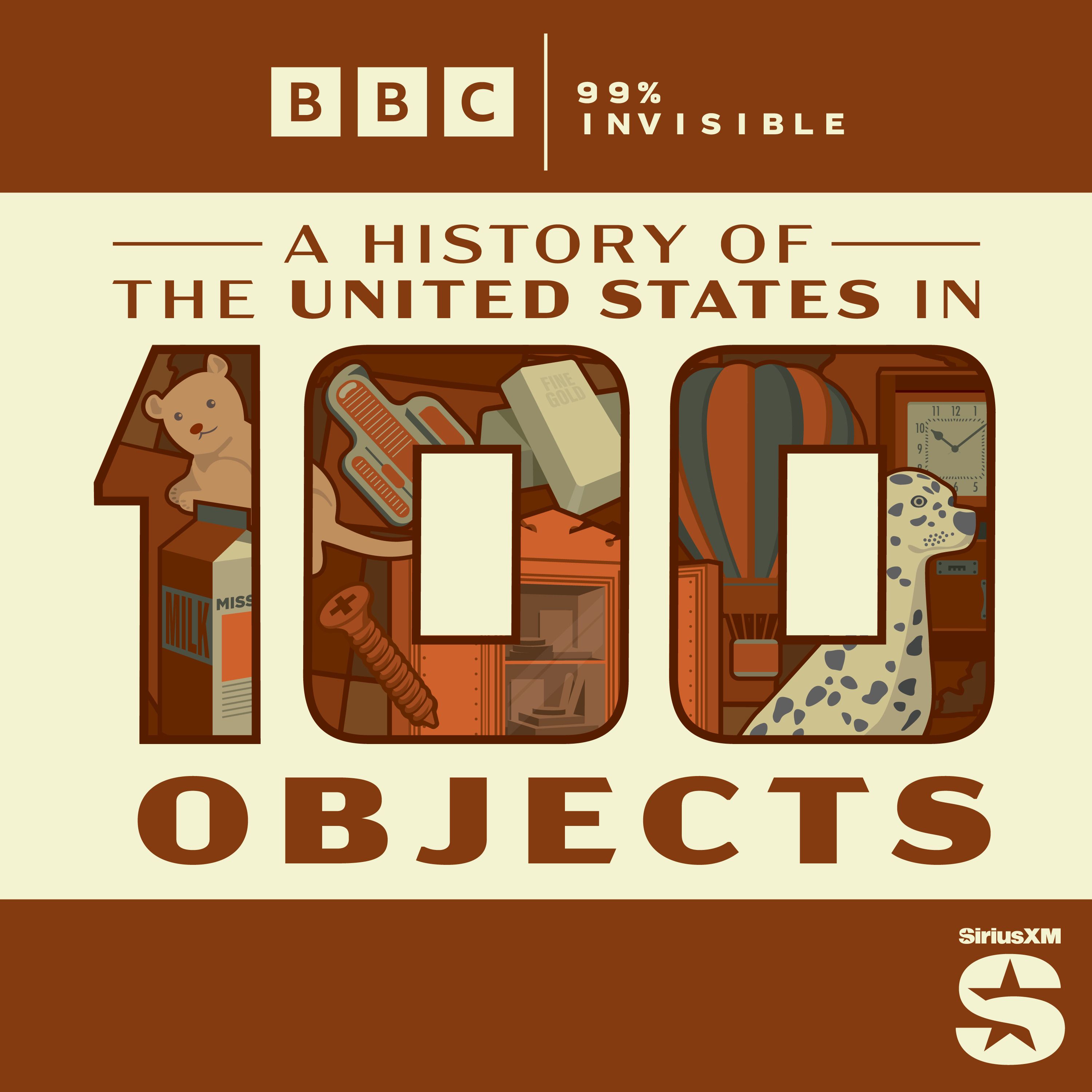
99% Invisible
A History of the United States in 100 Objects Trailer
00:03:30
100 objects. 100 stories. A new history of the US hiding in plain sight.
Loading summary
Transcript9 lines
- [00:01]
A
Wherever you are, stop for a moment and take a look around you. At all times. You are surrounded by objects that at first glance seem meaningless. But if you really think about them, they tell stories. A boarding pass that's still folded in your pocket, the book on the shelf that you were assigned in freshman seminar only read half of, but you still held onto for 20 years. A picture of your kids at the beach, or even the paperclip that once fastened some important papers. But for the life of you, you can't remember which ones. Gather enough of these objects and they begin to form a biography of who you are through things. The precious keepsakes, the clutter on your nightstand, even the stuff you'll eventually throw away. Now, stay with me here. Imagine you are the United States of America, and it's your 250th birthday. What objects would tell your history? Of course, there's the original Declaration of Independence and Lincoln's top hat and, I don't know, like a cannon from Fort Sumter. All worthy and fascinating objects, to be sure. But there is another story to be told. Using the objects that you don't see on sweaty field trips to museums. The equivalent of the ticket stops and the favorite knickknacks and the paper clips, like a bootleg band T shirt that tells the history of American punk rock. Or a little blue book that enslaved people transformed into a tool of liberation. Or a 1 inch screw that shows how America built a hidden industrial empire.
- [01:43]
B
The screw thread is a simple device, but it ties together the whole mechanical skeleton of our civilization, which on the one hand seems overblown. But you're like, is it wrong? I don't know that it's wrong.
- [01:54]
A
It's not wrong. My guy from 99% Invisible and BBC Studios, I'm Roman Mars, and this is a history of the United States in 100 objects as the country marks its semiquincentennial. A word I will never say again. We're going to collect objects from across American history. 100 objects to be exact.
- [02:16]
C
Picture a western where they're robbing a train, and there's a safe on one of the cars of the railroad train.
- [02:23]
A
This is the icon of his presidency. This is it. This is the Billy Possum to tell the story of who we are and where we've been. Remember, this is before the invention of the electric bulb. So when night fell, it was a night. Yes. We're going to talk to historians and journalists and regular folks who are obsessed with objects beyond the official record, like
- [02:46]
C
forgotten nobodies they might as well have
- [02:49]
A
been called objects that tell a history as sprawling and contradictory as America itself.
- [02:55]
C
The blueback speller is something that became a particularly prized possession because it meant that you might not be free in body, but you could be free in mind.
- [03:05]
A
100 objects, 100 stories, a new history of the US hiding in plain Sight, A history of the United States in 100 Objects, a brand new show from the BBC, and 99% Invisible. We're going to publish a new episode every Friday in the 99% invisible feed, which you can find wherever you get your podcasts.