
Podcast
A few words from Father Kemper
Hosted by Fr. Kemper Anderson · EN
Weekly homilies delivered at St. James' Episcopal Church in Cedartown, Georgia
19episodes
Episodes
Newest firstAll episodes

The good measure
Feb 23, 202500:09:37Tap to summarizeLuke 6:27-38 In last week’s Gospel lesson, Luke introduced the “Sermon on the Plain” by writing: “Jesus came down and stood on a level place.” Jesus didn’t preach from some lofty mountain top, far above the daily hubbub of life, with all its attendant crises. Jesus came down… and stooped to heal and encourage and spread the Good News of God’s kingdom to the poor and the hungry, the sick in body, mind and spirit, and those who mourned… who were all pressing in around him. He pronounced them blessed… and reassured them that, despite all their travails, they had God’s attention. And then he looked up at his disciples and invited them to go “all-in…” to join him down there on the plain, the place where God’s attention was focused, and help him turn the world upside down. And we’re still down there on the plain with Jesus this week, learning more about how we can live into our vocations as bringers of God’s kingdom. I don’t know about y’all, but it seemed like we had our work cut out for us last week… stooping to spread the love of Christ to the poor and the hungry, the sick in body mind and spirit and those who mourn… people who don’t look like we do, or live like we do, or speak or worship like we do, or smell like we do. We are to stoop to help with worldly stuff when we can, stuff like food and medicine and shelter… but mostly we’re just to be with them and love them. Really love them. But today—today—we’re told it’s not enough to love and help those less-fortunate than we are… that that, by itself, won’t turn the world upside down. No. Today, Jesus tells us that we must also love—and bless—our enemies. People who hate us. And persecute us. And abuse us. That’s too much! Surely, there must be some mistake! But then, Jesus doubles down: if someone sucker punches you, don’t assume a defensive posture. Open up. If someone steals your stuff, ask them what else they need. Share your wealth: give what you can, when you can, expecting nothing in return—not changed behavior, not even a thank you. And finally, Jesus tells us, in no uncertain terms, that we’re not to judge, or condemn, but always be merciful and forgive. Pie in the sky, huh? I wonder how often we’re tempted to pat ourselves on the back and say, “Well, I’m not perfect, but I do the best I can, which is certainly better than some folks! Isn’t it funny that, when confronted with our own inadequacies, our first instinct is often to minimize our own offenses by focusing on the shortcomings of others? Whether or not we name the Other, are we not still propping ourselves up at the expense of another person or group of people? Yes, we are. And I’m pretty sure I know what Jesus would have to say about that. What kind of a world would this be if, rather than putting up our dukes and giving tit-for-tat every time we felt wronged or offended, we opened up and made ourselves vulnerable, perhaps drawing out the humanity of our enemy in the process? What if, instead of holding on tight to all the “stuff” on which we stake our worldly security each day—and by stuff I’m not simply referring to tangible stuff like money and possessions, but also other things like position and privilege, time-honored customs and traditions, even our heritage as a particular people and nation—what if we released our death grip on these temporal assets and offered up everything we hold dear—everything—to help bring about God’s kingdom on earth, trusting in Almighty Providence to give us those things which we truly need? Perhaps you’ve heard it said that it’s much harder to hold anger and hatred in your heart for someone when you pray for them. Imagine what it would be like if we stopped judging and condemning people who disagree with us about the best way to cure all of the world’s ills and started praying hard for them instead. And I don’t mean simply praying for them to come around to our way of thinking. I mean praying for their peace and well-being. Their comfort and their safety. I mean praying for them to grow into deeper relationship with God… that they will continue to become the creatures God created them to be more-and-more each day. I wonder, if we did that—if we could all bring ourselves to do that—how long it would be before our enemies were no longer enemies, but only fellow travelers on the road to kingdom come? So, I’ll cut to the chase: Jesus tells us that the measure we give… is the measure we’ll get back. In other words, we’ll get out of this earthly sojourn precisely what we put into it. And what a measure that could be! If we can bring ourselves to accept half of the teachings in Jesus’ Sermon on the Plain, we’ll not only please God, we’ll also be happier in the here and now. We’re here to learn and to do. We’re here to learn kindness… to be present with and serve the least of these, like Jesus was. We’re here to learn to place our trust in God and God alone, and to give up all our worldly assets and aspirations to help bring about God’s kingdom, like Jesus did. We’re here to learn how to love and to refrain from judging, and to leave all of that in God’s hands, like Jesus showed us how to do. Stoop. Love. Bless. Give. Do unto others…. Be merciful. Don’t judge. Forgive. These are the teachings of the Sermon on the Plain. This is the good measure with which we’ve been blessed and entrusted. How much will we give? And how much will we get back? I expect we’ll all find out soon enough.
Transcribe →
A world turned upside-down
Feb 16, 202500:16:54Tap to summarizeLuke 6:17-26 Perhaps some of y’all are thinking to yourselves, “Hmmm… the words of today’s Gospel story sound familiar… it’s the Sermon on the Mount, right? The one that has “the Beatitudes” in it: all of the “Blessed are those-es,” if that’s a word, which I’m pretty sure it’s not. Right? But maybe there’s a little something jangling in your head, something that doesn’t quite sound like what you remember from your previous encounters with the story. Jesus preached a sermon in today’s gospel story, sure enough… and it was a humdinger. But it wasn’t delivered from the top of a mountain. Today’s passage begins with, “And Jesus came down with the twelve apostles and stood on a level place…” (v. 17). That’s the first thing, and the second is that the words of the Beatitudes are a little different. We read today, “Blessed are the poor… those who hunger now… who weep now.” What happened to poor in spirit? And those who hunger and thirst for righteousness? And the bit about the merciful, and the pure in heart, and the peacemakers… did we skip something? And what’s with all the “Woe to-es?” I don’t remember them being part of the Sermon on the Mount… where’d they come from? Fair questions, all. And here’s the reason for the differences: This isn’t the Sermon on the Mount. The Sermon on the Mount is a Matthew thing (5:1-12), and the reason that’s what springs to mind when we hear the Beatitudes is because we hear Matthew’s version of events far more often than we do Luke’s. Luke’s version is known as the Sermon on the Plain, because Jesus came down from the mountain where he’d gone to pray, to be with the people who needed to hear God’s message of hope and salvation the most. But a couple of larger questions remain: first, why the difference between Matthew’s and Luke’s narratives? And second, why should we care? Without getting too deep into the weeds about the history of the gospels, let me just remind you that Matthew and Luke were written around the same time (80-90 AD), but in two different parts of the Roman world, and there does not appear to have been any collaboration between the writers. Each had a constituency to whom he was writing, and a lens through which he viewed the world which, in turn, influenced the content and style of their writing. In a nutshell, Matthew seems to have been writing to an audience of Jewish converts to whom he wanted to introduce Jesus as their long-awaited Messiah who had come to save God’s Chosen People, in opposition to the greed and hypocrisy of the Jewish religious establishment, and fulfilling a multitude of prophesies written about him in Hebrew Scripture along the way. “Y’all have waited,” Matthew seems to be saying. “The time has come. We, the Jewish faithful, were right all along.” Luke, on the other hand, was writing to a congregation of gentile converts outside Judea, who were struggling to cope with severe economic hardship, a culture of increasing secularization, and the political turmoil of the times. Sound familiar? Certainly, there is plenty of overlap between Matthew and Luke, but Luke’s is an “activist” gospel. It’s messianic, sure, but Jesus’ followers are called to turn the world upside-down, right now! In fact, it’s often referred to as the original “social gospel.” Do remember a couple of weeks back, when Luke recounted the story of Jesus reading from the Isaiah scroll in his hometown synagogue? About the one anointed to bring good news to the poor, release to the captives, sight to the blind, freedom for the oppressed and proclaim the year of the Lord’s favor? And Jesus telling them that he was that One? And do you remember how that worked out for him? But, happily, Jesus lived to preach another day, and today as our Gospel story unfolds, we see that the multitude gathered around him are exactly the kind of people Jesus came to proclaim favored by God: the poor, the hungry and the outcasts. And Jesus is not high on some mountain talking down to them, but right there among them. And how about this: the text notes that as Jesus taught them and healed them in body, mind and spirit, he looked up at his disciples to address them. Looked up. Was Jesus simply stooping to help the least of these? Or had the disciples felt the need to retreat to higher ground, away from the seething mass of suffering? Or maybe a little bit of both? Some of y’all probably know that the Greek word we read in this passage as “blessed” (μακάριος) might be better translated as “happy.” Happy are you who are poor, for yours is the kingdom of God. A clergy colleague of mine is fond of saying that, “To be blessed is knowing that you have God’s attention. To know that wherever you go, you’ll not be alone. To be blessed is to know that you are valued and important simply because God has made you priceless.” That would make me happy. How about you? And so, I wonder if Jesus, in looking up at his disciples to pronounce Luke’s Beatitudes, is reminding them that they too must stoop and take notice of these poor, sad, discarded folk. “Never forget that these are the blessed of God,” he seems to be saying. “These people have God’s attention. God sees them even when no one else does. And we are connected to them and to each other because the only possession anyone really has is the blessing of God. Come and join me on the plain.” Maybe Jesus said that. The promise of Jesus Messiah, which is the Good News of God’s kingdom, is a world turned upside-down: from the poor being lifted up and the mighty cast down in Luke’s Magnificat, to the proclamation of the year of the Lord’s favor to the least of these in Isaiah’s prophecy, to the blessing of the poor and the hungry, the weeping and the reviled in Luke’s Beatitudes. These are the people God notices… and blesses. These are the people Jesus said would be rewarded. But following these words of hope is a warning to the disciples: the “woe-itudes,” which I’m also pretty sure isn’t a word. “Woe to the rich, the full and those who laugh at others’ expense. What goes around comes around. You’ll get yours.” Luke’s Jesus is clear that wealth and power and privilege are seductions that will surely separate us from God… and from each other. The kingdom of God belongs to those who have nothing… except God. How does that make you feel? It makes me feel “skeert,” which isn’t a Greek word at all. It’s kind of a human word. Skeert. Scared!Afraid that my pride of place and position, and gender and intellect might one day separate me from God’s kingdom. Because stooping to come face-to-face with the poor and the hungry, the weeping and reviled, is the only way to come face-to-face with Jesus. I’m going to say that again, because it’s important: the only way we will ever come face-to-face with Jesus is by stooping to come face-to-face with the poor and the hungry, the weeping and reviled. Maybe if we spent a little less time celebrating ourselves and a little more time trying to bring about the year of God’s favor to the broken and the least of these… maybe we’d be happier, and more aware of the blessings God has bestowed upon us. We’re all broken, you know. The world is broken. Whether it’s broken health, broken finances, broken relationships, broken faith, or broken something else, we’ve all got our cracks and missing pieces. Our brokenness is very personal, and yet it connects us with one another because we’re all so in need of God’s healing presence in our lives, and in our world. We look around, we see, and in some cases experience, injustice, exploitation and violence. And we cannot help but mourn. And that goes for all of us, no matter our skin color, or gender, socio-economic status or political leanings, we are all mourning. We hear of wars and rumors of wars, endemic disease and poverty around the world and around the corner, religious persecution, graft and corruption in business and government, rampant street crime and increasing levels of substance abuse and addiction, cutting across age and ethnicity. We hear about all of this, and more, and know that this is not God’s will! We listen to words of hate—unspeakable vitriol—being trumpeted from our leaders on both sides of the political aisle and know that this is not how God works! How long, then? From where is our help to come? This stuff is real. We can’t escape it… we can’t sugarcoat it… and most importantly, we can’t fix it. Woah, woah, woah, Father Kemper! What’s that you say? Here you’ve been talking about Luke’s activist gospel, proclaiming the year of the Lord’s favor to the least of these and turning the world upside-down, and now you’re saying that the problems of the world can’t be fixed? What the heck? What then should we do? (cf. <a href="https://www.biblegateway.com/passage/?search=L...
Transcribe →
Where to, Boss?
Feb 9, 202500:13:21Tap to summarizeLuke 5:1-11 “There is nothing—absolutely nothing—half so much worth doing as simply messing about in boats.” That’s what the Water Rat said to the Mole the day they met on the riverbank in Kenneth Grahame’s The Wind in the Willows. I wonder if Jesus liked boats. He certainly spent enough time in them during the months and years of his Galilean ministry: sometimes using them to get from “point A” to “point B,” sometimes teaching from them and sometimes just using them to “get away.” Several of his disciples were fishermen, eking out a living on boats with their nets on the Sea of Galilee. It was not an easy life, but it kept their families fed, mostly. During the hot Mediterranean summers, the men often worked at night and in the early morning when the fish would school near the surface to feed after having retreated to the deeper waters to escape the heat of the day. Nights and mornings were usually a pretty good time to fish, and it allowed the fishermen to get their catch to market before it spoiled. Only the super-rich had access to ice and, needless to say, Simon (who would become Peter), James and John were not rich. Not by a long shot. But they were able to keep their families fed. Mostly. But on this day, their luck had not been good. They’d toiled all night and into the morning and caught nothing. Nada! It’s a tough thing to have to tell folks who depend on you for their survival: “I got nothin’.” And so, there the men sat on the shore cleaning and mending their nets, probably feeling like failures and in no great rush to go home and tell their families about their night on the water. And then Jesus showed up. Jesus and a crowd. Jesus usually had some kind of crowd following him around. Since his escape from the mob at the edge of the cliff in Nazareth, he’d headed north and east to Capernaum, at the top of the Sea of Galilee (or the lake of Gennesaret, as Luke calls it), a distance of about eighty miles. Along the way, he’d taught in the synagogues, cast out a few demons (on the Sabbath of course) and healed some sick folks, including a woman who turns out to be Simon Peter’s mom-in-law (Luke 4:31-41). People were avid, even desperate, to hear the message Jesus was proclaiming—the good news of the kingdom of God—so much so that when it came time for Jesus to move on, they’d have none of it, and tried to prevent him from leaving their towns (vv. 42-44). I guess popularity can be a two-edged sword, can’t it? So here comes Jesus down to the lakeshore and the crowd is right on his heels… pushing, prodding, clutching at his robes, vying for Jesus’ attention, shouting at the top of their lungs, each person trying to make his voice heard above the others. I’m guessing Peter was not amused. “Great…” he must have thought. “The perfect end to a perfect day. Who is this guy, anyway?” The two had not yet met. Next thing you know, Jesus stepped into his boat and asked for a ride. And here’s the thing: there must have been something about Jesus that gave Peter pause. Something that stopped him from doing what he probably wanted to do, which was to pick Jesus up bodily and throw him overboard. I wonder if the two exchanged a look before Peter finally acquiesced, saying for the first time what he’d be saying over-and-over again for the next couple of three years: “Where to, Boss?” So, I wonder if Jesus liked boats. Maybe he did, maybe he didn’t; but on this particular day, I’m pretty sure Jesus “took ship” for a couple of reasons, both rooted in practicality. First and foremost, I think he must have wanted to create a little distance between himself and the crowd. He wasn’t going to be able to do what he needed to do—which was proclaim the message of God’s kingdom—amidst all the noise and commotion and incessant badgering of the crowd. Twenty or thirty feet of open water would be just the thing. And then there’s the reflective quality of water. When Philippa and I used to visit her folks in Greece, we stayed in a house about halfway up the side of a mountain on the edge of a bay in the Gulf of Corinth. There was a disco in the town across the bay from us, probably about two-and-a-half miles away as the crow flies, and very often… at night, when the wind was right… we’d hear not only the music from the disco reflecting off the surface of the bay and up onto the side of the mountain—so loud that it sounded like it was coming from the next room—but also, during lulls in the music, we’d hear conversations of people at the club clearly enough that we could almost understand what they were saying. From two-and-a-half miles away! So, I wonder if, in addition to creating a little space between himself and the crowd, Jesus figured he might be able to be heard more clearly by more people if he used the natural physics of the lake to reflect and, in effect, amplify his voice. He’s smart, you know. But that’s not really the crux of this Gospel story, is it? Certainly, the teaching happened, and that was important. But even more important was the meeting… the first interaction between Jesus and Peter, James and John… three men who would soon become some of his earliest disciples. Three guys who were having a terrible, horrible, no-good, very-bad day. “Where to, Boss?” James and John might have heard Peter ask. They’d failed at pretty much everything else they had set their hands to that day, so they might as well stick around to listen. What did they have to lose? And so, it began. And after the teaching, Jesus invited them out into the deep water to try doing something they thought they already knew how to do… only in a new way. And the resulting abundance stunned Peter. It was all too much for him to accept: “Go away from me, Lord, for I am a sinful man!” (v. 8). But it was just Peter’s fear talking: fear of failure… fear of being found unworthy… maybe fear that it was all a dream, and that he would wake to find himself drifting out-at-sea with an empty net. But there came James and John, and if any of them was dreaming, they were all dreaming… and if any of them were failures, or unworthy of God’s largesse, weren’t they all in the same boat? And they were all in the same boat… and Jesus was with them… and he was talking about a new kind of fishing. I expect it was a lot to take in. I wonder how many of us secretly harbor the fear that we might be failures in God’s eyes. Not that we’re unloved, or even unsaved… only that the way we live our lives doesn’t quite measure up to God’s expectations for us… making us somehow unworthy to participate in God’s plan for salvation. Anyone? Certainly, Isaiah felt unworthy to be chosen as God’s prophet in today’s lesson from Hebrew Scripture: “Woe is me! [cried Isaiah] I am lost, for I am a man of unclean lips, and I live among a people of unclean lips” (Isaiah 6:5). But God made him clean… made him worthy to carry a word of hope to a people who walked in darkness (cf. Isaiah 9:2). “Here am I,” said Isaiah. “Send me.” And Paul, by his own admission, was “the least of the apostles, unfit to be called an apostle, because [he] persecuted the church of God” (1 Corinthians 15:9). Paul stood by during the stoning of St. Stephen, the first martyr for the cause of Christ. Heck, he might have handed people rocks to throw! And yet, Paul came to believe that even he, along with the original Twelve Apostles of the Jerusalem Church, was made righteous by the grace of God (cf. 2 Corinthians 5:17-21), suitable to proclaim Christ’s death and resurrection around the Roman world from Damascus to Antioch… Galatia, Ephesus and Colossae, Philippi and Corinth and, finally, in Rome itself. Wherever it was that he was called to go… Paul dragged his undeniably unfit self. And you and I, each of us, is in the same boat. We have all failed at one thing or another… we’ve all sometimes done things and said things that do not reflect our identities as Christ-followers, or our vocations as proclaimers of the good news of God’s kingdom. But, despite all of our human frailties, we’ll be OK. Because Jesus is in the boat with us. Regardless of our shortcomings, we’re beloved of the Father and forgiven. We, ourselves, will be made clean… made righteous… made worthy to join the ranks of apostles and martyrs from time immemorial, to become “fishers of people,” proclaiming the good news of God in Christ to all those who seek him… in our own hometowns and around the world… IF we’ll answer the call. ...
Transcribe →
Don’t throw Jesus from the cliff!
Feb 2, 202500:16:13Tap to summarizeLuke 4:21-30 Just imagine: there’s Jesus sitting in the synagogue in his own hometown of Nazareth, amongst all sorts of folks who had watched him grow up over the years. Some may have known him pretty well; others might not have met him, but had probably heard of him… you know, like that third or fourth cousin, twice removed, that people here in the South talk about at family reunions. So, Jesus was among family, or at least extended family, there in the synagogue and it was likely a comfortable time of shared devotion. Until he dropped the bombshell: “Today, Isaiah’s prophecy about the coming of God’s kingdom has been fulfilled. In me.” I can imagine a moment of shocked silence, perhaps followed by a gasp and a little “yes!” from somewhere near the back of the room (his mother, perhaps)… people looking from side-to-side at their neighbors on the benches… some alarmed, many skeptical at this unexpected intrusion into their ritual. Then, a low buzz of conversation: “You know, Judith, I always knew there was something about him. He has such a wonderful presence!” “Oh, I know, Esther! His parents must be so proud. Do you remember the story about that time, must be fifteen or so years ago, when he disappeared for two whole days in Jerusalem? And when they found him, he was sitting in the Temple with the teachers holding forth just like he was one of them! (Luke 2:41-52) His mama must have given him what for!” “Wait a minute,” rumbled a man’s voice from across the room “Isn’t that… Joseph’s boy? Where’s he been lately? Looks like he’s all grown up.” And a response, “He does, Levi. Where’s this guy been hiding? We sure could use some of that “good news” here in Galilee. Yesiree, we got plenty of trouble and oppression right here in Nazareth.” And they did. You see, the Romans, weary of the incessant squabbling between the Jews and their Herodian overlords, were taking a more active (and brutal) role in policing the Galilean provincials. Taxes were high, and the arrest and torture of political prisoners was commonplace. Groups of armed Jewish “zealots” roamed the hills preying upon Roman commerce… and suspected Jewish collaborators. Some had even been bold enough to ambush small military units, killing the soldiers and seizing their weapons and provisions. The results of such lawlessness had been predictable… and disastrous. Roman authorities thought nothing of executing ten locals for every soldier murdered in order to discourage such rebellious behavior, and they offered generous bribes—enough to turn brother against brother—for information leading to the capture of Jewish partisans. Many succumbed to such tactics, and so not only poverty but also internecine violence and suspicion had become endemic throughout the region. Yes, Galilee was a mess. And here came Jesus preaching good news to the poor, release to the captives, recovery of sight to the blind, and freedom for the oppressed… truly, the year of God’s favor was at hand. Finally! For a people at the utter limit of their endurance, Jesus’ words were a powerful message of hope. And so, perhaps they can be forgiven for expecting this new prophet to swoop in and make all things right in an instant. But then Jesus burst their bubble, informing them in no uncertain terms that he would not be sticking around to work miracles in Nazareth. At first, there was stunned disbelief. Why would Jesus say that? Did he not understand the urgency of their need? Bitter disappointment flared into anger… and then into rage. The crowd that, only a moment before, had been so pleased and supportive of their new favorite son now assaulted him, manhandled him, pushed him to the edge of a cliff and then… Jesus disappeared. There’s a lot to ponder here. How could Jesus seemingly ignore the plight of his “extended family” in Nazareth? How could the crowd turn so ugly, so quickly? If Jesus’ didn’t intend to help the people of Nazareth, why did he raise their hopes in the first place? And, if Jesus wasn’t going to help them, then who would? Who could? Hope is a powerful thing. I wonder if Jesus, in proclaiming the advent of “the year of God’s favor” to the people of Nazareth, was inviting them… to stop all of their infighting, to set aside all of their sinful and selfish habits and to start behaving like people of God! I wonder if… implicit in Jesus’ refusal to stay with the people of Nazareth to be their own private miracle worker… was a challenge to them to become miracle workers themselves: to bring good news to the poor, proclaim release to captives and recovery of sight to the blind, to free the oppressed, to take upon themselves the role God had intended for them since the time of Abraham… that of being bringers of God’s Kingdom on Earth. But I guess the good people of Nazareth didn’t take it all that well, did they? I wonder if you and I would have taken it any better. When was the last time you were tempted to throw Jesus off the cliff? I believe we get nudges from the Holy Spirit all the time… telling us how we can be Kingdom bringers. How many opportunities were you given to spread the Good News and proclaim the year of the LORD’s favor… yesterday? Last week? Last month? And how did you respond? How many times did you give in to the Holy Spirit’s prompting… and how many times did you just take the path of least resistance, and kind of nudge Jesus over the edge of the cliff, where he would be out of sight and out of mind? I think we’re all tempted to throw Jesus off the cliff when he tells us something we don’t want to hear… or when we know that following Jesus—and doing what Jesus would do—might be difficult or unpleasant… or unprofitable. I think we’re tempted to throw Jesus off the cliff when we talk about immigration… healthcare and reproductive rights… race relations… gender and marriage equality… homelessness… social welfare, what constitutes fair taxation… and a bunch of other issues that create divisions within our communities… even within our churches. Jesus tells us that the poor and persecuted, the dispossessed and the disenfranchised, will always be with us (cf. Matthew 26:11, Mark 14:7 and John 12:8). We will never be able to “fix” all of the social problems with which this world is confronted. But that shouldn’t stop us—mustn’t stop us—from striving to do the work God has set before us… which is being the hands and feet… the Body of Christ, in our own hometowns. The people of Nazareth seemed ready to believe that Jesus was sent from God to prophesy the year of God’s favor; and they seemed pretty avid to see Jesus perform some local miracles, just as he had in Capernaum. But what had they, themselves, been doing to “prepare the way of the Lord,” as Jesus’ cousin John (the Baptizer) would have put it? Not so much, I’m thinking. In refraining from performing any miracles in Nazareth, Jesus forced the townspeople to confront their own assumed helplessness and inaction… their own failure to do the hard work of helping to heal the divisions within their society and live into their ancestral vocation of being the people of God in Nazareth in Galilee. And when we’re feeling sorry for our selves and find ourselves asking why God doesn’t do something about the multitude of ills that confront our generation, we should remember that God has done something… is doing something. God has created us. Perhaps you’re familiar with the mantra: “If not me, then who? If not now, then when?” And maybe you’ve heard the song “Do Something,” by Christian singer/songwriter Matthew West, that explores this question in light of our vocation as bringers of God’s Kingdom… “We are the salt of the earth, we are a city on a hill,” West sings, “But we’re never gonna change the world by standing still.” I think we’d all do well to reflect on the challenge implicit in the lyrics of this song the next time we’re tempted to throw Jesus from the cliff. Matthew West: “Do Something!” Watch the video!
Transcribe →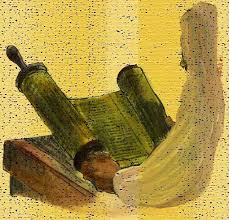
Have you ears to hear?
Jan 26, 202500:09:22Tap to summarizeLuke 4:14-21 Have you ever been looking and looking for something… only to find that it had been right there — “under your nose” — all along? You might feel pleased, although perhaps a little embarrassed — especially if someone else had been watching you search high-and-low. I wonder if some of the people listening to Jesus read from the scroll of Isaiah in the synagogue that day felt pleased (and perhaps a little surprised!) to have found something rare and special right under their noses in their own little hardscrabble village of Nazareth: a Prophet of God! Perhaps there were others, however, who couldn’t quite bring themselves to believe that anyone so common, so accessible to them could be anything special at all, let alone a Prophet… or a Messiah. Certainly, the Jews had been waiting for their foretold Messiah for centuries, but they were looking for a King like David, or a Prophet like Moses… not a local carpenter’s son, and not from Nazareth! Even the Apostle Nathanial, when he was first told by Philip about “Jesus, son of Joseph from Nazareth” said, “Can anything good come out of Nazareth?” (John 1:45) So, it’s not always enough to simply look for something… you must have eyes to see… and, in this case, ears to hear. This was the beginning of Jesus’ period of active ministry and he began it on his home turf in Galilee. He had just returned from forty days of fasting in the wilderness, where he had been sorely tempted by the devil. The experience seemed to have empowered rather than diminished him, however, and people were already beginning to talk about this new teacher. So, when Jesus entered the synagogue in Nazareth that day, expectations were likely pretty-high… among those with eyes to see and ears to hear. The order of worship in the synagogue on Shabbat, the Jewish sabbath, likely began with the Shema: “Sh’ma Yisrael Adonai Eloheinu Adonai Eḥad” – “Hear, O Israel: the LORD is our God, the LORD is One.” Next would have come a recitation of the Decalogue (or Ten Commandments) followed by a series of prayers and benedictions, after which Scripture would be read and interpreted. There would likely have been more than one reader with each reading at least three verses. They would stand to read and sit to teach/interpret. While the readings from the Torah (the Law) were predetermined in a fixed, triennial cycle, much as they are today in our own Lectionary, companion readings from the Prophets were often selected on the spot by readers. In this case, Jesus chose to read a passage from the prophet Isaiah. The Hazzan (assistant) would have handed Jesus the scroll and Jesus would have opened it, and read the passage in Hebrew, before interpreting (or teaching from) it in Aramaic. The interesting thing about Jesus’ use of this particular passage of Scripture is that he doesn’t seem to have read it “straight…” at least not the way Luke tells it. He omits some of the language originally contained in Isaiah 61:1 about “binding up the brokenhearted” and inserts the bit about “letting the oppressed go free” from an earlier location in the scroll (Isaiah 58:6). An accident, perhaps? Not likely. I don’t want to take us too far into the weeds on this… the takeaway is that Luke’s Jesus knew exactly the point he wanted to make, and didn’t balk at mixing and matching Isaiah’s words to suit his purposes. Jesus carefully selected and connected certain of Isaiah’s prophecies about future Messianic deliverance: to bring good news, to proclaim release, to free the oppressed and proclaim the year of the LORD’S favor… identifying them as being of the highest importance. The threefold repetition of the pronoun me underscored the role of this passage as a description of his own ministry and set the stage for Jesus’ simple and straightforward interpretation of the passage: “Today this scripture has been fulfilled…” let those with ears hear. So, in the end, the long-awaited Jewish Messiah was neither a King like David nor a Prophet like Moses. God was doing a new thing. God became Immanuel in a flawed and broken world… full of haves and have-nots, oppressors and the oppressed, politicians and prisoners, and the sick in mind, body and spirit… to spread hope, and lead us to a more abundant way of living. Jesus came to set us free from the crushing bondage of our sins by teaching us to love… and share… and forgive. Are you still looking for your Messiah? I wonder how often we find ourselves face-to-face with Jesus and fail to recognize him. Is it because our expectations are too high? Can anything good come from Nazareth? Or because they’re not high enough? It’s a lot easier to create God in our own image than it is to love like Jesus. Jesus Messiah was “in the world, but not of it…” and I wonder if the question we should be asking ourselves today… and every day… is how we can be less worldly… and more like Jesus. It doesn’t seem that hard on the surface, but there are a hundred… no, a thousand… decision points we encounter every day that offer us the opportunity to spread the Good News and proclaim the year of the LORD’s favor to “the least of these…” sometimes when it’s not terribly convenient. How are we doing with that? Are we deciding to follow Jesus as the Body of Christ in the world a thousand times a day here in our own hometown… following the example of Jesus in his? How well are we living this abundant life that God is offering? The price Jesus paid was his own life. God says we’re worth it… but are we behaving like we’re worth it? Like we’re redeemed? Are we loving like Jesus Immanuel… God with us? The cost was so great, we can never hope to repay… we can never be worthy. But we can do our best to spread the Good News and extend God’s love and forgiveness to our neighbors as we sojourn together through this weary world. That’s what Jesus would do. The scripture has been fulfilled in your hearing. Have you ears to hear?
Transcribe →
The threshing floor
Jan 12, 202500:09:37Tap to summarizeLuke 3:15-17, 21-22 Baptisms… and threshing floors. What do they have to do with each other? Do you remember the Gospel story about the time Jesus drove all of the money-changers and merchants out of the temple? (Luke 19:45-48) This was near the end of his earthly sojourn and Jesus was pushing his disciples pretty hard, getting them ready to take responsibility for spreading the Good News after he was gone. And the disciples weren’t being too “swift on the uptake,” so it’s possible that Jesus might have been feeling a little testy when the chief priests and elders approached him in the temple, where he was teaching and healing one day, and asked him by whose authority he was doing all of these things. I can almost hear Jesus sigh when he countered their question with another… hoping, truly hoping, I believe, that they would get it: “Was the baptism of John from heaven or from men?” asked Jesus. And the chief priests and elders, who couldn’t get past struggling to find a politically correct answer to Jesus’ question, found themselves unable to respond (Luke 20:1-8). So, which was it do you think? John, himself, was forthright in saying that the baptism he was performing was inferior to the one that the coming Messiah would provide. John’s baptism was a variation on a purification ritual for Jewish proselytes—that is, gentiles who wanted to convert to Judaism. That sort of washing was meant to start converts off with a clean slate before they placed themselves under the authority of the Hebrew Law (all 613 mitzvot) for the rest of their lives. But what was notable about John’s baptism was that it was not only for converts… but for practicing Jews as well: everybody got a bath. So, it was not only a ritual cleansing for newbies, but also preparation and a refinement of the faithful for something else… something special. What might that look like? On the day of his resurrection, Jesus would meet with the disciples in an upper room, breathe on them and say, “Receive the Holy Spirit” (John 20:19-23). Later, he would commission them to go forth “and make disciples of all nations, baptizing them in the name of the Father and of the Son and of the Holy Spirit” (Matthew 28:16-20). And on the day of Pentecost tongues “as of fire” would appear upon each of Jesus’ followers as they began to proclaim God’s word to all of the people of Jerusalem… in their own languages! (Acts 2:1-12) That’s what it would look like. What a day that must have been. But that brings us back around to the question posed by Jesus about John’s baptism: was it truly from God or was it just a religious thing? I wonder if it’s not a little bit of both. God created us in the image of divinity in order to be in relationship with us forever. But we messed everything up. And ever since the time of Adam and Eve in the Garden, God has been trying to restore us to unity with him… to bring us home. God made successive covenants with Noah and Abraham and Moses and David: if only the people would be faithful, they would be blessed more than they could ask for or imagine. God always offers us a path to salvation… a chance to be made clean. And yet, we resist the “threshing” that must take place to separate us from our impurities… so we can be reunited with God. But despite our stubbornness, I think that most of us are hungry for God whether we know it or not… whether we choose to admit it to ourselves or not. There’s something about living on this lovely (but rather diminutive) blue and green planet… in the middle of the vast expanse of interstellar space… that reminds us of our own smallness and points us towards a truth that we can only see, in the words of the Apostle Paul, “through a glass, darkly,” but that we hope one day to see face-to-face (1 Corinthians 13:11-12 KJV). And so, we create rituals that remind us of God’s unfailing love for us… rituals that help us stay faithful to God’s movement and purpose in our lives… because we want to be found worthy of adoption as God’s own people. Perhaps Jesus’ question to the temple leadership that day was rhetorical… to help them understand that the answer needn’t be simply either/or. What if it was both/and? What if the bigness and awesomeness of God could permeate human ritual and make it holy? It seems to me that the chief priests and elders missed an opportunity that day. And in our bickering over church polity in this day and age, how many opportunities do we miss to perceive the mind of God, albeit through a glass, darkly… and to spread the Good News, and be the Body of Christ to a world in great need of hope? And here’s a final conundrum. Even if John’s baptism, though arguably of men, was sanctified by God for the purpose of spiritual cleansing and as a sign of adoption, why was it necessary for Jesus to get dunked? After all, Jesus was not only without sin… he was God incarnate! In Matthew’s version of today’s gospel story, when Jesus came to be baptized, John protested saying, “‘I need to be baptized by you, and do you come to me?’ But Jesus answered him: ‘Let it be so now; for it is proper for us in this way to fulfill all righteousness.’ Then [John] consented.” (Matthew 3:13-17). Given the fact that it was Matthew’s gospel, Jesus’ use of the term “righteousness” might have been intended to echo Jeremiah’s prophecy concerning the coming Messiah when God said, “In those days and at that time I will cause a righteous Branch to spring up for David; and he shall execute justice and righteousness in the land” (33:15). Or righteousness might simply be interpreted as doing the will of God. But we must also understand that the Hebrew concept of righteousness was traditionally less concerned with law and legalism as it was with relationships between people. So, perhaps Jesus was saying that he needed to take on all our brokenness and poverty of spirit because, in the words of St. Gregory of Nazianzus, “[T]hat which He has not assumed He has not healed.” God wants to be in relationship with us and will stop at nothing to bring us home. What does your own baptism in the name of the Father and of the Son and of the Holy Spirit mean to you? How does it make you feel to know that God loves you unconditionally and will follow you through whatever wilderness you find yourself in, down the darkest paths you can imagine… to bring you home? No matter where you’ve been. No matter what you’ve done. You are cherished. You are adopted. But remember this: while God loves you just the way you are… he’s not going to leave you that way. So, give in to the threshing. And don’t mind the heat or the smoke… it’s just some of our chaff being burned away. We’re all redeemed. Now the question becomes, what are we going to do about it?
Transcribe →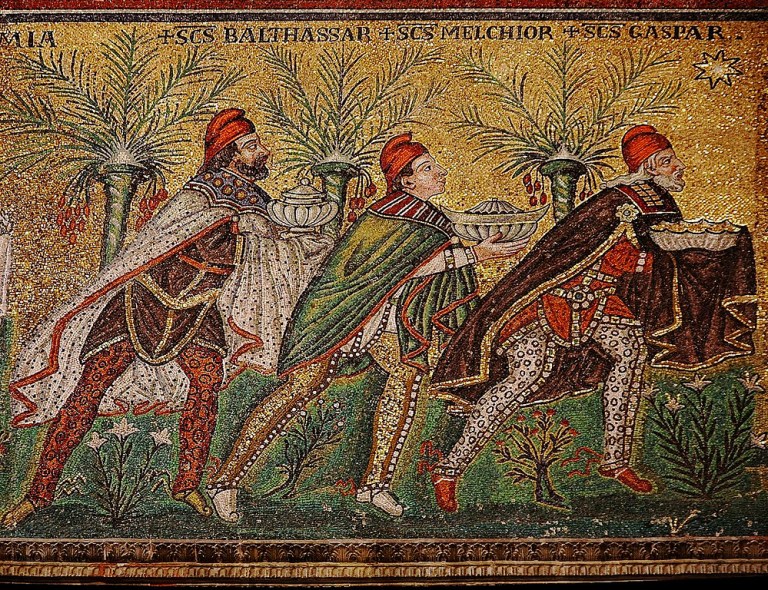
What is your gift?
Jan 5, 202500:13:00Tap to summarizeMatthew 2:1-23 When I was a child, I remember the Christmas story being very simple and straightforward: God sent the baby Jesus, born of the Virgin Mary, to save the world. Jesus was born in a stable in Bethlehem, wrapped in swaddling clothes, and laid in a manger because there was no room at the inn. There was a special star… and angels… and shepherds… lots of singing and rejoicing… and kings… and presents! And it all happened a long, long time ago. Pretty easy for a young mind to take in, right? Later on, I learned about Joseph and Mary having had to travel from Nazareth to Bethlehem because of something having to do with taxes… King Herod and the Holy Innocents… and a trip to Egypt. Hmmmm. That was a bit more complicated, and disconcerting… especially the part about the Innocents. Later still, someone clued me into the possibility that the kings might not have been actual kings… just “wise men” (whatever that meant) or perhaps even astrologers! Not quite as impressive. And that the wondrous “star of Bethlehem” was most-likely only a rare, but naturally occurring, astronomical phenomenon: a comet or a triple conjunction of stars that happened to have taken place around the time of Jesus’ birth. And that Jesus’ birth didn’t actually occur in the year zero BC according to the Julian calendar, but might have happened six years before… or six years after… or somewhere in between. And that Isaiah never actually prophesied that the mother of Immanuel would be a virgin… only a “young girl.” Man! Talk about bursting bubbles! As I continued to dig into Biblical history, I came to understand that none of the Gospel writers was likely one of Jesus’ inner circle of (twelve) apostles, and that there were differences between all of the supposedly “infallible” gospel accounts of Jesus’ life. I had known that not all of the gospels included the story of Jesus’ birth, but it wasn’t until much later that I got around to doing a side-by-side comparison of the gospels of Matthew and Luke (the two that do contain birth narratives) and noticed that, while both affirm that Jesus was born in Bethlehem, only Luke tells of Mary and Joseph’s journey from Nazareth to Bethlehem… and the stable and the manger (See Luke, Chapter 2). Surely, there were angels and shepherds in Luke’s Gospel, but no star of wonder… no wise men. Matthew, on the other hand, doesn’t even mention Nazareth until he informs us that Joseph and Mary settled there after their return from Egypt (Matthew 2:13-23), a trip that Luke neglects entirely. Matthew would have us understand that the story of Jesus’ birth begins and ends in Bethlehem. But he does tell us of the star and the magi… and the massacre of the Innocents. And it was only much, much later that I learned that the reason the gospel narratives each tell the story of Jesus Messiah a little differently, is that the writers were likely responding to the needs of their own worshipping communities in their specific place and time. For example, the Gospel of Matthew was likely written in Antioch in Syria in the last quarter of the first century, while Luke’s gospel was written around the same time, but in a different part of the Hellenized (Greek speaking) world… perhaps in Ephesus or Smyrna, in modern day Turkey. We may not be able to pinpoint times or places with exactitude, but we can absolutely discern the efforts of the Gospel writers to establish a connection between the life and ministry of Jesus Christ and the needs of the nascent Christian communities springing up in different parts of the Roman world. One can read between-the-lines in Luke’s gospel the Evangelist’s concern with leveraging the Good News of Jesus Christ to help promote justice and equity for all people, not only within his local community, but in the wider world. The subtext of Matthew’s gospel, on the other hand, reminds us that the life and ministry of Jesus fulfills all of the Old Testament prophesies concerning the advent of a “Messianic apocalypse,” wherein the Jews will be rewarded for their faithfulness, and “the nations” (non-Jewish gentiles) will stream to the light of the God of the Hebrews (Isaiah 60:3). And these are all wonderful rabbit holes we can explore together in greater detail one day… but not today. The present takeaway is that Matthew likely felt that the story of the star… and the gentile wise men coming to pay homage to the king of the Jews… was important because it foreshadowed that coming Jewish Messianic apocalypse. The Magi were the first gentiles to get on board. As for detailed timelines, do we really need them? What do they do for us? We work so hard to bring God down to our level… to rationalize and explain the unexplainable, that we run the risk of missing the point: whether Jesus was born during the reign of Herod the Great (as Matthew would have us believe) or while Quirinius was governor of Syria, as Luke tells it (vv. 2:1-6), isn’t really the key issue. Perhaps the writer of the fourth Gospel says it best: “And the Word became flesh and lived among us . . . [and] from his fullness we have all received, grace upon grace” (John 1:14a, 16). That’s the Good News: that the Word became flesh for all of us—for all races and ethnicities, all genders… for the rich and the poor, and everyone in between. For saints and for sinners… for people who believe… and for people who do not. For all of us. God loves us that much! So simple… yet so profound. And as for the star, maybe it was a comet, or a triple conjunction, or some other scientifically-explainable thing… but I’m pretty sure that the God of all Creation could plant a no-kidding “Star of Wonder” in the heavens to signify and celebrate the birth of the Word without breaking a sweat. What do you think? The Nativity of Our Lord and Savior Jesus the Christ, the Messiah, is God’s ultimate gift to the world. And I believe we’re all given gifts through which we can glorify God and hasten the coming of the Kingdom—if we choose to do so—if we are faithful. Some people’s gifts make headlines: the gifts of people like Mother Teresa or Billy Graham or Martin Luther King, Jr. But not everyone is called to be famous. Just as Jesus came to be a Messiah for us all, so too are we called to proclaim by word and example the Good News of God in Christ to all. And just as wise men from the East followed a star to bring their gifts of gold, frankincense and myrrh to the Christ child—a long, long time ago—so, also, are we to pay forward the gifts we’ve been given, great and small, in continuing Jesus ministry of love in the world, helping to restore all people to unity with God and each other in our own little corner of God’s creation. That’s our mission as “Church,” you know (BCP 854). What is your gift? And how will you choose to pay it forward? The word epiphany (Ancient Gk. ἐπιφάνεια) means “manifestation, or striking appearance,” in this case, the manifestation of God’s Christ to the gentile Magi. I pray that you will experience a renewed epiphany of Jesus Messiah in your life, and in your heart, in the next days and weeks as you work to discern your role as “Kingdom bringer” in God’s ongoing Christmas story… for a world in need of hope.
Transcribe →
Journeys, blessings and an Advent benediction
Dec 22, 202400:10:15Tap to summarizeLuke 1:39-55 Today’s Gospel lesson is about journeys and blessings. Not only the journey undertaken by Mary to visit her relative Elizabeth, but also the larger journey she had embarked upon when she gave in and said “yes” to the plans God had in store for her. And not only the blessing that Mary was given when she was chosen as Theotokos, which is Greek for “God Bearer,” but also the blessings she and Elizabeth both received when they trusted God to follow through with the mighty deeds that had been foretold by the angel Gabriel. You know these stories: It was Gabriel who visited first Elizabeth’s husband Zechariah, and then Mary, to tell them that God was on the move, and that they had an important part to play in his plan for the salvation of the world. The angel first appeared to Zechariah in a vision, in the temple in Jerusalem, where he was serving his turn as priest, and told him that his wife would bear a much-desired son in her old age, that they should name him John, and that he would be filled with the Holy Spirit. “He will turn many of the people of Israel to the Lord their God,” said Gabriel. “With the spirit and power of Elijah he will go before him, to turn the hearts of parents to their children, and the disobedient to the wisdom of the righteous, to make ready a people prepared for the Lord.” Zechariah apparently had a bit of a tough time getting his brain wrapped around Gabriel’s prophesy and, for his disbelief, was struck dumb for the entire period of his wife’s pregnancy. Which might have been a good thing for him. As Elizabeth’s belly began to swell, however, seeing was believing for her… and she rejoiced exceedingly (Luke 1:5-25). And as Elizabeth’s pregnancy progressed, Gabriel made a second trip to Earth, this time to the little village of Nazareth in Galilee, and appeared to Mary, who was engaged to be married to a fellow named Joseph, and told her that this was her lucky day… that she had found favor with God and was, herself, going to have a baby, who she would name Jesus. “He will be great, and will be called the Son of the Most High,” said Gabriel, “and the Lord God will give to him the throne of his ancestor David. He will reign over the house of Jacob forever, and of his kingdom there will be no end.” Sounds like the kind of news any young Jewish mother would like to hear, right? Messiah’s coming… and you get to be his mom! But Mary’s initial response was, “Wait… what? That might be kind of awkward because, you see, I’m still a virgin.” Implicit in her comment, I believe, was: “What will Joseph say?” And maybe that was why Gabriel didn’t strike her dumb the way he had Zechariah. He knew she would have some ‘splaining to do, and that she’d need her voice to do it. So, he just looked at her (kindly, I think) and reminded her that “nothing was impossible for God.” And Mary, like Elizabeth, embraced what God had in store for her. And so, it began (Luke 1:26-38). Journeys… and blessings. Do you sometimes feel as if you’ve “run your race?” “…fought the good fight?” “…made your mark in the world?” whatever that might be? That your life’s journey is pretty-much complete, and now you’re just hanging out, marking time? And the blessings? Of course, every new day’s a blessing… every recovery from illness… every birth and every success of a loved one… every time your favorite sports team comes out on top. All of these are blessings, and there’s plenty more like them—almost too many to count! And I believe God forgives us when we occasionally become prisoners of our own inertia… content to mark time and count our blessings, rather than actively and continually working to be a blessing to the world around us by participating in God’s plan for its salvation. Yeah, I know it’s a conundrum… “What role could God possibly have for me to play in helping to bring about his Kingdom?” Maybe Elizabeth and Mary asked a similar question back in 6 AD (by Luke’s figuring). But here’s the thing: God is full of surprises. He never stops. He’s not done with this old world yet and, if you’re still here on this Earth, God’s not done with you, either. The Season of Advent’s a funny time of year. Not funny “ha-ha” . . . funny odd. And it can be difficult. On one hand, it’s the build-up to Christmas! A time when we prepare to commemorate and celebrate Jesus’ first-coming, two-thousand years ago with praise and caroling and gift-giving, and by trying to be just a little bit kinder and more loving to people around us. But there’s more to Advent than that. It’s also a time when we are to take stock of our lives and prepare ourselves for the second coming, a day on which Jesus told his disciples that “the powers of the heavens will be shaken . . . and the Son of Man will come on a cloud, with power and great glory” (Luke 21:26-27). Just two weeks ago we listened as the Baptizer admonished his flock to “repent . . . to prepare the way of the Lord . . . and make his paths straight” (Luke 3:3-4). And we might have shivered a bit last week when he spoke of a new kind of Baptism that was coming into the world, not of water, but of the Holy Spirit… of wheat and chaff and unquenchable fire (Luke 3:16-17). Kind of scary, huh? So, amidst all the happy anticipation of Christmas, there’s also cause for… unease. It’s a time when joy and a sense of feeling blessed can seem elusive. Astronomically, Advent is a dark time of year. The Winter Solstice, the shortest day… and longest night of the year, was just yesterday. But you know what? We’ve turned the corner. The days will be getting longer now. The darkness is beginning to recede. Light and hope are returning to the world. So, prepare yourselves. Prepare yourselves for a new beginning… a chance to say “yes” to whatever journeys and blessings God has in store for you this Christmastime, and in the coming year. You may think your dance card is full. You may think you’ve already got your ticket punched. Or you might think that you’ve made such a mess of past journeys that you’re unworthy of a second chance. But if that’s what you think… think again. Nothing is impossible for God, and it’s never too late. Our God is a God of a million second chances. So, here’s an Advent benediction for you: May you have the strength and courage to say “yes” to God… and take joy in new journeys wherever they may take you. May your path be tolerably straight… and always illuminated by the Light of Christ. May you, yourself, be a reflection of that Light. May the Mighty One look with favor on you… and have mercy on you… and do great things for you. May you become an instrument of Christ’s healing and reconciliation in the world. May you be lifted up… and filled to bursting with his grace and peace. Here’s my prayer for you, St. James’ Church, as we stand upon the threshold of this new and glorious Christmastide: May you be blessed as much as you can stand!
Transcribe →
What then shall we do?
Dec 15, 202400:12:35Tap to summarizeLuke 3:7-18 Now that’s some kind of Good News, isn’t it? “You sons of snakes!” I don’t know about you, but I have a hard time thinking of being associated with a brood of vipers… having my heritage belittled… and being threatened with an edged bludgeon and with unquenchable fire… as good news! I guess John the Baptizer was not one to mince words when it came to telling people what they needed to do to “get right” with God. It wasn’t enough to be God’s Chosen People… it wasn’t enough to obey the Law… it wasn’t enough to be part of the Temple establishment, especially if that meant helping to maintain the status quo through violence or graft. “No,” said John, “you must repent of anything that separates you from God!” And not only that, but you must be active in bearing good fruit, the kind of fruit that helps bring about God’s Kingdom on earth. And the people were, perhaps not surprisingly, confused and alarmed! “We thought we were doing OK… we thought that our Jewish-ness and our faithfulness to the Law and the Temple would save us. If not that, then what? What then shall we do?” John knew that the people standing around him, knee deep in the Jordan, were guilty of the original sin of selfishness: of putting their faith in their own ability to provide for themselves, rather than putting their whole trustin God. And I expect John knew that the people’s selfishness was a product of fear, pure and simple… the fear that somehow, God’s Providence would not be enough. The sin of selfishness had dogged the steps of humanity since the time of Adam and Eve, and it continued to be a barrier between the people—and God… and John was on a mission to replace the fear of things temporal… with the fear of God Almighty! So, he told them, in terms they could understand, what they needed to do: “share what you have… don’t steal from folks… be content with what you’ve got”—and also what would happen to them if they failed in this charge. Implicit in John’s message was that when we put our whole trust in God, good things happen… great things… and that we will bear amazing fruit to help bring the Kingdom! That’s the Good News! And of course, this message would be central to Jesus’ ministry for the next three years. You remember what he said: “No one can serve two masters . . . don’t confuse what is truly important with that which is peripheral: consider the birds . . . and the lilies. God looks after them, and God will look after you. If your striving is first for the Kingdom of God, and its righteousness” (Matthew 6:24-34), God will sort out everything else. There’s a lot to tempt our fear going on in the world today: threats of physical and cyber-attack by our enemies… the threat of instability in the world economy… the threat of a changing climate… and those are just some of the external distractions! What about all our personal “stuff?” Lord knows there’s plenty of that! There’s so much to distract us from the Good News of God’s Kingdom. And, like those seeking the reassurance of John’s baptism in today’s Gospel, we are caught between our fears… and the unthinkable consequences of failing to make God sovereign in our lives. What then shall we do? For the past couple of years, mixed in with all of the angst about climate change and the economy, there’s been a lot of buzz about border security and how this country should deal with literally millions of political and economic refugees from Central America, Haiti and elsewhere, working their way north, through Mexico, intent on securing a better life for themselves and their children here in the U.S. People on both sides of the issue are quick to scoff at opposing viewpoints, which isn’t very helpful, and masks the underlying moral dilemma for people of faith, which is: do we trust God to inform our hearts and minds about the right thing to do, and to provide us with what we need to do it? Or do we rely instead on our own fear-based analysis of the matter at hand… and try to make the decision on our own? Well… “God helps those who help themselves,” some might say. Not in the Bible! Try the 1757 edition of “Poor Richard’s Almanac,” if you’re looking for that old chestnut. Look, I’m not here to talk about the ethics, or even the feasibility, of secure vs. open borders… or immigration control vs. immigration reform or paths to citizenship or amnesty. My own thoughts on these issues are complicated… the whole situation is complicated. Heck, if it was easy, we’d have licked the problem decades ago. I’m not telling you what to think or which “causes” you should take up. But I will say this: I’m pretty sure that any action we take based upon fear and insecurity about the future is likely to be in straight-up opposition to God’s movement and purpose in the world. Our God is not a God of the status quo. We have work to do. And, by the way, God never told us that our lives would always be comfortable… or safe. We are told, however, over and over throughout the Old and New Testaments, that if we trust in God we will be upheld (e.g., Psalm 34:17-19, Isaiah 41:10 and John 14:16, just to name a few). God will be right beside us… just as he was with his Son on the cross. This doesn’t mean we won’t sometimes be scared and tempted to take matters into our own hands. But that’s just fear (and the “original sin” of selfishness) talking. And it’s in overcoming such temptations that we live into being the creatures that God created us to be. It’s okay to be scared… it’s not okay to give in to our fears. Better that we give in to God… and trust him to guide our feet in the way of righteousness. Giving in to God is the only true path to grace and salvation and peace. I’d like to share a song with you that has given me great comfort during some of the difficult and fearful times in my life. Perhaps it will be helpful to you, as well, as you wrestle with your own fears, whatever they may be… continuing your Advent journey of self-examination in preparation for the rebirth of the Prince of Peace. Rich Mullins, “Hold me Jesus”
Transcribe →