
Podcast
A is for Architecture Podcast
Hosted by Ambrose Gillick · EN
Explore the world of architecture with the A is for Architecture Podcast hosted by Ambrose Gillick. Through conversations with designers, scholars and practitioners, Ambrose unpacks the creative and theoretical dimensions of architecture. Whether you're a professional, student, or design enthusiast, the A is for Architecture Podcast offers the best insights into how buildings shape society and society shapes buildings. To keep it free and good, subscribe to the podcast on Patreon.
The podcast is not affiliated with Ambrose's place of works.
18episodes
Episodes
Newest firstAll episodes

Beatriz Colomina: Architecture as disease and cure.
May 700:55:38Tap to summarizeBellerophon, son of Poseidon and Eurynome, slew the Chimera and, full of hubris, believed he had a rightful place on Mount Olympus among the gods and set off there on his winged horse, Pegasus. Zeus did not like this and sent a gadfly to sting Pegasus, which threw Bellerophon, who fell back to Earth and died. The story of modernism has maybe been a little tinged by hubris too. We have defeated all the monsters, presented an architecture and urbanism which proclaims it will do away with social and pathological ills, if only we would let it, and thus deserves a place among the deities. But perhaps, as covid showed, modernism has somewhat over-played its hand. The monsters got amongst us again. In this episode of the A is for Architecture Podcast - the 200th - I spoke to the great architectural historian and theorist, Beatriz Colomina, Howard Crosby Butler Professor of the History of Architecture at Princeton University, about some small parts of the recently published book, Sick Architecture, which she edited with Nick Axel, Guillermo S. Arsuaga and e-flux Architecture and published with MIT Press. In the book, 35 essays from around the world present ways architecture has both engaged with sickness as illness, but also as structure, logic and motivation.If you want and can, please support the A is for Architecture Podcast by listening in and sharing it, or by either subscribing on Patreon or making a gift via Buy Me a Coffee. +Music credits: Bruno Gillick Image credit: Borja Sanchez-Trillo/Comunidad de Madrid via Getty Images.
Transcribe →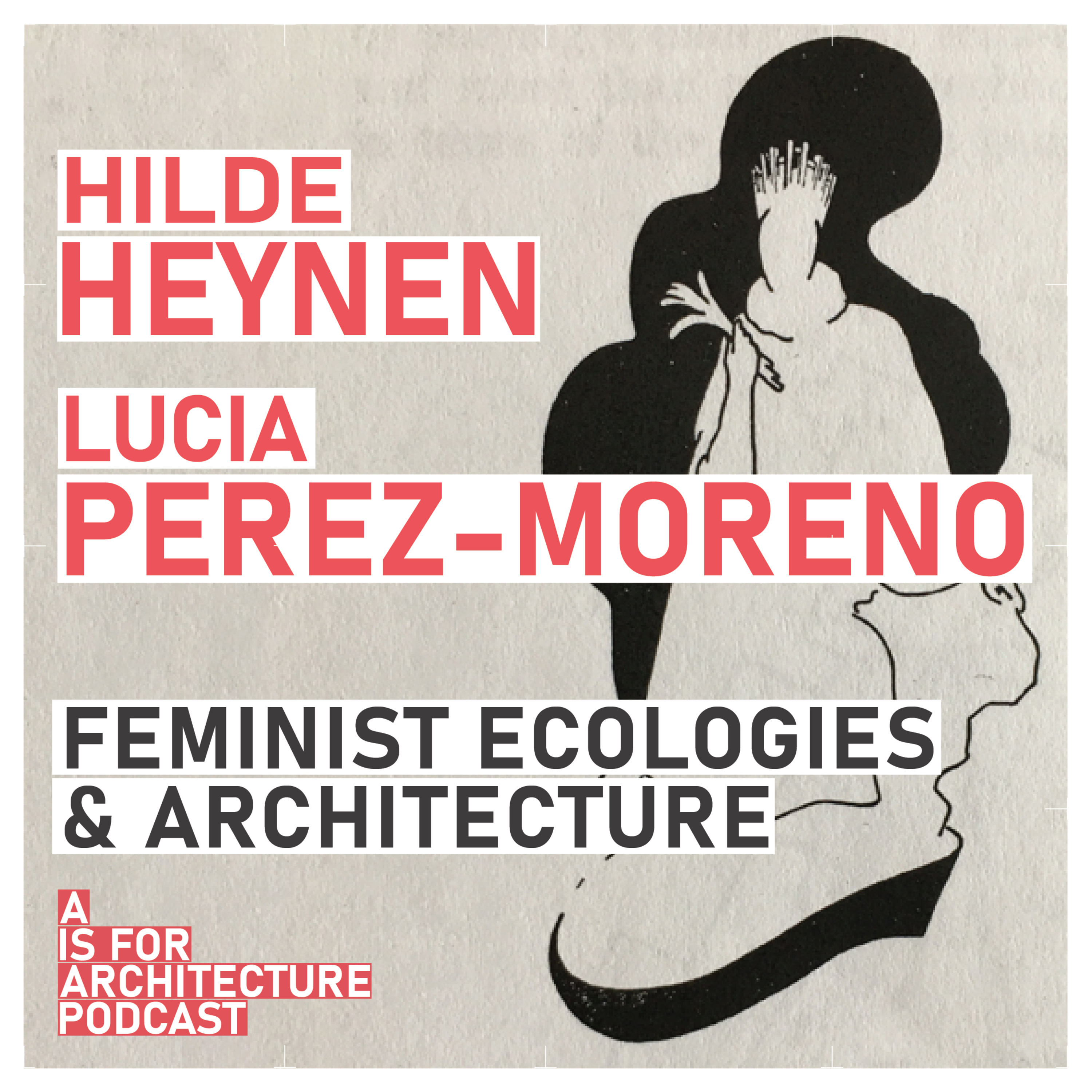
Hilde Heynen & Lucía Pérez-Moreno: Feminist ecologies and architecture.
Apr 3001:09:40Tap to summarizeIf one were to be the sort of inelegant person to point such things out, one might point out that despite all the egalitarian rhetoric, we still live in an architectural culture that cultivates dominance, not in the sense of dominion as rooted in domus, home, but in the dual senses of control and territory. The star architects we are assured we must look to, the big, bold, challenging buildings they erect, condition folk to see a casual way of acting act relative to ecologies, economies, cultures and justice as normative, ideal, something to believe in.In this episode of the A is for Architecture Podcast, I spoke to Professor Hilde Heynen professor of architectural theory at the Katholieke Universiteit Leuven, and Professor Lucia Pérez-Moreno, Professor of History and Theory of Architecture at the University of Zaragoza in Spain. Together, Hilde and Lucia have gathered together a number of Hilde’s most significant essays in a new book, Architecture & Feminist Critical Theory: Selected Writings by Hilde Heynen, published by Leuven University Press in 2025 and which tracks an evolving position, which emerges out of critical theory into feminist theory and latterly towards an environmental justice, but always proposing another way of seeing things in search of another path, one that is subtle, integrated, just and with just a little less man character energy.Hilde is on LinkedIn can be found at work, Lucia does do the socials and can be found on Instagram and on LinkedIn. The book is linked above.+Music credits: Bruno Gillick Image credit: Source: Sibyl Moholy-Nagy, Matrix of Man.
Transcribe →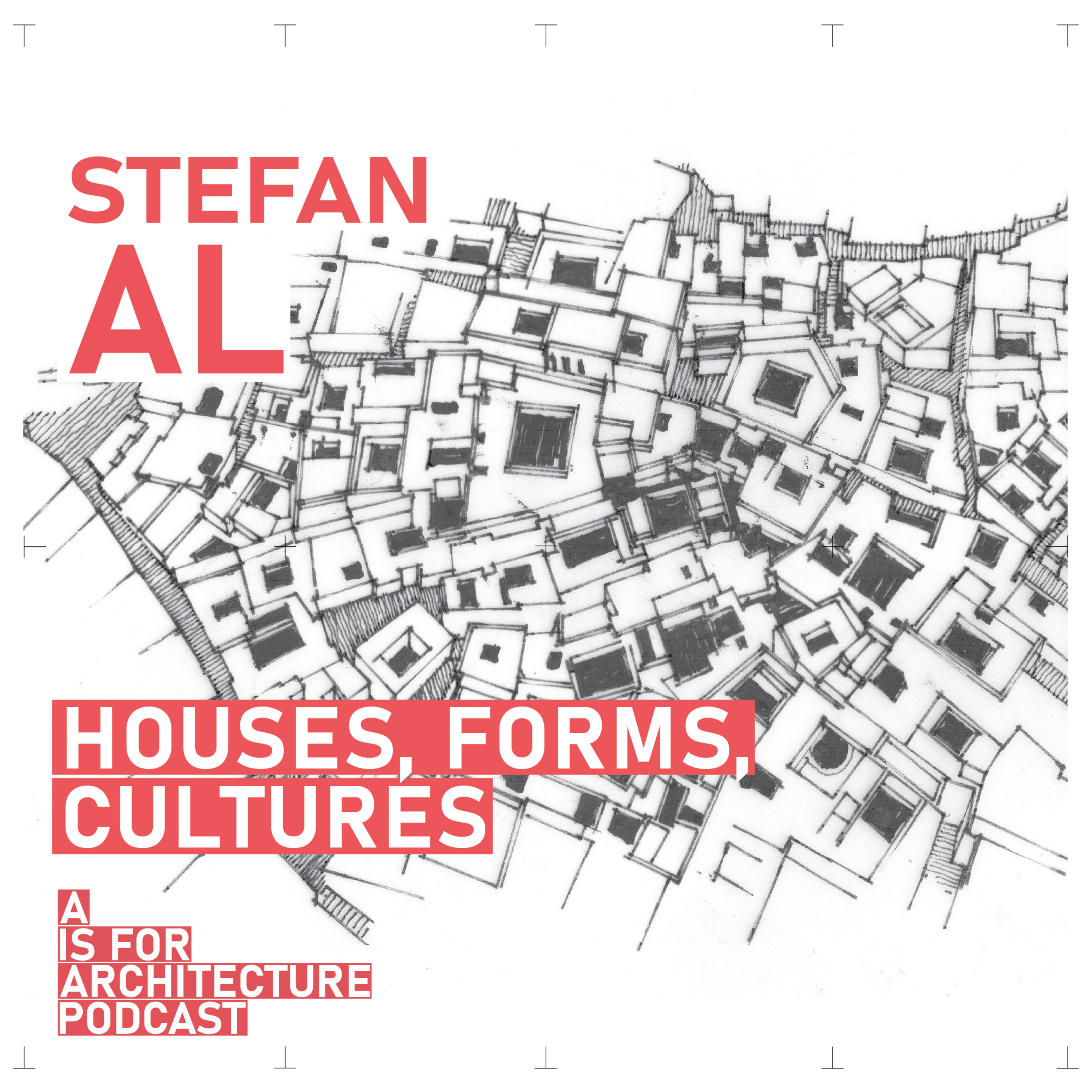
Stefan Al: Houses, forms, cultures.
Apr 2401:04:28Tap to summarizeDespite the fact that theorists probably live in one, homes are rather poorly theorized. Why is this so? Perhaps it is the ascent of the domestic in capitalist bourgeois culture – the world within a world – that makes them the seat of late modernity’s subjective turn which, in its turn, made home personal, and therefore ungeneralisable. Who knows.What I do know is that architect, writer and associate professor in the Department of Urban Policy and Planning at Hunter College, New York, Stefan Al has written a new book on them, Dwelling on Earth: The Past and Future of the Places We Call Home, published with W. W. Norton but nine days ago on April 14th 2026, and which makes for the subject of this newest episode of the A is for Architecture Podcast. Dwelling on Earth is a good book beautifully illustrated by David M. Dugas spanning two million years, from the caves and huts of our forebears to high-rises to 3D-printed houses of… tomorrow? Structured around the four major transformations that we use to describe human history - agriculture, urbanity, industry and now, sustainability, the book poses another meta question, one architects and writers have reflected upon more than somewhat: What is it to dwell? And, to be precise, is a home different to a house? Stefan can be found at work here, on his own website here and on Instagram and LinkedIn. The book is linked above.+Music credits: Bruno Gillick Image credits: Main: Marrakech, ©David M. Dugas. #ArchitecturePodcast #DwellingOnEarth #ArchitectureOfHome #ArchitecturalTheory #FutureOfHousing
Transcribe →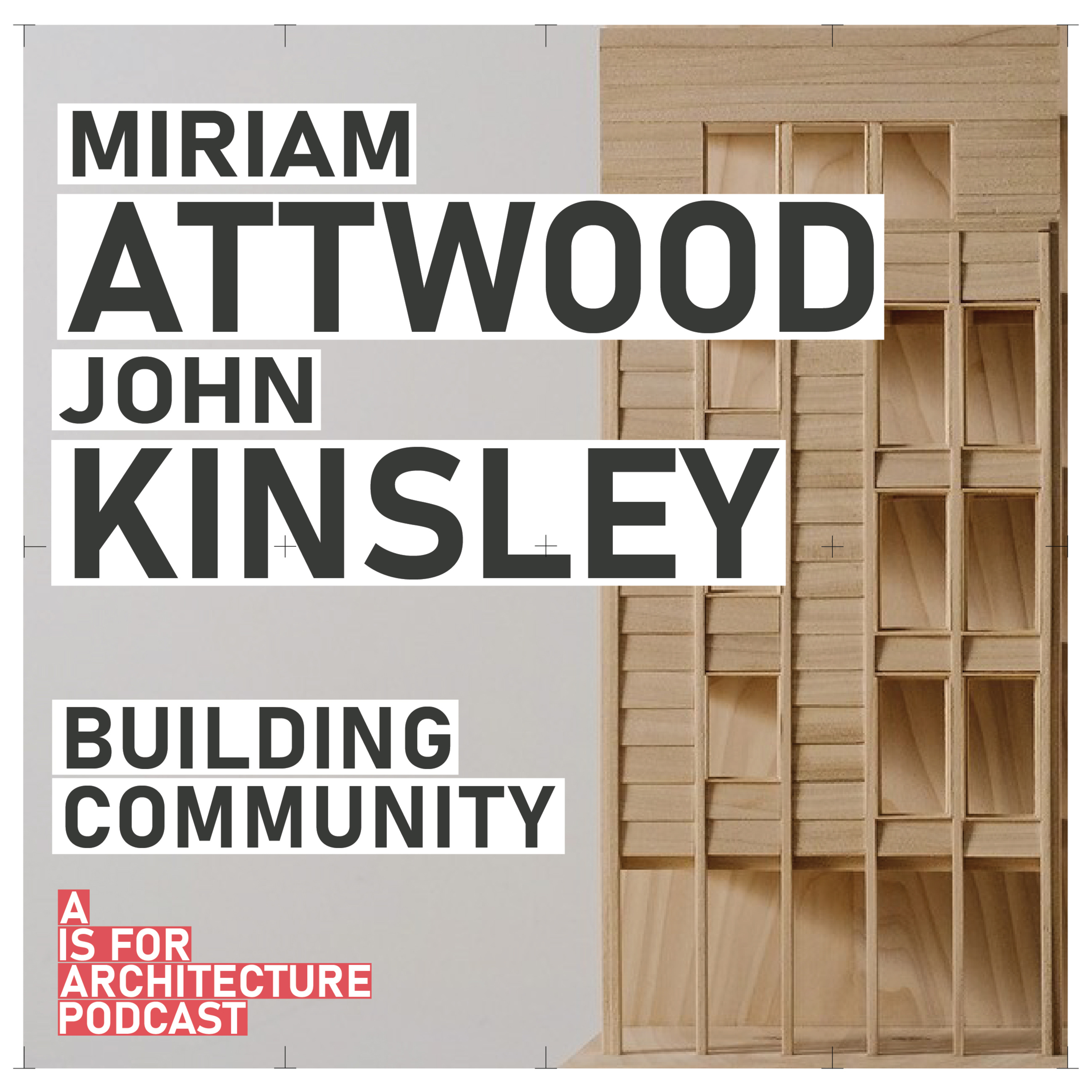
Miriam Attwood & John Kinsley: Building community.
Apr 1600:56:51Tap to summarizeNine out of ten architectural practices in Europe are involved in designing private housing, according to the Architects Council of Europe, with the work generating 54% of the average practice’s turnover. But according to RIBA, in 2018 in the UK only 6% of housing was designed by architects. So housing is incredibly important to the economy of a profession which is very marginal to the production of housing in general. How did we get here?In this episode of the A is for Architecture Podcast I spoke to an architect and their client, or a client and their architect, about a project which perhaps illustrates another way of doing things. Working together, architect and Lecturer in Architecture Technology at Newcastle University, John Kinsley, and client (and Director at StorytellingPR) Miriam Attwood discuss their scheme for a collective custom build home in Leith, Scotland. It’s a good story well told of another image of housing, one which adopts a typology, form, material and technology - and a process of design – design-as-relationship - which positions the house in service to the community it is for, and preferences home making above money makers. As the Bruderhof like to say, another life is possible.John can be found on John Kinsley Architects’ website and on LinkedIn. Miriam can be found there too and at StorytellingPR.Music credits: Bruno Gillick Image credits: Main: Model of collective custom build, Leith © John Kinsley Architects. #ArchitecturePodcast #HousingDesign #CustomBuild #CollectiveHousing #waltersegal
Transcribe →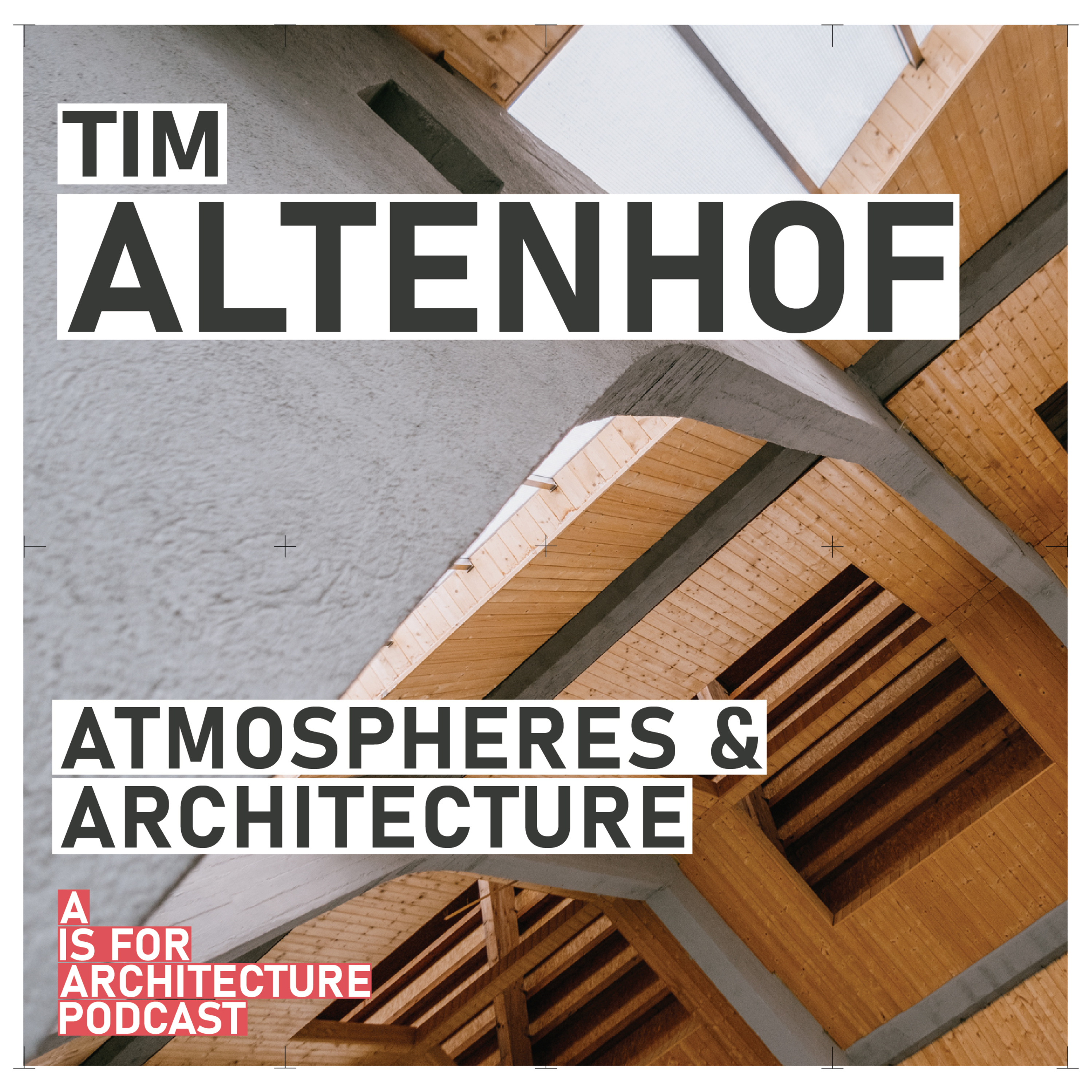
Tim Altenhof: Atmospheres and architecture.
Apr 901:06:06Tap to summarizeClose study of singular aspects of building culture remains the mainstay of good architectural scholarship. Through detail, universals can be revealed. This is the case with Tim Altenhof’s Breathing Space: The Architecture of Pneumatic Beings, published by Zone Books in March this year (distributed by Princeton University Press), the subject of the latest A is for Architecture Podcast episode. Breathing Space is an elegant exploration of the role of breath – breathing – in the development of buildings, and the way consciousness of the human lung has shaped architectural design, not least in the emergence of analogies between buildings and bodies. Our discussion of a little of Tim’s book focuses on the concept of ‘respiratory modernism’, examining how architecture engaged with the body, air and atmosphere in response to wider social, scientific and political concerns around health and the modern city. How were these ideas communicated to the public? And how does this thinking around breathing, bodies, environment and habitation come to us now, in this age of ultramodernism?Tim is Tim Altenhof is an architect and senior scientist at the University of Innsbruck. He can be found at work, on his own website and on Instagram. The book is linked above.+Music credits: Bruno Gillick Image credits: Main: Luckenwalde Dye Works © Tim Altenhof (2023), Author photo: © Bengt Stiller. #ArchitecturePodcast #BreathingSpaceArchitecture #RespiratoryModernism #ArchitectureAndHealth #ArchitecturalTheory
Transcribe →
Ed Wall: Architecture & war.
Mar 2600:44:24Tap to summarizeWith warfare seemingly creeping up on us – because governments keep starting them – it seemed like a good idea to speak to Ed Wall, Professor of Cities and Landscapes at the University of Greenwich, about his book Architecture for Warfare: How Corporations Profit from Destruction and Reconstruction, published by Jovis in December last year.It’s difficult to know what to say about this, beyond what Professor Wall describes in the book: there is a seam of architectural practice which makes the infrastructure of war and reconstruction, and makes a good deal of good business whilst doing it. Isn’t it better, one might ask, that architects, with their designerly imaginations, their theories and lovely drafting skills, and their spatial-technical and ecological competencies, are involved in this sort of stuff? At least then it’ll have passive ventilation.Jeremy Bentham – not an architect – drew the panopticon in the Eighteenth Century and in so doing arguably more-or-less defined the modernist city. The great Alfred - Waterhouse designed Strangeways in the 19th, and that’s pretty lit. Then there was Speer, of course, in the Twentieth. So the connection isn’t new. It still feels odd, though, as Ed explains…Ed can be found at work, on Instagram and LinkedIn. The book is linked above.+Music credits: Bruno Gillick #ArchitectureForWarfare #DesignEthics #UrbanReconstruction
Transcribe →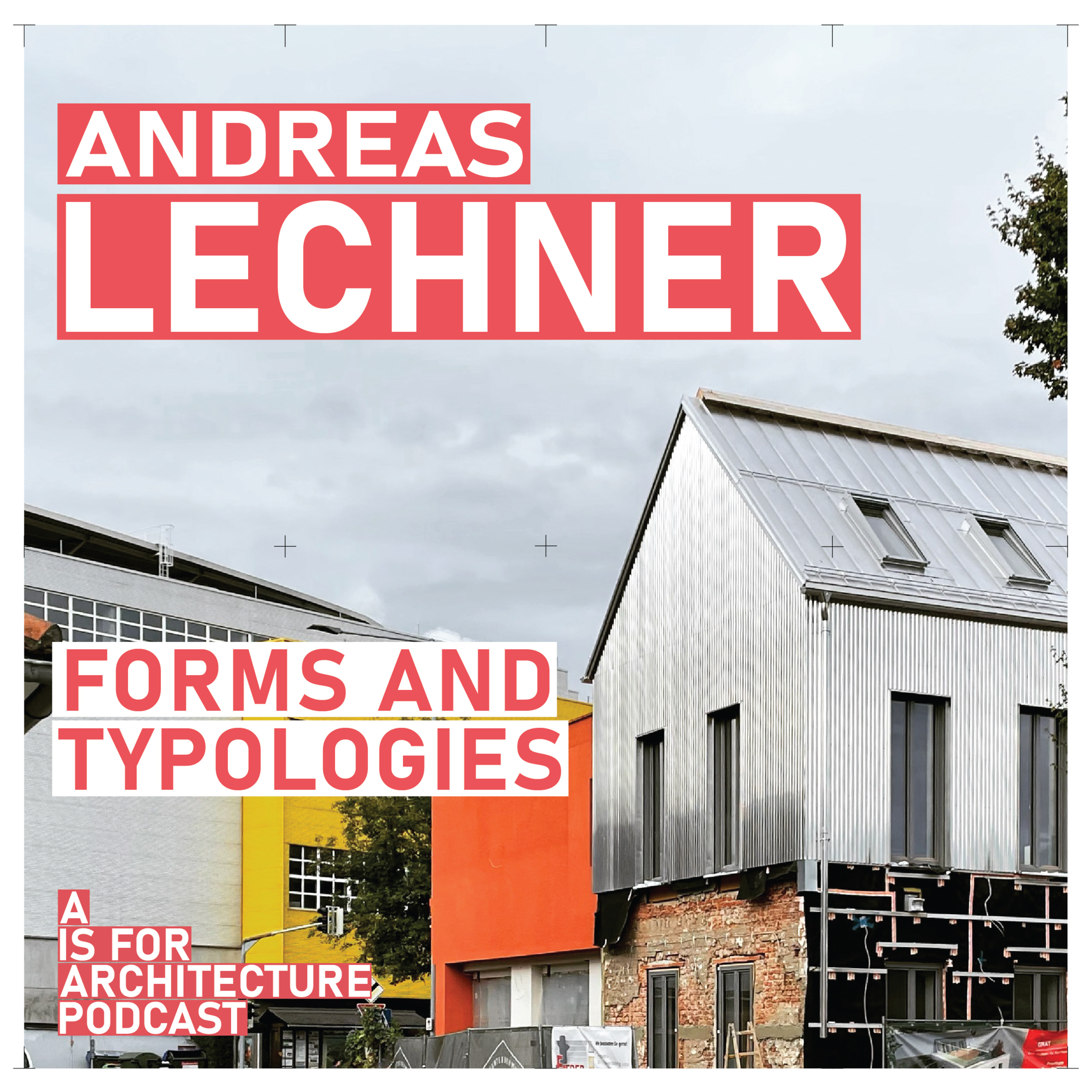
Andreas Lechner: Forms and typologies.
Mar 1900:57:41Tap to summarizeIn Episode 194 of the A is for Architecture Podcast, architect and writer and Andreas Lechner, Associate Professor of Design and Building Theory at TU Graz in Austria and founder of Studio Andreas Lechner, also based in Graz. We connected off the back of my previous conversation with Hans van der Heijden – with whom he had spoken on Drawing Matters last summer.Specifically, Andreas and I spoke about his book, Thinking Design: Blueprint for an Architecture of Typology (Park Books 2021), a book which combines theoretical reflection on architectural teaching with an illustrated visual atlas of 144 projects – all drawn orthographically and with no photographs – which serves as invitation to explore architectural design through the lens of typology – somewhat maligned in an age of humanised fun, grandiosity, pomp and intellectual frilliness - arguing as I read it for something a bit more normal - the primacy of form as the core of the discipline.Andreas’s practice can be found here, and he is on LinkedIn and Instagram. His conversation with the super Hans on Drawing Matters is here. The book is linked above. +Music credits: Bruno Gillick Image credits: 1: © Andreas Lechner, 2: © Andreas Lechner, Park Books, 3 © TU Graz. #ArchitecturalTypology #ThinkingDesign #ArchitecturePodcast #BuildingTypology #AndreasLechner
Transcribe →
Rob Fiehn: London’s futures
Jan 3, 2024Tap to summarizeEpisode 17/3 of A is for Architecture, is a conversation with Rob Fiehn, writer, communications consultant, Director of the London Society and Chair of the Museum of Architecture, about the London Society’s 2023 London of the Future book, a collection of essays by experts from various disciplines – ‘engineering, urbanism, architecture, manufacturing, futurology, journalism and more’ – speculating on ‘how the metropolis might be governed, organized and designed in the years to come.’ London of the Future is a plush publication, as you would expect, full of smart ideas and lovely images. It follows 102 years on from the London Society’s original publication of the same name when, ‘under the editorship of the architect Sir Aston Webb [it] published a collection of essays […] some rather more futuristic than others.’ (Gilbert, D. (2004). London of the Future: The Metropolis Reimagined after the Great War. Journal of British Studies). 2023’s edition is futuristic indeed, but not sci-fi. There are ideas that, without too much effort - or perhaps not any effort at all - may well come to pass. You can find the book on Merrell’s website here, and on the London Society website here. Rob professional alter ego is here, and he is on X here, LinkedIn here and Instagram too. Available on Spotify, iTunes, Google Podcasts and Amazon Music. Thanks for listening. + + + + + + + + + + + + + + + Music credits: Bruno Gillick + + + + + + + + + + + + + + + aisforarchitecture.org Apple: podcasts.apple.com Spotify: open.spotify.com Google: podcasts.google.com Amazon: music.amazon.co.uk YouTube: youtube/channel
Transcribe →