← AdExchanger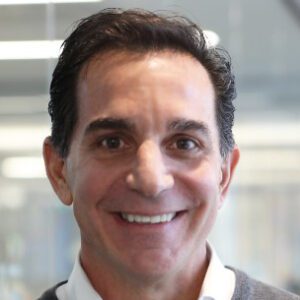
AdExchanger
Bob Lord Is A Holdco Skeptic
00:52:08
As the newly appointed president of Horizon Media Holdings, Bob Lord is dubious that megamergers between holding companies are actually good for the client. “Bigger is not always better,” Lord says.
Loading summary
Transcript80 lines
- [00:00]
Bob Lord
Foreign welcome to Ad Exchanger Talks, the podcast devoted to examining the issues and.
- [00:17]
Allison Schiff
Trends in advertising and marketing technology that matter most to you.
- [00:32]
Bob Lord
Foreign.
- [00:37]
I'm Allison Schiff and you're listening to good old Ad Exchanger Talks, the podcast where we talk about ad exchangery things. My guest this week is Bob Lord, Newly the president of Horizon Media holdings, which he joined in January after nearly eight years at IBM. But this is a return to agency land for Bob before IBM and a stint as the president of aol. At the time it sold to Verizon no less, he was the global CEO CEO of Publicis owned Razorfish, but he's no longer all that enamored of the Holdco model. In his own words, bigger is not always better. Looking at you, Omnicom and IPG, we'll talk about Horizon Media's M&A plans, principle based buying, how to measure what really matters, and lots more good stuff. But before we get started, give me a quick moment to tell you about our next conference and invite you to snag your ticket now. Programmatic I o Innovate will take place May 19th through the 21st in sunny Las Vegas. We've been putting together a great lineup for you. Everything you need to know about measurement, incrementality, how AI is changing your business. And that's just a taste. Hear from marketers including Asics, Headspace, kenview, and all of the media platforms you know, love and work with. We're also going to record a live episode of the Big Story, so good times. Visit our website to learn more and reserve your spot. Podcast listeners get 10% off as a thank you for listening. Use code POD10 to get your discount.
- [02:11]
Allison Schiff
Hey Bob, welcome to the podcast.
- [02:14]
Bob Lord
Thank you for having me here, Alison.
- [02:17]
Allison Schiff
So I like to start these podcasts out by asking for one thing about my guest. Kind of like fun fact style that not a lot of other people already know and that isn't easily find outable by looking at the person's LinkedIn or just doing a light Google search. But I was looking like deep back into your LinkedIn before our conversation in preparation for this chat and I saw that the first thing is that you were a shift supervisor and industrial engineer at GM in 1983 in Lockport, New York. The Harrison Radiator Division where you designed, developed and produced automotive radiators and air conditioning units. That is an interesting origin story. And how did you find yourself there?
- [03:01]
Bob Lord
Oh, you know. So I was an engineer at Syracuse University and they had a co op program which is now people will Call it an internship program. And I had the opportunity to go and work for General Motors over the summer. And I was 20 years old and I became a shift supervisor at the Harrison radiator plant in Lockport, New York, as you said. And we were making air conditioners and radiator cores. There were people on that factory line that worked there longer than I had been alive. It was such an experience. Sadly, the shift supervisor that I was working with had a massive heart attack and was out the entire summer. So I became the shift supervisor at 5am in the morning. And it was an amazing experience for me at 20 years old, but yes. I can't believe you dug that up. That's fantastic.
- [03:55]
Allison Schiff
I'm just imagining you the 5am bell with a lunch pail. You know, classic.
- [04:01]
Bob Lord
I was really that green. The green. I was so green behind the ears. It was so funny. So remember, it would be unions, right? The unions are really, really strong in the uaw. And I remember being there for about a week and the union boss came over to me and asked me to sign a whole bunch of papers. And of course I just did. I trusted everyone, had no idea. Allison. The next day I come in and the entire factory has brand new work boots. I'd signed an order to give 200 people work boots for the shift. So very quickly I got pulled up into the plant manager office. So, you know, you learn sometimes by hard knocks here not to necessarily trust everyone, but there were big lessons there for me.
- [04:42]
Allison Schiff
So that's a wonderful segue because I was going to ask you how you found yourself in agency land like capital, A capital L, and what you might have Learned from your 5am lunch pail experience that you brought with you. But yeah, what attracted you to the agency world? You know, before AOL and then IBM, you were. You were at Razorfish, owned by Publicis for over a decade. Eventually you were global CEO and CEO of Vivici, the Publicis Group's trading desk. But yeah, what, what brought you there?
- [05:17]
Bob Lord
So, you know, I was an engineer. I, as I, as I said, sort of, I was a technologist and engineers where I was installing factory robots. After I graduated college and at a certain point in my career, I decided I want to go back. I went back to business school and through that journey I realized that I wanted to run a business. And I had an opportunity to run a P and L for one of my clients. And I ended up landing a job at Razorfish when it was just start. Just had started in 1999 and it gave me this world where the promise of intersecting with marketing, media and technology, where technology was going to change the way that we did marketing, it was an unbelievable sort of great mission that we were on. The reality was, though, back in 1999 into 2000s, the technology wasn't there to really, really innovate and change the way that we do media planning and marketing. So I was there, took that journey for a very long time, which articulated through Microsoft, through Publisys, running Razorfish, becoming the global CEO of Razorfish. And I went over to AOL in 2009 and I helped Tim Armstrong build our first programmatic platform called AOL one. And it was sort of the seed for me to really see how technology could really help amp up our media buying processes. Technology was starting to get there. Cloud computing was there. Analytics was there in a way that it wasn't before. And through that journey, we sold the company to Verizon. And I ended up taking a job over at IBM as a Chief Digital Officer. And this is really interesting because I was there for about a decade and what it did by me being at IBM was it sort of put me deeper into technology, learning about quantum computing, about large language models. And then I re emerged out of IBM and I now has taken a job here as president of Horizon Media holdings with Bill Koenigsberg and really excited about it because the promise that I went to Razorfish with, of figuring out how you lead with technology data and how you create tools for the marketer is here. It's just like I think we are at this moment where we are transforming the craft of marketing and media before our eyes. So I can't be more excited. So for me, it's been a technology journey, not necessarily a marketing and media journey, but always with this promise of technology and the renovation that technology will bring to this industry.
- [07:54]
Allison Schiff
So you learned from your first job to read everything and you steeped yourself in technology, which now prepares you for a return to the agency world.
- [08:06]
Bob Lord
Yes. And the interesting thing about technology and sort of as you and I have talked about, the pace of change that's happening is coming in as a second mover or even a third mover around this technology actually gives you a competitive advantage versus the people that have been in the industry for a long time. So the perspective I bring now to Horizon Media after being at a decade at a company like IBM, is that using technology to transform a business and providing clients with increased value is right before us. It's about the industry actually moving faster and utilizing the technology in a way that doesn't build a tool necessarily to make an agency faster or make an ad tech company grow faster, but that we build tools that make the marketer's job more effective and more efficient.
- [09:04]
Allison Schiff
Well, let's unpack that a little bit. You have experience at the holding company level. Publicis owned Razorfish, but I know, and you've just only teased them there, that you have strong opinions about how the holding companies operate. So first, just to set the scene, what do you think of the Omnicom IPG mega merger and don't feel any need to hold back.
- [09:31]
Bob Lord
Yeah, look, I, I'm from the, the premise that bigger is not always better. And I, I believe that it'll be an opportunity for agencies that are the size of Horizon Media because the brands want choice. They want to be able to look at a company and a media buyer and an agency that can provide them with different opportunities. So more consolidation in the industry, yes, is an opportunity for the agency that's being consolidated from an efficiency standpoint, but it doesn't necessarily give a brand more choice. And I think choice in any kind of industry, whether it's technology or whether it's pharmaceutical or whatever industry you want to pick, more choice is better on behalf of the brand. More partnerships are available on behalf of the brand when you have more choice.
- [10:34]
Allison Schiff
Well, make that real for me. What would be an example of that better way that you've just described more choice in practice?
- [10:41]
Bob Lord
Yeah, so I own a car company, you know, and I want to advertise it. Ford versus GM or Coke versus Pepsi. You don't necessarily. Your competitive advantage is how you go to market, how you actually do placements, how you strategize around what your media plan is about. You don't want a generic plan. You want a partner that's going to figure out how you're going to outmaneuver your competition. So, you know, you want choices so that you can actually evaluate who's going to be your partner in what I believe is becoming a more and more important piece of your strategy. Because not only are you hiring media companies, but you're hiring media companies that are steeped in technology and data and insight that actually gives you information around your customer that you may have not had before, which allows you as a brand to create an unbelievable value value proposition with your customers in ways you weren't able to do before. So the strategic nature of who you partner with right now, I honestly wouldn't want to partner with an agency where my competitor is partnered with that same agency.
- [11:51]
Allison Schiff
Right and then you do end up, and you, you've said this in the past with a situation where like a large agency is focused more on, on themselves than the needs of their clients.
- [12:03]
Bob Lord
Yeah. When you become, when you become a very large organization, you know they're in a public organization, you're held to figuring out how you're going to make things happen more effectively and more cost effectively to drive your bottom line. And I believe some of the investments that some of the whole codes have made in the past, whether it's data companies or whether it's platform companies, they are saddled with those investments that they have to get a return on. So are you really offering to your customer the most modern data strategies and the most modern I would so platform or AI strategies to allow them to get their job done most effectively? I would probably say no. I would say I'd want to partner with a, with a company that is employing new data strategies and that takes the best of breed tools around AI and brings them to you as a marketer. So you as you can have self service control over how your media plan is, what, how your audience is created, how it's deployed and oh my gosh, how the reporting works.
- [13:09]
Allison Schiff
What do you think of the massive acquisitions that were made in the past by the big holding companies that bought like Identity Tech and Data tech? Specifically IPG spent $2 billion on Axiom which was in 2018 and then Publicis spent like more than double that, 4.4 billion to buy Epsilon the following year in 2019. So yeah, I mean have they delivered on their promise in public case? It does seem like the answer may be yes.
- [13:43]
Bob Lord
Yes. Yeah, look I, look I think they were, you know, those companies have always sort of led the industry in general. Right. And they've always sort of made the media business. If you go back to decades ago where PYS is buying up agencies and consolidating agencies, I mean they made the market for us. Right. So I believe what they bought was very, very novel at the time and needed at the time. And to your point, publicist has shown that they've been able to perform at a very high level to get a return on the investments that they've made. The challenge with some of those investments today though, given that we are now in sort of the next evolution of technology or we have much more accessibility to cloud computing, data strategies and or AI tools and technologies, the cost to enter is a lot lower than it used to be. So not only do the holding companies have to monetize on the investments they've made. But it's going to be a very difficult process for them to actually transform, which I call sort of data, data debt and tech debt, to transform those models into the new modern tools that I believe our marketers demand. Remember, Alison, like a lot of the CMOs that are out there today and the media planners who are running, you know, these very large brands come from a data background, now come from a technology background. So the demands that they have are a lot greater than they used to be. And they're looking for the ChatGPT like ability of interfacing with their, their platforms in ways that I think some of these, I know some of these holding companies can't deliver on compliment to all of them for doing those investments, you know, five, 10 years ago. But I think it could potentially hold them back now from doing the right thing for on behalf of those cmo.
- [15:38]
Allison Schiff
Right. Well, you're in a position, like you said, of having to justify the investment. And when there's a question of what tool to use, it's like, hey guys, what about this thing? This thing we spent billions of dollars on, let's use that.
- [15:51]
Bob Lord
That's exactly right. And their motivation is to continue to use those tools unless the customer, which is where we go back to, right? Unless the CMO demands that they want something different. They want reporting to be done in a timely manner, meaning in a day, not in two weeks. They want to know whether or not their campaign has launched and it's running. And you know what, they don't want to pick up the phone. They want to log onto a platform and query those kinds of things. And that's what I mean by giving the marketer and the media planner the tools at their disposal so they can help in real time manage the message and the communication to their, to their consumer.
- [16:29]
Allison Schiff
And there are increasingly more and more CMOs and marketing leaders with data and tech backgrounds who know to ask the question. You very recently spoke at an ad exchanger conference called CTV Connect. We co host it with Admonster, Synopsys and chief marketer. You were on stage with Delu Jackson, the chief marketing and communications officer at adt, the home alarm company. And for our listeners, if they don't know, Horizon Media is ADT's media agency of record. And we were, all, the three of us were chatting backstage and you mentioned that like we as an industry have gotten a little too far away from the hero goal. Like people forget that the reason this industry exists is to sell toilet paper and get home alarms installed or sell Whatever the product is. So I guess two questions. One, how did we lose our way? And two, how do we find our way back? Is it about just measuring different things?
- [17:30]
Bob Lord
Yeah. So I do think, I think we lost our way because we wanted to prove out the value of marketing. So we started to measure marketing qualified leads. We started to measure impressions because we really couldn't. The technology wouldn't allow us to really tie it back to the hero goals, or the goals, I would call them sort of the business goals as you and I talked about. And ADT is really, really interesting because they do have a hero goal. And the hero goal is installed alarm systems. Like that's the hero goal. And we've been able to work with ADT where we actually talk about the media buying and what we're doing in media buying and tie it to those hero goals. So if we shift from linear TV to CTV and we make a shift over a period of time, how did it help to increase? Number one, the number of installs, this security alarm installs. And those are really, that's how you become a very deep partner with somebody like an adt. And I think that's where we have to go as an industry. It's no longer good to just know that I got 1,000 downloads and I got 2,500 marketing qualified leads from this website. That doesn't mean anything to the cfo. And the good news, when you have a customer like ADT who lines up really well with the cfo, you end up getting more marketing and media dollars because you show the proof point. You show that return on the media spend is directly related to driving business results.
- [19:08]
Allison Schiff
Well, with custom metrics like ADTs, they call it marketing cost per installation with those kinds of metrics in mind, which track something important and very specific and tangible, like for a brand. In ADD's case, it's that installation. What should brands not be tracking? Like, are there certain vanity metrics that need to finally be relocated to the dust heap of history? And should every brand have a bespoke metric like marketing cost per installation, but whatever happens to make sense for what they're doing?
- [19:45]
Bob Lord
Yeah. So number one, I do think that the hero goal is really important. So whether it's the number of cars I've sold at the dealership, the number of qualified leads I've given over, I do think that the metrics, the marketing metrics are important because they're process metrics. It can help you sort of identify the customer journey, look at the customer journey. But they're Process metrics, they can't stand on their own. They still have to tie to these hero goals. So I don't think I would argue that we eliminate anything. I think it's a matter of how they're, how you claim success. You don't claim success when you're talking about impression level data, how many impressions I made. You claim success when you know that your retail sales went up and the number of shirts that were on promotion sold out that week. Like, those are the kinds of things you just need to, you need to tie it back to sales, which is ultimately impacting the business. And again, Allison, this is where you pivot as an agency. This is where you become a partner to the customer, where you share in their success.
- [20:53]
Allison Schiff
I mean, it's been something people have talked about for a long time, charging on outcomes. And I think there's some reticence to really embracing that among some because it's harder to do.
- [21:05]
Bob Lord
But I believe we're at a moment now where you see how approachable technology is. And if you actually plumb the systems consistently and you tie in, which you can now tie into SAP systems and Salesforce systems. Right. Ubiquitously. If you, if you can tie into sort of those elements, you can actually then start to change the metrics and you start hearing that, right? You start hearing even from the brand safety companies like an IAS or DB that they're talking about quality metrics, not necessarily just reach metrics anymore. And I think that that is a big difference that I hope in the next 18 months that we'll get to a full performance based sort of funnel with a lot of our clients.
- [21:49]
Allison Schiff
All right, well, your lips to God's ears. And we're going to take a quick break. When we're back, we're going to talk about Horizon's M and A plans and lots of other good stuff, including a dive into Horizon's data platform called Blue. So stick with. All right, we're back and we'll get right back into it. So I was reading a piece by Lara O'Reilly at Business Insider. It was back in January and Bill Konigsberg, who you already mentioned, Horizon CEO, he said something along the lines of Horizon Media is like a 35 year old startup now. And I was wondering if you could expand on that. Like, what does that mean exactly?
- [22:57]
Bob Lord
Yeah, no, I think, look, Bill, you know, he's run this organization for a very long time. And I think the spirit that Bill operates Horizon is that it is an entrepreneurial organization. And you see evidence of that all over, you know, ideas pop up. People have the ability of innovating in those ideas, proving them right, and then scaling them through the organization. Part of my job as president is not only oversee the agencies, but also oversee the affiliate groups. And that's Blue Hour Studio, which is our social influencer platform. FirstTube, which is sort of our live platform, live video platform, our newly launched one, Horizon, which is our creative platform. And then Night Market, which is around retail media. And Bill sort of like has planted these seeds through the organization. And I think it's all on the spirit. When he talks about a startup, it's almost like, try something. If it doesn't work, fail fast and fail forward. Right? It's about iterating. It's about iterating on the idea, it's about innovating, it's about bringing forward this idea that just because we've done something in the past doesn't mean in a way or process or tool that we have to do it that same way going forward. And evidence recently with what we just launched with the Blue platform at CES and what we've done there. So I think what he means is it's a spirit of entrepreneurship. It's a spirit of thinking about getting the best out of your people and allowing them to sort of explore.
- [24:38]
Allison Schiff
And we will talk about Blue in more detail in a bit, but it's about iterating. Innovating. Innovating. And also adding, because that's my little segue into Horizon's M and A plans. There's been a lot of prognostication that this is going to be a big year for agency M and A. And that was kicked off by Omnicom and IPG's thing. And Horizon hasn't been a big acquirer in the past. And just to recap for our listeners, there were two acquisitions, I believe in 2022 was a research firm called Revenue Enablement Institute and also First Tube Media, which is an experiential marketing agency. And then in 2023, Horizon acquired a sports marketing agency called Blake Sports Group. And just last month there was another acquisition right February. It was a company called Strategic, which is a sports, lifestyle and entertainment marketing agency. So there's clearly a sports theme here. But when it comes to M and A, why go big now? And what exactly are you looking for?
- [25:49]
Bob Lord
I think about the role that I've taken on as president. A big piece of this, which we'll talk about in a minute, is how we actually create the new age media and creative agency of the Future. And what Bill and I firmly believe is that you have to really lead with a platform and a data strategy and pull services along versus I think the models that have been in place, which has been you lead with a service organization and then you utilize tools when you need to. So I think It's a whole 180 degree change in our direction and where we're going and how we want to innovate. Now Bill has been using technology like the Blue idea has been around for decades, but actually how we launch a platform, how we launch a product that self service that the CMO can use or the media Planner can use directly is a very different prognosis. So if you give me any window, you know, into sort of my approach to this is when I was at aol, we bought six or seven different companies, pulled them together to create AOL One, which was our programmatic platform. What I envision happening here is that our M and A strategies and our business partnerships will be all about how do we build out this next generation media and creative platform on behalf of our Horizon clients. And you start to see that as we start to develop the media engine around Blue plus and its transformation engine.
- [27:18]
Allison Schiff
Do you feel like, do you feel like spilling a bean for us? I'm sure there's some tire kicking that's already begun and obviously you're not going to tell us the name of a company, but what are you kicking the tires on?
- [27:31]
Bob Lord
Yeah, no, Alison, it's a really, really interesting question. So we've had a lot of bankers in here talking to us about, you know, what's, what's out there, what's not out there. I think we're at a really interesting point. So obviously my desire here would be to just like I did at aol, look at sort of core technology companies that can help us not only in our data strategy, but also our media planning strategy as well as what do we do on the creative side of things, right? But as you sort of look at the companies that are out there and the evolution of what's happening right now for our technology, there seems to be, or at least my, my instinct right now is to just partner to buy, not necessarily go on any kind of acquisition kick because the technology is evolving so quickly and it's not clear who these winners will be. As we talked about earlier in the podcast, sometimes being the second or third actually makes you more competitive by waiting a the beta max sort of debate and VCR debate. Maybe I'm aging myself with that. Sometimes you want to be Second to the party versus being first to the party. So I do think there are some really, really interesting, I would say, creative companies out there that are using AI to execute at scale. I just think that there is not a model yet that makes them as attractive as I would like them to be. And then there's also a lot of companies that are sort of thinking about how you measure creative and how you tie that into media. So that sort of zone is actually interesting to me also. But I still think the jury's out on how we actually approach this. And it may be a crawl, walk, run kind of thing until I think we understand the implications that large language models are going to have on this industry. Now, the winners, remember, in programmatic, were the winners the programmatic platforms. The winners really were the people who own the data. Right? And they really created a moat around the data. I believe the same thing is here. It's not necessarily about the technology as much as what kind of unique data and audience insight do you bring to the platform that will make the media company and the agencies actually win in the long run?
- [29:56]
Allison Schiff
No, I, I would agree with that. And it does make sense to date before you get married. So.
- [30:03]
Bob Lord
And as soon as I know, I'll let you know. But it is a, It's a really interesting time because I think Unlike, you know, 2009, when we're thinking about AOL, there were established players in the market that had really big businesses. Now you have a lot of. Lot of startups going on or legacy companies that are positioning themselves as AI companies that have a lot of old tech that has to be renovated. So you're sort of in a very interesting space right now because you don't have any clear, clear winners yet. Which is an opportunity in my mind.
- [30:37]
Allison Schiff
Well, and as much M and A as you're planning and as aggressive as you plan to be, Horizon has also invested a lot in, in blue, its data platform spelled B, L, U, all lowercase. So what makes blue period, interesting? What would you say differentiates it from other data offerings at other agencies? And also, why is it spelled in lowercase like a William Carlos Williams poem?
- [31:10]
Bob Lord
Okay, well, first, first, let me, let me start with what I think the problem is, okay? Because I think that's a really important thing before we actually talk about the tool. I believe today that marketers are facing this overwhelming paradox, which is more data, more tools, more technology, yet they have this more complex, slower decisions and less clarity on how they're actually doing their marketing. So the problem isn't that the tools and the ideas aren't out there. It's just they're not. Most companies that are building these tools are not empowering the marketer to make decisions in real time to get to their consumers. So if you're a small business, you can probably do it on the back of an envelope. But when you sort of start to scale as a business and you want to reach consumers, it's a really difficult job. Now think about Alison, how we both do product discovery now. We don't automatically just go to Google search anymore. We may go to one of the AI engines, let's call it Reddit answers. We may go to Amazon to go discover a product. We may actually use Perplexity, which gives you an answer right versus any advertising in the middle. Although they're thinking of rolling out an advertising model. But the question as a marketer is like, how do you get your product in the consideration set when someone is using a very different consumer discovery process and that's only changed in the last, I don't know, six months for people to use tools in a very different way? So that's the problem. And Lou's mission is to help a marketer define its audience quickly, which, I mean like within 15 minutes, target a specific audience based on data and insights, roll out a media marketing plan, execute on that plan, and iterate on that plan in a timely fashion, meaning days, not weeks, not months, and actually measure the campaign and do it in a way where you can actually change that campaign and optimize that campaign across all media types, whether that's ctv, whether it's digital, whether it's influence, whether it's social media, whatever that may be that is. The mission of Blue is to help these marketers get through the data, get through the tools that they have, and actually get some insight so that they can make faster decisions and do it in a real time fashion.
- [33:52]
Allison Schiff
Period.
- [33:53]
Bob Lord
Yeah, I mean, okay, so let's, why don't we for once in this industry build tools where the marketer, we make the marketer job easier versus making it more complex. And let me tell you something else. And if I knew what I knew in 2009 and I thought the programmatic platform that I built in 2009 was going to harm and make the marketer job harder, I would have never done that. It's just how the, how the world has evolved. We have now have over $3 trillion going through digital programmatic pipes and the marketer doesn't really have a vision or an insight to how that stuff is performing. Until weeks later.
- [34:37]
Allison Schiff
It does feel like Programmatic was built like a house where you keep adding rooms and some of the doors don't lead to anything. And then we added a deck, but then we also added this janky thing on the side. It's a jewelry rigged by now.
- [34:55]
Bob Lord
Yeah, no, I think you're. I think you're right. And I think. You know what? I think the opportunity now is for us to really reset what we're doing as good agency partners. And I believe it is giving the media director and the CMO insight into how their dollars are being spent, where they're being spent, and create a conversation with their consumer. Just like you and I can go on Perplexity right now and basically create a conversation with, you know, that chatbot.
- [35:30]
Allison Schiff
I will say I. I'm surprised by my own experience how quickly I've transitioned from looking things up on Google to using Perplexity. Specifically, I used to Google, what's another word for xyz when I'm writing a story because I want to vary my language. And I've started doing that in Perplexity because I'll get like 7, 10, 12 different answers. Some of them are useless and some of them are useful and they trigger for me my next thought, and then I move on. So I'm not really using it to do research. I'm using it to kind of, sort of subtly help my writing process. But I did it once or twice and now I do it all the time, and it happened so quickly.
- [36:18]
Bob Lord
Actually, I've challenged everyone here at Horizon to use Perplexity for months and not go to Google search. And I do think it fundamentally changes your life because, number one, it gives you the answer. It tells you where the answer came from, which is part of a really important thing around AI. You have to know where the answer came from or how the decision was made. And then it gives you, oh, my God. There were five other people, Bob, that asked that question over the last month. These are the other three questions that they may have asked. Are you interested like it teaches you? It's just such a. It's such a helpful, helpful sort of process to go through. Imagine that in the media buying process, which is what blue does. It helps you build an audience. You have a conversation around who that audience is. You identify the data sources that you want to build that audience on. And oh, by the way, the tool comes back and it says, hey, had you thought about this? When you're building that audience, it's helping you, right? And then it helps you execute the plan and deliver the plan. So those are the kind of things that I think we have to. When I talk about modern sort of AI native first tools, this is the place we're at right now. And I am so excited because we've invested in technology here at Horizon, but we don't have that technology and data debt. So we can move really fast to deliver tools to our customers at lightning speeds. I mean, in six months. There is a big difference about what we offer now than what it was last January.
- [37:50]
Allison Schiff
Well, I'm going to take us back in time to November 2020. I interviewed you then. It was the height of the pandemic, which feels like another lifetime, honestly. You were still at IBM. You were SVP of cognitive applications and Blockchain I think was the title. And you were running IBM's $15 billion ecosystem business like a little Q and A thing that we did. Like three questions with Bob Lord. And I want to re. Ask. I want to re ask one of the questions that I asked you back then. So I asked you, how does IBM define AI? And your answer was, when we talk about AI, we mean augmenting human intelligence. We don't intend to replace decision making. We're allowing marketers or supply chain managers to make decisions faster by crunching data. And you also said that AI requires transparency into the model so people know about the decisions being made and also the specific data that the models are learning from. So that was just to refresh you. And I have a feeling your answer will be similar. But I'm going to re. Ask the question. But for your current context, how does Horizon Media define AI?
- [38:59]
Bob Lord
Yeah, I don't. You know what, look, I was schooled at IBM right around AI. So the answer I gave you back then is, is very similar to what I'll say now. But this is not about replacing human intelligence in the media marketing buying process. This is about making our marketers and our media planners smarter so they can actually ask real business questions. Like, you know, go back to adt, are we really driving, you know, security installs? Like those are the questions we should ask about. Not necessarily, you know, whether or not, you know, we've got the Excel spreadsheet right, and do all the columns line up and oh, by the way, do we reconcile the bill? Like those are, those are tasks that AI can help us do so that we can actually, really, really think about the insight and what's driving business. So again, I'm a firm believer in what I've experienced, whether it was in that supply chain Practice, practice, Sterling, that I, that I ran. We augmenting intelligence of human beings so that we can make better decisions and more and outmaneuver our competition. Because if you can make quicker decisions, you can actually then out compete your competition faster than anyone else. And like we said before, you having insight into your data better than anyone else does gives you a moat to compete against. Now in order for AI to be adopted, we go back to that transparency question about perplexity, right? It has to be explainable. You have to understand where the data came from and that's a responsibility that we have. So as we develop our blue tool, there are buttons and dialog box that you can have. So it will show you how the machine is making those decisions or what data sources are being used or how the large language model is being trained. Those are really, really important things. Because you as a marketer just don't want to accept an answer. You want to explore and go deeper to understand whether or not you agree with what the machine is doing. Because you know, you've heard of the hallucinations, they're real, they happen there in the world of AI. So you as a, as a human being and having the intelligence we have, we have to make sure that those answers and what's happening will work for our business. Very similar to the answer I had before, I guess.
- [41:25]
Allison Schiff
Well, it's good that you're consistent. I mean what would the answer be that would be different? Like no, AI is going to take over, become our overlords. Like no, that really is the right answer. AI should be explainable. We should understand what's happening. It should be a help meet and not a replacement. All of that stuff is, I mean it's oldie. It's an oldie but goodie.
- [41:46]
Bob Lord
Yeah. Well and the interesting thing is, I mean I think those answers and those consistency and those answers will really, really be important for leaders in any technology company to reinforce so that those are the principles that they build these tools by.
- [42:01]
Allison Schiff
So now I want to do if you're game like a pseudo lightning round, 20 or 30 second answers. It's cool.
- [42:10]
Bob Lord
Yeah, great, great.
- [42:12]
Allison Schiff
So you, you're an angel investor, you invested in firsthand recently which is the new AI agent startup being led by Jonathan Heller and Michael Rubenstein. Both double double click vets. But Jonathan also co founded Freewheel and Michael helped build app Nexus. So they are no slouches. But how do you decide what to invest in? Is it, are you looking for repeat entrepreneurs? What else is cool to you right now? Like what catches your attention, so you.
- [42:45]
Bob Lord
Know, it's so interesting is I teach a course at Harvard Business School now with Jeffrey Raidport. I'm an executive fellow and the course is about scaling technology ventures. And I only, I sort of was in it, sort of in the class, just helping Jeffrey with the course. But over the 35 cases that we go through, what you learn is the founders and sort of their experience of what they've done and what they've accomplished is one of the key things to success. So when I think about something like firsthand, I think about Michael and what he accomplished and what that team is currently pushing out. They're using modern technologies, they're exploring things, they're helping to solve at this point, publisher problems, not necessarily marketer problems, but they have a really, really key problem statement and they're using technology to deploy it around the problems that publishers have. So you look at the management team and you look at sort of the thesis of what someone is trying to solve versus building something and then trying to find a problem to fit it into. So it's a really, for me, based on what I've learned through that course curriculum, had really changed my view of where to invest and how to put money into different things. And I just like them too. And I really think they're on a mission to sort of help publishers do their jobs very differently.
- [44:18]
Allison Schiff
I will forgive you because that was a good answer, but this is a pseudo lightning round.
- [44:24]
Bob Lord
Sorry, sorry, you did say that. Okay, so lightning round, go.
- [44:29]
Allison Schiff
So you joined the board at Integral Ad Science over the summer. Why?
- [44:34]
Bob Lord
The CEO, Lisa, very talented individual in the midst of sort of transforming what that company does.
- [44:43]
Allison Schiff
You know the old saying, nobody ever got fired for buying IBM. What is the equivalent of that today? And I kind of feel like the answer has to be Meta and Google. And is that bad?
- [44:56]
Bob Lord
No. You know, I think the answer is no one's gotten fired for buying into the AI infrastructure. Companies like a Nvidia, like data centers, like. I think, I think the whole application layer is up for debate right now. And who's going to win that?
- [45:17]
Allison Schiff
Well, speaking of winning, how do you win pitches? Like, what convinces a brand these days? What's appealing when you go to pitch?
- [45:25]
Bob Lord
Well, number one, I think it's the people and the quality of people always in the agency land that's very important. But I think now it's much more important around the insight you bring around audiences and how you can partner with them, whether it's performance or non performance, to actually reach their, their goals. And their sales ambitions as a company.
- [45:47]
Allison Schiff
You will forgive me for using a cliche, but what. What's the top thing that keeps your clients up at night? Like, what gives them hives?
- [45:57]
Bob Lord
It's all the noise that's in the marketing and media pipeline right now. So if you're responsible for spending $400 million in media for a company, or even 100 million, 50 million, I think they're up at night because they don't know whether or not that media is effective or not. Then it goes back to that old adage of John Watermaker. I know marketing is successful for me, but I just don't know which half is actually having an impact. And I still think that keeps marketers up at night.
- [46:29]
Allison Schiff
Does Horizon Media do principle based buying?
- [46:33]
Bob Lord
Yes, we do principle based buying, but we do it in a way where we're completely transparent with our clients. So we don't do any principle based buying unless our clients agree to it.
- [46:43]
Allison Schiff
So it's not the root of all evil, as some would imply.
- [46:47]
Bob Lord
I think it's a, you know what, whatever value you can bring so that we can actually get a better return on media dollars is exactly what we're after at Horizon Media. So if principle based buying is something that the client wants us to pursue, we're going to go pursue that and we're going to do it in concert with them so they can actually get a better return on their media. It's that simple to me.
- [47:10]
Allison Schiff
Last question of the pseudo lightning round. Back in 2014, late 2014, right after you stepped down as president of AOL, we published one of our weekly Friday comics about it, basically wondering where you'd end up. So it was before you landed at IBM, and it was a drawing of you striding out of the AOL Verizon headquarters with a big smile on your face, being besieged by new job offers. And the caption was lord of what manner. We, like laughed a lot because we love wordplay.
- [47:42]
Bob Lord
Actually, someone framed that for me. Allison, thank you. Thank you for that.
- [47:46]
Allison Schiff
I was going to ask what it felt like to be immortalized in an ad exchanger comic.
- [47:51]
Bob Lord
Yeah, you know, it was actually just an ironic thing because I, you know, when you sort of do your daily job, you don't realize sort of the impact that you're having on an industry until after. And what it made me realize is as you mature in your career and you begin to get executive roles, you have bigger and bigger impacts, not only on a company, but also on industries and then on industries within society. And it actually Made me pause and understand sort of the privileged position that I was in and then was in after of how do I use those positions not only to drive company results and make employees happy, but how do you use them really to impact society and the benefit of me having to land at IBM? When you're 270,000 people in 260 countries, you really can have an impact on society. So it was an interesting moment for me because it gave me pause just to understand what people had seen me do, which I didn't think was anything remarkable.
- [49:03]
Allison Schiff
Well, all of that and thank you for having a surname that lends itself to wordplay.
- [49:09]
Bob Lord
Exactly, exactly.
- [49:12]
Allison Schiff
To close us out, I'd like to do my time machine question. So putting aside the paradox of time travel, if you could travel to one specific point in human history and make one strategic change that could alter the fate of the online advertising industry for the better, when would you travel to and what would you change?
- [49:36]
Bob Lord
It would have to be in the sort of the moment around 2009 when programmatic was becoming in fashion. I, I think we ushered in that level of technology not knowing what the implications would be long term, where we put a tool in place that distanced the marketer from their consumer in ways that I don't think it was intended to do. And I don't think anyone under understood the unintended consequences of that tool and the power of that tool. I'm not sure we built in, and I was one of those people. I'm not sure we built in the proper controls and safeguards to really, really protect the marketer and their relationship with their consumers. Because, you know, now, I mean, you know, people don't like getting ads that they're not entertained by or some people don't even want any ads at all. Right. And I do think that that that was, I think, a moment in time. I think that I would, I would reassess sort of what we were doing at that moment.
- [50:48]
Allison Schiff
I mean, it's a good answer and it's one of those things, right? I mean, like youth being wasted on the young and hindsight being 20 20. It's one of those very true cliches that if you could go back with today's knowledge and make a change, you, you would maybe do things differently. But, you know, here we are.
- [51:07]
Bob Lord
I know at the time. Well, the good news is, look, you know, I kind of like, I feel like I'm a, I'm going through rehab again, you know, of really, really making sure that what we're building is going to help the marketer, not hamper them. And I. And I feel as though I have that opportunity to do that today, which I'm very excited about. So hopefully we'll invite you in to see our demo at some point.
- [51:30]
Allison Schiff
Sure. And then we can make a comic about what's on the horizon for Horizon Media.
- [51:37]
Bob Lord
Oh, I love it. I love it.