Loading summary
Transcript85 lines
- [00:00]
Alison Schiff
Foreign.
- [00:13]
Ajit Mohan
Welcome to Ad Exchanger Talks, the podcast.
- [00:15]
Alison Schiff
Devoted to examining the issues and trends in advertising and marketing technology that matter most to you.
- [00:25]
Sarah Sluice
This podcast is brought to you by adstrated. Adstra's leading identity resolution network enables precise targeting, scalable activation, and richer customer understanding. Whether you're looking for person based accuracy or massive scale, only adstra has the transparency to give you both. Learn more@adstradata.com that's AD S T R A data.com.
- [00:56]
Alison Schiff
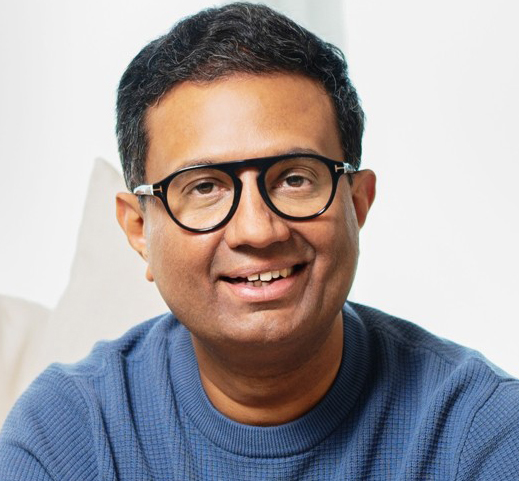
Foreign I'm Alison Schiff and you're listening to and perhaps also watching your talks. My guest this week is Ajit Mohan, the Chief Business Officer at Snap, where he oversees global advertising revenue, products and business operations. We'll talk about Snap's strategy to grow its ad business with a focus on performance and direct response. We'll get into the weeds on Maintaining and growing average revenue per user in lower monetizing markets will address misconceptions that some advertisers still have about snap, including that there aren't any olds using it. The platform has aged up quite a bit over the past decade and anyway, that's just a taste. You'll listen to the episode I don't have to give it all away. But first, before you do, please save the date for Convergent TV World. Taking place on March 5th and 6th at the Times center in New York City. Convergent TV World is the new name for our CTV Connect event. We'll bring together the worlds of linear TV streaming, CTV gaming, retail media and digital out of home to help you tackle the challenges of measurement, attribution and cross screen storytelling. Podcast listeners get 10% off the price of their ticket when they use the code POD10. So get your ticket and see you there. Ajit welcome to the podcast.
- [02:16]
Ajit Mohan
Alison. Thank you for having me. Great to be here.
- [02:20]
Alison Schiff
Tell me one thing about you that not a lot of other people already know about you.
- [02:26]
Ajit Mohan
I suspect. Alison, there's not a lot your viewers know about me anyway. But I will tell you something that I think even my wife doesn't know about me.
- [02:39]
Alison Schiff
Ooh, that's a really good lead in. I'm super curious.
- [02:42]
Ajit Mohan
We're getting into intense territory. She's a filmmaker and you know, music is a big part of a lot of her work and she's reasonably dismissive of my musical qualifications. But what she doesn't know is that between the ages of I think it was 6 and 16, I tried learning five different musical instrument instruments from the, you know, the guitar, the tabla, the harmonium, the drums, and ended up with the trumpet. And in each of these, you know, my music teacher or the tutor would, at some point, nine to 15 months into it, come and tell me you can't hack it. And, you know, it was a very different era where there was a lot of tolerance for being direct about where you stood on your performance and competence. And these days, you would call it resilience that I picked myself up and tried the next instrument. But this went on for a while before I realized that I was not cut for this, and I fully gave up. But I did spend a lot of my childhood chasing my mother's dreams. Alison. And learning a musical instrument was one of them.
- [04:03]
Alison Schiff
Well, I'm sure she's very proud because you've had a very interesting career. Non musical. I'm also not very musical. Although I love music, I can't play anything.
- [04:13]
Ajit Mohan
My mother tells me that she's still, you know, not. Not happy enough with what I do. Alison. But, you know, I'm sure this podcast is not for therapy.
- [04:22]
Alison Schiff
Well, I think you've had a lot of cool hops on your resume because you were the CEO of hotstar, which I think all of our readers know what that is, but if they don't, it's a massive streaming service in India. You were there for four years, 2015 to 2018, and then you left the year before Disney acquired Hotstar as part of the whole 21st Century Fox takeover. Now it's integrated with Disney in India, and I'm hoping you get grandfathered in for free. Hotstar, like for life, right?
- [04:50]
Ajit Mohan
It is interesting you mentioned that, because the day I left, the hotstar team gave me this Lifetime subscription, which I've been trying to redeem for the last seven years. You remind me about it. I should get. Go back to the team and figure out why that Lifetime subscription didn't work at all. But, you know, but obviously it was such a huge. It's a huge source of pride for me, I think. You know, we built this platform from scratch. This was 2014, 2015, and I think it's an interesting one. Alison. I think we succeeded in pioneering a streaming model that then was unusual, where the model combined TV shows, movies and live sports. And it was both ads and subscription.
- [05:38]
Alison Schiff
Which right now that's a very common thing. But it wasn't a foregone conclusion that would be a successful model.
- [05:44]
Ajit Mohan
That's right. And I think now it's kind of. Yeah, that. That makes sense. I mean, it makes sense to kind of bring all of what used to be on. On broadcast. Television. And of course, it makes sense to have multiple revenue streams, but I think we were one of the first to do it and on the platform scale. And, yeah, it was a very fun experience and a huge source of pride for me.
- [06:06]
Alison Schiff
Well, then from there, you were a VP and managing director at Meta in India, and now you're at Snap, you're based in New York, so. Hello, neighbor. Where are you in the city?
- [06:19]
Ajit Mohan
I live in soho, but this week I'm in Singapore. Alison.
- [06:26]
Alison Schiff
Oh, right.
- [06:28]
Ajit Mohan
Literally on the other side of the world. You and I are on opposite ends of the world.
- [06:32]
Alison Schiff
So you're ending your day and I have my morning coffee with me. But, yeah. So you. You came on board at SNAP 2023 as the President for Asia Pacific, based in Singapore, and then earlier this year, you became the chief Business officer of the. Of the whole shebang. So what would you say is the common thread between these transitions or, like, the motivation behind them?
- [06:56]
Ajit Mohan
Yeah, look, I think in many ways, you know, I joined Snap because I was inspired by the vision of the founders. You know, I met Evan back in 2022, and I really liked what the company stood for. A messaging or a communications platform that was created to really connect people who were already in each other's lives, close friends and family. And this idea of building a happy space for people where the whole platform is not fueled by virality of public content, is not driven by affirmation metrics. I thought for all of how platforms have evolved over the last 10, 15, 20 years, I think Snapchat plays a special role in providing an alternative to conventional social media. And that vision was quite compelling to me. And really, in the last three years, I think it's been, along with a lot of the leaders who signed up to the same vision. I think all of us saw the power of the platform and the opportunity of a platform that today is more than 940 million Snapchatters around the world. But there's a huge opportunity for it to be much larger in terms of our value to marketers and advertisers around the world, and the opportunity to build a business that is much larger than it is today. But the starting point, I think, is really the power of the vision that we offer an alternative at a time when the world, I think, needs that alternative, a place where people are happy. I think one of the stats that stands out, Alison, is 90% of people on Snapchat are happy to use the app, are happy to be on the platform, and I think the world needs it. I think there's a need for a platform that can bring people closer together. And I think that's what we aspire to do every day.
- [09:13]
Alison Schiff
I mean, some platforms are for doom scrolling and some are not. Right?
- [09:19]
Ajit Mohan
Yeah. And, you know, I think our, our. I think we've stayed true to the original vision of, of, you know, it's a visual messaging app. It's interesting and it's fun. And for that reason, I think it has always attracted a younger community than most of the other platforms. Even as over the last 14 years, the platform has aged up. Nearly one fourth of our users now are above the age of 34. But I think what we have stayed true to is the idea of bringing close friends and family together. And one of the things, for example, that we see is in many countries around the world, Alison, people open the app 50, 60 times a day. It's not. At the end of the day, you're going through a scroll of endless video is not how the app is used. It is close friends and family communicating with each other through the day. I think there are so many things about us that make us different, but it also makes us a place where people feel connected to those that they're closest to.
- [10:33]
Alison Schiff
Right. I mean, you open your messaging app on your phone probably that many times a day because you're communicating with the people in your life, from colleagues to friends to, I don't know, the dog walker.
- [10:48]
Ajit Mohan
Yeah, absolutely. And you know, people primarily, as you mentioned, come for messaging and of course, you know, they spend time on the camera, they spend time on Spotlight, you know, our Surface for short form video. But the primary use case still remains that. That the messaging tab.
- [11:12]
Alison Schiff
I want to talk a little bit about the business. You are the CBO average revenue per user, because ARPU tells a big part of the story of how well a platform is monetizing its users. That's true for Snap's business. Any social platform, any platform, really. And my understanding is that Snap's user growth is increasingly coming from outside of North America, which is great, but ARPU is lower than in mature markets. And as that user mix shifts, like, you could end up with a situation where users are up, but the underlying monetization picture is actually getting more difficult. So how do you deal with that and avoid a situation where the headline looks great, but then the ARPU mix overall is diluting the revenue growth overall?
- [11:57]
Ajit Mohan
Yeah, I think it's a great question. I think we think about it slightly differently, Allison. Our platform continues to grow. I think at 9:40 million today, we see a path to a billion users in the near term. Right. And that makes it one of the largest consumer platforms in the world. And if you look at where the growth is happening, it is in the 25 largest economies around the world. We reach about 75% of 13 to 34 year olds in the largest 25 economies in the world. So I think at one level, and while to my earlier point, the platform has aged up over the last decade, Gen Z and Millennials continues to be disproportionately on Snapchat. And I think that's the power of the platform to your question from a business point of view to marketers, to advertisers, is that there is a community here that invariably is not on other platforms. So that's the starting point of our value proposition to advertisers. But if you look at our ARPU and to the point that you mentioned that the ARPO could be larger. Absolutely. And I think the opportunity is to grow the ad business. And I believe it can be much larger than it is today, both in the west, in markets like US and UK and France and Germany, in some of the thriving economies like Saudi Arabia and the Middle east and India and in apac. And the opportunity to grow the ad revenue is across the spectrum. It is in the mature economies and it is in the emerging economies. I think the driver to that is less about the fact that growth is happening around the world. It is that one. If I step back and think about 2025, a lot of our work this year has been on really laying the foundations. Right. For a big turnaround in the business in 2026. And that's been on three fronts. One, on the ad platform front. Right. I think it was late 2022 when Evan drove the big shift for a business that was largely focused on brands to one that is focused on doctor and performance. Right. Which is where most of the growth in the digital ads market is happening. And this has really been the year where we made material improvements in our ad platform that is starting to show very material performance in a way that is being recognized by third parties. Right. It's for, it's one. It's for us to say that we are making improvements. It's for the market to say that, yes, we're seeing that. I think we had one of the third party measurement platforms, North Beam report that Snap was one of their standout platforms in terms of improvement and performance over Black Friday a few weeks ago. Right. That's the outcome of substantial investments we've been making on the ad Platform over the last 24 months or so, where we saw material improvement on that in the last three to four quarters. I think second, there's been a lot of new leaders who have come in this year across the business on the product and engineering side, on our sales side, and on many of the functions that allow us to take the improvements we are making on the platform to clients in a way where it's visible and easy for them to use. And the third one, which I think is probably one of the biggest shifts on the business side, Alison, is the introduction of sponsored Snaps ads in messaging. Right. I think one of the interesting things about us as a platform was that even though we are a large platform and most of the reason Snapchat has come is to. Your point is to message is to snap our advertising. What we allowed marketers to do was put ads everywhere but on the messaging tab. So there was a disconnect between the energy of the platform, the organic energy of the platform, and what marketers were allowed to do. And this was the year where we blew up that distinction. And really, through the launch of sponsored snaps, allowed marketers to tap into the energy of Snaps and what we have seen. And we didn't do it for the longest time, Alison, for all the right reasons. Right. I mean, putting ads and messaging, you know, you always want to be cautious about it.
- [17:24]
Alison Schiff
Messaging is sacrosanct. Right. It's the one on one interaction you're having with close people in your life. So you're very careful about it.
- [17:30]
Ajit Mohan
Exactly that. Right. It's private and it's authentic and it's the reason why, you know, people have continued to value Snapchat. But as we started trialing it in the first half of the year, what one of the things we discovered is that Snapchatters actually like the ads so long as they were relevant. They like seeing ads on the messaging tab. Kantar put out a report a few weeks ago that said that in terms of platforms that they looked at, in terms of where consumers want to see ads, Snap was number three this year. Number four was TikTok. I don't think we were on the top five list last year. So it's a big shift that we have made with the introduction of sponsored snaps. We are seeing that consumers are embracing it and it's driving big results for advertisers. We have seen on any of the metric, whether it's conversions, costs, we are seeing big, big improvements for marketers. So I think all of which is a roundabout way to say that the way to get ARPU to go up is to build a business that is delivering a lot more value to advertisers. And that's kind of what we have with the improvements on the platform, with the introduction of sponsored snaps and with really building a world class team here, which is making it easier for marketers to understand the power of the platform. I think we've set ourselves up for a great year in 2026 and that's the path for our post to go up.
- [19:07]
Alison Schiff
Well, in terms of marketers and really anyone understanding the platform, what are some misperceptions that still persist about Snapchat? I'm thinking of the user base. Most people associate Snap with teenagers still, even though you guys are aging up, I'm still older than your user base.
- [19:27]
Ajit Mohan
But.
- [19:27]
Alison Schiff
But still that might be one. Maybe advertisers don't realize what targeting is available. I think there's still a perception that the ad platform isn't as developed as say, meta or even TikTok, which is a newer platform. So what are some of those misperceptions and how do you dispel them?
- [19:48]
Ajit Mohan
Yeah, I think there are three sources of friction. I think the first bucket is what you say, which is misperception about the platform. And I think you called it. I think the biggest one is there's still a lot of folks in the industry who assume that our community is a lot younger than the reality. Right. We do tend to be the first up for a 13 year old or a 15 year old. And we are younger, we screw younger than other platforms. But I think to the point that you mentioned, I think in many countries nearly half of our users are above the age of 25. 25, 30% are above the age of 35. So while this is the place to reach really young people, especially for companies who are being thoughtful about building brands for the future, the reality is the center of gravity has shifted a lot more to the right as the community is aged up. And I think there's a misperception that we are very young. I think the other part is I think the really savvy marketers also realize that there is value in reaching younger audiences. And I think there's a bit of a misperception that young people can't afford to buy things. I think we have now looked at study after study that not only are they driving a big portion of spending, but they also influence a lot of spending in the household.
- [21:31]
Alison Schiff
They also grow up, for God's sakes. I mean, they're always going to be 13.
- [21:35]
Ajit Mohan
Yeah, exactly. They have grown up on Snap. So that's one big source of a misperception that is a source of friction for our growth. I think the second bucket is, I think, Alison, in many cases, sometimes we have made it difficult for advertisers. I think one of the things that's really great about Snapchat is that it's a very innovative platform. It tends to attract very creative people. And we have a history of building things that feel quite different from what the rest of the industry puts out. And whether from ephemeral messaging to vertical video to stories, Snap has pioneered a lot of formats that have gone on to be the industry standard and adopted and embraced by other platforms. But sometimes that DNA of innovation can get in the way when we try and make everything different. I think one of the areas where I am trying to focus on is we need to be as different as we need to be when it comes to creative surfaces. I think marketers love having that dexterity, whether now, today on Sponsored snapshot, being able to communicate authentically to our community or using lenses. But we don't need to be different when it comes to the ads manager, for example. Right. I think you need to be.
- [23:16]
Alison Schiff
Of course there's value in being exactly the same because advertisers are busy, their agencies are busy. They want to just be able to spend easily.
- [23:24]
Ajit Mohan
They don't want to learn new tricks. Right. They want to feel familiar. So I think that's, That's a. Sometimes we have tended to be different in places where we don't need to be different. I think we need to be innovative and that's, that's one of our strengths as a company on things that matter. And we need to be as similar to other platforms and things that don't really matter much. Like, you know, how do you actually use an ads manager for. For starting and running campaigns. So that's one thing that we are fixing so that we make it easier for marketers to use us. And then the third source of friction is a bit more systemic, which is that Meta and Google have become like the broadcast television of the 1970s or the 1980s, where I think there's a lot of inertia in the marketing ecosystem where a bunch of money goes to these platforms by default. And reality is these are two very effective advertising platforms for a long time and a lot of money goes there because both the platforms have shown a lot of value for marketers over time. But we believe that anywhere from 15 to 20% of the money that's going to these two large companies is better spent on other platforms like Snap, where the marginal utility, the marginal ROI of that last 20, 25% of that spend is better delivered on Snapchat. But because there is inertia, because no one now gets ever fired for using Meta or Google, I do think we have to work harder to show the value for marketers. And that's what we're doing, right? I mean, I do think that especially in an environment where companies, if they get more frugal, where they're paying a lot more attention not just to the average roi, but to the ROI of every last dollar, that's a world in which I think we can do better. And we are starting to see this, Alison, in the small and medium business world, right, the smaller companies, the D2C companies, which tend to be a lot more frugal than the large multinationals, we find that we are able to win their business and get a larger share of their wallet, a lot more with the larger companies. And that's because they know this, right? They're paying a lot more attention to marginal roi. They're really looking for the real utility of every dollar spent. And we're really hoping that us winning in that space is a message that we can take to the largest advertisers, because I do think everyone wants to get full value for all of their dollars. And the more we are able to show consistent results, the more I think even the marketers of large companies will start paying attention to the improvements we have made and some of the dramatically improved numbers that a lot of our advertisers are seeing, including in the last few weeks with Black Friday sales.
- [26:54]
Alison Schiff
I'm glad you brought up small businesses because I want to talk more about them, which we'll do in the second half. We're going to take a quick break and then we'll get back into it. So stick with us.
- [27:16]
Sarah Sluice
Hello, I'm Sarah Sluice, Editorial Director of Ad Exchanger, and I have with me here Rick Irwin, CEO of adstra. Hi, Rick.
- [27:24]
Rick Irwin
Hi, Sarah. Great to see you.
- [27:26]
Sarah Sluice
So, in a market dominated by very large identity providers, how do you see adstra disrupting this space?
- [27:35]
Rick Irwin
Well, really, simply, we set out and every day we do the things that the bigger players in the industry either cannot do or will not do. And when I say cannot do, it's because we have technology that we architected from day one that allows brands and their partners to do things that they can't do with the larger partners, like manage all of their identity resolution in their cloud environment. Rather than in the provider's environment. And then we do things that larger players perhaps can do but won't do because it might threaten their business model that they've very successfully built up over time. A good example of that is challenger brands often need the ability to scale their business using identity solutions. And volume based pricing methods like CPM really don't allow for scale because they, they tend to charge commensurate prices as the client grows. And so we work with clients oftentimes to provide them subscription based pricing that's flattened level and they can plan around that for a year or 18 months or two years at a time. Those are two examples of how we disrupt.
- [28:49]
Sarah Sluice
So more flexibility in terms of pricing and in how you use the identity product.
- [28:55]
Rick Irwin
Exactly.
- [28:56]
Sarah Sluice
Let's talk a bit about transparency and drill into that. Ad exchanger listeners tend to love transparency. And where do you stand on that issue?
- [29:06]
Rick Irwin
Well, we think the two values that matter most in identity are transparency and control. One goes with the other in both directions. Transparency allows the brand to actually see how identity resolution is being performed because it can be adjusted to be more precise or less precise depending on the appropriate customer use case. And so we give our clients the ability to see how matches are made and then control rides along with it. They can change the level of precision for the use case that they are pursuing that particular day. So if they're pursuing an awareness campaign, they might actually want a little bit less precise identity resolution because they want to cast a wide net and reach a lot of customers. And in an application where they're offering best customers a special promotion, they would be more interested in having a very, very precise match so that they don't offer a best customer promotion to someone who perhaps accidentally isn't the best customer. So transparency and control are both extremely important.
- [30:15]
Sarah Sluice
Okay. The opposite of a black box is what you get with ad strat. And let's talk about identity. It's such a broad term in the industry now, it can mean a lot of different things. How do you think people should be thinking about identity? And how is identity sometimes misunderstood?
- [30:33]
Rick Irwin
Well, the biggest thing I would, if I could wave a magic wand, I would love for people to understand the real and important difference between identity graphs and identity resolution platforms. Astra is an identity resolution platform. And every identity resolution platform produces a graph which is a snapshot. I use an example, I use a metaphor of a movie. What's your favorite movie? Can I ask you your favorite movie, Sarah?
- [30:58]
Sarah Sluice
Right now I'm feeling Melanie Griffith and Working Girl.
- [31:01]
Rick Irwin
Okay. Working girl. So imagine if you were a production assistant or a camera person on the making of that movie, when that movie was being shot, and you made a scrapbook of everything that happened during the movie shoot. You'd have this big scrapbook and page by page it would sort of tell a story, but it's not the same as watching the movie. And that's the difference between an identity graph, which is like a scrapbook, it's just a point in time, and an identity resolution platform, which is actually like a motion picture in that it is running matches perpetually all the time, updating to make sure that the association of one form of identity to another is accurate. And that requires software, hence why it's a platform. And a graph can just be a bucket of data, but an identity resolution platform is actually a working, breathing piece of machinery, if you will, that performs the work of identity 24 7.
- [32:02]
Sarah Sluice
I love that distinction of identity resolution and identity graph. It feels like an ad expl article. I'll file that away. Thank you, Rick, for educating us on identity and for supporting our podcast.
- [32:16]
Rick Irwin
Great to be with you, Sarah.
- [32:33]
Alison Schiff
All right, we're back, and let's talk about small businesses. You brought it up right before we hit the break. And you alluded to the fact that small businesses are an incredibly important revenue driver. And that's true for Meta, for example. I mean, big brands are great, but they've hit well over 10 million advertisers because the vast majority are small businesses. You can't reach that kind of scale without SMBs and D2C companies in the mix. So it's clear that SMBs are central to the long term revenue story you guys are trying to tell. But what else are you doing to attract them? A lot of them are performance advertisers, so it's not necessarily that they're frugal. They just totally understand deeply in their bones that if they spend $3 and they get $3.05 back, that's fine. They'll do that all day. So you have to offer them something beyond what you called affirmation metrics in the first half, which I thought was funny because I. I guess that's your word for vanity metrics. But yeah, talk to me about how you're bringing SMBs into the fold because it has to really work for them on paper. They have to be able to see with their eyes that this stuff is driving revenue for them and they're making sales and they can measure it.
- [33:47]
Ajit Mohan
Yeah. And Alison, this has been a big focus of ours for the last 18 to 24 months. And we've done it in three different ways. One, I really feel good about the team that we have built up. And over the last few quarters we have made investments to grow that team for it to be truly global, whether it's in the us, in Europe, in the Middle east, in apac. We are now running a global SMB business and starting to be at a scale where we have the ability to show up in different parts of the world. And as you know, in that world a lot of those businesses tend to be local. So a small business business in uk, targeting uk, but entirely disconnected with space. A lot of them tend to be export advertisers as well. Right. They, they look for product market fit. You know, it could be an Israeli company looking for product market fit in the us, A Chinese exporter looking in Saudi Arabia, and we are starting to see that as well. I think the second is we have made deliberate effort to disproportionately invest in our ad platform to make it easier for our smaller advertisers to buy ads on Snapchat and for them to scale. Right. I think that's been an intentional focus of ours to make sure that the platform delivers not just for the large advertisers, but we are working hard to make sure that small advertisers, you know, and the challenge there is they tend to start with small amounts of money. As you mentioned, they start scaling only when they see performance and it's really difficult to show performance very early on. Right. The classic cold start problem, right. When you don't have too much history, how do you make sure they can still see performance that they are happy with so that they feel comfortable scaling the spend? A lot of our investments on the ad platform have gone in that direction. And then third, of course is there's a lot of experimentation that we are really thinking through given the community that we have, which verticals and industries do particularly well on SNAP and making sure that we are able to take the case studies of companies that are scaling well on SNAP and really understanding why and parameterizing them and taking it to the larger set of small and medium businesses around the world. So it's been intentional, there's been disproportionate investment and frankly, we are seeing great outcomes there. I think some of our high double digit growth over the last couple of years has come from this segment and I think to your point, it helps on multiple fronts. Right. One of the things that I think even Evan has spoken about is in the Past, we have been very reliant on a few large advertisers, apart from, of course, the fact that we are winning in a space that's competitive. And to your point that smaller advertisers will move money when they see performance, if they see the outcomes that they want, they shift dollars the same day. They're agile, they're pretty fluid about it. So it obviously provides a lot of validation when you see them do well. I've been doing a lot of conversations with these advertisers, and one of the recurring messages that I'm hearing of late is that Snap is increasingly one of the largest sources of net new customers for the SMBs around the world. Right. And this is something that. This wasn't our pitch, Alison. We didn't. We didn't go out and make this pitch. We started hearing this pitch from SMBs. So there's obviously validation that a lot of the bets that we are making are playing out. So it gives us confidence in the ad platform. But of course, strategically, it also diversifies the advertiser base for us. Right. I think while we want some of the largest companies in the world to find success and they're some of our best partners, I think a world in which we have hundreds of thousands of these small advertisers on Snapchat, I think is a great outcome for them and a great outcome for us as well, for sure.
- [38:47]
Alison Schiff
And that's. I mean, that's the path to real growth is through the little guy. It's power in numbers, for sure. I want to talk a little bit about an ad auction glitch that you guys experienced in the second quarter where there was this update that was meant to boost performance for advertisers, and it ended up letting campaigns clear at very, very reduced prices, which I guess is great for them in the short term. But it did put a crimp in your revenue growth and it triggered a stock dip at the time. And I think that whole scenario put a spotlight on platform reliability. Meta, also, they experience glitches often during the holiday season. It can be an issue for advertisers. Very different kind of glitch that happens on Meta, although they've experienced a bunch of them, which we've covered quite a bit. My colleague James Hercher has written a bunch of features about that. Revenue growth re accelerated since fixing the glitch. But what are you doing? What changes are being made to the ad auction and the bidding logic and just how the platform functions to make sure that that sort of thing doesn't happen again because I'm sure advertisers loved getting a great deal. But you guys are also in business.
- [39:57]
Ajit Mohan
Yeah, as you said, I mean I think the good part is it created value for a bunch of advertisers. So, you know, given that we are in the business of serving clients, I'm glad a bunch of them got extra value. But I think your question on and I think there's a lot of recognition here, Alison, and I think to the point that I mentioned earlier, it's not enough for us to deliver good performance, right. Whether as a source of net new customers, whether some of the performance that we saw during Black Friday that was called out by third parties. It is important to be consistent. And I think what we have done on the back of and look, the other part is as a company that's quite innovative, I think we need to continue to test new things, right. So I wouldn't want us to hold back on testing alternatives to really figure out what's working, what's not. But I think really two things. I think we have made a lot of changes in our ads, product and engineering teams and I feel really good about the changes we have made and how we're running the platform at the moment. A lot more focus on systematic, thoughtful, incremental improvements and they tend to compound over time. And that's what we are starting to see now. And second, I think we have established a lot of processes to make sure that we are able to catch something like this early before it tends to have the kind of impact that we saw earlier in the year. But I do think we recognize the need to deliver consistent results for advertisers. And that's definitely the goal going into 26. And to what I mentioned earlier, I do feel like 25 has been a year of making a lot of foundational investments in the platform, in the people in building new formats. And I do expect a lot of these to come together and start showing really material outcomes for our clients in 26 that I think will help us materially re accelerate the business as well.
- [42:25]
Alison Schiff
I mean, in that vein, I'm sure you're familiar with Eric Suefert, an analyst. He's a mobile expert. He writes a lot about a lot and he's written a lot about Snap's advertising and monetization strategy. And I remember reading an analysis of his analysis of Snap's Q2 and he was pointing out that you guys were telling touting like 39% better conversions for commerce advertisers but average ECPMs dropped year over year, something like 10% despite pretty good impression growth and direct response. Revenue growth had slowed a little bit relative to brand spend. So to me, that suggests that performance ad improvements at Snap, like they're just not scaled enough yet, but I guess they will eventually create more meaningful lift for overall monetization. Is that the best read on that or how would you have, would you explain it?
- [43:16]
Ajit Mohan
I, I think there are a few different things going on, Allison. I think if I look at just the conversions, right. I mean, the, the, the outcomes we are driving on the Dr. Front, we're seeing material and systematic improvement on conversions on the platform over the last four quarters. Right. So I, I, I think from a, from you would measure the effectiveness of a Dr. Platform on the back of the velocity of the increase in conversions. And when I look at those numbers, I feel good about the movement we are making and the direction of it. With Sponsored Snaps, we did introduce a whole new supply. And I think if you look at.
- [44:07]
Alison Schiff
The.
- [44:09]
Ajit Mohan
Our peers and if you look at the history of ad platforms, whenever they introduce a massive new supply, usually you've seen softness in the CPMs.
- [44:24]
Alison Schiff
That was true with reels for many quarters.
- [44:26]
Ajit Mohan
Yeah. And then as sort of advertisers kind of leverage the lower CPMs and the auction density goes up, you start seeing those come back to sort of a more stable place. So I do think I like what I'm seeing on the conversions. I want to recognize that we did introduce a material new source of supply with Sponsored Snaps, scale up towards the middle of the year. And with all of the work that we're doing in, with a lot of new leaders in place, we do think it's going to be a bunch of things including more demand that is going to come in from both the large and medium customer segments that will see us drive revenue growth in the next few quarters.
- [45:22]
Alison Schiff
So I want to change gears. And I can't believe I didn't bring up generative AI yet. And that's such a dad joke now, right? To be like, oh, we contractually have to talk about AI. How did we not talk about AI yet? But how did we not talk about AI yet, because I know you guys have been rolling out generative AI just across a lot of different things. Creative production, ad targeting, performance optimization. And we're seeing similar moves from pretty much all of the social platforms with advertising businesses. You almost can't have a conversation with anyone in this industry anymore without generative AI coming up in some way. But talk to me about what's unique or meaningful about how Snap is deploying generative AI in the ad stack. Whether that's, I don't know, auto generating AR lenses, smarter audience modeling after Apple's ATT stuff, dynamic creative variations for Spotlight. What are you doing that's a little bit different from the playbook that we're seeing from your peers?
- [46:21]
Ajit Mohan
Yeah. And I think if I look at the whole spectrum of how we are using AI. Alison1, I think even to your point about AI is now a part of every conversation, but I think, you know this. AI and ML have driven models on the organic platform side for a long time, right. In terms of personalizing content. And our models continue to get better in terms of just making sure that the platform organically is improving, whether it's the content that is showing up on Spotlight or stories that work is accelerating on the ad front. We have started introducing smart campaign solutions and we are still in the middle of rolling out a bunch of this, fundamentally making it easier for marketers to use our platform in an automated fashion, whether it's. It's deploying the budgets in an automated fashion, making it easier for them to build and deploy creatives, making it easier for them to target. There's a whole suite under our smart campaign solutions that we expect to accelerate in 2026, which is really driving the automation agenda. Right. Not all advertisers are in the put the money in and forget it mode, but a lot of them are. And it's obviously front and center to make it easier for advertisers to be able to deploy campaigns in an automated fashion, where we're making it easier at the back end, whether it's on the targeting side, using our different surfaces, how much to scale, how fast to scale. That suite of solutions, some of it is out, some of it is being developed, and we're going to make a lot of new launches over the next few months and quarters. One of the announcements that we made a few weeks ago was our partnership with P. Perplexity. Right. That's another big vector of growth for us. When we think about the opportunity in AI. One of the things that we are quite conscious of is at the moment there's a lot of investment going into foundational LLM models. There's a lot of new energy around AI chatbots. Right. Including in commerce. So there's dramatic progress in terms of new services that are coming up, and a lot of that is through messaging. I mean, the engagement with AI is through chat prompts. Now, it so happens that there's a lot of models but there aren't too many large messaging platforms in the world, and we tend to, you know, we have a platform with the near billion users, so we see a huge opportunity. And our partnership with Perplexity is a great example where I think there's an opportunity for platforms like Perplexity to leverage the scale of a platform like Snapchat, fundamentally oriented around messaging, as they look to acquire new customers. Right. So that's sort of a big vector of growth that we expect in 2026. And then, of course, Alison, you didn't talk about it, but next year we are going to launch the consumer version of our AR glasses.
- [50:21]
Alison Schiff
I was going to ask you if you've tried on a pair, actually.
- [50:24]
Ajit Mohan
Yeah, we have, and I think it's super exciting. And this is more than a decade journey for the company, I think, starting with our origin in opening the app to the camera and a lot of investments and hard capabilities in ar. I think launch of one of the first camera glasses, I think it was in 2016. It was early.
- [50:50]
Alison Schiff
Yeah.
- [50:51]
Ajit Mohan
And down to a lot of substantial and intentional investments in both hardware and building our own operating system. You know, the company is really taking a bet at what it believes could be the next stage in computing. Right. Eyes up glasses, where people are able to engage with each other. Augmented reality, where you're still firmly in the physical world and you're able to have fun in the physical world and engage with people. So in many ways connected to the original vision of the platform in terms of bringing people closer together. One of the interesting things is that those glasses could also be the most intuitive carrier for AI in a world where these glasses are aware of the spaces that you're wandering around and there's a lot of information that's hitting you. You can imagine that that could be a very powerful way as people start leveraging AI in a more intuitive fashion. Hands free through voice, in a way where the glasses are aware of the physical world. That's another big bet when you think about all the different ways in which the company is looking at AI. So it's a big spectrum, right? From ways in which we are using AI to organically improve the platform, to making it easier for advertisers, to some great partnerships, including the first one that we announced with Perplexity, and then having this amazing shot at building the next computing platform with AR glasses.
- [52:38]
Alison Schiff
This is a question I've been asking a lot of people recently who have come on the podcast. How are you using AI, Generative AI, search chatbots, just in your Personal life. How is that changing how you search for and find information?
- [52:54]
Ajit Mohan
Yeah, look, I mean, I think for all of us, I'm sure it's becoming a bit of a helper every day. Right. And for me it is, you know, it's a great search query. Right. I mean, finding answers to questions, I mean, I find that between all of the different platforms, I mean you get pretty high quality answers. And at work, I mean, I think, you know, I do play around with kind of there are lots and lots of documents to be read. I find that it's a great way to get a synthesis, but it's also a great way to test out multiple scenarios. Right. I mean, when I look at some of the numbers that I'm looking at, I have now started putting them into the system and seeing like is there any insight that I can glean that I haven't picked up when I'm looking at an Excel sheet or reading a 20 page document? But I still feel like these are very early rudimentary use cases of AI and it's going to look a lot more sophisticated and involved over the next few months and quarters.
- [54:01]
Alison Schiff
Rudimentary, but hugely time saving. I mean, the main way I've used AI in the past couple of years is AI transcription. I used to spend. It's hard to even quantify and I almost have PTSD from it, but hours and hours of my week transcribing audio interviews and it was just absolutely hellacious. It's, I don't know, 12, 13, 15 hours of my. Of my week back. It's wild.
- [54:28]
Ajit Mohan
I can imagine.
- [54:31]
Alison Schiff
All right, well, penultimate question. If you could steal one killer feature from one of your competitors from Meta, TikTok, any other platform like one tap buying without leaving the app, Live shopping anything and then snapify it to make it better for your users for Snapchatters, what would you choose and why?
- [54:55]
Ajit Mohan
That's an interesting question. I think, given that our history seems to be that ideas have flown the other way.
- [55:02]
Alison Schiff
That's a good point. Yeah.
- [55:04]
Ajit Mohan
But I think these are all great platforms and I'm sure there's lots and lots of things that we can learn from these platforms, including Live shopping and leveraging Live. I'm sure there's a lot of great ideas in there. But you know, I do think to where we started this conversation. I think one of the great things about this company has been that it's been militantly innovative. Right. I think it's introduced so many formats and so many ideas that have gone on to become quite standard in the industry. And I do think with sponsored snaps, I do think it's one more that I have a feeling a year from now, two years from now, how we are delivering ads and messaging is also going to become quite standard. And I think innovation is quite at the heart of Snap. And I think that's one of our strengths. And I'm sure we'll put out a lot more new things that will set the benchmark for the industry.
- [56:09]
Alison Schiff
So, last question. And innovation, of course is important, but there are also practical matters. So I've worn glasses since I was 6. I'm a glasses person. Do you think people are going to get prescription specs? I mean, I ask as, as someone who wants, you know, my, my fun frames.
- [56:30]
Ajit Mohan
I think so. Alison, I'm curious, what do you think? But I think in a world where the glasses, the AR glasses provide utility, right? I think where it becomes, I'm walking around and I get information about the world, I can play games, it kind of becomes my next computer, I think. So I think people will do it. And I have glasses and I have prescription on these as well. I would do it, I think, I mean, if, if it essentially explodes a whole new world for me that I find utility in that. I think that seems like a small hoop to jump through.
- [57:17]
Alison Schiff
I mean, hey, I have prescription sunglasses and I keep them in a separate case and then I switch between them.
- [57:23]
Ajit Mohan
So I have these ones, by the way, I have these prescription glasses and I have these snap on sunglasses.
- [57:30]
Alison Schiff
Snap on sunglasses.
- [57:33]
Ajit Mohan
Completely unintentional.
- [57:35]
Alison Schiff
Sure.
- [57:50]
Sarah Sluice
This podcast was brought to you by adstra. Adstra's leading identity resolution network enables precise targeting, scalable activation and richer customer understanding. Whether you're looking for person based accuracy or massive scale, only Adstra has the transparency to give you both. Learn more@adstradata.com that's a d s t r a data dot com.