← AdExchanger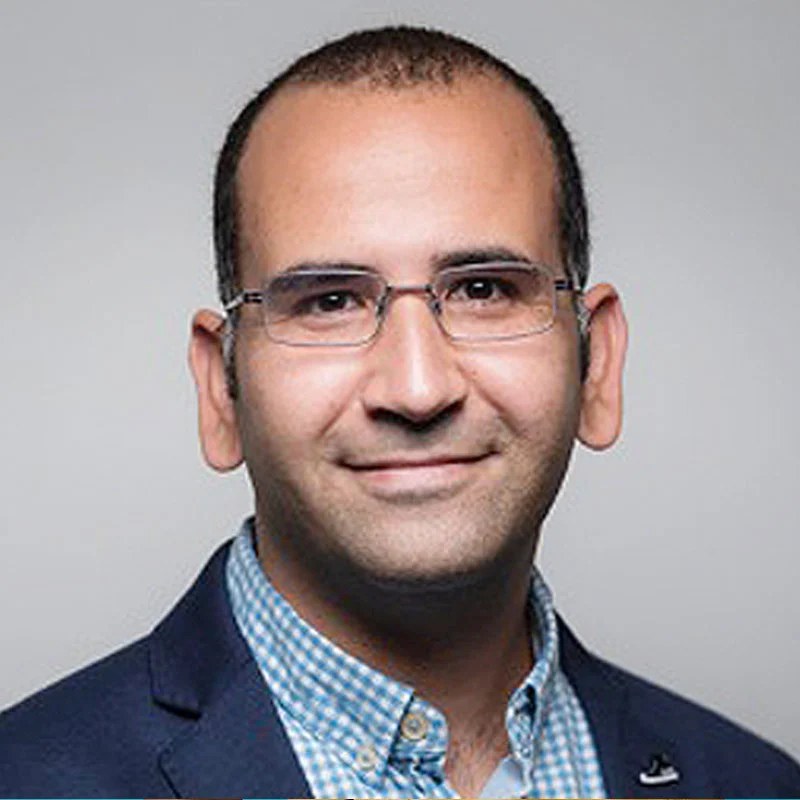
AdExchanger
Measurement Real Talk, With INCRMNTAL’s Maor Sadra
00:55:22
Many measurement companies are promoting marketing mix modeling as an easy-to-use solution to overcome signal loss. But that couldn’t be further from the truth, says Maor Sadra, CEO and co-founder of incrementality measurement startup INCRMNTAL.
Loading summary
Transcript90 lines
- [00:00]
Mayor Sadra
Foreign.
- [00:13]
Allison Schiff
Welcome to Ad Exchanger Talks, the podcast devoted to examining the issues and trends in advertising and marketing technology that matter most to you.
- [00:24]
Sarah Sluss
This episode is sponsored by iota, a trusted global provider of audience solutions for digital marketing. Ranked number one for global data privacy by Neutronian in 2023, IOTA empowers brands to enrich insights, enhance personalization, and transform omnichannel marketing. As part of the Dun and Bradstreet family, IOTA offers a full suite of solutions to make growth easy. Learn more@ieta.com, that's e y e o t a.com.
- [01:03]
Allison Schiff
I'm Allison Schiff and you're listening to Ad Exchanger Talks with my guest this week and my friend Mayor Sadra, CEO and co founder of Incrementl. As its name denotes, Incrementl is an incrementality measurement startup, but we'll get more into the details on what that actually means, as well as why measurement has been kind of broken, why Mayor thinks podcast advertising will eventually be bigger than ctv, and why mmm has been a pain in his butt. Plus lots of other good stuff. But before we get started, please allow me a quick plug and a request. Save the date for CTV Connect taking place March 12th and 13th in New York City. And hey, don't just save the date, snag yourself a ticket because this is a can't miss summit on all of the key issues and opportunities in connected tv. You will want to be there. Learn more and register@ctvconnect.com hey Mayor, welcome to the podcast.
- [02:01]
Mayor Sadra
Hi Alison, how are you?
- [02:02]
Allison Schiff
I'm well, thank you. Very nice of you to ask. Often people don't, they just say hi. So that's very kind of you. I'm doing well. But yeah, lay it on me. What's one thing about you that not a lot of other people already know?
- [02:17]
Mayor Sadra
It's a bit tricky because you know this, but not too many people know that. Like in a past life I was a musician. I was actually like a recording musician. I play a lot of instruments and I, I recorded. I think once you, you kind of like asked me and I did share with you even like original recorded music, right? I did.
- [02:37]
Allison Schiff
You did. And it's really good and I kind of want to link to it in our write up when I post this podcast because I loved it and I shared it with my mom and she also really liked it.
- [02:48]
Mayor Sadra
So really appreciate. But no, that's way too embarrassing. It's weird because like, I think it was an aspiration for a career. So now that's far away from that. It's. It's weird.
- [03:00]
Allison Schiff
Well, you also, people should know you're not just, I guess, a recording artist in a past life, but you play a ton of instruments, right? You play keyboard, guitar, bass, drums, flute, harmonica, and the accordion. And you also sing.
- [03:15]
Mayor Sadra
Yes, indeed I do. And I probably, if I had more time, I would even like pick up more instruments just because that was really something I enjoyed, like learning a new instrument when you also.
- [03:25]
Allison Schiff
So you were in the IDF, in an entertainment troupe that was between 2000 and 2003, like doing the music thing. And then after your military service, you slid right into ad tech, right? Ad tech and media and you know, a few early jobs. Da da da. But then eventually you became a director of sales and business development at Matomi. You were a top guy at interactive and I think that's when you and I first became acquainted, when you became a source of mine and a friend later and then a bunch of different roles at Applift, you were CEO eventually. So just lots of experience with app user acquisition and retention and performance marketing and mobile measurement. And you and I have had conversations over the years about measurement, also about fraud. And it's always bugged you to no end that attribution and accurate measurement have been so messed up since the beginning of digital marketing. This obsession with last click, the impact of fraud, doing view through attribution with these long windows, it just kind of drives you crazy because everything on digital is theoretically measurable, but there are all of these confounding factors standing in the way of accurate measurement. Which brings me to incremental, which is spelled with no E's the name of your startup, your measurement startup, which you founded in 2020. 2020. Right smack dab in the middle of a global pandemic. And fun fact for our listeners. Eric Suefert is one of mayor's investors and advisors. But yeah, anyway, what. What is incremental in a nutshell? In a little nutshell, a little more specific than just measurement Startup. Why did you co found it and what was it like to create a company? Basically over zoom.
- [05:15]
Mayor Sadra
Well, where do I start? So first of all it's funny but like the words. So I'm originally from Israel though when I started the company I lived in Berlin. The word for entrepreneur in Hebrew is yazam. And when we got started this was all zoom. So essentially we are a Yazam bazum, which sounds very funny, but it's essentially what we are. We started during a pandemic. Again, this was when we still thought this will be two weeks. How little we knew. I didn't see my co founder for the first 18 months when we started the company, but again, I think that was for us actually a good thing. So maybe to share, first of all, what incrementally is. Incrementally is an AI powered measurement solution that measures incrementality. But unlike legacy incrementality measurement, Incremental doesn't rely on neither user level data nor planned experiments. Legacy or traditional incrementality measurement typically asks people to make a change while trying to isolate factors. We don't really believe that that's an option for marketers. I always make the joke, you know, do an experiment, just make sure the weather stays the same and the world stays the same. Which is like good luck with that now again, I do get why experiments is an ideal, but we just don't really believe that this ideal is feasible or very operational. Especially not for some of the customers working with us, which are companies who operate globally, large budgets, hundreds of changes per day, they're unable to control the world and they're not even trying to control their own activities because they're so much in a rush to constantly operate, constantly optimize, constantly improve. So I think that's kind of where we come in and we work with companies anywhere from like Acorns to Binance to Etoro to Supercell to Scopely to Weeks to Monday. So it's a pareto of customers, but I would say it's pretty much the sophisticated people who spend a lot and are really, really obsessed with optimization. That's our cup of tea.
- [07:35]
Allison Schiff
So your cup of tea is a group of very experienced, very technical, data driven, data minded advertisers. But do you think that advertisers writ large understand incrementality or are you doing a lot of like education as part of your business development?
- [07:55]
Mayor Sadra
Interesting question. So I actually try not to educate, which sounds weird, but like I basically figured out that first of all the like I'm in a privileged point where we get a lot of inbound requests and a lot of this inbound is given the fact that what we've built is innovative. Now I would say that there's like two factors there. First of all, there's people who choose to not understand it and maybe to explain what I mean. And it's kind of related also to some past conversations we had about the topic of fraud or not fraud or attribution fraud and so on. But essentially if you're a CMO and whatever Attribution mechanics you're running with tells you that the certain channel is driving fantastic results, and you're getting compensated for this, and you're getting compliments for that, and everyone loves you for that. If this channel actually generates no incremental results for you, means if you stop this channel tomorrow morning and nothing will happen to your marketing performance, you don't really want to know. You actually don't really want any platform coming in and pointing a big arrow saying, hey, this is actually not incremental. Now, I think that's a major reason why incremental kind of was forced to remain inbound. So I'm not going to try to educate anyone in parentheses. I think people understand generally what incrementality means, but again, we have the privileged position of getting inbound from enterprise clients. So at this point, I'm just going to focus on those who actually want this platform rather than those who prefer not to have it.
- [09:42]
Allison Schiff
Right. I mean, if you're going to be like that monkey with its hands or its paws over its eyes, right, Then what. What are you doing, really? I mean, if people don't want to know, then maybe it's not your job to tell them, because if they were to run a test with you, then maybe they wouldn't even accept the results. Right, because you're telling them they're doing something wrong.
- [10:04]
Mayor Sadra
Exactly. So at some point we decided, you know, we're not going to chase anyone, we're not going to do like outbound sales, we're just going to accept inbound. And then it's all about showing off the technology and the platform and how to integrate with it and how to validate it. It's a different. It's a different conversation. But I would say again, a lot of the education happened. And if you remember, like when we got started, this was pre Apple's announcement of app tracking transparency. People thought we were crazy. People like, why are you launching a measurement solution? Like, who needs you? And I had a couple of beliefs, but one of them was that, hey, there's going to be a move coming. No one knew the move was coming now. And when that happened, if you recall, actually I wrote a guest post to Ad Exchanger. It was called thank you, Apple. And yeah, Apple, in a way, forced education on a lot of the markets. Suddenly people are like, hey, what is an alternative to this deterministic measurement? What should I be thinking about? And the topic of incrementality came up again and again and again and again and again. Luckily, we have a pretty like A good name for that as a solution.
- [11:21]
Allison Schiff
So part of the mission, right, is to evolve from measuring traffic to measuring value. Like, I'm taking that from your website, the marketing language. And it's a. It's a worthy mission. But what does that actually mean in practical terms? How do you do that?
- [11:40]
Mayor Sadra
So you asked me not to. You asked me not to ramble. You didn't tell me not to rent. Okay? So look, 20 plus years ago, I entered the space, and the biggest promise was everything was trackable. And to be fair, I really believed in it. Okay? I believed that the reason why digital marketing is going to be so fantastic is everything is trackable. Okay? But when I thought trackable, I actually, back then thought multi touch. When. When I started understanding that the only, like, method of measurement people are really using was last touch, I was like, something. This doesn't add up, okay? I'm sorry, but you don't click a banner, buy a car. You don't click a banner, buy a phone. You don't click a banner, buy a shoe. There is a funnel, like, I don't know, like marketing. Like, we've been taught for so many years that marketing has a funnel and awareness, interest, desire. But no, we're just going to give 100% credit to whoever touched the user last. That literally bothered me. So, yeah, I think that was. This is where the mission of the company came from. It's like this. I want to evolve this 20 plus years mistake of counting clicks to basically measuring value. You know, sometimes people find it, like, difficult to understand incrementality. I always think incrementality is really easy. Like, Alison, here's a pretzel. Now, Alison has one pretzel that is one incremental pretzel. But in a world of attribution, you already have a pretzel. I'm coming and I'm tapping the pretzel, and I'm saying, hey, Alison, I brought you this pretzel. But you're like, but actually, I had this pretzel already. Maura gave it to me. No, no, no. I gave it to you. Attribution is a lot more complicated than incrementality. I think I'm going to pause here because I might ramble.
- [13:27]
Allison Schiff
Well, I give you dispensation. Unpack that for me. How are they different?
- [13:31]
Mayor Sadra
Incrementality is all about measuring true incremental value. Are you actually getting something for the. Whatever you're spending? Like, is this product. Product being conversion, purchase, sale, lead, Is that an incremental one? Are you getting this and you would not receive this if you did not spend this money. So if you are a brand and you're running campaigns on Google and you're getting 100 conversions, would you have received these hundred conversions if it wasn't for the spend? If you would, if you would have received those, then these hundred conversions are not incremental. If you would not have received those, these hundred conversions are incremental. That's literally the whole definition. And in a world of clicks and tracking users, you're not actually trying to get someone value, you're just trying to get credit for value, which is really not the same.
- [14:26]
Allison Schiff
Going back to your pretzel example, I was just thinking, yeah, that kind of measurement is basically like gaslighting advertisers because everyone's coming in and saying, it was me. No, it was me. No, it was me. And you don't really know what to believe unless you have a framework in place and you have some understanding of how your media dollars are flowing. And you're also just being realistic to be fair.
- [14:52]
Mayor Sadra
Let's think about it for a second. And there's another analogy I like using, which is the football team attribution is like essentially giving the credit to whoever scored the goal. Okay, That's a fact. Okay. I'm not gonna argue with that. This person, player scored the goal, like they should get the credit. Awesome wave, applause, everything okay. But you shouldn't like make your entire marketing decisions based on that means, hey, you know what? I don't really need the other players. Just gonna fire them. Goalkeeper, small keeper, they're not scoring any goals. I don't need that. I'm just going to have a team with the person scoring the goal and that's going to be an excellent winning team. And I think we both understand the absurdity in that. And that's kind of the world marketers went to this like absolute data driven belief of optimization. Even though again, like just, you know, put a little bit of logic into it. I'm not even now saying anything about testing, validating, trying. No, just put a little bit of logic to it and then you understand that this does not make sense. This is not how it's supposed to be. I don't think whoever designed the post spec cookie tracking had this in mind.
- [16:12]
Allison Schiff
And to make another sports metaphor, what about assists? Right? In basketball, I mean you have play makers, so sure, someone gets to dunk, but the perfect pass is what allowed them to do it. And you need that guy.
- [16:27]
Mayor Sadra
By the way, I like it. It's funny that you mentioned this. So you mentioned I co founded Incremental and that's a very important point. I actually did not want to start Incremental. I wanted to start a different company that was a multi touch attribution solution using first party data. I am so fortunate my co founder, and he's the CTO of Incrementl was the one to say, no, no, no, no, no, let's just skip a stage and go directly into measuring causality using algorithms and machine learning. And I was like, I don't know, that sounds good. Now imagine had I started these multi touch. Yeah, that would have been. That have not gone well given privacy changes coming shortly after we started. So I'm very, very fortunate.
- [17:12]
Allison Schiff
Well, let's talk a little bit about privacy and measurement and a different approach. So mmm marketing, mix modeling. And I know you have very strong opinions about this. You wrote this piece late, late last year that you shared with me. It was predictions for 2025, but you called them prophecies because you're very confident about them. And one of them is that MMM will go back into the attic, quote unquote, meaning that there's been this huge gap between like what MMM actually is and what it's for and what people think it is. And your prophecy is that advertisers will stop hopefully using it as some kind of magic bullet privacy safe attribution solution for dealing with signal loss, which is coming often as a result of greater focus on privacy. And I'm just going to quote one line from your piece. Media mix modeling platforms have been a pain in our asses during 2022 and 2023. So why such a pain in your ass? And why will 2025 be different? Why will the thorn be removed from your butt?
- [18:19]
Mayor Sadra
Okay, so thanks for the quote. But then, yeah, so it's very weird. Like again, you've seen Applovin skyrocket, you've seen Facebook go from losing a lot of market cap to going back to become one of the most profitable companies in the world. You've seen all. You've seen LLMs, you've seen basically what AI has brought into ethic in the last year. Okay? Now AI literally touched everything. But for some reason the measurement bit when privacy happened, okay, so were not able to use a technology from the 90s anymore, which is again, cookie IDFA. So let's go back to a technology from the 1950s because that will be the solution. Again, of course I will say that today's mmm is not 1950s MMM in principle, it is MMM is all about finding correlation between spend and performance. And for the crazy like data driven savvy like optimization, every 30 minutes, advertisers spending $100 million across 160 countries in iOS, Android, web devices, connected TVs, billboards running 100 plus campaigns, marketing team that is 100 plus people. MMM is not for you. MMM is for old school retailers, consumer goods stuff that moves slowly. In terms of its marketing spend, MMM was built in an era where people ran on print and radio and you didn't really, you know, do real time optimization of creatives. MMM was just not built for today's world. Now, mmm, on the other hand, when it's working, and now I'm referring to today's mmm when it's working, when it's calibrated, it's an awesome playground. It's like, hey, mmm, show me what might happen if I do this and this based on my historical data, my 10, 12, 20 years of historical data. But if you're an app company that launched your game six months ago, then someone is selling you that MMM is like, hey, this is a solution for your iOS privacy stuff. That's not it. So, yeah, it was a pain. It was also a pain because some vendors over promised under delivered and then a lot of advertisers basically lost a lot of trust in anything that is a real probabilistic measurement approach, which incremental is to be honest.
- [21:03]
Allison Schiff
And it was also a pain in your personal butt because a lot of people thought that what you were doing was mmm and you had to clarify.
- [21:12]
Mayor Sadra
That, yes, we are not mmm.
- [21:16]
Allison Schiff
I wanted to give you the opportunity.
- [21:18]
Mayor Sadra
To say that we're not mmm, Senator.
- [21:21]
Allison Schiff
And you don't sell ads. All right, before we take our break though, I just, I want to ask you about how life's been going. You mentioned earlier that you lived in Berlin. That was while you were at Applift. It's between 2014 and then late 2022. And then you moved back to Israel where you're from, with your family. You're in Tel Aviv now. And it was about 10 months before the events of October 7, 2023, and life changed dramatically. And we spoke just the week after that. It all happened. And you were telling me about how some of Incremental's employees were being called to serve, meetings were being interrupted by air raid sirens, but you were still doing business as. As much as possible. But how would you describe the experience of doing business during a war? And how are you now?
- [22:13]
Mayor Sadra
That's definitely a heavy question. Like and again, I'm just going to be honest with you just because we know one another and I think maybe I'm feeling relatively safe in our industry. It sucked. There is a. There's really no better words. It sucked. It's also sucked in ways that I can probably not really comprehend because I don't really know like which I don't know LinkedIn connections or, or followers. I started like losing as a result of being Israeli which is super weird. Obviously the war itself is terrible and hostages and try to explain this to my kids and air siren and like bomb shelters and you're like this is like, you know, we're like in. We're the future. This, this should not happen. It's again, even though I grew up here and have experience like wartime in the past, living in Europe for a couple of years definitely changed my, my perception and then I came back here and then it's just boom to the face. Literal. Yeah, it sucked. I don't think there is any other word for it. I think of course like Israelis really always try to show their strength but in all honesty it just sucks. I. I don't wish it to anyone to experience and yeah that's, that's. I guess that man.
- [23:52]
Allison Schiff
I don't have a segue to our break other than I agree with you. It. It really does. It's. It sucks and I wish the a better tomorrow. We're, we're going to take a break and when we're back we're going to talk about AI which you touched on a few minutes ago. LLMs and advertising and everyone's not so favorite topic cookies. So stick with us. Foreign.
- [24:32]
Sarah Sluss
Hello, I'm Sarah Sluss, Executive editor of Ad Exchanger and I'm here today with Nate Carter, Vice president of Global Sales for iota. Welcome Nate.
- [24:41]
Nate Carter
Thank you, Sarah.
- [24:43]
Sarah Sluss
So everyone is talking about AI. How do you see AI transforming the intersection of data privacy and personalization?
- [24:54]
Nate Carter
Yeah, it's helping in several ways. We see AI tools helping our team be more effective and more precise in what we're able to offer up to our clients in terms of audience recommendations and insights. At the same time, we're seeing our clients using AI in order to be much more selective in terms of how they're leveraging audience activation across media channels. They're looking at broader use cases of data and getting to more precise results with their campaigns.
- [25:29]
Sarah Sluss
There's also a continued shift towards a more and more cookie less ecosystem. What approaches is IOTA implementing to ensure marketers can maintain effective targeting through this transition?
- [25:43]
Nate Carter
We're working really closely with our partners in order to ensure that our data is transformed into any and every identifier and placed in every ecosystem that our brands need it to be in. This can look at transforming our data against things like ID 5 unified ID. We also have partnerships where we can take offline data sets and use them to map into contextual signal. From a customer standpoint, we're seeing more and more where our data which resides offline being transformed and moved into environments like Google Cloud platform, Snowflake Databricks and others where they can start to do offline work before moving it into the digital universe.
- [26:30]
Sarah Sluss
So you brought up your customers, so let's dig a bit deeper into that. How are your clients thinking about delivering meaningful personalization without compromising compliance?
- [26:42]
Nate Carter
They need to work with partners who they know are taking compliance as seriously as they are. And that's our job at Dun and Bradstreet and iota. And so we do that. We work in Europe, we know how to be GDPR compliant. We work state by state in the us at the same time, we know that these law changes are going to diminish some of the depth of personal signals that you're going to get on a consumer in any market. And we think that that's a good thing. As we move towards a privacy first market, our customers still need to drive the same results. And so we're seeing them leverage a greater breadth of data, as we discussed with AI being an enabler of that, while removing anything that could be sensitive both now and in the future. As we move towards a future that is increasingly privacy sensitive, it's important for a healthy ecosystem that we lead the way. And we're doing that with our customers in being privacy first.
- [27:39]
Sarah Sluss
Thank you, Nate. Checking those boxes, but also thinking strategically about how to still maintain performance. We appreciate you becoming on the pod and thank you for supporting the podcast.
- [27:50]
Nate Carter
Thank you so much, Sarah.
- [28:06]
Allison Schiff
All right, we're back and I want to turn to the topic of audio and podcasts, which is a little meta with a lowercase m because we're on a podcast right now. But you have this theory that podcasts and podcast advertising could eventually be bigger than CTV, which is interesting. I mean, in 2024, I just looked this up before we started the recording, but podcast Advertising in the US was up around 16% to 2.5 billion, which is. Which is cool. I mean, that's according to eMarketer, but CTV ad spending in 2024 in the US was around 30 billion, or between 30 and 35 billion. So explain your theory to me. Why do you think podcasts will eventually outpace ctv?
- [28:57]
Mayor Sadra
Yeah, so, okay, so it's difficult, but let's see, where do we start? So first of all, the audience. Okay, so first of all, the audience who are listening to podcasts is really the audience that advertisers are looking for. It's millennials, it's Gen Z. It's typically people that earn more than a hundred thousand if we're looking at the US market. So it's definitely the audience that most advertisers are out there looking for. Hey, where can I find you? Where can I offer you something? That's. One second is the. Basically the intimacy and the impact of. Of podcast advertising. It's really high. Essentially every time we get to measure podcasts and compare this with any other mediums, it's. It's crazy how much it's like all over the chart. Now the third is this, like, you know, Marie Meeker style. You remember this, like, graph where Marie Meeker had this, like, yearly deck where it was attention versus ad spend in mobile, and it was always showing the gap, and eventually the gap was filled. And I think today we definitely live in a world where the gap was filled. Now, if you basically simulate the same, like, attention versus ad spend on podcasts, currently you have a $72 billion opportunity. Just currently. Not talking about future growth, not talking about more people listening to podcasts, not talking about basically the biggest podcast app, which is Apple Podcast. Isn't monetizing podcasts enough? Think about it like Apple search ads. It was pure net revenues for Apple. They didn't get it right the first time with iad. Back then, it kind of killed. Killed it, to be fair. But now it's just. They're just printing money. Okay, now with podcasts, Apple has the same opportunity, but I'm just looking at it from a holistic standpoint. And there is so many opportunities in the area of podcasts, from monetization tools to AI ads to AI podcasts to podcasts on YouTube and a specific YouTube for Podcasts app from Apple going into this game, from Spotify, like, upping their game. And essentially, the more I'm thinking about it, the more I'm just seeing that there are so many opportunities that are so easy to pick up. Now, CTV is difficult. CTV requires a lot of production. It, like, you look at the investment that companies need to basically put in to make, to make content, to make, to build an advertising infrastructure. Podcast is like, you know, a guy with a mic Basically. And yeah, I'm just, basically the more I'm looking into the numbers, the more I'm looking into the stats. I just think that the opportunity is significantly bigger. I wrote an article about it. I don't know if you want to link to it or not, but basically just putting every little thought I had on why I think this is such a huge opportunity. I don't know if you agree or not.
- [32:14]
Allison Schiff
It makes sense. And I'm also thinking that there's more and more of a blurred line between podcasts and CTV because of video podcasts.
- [32:25]
Mayor Sadra
I'm seeing a lot of these like famous podcasts basically porting their content into YouTube, but they're not re recording and they're not putting a video. They're putting some like, I don't know, card or whatever. Essentially people are putting it on YouTube mainly for the comments. So what a lot of people like to do is comment on, on. It's not really videos, it's more like podcasts. And it's one of the major reasons why Spotify is adding comments because they basically figured out, hey, we can build communities, okay? Because the, the challenge with these podcasts often is that there's a disconnect between the listeners, which are very loyal by the way, to a sense of community. Now if you think of like some famous podcasts basically offer their audiences, hey, we have a slack channel, we have a slack community, and so on. But I think that's the main reason why I'm seeing it going into YouTube. But I don't really think that's breaking the barrier between ctv, which is really like a video first approach to content.
- [33:23]
Allison Schiff
I see the argument. I, I think I agree with you. I feel convinced. I mean, there are so many unmonetized parts of this. And there's also been like so much reporting about the influence that podcasts have so particularly to do with politics. I mean, in the recent election in the U.S. so I think it'll become more culturally resonant. And if people have their AirPods in their ears, then advertisers should be there.
- [33:50]
Mayor Sadra
Some people are saying that like airports for example, that's the VRAR that we've been waiting for. It's actually not like, hey, let's put massive glasses on our faces. But it's this interface you have in your ear that you can naturally talk to, listen to and have a really intimate relationship with whatever you're listening to. Essentially people are saying, this is the wearable, this is the supercomputer, your phone and your AirPods within your ear. And this is why I'm thinking, you know what? Actually like this, to me at least makes sense. And that's why I'm like upping my vote of confidence within podcasts. Again, it's not necessarily at the expense of ctv, but I definitely see that the immediate short term opportunity, like let's say if I started a media company tomorrow, it would have been a podcast company. 100%.
- [34:42]
Allison Schiff
I so agree with you on AirPods. I wasn't gonna buy myself a pair because I thought I would just lose one. And I will say that last weekend, like an incredible idiot, and I did end up getting a pair. They were a gift. I knocked one of them out onto the subway platform in Astoria and they actually had to send somebody out to retrieve it for me. The MTA was very nice and they retrieved my AirPod for me. But that's a digression. I am obsessed with these things. They're really amazing. You're listening to music or a podcast, a call comes in. You take the call, the music stops the second the call is over, it goes right back to what you were listening to and you're hands free. It really has in a big way. And I wouldn't have thought this before I got them changed how I listen and increase the amount that I listen because I just leave them in my ears as opposed to taking out my wired earbuds and getting tangled in them. So I'm with you. AirPods really were a game changer for me and I. I'm really glad that someone gifted me a pair.
- [35:49]
Mayor Sadra
Agree. And by the way, I was also not like a early adopter. I was also skeptic and I wasn't a big fan of in ear because my. I tried in ears in the past, but no, this is completely different. And I think we should post our mutual affiliate link to AirPods below.
- [36:05]
Allison Schiff
Yeah, exactly. We are talking about attribution. We deserve credit for these sales of AirPods.
- [36:12]
Mayor Sadra
But you know what would happen if you put an affiliate link within the description? Honey will steal it.
- [36:17]
Allison Schiff
Ah, yes. Okay. Put a pin in honey. I do want to talk about honey in a little bit, but I want to talk about something a little more prosaic now, which is cookies. So if you go back to the book of Genesis, I believe that Eve took a bite of a cookie rather than an apple back then. And there's. I wrote that down to read out because I amused myself when I was pulling together my questions for you. But yeah, I mean, the online ad industry's straight up obsession and addiction. Third party cookies over the past two and a half decades has really left marketers with this like myopic view of what's possible from a media measurement perspective. And like at this point, after all the years of cookie tunnel vision and the past four years of deprecation talk and I have PTSD from it, are we finally moving on or is there still, I don't know, a cookie hangover? Like people's minds were perverted by cookie based measurement and it's hard to get them to see things clearly and do things differently, even though they might say they want to.
- [37:21]
Mayor Sadra
I think it's going to take a long while. Again, I think cookie is a mistake in basically the history of the. Let's take the bigger history of marketing. Not just because in digital, of course cookie was there almost from the start. Okay, Someone accidentally discovered that, hey, there's a loophole here and I can track people and I can just dump cookies. And since then it was a cat and mouse game for however many years our industry exists. But I don't think the people who are basically used to it, I don't see any of them essentially going, oh, you're not, it's over, let's just move on. No, I think people are continuously trying to cling to it. You see that also with like some vendors, such as vendors who are either relying on the cookie or using the cookie to track, or using the cookie to target, or using the cookie to optimize. And again, when we're saying cookie, we're basically referring to anything that is device identifier. Okay, Cookie, idfa, Google Ad. I think that again there are people who say, hey, we're over this, let's just look at different solutions, let's look into the future. And there is a lot of people who are just doing everything possible to just do more of the same when it comes to cookies, whether if it's clean rooms, sharing of blended data in order to still figure it out the user, or this like pseudo cookie which is basically fingerprinting.
- [38:56]
Allison Schiff
Well, okay, so let's, let's talk about the future. Cookies are so 1990, whatever, and also so 2024. So AI and attribution or like algorithmic attribution. I don't want to use a cliche, but I will anyway. I feel like that's a game changer, right? AI changes the game for attribution and measurement. But like how so I think the.
- [39:19]
Mayor Sadra
Easiest is just, I don't know, go and check out whatever Applavin, whatever Aplovin did for the last 12 months. That's thanks to AI and Meta's recovery from hey ATT. And we're literally killing your ability to target people based on your knowledge of everything they do outside of Meta. And Meta is suddenly starring and they're not just starring from a financial markets, they're actually generating incredible performance through advertisers. Okay, so essentially a lot of these companies once the IDFA was taken from them and that's really what happened. Okay, Apple said, you know what, we really prioritize privacy. We're not going to wait for anyone else to tell us what to do, we're just going to do it. And you either figure out a solution or tough. And a lot of companies figured out and the solution was not more of the same, was not how do we track users better. The solution is how do we use algorithms to gather enormous sets of data and create a natural learning that basically continuously improves on what we understand from users and what do we target to them and what do we show them and how do we model our own success and based on that, continue figuring out who do we serve the right ads to. And that's what AI is doing essentially. Now the disconnect of course is still the old school attribution click to conversion. Because when you not were not able to track clicks anymore, when you don't get this user level data, then suddenly you have this weird dissonance between what advertisers are seeing in their reports, what they're seeing in their bank account and what they're seeing within the ad platforms. The ones at least went towards AI.
- [41:10]
Allison Schiff
Well, I want to stick with AI, but talk about something a little bit different, which is like the search advertising opportunity and AI. Because it's only inevitable that we're going to see this booming LLM ad business across all the different AI platforms, right? I mean, perplexity. They already have ads. ChatGPT, Claude, like that whole crowd is going to monetize through advertising. I think subscriptions will still be the biggest part of their monetization, but ads for sure. So how big of an opportunity do you think that is? And then how would you measure LLM ads?
- [41:48]
Mayor Sadra
True measurement should focus on incrementality. But again, me saying that probably sounds too biased. So put that aside. I think that the reason why LLMs might know us better and might do an even better job than Google, who definitely has done the best job when it comes to targeting, is in Google. When you go to find something you think in keywords, you're not really searching In a natural way, we were kind of shaped to learn how to look for certain keywords. And again, if you've ever done like a search for something specific, you know, you start looking for certain keyword and keyword combination and you're really, really trying to go down that rabbit hole. LLMs basically say hey, don't talk to us in keywords, just tell us what you want, just talk naturally to us. Which I actually think will eventually give an enormous edge to LLMs in truly understanding a you you as an individual. And as long as this is like no one's going to ban first party data, then you're truly telling an mmm, where are you in life? What do you want? What are you looking for? What are you interested? What's your barriers? What is not okay for you because you're also correcting an LLM. I think that the targeting capabilities LLMs will have will just be so much better than anything we are targeting able to even perceive. And yeah, I think they'll just be able to serve you ads. And again, as long as you're talking to it naturally, you might trust it naturally when it's telling you hey, I have these results but I also have this result and this one is sponsored but I still think is better for you. Again, it needs to be very much tailored to the individual which you can do when it's first party data. Which is why again I think the opportunity is pretty obvious. I think the experiments we're seeing with like perplexity are interesting but I don't really think this will be how will look like. I am relatively certain that within a year we'll see ads on OpenAI's ChatGPT and maybe Claude as well.
- [44:00]
Allison Schiff
I totally agree. And it's not because we're a hammer at ad Exchanger and everything is a nail. I think it's only inevitable. Well, different topic and you, you mentioned honey. I do want to briefly get into the honey scandal so I think everybody knows but late last year PayPal's Honey browser extension, which is this extension that automatically finds and applies discount codes, came under fire for basically stealing credit for online purchases from creators and publishers because it was replacing attribution tags from their affiliate links with its own tags. And this is only able to happen I think at all because advertisers are still so stuck on last click attribution. And since the stuff about honey came out, I read all of these think pieces and reaction pieces about how yeah, this is bad, but they're not the only ones doing it. Like the behavior is ubiquitous. But yeah. What, what's your take on the honey situation? And do you think there's going to be an impact from the class action lawsuit against PayPal because a bunch of YouTubers are suing PayPal for stealing their commissions using honey? Allegedly.
- [45:09]
Mayor Sadra
Allegedly, yeah. So first of all, obviously I'm not surprised. Again, we've seen this happen during the mobile attribution fraud era. I think it was like 2016. Again we saw this left and right in articles and anti fraud solutions. Finding this publisher and this publisher, what I was surprised about, this is a PayPal owned company. This is not like, I don't know, small time random ad network from whatever country I don't want to offend its residents from. This is like a big company doing this. This is really bad. Guys. Like you have a pretty good business model. No. Shouldn't you be making money on the back end your deals with whoever you had deals with? Yeah. So do I think something will happen like bigger as an impact from the class action? No. I think within, I don't know, two years there will be another random weird fraud case that will report on. It's probably still happening all the time. I think the only reason why fraud is not such a hyped out topic anymore is mainly because two things. One, you don't get to see clicks and impressions anymore on the Apple ecosystem and a lot of the ad spend goes there, so you just don't really have the tools anymore. Plus I think a lot of people kind of got like tired of the topic.
- [46:34]
Allison Schiff
Burned out. Yeah, I agree.
- [46:36]
Mayor Sadra
Yeah, I think it's just there and it's a big chunk for sure. But I don't think anyone really wants to try to figure it out. I think it's very difficult to figure it out. You just work with. Usually the solution is you work with trusted companies here. I think again the shock was if this is indeed the case, then it's PayPal, it's like a big company.
- [47:03]
Allison Schiff
So we're going to do a lightning round to close out so 10 second answers or less. Otherwise I'm going to make a buzzer sound and cut you off. All right, so Google just recently moved to its open source MMM product which is called Meridian. They moved it out of beta and Meta has an open source MMM tool. Robin, they hit some similar milestone last year. Is this a sign that deterministic measurement will become a thing of the past?
- [47:36]
Mayor Sadra
Okay, now 10 seconds or less. This is not a 10 second or last day question. Maybe or kind of. Okay, so again Deterministic on a user basis. Yes, deterministic on a campaign basis. So aggregated. No, you'll still get that with SKA network and whatever eventually Google releases to the world. It also means that these platforms recognize the need for probabilistic and mmm even though again, it's not really a measurement, it's more of a scenario planner, it's more of a idea to basically create a budget plan is probabilistic.
- [48:10]
Allison Schiff
I mean that wasn't a 10 second answer, but it was also, you're right, a totally unfair question. So, lightning round, we'll start now. Can you trust MMM tools from the big ad platforms or will there always be some kind of bias there?
- [48:25]
Mayor Sadra
I think MMM is the rail, so you basically need to build it in house. I would say try tools. We tested a couple of MMM techs and we checked out pymc, which at least our data science said was pretty good, but we haven't checked out the latest Meridian. So yeah, you can. It's just, it's just tech. It's open source. Why not?
- [48:48]
Allison Schiff
At the end of last year Google didn't so much announce, but it just sort of became public that it's going to start allowing fingerprinting again. Is that a good thing for Google?
- [48:58]
Mayor Sadra
Yes.
- [48:59]
Allison Schiff
Is that a good thing for anyone other than Google?
- [49:02]
Mayor Sadra
For advertisers who don't want to deal with figuring out alternatives for their user basis tracking, yes. For mmps, it's also great.
- [49:12]
Allison Schiff
Who is it bad for?
- [49:14]
Mayor Sadra
Well, it's not necessarily bad for incremental, but I would say that it just delays the inevitable. But again, I completely understand why Google would do that. So I'm not judging.
- [49:28]
Allison Schiff
Apple officially has a policy against fingerprinting, but do you think that Apple will ever seriously enforce it?
- [49:36]
Mayor Sadra
Maybe. I would doubt it because really enforcing it would be limiting. It's basically diverting all traffic through Cupertino, kind of like a global vpn. It's just not worth it. Maybe they'll penalize someone at some point, but I would highly doubt it.
- [49:53]
Allison Schiff
So SkadNetwork is Apple's framework for privacy, safe app ad attribution. And then there's private click measurement or pcm, which is the same thing, but on the web. Do they work?
- [50:03]
Mayor Sadra
Yeah, they work for some, they don't work for all, they work for you. If most of your conversions happen within the first 24 hours and you have statistical significance, if you're selling products that are expensive and take some thinking and are not like impulsive buys. No. Then basically everything like Apple's attribution will show you is that everything is organic. So it doesn't really help you.
- [50:29]
Allison Schiff
Do you think it would make sense for Applovin to acquire Snapchat to expand its e commerce reach? That's a theory that I've heard people float.
- [50:38]
Mayor Sadra
I could see that, but I think it depends on the price. Adam is super smart for sure, and Applovin has killed it when it comes to execution. I think it has to do with the valuation. Like if I can get a sweet deal for it. Yes, I would say if they can buy Reddit, they should. I think that's a bit better acquisition probably for an Applovin.
- [51:02]
Allison Schiff
What is the biggest misconception about incrementality measurement and running an incrementality test?
- [51:09]
Mayor Sadra
So I would differentiate incrementality measurement. The misconception is that people think it's complicated, but it's not. Again, it's like, hey, Alison, here's a pretzel. You now have one Incremental pretzel. Very easy to understand. People sometimes think that incrementality is this like crazy math equation, data science, whatever. That's not when it comes to experiments. So because I have to separate the two experiments, sounds really good in theory. Okay, hey, just have this pill and you guys just have this TikTok and we're just going to compare you like two weeks. Who gets the flu and who doesn't in marketing, the world is not as isolated. You cannot isolate the world. There's so many variables influencing one's performance that this assumption that you can, oh, I'm just going to do a planned experiment. I'm just going to see the before and after is deluding yourself. That's my view.
- [52:04]
Allison Schiff
All right, last question of the lightning round, which was a total failure, even though you were interesting. President Trump signed an executive order delaying the TikTok ban in the US for 75 days until April 5th. Let's say the TikTok app actually does get shut down in the US for an extended period or indefinitely. Would that let marketers run the best live and most scaled incrementality test of all time?
- [52:30]
Mayor Sadra
Probably. Yes, indeed. I wonder if Trump maybe will ban Google for a couple of weeks as well and maybe later. Meta and you know, kind of like this like gradual geoleafed experiment.
- [52:44]
Allison Schiff
I'm sure that's what he has in mind.
- [52:46]
Mayor Sadra
Avid reader of Ad Exchanger. I know.
- [52:50]
Allison Schiff
Well, last question. For real. And we're not in the pseudo lightning round anymore. In that prediction piece that I mentioned earlier, you also had this prophecy that Google won't go ahead with privacy sandbox this year or even next year. So do you mean the Chrome privacy sandbox and the Android privacy sandbox? So both versions. And also, like, why?
- [53:15]
Mayor Sadra
Well, didn't Google just announce allowing fingerprinting? So, look, Google has a lot of stuff to deal with. Okay? Right now, when you think about it, there's a plavin Growing is a threat to Google. OpenAI is a threat to Google. Perplexity is a threat to Google. Trump, in a way, is a threat to Google. So I'm thinking like, you know, Google has enough scrutiny and they cannot just acquire any company like smaller companies. Anything they do gets scrutinized. So if they can pull off delaying this like cookie deprecation for God knows how long, they probably should. Like, if I would be Google, I would be. I would be doing the same. Like, they have no interest in like hurting their own business. And their own business is not just their targeting, which again, doesn't really require the cookie. It's the millions of small businesses running ads on Google that do require. This is a tracking mechanism. So I'm completely giving them credit. That's why I said I'm not judging them for this delay. I just, again, I'm not counting of this happening anytime soon.
- [54:28]
Allison Schiff
Well, cookies, pretzels. I'm kind of in a snacky mood, so I'm gonna have to end the podcast so I can go grab something to eat.
- [54:44]
Sarah Sluss
Today's episode was brought to you by iota, a Dun and Bradstreet company and trusted global provider of audience solutions for digital marketing. IOTA is your partner for quality certified audience data and transformative digital marketing solutions. With comprehensive consumer data capabilities, IOTA delivers the confidence and tools marketers need to Thrive. Discover how IOTA can make growth easy@iota.com that's e y e o t a dot com.