← AdExchanger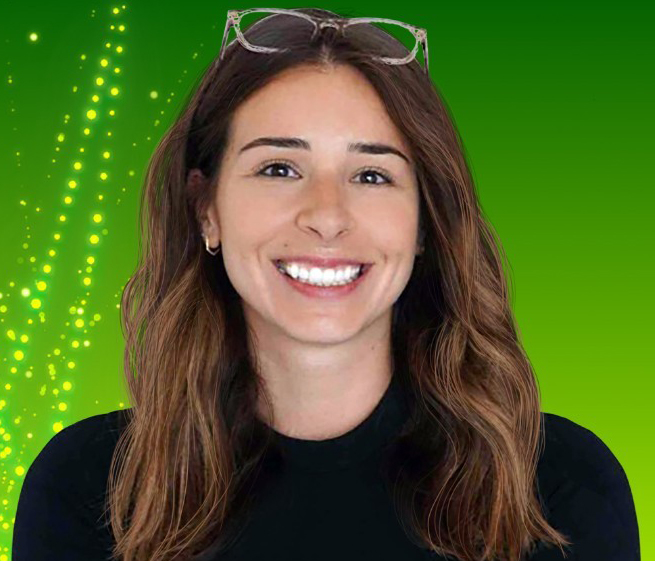
AdExchanger
Measuring The Unmeasurable, With HyphaMetrics Founder Joanna Drews
00:46:31
HyphaMetrics had barely taken its first few steps as a new startup before drawing the ire of measurement juggernaut Nielsen. Four years and several lawsuits later (including one jury trial win for Hypha), CEO Joanna Drews is more than ready to get the...
Loading summary
Transcript92 lines
- [00:00]
A
Foreign. Welcome to Ad Exchanger Talks, the podcast devoted to examining the issues and trends in advertising and marketing technology that matter most to you.
- [00:32]
B
Hi, everybody. You are listening to the Ad Exchanger Talks podcast. I'm not Alison Schipp. I'm so sorry about that.
- [00:39]
A
Truly.
- [00:40]
B
I feel like. I wish that I were. You know, that that T shirt that's like, you should always be yourself, unless you can be Batman. Yeah, that's. That's kind of how I'm feeling right now. Instead, I am Victoria McNally. I am an associate editor at Ad Exchanger. Hopefully you've heard my voice make similarly dumb jokes about Batman during the Big Story podcast every once in a while. So this isn't a complete shock to you. Anyway, I am joined this week for talks by hifa Metric CEO Joanna Drewes, who I think it's pretty safe to say has had a wild 2025 so far. And we talked about it. We talked about the patent infringement lawsuit that Haifa just recently won against Nielsen, which is rare in this industry for so many reasons. And we also got into her career. You know what led her to start a measurement company in the first place? Her obsession with market research. Making sure we're all using the term panel correctly. Because apparently some of us aren't. But first, before we get into that, I must impress upon you how exciting and fun and rad programmatic IO New York is going to be. And not just because I live in New York City and I don't have to get on a plane. Although that's definitely up there for me. This show is fast approaching. It's September 29th and 30th, so if you've been waiting until this point to get your tickets, stop it. Stop doing that. Get tickets. And also make sure that you use the code PODCRUSH for 25% off. That's P O D C R U S H. All right, groovy. Without further ado, let's get into it with Joanna. All right. Hi, Joanna. Thank you so much for coming onto the podcast. It is great to chat with you again.
- [02:20]
A
Thanks so much for having me. I'm excited to be here.
- [02:23]
B
Awesome. So Alison has a traditional icebreaker question that she likes to use, and I'm not gonna deviate from that formula. Cause it's a good question. What's one thing about you that not a lot of people, particularly in the ad tech space, already know?
- [02:38]
A
Yeah. So, you know, I think in the ad tech space, when we have CES or other fun events, that we're lucky to get together on, I'll be the first to buy that ticket to the Drake concert or Calvin Harris or whatever it might be. So that would come of no surprise to people within our space. But I think they'd be surprised to know that every New Year's Eve I have a ticket to the Fish show at msg and I'm a die hard Fish fan at the same time.
- [03:09]
B
Oh my God, that's amazing. Well, this is what the podcast is about now. I'm so sorry. How many times do you think you've seen them?
- [03:19]
A
I've seen them. I'm not as high of a number as other Fish fans. I'm still accruing my number, so to speak, but I would say 15 plus, maybe a little under 20, something like that.
- [03:32]
B
That's pretty good. I had a friend a couple years ago who was in the 40s and that was in 2020, so I imagine it's doubled at this point. I don't know. I haven't talked to him in a while.
- [03:43]
A
Yeah, I have friends like that too, and they're the ones who explained to me why the songs are special. So you need those friends at a fish show?
- [03:51]
B
That's awesome. So how do you become a fan of fit? I mean, is it just that you, like, went once and got hooked or were you already a fan of the recorded music? Like, what, What? What did that look like for you?
- [04:04]
A
Yeah, spot on. I went once. I was like, why not? Concert's a concert. And then I just became completely hooked. Everyone' nice at the concert. The jams that go on endlessly are so interesting. It's just good vibes. So. That's exactly it. I got hooked after one time.
- [04:22]
B
Are you yourself a musician or performer or anything like that? I know that's really popular with Fish fans as well.
- [04:29]
A
Oh, God, no. I think that I'm so tone deaf that nobody wants to be around that I can't sing. Playing instrument. All of it. It's like my biggest blind spot. I couldn't do it to save my life. I can do other things, though.
- [04:44]
B
So you're purely just there for the vibes?
- [04:46]
A
Absolutely.
- [04:48]
B
That is amazing. So at the risk of making a really dweeby segue, speaking of things people don't know about you, the thing that I think probably most people in the attic space do know you for right now is the recent patent infringement trial that your company Hypometrics, wanna get snielsen, which is incredible and I definitely want to talk about that. But rather than start, you know, in media res, let's talk about how we got to this point, do the sort of record scratch. I bet you're wondering how we ended up here, sort of narrative, if that's cool with you.
- [05:17]
A
Yeah, of course. Sounds great.
- [05:19]
B
So, based on a bit of LinkedIn research I did, I know that you originally started your career on the market research side of things at agencies like icrossing at Group M. Was there something specific about that particular discipline that originally appealed to you when you were first breaking into the ad industry?
- [05:38]
A
Oh, that's a good question. I've always just enjoyed communications in general, so I studied advertising and public relations. I did a minor in poly. I'm from the D.C. area, so I thought that I would go in that direction of things. And then I got a couple internships in New York, more on the branding side of the ecosystem, and I was really lucky. And one of my first mentors, she led the research practice at Interbrand, a large branding firm. And then when she moved to iCrossing, she recruited me. And at first I think I thought it was pretty daunting, you know, first job and we did everything from focus groups to linguistic analyses for SEO and SEM purposes. And I just got hooked on it because it's this media measurement in general is this nice bridge between the creative of what we do in our industry. Right. And then understanding what works and what doesn't work and what's valid. So I think that tangible part of market research and the data analytics part of it is what got me hooked. And yeah, and I just kept continuing down that path.
- [06:55]
B
So I've also fallen into some places that had more of a market research focus in my career. So I'm really curious for your take on this. Is there anything that people get wrong when they talk about market research that really bugs you, whether that's like, how they interpret findings or how they're doing research? Is there ever stuff that makes you instinctively want to just get in the comments and correct somebody?
- [07:16]
A
I think that happens to me on a daily basis. But the one real sticking point is when people use the word panel. I should say misuse the word panel. Over the last few years of the currency wars and otherwise, I think that term has been used loosely and widely with really data aggregation. Right. A lot of the companies that have licensed data from multiple sources will loosely use the word panel, but the reality is a panel has a very specific meaning that is obviously near and dear to my heart.
- [07:54]
B
So I know I just said I did some market research stuff. I still feel like I don't Know what? The explicit definition of panels. So I'm going to invoke newbie privilege and ask, how would you specifically define it?
- [08:04]
A
Yeah, I would specifically define it that it's a group of people that's been recruited in order to analyze their behaviors, and that group of people is statistically reflective of a larger group of people. So I think in our industry, when we use the word panel to hyphen otherwise, it should be a group of people that's reflective of the US Population. And then the technology within those panels is what differentiates each panel's value proposition and what they're bringing to market, because that technology dictates what. What that panel is capable of measuring. And I think what's also really interesting that people aren't aware of within our industry is that panels are used across various industries. They're used in the medical community. Economists use it in order to figure out what will be happening in the future. So panels are widely used across various industries in order to prepare for our futures.
- [09:03]
B
So when people misuse the term, is it that they're conflating a bunch of things that aren't panels? They're like, aggregating stuff together? Yeah.
- [09:12]
A
I hear it used sometimes when people talk about CTV data specifically, where that's a footprint of households, and then the word panel slips in somehow.
- [09:25]
B
So what's the difference between a footprint and a panel, then?
- [09:29]
A
Well, I would say a footprint for, in the case of CTV especially, is the distribution of those TVs across a cohort of the country or otherwise. Right. And then that's the footprint, that's the distribution of those devices across the country. But a panel, you are actively seeking a certain type of profile of person in order to create a statistically reflective group of people. So if you're just distributing TVs, it's nearly impossible to make sure that that group of people is going to be statistically reflective. That data set is highly valuable of CTV data, and it needs to be widely used in our industry for several purposes. But it lacks the. The stringent, I guess I would say, analytical needs and quality necessary to call it a panel.
- [10:21]
B
So in talking about this, you made the transition from agency life to working at actual measurement vendors? Eventually. And what factored into that decision for you?
- [10:32]
A
Yeah, so I just got obsessed with the fact that everything is not measured in a unified fashion. So my last stint at the agencies was at Group M, and I was incredibly lucky to have that position. It was under the Chief Research Officer, tied into the Chief Investment Officer's department. And so forth. And what we were focused on was pulling together all of the data that we had from our trading platforms and to understand the value of streaming and CTV and digital and linear, et cetera. And it all goes on. Right. And what remains true until now with Haifa's introduction of data, is that all of those platforms and mediums and permutations were using different technologies. There's a lot of self reporting and it was impossible to tell that unified story in the marketplace of one video. So I got completely fixated on that problem. I left Group M and I joined a company called Axwave, which had Audio acr. And we use that Audio ACR in order to build a panel of individuals. So not households, but individuals. And they had the app on their phone. So that's when that was my first stint, so to say, so to speak, in regards to building a product.
- [11:53]
B
So you mentioned that they were using the app on their phone. Was that like. Because I know there are similar products that I've talked to people about where it's sort of quite quietly listening to the stuff that you're watching on other platforms. Is that kind of what this product was like?
- [12:07]
A
Yeah, that's exactly right. Think of Shazam. Except instead of actively listening for music or otherwise, it was actively listening for advertising and content and it was running silently behind the phone.
- [12:21]
B
Gotcha. And so people were opting into that. How did they find you guys?
- [12:27]
A
We advertised a lot on various platforms. So like in the Google Play Store and otherwise, but also in the panel industry, you work with recruitment partners. So if you, or if anyone in your household has ever taken a survey, you're immediately put into this bucket of information that's accessible. And then you work with a recruitment partner to find individuals that are needed for your panel.
- [12:50]
B
Gotcha. It kind of sounds like when you donate to a political campaign and then all of a sudden you get emails from everybody up and down the ballot.
- [12:57]
A
Yeah, that's exactly what it's like.
- [12:59]
B
Gotcha. Gotcha. So I know from there you moved on to comscore and you kind of started at what seemed like it was a weird time for the company. I know, just looking back at our own archives, like they'd gone through some financial disclosure issues. They got delisted from Nasdaq maybe right before you started. And so I'm curious, like, what, what brought you to the company and what was the mood like there? Did it feel like you were walking into an all hands on deck situation?
- [13:27]
A
Yes, but I worked closely with comscore during my days at Group M and I always. And actually I worked with the comscore data when I was at icrossing as well. So I always was keeping track of the company and what they're bringing to market. And I fell in love with their products and what they were doing, and I felt strongly that they were capable of filling the gaps, so to speak. So I thought it was a great opportunity at that time. Even though it was, you know, maybe a strange time for. For the company, I thought it was a good opportunity to. To see, you know, what problems that they were seeking to fix and how I could be part of it. Right. Because they had recently acquired Rent Track and those two cultures were coming together. So they had the TV data, which I was familiar with from my group M days, and they had all this digital data that I was familiar with throughout my career. So I was excited to be part of the team to figure out how to stitch it all together and bring something to market that was holistic.
- [14:25]
B
So what was it about their products at the time that you were like, yes, absolutely. This is the answer?
- [14:31]
A
I would say it started with their digital products. The granularity of their reporting and being able to understand human behaviors across screens and environments and otherwise. That's what got me hooked on comScore. And then that kept growing, and then they got the rentrac data and otherwise. So that growth and change and innovation over time is what attracted me to comscore.
- [14:56]
B
So we've been talking around your obsession with the data and the granularity that you can get with different products. I'm so curious, when you're looking at data, what's the kind of stuff that really excites you as an individual who's just snooping around in there?
- [15:12]
A
Yeah. What excites me is what I call the unmeasurables, which is something that we're honing in on here at hypa. And that's essentially the term that we use for all the data that hasn't existed in the marketplace yet that we are introducing. So I oftentimes talk about data in the form of an Excel sheet. So think of an Excel sheet, and every single block is filled out. And that's what it used to be like prior to the onset of streaming and digital and otherwise. Right. When we were just mostly focused on TV and using that data to trade across our ecosystem. Every single one of those cells was filled out because it was easier to measure. The technology at the time was on par with the consumer experience and otherwise. But then as a consumer, what's happened Is we have personal devices, we have streaming devices that are shared with other people. So co viewing is necessary, and in that instance, and otherwise. But measurement technology hasn't kept up. So going back to that Excel sheet, with every single cell filled out, more rows and columns have been added in the form of personal devices and smart TVs, and those cells are slowly evaporating. So the map, so to speak, to help us plan for the future is getting weaker and weaker over time. And what we are introducing to the marketplace is those gap fillers. And that's what I call the unmeasurables.
- [16:41]
B
Do you have any examples of stuff that you would consider unmeasurable? Are there certain demographics? I don't know. What does that look like?
- [16:49]
A
Yeah, absolutely. What it looks like is a unified measurement of linear TV and streaming and digital and otherwise. Again, going back to the fact that as a consumer we can watch whatever we want whenever we want, and it's one video across all these various permutations, that's what hype is capable of reporting on. So specifically, that's when you're using your TV and you turn on your Xbox, that's a gap that we fill. We measure all video gaming, every single secondary device that you could possibly use. So that's a gap that we fill. Another one is if you're using your Apple TV on your Samsung device and selecting Hulu and you get exposed to ads, we can measure that entire consumer journey, every single one of those touch points that I, that I just mentioned. And when you switch off of Hulu and let's say you decide to use your cable box to stream Netflix, we then measure all of that as well. So in that consumer journey that I just mentioned, every single one of those touch points, we're capable of measuring it in an absolute, unified, equal fashion. And that's what we're bringing to market in regards to the unmeasurables.
- [18:05]
B
Gotcha. So it sounds like what you're describing is maybe related to the coremeter, which is a device that you sort of talked about with that Exchanger and with other press outlets in the past. Can you tell me more about how that device works? How is it actually measuring everything? Sure.
- [18:22]
A
So the coremeter is just our metering device. Right. So every home in our panel receives one. But what's powering the core meter is uni, our software. And uni is what makes us special. Ooni, short for a unified Neuromedia identification engine. And what's happening is based on the source itself and what you're watching and those permutations that I mentioned, a different set of algorithms are being applied to collect all of that data. So you as a consumer, you don't pick up on the fact that in between commercials, when you're watching linear tv, there are small gaps of time. Or in a streaming environment that's a tile mosaic, like visual versus a grid in a cable box environment, or if you're using your Xbox to play Call of Duty, there aren't nearly as many breaks. Right. So what I just described, those are three separate algorithms and we're applying various methods that include ocr, vector analysis, spatial correlation, and the list goes on that are entirely dependent on making sure that that granularity is captured based on the source itself.
- [19:31]
B
So we're talking about the nitty gritty of the actual measurement and the methodology that you're doing. I meant to ask before that, how did you get from comscore to launching a measurement startup? Because to hear you talk about it sounds like you were really invested in what comscore was doing. And clearly something had to be, you know, something in that process was something you couldn't solve there and had to move on from. Like what went into that process.
- [19:59]
A
Yeah, well, Audio ACR was basically off the table in regards to using it as a measurement tool because when Nielsen acquired Gracenote, it's my understanding that they own over 60% of the IP in relation to ACR. So it's basically automatic infringement. Right. And that's actually why I left AX Wave, because when that, when gracenet was acquired by Nielsen, they were afraid of IP infringement lawsuits and otherwise, so they sold off and went down on a different path. And then, so when I joined comscore, I was fixated on various partnerships with Alphabet and Meta and otherwise all various data partnerships in order to enhance their products. And during that time I was working on various partnerships and going to various conferences. And that's when I met my business partner, Gerardo Lopez, and he built the solution that competes with Nielsen in Mexico for a company called HR Media. And that was an ACR based solution as well. And when I met him, we were both talking about the fact that, well, you know, ACR is great for linear tv, but then once you start applying ACR for every other permutation of our consumer experience, it starts breaking. So we both had that similar pain point. And he came to me one day and he said, well, what if we thought of something other than acr? What if we started using consumer grade technologies that are on par with today's year and not 20, you know, 30, 40 years ago and applied them to our space. So I got really excited about that idea and we started, you know, mapping out what that would look like and otherwise. And we took a leap of faith, and here we are. We have hypometrics.
- [21:55]
B
It's so fascinating that, you know, even so early on, before you even came up with the idea for this company, Nielsen was sort of still looming large.
- [22:03]
A
Yeah, I mean, I think they'll always loom large. Right. They set the foundation for an industry. I have an incredible amount of respect for Nielsen and what they bring to the table. They've set a platinum standard for all of us in regards to, you know, what the expectations should be and are and why all of this matters. So, yeah, I think that they will always continue to loom large.
- [22:27]
B
That feels like such a perfect jumping off point to talk about the lawsuit and about the last couple of years for you. But first, I want to take a quick break. We have our own ads to sort of, you know, throw in there, and then, then we'll get into it, so stick with us. All right, we are back. We've got all the backstory now. Let's actually get into it. First off, I know that Nielsen sort of lost its MRC accreditation in 2021, and then not long after that is when they first sued you guys for patent infringement, along with a number of other measurement vendors, you know, Video amp T Vision. I believe that you actually talked to Alison after the MRC news and before the lawsuit and said you were getting a lot of inbounds from people during that time. And I'm so curious, like, what was it like during that little sweet spot of time? Like, do you look back on it now as the combo for the storm?
- [23:33]
A
Oh, yeah, absolutely. I mean, that time was so exciting, and, you know, it's still exciting today. The whole journey is very exciting. You learn so much on. On every step of the way. But, yeah, it was, it was incredibly exciting during that time because when we took that leap of faith, the business idea of creating this data set that was available to absolutely everyone in our industry wasn't necessarily, you know, typical. There wasn't another company that we could point to or otherwise. And there was a lot of disbelief in regards to our capability of pulling it off and whether or not, you know, we actually can do what we say. These terms like machine learning, artificial intelligence and otherwise, of course, they were known back then, but it's not nearly as similar as it is today, where, you know, if you, if you tell someone that you're Using ML and AI. They believe you because we have access to all these tools. But back then, it was still a bit nascent, especially in our industry. So, yes, we were receiving inbounds. It was incredibly thrilling. We continue to get proof, points and validations that our ideas were correct and what we were bringing to market does have value.
- [24:50]
B
So when you first heard about that initial lawsuit, like, what was your immediate reaction?
- [24:58]
A
To be perfectly honest, I cried. I remember I woke up and I just got. When you get a complaint filed against you, there's a lot of attorneys that have access to that information. So I woke up and I probably had over a hundred emails from different attorneys saying, we'd love to represent you. And I was like, what's going on? What's this phishing attack on my phone? Like, what, did someone steal my number? So, yeah, it was incredibly daunting. I mean, we, we were a tiny company, now we're bigger, but we're still a tiny company. I believe that Nielsen has two and a half billion in revenue in the U.S. you know, we. We have pennies compared to that, and back then we had less than pennies, so. And I've never been sued before, so it was all just so new and daunting and scary. But with that being said, we have an incredible team here, not only on the executive team, but a ton of advisors and otherwise that immediately stepped up and we unified together as a front. And, you know, I so truly believe in what we're bringing to market and how unique and different it is. And I think our patents speak for ourselves on that front. So we just really stuck to our guns up until recently with knowing, having confidence and faith in the fact that, you know, we're here to solve problems in the marketplace, and that's what we're focused on.
- [26:27]
B
I'm so struck by the uniquely modern horror that is waking up to a bunch of emails about representation offers before knowing that you've been sued. Like, that sounds so wild.
- [26:39]
A
Yeah.
- [26:39]
B
Not to get too tmi, but has that kind of thing affected, like, how you use your phone now? Like, are you better at being hands.
- [26:47]
A
Off because you don't want to know?
- [26:49]
B
Yeah.
- [26:49]
A
I mean, I'll say this. What doesn't kill you makes you stronger. Right. So that was our first lawsuit. The second time, and other times that happened, it was like, okay, we know what's happening here. Let's realign ourselves, let's see what's happening. So. But I would say that about the entire journey of forming hypometrics and getting to where we are today. And that will continue to happen. I think I'll. I'll wake up with a flurry of texts for many mornings in the future. And it's, it's part of, it's part of the journey, it's part of the game.
- [27:21]
B
I know you're also on the west coast too. I imagine that has something to do with it also, like just waking up to news.
- [27:26]
A
Yeah, yeah, absolutely. Yeah.
- [27:29]
B
So you mentioned, you know, there, there have been other lawsuits. That initial lawsuit I know was withdrawn, but Nielsen filed a few others and then combined them and, and that's what is what recently went to trial. So can you talk a little bit about what it is that they were alleging that you infringed on in terms of IP and what your counter argument was? Sure.
- [27:49]
A
So there were two claims of infringement. One was for our use of AI and convolutional networks specifically. What I can say about that is we use an open source software called yolo. It's available to absolutely anyone with access to the Internet and we use that in a lab environment. We had a POC a few years ago when this was occurring during that POC phase while we were in the lab environment and our engineers were tinkering with every possibility in regards to AI and ML and spatial correlation and vector analysis, et cetera. They also use this open source software called yolo. So it sits within our code, it's in our bucket. But it was never used in a household setting. It was used for a few weeks by one of our engineers. What they found out was that it lacked the granularity necessary in order to produce the reporting that we're known for today. So that's why we didn't move forward with it. And yep, that's all I can say is that the jury agreed with that. It was a jury trial, which again, what does it kill you? Only makes you stronger, which was a first for me. So, yes, that was one of the infringement claims. The other one was for a router. And I believe the specifics of the router meter was the automation of the URL and HTTPs traffic to the individual within the router itself. However, they received that patent after our POC ended. So it's not possible to infringe on a patent if you're not doing it right. So that's one of the things that occurred during the trial, so to speak. That line of deliation was given by the judge in regards to the fact that any activity prior to that point in time until they received that patent, we couldn't we weren't capable of infringing. But even on that front we don't, we don't do what that patent says it does. We have a router component that is not in our core meter, but it's a separate meter. So there's that split. They don't sit together. And then secondarily we don't use the methods that are in their, in their patent because it was cumbersome on the panelists itself. So after they received their patent again, we played with that technology internally and we found that it took too many steps on our panelists, phones and otherwise that deteriorated their experience. So we moved off of it fairly immediately. Both of those circumstances played were used in testing POC lab like environments. So yes, the code absolutely exists within our databases, but that does not mean that we moved to use it within our panel.
- [30:56]
B
So set the scene for me a little bit. When you're talking about your engineers experimenting with different methodologies and processes, how big was that team at that point?
- [31:06]
A
Yeah, it was small, so at that point I would say we had about 15 engineers at that point. But in regards to the use of yolo, there were two engineers specifically that played with that, with that open source software.
- [31:25]
B
Gotcha. What was that overall experimentation like? Did it seem like you were throwing spaghetti at the wall? Were there particular elements that you knew you wanted to include in the product?
- [31:38]
A
Yeah, so I'm not the engineer in the relationship. I always make that blanket statement. I trust Gerardo with a lot. So I would say that from where I was sitting, it felt like we throwing spaghetti at the wall. But you know, this was his vision and initiation in regards to technology. And we were using a lot of cloud services like Google's as well, so. Which we don't use anymore today. But yeah, I wouldn't necessarily say it was throwing spaghetti at a wall, but there was a lot of new tools back then being introduced to the marketplace and being technologists and being entirely focused on consumer grade technologies and how we can bring that into our ecosystem to equivalize the marketplace against how consumers actually behave. We're always at the forefront. So I would say even today it feels like we're throwing spaghetti at a wall. But I think it will always feel that way when you're sitting at the forefront of bringing on the newest technologies and capabilities in order to create the best products.
- [32:42]
B
So I'm also curious. The first lawsuit was 2021, it's now 2025. You've been dealing with this sort of on and off for that whole time, I'm curious what effect dealing with all the legal troubles has had on your business as it's been growing? I imagine it's not as if everybody who works for the company has been, like, quietly twiddling their thumbs this whole time, waiting for a judge to get involved. You know, like, what does that look like?
- [33:05]
A
Yeah, well, I think I said this in an article at one point where, you know, building a startup is like climbing Mount Everest, but having lawsuits hurled at you. It's like eating glass and climbing Mount Everest. It's tough. It was tough. It definitely placed a seed of doubt to anyone that we spoke to in regards to becoming a customer of ours, an investor of ours or otherwise. Because who is Joanna Drews and where did she come from that she figured this out? Right. And these are pretty sophisticated claims, so you have to assume that people have the wherewithal and time and interest to dive into it. And that's not necessarily the case. Right. So it definitely slowed us down. But I will say that the marketplace speaks for itself. It has our back. Throughout this time, we've had panels internationally, we've done POCs for very large brand names, Fortune 100 and otherwise. And, you know, there's a strong willingness to make sure that the Haifa panel comes to fruition, and that comes from the buy side, the sell side, currencies and otherwise. So, like I mentioned earlier, you know, we're standing by our faith and our confidence in regards to not only our technologies, but the data that we're bringing to Marketplace. We're bringing in the unmeasurables, all of these data gaps. Going back to that Excel analogy that I used earlier, we don't have to live that way anymore, and that's very exciting. And that should be the focus moving forward.
- [34:44]
B
I know that, you know, the past couple of years especially, you've also announced partnerships with other companies in the ad tech space. There was the one with Samba TV last year in January, and then another one more recently with comScore. Can you talk to me about what those partnerships have entailed?
- [35:00]
A
Sure, yeah. So in regards to some of our partnerships, and there's more, those are the public ones, and we're really excited about rolling out new ones when the time is right. One of our programs that we have is what we call a panel recruitment program, which is where we work with other companies in order to represent their footprint. What we were talking about earlier. So we work with other companies in order to recruit their households for a couple of reasons. One is today, all reporting is not aligned with the OEM consumer experience and otherwise. So what we're trying to do is getting it right from day one. And that helps Haifa and it helps all of these companies by making sure that, for example, if you're using a Verizon box, all the streaming that you use that Verizon box for is accounted for. Or if you're a Samba household, we're collecting all the various permutations of your behaviors and otherwise. So that's to create fairness for all of these companies, OEMs and otherwise, that have footprints across our country. So we're making sure that through our data collection, our data dictionary is expanding, our granularity is reflected. That's on par with the consumer experience. And then secondarily, as we build out the panel, it ensures on the other side that when our data set is being used for calibration purposes in other platforms or otherwise, there is an accurate representation of all these various companies.
- [36:33]
B
So it sounds like for Samba tv, for example, they give you access to their data or their households, and you are trying to recruit through that. Is that kind of what it correct?
- [36:42]
A
Yeah, we have several partners that we're working on on that front with Gotcha.
- [36:47]
B
Gotcha. So, going back to the actual litigation, you mentioned this before it went to a jury trial. It's part of the reason why this story is so unusual, because it's basically unheard of in these situations. I feel like it's way more common to see a case withdrawn or dismissed. When you found out that it was going to trial, like, did that feel like a good thing at the time? Like, did it feel like, oh, maybe it'll be good? Or, you know, like, what was that like?
- [37:12]
A
I would say I felt the opposite of that.
- [37:15]
B
Okay. Yeah, talk about that.
- [37:17]
A
Well, the craziest thing is that up until the day of trial, the judge can say that we're not moving to trial. So we were all kind of under the assumption that that would happen, based on, you know, what you said earlier, that it's, you know, a little bit unusual. But then once that was decided, it's just kind of like it is what it is. That's kind of the mental state I think you have to keep in these situations. Of course, you run through all the permutations of what could happen. That's what your anxiety does to you. But ultimately, you gotta find your middle and just ride the wave, so to speak, and be okay with however it goes.
- [37:58]
B
Yeah, that was something I was really struck by, that it happened so quickly. You hear of jury trials Taking weeks in cases of criminal cases. So was that something you were expecting going in?
- [38:09]
A
Absolutely not. But I will say that that is, I think, a testament to the trial itself, because had it been a, you know, a more. If there are more data points to consider or otherwise. Right. It's clear that the jury was able to make a decision quickly based on what they saw over a week. So I would say it's a testament to the situation itself. I think it's also worth mentioning that our own patents we received in warp speed. We received them in between seven to nine months after filing them. That's also unheard of, and that's because we operate in an entire white space. When we formed the company, as I mentioned, the use of all these tools was not known in our space. So when we applied for our patents and otherwise, we received them fairly quickly, because when the Patent Office was evaluating the landscape, they saw that we were operating in a very vast white space. So I think all these data points are just a testament to the situations.
- [39:14]
B
Since the trial ended. Nielsen's really been pushing on this idea that you don't actually have a product. That's a big part of the statement that they put out immediately after the verdict. I know that you guys had some back and forth about if you don't have a product, why are they suing you? That kind of stuff. Looking at the court transcripts, which are publicly available, I can kind of see where they developed that narrative from. So I'm really curious, from your perspective, like, can you sort of clarify outside of a courtroom setting, what it is that you meant when you were sort of talking about that element?
- [39:45]
A
Well, I mean, you know, we're in 50 households, so going back to throwing spaghetti at a wall, we're still trying to figure all of it out. When I said that we split the meters, that was from the various POCs that we were in, and we learned that a household would prefer that. So I would say that a final product is when we're going to be at 5,500 households. That's a large data set that can be used for calibration and interoperability and otherwise. From here until then, our machine learning models are growing. Our AI is getting more granular and sophisticated with every new environment that OONI comes across, our model and our engine grows. And with that, we are applying new techniques on a daily basis. And not only that, but we have a lab in Mexico City. We have a big engineering hub there. And I would say it's not just limited to our software, but Also the measurement of other devices. Right. So I urge our engineering team to hack an Oculus and figure out how to measure that and then what's next? Right. We're going to have robots walking around with screens on their faces. How are we going to measure that? So we're constantly in, you know, an area of ideation and throwing spaghetti at a wall. And, you know, again, we're at a nascent stage with 50 households, and I think it's fair to say we'll have a product once our sample is much larger.
- [41:11]
B
And so, you know, you're still iterating, you're still working on building those household panels out. In the meantime, I imagine you've been taking on new clients and customers. What's your pitch to them? Like, what have they been getting throughout this process?
- [41:25]
A
They're excited about the unmeasurables. I mean, it's analogous to climate change and insurance companies and them being strapped to figure out how to evaluate premiums for homeowners insurance, for example. Right. When you look at historical, the way that insurance companies use historical data, they look at weather patterns and climates and otherwise to figure out how to establish those premiums. That's becoming nearly impossible for them because the volatility of our climate is changing everything. So how do you find those patterns? Well, you can bring that analogy back to the Excel sheet analogy that I mentioned earlier. If you're a programmer or your brand or whatever company sits in this ecosystem, it doesn't really matter agencies, currencies, etc. If your data sheet is filled with holes. And over time, as our consumer experience moves over to more of those holes, not only do we not know how many holes are there, but how do we plan our future when 75%, 50%, 25% of our behaviors are unmeasured? We don't know what that percentage is. And we're making future decisions on a map full of holes. So that's what brings our customers to us. That's severe pain point for them. How do you plan for the future? How do you optimize your spend? How do you allocate, you know, the right experience from a marketing perspective for. For your customers and otherwise? So that is the driver of the support that we receive.
- [43:04]
B
So are they coming in, sort of anticipating that down the line they will get more of a return out of it?
- [43:09]
A
Absolutely. I mean, you know, as I mentioned, we had several POCs. So we have data sets, we have labs running here in the US and in Mexico. We've done some work internationally. So there are Several proof points. And all of those efforts were funded by blue chip top tier clients and customers and brands in our space. So the proof points have accumulated over the years and now our customers are excited to double down and make sure that we bring the product to the marketplace.
- [43:39]
B
Right. So, speaking of which, you know, we know how the story ends. The jury found in favor of hyphymetrics. You didn't infringe on Nielsen patents. Obviously this is good news for you. But I'm sort of curious, like, in the immediate aftermath, what's next? Like, I know you're planning on scaling your household panel. Like, can you talk about what, what that looks like and what you're sort of moving forward with right now?
- [44:02]
A
That is really what's next. Rather, you know, I personally had to spend a decent amount of time on a weekly basis with our attorneys and otherwise, because again, these are very sophisticated topics and you need a lot of different types of brains on the topic in order to make sure there's a unified understanding and explanation being brought to a jury or otherwise. So now that's opened up more time for myself and other members on my team, and we're just entirely focused on building that panel, bringing the best data possible to the marketplace, working with our partners. Our partners and customers also receive updates on a weekly basis. They're attuned to our methodology decisions and otherwise. So we're entirely focused on ideating and making sure that our measurement capabilities continue to expand and are on par with the consumer experience.
- [44:58]
B
So in the meantime, hypothetically, let's say somebody wants to start their own measurement startup, sort of go through the same trajectory that you did. Do you have any advice for them about how to do that? Like what? What have you learned through this process that you'd actually be willing to share with what would ostensibly be potential competitors?
- [45:14]
A
I would say don't do it. I would say go for it, eyes wide open, and you'll grow as a person no matter what. So, you know, I think competition is good in our space. I think that there maybe there hasn't been enough of it from a technology standpoint. I see a lot of repurposing of the same technologies across companies. And I think that new products, new technologies, new ways of thinking about our space, especially now with the onset of generative AI and otherwise, there's only new challenges ahead of us, and the only way to get ahead of them is with newcomers. That's why this cycle of startups and large companies and otherwise exist. It all creates friction to create the best products possible.
- [46:08]
B
All right, well, that feels like a great place to end it. Thank you so much again for chatting with me today, Joanna. And thank you to anybody out there who's still listening. Thank you. Next time.