← AdExchanger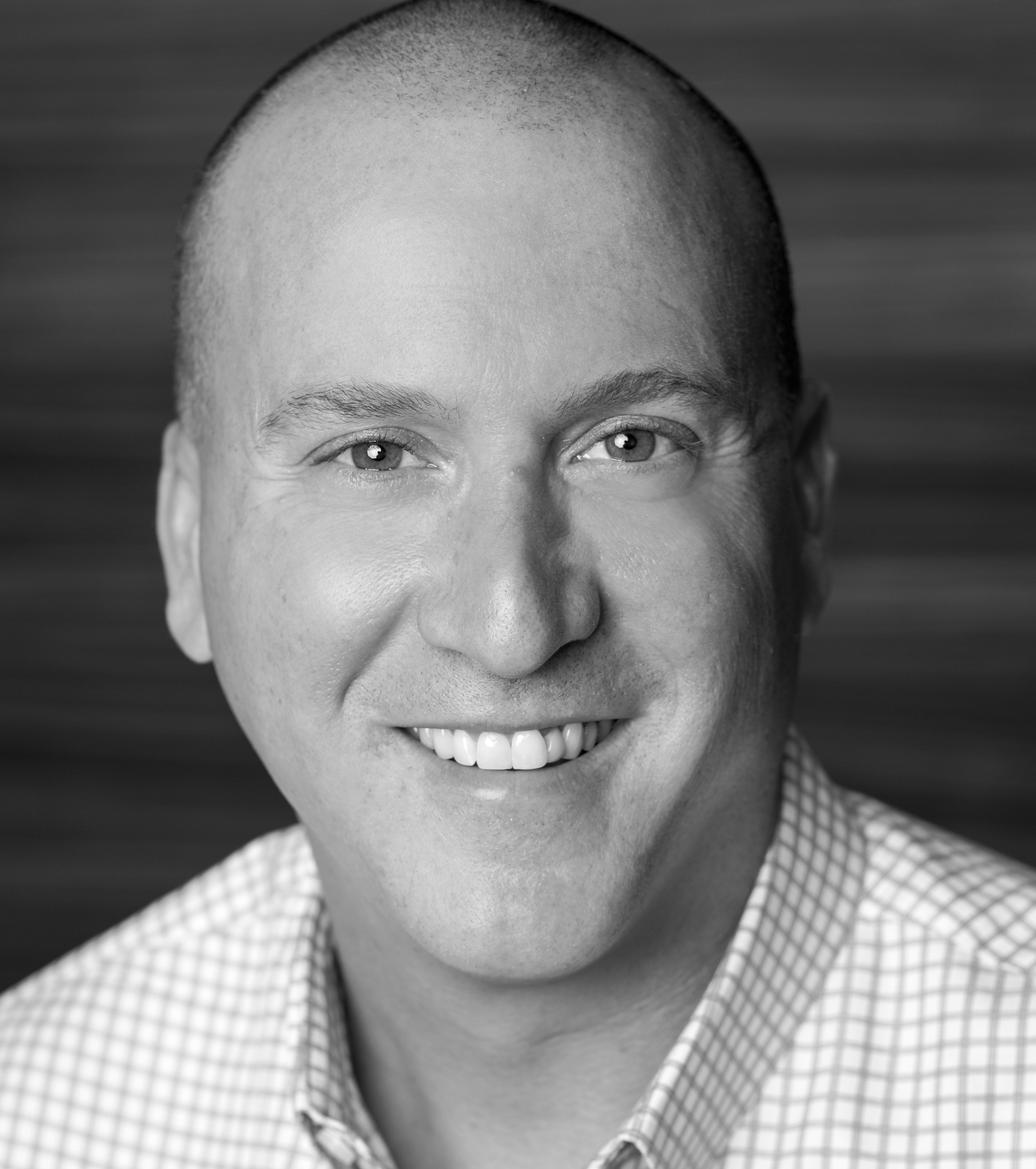
AdExchanger
Rob Wilk Is All Charged Up About Yahoo’s O&O
00:44:53
Microsoft ad sales vet Rob Wilk joined Yahoo last year to lead revenue for the company’s advertising business with one main goal in mind: to evangelize Yahoo’s owned-and-operated properties. Most advertisers just aren’t aware of the inventory...
Loading summary
Transcript62 lines
- [00:00]
Rob Wilk
Foreign welcome to Ad Exchanger Talks, the podcast devoted to examining the issues and.
- [00:17]
Alison Schiff
Trends in advertising and marketing technology that matter most to you.
- [00:32]
Rob Wilk
Foreign.
- [00:37]
Alison Schiff
I'm Alison Schiff, managing editor of Ad Exchanger, and you're listening to Ad Exchanger Talks, the podcast where we talk about ad exchangery things. My guest this week is Rob Wilk, the Chief revenue officer of Yahoo, which just celebrated its 30th anniversary a few weeks ago. Yahoo was incorporated as a company in 1995, which is the same year I had my Bat Mitzvah. So I feel old. Rob joined, or shall I say rejoined Yahoo as CRO last year, but it's his third stint at the company and we'll talk about his vision for the ad sales team within Yahoo ads and his vision for Yahoo's advertising business overall. Plus, we'll get into Yahoo's little spat with the trade desk over demonetization of video inventory last year. Why? Yahoo DSP decided to adopt the IAB Tech Labs data transparency labels recently, along with lots of other good stuff. And if you stick around until the very end, you'll get a little surprise. Rob will do the Yahoo yodel for you. Let's get started. Hey Rob, welcome to the podcast.
- [01:44]
Rob Wilk
Thank you so much for having me. I'm excited.
- [01:47]
Alison Schiff
So I usually ask people to share something about themselves that not a lot of other people already know. But in preparing for our chat, I came across a very fun fact about you, which is that you once performed a 15 minute stand up comedy routine in the West Village. So I just want details and I want you to maybe do a little bit for us briefly.
- [02:12]
Rob Wilk
That would be horrifying, but I did do it. I'm much older now, but when I turned 30, as a birthday gift, my brother signed me up for a six week class where you learn how to build a routine, you know, how to get all the beats right, how to address an audience, and then your final exam is the teacher actually books you at a real comedy club. So it was in the West Village, it's called the Duplex, still exists today. And I did do a 15 minute set. And I mean, I'm gonna be honest, Allison, I killed. I mean I killed.
- [02:44]
Alison Schiff
Haha. Good.
- [02:45]
Rob Wilk
I'll never do it again, by the way. It was horrifying and scary, but I loved every second of it.
- [02:51]
Alison Schiff
How many people were in the audience?
- [02:53]
Rob Wilk
Probably like a hundred. It was real.
- [02:56]
Alison Schiff
Did they pay money?
- [02:58]
Rob Wilk
They did, but to be honest, you had some regulars. But also I was allowed to invite people I knew. So out of sheer morbid Curiosity. A bunch of my friends and even my father was in the audience because they wanted to see it.
- [03:13]
Alison Schiff
Well, that is amazing. We are going to spend a bunch of time talking about Yahoo also because Yahoo just celebrated its 30th birthday, which is nuts. So happy birthday To Yahoo turn 30 on March 2nd. But first, I want to talk a little bit more about you and how you found yourself at Yahoo, but for the third time. So you were at Yahoo between 2005 and 2009, a few different roles including director of agency sales, and then Yahoo pops up on your resume again. Between 2009 and 2012, you were the senior director of Search account management. And I looked at the dates. I think you coincided with Marissa Mayer for about two minutes at the end there.
- [03:57]
Rob Wilk
Oh, actually I didn't. What's crazy is I gave my notice the same day they announced that she was joining. That's the same day worked for her.
- [04:09]
Alison Schiff
Well, then you had some stints at Foursquare, Microsoft, Snap, and now you're back at Yahoo as the CRO. And you joined last year. So why three tours of duty at Yahoo? Like what brought you back again and again?
- [04:24]
Rob Wilk
Yeah, well, the first one was an acquisition. So if you went a little bit further back, Alison, you would have seen that. I worked for a company called Overture, which was one of the early Yahoo acquisitions. They were a provider of paid search for a bunch of different publishers and Yahoo acquired that company for 1.4 billion. So my initial foray into Yahoo was the acquisition, which they've done a lot of acquisitions over the years. So it's not that unique. This latest round I think is probably, hopefully more interesting is I spent eight years at Microsoft. Microsoft and Yahoo have a longstanding relationship. And when Jim Lanzon, who was, who's now our CEO, was brought in by Apollo, you know, he reached out to me and just said, hey, you know, we should get together. We do a lot of business together. We have a long standing partnership. And he's just one of those people that most people find really easy to work with and talk to and we hit it off right away. So we, we got along really well as business partners. But then, you know, when I was trying to think about what I wanted to do next, you know, we started to have a conversation and it sort of led into something very naturally which is Yahoo under Verizon's ownership over the last few years really focused on our dsp. But there was a need that Yahoo had to really focus on our core properties. So that was the original reason for me Coming to join was to try and sort of reinvigorate and remind advertisers the power of Yahoo's owned and operated properties.
- [05:57]
Alison Schiff
Yes, I do want to talk about the O and O in a little bit, but another stop on your career path. So Microsoft for eight years, head of North America sales for Microsoft Advertising and then a few other titles. I think you were eventually the straight up global head of Microsoft Advertising. The whole shebang.
- [06:16]
Rob Wilk
Yeah.
- [06:17]
Alison Schiff
Then you left in 2023 to become the President of the Americas at Snap, but then you only stayed for about six months. I was just curious what happened at Snap.
- [06:27]
Rob Wilk
Yeah, listen, you know, there's not much really to say. I think chemistry for me is really important. Who I work with and how we work together is really important. And you know, candidly, Allison, it just wasn't a great fit. But to me, I sort of view it as it was sort of lucky because it opened up the opportunity to rejoin Yahoo. And I've been here for about eight months and I'm having an absolute blast.
- [06:51]
Alison Schiff
Okay, so back to Yahoo. But actually we're going to rewind decades. It's 1994 and Jerry Yang and David Filo, they're electrical engineering graduates at Stanford and they create a website called Jerry and David's Guide to the World Wide Web, Your future employer, which was a directory of websites. And then they renamed it Yahoo, which I think everyone knows stands for yet another hierarchically hard to pronounce organized Oracle. And then the Yahoo domain was created in 95 and then that year, March 2nd, Yahoo was incorporated as a company. And I saw this reference somewhere that the first ads ran on the yahoo site in August 1995. But I can't imagine that David or Jerry or really anyone envisioned that Yahoo would have a whole suite of advertising products and targeting solutions and one of the largest demand side platforms on the market eventually. So in a nutshell, how would you describe Yahoo's journey from yet another hierarchically. I did it right that time, organized Oracle to what it is today, which is something different.
- [08:10]
Rob Wilk
Yeah. The adjective that I think I use the most when I just talk about Yahoo, its history, even where we are today, the word iconic keeps coming back into my vernacular. Right. If you think about something like the Yahoo homepage, like you could strip every part of the branding off of that, show it to anyone and they would know exactly what it is. Right. And then you get into, you know, everything from Yahoo News, Yahoo Finance, Yahoo Sports, Yahoo Mail, which is still the number two email provider in the U.S. you know, one of the things I love about working at Yahoo and talking about Yahoo is that that 30 year history really means something. We have been around the block and we have learned a lot. I think Yahoo's history, for better or worse is pretty well known and there's been lots of fits and starts and lots of changes. But a big thing that got me fired up to come back is new management, a new leadership team, a new sort of perspective on what it takes for Yahoo to be successful. But the part that maybe I even didn't think about nearly as deeply until I got here is the level of love for the brand from the consumer perspective and certainly from the marketing and advertising community that I've called home for 30 years. Every single person that has reached out to me when I took this job was so positive. They always sort of throw in like, oh, I remember this, I remember that I had this amazing experience here. We did this incredible campaign and we want to Cannes lion here. All of that feedback from the community like Yahoo is, is just one of these companies and one of these brands that, that people love and I love that.
- [10:05]
Alison Schiff
And you mentioned mail and I'll share a little anecdote of my own. My first ever email address was a Yahoo email address RIP though it is now, it is now defunct. But I had it for many, many years and it was first ticket with 1t@yahoo.com. my dad used to be the a radio Engineer in the 70s. And apparently the term first ticket refers to the first time that a radio station broadcasts like a specific type of music or program or the first time that an artist or a song is played on the station. So yeah, that's my fun fact for you. First ticket@yahoo.com RIP that's a great fun fact.
- [10:43]
Rob Wilk
I can give you another example. I've been married for 21 years. So when my wife took my last name, she registered her new Yahoo email and it's, you know, it's been 21 years. She has a small business that she runs. She's a baker. By the way, the name of the little company is called Wilk Chocolate Little play on milk chocolate. And she's incredibly talented and she does like some really fun work. But she lives and breathes on Yahoo. That's her whole, you know, her whole personal life and her whole, you know, business runs on, on Yahoo. And she's very, very attached to it and you know, it's become sort of a part of your identity. And by the way, you know, just, just to make the bridge here for a minute, you know, email Addresses are not only very personal, but they're very sticky. A lot of people want to keep their email and a lot of people depend on us to make sure that, you know, that email is up and running and working and private and safe and all of that good stuff. And just as a funny aside, this literally happened yesterday. Alison. Yahoo's been doing some really fun things on social, whether it's Instagram or TikTok, we've got a lot of followers, like people, again, really like the brand. And we posted something yesterday, literally yesterday, and it was sort of a play on a group of young women sort of going through like almost looks like a museum tour. And someone says, here we find someone who's had the same email since 1998 and they like take a picture and they keep walking. And a lot of people, if you know what stitching is, they sort of stitched it and they're all waving sheepishly at the camera like, yep, that's me, I'm that person. But we posted that yesterday and it got 4 million likes. Like 180,000, sorry, 4 million views on like 180,000 likes. And that was posted less than 24 hours ago. So, you know, I'll try to not keep coming back to like, why? I just love the brand, but I love this notion of we take our work super seriously. You know, I as the CRO, I take our clients, you know, performance and their experience with us very seriously, but we don't take ourselves too seriously. And that silly little 15 second video, to me it's like very emblematic of like the vibe right now of how people view us, of we can be a little quirky, we can be a little bit different. We have an actual corporate personality and I just think people are enjoying that.
- [13:13]
Alison Schiff
Well, sticking with email, which is sticky, like you said, how is email taken advantage of or used on the advertising side of the business, like for identity? And how do you make sure that it's all kosher?
- [13:28]
Rob Wilk
Yeah, I mean the whole kosher part is number one. Right. It's important that people know that their emails are private and that they're safe. We can actually, we use the notion of emails as a way to remind people, like use our services. They're usually logged in at any given moment. The audience that's on Yahoo today, 70% of them are logged in. Right. Because they get a more personalized experience. Again, a lot of folks will toggle back between Yahoo Sports and their email and then go back to Yahoo Finance or news. So not only does it help us with what is now arguably one of the most valuable assets, which is a massive first party data source. But also it helps us on the DSP side because we have, you know, our DSP is powered by, you know, 200 million, you know, folks that are, that are logged in, that we understand, you know, who they are and what they do. And it's such a competitive advantage to have, you know, that level of first party data at just absolutely massive scale.
- [14:38]
Alison Schiff
So I know you are the consummate salesman, but tell me what else is interesting and differentiated about the Yahoo DSP and like how it fits into the overall Yahoo Ads equation but do it without any salesy language or jargon. That is my challenge. That is my challenge to you.
- [14:56]
Rob Wilk
I'm not a big jargon guy. Like I, I won't, I, you'll see. I won't like throw a bunch of like you know, weird jargony things at you. I appreciate mostly honestly I'll send. Because I can't pull it off to be honest. But, but objectively here's, here's what I think is interesting or what, what are, what is our advantage again, you know, the Yahoo DSP has exclusive access to all of our first party data. So I hope I said that as straightforward as I can. But one of the things I've been thinking a lot about is, and actually you, Alison and edxchanger have been covering a lot about what's happening with Supply Path. And now I'm really going to throw some names out here like supply path optimization and like what is happening in terms of all the different layers of tech that are being bundled together. The way that I like to explain our DSP is this is a DSP at scale, powered by, you know, a spine of really high quality logged in users, 200 million of them. But the DSP team and the tech team, all the folks who work on it, they think like a high quality publisher, right? Which, which I do think is differentiating. They think about, you know, again now I'm like worried about jargoning this too much, but RDSP is highly transparent. Just as one example, way more than most. They put a lot of the control into the end user's hands. The folks who are hands on keyboard, that is differentiating. And then on the other side of the coin, just to make this clear, Alison, we have our Yahoo DSP and what we sort of reintroduced in January at CES is Yahoo Ads. The simple way to think about it is Yahoo Ads is ads on Yahoo and Yahoo DSP is, you know, ads across. You Know, lots of different channels, you know, including, you know, ctv, which is, which is right now, you know, the fastest growing segment. So it gives advertisers, you know, two very clear swim lanes. One is like, hey, we want to, we want to reach Yahoo's audience on Yahoo. Great. We also want to use a lot of the incredible data to target people, you know, across the open web, across ctv. They can use RTSP to do that.
- [17:09]
Alison Schiff
So ads on Yahoo. Oh, and o. Yahoo has been very focused on its own inventory. So you have the stage, talk a little bit about the inventory that you have and what engagement you get and why Ono has become. Not that it never was, it was always a priority, but why it's become more so. A priority.
- [17:32]
Rob Wilk
Yeah. You know, I think part of the realization is we have an audience that when we sit with an advertiser, whether it's an agency or a client, and we sit down with them and we start skipping some stats, we get the same reaction every single time. And that reaction is, I had no idea. So if I told you Yahoo is the number one in terms of traffic, number one in news. We've been number one in finance for close to 25 years. Number two in mail, depending on the month, number two or number three in sports. And in aggregate, we're always top five. And some months we're number two. Sometimes we're number three, depending on, you know, conspiracy data. But when you, when you sort of reintroduce people to just the sheer volume of what Yahoo has, you know, a lot of times advertisers are surprised. And in fact, true story, I had one very senior client that we met with and we were, we were talking about, you know, Yahoo, and, and she sort of stopped the meeting and she's like, God, I. I think I feel the need to, like, apologize here. And I said, why? Why would you need to apologize? And her response was like, I'm in this business and these are things that I should know. And my honest response was, you don't need to apologize. We do. Right. Like, this was the reason we felt the need to relaunch Yahoo ads and sort of remind the industry, you know, who we are and what we do. Because, you know, there's a lot of competition out there. And if you're not out there making it clear who you are and what you do and what the value is, you know, advertisers have lots of choices. You know, scale, scale in isolation is just not that interesting anymore. And I think, you know, you go back 15, 20 years, Yahoo would say well, we're number one, we're the biggest. And saying that you're big these days is not interesting. But saying, hey, we still have massive scale and we have one of the most incredible data sets that advertisers can use to really effectively reach their audiences. Now you're getting somewhere.
- [19:37]
Alison Schiff
There's something else I wanted to ask you about which is Yahoo Backstage. And in its simplest terms, and this is how I think of it, it's a direct to publisher tool, right? Like kind of part of the SPO trend. Now I put it in the same classes like the trade desk, Open path, Pubmatic has Activate, Magnite has its clear thing. Is that too reductive? And what's the latest on Backstage?
- [20:04]
Rob Wilk
Yeah, I mean if you think about Backstage, I sort of think about it as, you know, there's a way to get reach through our DSD and if there are specific, let's call them top tier, highest quality publishers. Backstage is the way for advertisers to reach that. The, the, the proof is in the pudding though. Like does it actually work for advertisers? Our adoption of Backstage is, is really, really big and we have really good high quality publishers on there. And the way, the way I tend to think about it is, and listen, I think you guys have even written about this, which is if you look at the last couple of years, there's lots of trends that people can point to. One of the trends that I'm watching closely that you know, selfishly I'm excited about is this idea that advertisers want to know that their ads are obviously viewable, they're being seen by real people, but also they're showing up on places that are considered quality. You know, if you think about the growth of, of digital advertising over, let's say the last 20 years, it does build a little bit of like an, an inverse or sort of a perverse setup where you and I right now could set up a website, drive a bunch of traffic to it just for the sole purpose of running ads. That's mfa. It's made for advertising sites. There's a high incentive for a lot of, let's call it bad actors to do that. And I think the biggest brands are starting to wake up and say no, it's not just about scale, it's not just about reaching. I want to know that I'm going to not only reach an audience, but reach them in an environment that is brand safe, that is of high quality. And for me that trend benefits Yahoo's O and O properties. These are some of the most, again, iconic trusted properties anywhere in the world. But it also gets advertisers excited about Backstage. So on the DSP side, over 80% of all of our advertisers use Backstage, and when they do, they actually report savings. So the example we always talk about is ebay, who loves Backstage, told us that they find that they get about a 60% lower CPM on average compared to non backstage campaigns. So it sort of works in every dimension of it's high quality, it's safe, advertisers get a better experience and a better, better price, and we sort of, you know, get the credit for making that introduction between the advertiser and the audience.
- [22:45]
Alison Schiff
Well, before we hit our break, I wanted to talk about the Yahoo SSP, which you guys shut down in early 2023, which I know was before you came back and took on your new job. But when we reported on it at the time, we posited that it was like another, yet another example of how difficult, how tricky it is for SSPs to prove their value in a marketplace that's just getting more and more commoditized. So do you think there's been too much commoditization of the SSP market? And then why don't you think that's been the case or why has it been less the case in the DSP landscape?
- [23:30]
Rob Wilk
Yeah, I mean, you said it. Well, Alison, I, I wasn't here, so I only hear, you know, bits and pieces of, of part of it. But the, the basic idea wasn't really about the SSP as much as it was. We saw the clearer path with the dsp and you see a lot of, you know, companies that are, that are starting to have the same kind of perspective of. We wanted to make sure we've got focus. And it was like, can we focus on our dsp? Make sure that we understand that there's a real benefit for advertisers here that can focus on that direct path to the key premium publishers, which is such a big part of, again, about Backstage, which we already talked about.
- [24:14]
Alison Schiff
All right, well, fair enough. We're going to take a quick break now and when we're back, we're going to talk about Taboola and AI and transparency and lots of other good stuff. So stick with us. All right, we're back. And the first thing I want to dive into is what happened with the trade desk last year. So it was June, and the trade desk disabled access to some of Yahoo's video in inventory across the open market, which felt Kind of like, I don't know, a salvo in this ongoing dispute about how video inventory was being labeled. And basically the trade desks marketplace quality people were saying that Yahoo was mislabeling like some video as in stream, then it wasn't really in stream. And there was back and forth about that. And it was kind of the buzz at Cannes last year, like for the ad tech nerds, to be clear, not for the creative people. And then like shortly thereafter, it was like early. It seemed like Yahoo and the trade desk came to some kind of resolution. But I'd love a little peek behind the curtain. Like, what exactly happened there? And like, what is Yahoo's relationship with the trade desk today?
- [25:42]
Rob Wilk
Yeah, so the, the, the funny peek behind the curtain on this one is if you look back at the timing, I started on June 28th. Ooh, that was fun. So I obviously don't have a ton of background. I think the, the thing that is most important to know is we have resolved that issue. We work with them very closely. I actually candidly have a ton of respect for the trade desk and what they've done. And there's a lot of companies out there that would say the same thing just around their support of the total ecosystem for not only Yahoo, which is a really important part, but also just for the open web as a whole. So I can just tell you, totally resolved. Our focus is making sure that we deliver great results. So the relationship between the two companies is great.
- [26:33]
Alison Schiff
Well, sticking with Yahoo's relationship with companies, other companies. Taboola. So it's late 2022, Yahoo takes a 25% stake in Taboola. And that's part of a 30 year exclusive ad deal. And that made Taboola the primary native inventory ad seller for Yahoo's stuff, for Yahoo's, Yahoo's media properties. And I know Yahoo just celebrated its 30th birthday, but like as of 2022, Yahoo hadn't even existed for 30 years. And I just remember reading 30 years. Oh my goodness gracious, that's a very long time. Like, how do we know the earth will not have crashed into the sun by that point? But give us an update on that relationship too. And my guy, why 30 years? What is up with that?
- [27:23]
Rob Wilk
Look, it was, you know, we made a very serious commitment to the two companies just, just to make sure we're on the same page because you mentioned they're the ad seller. Taboola does have access to Yahoo. Yahoo supply, but we also have built a team within Yahoo ads that can work with advertisers. Directly and allow them to run Native across Yahoo. We have a whole team that, you know, builds the campaigns, optimizes them, reports on them. You know, very, very sort of high touch. So just, just so we're clear on that, I tend to think of it more like Taboola. Taboola's platform is really more the engine that drives our Native. But our Yahoo relationships with advertisers around Native, you know, are. Remain intact.
- [28:10]
Alison Schiff
And so 30 years is just. I don't know, is it an arbitrary number to show that you were putting like a ring on it in a way? I don't know.
- [28:19]
Rob Wilk
I'll be honest, I wasn't here when that deal was signed. But I know that we're very committed to each other. I'm very close with their executive team. We meet all the time, we collaborate constantly. They're building a lot of great tech that we can then use to drive great results for advertisers. And that's really what I care about.
- [28:39]
Alison Schiff
Well, changing gears a little bit and to touch on something you brought up during the first half. Transparency, or kind of like more like the lack of transparency. Whenever we talk about transparency in online advertising, it really is a reference to the lack of transparency in online advertising. And it's been a huge issue in the online ad world for years. It continues to be. And I feel like we've been talking about it forever. Because we have been talking about it forever. And earlier this year, Yahoo became the first DSP to adopt the IB Tech Labs data transparency labels, which the Tech Lab first released back in 2019. So it's like six years. I remember reporting on it back then and there wasn't really any adoption. The labels are basically programmatic advertising's answer to, like, food nutrition labels. So there's information about how an audience segment is built and what data they contain, the provenance, the recency, and stuff like that. But my question is. Well, it's two questions really, like, why aren't all DSPs doing this? And then why did you guys decide to do it now? Because the labels aren't new. I think they're a great idea, but they're. They're not new.
- [29:48]
Rob Wilk
Yeah, it's so funny you should ask other folks that exact question. There's a reason that we signed up for it and full disclosure, I'm on the board of the iab. I have an ocean's deep worth of respect for David Cohen and what the IAB does. So I'm excited about it because it puts our money where our mouth is. You just Said it. We can talk about transparency all day. And I love the example you use of the nutrition labels. Like as a father of three kids, imagine not being able to understand what's put in our food. And even sometimes when you can see the label, you don't even understand what it is. So that's such a good sort of analogy that I really like. But these things should not be exceptions. These are advertisers that are using their budget to buy performance. They have an expectation of performance and they have an expectation of quality. It is a great question to know why there aren't more people doing this. We worked very closely with the, with the IAB to get this going. And because we have nothing to hide, that is the real explanation of transparency. We have no problem making sure that people understand where does our data come from, how up to date is it, how is it grouped, all of that, because it helps the advertiser understand what are the ingredients that we put in to drive the results that we drive. And yeah, the hope is that advertisers will trust us more and they will, you know, invest more with us over time because not only do they trust us, but they actually understand the ingredients that drive that success. Why wouldn't you do it?
- [31:26]
Alison Schiff
I don't know. Maybe it's the difference between fast food and farm to table or something. I'm just jumping around because I feel like there's so much I could ask you. But let's talk about AI. Like how Yahoo uses AI to inform and improve ad performance. But really, really not aspirational or cool sounding edge case stuff, but real stuff that has some level of scale to it.
- [31:54]
Rob Wilk
Yeah, it's so funny. This is like, I think I'm starting to learn about you that we share a lot of pet peeves, but one of them is the idea of talking about AI in some type of big magical, someday way. And I'm just more pragmatic than that. I prefer to talk about it as what are people doing with it today? Right. If you look at our DSP as an example, we have 570AI and DSP patents. That's number one. Number two is we have a suite of products called Blueprint. Blueprint is live today. Advertisers use it. It's one of our fastest growing features that we've ever had in our DSP. This engine processes like 2 trillion bids every day and uses over a million signals to help make decisions. That is a real case, a real example today on the owned and operated side, again, real use cases. Alison I don't know if you know this, we acquired a company in April of last year called Artifact, started by Kevin Systrom. He's very well known. He's the person who started Instagram. This is like his latest endeavor. We acquired it, it's an AI powered news app and we basically took the tech and introduced it to a massively scaled audience in yacht news. So now the more that users use our news app or the more they read stories on YahooNews.com, those experiences become a lot more personal, a lot more relevant. And the last one, you're starting to see it all over Yahoo. But if you read a new story, there's a little area above the news story that you can tap and it just says generate key takeaways. Right. It's basically a more simple but elegant way to introduce users to AI. So whatever that story is, you hit that generate key takeaways and you'll get like three or four headlines of what that story is about. And of course it's in Yahoo mail. Now whether it is, hey, summarize this very long email someone sent me. Help me write a better version of it. So it's starting to pop up in all these different places and you know, I, I understand the desire and I understand folks who want to talk about it in sort of big grandiose terms. I think if you, I, I prefer to try to find an angle that is most useful and helpful to others and understandable by others. So I try to use examples like that of like this is in the everyday and maybe even just one that is really out of left field that a lot of people don't talk about. But one of the things, you know, within our own sales organization, how we work with advertisers when they, you know, send us an RFP and we want to build that proposal or advertisers performance and we want to optimize it like we're building AI into our own team's workflow just as much as we are building it into the products that either our advertisers use on the DSP or building it into products that you know, everyday consumers use on, on Yahoo properties.
- [35:14]
Alison Schiff
So to use three like acronyms at once. It's like AI applying AI to your B2B CRM.
- [35:23]
Rob Wilk
Well done. Yeah, I mean listen this, you know, it's no secret there's companies out there like Salesforce that are really going all in on AI and what they call gentic AI and I don't want to read about it and I don't want to, you know, wait for someone else's case study. Like I've told Jim from day one, you know, one of my aspirations for this team is to be the most tech forward, you know, data driven organizations that we have. I think there's so much opportunity to use AI just to be better and more efficient and more effective and more helpful. And I don't want to wait. So we're testing things now. We're working on these things right now.
- [36:01]
Alison Schiff
Well, how do you use AI for yourself? Like to help with your own personal work life or life in general? Because one of my colleagues said that she was chatting with you at an event recently and you mentioned that you love podcasts and that you're a voracious listener of podcasts and just audio in general, in part because you drive to work and that you use an app to turn articles into podcasts, which I think is really interesting because it helps you consume more, you know, content overall, I would assume, and allows you to multitask. But tell me a little bit about that and how else you use AI just for yourself.
- [36:40]
Rob Wilk
Yeah, I mean, so that actual reference is notebook lm. So I'll give you a great example. We have a weekly leadership team meeting and I usually try to schedule everything I can around that meeting. It's like my key touch point with my team. But every once in a while schedules don't align. So there was one meeting that I could make and basically you can turn an actual one hour meeting into a AI podcast where two people are now two AIs, I should say, are basically discussing the team meeting as though they were in it. And honestly, I will listen to that all day long versus reading just the transcript, which could be pages and page slot. And I think that part is really, really fascinating and it's just a more interesting way to consume information. I'm a huge, huge die hard music fan, so I've learned over time that I can memorize song lyrics. It's a very strange skill that I've acquired, but I realized that I'm more of an auditory learner. So I like to listen to things versus read things. I just find that it's more interesting to me, it's more pleasing and I find that I can retain more information. The other example, I'm sure I'm not alone in this, but you know, I'm getting older and I'm becoming much more conscious of my health and I, I talk to ChatGPT a lot about the things I eat, the exercises that I do, what's Better, you know, I need to, I need more fiber, I need this, I need that. What should I do? Like, I just find it obviously very helpful, but it's a more. What's the word? It's just a more interesting way to get information is maybe the way I would put it.
- [38:28]
Alison Schiff
To go back to the notebook AI example. I can see how it would be useful in a lot of ways, but it also, I think it's what was lampooned in a recent SNL sketch. I don't know if you saw it, but it was a teacher that was trying to make lesson plans into a podcast and it kind of goes off the rails else.
- [38:48]
Rob Wilk
But so it is the perfect, like, you know, perfect thing for SML to make fun of. But actually, if you actually use it and you see the output, I'm telling you, you would be shocked at how good it is. I mean, to the point where they will say, you know, again, it's an AI. But they'll say, oh, Rob made this point. But then so and so disagreed. Can you believe they said that? They have like little now what he thinks that they throw into the AI to make it really feel like you're listening to two people who are giving the play by play of a meeting that you missed. Like, you know, reading the notes of a meeting that you missed is probably the most excruciating thing I can think.
- [39:27]
Alison Schiff
To do for sure. Especially when some meetings could have been an email. That's what they say, of course. So we're nearly out of time, but I'd love if you could share a few. This is going to be yin and yang, like a few online advertising trends that you think are really cool and stuff you're excited about, but then. And also some things that you're just totally over, like you don't want to hear about them anymore.
- [39:51]
Rob Wilk
Trend that I truly am excited about is we sort of touched on it a little bit. But I'll just say the idea that advertisers and agencies are starting to sort of run into the warm embrace of the publishers that they know and that they trust, that are high quality and brand safe, I really think that matters. And it's not just like a talking point. You know, I have children, I have a 20 year old, a 17 and a 14 year old. And I look at their online habits and a lot of times I see them consuming things that I wish they didn't and a lot of things that I understand why they're so confusing to them from a content perspective. And then, you know, some of the. The ways that advertising is built in that. That, you know, confuses them, I'll just say so. I think the. The notion of quality, the notion of trust, safety, all of that I really do think is important. It's not just a. It's not just a talking point. You know, things that I'm. I'm sort of tired of hearing is. I'll just say, like, you know, the importance of data. Like, okay, got it. Like, everyone knows data is important. Even, you know, maybe I'll even go on the AI front, because we talked about it a little bit, is I just personally am more interested in how people are using it today. That doesn't just make for a sexy headline, but actually drives business results. Not just. We did this cool thing with AI.
- [41:21]
Alison Schiff
Yeah, I mean, I totally agree with that because the Edge case is always interesting. It's cool, it's flashy, maybe there's a sizzle reel about it, but it's just not what you eat every day.
- [41:36]
Rob Wilk
Exactly.
- [41:38]
Alison Schiff
So to bring us home, I want to ask my time machine question, which is a favorite question of mine. If you could travel back to one specific point in human history and make one strategic change that could alter the online advertising industry for the better. And of course, you can put aside all paradoxes of time travel. So you make a change however many years ago. It doesn't mean that you're not born or anything. When would you travel to? And then what change would you make?
- [42:11]
Rob Wilk
So I can't use the butterfly effect rules here. Yeah, I love this question. I think I would go back to that first moment when there was a news story where a brand had an ad next to that news story and someone had an emotional reaction and said, this is bad. And I say that not as the person who represents Yahoo News, but as a. As a citizen of this country. I believe in quality journalism. I think it's really, really important. And, you know, they're heavily dependent on advertising revenue. And I would. I would love to go back to that moment and not allow that brand to, you know, to walk away from, from quality journalism. I'm not talking about, you know, fake fake journalism or, you know, some kid in his basement is writing news stories. I'm talking about companies that we all know, that we respect, that we know take the truth very seriously. I'd love to go back in time and change that perception so that quality news organizations around the world would have the revenue they need to do their jobs really well.
- [43:26]
Alison Schiff
Hell yeah. So I.
- [43:30]
Rob Wilk
True answer.
- [43:32]
Alison Schiff
I have a request. So I had Yvonne Markman on this podcast it was September 2021. At the time, he was the chief business officer at Yahoo, and he left the following year, and now he's an investor and he's on a bunch of boards. But when he was a guest on Ad Exchanger Talks, he humored me when I asked him to do the Yahoo yodel at the end of the episode. And so, Rob, I ask you to continue the grand tradition of Yahoo executives on Ad Exchanger Talks and to do the Yahoo Yodel for me to close us out.
- [44:06]
Rob Wilk
I will do it because I have no shame. But I will tell you, I am a huge music fan, but I can't sing a lick. So here we go. Yahoo. Bye. My voice cracked. Terrible.
- [44:24]
Alison Schiff
Sa.