← AdExchanger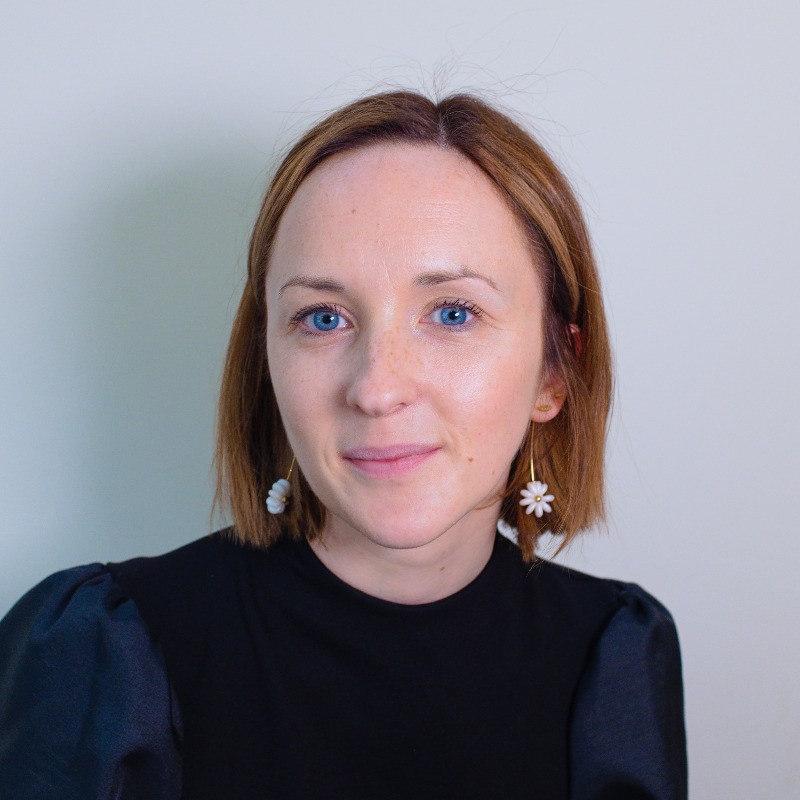
AdExchanger
The Business Case For Carbon Cuts
00:51:38
Anne Coghlan, co-founder and COO of Scope3, on why cutting carbon in ad tech isn’t just about saving the planet; it’s about eliminating inefficiency and financial waste at the same time. Plus: Using AI to automate and optimize digital media buying...
Loading summary
Transcript86 lines
- [00:00]
Ludo Devellon
Foreign.
- [00:13]
Alison Schiff
Welcome to Ad Exchanger Talks, the.
- [00:15]
Anne Coughlin
Podcast devoted to examining the issues and trends in advertising and marketing technology that.
- [00:20]
Alison Schiff
Matter most to you.
- [00:24]
Sarah Sluice
This episode is sponsored by Amazon Ads. Amazon Ads offers a range of products and solutions that can help businesses achieve their advertising goals. With Amazon, Streaming TV ads show up alongside the content your customers love. These full screen, non skippable video ads appear before, during or after video content like TV shows, movies and live entertainment across connected tv, mobile and desktop. See your ads show up on Prime Video, Twitch, Fire TV channels and across the open Internet.
- [00:56]
Alison Schiff
I'm Alison Schiff and you're listening to Ad Exchanger Talks, the podcast where ad tech nerds unite. My guest this week is Anne Coughlin, Chief operating officer of Scope 3, the advertising sustainability startup she co founded with Brian O' Kelly Bach himself. We'll talk about sustainability as a selling point, Scope 3's new Agentic Media platform, why brand safety tech today just ain't doing the trick, and lots more. But first, attention publishers. Let me tell you something you already know. Signal loss is real and the pressure is on to reclaim growth. So join your peers at the Admonster Sell side Summit in Austin November 2nd through the 4th, where industry leaders will map the roadmap back to growth and profitability. It's the one event built for publishers by publishers. No panels, no fluff, just real strategy that works. Save $500 on your pass with code POD500All caps@admonsters.com sellsideaustin the web is changing fast. Don't get left behind. Hey Anne, welcome to the podcast.
- [02:02]
Anne Coughlin
Thank you so much for having me.
- [02:04]
Alison Schiff
All right, so what's one thing about you that not a lot of other people already know and that I couldn't just find out by checking out your LinkedIn page?
- [02:14]
Anne Coughlin
I don't think you could find this on LinkedIn unless you looked really, really hard. But I don't speak English at home, so I speak Italian at home. I'm not Italian. I learned it at school, but I have a husband who's Italian and a five year old. And so we're trying to make sure that my son, as we live in London, is fully bilingual. And so I spend my weekends at the park with Italian kids shouting in Italian for my son to not break a leg or something. So yeah, I do English in the day and Italian in the evenings and weekends.
- [02:49]
Alison Schiff
That is, by the way, something I did find out by looking at your LinkedIn. I was going to ask you if you speak Italian because I do like to scour people's pages before I have them on the show. And I saw that the first thing you have listed for work experience is a gig as a freelance translator from Italian to English when you were based in Padua. So you don't have to come up with another fact.
- [03:12]
Anne Coughlin
I did do that and that was so funny. That was like, probably like the cheapest translation work ever. I got paid a thousand euros to translate this massive, massive statistics book, but it was from Italian to English. I just looked up a lot of words and it was mathsy book, so it was kind of easy. Oh, damn. Okay, I'll think of another one.
- [03:35]
Alison Schiff
Definitely off the hook.
- [03:37]
Anne Coughlin
You want me to do another one?
- [03:38]
Alison Schiff
You know what? Yeah, yeah, bring it on, if you have one.
- [03:42]
Anne Coughlin
So I played the violin growing up and for a few years I was in a band and played lots of gigs and festivals around the UK until my friend, who was the singer, songwriter in charge of the entire band, got a record deal and moved to la.
- [04:01]
Alison Schiff
So.
- [04:01]
Anne Coughlin
So she's now, you know, going on tour and publishing songs that get millions of views on TikTok and Spotify. And so that's kind of nice. I'm hidden somewhere on Spotify on an EP from 2017.
- [04:18]
Alison Schiff
Well, now you're an ad tech. Exactly, you're ad tech famous.
- [04:22]
Anne Coughlin
Well, actually I was an ad tech during the band and I would be doing my work during soundcheck. Sometimes when we were trying to play at like a venue in London, I'd be like, on a call or on Slack or something. Probably shouldn't have did that.
- [04:37]
Alison Schiff
You have multiple fun facts, so I appreciate that. And also I do appreciate that you're bringing a second language into the home at a young age. I wish that had happened for me. Not only just being American, because a second language just doesn't happen for a lot of Americans. We've become very lazy.
- [04:56]
Sarah Sluice
But.
- [04:56]
Alison Schiff
But also my brain, I think, is now foreclosed. There's just something that's less elastic about it now. I'm really good with English. I got English down and I just. I have like a brain made of Teflon for. For other languages. And it's. It's a shame. And I wonder if that had been different, if I'd spoken like Hebrew at home, for example. I had some exposure to that, but we never talked it in that language at home.
- [05:17]
Anne Coughlin
I wonder if you do, though. My mum has just started learning Italian in her 70s, so, you know, she goes to classes now. Maybe if you have more time in your life, you could figure out a way of picking up something I mean.
- [05:32]
Alison Schiff
I'll take it under advisement. I'm also fundamentally lazy unfortunately as a person. But I know that you are not lazy because you are the co founder of something and you cannot be lazy as an entrepreneur. But I want to talk about what brought you to Scope three before we talk about Scope three. Now you're the coo, you are the co founder but we're going to head back in time for a minute. First you've been doing the ad tech thing for a while, even during soundcheck and before going on stage. So since around 2014, which is when I joined Ad Exchanger. Actually that's when you joined App Nexus as an associate implementation consultant and worked your way up there for four years and then you went to Xander in 2018 when AT&T bought App Nexus. It wasn't called Xander then, that was, that was the AppNexis rebrand. And then you left before for the sale to Microsoft and you joined Weybridge as head of product. And Weybridge also had a different name when it started. It was allergic to vowels. A commodity. Yeah, we were cmdty applying data and tech to supply chain and logistics management. But like real supply chains, physical ones, not advertising supply chains. And there's a through line through all of this because webridge and Commodity was co founded by Brian o' Kelly and I think all of our listeners know that he was also the co founder and CEO of AppNexus where you started your ad tech career. So you and Bach have been working together for quite some time. App Nexus and Weybridge and now Scope three. So how did you guys become like besties?
- [07:09]
Anne Coughlin
Yeah, how did we become besties? The first time I spoke with Brian he actually interviewed me for a role change at AppNexus. So I'd been working my way up in the implementation consultant world. So at UpNexis when I joined there was this really strong group of people called Global Services and we were the people that were on the ground every day in our clients offices troubleshooting, helping them get the best use out of the platform. And during that time he's told me since that I was very loud and very noisy about the things that my clients needed and my clients were really savvy builders in mostly in Europe. So MIQ was one trade lab at the time who now part of Jellyfish Brandtech Group and that kind of led me to be asked to interview internally to be the first product strategy hire in Europe. So at that time AppNexus hugely American New York headquartered, I think, 600 people in the New York office, and There was only 30 in London when I joined. And it got up to about 100 by the time I left. But there was no product management outside of the US and so they decided that they wanted that role. And so the first time I actually met Brian properly, he was interviewing me for the role, and I'd never done product before. And so very openly in the interview, he was asking me questions, saying things like, I can't ask you the question I'd normally ask a product person because you've not done the role before, so I need to think about a different question to ask you. And so we worked quite closely together for the year, kind of leading into the acquisition on a project, really thinking about what the product could be for these kind of builder types within Europe. One of those was Cybid. So Cybids were acquired by Double Verify a couple of years ago. So kind of those guys were just starting out and we were figuring out how to make AppNexus work really successfully for them at that time. And so then it was a year later when he called me and asked me to be the first product hire at Weybridge, a commodity at the time. And then we worked closer and closer during that period of time where we actually never met in person because it was Covid. So we never met for those two years. And the first time that we kind of had the idea and started thinking about what it would mean to start Scope three was, you know, just after the travel ban had lifted. Do you remember that? That crazy time where couldn't fly. I couldn't fly to the US because I wasn't a US citizen. And so I think it was November 2021 when they lifted the travel ban. And I think a week later I was in New York and we were in a coffee shop, the founding team figuring out how to start Scope three.
- [10:05]
Alison Schiff
I imagine you were sitting outside, it was very cold.
- [10:08]
Anne Coughlin
We were sitting inside, but far away from each other.
- [10:12]
Alison Schiff
Right. Of course, you're just yelling about trade secrets across the sidewalk. So then it's late 2021, early 2022, which is when Scope 3 was founded and launched officially. Right. So at the time, the main focus, like the core idea, was to help digital advertising, the whole industry, track and understand and reduce carbon emissions associated with digital, like ad transactions and the whole supply chain. And you did this through. Through data. It's very similar in a way conceptually to commodity. Right. It's just like taking data and applying it to a different industry. But this happens to be the industry that you and of course Brian were very involved in. You would measure the environmental impact you still do of digital advertising, like the amount of energy used by devices, data transmission, servers that power the supply chain, all of that stuff. And then you would give this data to buyers, agencies, advertisers, ad tech companies, and they could use it to become carbon aware and hopefully make changes to reduce their carbon footprint footprint. And I remember when I first read about it, I'm like, this is a really great idea. And there was a positive reception, like who can argue with trying to save the environment? But I think there was also like some cynicism in the ad industry that tracking ad emissions is like negligible. Right. Compared to bigger issues like video streaming or AI energy use or like even beyond, you know, what's happening online. And then maybe it's also about just like feeling good and positive pr, but what about like real climate impact? So like what do you, what would you say and like what do you say to naysayers?
- [11:55]
Anne Coughlin
Yeah, it's, it's a great question and obviously something that we, we came up against quite a lot when we started the company. I was just a feel good thing, like what is the actual carbon footprint of this? When you look at, you know, a CPG brand who has huge manufacturing supply chains and you're focusing on advertising. But I think that really the reason why we founded Scope three was seeing that the advertising ecosystem that we left for a couple of years still fundamentally had an incredible amount of inefficiencies and ineffectiveness. And Brian and I were watching partly from the outside and he was on the inside looking at Google antitrust case. We were looking at the continued conversation about cookie deprecation. We were seeing, you know, the year after year, ANA reports or ISBA reports coming out saying that the percentage of working media was still hovering around like the 45% mark. And so for us, the seeing a problem with the whole system and trying to figure out what is something new that we could bring to the system that would make people think about it differently and do something to drive change. That's what we were trying to figure out the solution to. And so we had this kind of economic theory as well, around doing the right thing, but actually doing it because there were problems with waste and actually trying to move the needle in that way. And so very quickly, I think within the first year we realized that it wasn't a do the right thing, measure your carbon footprint, get a reduction. Because fundamentally, first of all, if it's your job to hit certain KPIs as a business, you're not going to want to vanquish those, maybe not get a bonus, maybe worst case, get fired because you're only trying to do the right thing. There needed to be true business impact. And so we kind of saw that carbon was a lens of actually getting rid of an incredible amount of inefficiencies. We published a report with ubiquity at the end of 2022 showing that there was a real correlation between made for advertising sites and emissions. And so it was again using carbon as this lens to actually solve an industry wide problem, but in a way that was, I'd say, kind of almost more quantitative. So when you think about carbon emissions and grams of carbon and the models that are used which are agnostic to advertising, we're just applying them to advertising. That's very different to the metrics that we just make up within the industry. Like viewability is a metric that we only kind of came together to decide this is how we're going to measure viewability. And this is what is, you know, a creative interview is defined as this or you know, another one. If you're trying to create a couple for the same thing. It was a really good way of having something that couldn't really be argued with.
- [15:12]
Alison Schiff
Well, yeah, I mean, it almost doesn't matter what the selling point is because there's such a correlation between financial waste and environmental waste. You brought up mfa. So making an ad transaction more sustainable means doing things like cutting out the middlemen or cutting out unnecessary hops and all of these auction shenanigans. And then if you do that, the auction is just more efficient automatically. So cut out the environmental waste, you cut out the financial waste, you cut out the financial waste, you help with the environmental impact. They're quite correlated. But as you were saying. Yeah, to my mind too, that would be a more compelling pitch. Like, I'm sorry to say, like the environmental pitch. Of course you're never going to find someone who says I don't care about the environment. Or if you do, you know, you'll never have them say it out loud. But like, what's, you know, the benefit to my bottom line? Like that really feels like the motivating factor. But are you selling like sustainability today? Is that part of the pitch anymore?
- [16:13]
Anne Coughlin
We still have sustainability kind of standalone media reporting. We have a. For instance, we have a really good partnership with TikTok where we help their customers measure the impact of campaigns that they run on TikTok and provide kind of suggestions and way of reducing it. But what we see really is a step further from what I just talked about, which is if we're wanting to help ultimately the ecosystem drive safe and sustainable growth, what we need to be doing is looking at where will this ecosystem be in 3, 4 years time, unfettered, if someone doesn't actually think about the best way to build the system. And so we've in the last, really, since the beginning of this year, been really pushing to imagine what a new way of media buying actually could look like. And recognizing that, I think we're a few minutes into this conversation now and it's the first time I say the words AI, but recognizing what AI could actually do to the ecosystem, we can talk in a second, I'm sure, about the environmental consequences of using AI, but there's a worst case scenario and then there's a best case scenario about that. And if we're true to what we want to do in in Scope three world, which is like manifest an ecosystem is actually better for the brands, for publishers and consumers, we need to be much more conscious about building from the ground up something that works better and is more effective, but it's also not wasteful from a environmental perspective. And then as we've seen already from.
- [18:00]
Alison Schiff
A financial perspective too, there's a ton for us to talk about related to AI and the platform upgrade. But before we do, as you were speaking, I was thinking, yeah, sustainability, not just environmental sustainability, but like sustainability for this entire industry so it doesn't collapse in on itself because it's just so complex. At a certain point you really need to just like take a step back and think about how to rejigger how this thing works. You can't just keep adding, you have to subtract for it to be flat functional.
- [18:31]
Anne Coughlin
Yeah, I love that. I'm going to write that down.
- [18:34]
Alison Schiff
Yeah, I see you jotting. So we're going to take a quick break and then we're going to spend pretty much the whole second half talking about AI. But before we do, and bringing it back to sustainability as an environmental thing, how much progress has there been made toward like quote, unquote, decarbonizing digital advertising? Like have you guys actually been able to quantify that?
- [19:00]
Anne Coughlin
It's difficult to put a real number on it because we still haven't finalized as an industry exactly how we should measure every single channel across the entire media buying landscape. So the GMSF, which is on version 1.2 now, is getting to the point where we're Almost covering every single channel and able to measure. We certainly see on a kind of country by country basis from the brands that we have been able to measure an overall reduction in emissions. I think we did in a study we did earlier this year. It was half a billion impressions that we analyzed. And we saw through kind of the use of our kind of reduction suggestions, 29% lower carbon emissions overall. So there's like real tangible ways of doing it. But at a macro level, as an industry, we don't have a number that says, you know, from this year to this year, this is the reduction overall. And part of it is what we're going to talk about, like how do we think about the entire life cycle and where the boundaries are and then the use of, you know, new technology on top of the existing ecosystem, which is part of the problem.
- [20:22]
Alison Schiff
I mean, it makes sense as an evolution. First you have to measure the thing to see how bad it is or just understand it, to understand the scope of it. And then you can innovate on top of that. But until you have a pretty decent sense of what the world looks like, it's a little bit difficult, not just to do the selling, but to create the technology to take the next step.
- [20:43]
Anne Coughlin
Yeah, absolutely.
- [20:45]
Alison Schiff
Okay, we're going to take a quick break now and when we're back, you're going to hear us say AI like 37,000 times. So stick with us. Foreign.
- [21:11]
Sarah Sluice
I'm Sarah Sluice, editorial director at Ad Exchanger, and I have with me here today Ludo Devellon, the product marketing lead at Amazon Ads, our podcast sponsor this month. Hello, Ludo.
- [21:22]
Ludo Devellon
Yes, hello. Thanks for having me.
- [21:24]
Sarah Sluice
So to start things off, what is the biggest opportunity right now for advertisers in the streaming TV market?
- [21:32]
Ludo Devellon
Well, the biggest opportunity in my view is to remove the guesswork for marketers. When you think about it, streaming TV combines the best of both worlds. It's mass rich with precision and personalization. And with Amazon Ads, advertiser can achieve this personalization at scale by serving ads to specific audience based on viewer behavior while delivering broad reach. And this powerful combination helps maximize advertising impact and remove more importantly, wasted ad spend. And this is really critical because, you know, the ANA has estimated that marketer on average waste 36% of their budget through inefficient targeting, duplicative ad delivery over reliance on probabilistic audiences.
- [22:12]
Sarah Sluice
So streaming delivers that same mass reach people love with TV advertising. But less waste, more personalization. When advertisers consolidate their streaming TV investment with Amazon ads, what Happens.
- [22:27]
Ludo Devellon
Well, I think there are two advantages to work with Amazon ads. I mean first of all, Amazon ad is the only DSP that has all premium streaming inventory under one roof. So of course we have prime video ads which is our own property. But advertiser also have access now to all premium publisher including Netflix, Disney, Roku and more. And the second advantage is that we power our advertising solutions through the Amazon Ads authenticated graph. This is a unique graph which is built on verified relationship and not model data. And so in the US we can reach 90% of household to help advertiser manage true unduplicated reach and frequency and it's delivering great performance. So for instance, with the same budget, advertiser can see on average 42% improvement in unique reach for their campaign with a reduction of 27% of frequency.
- [23:17]
Sarah Sluice
So we've got inventory and identity as the two unique pieces. So let's close with looking ahead. Where do you see advertising on streaming TV heading in the next few years?
- [23:30]
Ludo Devellon
So I think streaming TV is really democratizing access to TV advertising. The barrier to entry are coming down with more self service options without minimum budget or year long commitment. So for instance at Amazon we have Sponsored TV which is our self service streaming TV solution for businesses of any size without any commitment in terms of minimum budget. The second driver is AI tools that make video access advertising creation both accessible and also very affordable. And I think this means that small businesses who could never afford TV before will join the game. And all in all, I think we could go from thousands of advertisers to potentially millions of TV advertiser in the next few years, which will unleash a new golden era for creativity with more choice and more entertainment for consumer.
- [24:17]
Sarah Sluice
So we will be seeing more small advertisers entering the TV market using AI to create their ads. I totally agree with that prediction. Thank you Ludo. And thank you to Amazon Ads for supporting our podcasts.
- [24:30]
Ludo Devellon
Thank you for having me.
- [24:44]
Alison Schiff
All right, we're back. And before we talk about AI for the next 20 minutes, I wanted to ask you a question that I asked Brian o' Kelly on this podcast when I had him on back in September 2022. I mean, it's both like a fair and an unfair question, but there's not a little bit of irony in having essentially founded one of the companies that created the mess that's now being fixed in a way by Scope three. And by this mess, I just mean the state of online advertising, because Brian is one of the innovators and inventors of rtp. And now it's like, well, I'm going to create a startup to clean, clean up the problem. But like, how do you answer that? Like, how do you, how did you answer it? I feel like it came up more in the beginning. It was just a sort of a potshot. But still a question that I assume people, people asked you.
- [25:38]
Anne Coughlin
Yeah, I mean, yeah, I think Brian's called the. I know he's got lots of names, doesn't he, around, you know, the godfather of rtp. And he's someone who really thinks deeply about the problem that's in front of you that you're trying to solve and is an incredible innovator and manifests the things that will solve that problem. I think at the beginning of every revolution or evolution in technology, there's, I always go back to the hype cycle, the Gartner hype cycle, where you have this technology trigger and you're on the rise and then you get to this peak of expectations and then there's like a trough. And I think when you're creating anything, and it's so true in AI right now, you don't worry about the consequences because you're so focused on the problem that you're trying to solve. And that can also be. Then, you know, you start seeing the compromises that are made in a system that you've created that you don't necessarily have full control over. And maybe you shouldn't have full control over anymore because everyone is contributing to this thing. But I would say that this is part of the reason for Scope three existing is we talk about the system all the time and we talk about the things that potentially we could do to make it better. And we talk about trying to think about not just the first order consequences, so if you do this, then what happens, but the second order ones, what could happen after that to try and make sure that we're building out products and solutions that are not going to shoot ourselves in the foot in six months time, in a year's time. And I think part of the movement that we created in sustainability, this kind of wave of many, many companies joining us on this journey to want to measure and build innovative products to help people reduce their carbon footprint meant that there was so much collaboration and still is so much collaboration. I went to the Green Media Summit, the Equity of Green Media Summit in London last week and it's the first one that they've done in London and there's still such a huge discussion and way of thinking about doing that that it means that you can, you can kind of see people wanting to change something for the better. You know, it's, I think for Brian having invented Programmatic and then for me having played with Programmatic for so many years, there's some great things about it and there's so many opportunities for people to do really cool things. We just have to, if we think about the next, what the next evolution is, learn from the mistakes that were made, even if they were done with the best possible intentions of solving the right problems, and figure out what's around the corner that we can't quite see yet.
- [29:03]
Alison Schiff
And that's why I said it was a fair and an unfair question because why not use your expertise to look at what's next, right? I mean, you know how the guts works. So. Yes. So let's talk about what's next. But also I guess what's now because scope 3.2.0 is out there. It was earlier this year you guys released like an updated AI product suite. You call it the Agentic Media platform. And it's a bunch of AI driven tools that help buyers and publishers optimize their media buying. It's like a triplicate focus, efficiency, brand safety, sustainability and they're all quite interconnected. So features like smarter automation so you can manage your direct buys or your programmatic campaigns dynamically filtering out crappy stuff, high carbon inventory fraud. And those things are obviously like we were talking about during the first half, like very closely correlated with low quality inventory. So it all ladders up to efficiency and then the whole business is powered by AI. So you have ad tech companies building their own agentic tools on top of the platform, scaling curation, for example, like giving more transparency and control over media buys. However they can like envision that. So my first question, I have a lot of questions about the platform, but like what kind of tools have you seen companies creating and like how creative are they getting?
- [30:36]
Anne Coughlin
Yeah, lots of different tools. And I think even before answering that, I think one of the things that you said which was really interesting was all the different ad tech companies are building their own tools and that's for me part of the innovation hype cycle fear that I have about AI, which is if we think about the programmatic supply chain and you think about how inefficient it is and you think about how many companies are involved in a single transaction and the carbon emissions of that, but also just the inefficiencies, the financial waste, all the stuff we've talked about. And then you add AI on top of every Single thing. So every single company has like login and this is your AI workflow tool and the AI will click the buttons for you. Or this is the bot, a chat bot that will help you.
- [31:37]
Sarah Sluice
Or.
- [31:39]
Anne Coughlin
You know, we're using AI now to make your keyword lists more keywordy.
- [31:47]
Ludo Devellon
Whatever.
- [31:47]
Alison Schiff
Oh, no, not more keywordy.
- [31:49]
Anne Coughlin
More keywordy. Right. Like, whatever it may be, that's just like, I don't know, just throwing AI on top of the problem versus actually figuring out how to solve the problem of buyers and sellers wanting to transact in the best possible way and not being able to. So I think that there are.
- [32:14]
Ludo Devellon
I.
- [32:14]
Anne Coughlin
Think that there are lots of really interesting tools that sit outside of the media buying ecosystem. So, you know, at the planning stage, we see incredible inefficiencies coming out. Sorry, incredible efficiencies. I'm so used to saying inefficiency coming out of some, some agencies where, you know, they're able to create different permutations of a media plan and understand the best way of executing that. They haven't tied that into actual activation yet. I haven't seen that happen. We're seeing, you know, some of the, the creative use cases. Again, it's almost AI as automation versus AI as being truly agentic, which is this kind of idea of being able to reason and plan and decide and execute. So I see kind of examples like that that are, I think, good ones for. On the, the efficiency side that again, sit kind of outside of programmatic. We realized that in the brand kind of safety space, there were lots of. I kind of joked about the keyword making things more keywordy before, but LLMs are brilliant at extracting nuance from content. And so one of the things that we thought about was, well, why do brands have to pay so much for verification? And there's this huge, I guess, defensiveness about brand safety. This is what you don't want to buy.
- [33:56]
Alison Schiff
It's running scared. It's very negative. It's like, what do I want to avoid? And not what do I want to be near? There's a fear there.
- [34:03]
Anne Coughlin
Absolutely. And so we kind of thought, well, what if we could like, use AI? So use LLMs to understand content and help a brand create a bespoke way of thinking about where they wanted to buy. So what's the kind of content I want to run on? Sure. What's things I want to avoid? I don't want to, you know, if I'm an alcohol brand, I don't want to go against advertising regulations in Various countries. Where do I want to find the people that I'm trying to connect with online? Making sure that I don't have mfa, making sure that I have websites and content that adheres to good carbon health. And what if an agent could put all of that together and decide so that when an impression was up for the. Up for the taking, we could bring decisioning a little bit earlier in the supply chain and say, yeah, this agent says, yeah, on behalf of my brand, I'm good with this. I would want to buy this or I wouldn't want to buy this. And so kind of bringing all of these media quality, safety and suitability signals together was an ask that we'd been having from buyers. And so we launched that in March, earlier this year, to this idea of creating a brand agent. A brand can create an agent, give it its guidelines, give it its operating instructions, and then have that kind of go forth and make the decisions on behalf of the brand once.
- [35:46]
Ludo Devellon
Right.
- [35:46]
Alison Schiff
Marching orders. And that to me, feels far more strategic than just fearing the screenshot industrial complex. Because you're actually sitting down and saying, what do I want to achieve? Not what do I not want to be near? Because I'm worried. And that's not really a strategy. That's just like getting through the day and at the same time screwing over publishers. Not intentionally, but that is the. The outcome, unfortunately.
- [36:15]
Anne Coughlin
Yeah. And one of the case studies that we have is that with more surgical, precise way of targeting, ultimately that's what the agent is doing. Right. It's deciding where you buy or not. 25% of media spend could be reinvested. So we're also trying to tackle that lack of ultimately working media. We're trying to create more liquidity as well within the marketplace.
- [36:45]
Alison Schiff
Are you guys trying to compete with the verification providers like DoubleVerify, Integral AD Science? I will say they talk a lot more about media quality. That's a term that comes up in all the blog posts and press releases and on all the earnings calls.
- [37:00]
Anne Coughlin
So, I mean, I think that media quality should be part of the fabric of a media buy. And I kind of almost feel like it's a. Maybe I'm just too positive or too optimistic.
- [37:15]
Alison Schiff
Don't lose that. Keep it.
- [37:17]
Anne Coughlin
But maybe I'm just too optimistic. But that should just be part and parcel of what you should get when you're transacting media. Right. Back in the day, I'm not old enough for this, but back in the day, before all of this stuff, when there was no Internet and you would call up the newspaper and say, hey, I want to buy an ad. Like you were not worried about any of these signals that we've created in the ecosystem. So I think there is a, I'll say it's just kind of a shame that you have to pay someone to tell you that all of this stuff is okay. It should just be part and parcel of doing a media transaction is making sure that the ecosystem is working for you. And I think a lot of that is because of what's being created within the programmatic ecosystem of just, you know, how opaque it is. The lack of transparency means that we like, there is a need to make sure stuff is run safe, make sure you're getting the viewability score that you say that you think you get because that's a proxy for actual sales uplift and actual, you know, return on your ad spend. But for us it's kind of, it's bundled in versus like an additional charges for verification and measurement. So we're not, we, we don't say come to Scope three and we'll do your ad verification and measurement for you. We say come to Scope three, build your brand agent, choose where you want to buy and oh by the way, we'll make sure that all of these things are checked off and you can see reports at the very granular URL level that show the results that you're expecting.
- [39:15]
Alison Schiff
It sounds like you're competing with them. I have to ask the obvious question. Going back to just AI as a very carbon hungry creature with lots of emissions training and operating models takes a lot of energy. Since AI is such an energy suck, how are you making an AI powered platform energy efficient? Because you can't be a sustainability focused startup with technology that isn't energy efficient. That's like a non starter.
- [39:45]
Anne Coughlin
Yeah, I mean it's one of the questions that we ask ourselves when we are building tech. Right. So it's kind of funny where you, you get offers on credits with various different platforms and do you go with Claude because they've given you free credits and you can use this or do you go with Google and GCP because they've given you free credits and go with this? We've always looked at the sustainability reports and the sustainability data to make tech decisions. We've done that actually since we were back to the coffee shop deciding who we were going to go with for our cloud service provider and stuff. It was all about the data essentially to make those decisions. What we do as well is we measure the output. So going back to the same vision conversation that we had before the break thinking about the emissions. So we raised some money last year to look at the sustainability of AI. And so we've published a couple of white papers and also we have an SDK that people can install that means that you are actually tracking and measuring, looking at the carbon and the water output based on your prompting. So we look at that and we make sure that that's kind of available as well within the product. Of course, AI uses, emissions efficiencies have gone up significantly over the last year. So that connects to the carbon footprint, I think on Gemini, which is what.
- [41:41]
Ludo Devellon
We use.
- [41:44]
Anne Coughlin
I think it was like 44 times more, 44 times lower carbon footprint in a year on text based prompting. And most of the work that we do, and actually most of the work that anyone does is on text based inference. So when we see those reductions, we kind of get the carbon benefits of that as well. And I think the other thing that we think a lot about is where we're using AI. So this isn't an AI agent making a decision every time there's an ad request. First of all, it's probably too slow to do that given the response times required. But it's also thinking about the way that the ecosystem should actually evolve in a new paradigm entirely. So forgetting programmatic for a second, where agents talking to each other to make decisions doesn't have to happen on every single impression. And we could use the real time nature of ad buying when required, but not all the time. And so there is definitely a, and this goes to first order and second order consequences and thinking about what a new system could look like if we do think about a new protocol and a new way of connecting buyers and sellers. How can we do that without sprinkling AI on top of everything? What is the best way for agents to communicate? And so we've done a lot of thinking about that as well.
- [43:22]
Alison Schiff
Right. It's not fairy dust. This is not a perfect comparison. But I was just thinking, yeah, you don't have to leave your AC on the whole time. You can turn it on when you get home and then maybe just turn it on when you go to sleep. Sleep. I feel like you kind of answered this question, but I do want to talk a little bit more about the future, which doesn't feel so distant. Are we just going to have agents talking to agents, like an SSP's agent communicating with a DSP's agent, and then what's left for the media buyer to do? I guess in, in your view, they wouldn't just be chatting incessantly. It would only be when it makes sense and for certain tasks. But eventually are we reaching a point where a media buyer is just tweaking or setting the strategy at the top, checking in periodically and then doing what else?
- [44:19]
Anne Coughlin
Great question. So you're definitely right that the future I think feels sooner than I even thought possible. At the beginning of the year. Tim Berners Lee in like 2000, I think it was even like 2009 or something was like the web isn't is not even close to what I've envisaged. I don't know if he envisages what's happening right now, but yeah, there's been a kind of an industry group that's been working on exactly this question of what will it look like when agents communicate together. And let's come together and figure out a protocol by way in which that works across the ecosystem. And how will publishers sell their inventory ultimately two brands and what does that look like? There's been an incredible amount of work happening and there's a. I think there's a launch of that happening on 15th of October.
- [45:30]
Alison Schiff
Oh, interesting. Okay, this episode is coming out on the 14th of October, so I guess.
- [45:39]
Anne Coughlin
There is a, is a. It's a group of people that are going to be talking about what that could look like.
- [45:45]
Alison Schiff
Okay. So follow up with me and I'll have to tease it in our write up that goes with this podcast. So everyone needs to read it.
- [45:52]
Anne Coughlin
Awesome.
- [45:54]
Alison Schiff
So speaking of publishers selling their inventory, I want a short answer to a really big question, just like a mix of from your gut and from your brain, because people love talking about the future of the open web. But I do have to ask, does the open web have a future? The open web that we like to talk about, that we have fondness for, like, is there a future for what people consider to be the open web, as in not walled garden stuff? Because it does feel like walled gardens are gobbling up everything. Like they're just black holes.
- [46:31]
Anne Coughlin
I'm optimistic. So I think there is a future for the open web, but I think we have to be smart custodians of that because there's a risk with AI that the open web just turns into slop, which I think is the new official term for what AI generated content proliferating the open web is. I think the, this idea of giving publishers more control in an agentic buying and selling paradigm should be something that's really positive for publishers monetizing their inventory. And so as custodians and I say as custodians, not scope. 3. I'm talking about people that work in the advertising industry. The whole industry is custodians or. Yeah, the industry is custodian of this, of this. Like it's, it's up to us really to not fall into the traps that we've had before of, you know, only 40%, 41%, I think the last one was of working media, going money, going to the publisher only, you know, brands having 20,000, 100,000 sites on an inclusion list, that means that publishers never see anything. All of these dynamics need to be like, thought through in the new paradigm to make sure that we're able to be a bit more honest, a bit more efficient, more transparent, more sustainable. Sustainable. So maybe slightly longer answer than you wanted, but optimistic. And we need to think through kind of the second order consequences before we get to what the future definitely 2026 will look like.
- [48:39]
Alison Schiff
I am in favor of this and I just hope that we don't continue to participate in a way, and I say we like publishers in our own death spiral. Right? Because if you produce low quality content, then the advertising ecosystem around it, you have less to monetize. So that ecosystem has less to work with. It itself is becoming more automated and the whole thing just sort of plops down under its own weight. And ideally that doesn't happen because I like having a job. It's really fun going to websites and reading things. So let's just keep doing that.
- [49:17]
Anne Coughlin
I agree.
- [49:18]
Alison Schiff
So last question, which is it's kind of like a little bit of a prediction question because maybe the second part will be like what your hope is and then we'll see if that actually happens. But what as an industry are we just talking about too much that we should like leave in 2025? We're just like flapping our gums for whatever reason. Maybe it's like navel gazing or whatever. And what are we not talking about? Enough that's really important, that needs to get attention and like 26 should be the year we do that, if not before.
- [49:53]
Anne Coughlin
I think 2026 is agentic advertising and figuring out what that is and what that looks like and then what are we talking about? Too much. I feel like the last month everyone has been talking about transaction IDs. Oh yeah, I think we could leave that in 2025. I think that's just an example as well of industry groups fighting with each other versus actually trying to take a step back, figure out the problem that we're all trying to solve collectively, which is the one that we've been talking about for the past few minutes, so I think that can probably stay in 2025 for me.
- [50:39]
Alison Schiff
There are a lot of tempests in teapots, but you have to zoom out. There's a whole table. There are little sandwiches with the crust cut off. There's cr. There's like milk. There's half and half chocolate biscuit. Yeah, exactly. There's a whole world out there. So.
- [51:03]
Sarah Sluice
This episode is sponsored by Amazon Ads. Amazon Ads offers a range of products and solutions that can help businesses achieve their advertising goals. With Amazon Streaming TV ads show up alongside the content your customers love. These full screen, non skippable video ads appear before, during or after video content like TV shows, movies and live entertainment across connected tv, mobile and desktop. See, your ads show up on prime video, Twitch, fire TV channels and across the open Internet.