← AdExchanger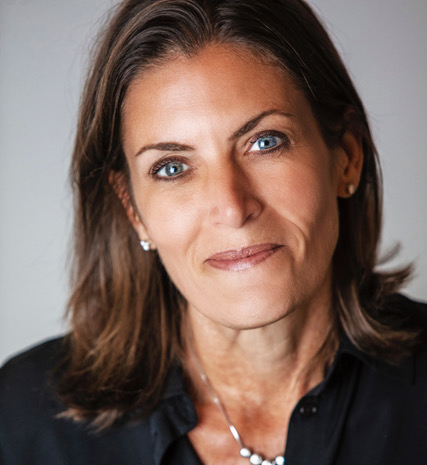
AdExchanger
Wendy Clark Says, ‘Do Your Homework’
01:04:13
Former Dentsu CEO Wendy Clark, current president of consulting group Consello, sees the renewed controversy around principal-based buying as a symptom of a more fundamental issue: the lack of open dialogue between brands and their agencies.
Loading summary
Transcript87 lines
- [00:13]
Antonio Miller
Welcome to Ad Exchanger Talks, the podcast.
- [00:15]
Allison Schiff
Devoted to examining the issues and trends in advertising and marketing technology that matter most to you.
- [00:24]
Sarah Sluice
Let me tell you a bit about this month's sponsor. Activision Blizzard Media is the gateway for brands to the leading interactive entertainment company. Their legendary portfolio includes iconic game franchises like Candy Crush Saga, Call of Duty, Overwatch, World of Warcraft and more, which together attract hundreds of millions of monthly active users worldwide.
- [00:58]
Allison Schiff
This is Allison Schiff and You've got your AirPods tuned to AD Exchanger Talks. Thanks for listening and I've got a great one for you. My guest is Wendy Clark, currently a partner and president at consulting group Concelo. Before joining Cancelo, she was the global CEO of Dentsu and CEO of DDB Worldwide. Wendy was the first ever female CEO of a global agency network. We'll talk about her time at Dentsu, which was right smack dab in the middle of the very fraught pandemic years. And we'll touch a few live wires, including principle based buying and the agency holding company model. Is it broken? But first, please allow me a quick plug for our sister podcast the Big Story, which is a weekly roundtable discussion of the biggest stories of the week featuring a rotating cast of members of the Ad Exchanger editorial team. It's good fun, so add it to your media diet. It's very meaty, but zero calories. And while you're at it, please save the date for next year's CTV Connect March 12th and 13th in New York City, Ad Exchanger is joining forces again with synopsys, admonsters and chief marketer to host a Can't miss summit on all the key issues and opportunities in Connected TV. Learn more and register@ctvconnect.com hey Wendy, welcome to the podcast.
- [02:20]
Wendy Clark
Hey Allison, thanks for having me.
- [02:22]
Allison Schiff
So what is one thing about you that not a lot of other people already know?
- [02:29]
Wendy Clark
Well, you know, I know this about your podcast, that you asked this question and it's sort of like delving into the two truths and a lie bank of answers that I have.
- [02:38]
Allison Schiff
I'm getting predictable, but yes.
- [02:40]
Wendy Clark
Yeah, you know, there's a, there's. I have some go to's, so. I was born and raised in England. A lot of people don't know that because I don't necessarily sound British. I have one blue eye and one green eye, so I've got the David Bowie thing going.
- [02:58]
Allison Schiff
Yeah. Cool.
- [02:59]
Wendy Clark
And then my, my uncle was the Queen's press secretary in the 70s, which is a pretty cool thing. So. Especially as the Crown Came around. You know, my uncle was the person who gave her that red box, so he's the first person to see her every day. So really, really kind of cool legacy there. Some, some shoes to live into.
- [03:19]
Allison Schiff
I mean, I asked for one fun fact and I got a trio of pretty excellent ones. And then I have one about you that maybe some people do know. I just saw it on your LinkedIn that you have a degree in creative writing and I'm part of that club also.
- [03:35]
Wendy Clark
I saw in your bio. Yeah, that's so cool.
- [03:38]
Allison Schiff
When, when I told my parents that I wanted to be a writer, they were very supportive of me. I'm an only child. They're always supportive of everything I want do they love me. But I found this out years later. They apparently went right upstairs and closed the door to their bedroom to have a serious conversation like, okay, she wants to be a writer.
- [03:57]
Wendy Clark
Parenting had gone wrong. Yes.
- [03:59]
Allison Schiff
Well, like we're going to have to take a, take out a second mortgage. But.
- [04:03]
Wendy Clark
Well, you and I both got asked the question, what are you going to do with a, with a degree in writing? And so here we are. Look at us. We've made it through.
- [04:12]
Allison Schiff
Well, yeah. When you were studying creative writing, what was your vision for what you'd do with your career? Did you have an inkling that you'd eventually be the CEO?
- [04:22]
Wendy Clark
No, it wasn't that. In fact, I never have thought that. So that's sort of an interesting something to come back to. But I wanted to write advertising, so I knew I wanted to be in advertising and I thought I would write it. And you know, as the story goes, my first job, I was writing press releases. And by the fifth iteration, when the edits came back and really the only words, words I had contributed were the. And, and I, I switched to account service.
- [04:50]
Allison Schiff
I feel that, by the way.
- [04:52]
Wendy Clark
Yeah, deeply turns out, you know, I, I enjoy writing. I do say, I mean, obviously someone my age, you know, I finished college in the early 90s. We could not have foreseen how important email was and the written communication at the time, you know, yes, important, but now material to know every minute of every day. I do use it, I use those skills all the time. So I have no regrets and I'm very thankful.
- [05:20]
Allison Schiff
I mean marketing is communication, it's storytelling. It's getting your point across. It's vital.
- [05:27]
Wendy Clark
Yep, absolutely. So it's been a good, it's been a great foundation for me. And so anytime I do meet other English majors and certainly I have college age children now, so if I Meet their friends who are. I'm, you know, I'm in it with them, I'm giving them encouragement. I'm telling them there's a path that will be fruitful and prosperous for them.
- [05:46]
Allison Schiff
Well, I have a lot of questions about sitting at the helm of Dentsu because you were a global CEO for two and a half years between September 2020 and January of last year. And I know you've probably got some really interesting stories to tell and hopefully there's enough removed that we can get a little spicy. But I want to talk about your new gig, I guess newish at the Concello Group. You joined as a partner last year, last April, and you've since become president. And Cancelo, for anyone who isn't familiar, it's an advisory and investing platform, a consultancy. But I have to be honest, when I hear the term consulting firm, my brain gets a little fuzzy, like I know what a consultant is, an expert in something or many somethings that can use their expertise to analyze a business, to offer advice, to help with strategy. But it still feels a little amorphous to me. So what is the job, from a practical point of you?
- [06:44]
Wendy Clark
It's such a fair reaction Allison and I had, by the way, when Declan Kelly called me, I had a similar reaction. You know, literally said, and I'd known Declan for 15 years. And I said, you know, I, I love you and thank you for the phone call, but I got to tell you, I don't want to be a consultant. And he said, just come and talk to us. Just come and meet the team. Just hold that thought. And so I did, thankfully, because here I am almost two years later now. And, you know, what we do here is take all of our expertise. I mean, what I like so much about Cancelo particularly is we're all former operators, so none of us, not one person in this place is a career consultant. We have come into this at a later stage in our career or mid stage in our career for some who are a little younger. But we have all had very practical hands on operating experience. And so we are bringing that experience to bear with our, with our clients. And I have to say it's a very sleeves up, dirt under the nails, hard working environment. This is not the perspective I had of consultants. You know, arguably I'm working as hard as I've ever worked in my career right now to give some sense of that. And I love it. I mean, we've got, you know, 40 plus clients and we get to go to work across sectors, across industries, across critical business issues at the highest altitudes of the company. And it does really feel like you can make an impact and really help and shape positive outcomes.
- [08:22]
Allison Schiff
So I don't know if you're a coffee drinker, but let's say you are. You wake up in the morning, you pour your first cup of coffee, you open your laptop and, like, then what, like, make everything that you just said real for me.
- [08:34]
Wendy Clark
Yeah. So I'm not a coffee drinker. I'm sipping a cup of tea. Because I. That goes back to the British.
- [08:40]
Allison Schiff
Yes.
- [08:41]
Wendy Clark
But after my cup of tea, we work on, you know, we work on real client opportunities. So I have a, you know, set of clients that I work on. Obviously, as president, I'm sort of across all of them, but there are about six or seven that I myself lead. And so I will be on in meetings with the executives from those firms. Some of those are routine meetings or just, you know, we've got a set of work that we've been working on. You know, it could be go to market strategies, could be branding, could be investor relations, could be, you know, organizational design and development. I mean, it could be, you know, just about anything. Sort of emptying my brain of all the things that we've got going on with clients at the moment. And we're leading those strategies, working with their teams, helping them, you know, make progress with their firms. That's the sort of planned day. Now there's, you know, the other scenario where I had my cup of tea and I actually don't even get to the tea because I've opened my eyes and there's some sort of, you know, crisis or critical issue that requires attention and we're in. We're, like, immediately on, together, online, working through whatever that challenge may be. So we do, you know, there's a set of planned work and frankly, there's a set of unplanned work, because these are all publicly traded companies that have to move and pivot at the pace of the marketplace and we're there to help guide them and do that successfully.
- [10:07]
Allison Schiff
Yeah, Those days when you make your cup of tea or your cup of coffee and then you keep microwaving it all day and not actually drinking it.
- [10:16]
Wendy Clark
Yeah. Now I just turn the kettle back on. Like, I just keep turning it back on, because if anyone who's British, who's listening, we absolutely only make tea with boiling water. It's just an anathema. So you have to get it at the boiling point to actually pour it over the teabag. And there's those days where that little teabag is just in that mug and I just go, hit the kettle and I'm like. And I get pulled away and I just never get it right at the boiling point on the teabag. But those are okay days too. They, you know, that's why, that's why we do what we do. And I, and I have to say genuinely, after 33 years of working, I, I love it. I love being at the coal face of business. I love helping now at this stage of my career, helping others through my own experience and background and helping them navigate. And the phrase we use at our company is we help the best in the world be even better. And I come to work every day to do that.
- [11:12]
Allison Schiff
So you've spent a lot of time looking at the industry from multiple different perspectives. You're an operator. Like you said, time on the agency side, but also time on the client side at&t and then also Coca Cola. And I do love your title when you were at Coca Cola, President of Sparkling brands, which is kind of amazing.
- [11:36]
Wendy Clark
And that's. And you know, if you're in charge of marketing, you have to market your own title too. So you get to, you get to do fun things like that.
- [11:44]
Allison Schiff
As a just a side point, there are titles I've seen out on the marketer side at CPG brands that I just love. There's someone that I once talked to who was the VP of skin, which was like at a beauty brand at Unilever.
- [12:02]
Wendy Clark
Yeah, probably. Yeah, yeah.
- [12:05]
Allison Schiff
Or Vinnie Rinaldi at Hershey's. He's like in charge of salty. Like his title actually has salty in it, which I love. But yeah, why, why leave like the rarefied air of the agency world C suite? You know, going from being a CEO and also being, you know, at the top of like two very well known brands to becoming an advisor to CEOs and CMOs and other C letter people.
- [12:32]
Wendy Clark
You know, the opportunity, I mean, my departure from Gentsu, I think is well documented that there was a restructuring and the leadership was all going to be shifted to Tokyo. So not necessarily something that was planned from my perspective in the sense of the timing of it. That was always the goal, that we would get the international business back on track. The results were such that we did that quite quickly after Covid. And so the decision was made to accelerate that restructuring. So I found myself at age 50ish, kind of going, okay, so what now? You know, do I want to rinse and repeat or do I want to try something different? And there were plenty of Opportunities. And I just kind of kept holding. Well, you know, I had a gardening lead, so I just kind of kept holding myself to this premise of, you know, I like to learn, I like to do new things. You know, one of the reasons back to Coke that I left Coke after eight years, which was pretty rarefied air to, to be the head of, you know, marketing at Coke, was because I was getting in a cycle of doing some of the same things again. You know, just, you know, we'd done Olympics and we'd done World cup and then we did another Olympics and we did another World cup. And, you know, that is an incredible privilege, don't get me wrong, and I will. That experience itself was among the best in my career. But I was in muscle memory. And when I'm in muscle memory, I'm not as good as when I'm not in muscle memory. I like to be in the deep end. I like my nose just above the water. I like to have to paddle like hell to keep breathing. And so this notion of, you know, looking for a new job and contemplating my options and thinking, okay, well, yeah, I could do another agency or yes, I could go brand side, I just kept thinking, I want to try something different. And then Declan Kelly, you know, called me. He was one of the first people to call me and lovingly badgered me to con, to come and, you know, see the firm. But this looked suddenly extremely different at the time. It was a 60 person firm. I mean, I had 45,000 people at Dentsu. And I started to just quietly by myself as I was contemplating going, well, Wendy, could you. Do you know how to do 60? You know, you've done 45,000 at DDB, I had 10, 10, 12,000 people. You know, I'd come from very large global companies with significant sized teams. And the one thing across my 33 years of working, I had never done small, I'd never done startup. And it just then got into, once something gets in my mind, I can't. I was like, yep, nope, I'm not sure. I'm not sure if you could do it. Wendy Clark So, you know, then that starts to become the challenge I love. That's the challenge, right? That's the dive in and figure it out of it all. And so that was Cancello for me. It was okay, you know that, you know, the team size and the revenue here was, you know, equivalent of one country at Dentsu. Right. It was just a small country at that. I just wanted to prove to myself I knew I'd done scale. I had never done small, I'd never done startup. And the byproduct of that, Alison, is I have got way back, closer to the work again, which I do do love, you know, in the very big job, you know, at the very big companies, my day was filled with audit committee meetings and HR opportunities and governance issues and board reports. And you know, I was not as close to the marketing and the work as I wanted to be. And you know, this opportunity now when you're one of now we're 100 people that I'm in, I'm right up against, as I was telling you at the beginning, you know, right up against clients, the work they're doing, their challenges, where I'm in the decks, I'm creating work, I'm writing the strategies. I am back to doing the very thing that at the beginning of my career I loved.
- [16:45]
Allison Schiff
45,000 is wild. As you were talking, I quickly googled the population of the town I grew up in, which is 28,274. So Bergenfield, N.J. fewer people than are employed at Dentsu.
- [17:02]
Wendy Clark
Yeah, it is a big operation and I was very, very thankful for it. It was among the most challenging in my career. Leading a team that I had never met through Covid was extraordinarily challenging and shaping in the best possible way. I, you know, probably one of the most distinct logos in my mind is the Logitech logo at the eye of the camera because I stared at that thing for 20 hours a day just willing people to believe that we would get through, to stay with what we were doing to, you know, know that there were going to be better days ahead. And all I had was that lunch. All I had was that just. And I honestly, you know, it was so hard for, for those teams in that time. I don't think anyone of our generation will ever, ever forget that. But made incrementally more challenging by the fact that I was a brand new CEO. They'd never, why, why should they believe me? They, they'd never laid eyes on me, they'd never met me. So that was a very, very defining and shaping two years for me.
- [18:16]
Allison Schiff
So I want to turn to a topic that a lot of people are talking about now. It's been bubbling to the surface and it's kind of controversial. I speak of principle based media buying, which is when agencies buy inventory at bulk at a discounted price and then resell it to clients at a markup. And I think it's obvious why agencies and why the hold cos do this. Because they can use their size as leverage and make money on the. And you could argue that it's a way for agencies to pass on some savings to clients because they can lower the fees and there are longer payment terms by buying in bulk. I mean that. But there has been a lot of controversy swirling because people see it as a way to squeeze margins and maybe there are some hidden fees and it's hard for the brands to assess the quality of the inventory. It's just not the most transparent thing in the world. Not that programmatic is known for being all that transparent. But my question is principle based buying is not a new thing, but people are newly focused on it and for lack of a better term, they're kind of getting their knickers and a twist about it. So why is there so much attention being paid now to principle based media buying?
- [19:37]
Wendy Clark
You know, I think it is probably a symptom of a larger topic and conversation, which is, you know, this very real need for brands to continue to source money, to reinvest in what they're trying to do, and for agencies to continue to source money, to drive profit. And so you know what you can, I can reflect on so many sides of this conversation, both from the client side, when I was a client, from the agency side, when I was leading an agency, and now from the consulting side where we're helping brands with this challenge. And at the very core of this has to be a trusted and open dialogue between brands and their agencies. And it is quite interesting, Allison, because we find, as we've been doing, you know, getting closer to companies and their contracts. And we have a, you know, a set of experiences now that we can compare across clients. Most of these contracts, most of the ways that the relationships are written are not nearly as detailed, as transparent, as protective from, you know, the measures that are included to allow you to interrogate what you're buying, how the agency is buying, auditing rights, accountability and performance tied to bonus or upside compensation. All of these things, which quite frankly I found to be fairly fundamental, are relatively missing in many, many relationship contracts. And so one of the things, again, back to symptom of problem. I think it's really making sure that when you are beginning and, or just, you know, even if you're in a relationship already with an agency, that the terms of what you expect from that relationship are outlined in your contract number one and number two, that you're leveraging those terms that you are indeed having. You've got the visibility, you are doing the auditing, you are looking at the reporting, you are taking the time to go deep. I mean, you know, one of the things I would say over and over again, it does feel in many cases that the hard work gets skipped a lot. That is perhaps one of my observations from being on the advisory and consulting side. Now we are skipping the detail in many cases. We are not going as deep in our understanding and knowledge and tracking and reporting in, in all of these areas as we should. And then there are surprises. So then you get into, oh, hang on a minute. I didn't know you were doing principal base buying. I didn't know that, you know, you know, I didn't have auditing rights. I didn't know that there was no accountability or performance measures in my contracts. Like, these are, these are things that should, you know, this is just good hygiene, quite frankly. And so, you know, people will argue both sides of that discussion and they have every right to. But I think at the fundamental core of it, I would just suggest that getting your relationship right, making sure that there's, you know, a trust and transparency there, that that is documented and that you then exercise your rights is probably one of my biggest learnings so far.
- [23:18]
Allison Schiff
So be an engaged client. Don't just let everything wash over you.
- [23:22]
Wendy Clark
Yes, and, and do the work. I'm sorry, but do the work or hire a consultant. Call me hire a consultant. Do the, have someone do the work. We pay for ourselves nine times out of ten. Ten times out of ten, quite frankly, on these things, because we, you simply can't believe, you know, what, what, how basic some of these things are that that can just be remedied. And then, you know, look, I'm a big believer. We, you know, we've done some agency reviews as part of this. I'm a big, big, big, big believer in marriage counseling. I don't believe in breaking up. I believe in trying, you know, at least before you get to that point. And so this can be part of the counseling. You know, hey, let's rewrite the terms here. Let's get back to the trust and transparency that we want. Let's make new agreements here. And there can be a renewal here in an existing relationship that is very healthy and beneficial for both. But both parties have to know agencies need to make profit. You know, clients are looking for profitable growth and durable results. As long as you know your intentions and needs, like any relationship, you can.
- [24:33]
Allison Schiff
Make it work with that in mind and transparency and honesty being paramount. I mean, maybe we should stop calling it principle based media buying and just be clear about what we're talking about like we're all adults. Like it's arbitrage, just call it arbitrage, no need for euphemisms. And then maybe people won't be as surprised.
- [24:52]
Wendy Clark
Well, and by the way, you know, so agencies need, it's back to agencies have to make profit. And you know that profit has been under pressure considerably. And so what you can get back to is let's have an open conversation about what a healthy and decent profit for the agency is and then make all the decisions around that. Like you the part of the reason some of these other ways of making money have risen is because there's been pressure put down on the fees front to where the agencies can't make the profit that they need to. And so they're looking for other ways to generate profit. If you, if you just crack it all open and say let's have an agreement on what a healthy and appropriate profit margin looks for you and then let's build from there. It's agree and build from there. That's, you know, that's a starting point.
- [25:47]
Allison Schiff
I have a friend who believes that everyone should be in therapy. So it's not, not a bad idea. So we're going to take a quick break and when we're back we're going to do a little bit of a memory lane walk, talk a bit more about Dentsu and you know, lots of other good stuff, including AI, of course. So stick with us.
- [26:21]
Sarah Sluice
I'm Sarah Sluice, Executive editor of Ad Exchanger. I have with me today Antonio Miller. He is research manager of Advertising Insights of Activision Blizzard Media, where he gets to research how people are gaming and what kind of ad experiences work for players and brands. Welcome, Antonio.
- [26:39]
Antonio Miller
Hi Sarah, thanks for having me.
- [26:41]
Sarah Sluice
Attention and the metrics that define it are really hot industry topics today. And I know your team recently did research on this subject. Can you tell us a bit more about it?
- [26:52]
Antonio Miller
Yes. So for the past year a team has been diving into the subject of attention, mostly through eye tracking research and internal measurement data. And now through our latest research titled Play It How Gaming Immersion Unlocks Player Attention, we dive into the concept of immersion which when studied can predict consumer action with 80% accuracy. This means immersion impacts metrics like brand recall, awareness and even purchase intent for brands. And we're finding that gaming is the key to high quality attention, not only because it outperforms online video and social media and immersion, but also because of its ability to engage and delight audiences and hold consistent, stable immersion.
- [27:31]
Sarah Sluice
Okay, so immersion is a key thing Here, how does gaming differ from other forms of media in terms of capturing and sustaining audience attention?
- [27:41]
Antonio Miller
So, in our latest research, we found a few things. First, Gaming has a 99% viewability rate. It also has more ads that are fully viewed at 100%. That's hard to beat. Secondly, games provide players a place to be relaxed and happy, which is crucial for stable immersion and can translate to better ad experiences. This seems obvious to us. There's so much content on social media and online video platforms, you don't know what you're going to get. With gaming, every point of the journey is opt in, from launching the content to ad moments that are timed and rewarded when you need the most. And that's what keeps in game immersion and ad immersion stable. And finally, as a result of all this, gaming outperforms online video and social media in immersion, which, as I've said earlier, has huge impact on metrics like awareness, recall and purchase intent.
- [28:27]
Sarah Sluice
If brands want to take advantage of this highly immersive gaming space, how should they get started?
- [28:33]
Antonio Miller
So the thing to remember is that gaming is about joy. It's inherently fun. So I'd encourage brands to have fun with it and execute it in a way that can enable that balance of fun immersion and brand resonance. We have an internal studio, it's called Starrcade Studios, that does exactly this. It partners directly with brands to find that right balance. So I'd say Starrcade Studios is a great place to start. However, if you're intent on creating a campaign without so much external support, prioritizing partnering with a publisher that is thoughtful about ad placement, offers immersive experiences like branded mini games and rewards players for their time. We know players value this exchange. We also have data showing that players are more immersed after a thoughtful ad experience, which supports the sentiment that when done right, ads are welcome.
- [29:20]
Sarah Sluice
Thank you so much, Antonio, for those tips.
- [29:22]
Antonio Miller
It was my pleasure. Thanks for having me, Sarah.
- [29:42]
Allison Schiff
All right, we're back and I want to go back in time a bit to your recent past as global CEO of Dentsu. Like you were saying, it's a role you took like smack dab in the middle of the pandemic. It was a wild time for everyone, including the agency hold cos there were salary reductions and freezes and cost cutting measures and everyone just had tons of work to do. And in the midst of all of that, you kicked off this internal two year consolidation project inside Dentsu and you integrated or the plan was to integrate something like 160 brands down to like six main global leadership brands. Dentsu isn't alone in this broad kind of consolidation process that happened at a bunch of different holdcos. And ostensibly it's about cost savings and efficiency and streamlining workflows and more innovation, faster innovation, serving clients better, like all of that good stuff. Lots of consulting, ish words actually. But off the record I've heard like from some people who work within the large agency holding company model unnamed, that what's sometimes stated in the press release about creating a new, more simplified approach, the process of actually making that happen itself isn't all that efficient because we're just talking about so many different pieces and moving parts and people, tens of thousands of people, and it can take a really long time. It's potentially a slow process. So what was your experience doing that at Dentsu? Like distilling Dentsu down.
- [31:23]
Wendy Clark
I don't disagree with anything you just said as a setup, however, that should not deter you from doing it. When I got to Dentsu, there were 250 people with the title CEO. So what?
- [31:39]
Allison Schiff
That's a lot of CEOs.
- [31:41]
Wendy Clark
Yes, 250 CEOs at Dentsu International. So if you're coming in as I was to a company that was underperforming, I think that it's obviously publicly reported. So it was clear we were many quarters without top line revenue growth and many quarters with missed profit margin. I was recruited to change that and change that trajectory. To me, in my playbook and in my blueprint, you set a vision, we going to set the, that's the mountain and we're going to climb that mountain and you know, you enable the team, the company to achieve the vision. And so, you know, there, you know, and then you measure, did we, did we climb the mountain? We said we were going to climb. If you've got 250 people with the title CEO, you can imagine how many mountains had been drawn and how many different. Some were hills, some were mountains, some were plateaus, somewhere, you know, mesas, how many, how many metaphors. Can I give you a mountain?
- [32:43]
Allison Schiff
I can't think of any more. That's a lot of topography.
- [32:46]
Wendy Clark
But the point is we had to get singular in our focus and we had to integrate around that focus. We had to take, yes, certainly had to take cost out. I mean the cost alone of 250 people with the title CEO, and I'm exaggerating that point to make a point that that type of redundancy and replication existed across the enterprise. It was an outcome of the notion of a holding company. Right? These big companies acquire and build brands and they have lots and lots of, you know, stars in the constellation. And if you want to move with speed, which is now one of the imperatives of the marketplace, if you want to move with efficiency, which is another imperative, and you want to do, you know, great innovation and forward looking work, which you need to generate money to invest behind, being able to innovate at your company, here's the path. It is certainly true, as you said, that it is extremely complicated to go from 160 companies to six and not lose revenue, by the way, keep client satisfaction high, keep employee morale high so that you can navigate that path. So that was the work we did for the two years that I was at Dentsu. It was very hard, it was very rewarding. I think people understood that what got us where we were, which was not positive. Usually you go, what got us here won't get us there. We didn't want to repeat what had got us there. Unwittingly, the company had lost its path to revenue growth and performance. It had lost its path to profitability. And so, I mean, proudly, I tell you that that team restored revenue growth in three quarters after we announced that. And we had five successive quarters of sequential revenue growth and we had five sequential quarters of profit margin expansion and delivery. So it works. It is hard. And then you come into, I mean, what this conversation should be about and what, you know, the people say, yeah, that's really hard is it's not the what, it's the how. Right. It's how you do that and how you bring people on the journey with you and how you treat people humanely when their jobs may be changing or shifting and, or going away. Like, what are the values of the company in that moment that say, look, we've got 45,000 people and 14,000 clients and you know, a necessary journey that this company has to go on to remain relevant to both its people and its clients. But that's going to look a little different. And we have to be honest about that. And what I would do, we had ongoing calls with the entire company where everyone I would get on the leadership team would be on with me. We would answer every question in the chat. If people could ask us live questions or they could ask in the chat. And your willingness to put yourself into that, not hide behind some sort of document that sent out some sort of two sentence holding statement that you're like, oh, you know, check this link and go online and read our Internet post for more details. No, we put as leaders, if this is our Vision, our plan. You have to put yourself out there and be willing to answer the hard questions, the really hard questions. And people would ask them, they got used to, you know, having that kind of access and they would ask them and you know, then I have to, then I have to answer, you know, if I, if I say I do my best, I'll answer the question to the degree I know it, you know, reinforce. And we, and there were times we had to agree to disagree and I would just say that, you know, like I was having a conversation with you. I'm sorry, Alison. We just going to have to agree to see it differently. I appreciate you sharing your viewpoint. You've, you've, you know, I understand where you're coming from. You've made how you feel clear. But in my capacity as CEO of the company, I really truly believe, based on the deep analysis and back to a theme here, hard work of truly understanding where we need to go, the decision we're going to go on and the path we're going on is the right one in my estimation.
- [37:09]
Allison Schiff
What about the agency holding company model like writ large? Is it like fit for purpose for the modern world? Because the point is that it's big. I mean it's a holding company for many different things. But you do hear people say things like oh, the agency holding company model is broken, not rolling with change or just too big overall or operating in self preservation mode as the world changes around it. So I mean, what would you say to those folks?
- [37:44]
Wendy Clark
I would say to those folks that may be right for them. Right? Different brands, different companies have different needs. So you've got whatever six, seven holding companies. That's one choice. You can go down that path. You have hundreds if not thousands of independent agencies, mid size, regional, small, boutique, local, digital. You've got every flavor. So my again, theme of the podcast, hard work. You got to do the hard work. You have to go in and look at all these options and figure out which one is right for you. No one is forced to work with a holding company. You can, you don't have to though. That doesn't, that's one aspect of the marketplace. It's not the marketplace. So look, I'm sure if you had the whole CO CEOs on, they would tell you exactly why they're fit for purpose. And that's their job. They should be, they should be driving their company and making sure that they are meeting the needs of as many clients as they can. Dense, you had 14,000 clients. That's not nothing. But there are hundreds of thousands, if not millions of clients in the world. So, you know, look, there's, there's, there's a fit for everyone. And I just wouldn't be lazy about it. I just wouldn't dial it in and go, well, you know, this brand is doing it, so it must be right. Or I have a relationship with this executive, so that must be right. I would do the hard work. I'd really think about your strategy, I think about your team, I think about your objectives and goals, what you're going to be held accountable to. I'd think about what your shareholders expect from you. I would think about all of that and then find a partner again, back to the relationship and someone you can build the trust and transparency with who understands and speaks that language in a way that you know will help you achieve everything that you need to.
- [39:37]
Allison Schiff
So, guys, Wendy Clark wants you to get up off your butts. That is my takeaway.
- [39:43]
Wendy Clark
We're going to go there now. I do, you know, I've never been shy of hard work. I do think probably one of the things I've, one of the refrains I've said in life and certainly an agency, Ari Weiss and I at ddb used to say, there are no shortcuts. When we were turning around ddb, there are no shortcuts. You can look for shortcuts and you can spend as much time looking for a shortcut as just doing the work. And so I think, look, in doing the work, there's. You get a sense of confidence because you've looked under every rock you really know and understand where your decision is coming from is backed by your knowledge. You have learning because you, you're learning. You're going to invariably learn something you didn't know that's going to lead to, you know, another thing you can be curious about and interested in. And you'll have results, you know, if you, if you do your homework, generally speaking, you've set yourself up for success.
- [40:41]
Allison Schiff
So we can't talk about how agencies are transforming or more accurately like having to transform without talking about AI. And I talked to a really top person at an agency recently, and I can't name them either, but they said, and I do think they would know that several of the agency holding companies don't have as much AI technology as they claim. Like, they make great presentations, but then when it comes down to doing it, it's not, it's not like it's vaporware, but it's just not as developed as claimed. So beyond like talk, what is your sense of how advanced agencies really are with their AI.
- [41:23]
Wendy Clark
Well, I don't really know that my sense matters. I mean.
- [41:28]
Allison Schiff
Oh, it does that and a bag.
- [41:30]
Wendy Clark
Of chips will get you. I don't know. But so, because again, see, here I go, I, if I haven't had the opportunity to interrogate it, I'm probably unlikely to talk about it. And I really haven't. I've seen, I mean, I've seen a handful of them pitch and to your point, the pitch is there, but I have not gone under the hood and looked at it. I do think it's important. I think I, you know, again, sort of start with. I think AI is, is a transversal, right? It's going to impact every facet of our lives some way somehow. And so every business has the opportunity to use AI for acceleration for the benefit of their, you know, the outcomes of their company. And that could be, by the way, for their employees, for their consumers, you know, obviously for shareholders ultimately, but across the board. So you start with, again, if I'm a brand leader, I'm saying what am I trying to achieve and where do I think AI plays a role of acceleration positively for my, for my brands? Or, and, or if you don't know that, you know, invite people to come and share their points of view with you so that you can, you know, understand it. Partner with your cto. We talk about that a lot. I think one of the best partners with a CMO right now is the CTO to really deeply understand the impacts of technology and, you know, then, then get underway. To me, this is held at the brand level. The brands need to direct and drive the impacts that they want for their companies and then select partners that can work with them. The agencies may be those, there may be other people. The other thing I would say on this is I think we dismiss incrementality and I think incrementality in AI or technology in general is huge because if you put together a bunch of baby steps, it equals a giant leap. And I think we get so caught up in like, what is the. From two and the giant leap we're going to take. And we dismiss making incremental improvement every single week, let's call it every month, you are going to look back and go, wow, look what we did. Like, we went on a journey and we have transformed our customer service or customer experience interaction or, you know, our, our content creation platform, or, I mean, you know, name the impact in place. It will, it will show up. But I just, I wouldn't undervalue Incrementality on this. And I know, you know, that's probably a little antithetical because we're like, we want the big inspiring headlines and the. But, but incremental is good in this and I think it creates the learning journey. It'll allow you to test and learn with partners. You can decide if your agencies are part of that, if you need others, there's huge benefit that can come from that. And lower risk of getting started. Much easier to get started.
- [44:30]
Allison Schiff
I mean, incremental is stable. There is an interesting piece in the Wall Street Journal that I read just recently. The headline is AI saves Ad agencies a Lot of Time. Should they still charge by the hour? And it goes into how some agencies are trying to move to new compensation models that focus more on outcomes and the scope, the work that they do rather than charging by the by tonnage, like the number of hours it takes them to do it or the number of people that they throw at a problem. So I've been an ad exchanger, which is crazy to me for a little over 10 years, and I remember conversations from a decade ago about whether agencies should consider moving away from billable hours and charge based on performance. And it was kind of an academic question, but the rise of AI makes that a real question. So how do you think agencies should charge when AI is part of the equation? Because I mean charging based on outcomes and performance seems fair, it seems like a good evolution. But I think it's also risky for agencies because there aren't guarantees for performance.
- [45:44]
Wendy Clark
I mean this is, this is one of those age old discussions and it sort of depends on the point in time that you come into the discussion because that one's been going on for a long time I would guess. I mean, certainly when I was leading. I'll just speak in my own experience, you know, the FTE model was not a great, it's not a great thing for an agency. But you know, it's been decades so it's, it very hard to move away from because everything is built around that. But if you are doing it again, I am quite certain you would not build it based on an FTE model. So yeah, and certainly now, yet again, the originators of the FTE model certainly could not have imagined technology AI offshoring all the, all the, all the aspects that we have today to process into that and still run profitable companies. So but it is where it is and I think people are certainly using more performance based incentives in their contracts and they should. And I think great agencies, great partners want to Step up and be held accountable for that. There is a challenge. Let me, let me, you know, as you would imagine, I can argue both sides of most things on this. You know, from an agency perspective, when you don't control the variables and outcomes, you know, if you don't have, you know, you don't have access to a CEO or you don't have, you know, you're really at the whim, it's hard to put your revenue and your certainly then ultimately your profitability at risk when you're sort of on the outside, right? So how deep, transparent and trusted that relationship is, back to that sort of point, will have everything to do with how willing and able. It's not even the agency may be incredibly willing, but you may not be able to do that if you don't have the sense of real control in the outcomes and the decisions. So I'm sure that there's absolutely a correlation between those two. So it may be more or less based on that. But, you know, the other compensation models, I think, you know, are certainly something that agencies are constantly looking at and wanting to, which is sort of leads back to your principal base buying question. Like other sources of, you know, profit are important for agencies, they need to expand beyond the FTE model because it is under pressure, no question.
- [48:24]
Allison Schiff
Could agencies charge a premium for being like, really good at using AI, just being prompt masters or something?
- [48:33]
Wendy Clark
I mean, what you want to move to is outcomes, right? You want to get paid for outcomes. It's that, that's, that's what you, you know, outcomes outputs, you know, and obviously tied to performance of those. But we're going to have to move away from a, you know, a straight human doing the work because there's, you know, equally the investment from agencies to get the technology so that AI, you know, can have its impact is not insignificant. So if you're not getting paid for the person and you're not many times getting paid for the technology, then that investment gets difficult. So this gets back to having, you know, having a relationship that, you know, really enables a very transparent conversation.
- [49:23]
Allison Schiff
And what about agencies and consultants? Like, are you in an adversarial position at all with any of your former agency colleagues? Because.
- [49:33]
Wendy Clark
Okay, no, not at all. No. I mean, number one, I have empathy for them. It's a hard job and it's getting harder. No question. I see all of them all the time and some of the, you know, we're running reviews and that sort of thing. So I see them there. Obviously, that was kind of probably one of the Most cathartic thing was seeing all of them pitch and going, oh, God, this is what I was on the other side of. So there was that. I was like, oh, I see how all of this works. I get it.
- [50:02]
Allison Schiff
You know, have a sausage is made.
- [50:05]
Wendy Clark
Yeah, yeah. Once you get to see it, you're like, oh, yeah, that's what I lost to. Got it. All right, so that was good. But no, we have. I have. The job is hard. I have an immense amount of both respect and empathy for that role. And I look at my core. I love advertising. It's what I have wanted to do from my very beginning. It's always what I've wanted to do. And so I cheer for our industry and for the leaders of our industry. I cheer for innovation. I cheer for great, strong, vibrant, vital leadership. I think nothing could be more important than that because I'm a, you know, I led Bill Birnbach's agency. What a privilege that was to say that, you know, I sat on the same floor where his office was originally. I believe in the, in the legacy of this and the heritage of this and that it is upon all of us to create its next best day. And so I want those leaders to do well. I want this to be a vibrant choice for my children to think about going in, you know, and my grandchildren.
- [51:18]
Allison Schiff
As long as they. I was going to say as long as they're not creative writing majors, but actually, as long as they are.
- [51:23]
Wendy Clark
Yeah. Hey, come on. All are welcome.
- [51:27]
Allison Schiff
So, penultimate question, and I'd love your completely unvarnished point of view on this. What do agencies think about ad tech companies? Like all of those SSPs and DSPs and CDPs and buying platforms and measurement providers, the whole, like teaming Loomiscape. Like, how does a former agency, holding company CEO and a top consultant, now, how do you view adtech vendors? Are they useful? Are they kind of gross? Unnecessary evil? Are they valuable partners? Are they some kind of weird combination of all of those things?
- [52:06]
Wendy Clark
Well, they. They're not gross. I mean, that seems extreme. Again, it varies. So my starting point is always, you know, is with the company and really even further back from that, the consumer. Right. I think we lose our way a lot and get caught up in our own ecosystems and we forget this entire ecosystem exists because there is a consumer out there that we want to engage and have take some sort of action. Right. That's. That's at the very, very end of this string. That's what we're trying to do. So building back from there and going through okay, so there's a consumer that we want to take a necessary action then there with this company and this, this brand. Okay, what, what is necessary there? Right. I think it is putting together the building blocks in a way that is the most powerful yet most efficient to accomplish what you're trying to accomplish. That, that can vary and it can look very different. Back to, you know, this is a, there's a constellation here of potential partners that you can work with from an agency perspective. You know, I think there are agencies that are, you know, think that they can do everything and that they should do everything. There are agencies who only want to be great partners and go, you know what? We're going to be the best partner in the world, play well and assemble best in class partners to do that. That's a path. There are clients who go, you know what, I'm going to keep a certain amount of this on my side. I don't, I'm going to connect directly with those in the ecosystem, with ad tech companies, and then you can connect with them through me. So, I mean, there's so many different paths here with how the building blocks come together and it is dependent on the company and the brand and their comfort in how they want to work based on what they're trying to achieve in the marketplace. You know, I, this comes back to some fundamentals. I mean, my fundamental belief through my career has been always that, you know, one of us is never going to be better than all of us. Right. I just fundamentally believe. No, I work for Roy Spence. Reverend Roy in Austin, Texas, used to say, no one has a corner on the smarts in his Texas drawl. And yeah, I don't. I believe that. I was raised that way in my career and I believe that everyone has something to contribute and that, you know, our openness to working with. Again, best in class, do your homework. Pick your best in class partners, but that they have something to contribute and that, you know, if we set the conditions to come into a room, proverbial room together and work together and draw the very best from each of us and each of those partners, man, there's nothing we can't do. And that was, by the way, just. That's what I used to say at Dentsu when we had all these independent agencies. Imagine what is possible by harnessing our collective genius. Like each of us doing that which we are most gifted to do and contribute, and the company being able to harness that. It's incredible. And that's how I felt about when I was a client. I felt about the ecosystem of agencies I put together, which in my opinion were best in class agencies and best in class partners to do the best work that was possible. That was my job, that was my responsibility. So that's not. Ad tech partners are absolutely important part of the ecosystem and it just becomes which ones you want to work with and how you want to plug them into what you're trying to accomplish.
- [56:05]
Allison Schiff
I'm glad you brought it back to Dentsu a bit, because this is something I didn't mention before, but when you became the global CEO of the Dentsu Ages Network, you were the first ever female CEO of a global agency network, which is very cool, but it's also remarkable that it took until 2020 for there to be a woman at the helm of a global agency network. Although overall, I think we're seeing more women in leadership roles in the agency world and in tech. But just leave us with an answer to this question. What has to happen for more women to get into well deserved executive positions at tech companies in the online advertising industry?
- [56:50]
Wendy Clark
Well, if I knew that answer, Allison, I would have said it long before now and we wouldn't be having this conversation. So, I mean, I think it's layered, but I'll give you some observations. One of the things we have to realize, I can remember this is gonna be a little bit of a long walk down the, down the path here, but when I, when I got relocated for one of my jobs, I won't say which one it is to protect the innocent, but I was relocated and the relocation agreement said executive, company executive and trailing spouse. That was the reference to my spouse at the time. And my spouse, who had an mba said, is that what this has come to like, because we're moving for your career? I am now called the trailing spouse. I mean, he had his own career, very educated. But the reason that document was written that way was because I was the first woman that had moved at that executive level. And so it was written because it was a man and assumed his wife. That wasn't working. My point in telling that story, and by the way, that document was changed upon my joining the company. We don't have to call someone a trailing spouse. My point in saying this is our institutions were created by men and for men. That's not, that's not. I'm not saying that to be derogatory. That is fact. Right? There was a time women did not work. And so we have to reflect, number one on the journey we've come, which has been significant and great. But we also have to reflect that some of the baseline things that exist in companies and indeed in society are the way they are because they were built at different time. So part of what we have to do is the hard work to systematically undo some of these things. Right? We've got to take them, you know, piece by piece, brick by brick. Each of these have to be reflected upon and built for a different time. That now says this will be a workplace of men and women in, in equal status with equity of decision making and, you know, opportunity. And so part of that's the hard work of my 33 years has been acknowledging that and trying to, you know, reimagine, renew and, you know, relaunch. In some ways, a lot of just the basic practices. That's just one thought I give you. Another thought I give you is, you know, part of that is because there are not women in those positions. And, you know, we can, although I don't want to go there, we can reflect on political recent outcomes. If you can't envision a woman in a role, that becomes even harder for people to get there, right? Because it's my mental image is a man doing that role. And the dissonance that the emotional and mental dissonance on seeing a woman do role that they haven't done in your company is hard. And so then that becomes this quote, unquote, risk. And I have been in many a meeting where it will be labeled, well, you know, are we ready to take that risk? Are we ready to take that bet on that person? And it is purely, if you took, you know, this is why people do, you know, they take gender off CVS now so that you'd look at the readiness and the performance of the individual versus the gender. It's just. And again, a lot of that is subconscious. It's, it's, it's, it's in our mental framing. So I think a lot of this is bringing it to the conscious and trying to understand why, you know, why we are where we are and what we individually can do is huge and significant on this. So those are just two sort of little examples of things that I would say each day back to incrementality. Incremental change in this is absolutely essential. Yes, we want to take the large leaps, but if you can make incremental change on this every day, every week, every month, every year, we will have vastly different outcomes. So, you know, when I did step into that dentistry role, part of it was honestly, I was very happy at DDB when they approached me, I really wasn't looking for another job. And part of me was like, you know, it's a lot to ramp up on. The company obviously wasn't where it needed to be at the time. But I did have a reflection moment personally and think, you know, am I when if any woman came to me on this, I'd be like, oh, hell yes. You're taking that job. You go take that job. Go on. You show people that you, you provide that mental image. You provide that reference point. But I personally had, like, a little bit of, you know, deciding of kind of like, I just don't know. And honestly, at least part of my decision was, quote, unquote, stepping into the arena because I just felt it was so important to show that that job could be held by a woman. And so, look, these are big and small reflections. These are big and small actions. But all that amounts to positive change. If I look across, I think we can get frustrated when we look day in, day out, week in, week out. But if I reflect across my three decades of working, I mean, the, the journey we have come on, the distance we have come since my first job in 1991, I mean, it's, it's. I, you know, there's a lot, there's been so much progress. Doesn't mean there's not more. But we can make change. We can absolutely be part of the change that we want to see in the world.
- [63:01]
Allison Schiff
So we record without video, so you can't see me nodding my head the whole time that you're speaking. But, yeah, the hard work is worth it. That is my takeaway for a lot of what we talked about today. So thanks for going down memory lane and also for looking toward the future. And as much as hard work is worth it, I hope you have a few days coming up where you can actually enjoy your tea.
- [63:28]
Wendy Clark
Oh, thank you, Allison. It's been fun talking to you. Thanks for taking me down memory lane and. And now I'm going to get back to looking forward.
- [63:43]
Sarah Sluice
Thanks to Activision Blizzard Media for supporting ad exchanger podcasts. If you're interested in learning more about the research you heard from Activision Blizzard Media or in seeing what's possible for your next in game campaign, head over to its website, www.wwisionblizardmedia.com.