← AdExchanger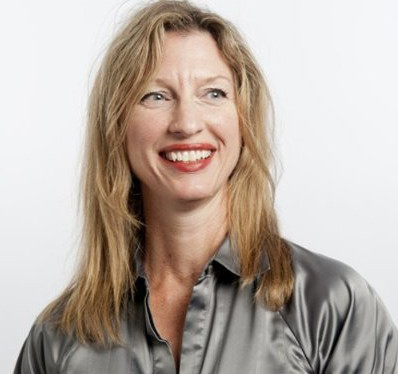
AdExchanger
What It Means To Measure ‘True ROI’
00:49:07
What does it take to serve mid-size brand clients; how is AI transforming media buying; and why – for the love of god – is measurement still so messed up? Mediastruction CEO and Founding Partner Marilois Snowman has a few thoughts.
Loading summary
Transcript70 lines
- [00:00]
Nate Carter
Foreign.
- [00:13]
Alison Schiff
Welcome to Ad Exchanger Talks, the podcast devoted to examining the issues and trends in advertising and marketing technology that.
- [00:20]
Mary Lois Snowman
Matter most to you.
- [00:24]
Sarah Sluice
This episode is sponsored by iota, a trusted global provider of audience solutions for digital marketing. Ranked number one for global data privacy by Neutronian in 2023, IOTA empowers brands to enrich insights, enhance personalization, and transform omnichannel marketing. As part of the Dun and Bradstreet family, IOTA offers a full suite of solutions to make growth easy. Learn more@ieta.com, that's e y e o t a.com.
- [01:02]
Alison Schiff
This is Alison Schiff and you're listening to Ad Exchanger Talks, which we really appreciate. We know there are lots of other podcasts out there vying for your precious and limited attention. On the show this week we catch up with Mary Lois Snowman, the CEO and a founding partner of Mediastruction, which describes itself as a data led media planning and buying agency and it's also woman owned. We cover a lot of ground from what it takes to serve mid sized brand clients and why measurement is still so messed up to how to evaluate different measurement approaches, how AI is totally transforming media buying and lots of other good stuff. But before we get started, CTV Connect is around the corner March 12th and 13th in New York City. There's still a little time to snag yourself a ticket to this can't miss summit on all the key issues and opportunities in connected tv. We've got Netflix on stage, Inspire brands, Uber, A and E, Roku, espn, the Trade Desk, Magna, Horizon Media Scripts, Fubo, Disney and lots more. Learn more and register@ctvconnect.com Mary Lois, welcome to the podcast.
- [02:13]
Mary Lois Snowman
Great to be here. Thank you Alison.
- [02:16]
Alison Schiff
You know, for years and years I thought your name was pronounced Mary Loi. I Frenchified it for some reason. I don't know if you get that a lot.
- [02:24]
Mary Lois Snowman
It's pretty funny because my father also Frenchified it even though he was from rural Arkansas. My name is actually named after my two grandmothers, Mary and Lois, but I love the French pronunciation.
- [02:39]
Alison Schiff
Well Mary Loy, what's something about you that not a lot of other people already know?
- [02:47]
Mary Lois Snowman
I think in my industry people are surprised that my background is as a writer and as a journalist because most of my day is spent with math equations and talking about math. I actually tried really hard not to study math because I was so intimidated by it, but then when I found the storytelling in math it kind of led to a career shift.
- [03:17]
Alison Schiff
I really admire the flexibility of Your brain? Because I do not have a mathy brain at all. I apparently this is family lore. I won a math award when I was six in the first grade for basic arithmetic. And my father was so excited because he thought he had a math genius on his hands. And then it was all downhill from there.
- [03:40]
Mary Lois Snowman
You know, it's funny, Allison, my dad was a math teacher so he wanted to do math equations for fun. And I think it so traumatized me that I avoided math. But I'm actually pretty good at math and I actually enj enjoy the logic of it.
- [03:58]
Alison Schiff
So let's talk about Media Struction, which is your your current and long term venture. It's an independent media planning agency. You work with mid sized brands. You founded it back in 2007 and a lot has changed since then. AdTech was still a precocious little baby. But actually before we get into what Media Struction does, which we will in more detail and it's an amazing name for a company. I think it's very clever, like a good portmanteau word. But yeah. So you worked as a journalist and According to your LinkedIn, you also founded a company which you ran for about three years between 08 and 2011 called Salon Screens, which was a company that partnered with the inventor of the nail dryer to install TV screens into nail salons. Which feels like the early first blushes of retail media in a way. But how does one go from journalism to creating ad inventory in nail salons to founding an independent media planning agency where you think about math all day?
- [05:04]
Mary Lois Snowman
I mean, I'd like to say it was a strategic plan, but I think sometimes opportunities just sort of reveal themselves. I came into Media Struction at being recruited actually from another independent agency that wanted to open a sister shop. And I had worked as a freelance media buyer for a long time and kind of knew this other shop. And I always wanted to do things a little bit differently. It felt like there were lots of silos and media agencies and there wasn't really sort of this holistic perspective of understanding the client's business, understanding their consumers and thinking like they're consumers. Salon Screens was, I guess, a result of that thinking and that kind of creativity. We had a client, it was a CBS O and O station. They had a lot of churn in their news viewership and knew that they could gain share by garnering more female viewers. And I had this aha moment at a nail salon one day where I'm like, this is 10 minutes where you're basically Handcuffed. Your attention is handcuffed to this device. Wouldn't it be great if there was a screen right here? So we did a project with CBS Content, partnered with the, the owner of the inventor actually of these nail dryers. You'll see them, you know in a lot of salons and, and tested it and it, the, the recall was as you can imagine, off the charts. But commercializing that business was a bit more challenging. Nail salons are owned by a lot of independent owners and at the time there wasn't sort of the wi fi technology as prolific as it is now.
- [07:09]
Alison Schiff
It seems like maybe an idea that was a little too early because you do see now companies that aggregate that kind of inventory among bodegas or gyms or mom and pops.
- [07:20]
Mary Lois Snowman
It's true. And sometimes it's great being a visionary, but sometimes it can be challenging being early because you know, you kind of don't. You're the first one encountering that resistance and those challenges. And of course we were bootstrapping it too.
- [07:35]
Alison Schiff
So media struction, how would you describe like your philosophy and what's different about like your approach to media and to measurement?
- [07:47]
Mary Lois Snowman
Well, Mediastruction really wants to sort of bring the sophisticated holdco level solutions, tech stack data science to mid market. And I think what's, what's different is we have benefit of being a little bit scrappy or more agnostic to the tools, kind of following what's in the client's best interest. I think most independent agencies you talk to would, you know, share that same philosophy. You'll kind of see a lot of them talking about fuller transparency and that sort of thing. But I think that we can actually deliver on the data science piece. It's not an add on for us. It's a practice we've built within our organization so we can, we can truly own it and deliver on that.
- [08:41]
Alison Schiff
Well then how do you guys differentiate yourselves from other independent mid size agencies? Because it makes sense. This is how you're differentiating from the massive, massive hold cos that are only getting more massive. But there is this growing like coterie I guess of independent mid size agencies that I think are kind of embracing a similar approach.
- [09:07]
Mary Lois Snowman
Yeah, I think that we can actually deliver on performance measurement in a way that is rare for independent agencies. There's really nothing that we can't measure. I think a lot of independent agencies will kind of focus on a particular vertical, maybe they'll identify as performance based or digital agencies, that sort of thing. But we are, not only are we omnichannel but we can provide MMM against digital only campaigns. We can provide it against brand campaigns using brand measurement as an input. I think that we just have a level of sophistication around measurement that is different from most independent agencies.
- [10:00]
Alison Schiff
So you brought up mmm and I do want to talk about MMM more later. But first, what do you think of Omnicom and ipg? What was the first thought that went through your head? Just like, holy crap. And then what?
- [10:16]
Mary Lois Snowman
Actually I wasn't surprised at the merger. I think that, you know, it's been attempted before. These are publicly held companies that need to find new ways to increase share value quarter over quarter. That's a, that's a lot of pressure. And the way they can do that is by consolidating resources. I think I read today a point of view that this principal based buying is just going to create even more margins for this entity and rather than competing against each other, it made sense for them to consolidate. I don't know how it's going to shake out for brands. I mean, I feel like we're hearing a lot about automation. Again, principle based buying, which I think is a bit of a misnomer. And what's going to happen with the creative teams. Of course AI is going to be all part of that as well. It seems to be reflective of what large companies do and how they find value for their shareholders. Not sure. It's great for brands and particularly for mid market brands.
- [11:29]
Alison Schiff
Why is principle based media buying a misnomer?
- [11:35]
Mary Lois Snowman
So the way it works is inventory from the sell side is procured in advance and owned by the ad agency. In my mind that creates a lot of conflict of interest. You know, the ANA a number of years ago did an investigation and found there were, you know, back end deals and incentives for agencies buying side to procure certain inventory because it was more advantageous to their P and L. This feels like the same thing, only it's been sort of rebranded as principal based buying. I don't know how it's much different and I think that if I were brand I would have a lot of questions about why my immediate plan might look the way it does.
- [12:32]
Alison Schiff
It does feel like a euphemism.
- [12:35]
Mary Lois Snowman
I mean I kind of joke about it being a homonym principal ple or principal Palace. I'm not sure I. I'm not sure which principle is at play here.
- [12:49]
Alison Schiff
So you have some questions about how this mega merger might shake out for, for brands. And we're primarily talking about larger brands because that's the type of brand that would work with one of the large Holdco agencies. But let's talk about who your clients are. There was this very interesting piece in Digiday at the end of last year in December about why agency consolidation could be good for the smaller independent agencies that service smaller and mid sized brand clients. Brands that want more attention than they're getting from the huge agencies that just offer them a sort of cookie cutter approach or maybe they're just not big enough to warrant attention from the big old cos or they can't afford it or whatever. And you refer to this group of clients as the forgotten middle, which is a very evocative turn of phrase. So yeah, I mean, what's required to properly serve the forgotten middle properly? And why do you think there's such a big opportunity there for indie agencies as we see more and more like just massive consolidation?
- [13:58]
Mary Lois Snowman
I think the forgotten middle gets forgotten because they, the holdcos are monetized by, you know, headcount and FTE models. I mean there's other hybrid models out there but what ends up happening just in practice is the middle gets the B team or the C team and they're so busy focusing on pushing out work that they're not necessarily getting the critical thinking, the strategic thinking. And the brands that we represent, we think of them as dynamic brands. They're very, very close to business outcomes. Maybe they're a D2C brand and they're looking sometimes multiple times a day at conversions. They're so hungry for the why and how of advertising's impact upon their business that there just isn't a model for brands that are spending, you know, under say 30, $50 million a year for hold coast to give them those answers at the cadence that they need. And I think that those brands inspire me because this is what drives this country and what makes this country so attractive is that innovation that, that thought that anybody could create a business. I mean I'm inspired that as a, as a business founder and owner. So I think that they deserve a level of strategic thinking of measurement, sophistication and data analysis around their own data and not just a black box off the shelf product that can help them grow their business. I think that's exciting.
- [15:49]
Alison Schiff
Yeah, they don't deserve the B team. That's not cool.
- [15:53]
Mary Lois Snowman
Yeah, I mean, hey, you know what, it's funny. I don't want to disparage the B team because the B team is the young apprentices that are getting their start and are learning by way of doing. I actually as an Aside worry about that with a high that, you know, we might, we might, that that kind of role could be eliminated. But I don't, I think that what a holding company has to charge for an executive leadership position to, to be able to respond in sort of that fast, nimble, agile way that that challenger, you know, dynamic brands need. It's just, it's just not doable. It's not sustainable for either party.
- [16:40]
Alison Schiff
You know, as an aside, I think about that too, how I cut my teeth and learned what became my trade, which was very haphazard. I did go to journalism school in Ireland, but I went only because I wanted to live in Ireland and it was like pretty cheap to get a degree there. So I just wanted to live abroad. That was my main reason. And I really learned about how to do my job by doing grunt work by manually transcribing things and thinking of, you know, what points to zoom in on and covering local municipality meetings in my town in New Jersey, the kind of thing that you really could have an AI do now very easily. But I, I found a lot of value in that stuff. I wasn't able to just immediately have higher order thinking. Not that I have such higher order thinking now. It was a process.
- [17:38]
Mary Lois Snowman
Yeah. I mean, for media agencies especially, the model for so many years was arbitrage. The value proposition was we can negotiate, we have tools for negotiating on your behalf better than you can yourself or than any other agency can right now. It's as much, there's so many, there's just a proliferation of choices for ad dollars and so much demand and noise out there. It's really about how do you cut through that noise and how do you determine the highest and best use for those ad dollars? Some of that comes from experience of multiple clients in different industries and kind of seeing and experiencing what happens and how kind of media is involved in that. And just learning to set up media by, in an ad platform, learning the language, understanding that an impression for a banner ad is not the same as a search impression, it's not the same as a linear TV impression. Right. That, that takes learning by doing. And I can see a world where a lot of that, so much of that's going to be automated. It's going to be interesting, you know, who's left to do the strategic critical planning and thinking.
- [19:07]
Alison Schiff
Well then, yeah, let's talk a little bit more about AI before we hit the break. I mean, AI is changing everything, including media planning and buying in a big way. What are the main ways that you're seeing AI transform media buying. I mean the big one I think is audience insights like generating and analyzing audience insights, synthetic audiences, AI agents. I mean there's just a lot of stuff. But how are you seeing it play out?
- [19:38]
Mary Lois Snowman
I mean immediately speed to researching a topic, writing a thesis on that topic and then even socializing it and a PowerPoint or you know, some other presentation with AI tools is pretty game changing. I mean think about the interns that we used to have that their whole role was to set up PowerPoint presentations, right? AI can do that now I haven't seen, I'm very intrigued by this idea of synthetic data. We have an issue with research, with panels right now. We have, I mean we've seen it, you know, in elections and you've seen challenges with, with the ratings providers and their panel methodologies. But I haven't seen a synthetic solution yet that I have a lot of confidence and I believe it's coming. I believe there's actually some startups that are offering that, but I'm a little bit of a wait and see for that as a solution. I think there's so much sort of pulling of levers and creating parameters on campaigns and kind of mechanics that happen particularly in digital ad buying that I think we are just a few years away from AI automating all of that and where you've had a team of traders of you know, whatever, a dozen traders, you know, you'll need like one or two. That's going to be huge game changer.
- [21:20]
Alison Schiff
So that, that answers a question in a way that I wanted to ask which is how much of this is real as in really happening today and how much is like coming soon to a media planner near you? Not to mention all of the BS and fluff and like companies that are overstating what they can do because there is a lot of real stuff too, it's just not necessarily all there yet.
- [21:42]
Mary Lois Snowman
There's a lot of real stuff right now. I mean we, we have analytics platform that is primarily machine learning driven because the ML machine learning models are looking at a brand's historic data. Right. But there's some exciting stuff that can happen with AI, some of it just technically like we could take a PDF that's called unstructured data and structure it. That's saving weeks, months of time, just, just that ability. But I think there's going to be even more kind of large language models that are going to create platforms where you will be able to ask a query it much like you would with chat GPT. Where should I spend My dollars, How should I spend my dollars? What should I do about this campaign? And it will come back with a result that's right around the corner.
- [22:51]
Alison Schiff
Well, also right around the corner is a quick break that we're going to take, but when we're back, we're going to keep talking about AI because there's so much to say. And we'll also talk about measurement, which still feels kind of broken, but maybe there's some, some decent news for people out there. So. So stick with us.
- [23:23]
Sarah Sluice
Hello, I'm Sarah Sluice, Executive Editor of Ad Exchanger and I'm here today with Nate Carter, Vice President of Global Sales for iota. Welcome Nate.
- [23:32]
Nate Carter
Thank you, Sarah.
- [23:34]
Sarah Sluice
So everyone is talking about AI. How do you see AI transforming the intersection of data privacy and personalization?
- [23:45]
Nate Carter
Yeah, it's helping in several ways. We see AI tools helping our team be more effective and more precise in what we're able to offer up to our clients in terms of audience recommendations and insights. At the same time, we're seeing our clients using AI in order to be much more selective in terms of how they're leveraging audience activation across media channels. They're looking at broader use cases of data and getting to more precise results with their campaigns.
- [24:20]
Sarah Sluice
There's also a continued shift towards a more and more cookie less ecosystem. What approaches is IOTA implementing to ensure marketers can maintain effective targeting through this transition?
- [24:35]
Nate Carter
We're working really closely with our partners in order to ensure that our data is transformed into any and every identifier and placed in every ecosystem that our brands need it to be in. This can look at transforming our data against things like ID 5 unified ID. We also have partnerships where we can take offline data sets and use them to map into contextual signal from a customer standpoint. We're seeing more and more where our data which resides offline being transformed and moved into environments like Google Cloud platform, Snowflake Databricks and others where they can start to do offline work before moving it into the digital universe.
- [25:22]
Sarah Sluice
So you brought up your customers, so let's dig a bit deeper into that. How are your clients thinking about delivering meaningful personalization without compromising compliance?
- [25:33]
Nate Carter
They need to work with partners who they know are taking compliance as seriously as they are. And that's our job at Dun and Bradstreet and iota. And so we do that. We work in Europe, we know how to be GDPR compliant, we work state by state in the US at the same time, we know that these law changes are going to diminish some of the depth of personal signals that you're going to get on a consumer in any market. And we think that that's a good thing. As we move towards a privacy first market, our customers still need to drive the same results. And so we're seeing them leverage a greater breadth of data, as we discussed, with AI being an enabler of that, while removing anything that could be sensitive both now and in the future. As we move towards a future that is increasingly privacy sensitive, it's important for a healthy ecosystem that we lead the way and we're doing that with our customers in being privacy first.
- [26:30]
Sarah Sluice
Thank you, Nate. Checking those boxes, but also thinking strategically about how to still maintain performance. We appreciate you becoming on the pod and thank you for supporting the podcast.
- [26:41]
Nate Carter
Thank you so much, Sarah.
- [27:00]
Alison Schiff
All right, we're back and yeah, let's talk more about AI and how it's transforming media planning and buying. So signal loss.
- [27:11]
Mary Lois Snowman
Signal loss.
- [27:12]
Alison Schiff
Signal loss. I mean, like audience identifiers are going away. There are hundreds if not thousands of articles just on Ad Exchanger about signal loss. But how can AI help with that part of it?
- [27:26]
Mary Lois Snowman
So I'm going to answer your question by giving a little context. That signal loss, the signal loss based on audience identifiers is a relatively new form of attribution, new meaning. With the advent of digital media, Allison walks into a store and buys something. But if you had been served an ad on your mobile phone from that purchase, they can attribute you and therefore, you know, create some sort of calculus on the investment value of that, of that mobile impression. But there are other methodologies out there that are based on historical data, sales data, historical ad spend data, and modeling the correlation between all of that exposure data to sales data. And then I think of it like a stress test in order to quantify that that value. Those models have been around for a really long time, but were primarily geared to large brands that had tons and tons of data and could build these, these big fat models around it, where I think AI and even cloud computing and kind of the advances with cloud computing is changing. That is, you can organize your data in a more granular fashion, like maybe even by day, by week instead of by month or year. And the speed with which you can access it now through APIs that are pretty prolific is changing it so that those types of models are available to lots of brands, even the dynamic brands that we serve. And just a few years ago it would not have been available to them. The other thing that's kind of happening is that these AI Models are pretty much open source. There's a lot of open source AI models and it makes it a lot easier for a data scientist to grab something in existence and adapt it for the client, the brand. And I think in a few years it could even be almost like an automated adaptation of that. You already see data scientists concerned about the future of that. The challenge with AI, particularly for the answering where should I spend my ad dollars? Is it doesn't answer why. It only gives you one answer, where do I spend it? And if that seems wonky to you or unreasonable, you don't know why. So I say that with a little bit of caution, that I think AI is going to get us where we want to go faster. But I almost think of it like Picasso. You know, Picasso had this really abstract, cool painting and it was very revolutionary. But Picasso knew the classics as well. So it's important, I think, to know the classics even as you adopt AI, because it's not going to back into how it got to its answer.
- [31:06]
Alison Schiff
Yes, Picasso was a classically trained artist before he became Picasso. That's a very good point. And in terms of the why, I mean, it's going back to your background in journalism. I mean, why is a very important question. You don't just consume truths that are presented to you as truth. You want to probe that and you can't really optimize or think properly about making things better unless you know the why.
- [31:35]
Mary Lois Snowman
That's right. And I, I would even like in a shameless plug, say, I think it makes sense for your media agency to work with you to model your attribution because they are so intimately familiar with the inputs and the why. A lot of times giving that, that exercise over to a black box. There's one methodology that's built in the black box. It may fit you or not fit you, but you won't know until you test doesn't necessarily do this exercise called pre fitting and the inputs into it. You know, it might be, you know, technologists who don't really understand media and don't understand how those impressions that I talked about earlier aren't necessarily created equal and how to weight those impressions in the model, how to change the data and its cadence in a different way depending on how much history of data that you have, that sort of thing. So it's really important to have a conversation up front, first of all about what do we want to solve and then secondly to do that analysis collaboratively of like what data are we going to use to solve this question? Sometimes there's data sets called exogenous data that influences sales and they're not always included without that conversation. Something like weather or interest rates or, you know, tariffs. Right. So it's very, very important to ask a lot of whys before you go off with the. The answer.
- [33:19]
Alison Schiff
Well, ask a lot of whys and I have a what question. So on LinkedIn, I saw this reference that you made to quote, unquote, true ROI and knowing the true ROI of your marketing dollars. So what exactly is true roi? Like, how would you define it? And I mean, I have a sense, but put a, put a finer point on it. And do most marketers actually know what their true ROI is?
- [33:47]
Mary Lois Snowman
I love this question. Thank you for asking it. What I think happens a lot is agencies and brands conflate ROAs for ROI and return on ad spend. R O A S is a way of attributing media investment dollars to sales or conversions, whatever kind of KPI you're using. But it kind of assumes that all of those conversions occurred because of your ad spend dollars, and it doesn't generously attribute those conversions to other things that could be happening. You know, a billboard and, or any kind of offline or kind of analog media exposure or those other exogenous variables I talked about like interest rates or weather, etc. In MMM. The first measurement is the incrementality, the incremental sales that occurred because of your media exposure. And you might be surprised that in a given period, only 20 or 30% of your sales came from your PAINK TDF. The other 70, 80% came from previous year's history of marketing, brand building, distribution points, shelf space, all kinds of things. And so to take that smaller incrementality and apply your media costs to that and your value of that, that smaller incrementality is a true ROI calculation that a lot of smaller brands miss because they are looking at roas or they're looking at some sort of audience identifier as a conversion metric.
- [35:51]
Alison Schiff
So I wanted to ask about why measurement is just generally so messed up. And I guess one reason is because of this conflation or confusion between ROI and roas. But there's also confusion between correlation and causation, an overreliance on flawed metrics, a lack of transparency. I feel like it's quite a long list. But I mean, not to be too glib about it, why is measurement so messed up?
- [36:20]
Mary Lois Snowman
Everyone sort of has their point of view. It kind of goes back to this idea of very siloed teams. So if you grew up on Digital media, you're going to, you're going to think about multi touch attribution as a methodology, you're going to think about digital metrics and you're really not going to have any experience or understanding of other methodologies out there that are more holistic or inclusive of other things besides digital media. I see a lot of brand managers who grew up on digital media and they're just not familiar with other methodologies. So part of it's a cultural thing, part of it's I think of as anosognosia where you just kind of don't know what you don't know. And I think that there's sometimes a friction even between the analytics team and the media team at agencies and at brands and concerned that folks are kind of grading their own homework. So the way I think to accomplish that is by having sort of a measurement evangelist within the organization who crosses multiple disciplines. They cross the analytics team, they cross the brand team, they cross, you know, digital quote unquote, traditional media and kind of work as the through line for all of those teams to get to a source of truth. Right.
- [37:57]
Alison Schiff
Otherwise you end up with a kind of myopia. What are some tips for evaluating the effectiveness of different attribution models? Tips for marketers so they can choose the right one for their business?
- [38:10]
Mary Lois Snowman
I think you could ask yourself, am I measuring short term, midterm, long term? I don't like to talk about funnels because I don't think consumers like to be put in shoots and think like shoots. I think there's the funnel. McKenzie kind of disputed that a long time ago. But ask, you know, is this a short term measurement, kind of like a signal, like, or what we doing now? Does it seem to be working? And it's kind of the beginning of a hypothesis. So there's certain measurements that I'm not sure that they're true ROI or I'm not sure that they're measuring incrementality, but they're great signals. So that's short term and then there's midterm. That's sort of more like, okay, we've been doing this for a few months, are we seeing a lift somewhere? Okay, that sort of answering whatever it is that we're doing seems to be having an effect. Then you want to get to a more sophisticated long term measurement like MMM that is inclusive of the brand building and the trickier touch points to measure. And the output of that is an attribution by media channel. But then typically it's also a simulation of various Media mixes so you can understand over time what is the highest and best use of your ad dollar by channel. I think they all have a place. It's just sort of a matter of what data do you have available to you now, how much history do you have and what time period are we looking at.
- [39:52]
Alison Schiff
And I think you alluded to this during the first half but didn't call it by name. This tool, that media structure and developed an MMM tool called Future Site that helps brands like organize all of their data online and offline from ad buying platforms into one place. And then you can assess the impact of each ad exposure on sales and figure out the optimal mix. Other, other stuff like that and you, you refer to it, I saw some reference somewhere might have been on your website to telling an actionable data story. So one, is that an accurate way to describe how it works? And then give me an example of Future site in action for one of your clients. Like a real data story?
- [40:36]
Mary Lois Snowman
Yeah, it is a great way to think about it. We've been doing data science, building bespoke algorithms to attribute media for a long time that was done in a program and then socialized, you know, in a PowerPoint through charts and graphs and that sort of thing. And then we wanted to productize it and make it even more agile by offering clients ability to ingest all of those that sales data, those that ad spend data nightly. And so we built a platform that allows for that. That's the future site platform. I'll give an example of a, we might think of as a direct to consumer performance based brand. Right. They're heavily invested in digital media and they have this blind spot because Google doesn't talk to Facebook, doesn't talk to the trade desk, right. So they've got display, they've got search, they've got social running and they know they have by you know, example, 100 sales in a given day. But if they were to aggregate all of those three channels, it looks like they have 300 because everyone's taking credit for the same event. So Future Site is measuring the incrementality. Remember I talked about that? It's, it's saying like, look, I understand that each of these paid media channels provided that conversion or contributed that conversion, but there are other things happening as well. So we're going to first measure the incrementality, then we're going to simulate millions of times various media mixes of those three channels and we're going to identify for you where you've reached your point of diminishing return by each of those channels and then what is the highest and best use of your ad dollars in combination so that you're not over investing in any one of those channels. That includes a forecast of the sales with that optimized media mix.
- [42:43]
Alison Schiff
So we're out there optimizing media mixes and that's all to the good. But there's also a dark side of digital media. And I want to talk about a project that Mediastruction recently launched called Right side of Relevance. And the mission is to combat what you refer to as the dark side of digital media. So what does that mean exactly and what does it entail to combat the dark side of digital media?
- [43:12]
Mary Lois Snowman
I mean, I think of it as swashbuckling because there's so much junk on digital side. I mean, you know, we, we just saw in the news recently there's, you know, horrible, certainly not brand safe sites that are being inadvertently purchased with Programmatic Media. There's lots of bot traffic, there's anywhere there's a dollar, there's a pirate ready to steal it. And so for us it kind of equates to just a lot more work that in another kind of plug for independent agencies. We're just willing to do that. So we'll use tags. We have a partner that we use who developed his own sort of triangulation method of detecting bot traffic that goes above and beyond what we can get from some of the off the shelf products and manually curate lists of white lists and blacklists that we feel safe for our brands. So that's part of it and it's just more elbow grease to do that. But what we've seen is it does yield better performance because you know, you might think as a brand that that lower CPM that you've pushed for and negotiated and maybe the agency is touting is a way to save dollars. But very often the higher CPM premium placements or curated lists are generating higher value conversions at a lower cost for sure.
- [45:02]
Alison Schiff
I mean, let's please relegate the race to the bottom to the trash heap of history and start prioritizing quality. It might be more expensive, but it's better in the long run for performance. But also just, it's just better, right?
- [45:17]
Mary Lois Snowman
And then just being even agnostic about your tools and about your publisher relationships back to the principal based buying. Is it really principle based? And we can be agnostic about that. We can follow our research and our data analysis around best performance and just be neutral in who we partner with, depending on what's in the client's best interest. And we think of that as being on the right side of relevance. I mean, we want the media to be relevant and that's super important and we do a lot of work around that, but we want to be on the right side of it. So, so we did create that platform.
- [46:04]
Alison Schiff
And I mean, with the right side of relevance in mind. If monetizing child sexual abuse material isn't an example of the dark side of digital media, I don't, I don't really know what is. And back, back in 2022, you, you wrote a column for Ad Exchanger with the headline Advertisers are in Trouble. The industry needs chief morality officers, which you defined as people who simply need to know how to ask the right questions on a quest for truth, which I like. I like that. But just to bring us home as we, as we close out the episode, explain what that job would look like. And would you say that the online advertising industry needs chief morality officers, a different kind of cmo, now more than ever?
- [46:54]
Mary Lois Snowman
Don't think it's changed. I do think we need it more than ever. I mean, you know that that thought occurred to me working with procurement because procurement's role is to be that neutral party that's negotiating on the best half of the brand, kind of not knowing, you know, how much margin is built into the deal. Right. But what happens with procurement is they're so focused on the dollar amount and they don't have the insider knowledge of what's going into it. Right. So to be able to have a chief morality officer who's asking about the inventory, where the CPM came from, what measures are being put into place to curate those lists and to test those URLs. You know, who the principal based buying partners are and why. I think the brand is missing a lot and it doesn't have to be that difficult. But just to ask those straightforward questions and to allow the agency to be a true partner and answering them transparently I think would be awesome.
- [48:13]
Alison Schiff
Well, there you go. Bringing the journalist mindset. The who, what, where, when, why, know how to ask the questions and how.
- [48:29]
Sarah Sluice
Today's episode was brought to you by iota, a Dun and Bradstreet company and trusted global provider of audience solutions for digital marketing. IOTA is your partner for quality certified audience data and transformative digital marketing solutions. With comprehensive consumer data capabilities, IOTA delivers the confidence and tools marketers need to thrive. Discover how IOTA can make growth easy@iota.com that's E I E O T A.com.
- [48:58]
Mary Lois Snowman
SA.