← AdExchanger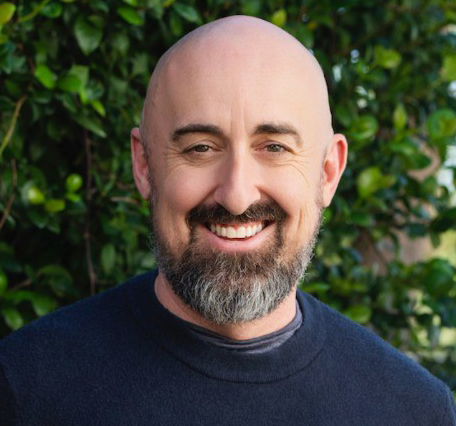
AdExchanger
Why Medium Said No To Easy Ad Money
00:58:52
Tony Stubblebine became CEO of Medium in 2022 and turned the struggling, loss-making platform profitable by cutting costs, improving content quality and refusing to rely on advertising.
Loading summary
Transcript83 lines
- [00:00]
Allison Schiff
Foreign welcome to Ad Exchanger Talks, the podcast devoted to examining the issues and trends in advertising and marketing technology that matter most to you. This episode is sponsored by Amazon Ads. Amazon Ads offers a range of products and solutions that can help businesses achieve their advertising goals. Advertising needs a world where marketers no longer have to choose between building their brand and driving results. Amazon Ads helps marketers prioritize solutions that break down silos and simplify campaign management, enabling the orchestration, execution and measurement of holistic campaigns that achieve both objectives. We remove the guesswork for advertisers by making it simple to manage all of their TV planning and buying with Amazon Ads. I'm Allison Schiff and you're listening to Ad exchanger talks. Marshall McLuhan famously stated that the Medium is the message. And guess what? I've got the CEO of Medium, the community driven online publishing platform, as my guest this week and he's got a message. It's time to bring back what he calls white hat marketing. As in honest integrity driven marketing that focuses on leading with value and genuinely helping others as opposed to manipulating them and using deceptive tactics to grab attention. Be transparent, create beneficial content, share useful knowledge. It's a recipe for building trust. We'll talk about how to actually do that, as well as how Tony helped pull Medium back from the brink of having to shut down plus Medium's approach to maintaining content quality in an age of AI slop and lots more. But first, please take a moment to register for our upcoming webinars. We've got one on November 13 about understanding digital out of home measurement and another on November 18 about creating more efficient quality strategies quite topical for the AI age. Our webinars are free and you can get more information and register@adexchanger.com webinars hey Tony, welcome to the podcast.
- [02:26]
Tony Stubblebine
Well Alison, thank you for having me.
- [02:29]
Allison Schiff
So I usually start off this podcast with a stock question, which is what is one thing about you that not a lot of other people already know? But I wanted to start out with a quick ish rundown of a lot of the cool stuff you've done that people do know, but maybe our audience might not know. And there is a lot. So stick with me. You're going to have to kind of sit there and smile and nod while I list all of your all of your accomplishments.
- [02:53]
Tony Stubblebine
It doesn't sound that hard.
- [02:55]
Sarah Sluice
Just bask.
- [02:56]
Tony Stubblebine
I'll see if I can sit still. Yeah.
- [02:59]
Allison Schiff
So before taking the reins at Medium the summer of 22, you did a lot of things, a lot of pretty interesting things. You were the lead engineer at O'Reilly Media, which is a publisher of technical books and manuals. And while you were there, which is around like 2003, 2004, you wrote and you published a book of your own of regular expressions to do with understanding programming language. Then you were the VP of engineering at Odeo in 2005, which was the podcasting company co founded by the co founders of what later became Twitter. And then one of them went on to found Medium back when it was still called Twitter because they hated vowels. Tw, T, T, R. And you led engineering for the first version of Twitter. You were the CEO of Crowdvine, which was a SaaS platform that people could use to white label social networks for events and conferences in different communities. You co founded the first habit tracking app for the iPhone called Lyft and the first habit coaching company called Coach Me. And then you launched and curated one of the largest and long standing pubs on Medium, which is called Better Humans, focused on self improvement and personal development. And yeah, I mean that brings us up to the present day. You joined Medium as CEO a little over three years ago. And so forgive me for the long preamble, but I did want to give our listeners a sense of your background because we bring a lot of different types of guests onto this podcast. We had an economist recently talking about the Google Ad tech antitrust trial. We've had academics talking about ethics related to AI and advertising. But usually I am interviewing people who are pretty deep into ad tech specifically, which is not your thing. So I am finally going to ask you a question which is a version of my usual starter question. What is one thing that an audience of ad tech folks and ad tech focused publisher people and marketers should know about?
- [04:57]
Tony Stubblebine
You see, you switched the question on me. I had one prepared for the generic version. I mean I'm a part time wedding minister and I've done seven weddings and I like to say 100% success rate, no divorces and you know, now that's a good one. 50 plus years of happiness I assume. So I don't think that meets the call for the revised question for ad tech. I think, you know, I tend to find that, that people are in like, they're either on like the product side, the supply side, we say sometimes, or the demand side, like how to get people to buy the product and that there's a lot of need for ambient awareness of what all of your options are. So I can't speak in any real depth around ad tech because I just haven't really been close to that, but it's. I have been close to a lot of other marketing and I think there's a thing inside a medium that is actually a marketing goal that I wish we could bring back. There is a period in the Internet of what we call just like white hat content marketing. It almost felt like 1920s style, how to win friends and influence people. It's like the Internet's an opportunity to be helpful to other people and once they see how helpful you are, they're going to hire you for your services. And I love that period. I thought that felt like a very high integrity period of the Internet. And then the Internet kind of got morphed by virality and misinformation and a bunch of other things that are essentially about grabbing attention. It turns out sometimes integrity and being able to grab attention or not the same thing. And so when we were building Medium or like kind of when I took over Medium, the big question is, who's Medium for them? Like we like to say Medium is for real people. Like, like a place where anyone can come and publish and write. And one of the use cases that is really valuable to everyone, both the writer and the reader, is white hat content marketing. Here's how to do something that's valuable and if you need even more help, I'm available at a cost. So consultants especially. There's one person we reference a lot of business strategists on Medium. His name is Roger Martin and he just is giving non stop great business strategy advice for free. But, but I know for a fact that he gets hired by the readers all the time. And his content marketing approach strategy is so effective that we use his Medium posts in our own board meetings. And here I am now repeating his name as a guest on someone else's podcast. That's marketing. At the end of the day, that was marketing for him. But, but the kind of, the precursor for it was lead with value. And I don't, I think that I would have to rely on you, Alison, for like how to connect the dots to ad tech. But that's like, that's my kind of my like strongest feeling about anything in marketing is kind of in that area.
- [08:27]
Allison Schiff
I mean there's a direct connection in that the goal is really the same. Ad tech exists to support the dissemination of information about products and services that should ideally benefit somebody and the process of reaching them shouldn't freak them out. And yet it often does because targeting has been warped. So I almost feel like though we haven't gone from White Hat to Black hat marketing. It's more like gray hat marketing, you know, just like yucky. So how do we get back to White Hat?
- [09:01]
Tony Stubblebine
I'm really struck by how like, is there such a thing as deep gray? And the thing that stands out to me is when I was first like exposed to growth hacking and of course when I practiced it myself, I've run businesses, I want customers. I wonder will this tactic work or not? Right. When I first saw and used those, I understood that I was going against the intention of the platform. Like I understood at some level it's wrong. Right. And now when I run into people, I, it almost sounds like it had never occurred to them. You know, it's like if the platform allows you to do something, then therefore the platform must like want you to do it. And, and so like, you know, kind of the default on a platform like Medium, any social media platform, and the default gray hat growth hacking is follow for follow or something reciprocal. It's like I post a comment, hey, that great, you know, great post. Right. But if I didn't read your post, to me that's obviously dishonest. And I feel like the current era has been so warped by the idea of the Internet is hackable that they've lost the thread about what is honest or not and whether honesty even matters. So that's me agreeing with you. We live in a very gray area and it's become so commonplace that no one like, like people don't seem even to recognize the moral issues of it.
- [10:53]
Ludo Develant
Right.
- [10:54]
Allison Schiff
I mean the just because you can becomes an invitation to do it more.
- [10:57]
Ludo Develant
Yeah.
- [10:57]
Allison Schiff
And then it perpetuates.
- [10:59]
Tony Stubblebine
Right. And then, you know, then I'm in the business at some level you cross the line and you get thrown off of medium. And people are always so shocked by this. And I'm like, well, you're living in the gray area. You've invited yourself. Your average person is not leaving fake comments across, you know, the platform. But you are. It had never occurred to you that there would be repercussions, is I. It's, it's been a wake up call to me actually about like something seems off to me in the culture because of it.
- [11:34]
Allison Schiff
Well, how, how broken is the Internet? You've written a lot about quote unquote, better Internet. So how broken is it? And as like a sub question to that, can we have nice things or is it not inevitable that we exist in this like state of entropy where the Internet always ends up flooded with low quality content? You know, like it's A finger in the dike. And there's misinformation and bad actors despite the best intentions of some. And I promise I'm not actually that pessimistic. I'm just playing devil's advocate. But there is definitely the ring of truth to that.
- [12:10]
Tony Stubblebine
Yeah, there's two sides to it. And I think the Internet's always changing and some part of it is getting corrupted while some other part of it is growing and flourishing. And so right now I think the public Internet is being corrupted in a way that like, hey, like the best reaction is just to get, get your popcorn out and enjoy what a mess it is. Because the incentive for people to publish to the public Internet is receding because Google traffic is receding and that had like topped up a lot of public pieces of the Internet while at the same time what's left is, is getting flooded with AI slop. And also even before that existed very sophisticated content marketers. And so the kind of, the authenticity, the realness of it was getting very messy. And so it's almost entertaining how weird that part of the Internet might be getting and, and whatnot. But at the same time there's, there was always something, even when we thought it was good, there was something bad about it, which it was, it was in, it was inauthentic. It was, we were writing or participating in public, trying to get the machine to validate us with some number of page views or something. And there's like that's an artificial type of validation. And what I think is happening, actually you can point to a lot of examples of it, is that there's a retreat from the public Internet to private spaces. There's a whole spectrum of what we mean by private. Private could be a group chat with your friends and family, it could be a discord, it could be, I think of even subreddits as an example of this where technically anyone can see what's going on in a subreddit. But it's like conceptually you're mostly think you're talking to the people that are there every day. And what I like about that is that you're interacting with real human beings again. To me that's really exciting. So yes, the Internet is changing shape in some super aggressive way right now based on what's going on with AI and all the disruption that that's causing. But there's like something beautiful will come in replace of what we're in place of what we're used to.
- [14:59]
Allison Schiff
Maya, my dog, full throatedly agrees with you. He's Barking wildly in the background.
- [15:05]
Tony Stubblebine
I know I have, I have a good, I have good rapport with dogs. If I had said that and you had a cat who would just be, I think people would shut the podcast down.
- [15:16]
Allison Schiff
I do have a cat. I have both.
- [15:19]
Tony Stubblebine
Let's not let the cat weigh in because I'm really much better with the dogs.
- [15:25]
Allison Schiff
She's too busy judging everyone from her perch. She's looking very overloaded with me right now. I want to go dig into Medium a little bit. When you joined in 2022, it wasn't doing very well financially. It was losing more than 2.5 million each month. It was losing subscribers in part because there were some pretty serious content quality issues, a lot of low quality writing, get rich quick schemes. And you wrote this really interesting essay about that experience of pulling Medium back from the brink. And I want to talk about what you did. It was not just one thing. You led this whole turnaround involve fixing the content quality issue, cutting costs really drastically restructuring investor loans, all of that. But what struck me, and maybe because I'm a hammer and I just see a world of nails writing for Ad Exchanger, I'm like, well, where's the advertising? I mean there's no mention of advertising. It's usually a very low hanging fruit to generate revenue. But you didn't reach for that. So before you tell me what you did, why was advertising never part of, part of your consideration set?
- [16:35]
Tony Stubblebine
Well, I think what like if I start at the top, a thing we like about the Internet that's different when, from when we started in startups in like the 2000s is it. It's so big that you don't need to be all things to all people. And so we'd seen a lot of social media that was funded by ads and, and then seen what design decisions you make as a result of that. And so that's what we call the attention economy. And a lot of what we didn't like about social media is because, because of that incentive structure is like the more you can drive attention, the more ads you can show, the more, the more money you can make, the healthier your business. But the things that drive attention are often the things that like just personally I don't want to see more of really like angry emotional content that drives division often it's bait.
- [17:34]
Allison Schiff
It's so much bait. It's rage bait.
- [17:36]
Tony Stubblebine
Rage bait. Yeah, all that. Right. So we didn't like it. And I think we, you might hear us say sometimes like we wish none of it existed. But regardless we just thought the opportunity is for us to offer an alternative. And so just like fundamentally at a mission level, we thought we needed a different business model than ads. I would say it's also self serving and maybe the other more nuanced view that hopefully works for your audience is that we replace third party ads with house ads in a feed of stories on Medium. Right now some of the stories exist behind a paywall and I don't think it's wrong to just say like that paywalled story, just an ad unit for our membership, for our subscription. And what for us, we find that probably the house ads outperform anything we could do in terms of bringing third party ads onto the platform. Like the. I think if we were, we're not going to do this, but if we were to cover medium and third party ads, we think it would bump, bump top line revenue by like 20%. So it's like it's not nothing, but it's also those ads aren't free. You know that the higher, highest performing ones is like we have to have an ad sales team to get those higher rates and if we don't have that ad sales team, it's just much less money. So it's not really. So if you say that it's like, well, why don't we just have a second product to sell and put it in that ad inventory instead? That is kind of philosophically. We just always rather think in terms of house ads. Something that we know is relevant.
- [19:34]
Allison Schiff
To.
- [19:35]
Tony Stubblebine
Our readers, that is a product that we own and control and in fact we're getting ready for a second product right now. So that is, that continues to be how we think.
- [19:47]
Allison Schiff
And cast your mind back to 2022. You're sitting behind your desk with just an enormous cup of coffee. If you're a coffee drinker thinking, what the hell do I do here?
- [19:58]
Tony Stubblebine
Yeah, it's a business turnaround. I think it's a good lesson in what works and doesn't work in business. And also that there's something, to me, there's something really validating about how the world works that you can just come into a business and focus on running it well. And to me running it well was being clear about every person in the company, what is the thing that they can do to contribute to making the business run. And we had, I'm curious if this was your experience, but in the startup world we had gone through this period of easy money and my experience with looking at all companies, not just Medium, is that it led to really soft decision Making and where people had jobs that weren't really connected to any hard business strategy.
- [20:59]
Allison Schiff
And.
- [21:03]
Tony Stubblebine
I think that's bad business, but it also makes for not very fun work. I think one of the services you provide as an entrepreneur is not just to bring a product to customers, but to bring a job, a meaningful job to people. And I just always, I hate to offer someone a job that's not going to have an impact on the world. And yeah, essentially that was the turnaround was like, come and get much, much more clear about how everyone in the company can contribute. So in a sense I didn't do anything on the turnaround. Right. Like a lot of people around the company did the work. All I did was kind of help get us pointed in the right direction.
- [21:51]
Allison Schiff
I mean, I think there's some false modesty there, but. No, I hear what you're saying. A lot of people have to row in the same direction for something like this to work. You can't turn around a big ship, all of that. You can make any reference or bring whatever metaphor you need. But I get what you're saying. Well, we're going to take a quick break in a minute, but I wanted to ask you one other question first. So it wasn't a foregone conclusion that Medium would survive because like we were just saying, you were teetering on the brink of closure when you joined, but you turned it around and you're making a subscription model totally work. I was told by your comms team that I can ask you anything I want about Medium and that you're super candid. So this is my question.
- [22:35]
Tony Stubblebine
I also, I know how to, I know how to say no and I know how to bridge to a different answer. So we'll see, like, fair warning. All right.
- [22:46]
Allison Schiff
I mean, this is, this is not like a vicious question or anything, but I mean, Medium, you guys had a really impressive turnaround, but I think there might be like a critic out there who would say that a subscription model only really works for like a niche or well off audience and other publishers aren't really in a position to breathe that sort of rarefied air. So. So you're not responsible for all other publishers out there, but what should other publishers do? And you know, it can't really be just like, do what we do because a news publisher is in a very different position than Medium, which has a lot of publisher like qualities, but isn't really a publisher in the sense of like a New York Times or an LA Times or a much smaller news organization.
- [23:35]
Tony Stubblebine
Yeah, I, I think you're talk, when you're talking about traditional media and journalism, you're kind of, you're talking about the most marginal of publishing businesses. I don't think they think that, but there's actually a type of publishing that's much more commercially lucrative because it's more valuable to the people who pay, which I'll get into. And then there's also on the other side, there's publishing that just, it's not commercially viable and probably better just to accept that. So on the like commercially viable, you said. In my background I'd worked for this book publisher, O'Reilly Media, which before so much information was available on the Internet, the programmers who built the Internet learned how to program because they had physical copies of O'Reilly books on their desk. Right. And what I learned there was how valuable professional content is. You know, it's like we're Talking about a $5 a month subscription to Medium for content that's more valuable than you got for whatever you paid for at college. Right. Like it's incredibly affordable for the readers on Medium who are looking at Medium for professional development, which is not the majority of our readers but is the majority of our subscribers. And so that ends up being a very easy business to be in. I mean not trivial, but the value proposition is easy to make. $5 is at the lowest end. A book can be 30 or $40, a course can be $2,000. Most professionals, many professionals have a easy way to justify them. For the most part we're not. Medium is not in traditional media. We're user generated content where for the people that don't think of themselves as professional content producers don't think of themselves as professional influencers, all that stuff. Those people tend to use professional tools and then show up on Medium but it's not the primary home to them. And then you have kind of the less commercially viable. I mean, I guess I would point to poetry. Like I like poetry. There's a hike by my house called Poets Walk. I sometimes will save poetry and take my partner Sarah there and read her something. I mean I'm not against poetry. I just don't. I've never seen anyone make a big business out of poetry. And so like, like what's a poet to do on Medium? Given that we will pay, but we won't pay that much because we don't have that many paying subscribers. And you know, I like, I think in Poetry people who treat it as the payment is coming in terms of community or just like hot, like love of the craft tend to be happier. And like, this is like a, like a stoicism is required here. Like control what you can control. And I think if you come into, let's say poetry, saying like I got into poetry in order to be a billionaire, you're going to end up being disappointed. But it doesn't. So that's sort of my wide ranging take on that.
- [27:02]
Allison Schiff
And I will say before we hit our break, in terms of paying for Valuable content. Content. $5. What is $5? Yesterday my boyfriend and I couldn't find our login information for Paramount Plus. And so we paid 299 to watch a single episode of South Park. I mean, so I, I, I will, after we finish recording, go to a coffee shop and spend probably 675 on a latte. So $5 for valuable content is not very much for sure. All right, well, stick with us and we've got a lot more to talk about.
- [27:52]
Sarah Sluice
I'm Sarah Sluice, editorial director at Ad Exchanger, and I have with me here today Ludo Develant, the product marketing lead at Amazon Ads, our podcast sponsor this month.
- [28:02]
Allison Schiff
Hello, Ludo.
- [28:04]
Ludo Develant
Yes, hello. Thanks for having me.
- [28:06]
Sarah Sluice
So to start things off, what is the biggest opportunity right now for advertisers in the streaming TV market?
- [28:13]
Ludo Develant
Well, the biggest opportunity in my view is to remove the guesswork for marketers. When you think about it, slimming TV combines the best of both worlds. It's mass rich with precision and personalization. And with Amazon Ads, advertiser can achieve this personalization at scale by serving ads to specific audience based on viewer behavior while delivering broad reach. And this powerful combination helps maximize advertising impact and remove more importantly wasted ad spend. And this is really critical because you know, the ANA has estimated that marketer on average waste 36% of their budget through inefficient targeting, duplicative ad delivery over reliance on probabilistic audiences.
- [28:54]
Sarah Sluice
So streaming delivers that same mass reach people love with TV advertising, but less waste, more, more personalization. When advertisers consolidate their streaming TV investment with Amazon ads, what happens?
- [29:08]
Ludo Develant
Well, I think there are two advantages to work with Amazon ads. I mean, first of all, Amazon Ad is the only DSP that has all premium streaming inventory under one roof. So of course we have prime video ads, which is our own property. But advertisers also have access now to all premium publishers, including Netflix, Disney, Disney, Roku and more. And the second advantage is that we power our advertising solutions through the Amazon Ads authenticated graph. This is a unique graph which is built on verified relationship and not model data. And so in the US we can reach 90% of household to help advertiser manage through unduplicated reach and frequency. And it's delivering great performance. So for instance, with the same budget, advertiser can see on average 42% improvement in unique reach for their campaign with a reduction of 27% of frequency.
- [29:58]
Sarah Sluice
So we've got inventory and identity as the two unique pieces. So let's close with looking ahead. Where do you see advertising on streaming TV heading in the next few years?
- [30:11]
Ludo Develant
So I think streaming TV is really democratizing access to TV advertising. The barrier to entry are coming down with more self service options without minimum budget or year long commitment. So for instance at Amazon we have Sponsored TV which is our self service streaming TV solution for businesses of any size without any commitment in terms of minimum budget. And the second driver is AI tools that make video advertising creation both accessible and also very affordable. And I think this means that small businesses who could never afford TV before will join the game. And all in all, I think we could go from thousands of advertisers to potentially millions of TV advertiser in the next few years which will unleash a new golden era for creativity with more choice and more entertainment for consumer.
- [30:58]
Sarah Sluice
So we will be seeing more small advertisers entering the TV market using AI to create their ads. Totally agree with that prediction. Thank you Ludo. And thank you to Amazon Ads for supporting our podcasts.
- [31:12]
Tony Stubblebine
Thank you for having me.
- [31:27]
Allison Schiff
All right, we're back. And you're not a fan of advertising. I think that's fair to say. But you are an advocate of marketing. Advertising is a component of marketing. And we were talking about this a little bit during the first half. But what's more strategic is supporting like a longer term brand vision and that takes time and investment. And you know, the KPI can't just be a click or something. And you, you launched a publication on medium called Better Marketing that's by and for marketers. And it publishes marketing inspiration and career advice and tutorials and industry news and case studies and all that good stuff. And there's this post that you wrote back in 2016 that comes up right away when someone googles your name almost 10 years ago with a pretty great headline. And I think pretty much everything you wrote still rings true. Marketing is your moral obligation. That's the headline.
- [32:24]
Tony Stubblebine
Yeah.
- [32:25]
Allison Schiff
So like if you care about providing high quality products and services, then you should communicate what the value is honestly and don't try to manipulate people. And it's Important to do that responsibly when you do like your audience will reward you is like pretty logical. And I guess in this day and age it's difficult to put that into practice. And I applaud not only the principle, I, I applaud that you are trying to live that and living that at medium. But again like, I don't mean to be cynical, but something like that scalable in today's landscape or like has the rise of AI and data privacy concerns and just like sloppy slop everywhere and toxic social media, all of that has it kind of like fundamentally challenged marketing as a, as a moral act.
- [33:12]
Ludo Develant
Right.
- [33:12]
Tony Stubblebine
It's like our black hat marketers go steamroll the white half marketers. I'll tell you what I was thinking when I wrote that post, which is that I was in this world of coaches, all types of coaches, health coaches, productivity coaches, exec coaches, life coaches, this whole world. And many of them were quite good, but nearly all of them were struggling with their careers, like struggling to pay the rent practically. Because to be a coach is the same as to be any type of consultant. You're a one person business and you have to do all sides. You have to provide the product but also bring in the customers. And in coaching there's this idea of the reframe. Like you try like someone has a self limiting belief and you're trying to find some way to give them a new frame of reference for the world. And you know, the self limiting belief for a non marketer is that marketing is icky because we hear these stories of these incredibly dishonest marketers and salespeople and I'm not even sure how true they are. I think for the most part the Viagra spam that shows up in your inbox gets filtered out. I don't think that's good business. I think most of the marketing that we're exposed to is actually fairly high integrity. But still that concept exists and it creates this belief in a lot of people that they don't want to market their product because they don't want to be a bad person. So like how do you knock someone out of that? And that idea that marketing is your moral obligation basically was an attempt at reframing the world for coaches. Like if your coaching is so fricking powerful, then you need to beat the other coaches that are selling snake oil, right? And like it's your moral obligation otherwise a customer is getting substandard service. And I think that's generalizable to all people. And I also don't think that marketing is so competitive that nobody can do it. Right. And so I'm often kind of this other thing that comes from this coaching world. The sales coach gave me something that I found really empowering, which was the idea that sales. And that's probably true for marketing, that sales is a sorting function, not a convincing function. So if you think of sales as convincing, you think about you go to a used car lot and the used car salesman talks you into a car you don't want. That's manipulative. But you went to that car lot for a reason. And if instead the person puts two cars in front of you and says, do either of these cars meet your need? Then that type of. You're sorting the customer into a yes or a no. Does this meet your need or not? And you know, like, essentially then this is a kind of a research project. What is your need? You know, and do I have something that serves it? And just to be completely okay with the idea that the answer might be no. Right. Like, like if I have a.
- [36:40]
Ludo Develant
You.
- [36:40]
Tony Stubblebine
We're just, we're talking at the break about how we both live in New York City. Like if I have a pickup truck to sell you to sell. Do you have a need for a pickup truck to park on the street of New York? No. There's no room for this, right. So it's fine. You just say no and I move on. Right. Someone's going to want a pickup truck. And I just, I found like those two concepts really helped get non marketers into the world, like into some openness to doing sales and marketing. But then now you're raising this question, which I wonder if you think it's true that there's no hope for people that are doing white hat marketing and that you have to be like analytics driven, no results only, no integrity kind of person in order to succeed out in the market.
- [37:42]
Allison Schiff
I don't know if it has to be no integrity, but I do spend most of my time talking to performance marketers and the goal is always like, does it back out? Right. Can I spend $2? Make $2 and $0.01? And whatever you do is fine. Not whatever you do is fine. You're not going to run over a grandmother in the street. I don't know how that would help your KPI, but it's really just about results and outcomes and that really is what's celebrated. But I don't think it's mutually exclusive to focus on driving conversions without ethics. I think those two things can exist. I don't know how exactly to make that into a, a broader mentality. It's easy to forget that, you know, just because you can doesn't necessarily mean you should. Because if what you're doing seems to work, you do more of it. And if you're awarded by your CFO and your campaign was a success, you just keep doing that, whatever that is, and you get an award at an advertising award show and you put it on your shelf and then you enter those awards again the next year and that's, that's what you do. That's your job.
- [38:55]
Tony Stubblebine
To me it sounds like the morality comes down to the product, does the product deliver or not? And I think if you're getting an award, probably the product delivered. But I'm thinking about like fly by night dropshipping places where, you know, I think they launch, their reviews are high, but those are all fake reviews. And then once enough bad reviews come in, they close up, shops spin up again under a new name. Right? Like that's, that's the kind of the black cat world. And like I say, I don't think, I think the vast majority of marketing is selling products that basically deliver. And it's never the case that a product delivers 100%. There's something my, the CEO of O'Reilly, Tim O'Reilly Company is named after him. He just said casually in an all hands meeting, once he go, he said, he said, if we only got paid for the books that got opened, we'd be screwed. And I thought that was such an interesting observation about who's responsible. This is a company that cared so much about the quality of their books and is it their responsibility if someone bought it and didn't buy it and didn't get the value out of it? That's probably true for a lot of the products we buy. Know the customer does have some responsibility. At the end of the day, I.
- [40:21]
Allison Schiff
Want to change gears a little bit and talk about content quality and medium's responsibility to manage content quality because there is just in general a lot of clickbait out there. And it's pretty easy now I think for slop to masquerade as thought leadership using AI. How do you like, how do you keep the quality level high with so much content flowing through the system? What's the approach? Is it human editors? Is it actually using AI as well? So algorithm, some kind of combination of the two? Something else?
- [40:57]
Tony Stubblebine
Yeah, I mean algorithms are always part of it and you know, we use different language. Before AI was the kind of the most common term machine learning in the Back end. But the thing we do differently than any other platform is we designed a number of ways to put a human expert signal into those algorithms. The algorithm is always making decisions based on the incentives you give it. And if you only give it a click incentive, then we've seen historically, it will. The winners in that algorithm will end up being clickbait, slop, a bunch of stuff that it turns out a reader will not be happy to have paid to read. They'll click on it, but they won't be happy to have paid to read. And they won't feel like their medium subscription is valuable. So we put in the algorithm. We try to say the algorithm is playing matchmaker, but it's not there to judge the quality of something. So we have just a lot of internal human curators, we have external from the community curators. We have just like a number of ways in order to say this person knows what they're talking about and they think this story is smart. That's actually the most important thing. This is smart. If you're in ad tech, this is an ad tech story that makes sense. Right. And that kind of expert signal fed into the algorithm means that it's playing matchmaker with a higher level of quality. And quality is such a messy term because quality sometimes means good punctuation and sometimes it doesn't. Right. But you know, we're thinking in terms of quality of is your life better for having read this? And the algorithm is great at the matchmaking, like your life goal is X. Well, we've got an article that matches that. But especially for professional development, you want to just know that you're getting current professional advice or professional advice that is likely to have been useful because it was practiced by someone who knows what they're talking about.
- [43:15]
Allison Schiff
Right. So less of a creator economy, attention economy, and more of like an expert economy. I think I've, I've seen you say something along those lines before.
- [43:25]
Tony Stubblebine
Yeah, right. Like every. I like, basically, I would rather hear from every one of your listeners than from an ad tech influencer who's not, who doesn't have an ad tech job today. You know, like. And that is the, that's kind of the essence of what I think the Internet's about. About the reason to give everyone a voice is because everyone is, is an expert at something. By definition, they're an expert in your own life. Something happened to you today that if you were to capture it in writing, would be helpful to someone else. And I think in order to make space for voices like that for like people listening, we had to really push out the creator economy, which is just like the business of manufacturing content sometimes out of nothing, you know, and um, but that, you know, like that just gets in the way, steals the oxygen from, I think, the people who actually know what they're talking about because they're, they're out living. You know, it takes time to learn a life lesson and so you have to give yourself time. And a lot of times writing every day kind of me is the, the signal that you're not taking enough time to, you know, live an interesting life.
- [44:43]
Allison Schiff
What do you make of the creator economy? On social media platforms, people make themselves into experts, I guess by talking a lot about makeup or being a self designated expert in this or that particular thing. And then of course, you're part of the machine and there are rev shares and you get back into the bait discussion. Right. I mean, in essence you are trying to clickbait people because you just want them to engage with your stuff more and more. And it's a cycle.
- [45:14]
Tony Stubblebine
Yeah, I just, as a reader, that's what I'm trying to avoid. And I just have gotten so much value out of the parts of the Internet where you can hear honest opinions from real people about their real experiences. And the more manufactured the content, the more artificial it seems to me and the less likely it is to be true. And so that's not. It might be entertaining, I'm not discounting that. But if, if you're someone like me who thinks, you know, my life will be better if I'm smarter. Right. That. And so I'm hunting for the things that make me smarter and like, as a result, I've just really found myself avoiding the creator economy. And for what it's worth, I think podcasting is actually the right middle ground because you're facilitating someone, you know, not me, today. God, this has been awful for your listeners. But, but your typical episode has an expert, right? Like a practitioner. And you're facilitating a chance for them to share something that they wouldn't otherwise share.
- [46:32]
Allison Schiff
So some people are going to be listening to this podcast, audio only, and some people might watch it on YouTube. We relatively recently, within the last, I think it was four or five months, started recording video to go alongside our podcasts. And I find it to be a very different recording experience when I can see the person, weirdly, I. It feels less intimate to me. I like just having somebody in my ears and well, that's me as a listener. But also in having the conversation, there's something that's kind of nice about, well, showing up without doing my hair. Not that it looks like I did my hair or anything, but I did comb it, you know, for people watching on the video. I keep this over here because my bangs are unruly sometimes, but it feels like there's kind of a loss of intimacy. The kind of intimacy that you have through radio, for example, which is an audio. Was an audio only medium until I guess like Don Imus decided to bring a camera into the studio. But that's kind of a segue into me wanting to talk about the role of text based content and journalism and stories in an increasingly video dominated digital landscape. In Ad Exchanger, we're a pretty niche trade journal and we're being encouraged by the higher ups to think more about social video and how to enhance our writing with video for the sake of engagement. I mean that is the reason we're recording this podcast with video. So how do you see long form writing and like thoughtful smart journalism carving out or just trying to maintain really a meaningful place among this like flood of short form video. And we'll be producing some of it ourselves soon too.
- [48:18]
Tony Stubblebine
I mean enjoy, have fun. People really latch on to this trend or this idea that there is a trend. It's like this is be the second or third wave where media has been asked to pivot to video. All the forums have different strengths. Medium is a place where we are champions of writing. Like because our goal is like our mission statement is to deepen understanding and we have not found a format that's better for deepening the understanding of the creator. Like really common to feel like you don't even know what you think about something until you've written it down. Like writing is thinking and there's like a built in reward for the writer just by having written it for themselves. A lot of times it's the first time they really understand a thought or an idea or an experience that's been rattling around in their head. And writing and especially like the full story of something is the most effective form of transmission. Technologists are always trying to be more efficient about how we teach each other, but the mistake they always make is to think that like we're teaching a robot and we just need to give them a few facts. But we're not robots. We like, we can't take any action without our subconscious going along. And that's why story looks so inefficient and it's filled with all of this like social proof. And these like extraneous contexts was actually because our brain needs all of that. And so, like, just for my goal of helping people be smarter, there is no better format. Like, that's my starting point. I don't even like what's trendy. Doesn't even factor in that we're trying to be the best. And. And so then, like, we've just been able to rely on. There's always going to be a market of people who can think their life gets better if they get smarter. And therefore they need the best format for that. And that that continues to be. To be writing. So I'm excited about writing. And then the thing that I've been talking about this week, really for the first time, is how much there's a writing renaissance going on because of AI. I think people under acknowledge how good of a writer you have to be to get the AI to be helpful. It's constantly. You have to be more verbose, but also more articulate about what you want, what you think.
- [51:01]
Allison Schiff
Super specific.
- [51:02]
Tony Stubblebine
Yeah, yeah. And so I was talking to a peer CEO the other day who said he's written more in the last month than he has in the last 10 years because he's trying to capture everything he knows and thinks so that he can give it to an AI. And this is the weird part, so he can give it to an AI to create something that he can give to a human. And I mean, honestly, I would ask your bosses, why aren't you creating chatbots? Right. Why aren't you? Is publishing video the right thing to do or publish something that people can actually interact with and use as a tool? I just think the world is changing so much and it's creating a lot of interesting new opportunities and kind of pivot to video. Feels a little like, archaic at this point.
- [51:59]
Allison Schiff
We did this. We did this.
- [52:01]
Tony Stubblebine
Didn't we do this? Right.
- [52:03]
Allison Schiff
I remember it pretty well. I remember thinking too. Like, when you pivot, if you pivot too much, you're just spinning. That's a visual that I have.
- [52:12]
Tony Stubblebine
Right. Weren't we facing in this direction five years ago? Yeah, I remember this view. Yeah.
- [52:19]
Allison Schiff
The way that I consume information on a page isn't usually in order unless I'm reading for pleasure. So I find it way more useful to be able to scan a document than having to scrub through a video if I'm trying to learn something or get an answer. And that's not even how the human brain really consumes information. Right. Like you don't read in order. Your eyes hop around, and a video, even if it comes in chapters, forces you to be very linear and to go on the very specific journey that the creator decided you should go on. And sometimes that's useful. I mean, if I need to fix a thermostat, which I did at my mom's house, I did watch a YouTube video that was very helpful. But not for all kinds of information, right? Yeah.
- [53:11]
Tony Stubblebine
Right. I mean, again, like, you're just saying the same thing, that I believe that writing is a very, very effective form of media. And that's like, that's. To me, the whole argument is right there.
- [53:30]
Allison Schiff
So we're, we're nearly out of time. So I wanted to ask you totally different question basically for some personal development advice because you're big into self improvement and coaching, which I guess is why you founded Coach Me and lots of other things. I'm a terrible procrastinator. Like, I'm so good with deadlines. I always make my deadlines, but I'm kind of like a dirt bag. I put them off and I put them off and it's like my present self hates my future self. Like I'm always just sitting there at midnight with a deadline in the morning thinking, why did I do this? Why did I watch six episodes of something you fool? So give me some free advice on how to get things done early.
- [54:12]
Tony Stubblebine
I will.
- [54:12]
Allison Schiff
Kind of information I can find on medium.
- [54:15]
Tony Stubblebine
You can. There is a productivity. No, there's a procrastination professor. It's a specialty of research, who wrote for one of my publications, Better Humans. His name is Tim Pickle. P Y C H Y A L. And I think the piece on better humans will be obvious. But one of his observations which perfectly matches what you say is that if we were to put you under an mri, the part of your brain that lights up when you think about your future self is the exact same part that lights up when you think about a stranger. And so it's not that you're being unkind to yourself, is that you're being unkind to some stranger, that you're not accounting for that. That doesn't help you though.
- [55:05]
Allison Schiff
No, but it's interesting.
- [55:06]
Tony Stubblebine
It's an interesting factoid. The thing that I think helps, and this also kind of starts with Tim, but there's a lot of different pathways is the observation that procrastination is mood repair. And, and especially what's important to note is that it's not a, a strong feeling, it's a weak feeling that you're not acknowledging. It's like, like the world of getting things done kind of had this Right where it's like the task is just a little too hard. It's not a lot too hard. You know that like the difference between terror and like and like. And that feels like, that feels hard, you know, is like is pretty wide and. But the vast majority of procrastination is you're avoiding some feeling that's incredibly trivial. And so a lot of the things that actually work on procrastinating, like most people try to tackle procrastination with complicated productivity systems, but the thing that actually works is just to be more comfortable having feelings. And this was like such a shock to me when I finally realized this because I'd come from a world of building productivity systems and, and it was meditation helped quite a bit. But it was honestly, it was like a therapist pinning me down and being like, how do you feel in your body? And I was like, what does that even mean? I've never felt how my feelings in my life, dude. But he's like, exactly any. And so when you find yourself procrastinating, the question is like, why? What is the anxiety, this minor anxiety that you are trying to avoid and is it really as bad as it really so bad that you need to run away from it? The vast majority of the time it's just not. And that's the high level view of how to get out of procrastination.
- [57:11]
Allison Schiff
I'm going to stop lying to myself, thank you very much.
- [57:15]
Tony Stubblebine
Introspect a little bit. You don't have to, don't put so much pressure on yourself that you have to not procrastinate. But if you could just say, what is it that I am avoiding here and how bad is it really? That would be a good start. Just to see if the procrastination dissipates sometimes.
- [57:36]
Allison Schiff
Well, I will report back and I will not procrastinate on publishing this episode, which will, you know, be live for our listeners soon enough. And yeah, thanks, thanks Tony. Thanks for the free advice and thanks for taking us through Medium's journey.
- [57:53]
Tony Stubblebine
All right, I appreciate it.
- [58:05]
Allison Schiff
This episode is sponsored by Amazon Ads. Amazon Ads offers a range of products and solutions that can help businesses achieve their advertising goals. Advertising needs a world where marketers no longer have to choose between building their brand and driving results. Amazon Ads helps marketers prioritize solutions that break down silos and simplify campaign management, enabling the orchestration, execution and measurement of holistic campaigns that achieve both objectives. We remove the guesswork for advertisers by making it simple to manage all of their TV planning and buying with Amazon ads.