Podcast
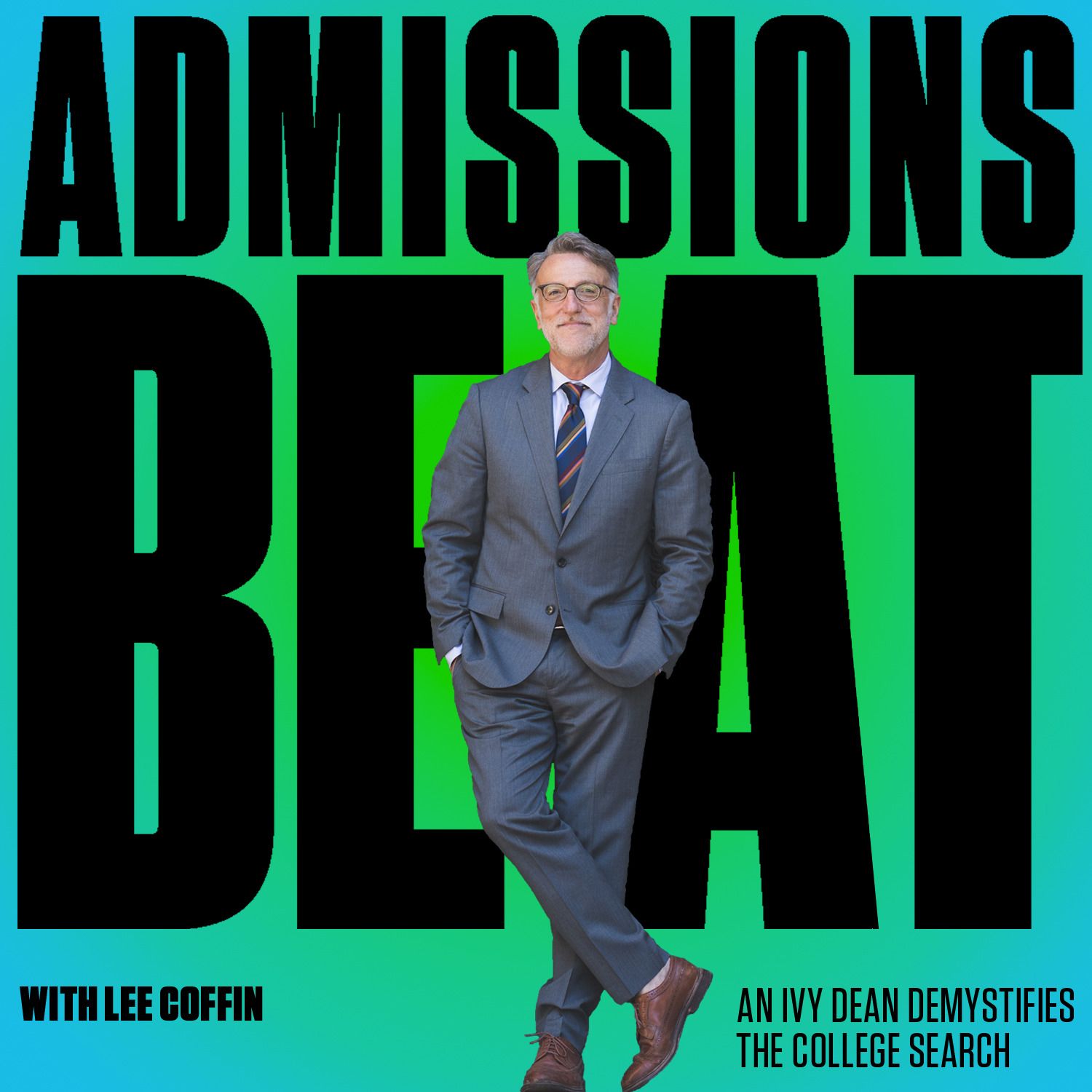
Admissions Beat
Hosted by Lee Coffin • Vice President and Dean of Admissions & Financial Aid at Dartmouth College · EN
On the Admissions Beat, veteran dean of admissions Lee Coffin from Dartmouth College and a range of guests provide high school students and parents, as well as their counselors and other mentors, with "news you can use" at each step on the pathway to college. With a welcoming, reassuring perspective and an approach intended to build confidence in prospective applicants, Dean Coffin offers credible information, insights, and guidance—from the earliest days of the college search, to applications, decision-making, and arrival on campus. He does so by drawing on nearly 30 years of experience as an admissions leader at some of the nation's most prestigious institutions.
28episodes
Episodes
Newest firstAll episodes
March Madness Part 1: Reading Season
Mar 1000:47:36Tap to summarizeIn the first of a two-part episode, AB peeks behind the opaque curtain of a selective admissions office in March. Four Dartmouth admission officers join their dean for an introspective conversation about reading applications, which is "the fundamental task we have as admission officers at a college," AB host Lee Coffin notes. As one veteran reader says, "It's my favorite [part of the admissions cycle] because we get to meet people from all around the world...and put ourselves in the life of another person. It is a fundamentally positive and optimistic part of each admissions cycle."
Transcribe →Follow Me!
Mar 300:46:27Tap to summarizeDo Instagram or Reddit rival a guidance counselor as a source of admissions information and advice? Can YouTube match or beat an on-campus tour as a measure of vibe and place? Conventional wisdom says Gen Z prefers social media over in-person activities, but a trio of undergrad admissions bloggers at Dartmouth suggests a more cautious role for social media in a college search. The first-year students ponder the plusses and pitfalls of digital platforms as opportunities for discovery and as rabbit holes to avoid.
Transcribe →Crunching Numbers
Feb 2400:54:54Tap to summarizeThe college admissions process spits out lots of stats. Some numbers are straightforward, or they seem to be, while many data points require a nuanced interpretation from an inside source. Always, an ounce of context goes a long way towards appreciating what a number really means. The admissions deans from Colorado College and Dartmouth offer curious consumers of admissions data a cheat sheet on admissions numerology and how to "crunch" the stats that count. "Fair warning," they agree, "there is no code to crack!"
Transcribe →"Let's Just See What Happens..."
Feb 1700:50:43Tap to summarizeBy definition, a guidance or college counselor offers counsel as a search takes shape and progresses. But sometimes that advice is resisted by parents and students. A "reach" or a "likely" designation can spark debate as aspirations meet the truth of a competitive forecast of admissibility. "Let's just see what happens..." or "you never know..." are common reactions of resistance. “I know," a veteran counselor replies. “I am not trying to insult you—I am trying to steer you towards good options."
Transcribe →Everything Counts!
Feb 1000:45:31Tap to summarize"What counts?!" is the perennial question asked by parents and students as they wonder what makes a strong application. The answer, it turns out, is complicated. In a re-broadcast of a popular episode from Season 7, the admissions deans at Dartmouth and Brown ponder the nuanced question at hand as they share insights on what admissions officers are—and are not—considering as they build their college communities. Juniors, this conversation will help you discover which colleges match your interests and abilities, while seniors may be glad to know that the way you tell your own story is as important as the transcripts and test scores you submit.
Transcribe →Discovery Starts With Program
Feb 300:54:06Tap to summarizeAn effective college search starts with discovery. “Start your discovery with the fundamental thing about college,” AB host and Dartmouth Dean Lee Coffin advises. “You are going to college to study, and four ‘Ps’ should guide the first phase of the search. Focus on program, place, people, and price as the building blocks of discovery for each campus." Senior admission officers from Brandeis, Cornell, and Saint John’s of Annapolis join Coffin with tips on how to explore academic programs, classroom types or formats, and general education requirements. They also discuss how place shapes academic majors from campus to campus. “Understand how every institution offers its course of study in its own distinctive way,” Cornell’s director of undergraduate admissions counsels. “And focus on what gets you excited—what learning environment lets you do your best work?,” the Brandeis dean asks.
Transcribe →Junior Kickoff!
Jan 2700:49:46Tap to summarizeIt's time for the high school class of 2027 to step into the college search spotlight. As juniors kick off their college search, AB resets its narrative spotlight to the discovery phase. In the ninth season premiere, Dartmouth's Lee Coffin welcomes recurring co-host Jacques Steinberg, a former higher ed reporter at the New York Times and the best-selling author of The Gatekeepers and The College Conversation, and Kate Boyle Ramsdell, director of college counseling at Noble and Greenough School in suburban Boston, for a wide-ranging primer on the college search. The trio outlines key milestones in the search calendar; shares tips on identifying criteria and "non-negotiable" factors; advises the development of an exploratory list as an opportunity to discover; and recommends a family's financial capacity as an essential list shaper. "Let's give you a toolkit to move from discovery to applying with a sense of purpose," Dean Coffin says.
Transcribe →A Primer on Financial Aid
Jan 2000:21:15Tap to summarizeIn a preseason bonus episode, Admissions Beat cross-shares a YouTube conversation about financial aid from the parenting website Grown & Flown featuring AB host and Dartmouth Dean of Admissions & Financial Aid Lee Coffin and AB contributor Jacques Steinberg, former New York Times higher education journalist and bestselling author of The College Conversation. As G&F notes on its YouTube channel: "In this essential conversation…Steinberg and Coffin break down what families really need to know about paying for college. This is not about negotiating like you’re buying a car—it’s about understanding how colleges calculate affordability, how financial aid works behind the scenes, and how families can make informed, realistic decisions without panic." You can learn more about Grown and Flown’s video offerings here.
Transcribe →After Early
Dec 900:55:17Tap to summarizeFor the high school Class of ’26, the first college admissions milestone is at hand as early decisions—some binding, some not—land. In AB's season finale, a trio of deans and a college counselor unpack those decisions, offering guidance on the etiquette of an early acceptance as well as reassurance for those with an early outcome that extends a search into regular decision.
Transcribe →Channel Your Main Character Energy
Dec 200:40:37Tap to summarizeFrom Grey's Anatomy to Bridgerton, Shonda Rhimes is television's storyteller extraordinaire. The Emmy winner visits AB for a lesson on how to channel main-character energy in an essay or interview. "What would you say to a teenager staring at a blank page, afraid their first draft won’t be good enough?," Dartmouth's Lee Coffin asks her. "Don't overthink your story," Shonda advises. "Just be you."
Transcribe →