Podcast
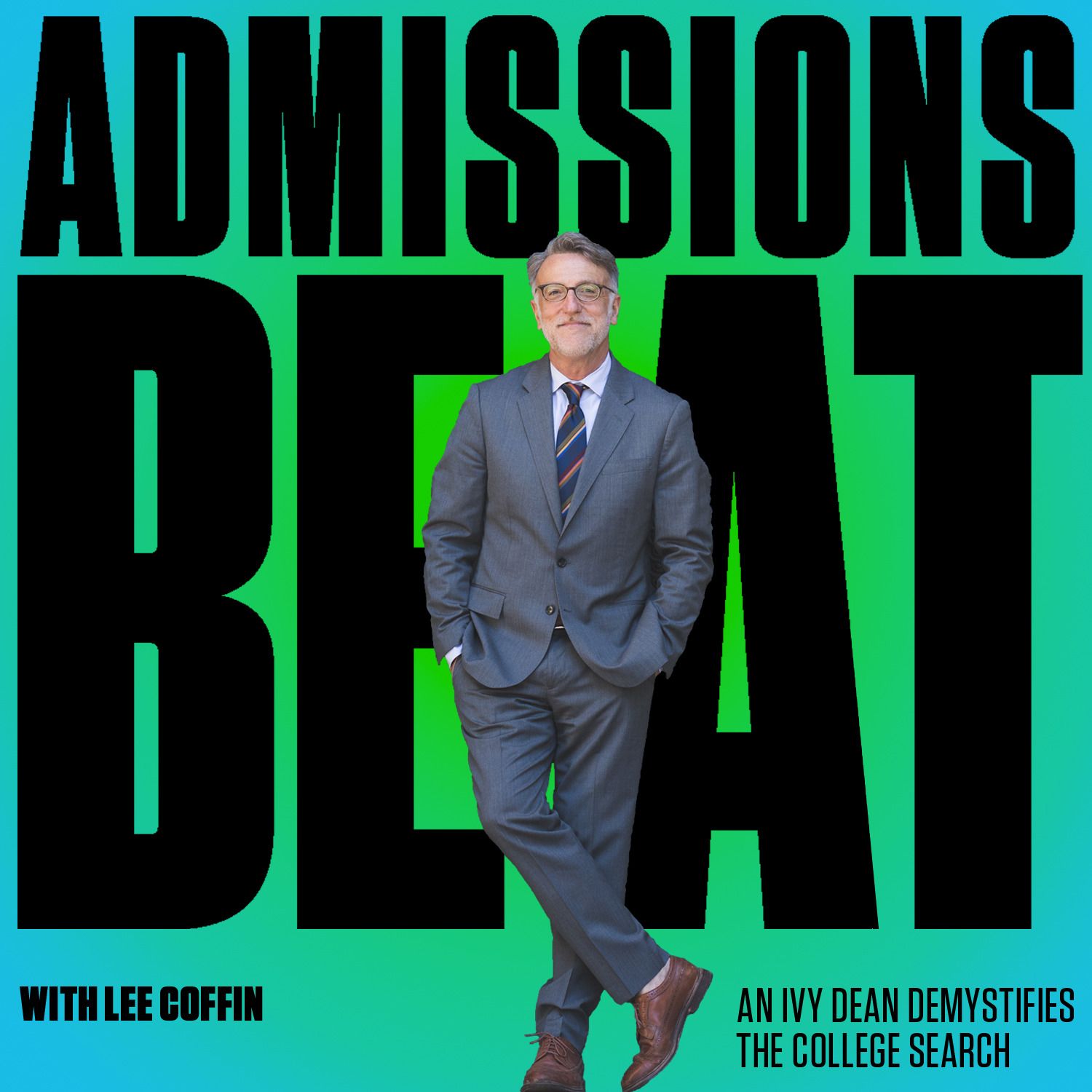
Admissions Beat
Hosted by Lee Coffin • Vice President and Dean of Admissions & Financial Aid at Dartmouth College · EN
On the Admissions Beat, veteran dean of admissions Lee Coffin from Dartmouth College and a range of guests provide high school students and parents, as well as their counselors and other mentors, with "news you can use" at each step on the pathway to college. With a welcoming, reassuring perspective and an approach intended to build confidence in prospective applicants, Dean Coffin offers credible information, insights, and guidance—from the earliest days of the college search, to applications, decision-making, and arrival on campus. He does so by drawing on nearly 30 years of experience as an admissions leader at some of the nation's most prestigious institutions.
28episodes
Episodes
Newest firstAll episodes
Strategies for the Road Ahead
Nov 2500:55:41Tap to summarize"Getting in" is the clear goal for almost every applicant, but a college search also yields valuable lessons for the road beyond the admissions process itself. Angel Perez, CEO of the National Association for College Admissions Counseling, returns to Admissions Beat for a Thanksgiving week conversation with Dartmouth Dean Lee Coffin that plumbs the lessons of his career in admissions as strategies for the road ahead. "These are the things I wish I knew," Perez notes.
Transcribe →College Is Opportunity
Nov 1800:51:16Tap to summarizeFor many students around the world, college presents a rare opportunity to change the arc of a life, to pursue the fabled “American Dream,” where anything can happen for anyone. But for those who are first in their families to attend and graduate from college—a cohort known as “first gen”—the promise of upward mobility means navigating what, for some, can be a mystifying admissions process. “I didn’t know what I didn’t know,” Dartmouth Dean Lee Coffin remembers about applying as a first-gen to college. Three veteran counselors from access-oriented schools and organizations in Boston, Los Angeles, and Kentucky join the AB host, sharing stories and tips about how to celebrate a unique life experience throughout an application and, later, on a college campus. As one observes, “It is time to showcase your tenacity, grit, and a desire for more.”
Transcribe →An Admissions Newsfeeding Frenzy
Nov 1100:57:25Tap to summarizeThe media's admissions beat is a very active feed each fall as application deadlines approach. Headlines invite clicks, shares, chatter...and often anxiety as students and parents consume newsfeeds that brim with content. But every admissions-themed article is not "news you can use," and some advice columns need a dose of interpretation. This week, AB host Lee Coffin and producer Charlotte Albright have a conversation about several recent admissions articles from The New York Times and Forbes—and the headlines that sometimes accelerate applicant angst—as they ponder what these posts really highlight. “I want to offer a forum for explanation,” the Dartmouth dean observes, "and what nuggets of information are worth adopting as valuable guidance."
Transcribe →Admissions Quiz Bowl
Nov 401:00:59Tap to summarizeLike most professions, college admissions has its own internal language, and that distinctive style of communicating is especially true as an application is read and summarized. In a special "quiz bowl" episode that fuses NPR's Wait Wait Don't Tell Me with Jeopardy!, four veteran college counselors—all former admission officers who've read thousands of applications themselves—match wits to decode and decipher the unique lingo and shorthand that admissions officers use as they read an application. For applicants, AB Quiz Bowl offers an inside peek at the many things an admission officer notices, as well as some tips about how to emphasize the points you most want to highlight in your own application.
Transcribe →Can I Afford It?!
Oct 2800:48:01Tap to summarizeSticker shock is real. Perceptions of college affordability represent one of the biggest concerns that most families navigate as a college search unfolds, with a 2024 survey of US voters revealing that 77% of Americans see college as “unaffordable.” This week, the pod tackles that (mis)perception as Admissions Beat becomes “Financial Aid Beat.” Justin Draeger, SVP for Affordability at Strada Education Foundation in Washington D.C., and one of the nation’s leading advocates for college affordability, joins Lee Coffin and Dino Koff from Dartmouth for a primer on the ins and outs of financial aid. The trio reassures families that higher ed really can be affordable as they offer tips on completing the Free Application for Federal Student Aid (FAFSA) and colleges' net price calculators, and they help translate some of the “jargony language” that muddies the financial aid conversation and causes unintended confusion.
Transcribe →Lessons from the Search: Parent POV
Oct 2100:56:56Tap to summarizeLike so many things, a college search often looks—and feels—better in hindsight. Parents are important eyewitnesses to a search as it unfolds and concludes, and they have plenty of stories to tell. Two parents from suburban communities full of high-achieving, ambitious students share thoughts and lessons from their children's respective searches a year ago. From the parental POV, they reflect on managing their own expectations and worries, processing the "silent treatment" from a child while "keeping quiet" themselves as they formed opinions and impressions, navigating the chatter of suburbia as well as the instincts of an independent-minded applicant, and planning to do it all again—with lessons learned—as a second child begins an admissions journey.
Transcribe →Data Dive into the Transcript and Testing
Oct 1400:53:51Tap to summarizeA college application generates a lot of data. "The transcript is the heart of the application," Emily Roper-Doten of Brandeis notes, "and there's a story in that transcript." And while that story seems straightforward, admissions data is easily misunderstood, as a grade point average, SAT score, and class rank (when available) dance with the rigor of a student's curriculum, the teacher recommendations, and the achievement norms shared on a high school profile. In an updated encore episode from Season Four, the new Brandeis dean joins AB host Lee Coffin from Dartmouth and Jeremiah Quinlan from Yale for a dive into the high school transcript and the role of standardized testing, optional or required. The trio of deans offers a primer on what the numbers mean, which stats matter and why, and how digits or percentages or letters inform an admissions evaluation.
Transcribe →Let Your Life Speak in 650 Words or Fewer
Oct 700:49:35Tap to summarizeLet your life speak. That venerable Quaker saying is great advice for any well-constructed college essay, but so many seniors wrestle with writer's block as the "perfect" essay eludes them. In a rebroadcast of a popular episode from Season 4, two veteran college counselors and AB host Lee Coffin from Dartmouth offer timely tips on composing an effective college essay in 650 words or fewer. “The essays that I love seem so effortless,” Ronnie McKnight from Atlanta’s Paideia School observes. “It is just an introduction of who you are.” Dean Coffin concurs: “What's the takeaway from what you shared?...And what is it about being a camp counselor, for example, that adds to my understanding of you as an applicant or as a member of the class I'm trying to build?” Adds Sherri Geller from Gann Academy in Massachusetts: “The questions and prompts are…things that 17-year-olds could answer. And if they were given this as an assignment in an English class…and just told to sit and write it without the pressure of thinking, ‘Is this going to affect my college admission decision?’ I think they really wouldn't find it to be that hard.”
Transcribe →