← Adult Child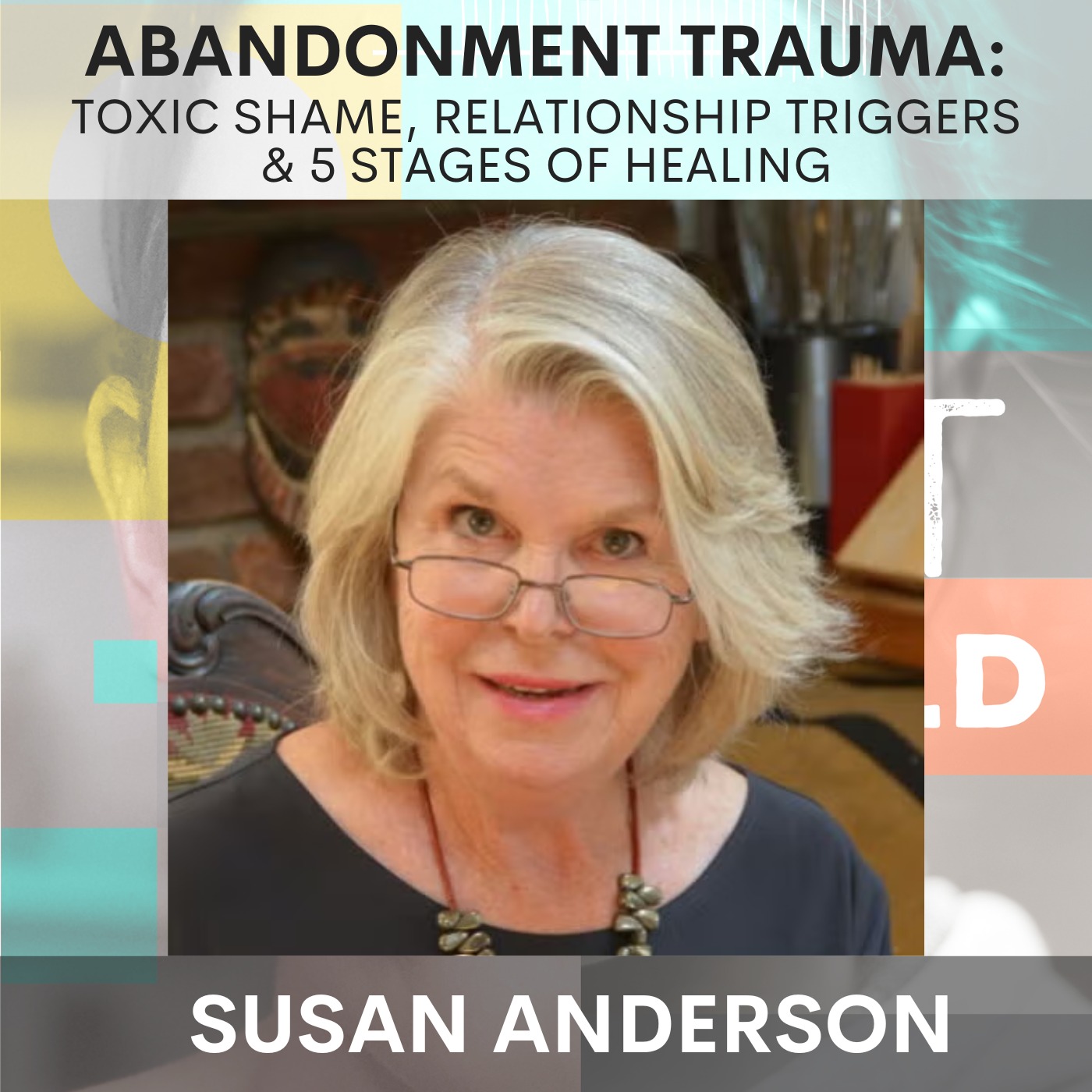
Adult Child
Abandonment Trauma Deep Dive: Shame, Relationship Triggers & 5 Stages of Healing w/ Susan Anderson
00:56:56
Loading summary
Transcript110 lines
- [00:00]
Mood.com Advertiser
Look, if you're still buying weed from some guy named Trevor in a parking lot, you're doing it wrong. Mood.com delivers legal THC products straight to your door. Gummies, vapes, flour, the good stuff. No sketchy DMs, no med card. Just add to cart, check out and boom, it's at your doorstep. It's legal in all 50 states thanks to the farm bill. And Mood's products actually work.
- [00:24]
Podcast Host
Seriously?
- [00:24]
Mood.com Advertiser
This isn't gas station garbage. It's small batch lab tested real results. Go to mood.com, use code first20 for 20% off and never run dry again. That's mood.com, go get lit legally.
- [00:38]
Grainger Advertiser
This is the story of the 1. As head of maintenance at a concert hall, he knows the show must always go on. That's why he works behind the scenes, ensuring every light is working, the H Vac is humming, and his facility shines with Grainger's supplies and solutions for every challenge he faces. Plus 24. 7 customer support. His venue never misses a beat. Call quickgranger.com or just stop by Grainger for the ones who get it done.
- [01:11]
Andrea (Podcast Host/Adult Child)
Being abandoned is awful, but saying don't leave me is even worse. My name is Andrea, and this is Adult Child. Just let it all go. What's making you small Now? Welcome back to Adult Child, where we take a deep dive into the impact of growing up in a dysfunctional family. So basically, I'm talking to like every damn person out there. Just not everybody has figured this out yet. Okay. Ahoy, my dear. Shit shows for any new listeners. My name is Andrea. I am a total and complete shit show. I'm the captain of this hot mess of a ship. I'm an acquired taste. We curse here. You've been warned. This is where we talk about all things dysfunctional families, complex trauma, healing in a raw, vulnerable, and at times, self deprecating, humorous way. It's like an uplifting, self deprecating, humorous way.
- [02:14]
Podcast Host
Right?
- [02:15]
Andrea (Podcast Host/Adult Child)
Because this shit is no joke.
- [02:16]
Podcast Host
And we got to be able to.
- [02:18]
Andrea (Podcast Host/Adult Child)
You know, laugh when we can.
- [02:19]
Podcast Host
Okay? The only way to survive this.
- [02:22]
Andrea (Podcast Host/Adult Child)
So, welcome. We have been waiting for you. So today, folks, we are revisiting one of my favorite episodes ever with one of my favorite guests ever on one of my favorite topics ever, but one of my least favorite lived experiences ever. We are joined by the badass herself, Ms. Susan Anderson, therapist, author of many a book and a true thought leader on what is the core wound for so damn many of us, myself included. Abandonment, trauma, and when I say thought Leader. I mean, thought leader. In 2000 when she published her book the Journey from Abandonment to Healing. This really was the first book to explicitly name abandonment as a trauma in itself. Now, prior to this, you had the work of PM Eldy John Bradshaw that were, you know, talking about these ideas. You had attachment theory. You had had the fear of abandonment showing up in the dsm, but solely as a criteria for borderline personality disorder. But it was really Susan who, you know, pulled it all together and said, clearly, this is abandonment trauma. Here's what it looks like and here's.
- [03:41]
Podcast Host
How you heal it.
- [03:42]
Andrea (Podcast Host/Adult Child)
So I am forever grateful to this woman. We're just taking a deep dive into, into this shit, into this abandonment trauma. Boy, is it no damn joke, folks. It's no joke.
- [03:57]
Podcast Host
It never goes away completely, let's be honest.
- [04:00]
Andrea (Podcast Host/Adult Child)
But you can heal a whole hell of a lot. You can learn tools to help you deal with it. And it no longer has to completely.
- [04:09]
Podcast Host
Run your life or destroy your life.
- [04:11]
Andrea (Podcast Host/Adult Child)
In the way in which it once did for me. So let's get on with the damn show. But first, first let's talk about why you. Yes, you need today on the DO show, my online support community where we have a minimum of six weekly zoom support groups. If you're curious what time those damn groups are, folks, you can go to adult child podcast.com shitshow scroll down. I got a little schedule there for you. This is where you can connect with other fellow shit shows who are doing the damn work to heal. This is a support community at your fingertips in your back pocket, available to you 247 through our app. You can also access it through the web. This is a place where you can show up exactly as you are. That includes as a messy ass shit show and you will be love accepted and understood. So you, yeah, you. The person that's been wanting to join for forever. And there's hundreds of you, if not thousands of you, who's going to pull the trigger today? Who's going to do the damn thing? Let's just do it already. Okay, this is getting a little ridiculous.
- [05:12]
Podcast Host
Let's just do it.
- [05:13]
Susan Anderson (Therapist and Guest)
Fuck.
- [05:13]
Andrea (Podcast Host/Adult Child)
For less than a dollar a day, let's just do it. You can quit after a month if you don't like it. See the show notes or head to adultchildpodcast.com shitshow next. Give me a little follow on the insta on the podcast. On the podcast. Give me. Give me a little follow on the insta on the TikTok at Adult Child pod. And last but not least, Whatever you do, please, please, please give me a damn five star rating on Apple, on Spotify. Thank you.
- [05:34]
Podcast Host
Love you all. So it is my pleasure to introduce Susan Anderson. She is a. A psychotherapist. She is the aband. I mean, I think that's what we're going to call you, the queen of childhood abandonment and abandonment trauma. So welcome to the podcast.
- [05:55]
Susan Anderson (Therapist and Guest)
I'm happy to be here.
- [05:56]
Podcast Host
Oh, I'm so happy to have you here. So I love your workbook. I was just going back through it and I was looking at all the different things that I highlighted, which there's quite a few. So many things I want to talk with you about, but I want to talk about you. What is your. Let's hear your abandonment story.
- [06:13]
Susan Anderson (Therapist and Guest)
Well, I was happily in a relationship and I know this is something extraordinary because it tells you a lot about my family history, that I even was capable of being in a beautiful relationship for 18 years, but he suddenly left me for another woman. So somehow I picked someone who would wait until my most vulnerable hour to leave me for another woman. I mean, that, that potential was in him all along. But anyway.
- [06:44]
Podcast Host
Well, how did that happen? Like, he literally just came to you one day and was just like, bye.
- [06:49]
Susan Anderson (Therapist and Guest)
Yeah, more or less. We were in the middle of this really incredible thing that we raised kids and built a house and just had a beautiful life. But he had a quirk. And the quirk was he thought he fell in love with someone and thought it was time to switch partners. So it was very sudden. But the fact that that potential was in him all along, that he could abandon someone and our family, the whole family, walk away, he had that in him all along. And I chose him. So I had to take responsibility for that and really rip myself into real honesty chunks to get to try to figure out why I did that. What is there in me that I chose someone who could abandon me like that? And of course, the abandonment was so painful that I survived it. Barely, barely survived it. So that's what got me started. And it got me started doing research into myself, which I did through a couple of exercises, which I share in my program, and also research into neurobiology and animal psychology and all kinds of different fields, anthropology, epidemiology. I mean, I really did a lot of research for three years to try to understand what is the mechanism within us that governs that level of happiness and dysfunction, happiness versus dysfunction. What is that mechanism? And what can we do to tune it up to make it work better? And looking for that mechanism and for understanding how to work with it. It was very, very intensive research for a period of time. But then when I came up with some answers that, that started me on this, this whole new bent of writing books on abandonment recovery and running workshops, etc.
- [08:59]
Podcast Host
So I feel like having the response that I. I chose this person that had this potential in them. I don't think that that's, that would be typically somebody's thought in your shoes. So how the hell did you have that realization? I mean, had you already done some self discovery work? Because I just think that most people that would not be, their response was like, oh, why did I pick this person?
- [09:29]
Susan Anderson (Therapist and Guest)
I'm a therapist. At the time I had been a therapist in specializing more or less in abandonment. I used to think of it as separation anxiety. So I specialized in heartbreak, loss and abandonment. Even though I had a practice of every different type of person. I worked in a psychiatric hospital, so the people I worked with ran the gamut. But my subspecialty was separation therapy. So I knew a lot about people getting themselves into painting themselves into corners in relationship choosing people who reenacted scenes from their childhood. I knew all that already. And I felt like such a victim being dumped by someone I loved so much. I was madly in love. And he walked away and left me like yesterday's trash to be collected by a garbage truck. And it was so painful and I felt like such a victim that I needed to see myself as a player in it. I needed to take responsibility. And at first I was forcing it, but then I came upon the realization that no, no, I chose this person. And there was something sexy about the fact that he had the capacity to walk away from someone. There was something so sexy. It was, it gave him sort of a little edge, a little attractive, hard to get edge. Somebody who could make unilateral decisions without considering the impact on the other person. So somehow that attracted me to him. I had to take responsibility for that. And if I, if I hadn't been able to do that, I think I would still be feeling the feeling like a victim, like a reject, like somebody I wasn't good enough. I didn't have enough to keep his interest. I think I would still have a remnant of those feelings.
- [11:36]
Podcast Host
Two things. So first, what were some red flags throughout those 18 years that this was who he was.
- [11:48]
Susan Anderson (Therapist and Guest)
He was very considerate and nurturing and kind. Not just to me, but to the kids and to other people and animals and the raccoon that used to come to the side of the house. I mean, he was Kind all the plants liked him a lot, that he was very good to them. So there were very few red flags. But there was something about him always that could always land on his feet. He always took care of himself. He was always comfortable. So I somehow knew that he was someone who could just walk away from a loving person regardless just to satisfy his own happiness. And the real clue for that came in his own history. I didn't know his history because he kind of distorted it. He made it seem like his ex had been too clingy and too needy and too demanding. And it didn't occur to me that maybe she he was too cold and rejecting and that maybe that's why she was being clingy. Didn't occur to me. But over time I began to think, gee, I really am not sure about why that relationship, they got divorced, why that happened, what part did he play? And so I had a sense that he left her, that he had the capacity to leave that woman. So it was history that was a red flag as I got to know more of the history and background information.
- [13:26]
Podcast Host
And then what about your childhood? So I would say, what was your perception of your childhood prior to this? And then what did you learn and realize about your childhood as you started diving into all of this?
- [13:43]
Susan Anderson (Therapist and Guest)
Well, one of the most important things that makes me an adult child is that when I was about 7, 8, 9, I became severely obese. Now today, because there's such an awareness about self esteem and people of all different body shapes, it's very awkward for me to mention that this is what happened. But at the time there was nobody in my school or in my town or in my family who was as obese as I was. I was like completely unique. And my father was ashamed and wouldn't introduce me to friends. I would, out of kindness, I would hide in one of the bedrooms so he didn't have to introduce me. As a way of showing him how much I cared about him. I would hide out so that he wouldn't have to be embarrassed. And this was his own weak ego. He was an adult child too. So this is how it manifested. But that being in that position of feeling rejected and unworthy and repulsive and self hating to an extent that is just really, really incredible that I survived it and that people do survive this. We do. There are so many of us. I don't mean just people who had obesity, I mean people who had all kinds of issues, that we survived these things. But this is the adult child, the main one. Then there, then there were all the other familial things that you can imagine my mother being a little distant, all of it, all kinds of other dynamics that shaped it. But I'm absolutely an adult child because I survived that and developed all kinds of ways of coping with that which are not necessarily all healthy, which I had to, you know, work on and learn about as I went.
- [15:53]
Podcast Host
So then when you chose to study psychology and become a therapist, I know a lot of times that includes having to do your own work as you're going through school. So did you, did you unpack any of that as you were going through schooling?
- [16:11]
Susan Anderson (Therapist and Guest)
I never had to unpack it. That feeling of being on the outside, looking in, feeling repulsive, having a ton of shame and embarrassment, being self conscious, that all was with me consciously all the time. That experience of being rejected and isolated, I couldn't get any one of my. Anybody in my entire school to have lunch with me. I had to sit alone in the cafeteria every day. In those days of being that unacceptable and that repulsive that I had to have my own table. I would. That schools wouldn't do that today. They would do something about that. But then that was what happened. And that has never left me, never became unconscious. The shame, of course, became unconscious, the level of shame, because we, you know, we bury that as much as we can. But I never had to do much work to bring it out. I just had to learn to contain it because I could overwhelm any of my first therapists with my feelings.
- [17:17]
Podcast Host
Mm. Wow. Yeah, I can relate as far as. So I became like the school in the seventh grade. And so like, I became the girl that no one was allowed to be friends with, that, you know, no one wanted to be friends with, and. Yeah. Harassed on a daily basis. So my heart, my heart breaks for you. So then, so then I guess was. As you started to work through this abandonment stuff, were there some profound realizations that you had about yourself?
- [17:51]
Susan Anderson (Therapist and Guest)
Yeah, well, I began to look at everything through the lens of abandonment. You know, the words that I used at the time were abandonment, rejection, shame, embarrassment, self hatred, and separation anxiety. Because being in a relationship and having insecurity that that person was going to leave, that I would somehow ruin it, I would sabotage it, that I wasn't enough, that all of a sudden some repulsive quality in me was going to come out like a plume of smoke and the person would run for the hills, that I had an inherent turn off valve that was going to just come on and send them away. That that separation anxiety was in most of My relationships, I felt it with any authority figure. So any boss became like a towering figure who had me worried that I was going to be thrust away, fired, you know, abused, bullied, you know, I had that always those fears and of course those fears became self fulfilling prophecies naturally. So you know, I, I had separation anxiety and abandonment were the theme when I became a therapist, that I had a heightened sensitivity. I worked in a hospital with psychiatric patients who were like schizophrenic and bipolar and you know, eating disorder, borderline, all kinds of diagnosis, major depressive episodes that where people couldn't even close their jaw. They were just so depressed. And I worked with all these people and I saw everything through the lens of separation anxiety. Abandonment may not have been what brought them into the hospital, could have been something they ate, could have been an allergy to a medication. Many things can cause a person to have psychiatric problems besides emotional things. But once they were put in a locked ward, once they were sequestered away, it ignited their separation anxiety. And then I would be in complete empathy with where they were at. And that empathy became a way of working with them, something to really connect to them with. And that's how the work of abandonment recovery started. Sort of discovering the power of the empathy that connected with the abandonment fear, the separation and then what you can do with that to move forward, to make headway.
- [20:52]
Ryan Reynolds (Mint Mobile Advertiser)
Hey, it's Ryan Reynolds here from Mint Mobile. Now I was looking for fun ways to tell you that Mint's offer of unlimited Premium Wireless for $15 a month is back. So I thought it would be fun if we made $15 bills but it turns out that's very illegal. So there goes my big idea for the commercial. Give it a try@mintmobile.com Switch upfront payment.
- [21:14]
Podcast Host
Of $45 for three month plan equivalent to $15 per month required.
- [21:17]
Grainger Advertiser
New customer offer for first three months only.
- [21:18]
Podcast Host
Speed slow after 35 GB of networks busy. Taxes and fees extra.
- [21:21]
Grainger Advertiser
See mintmobile.com this is the story of the one. As a maintenance supervisor at a manufacturing facility, he knows keeping the line up and running is a top priority. That's why he chooses Grainger. Because when a drive belt gets damaged, Grainger makes it easy to find the exact specs for the replacement product he needs. And next day delivery helps ensure he'll have everything in place and running like clockwork. Call 1-800-GRAINGER click granger.com or just stop by Grainger for the ones who get it done.
- [21:53]
Podcast Host
So I can share my own experience with separation anxiety. So So I found out my mom was an alcoholic when I was seven. I was an only child, and my dad traveled a lot for work. But so it started with me not being able to spend the night away from home. And then I would say around 7 or 8 years old one night, I woke up in the middle of the night in just a panic, and I went into my mom's room. And typically in the past, like, if I had had a bad dream, they could just walk me back to my room and I would be okay. But for some reason that night, I had to sleep in my mom's bed, you know, And I just kept going, and I was hysterical and hysterical. And after the back and forth and back and forth, finally my dad just threw in the towel and he went and slept in my room. And so what that started was a pattern for the next year and a half of where I would fall asleep in my own bed, and then in the middle of the night, I would wake up and I would go and switch places with my dad. And that went on for, like, a year and a half. Eventually, they. They sent me to a therapist. And I remember years later asking my mom, did you ever tell that therapist that you're an alcoholic, that you and dad fought all the time? And it was like, no, of course not. You know? Of course not. You know, I was. That's when I became the identified patient. And I remember, too, I remember one day walking into school, and one of my friends, he said, so and so told us that you sleep in bed with your mom every night. And my. My dad had played tennis that weekend with that person's father, so.
- [23:40]
Susan Anderson (Therapist and Guest)
Oh, great.
- [23:41]
Podcast Host
Yeah, that was really lovely. So, yeah. And then, you know, getting sent to rehab in 8th grade just freaked the fuck out. Freaked the fuck out. You're not supposed to call your parents for the first four days. I was so hysterical that they let me call my parents that night anytime I got sent to boarding schools or whatever. Just. Yeah, like, literally just feeling like I was gonna die. And so it was actually that feeling when I felt that way after Brian, number one, when I. When I. When he broke up with me, we had been dating for less than a month, and I literally, like, felt like I was gonna fucking die. And that was my first. Aha. Moment when I realized that there was no way that the way that I was feeling could actually be about him, you know, Like, I had only known him for less than a month. And then shortly after that realization, I had the realization that this feeling was a feeling that I had Felt often as a child. And that's how I was able to connect that, you know, my issues in romantic relationship was a remnant of my childhood. So.
- [24:56]
Susan Anderson (Therapist and Guest)
Well, I, I hear your story and I, I feel your story. And it's through this lens of separation and shame. Like your mother not mentioning to the therapist that she's an alcoholic. Well, she's terribly ashamed of being an alcoholic, so of course she's not mentioning it. Or that she and your father fight and probably very much related to her alcoholism. Well, nobody's mentioning that because of embarrassment and shame. And then you sleeping in your mother's bed and all the shame of that and all the shame of any emotional excess, the fear, being afraid and having the shame of that, and then having your father tell his tenant buddy and having it get out. That's just the. I'm looking at it through the lens of here's a self, this fledgling self, this shaky new self, trying to have a sense of, you know, calm and stability with that kind of a situation, having all of this shame and embarrassment heaped on her.
- [26:02]
Podcast Host
That's why I turned to drugs and alcohol. You know, it was the only way that I could get through it. So one of my favorite things that you talk about in the workbook, I want to bring up this quote. I could just relate to it so much. You're talking about your friend Peter Yelton. And it says, he says that abandonment is a profound enough trauma to implant an invisible drain deep within the self that works insidiously to siphon off self esteem from within. The paradox for abandonment survivors is that no matter what they do to build their self esteem, the invisible wound of abandonment is always working to drain it away. And I could relate to that so much because I was never somebody that hopped from one relationship to the next. Like, I would have some pretty, you know, year gaps in between relationships. And during that period of time, like, I would be feeling good, you know, like, I would be feeling good about myself, high self esteem, happy. And as soon as I would get into a relationship, all of that went away in an instant, you know. And so I guess, though, is it.
- [27:17]
Andrea (Podcast Host/Adult Child)
Really, is it self esteem or is.
- [27:19]
Podcast Host
It more so, like self worth? Because I feel like somebody could perhaps have high self esteem, but low self worth.
- [27:29]
Susan Anderson (Therapist and Guest)
Well, I mean, then we have to get into the semantics of worth versus steam. But what it really is. That's my favorite quote that you managed to find in the world.
- [27:39]
Podcast Host
So freaking good.
- [27:40]
Susan Anderson (Therapist and Guest)
My friend Peter, who just came out with that one day, I wrote it down. It was so Brilliant.
- [27:45]
Podcast Host
Peter. Where's Peter at these days? Let's get him on the pod.
- [27:50]
Susan Anderson (Therapist and Guest)
Oh, he's still, he's still brilliant. Coming out with winners all the time. Yeah, I'll, I'll tell him.
- [27:56]
Podcast Host
I'd love to connect him.
- [27:58]
Susan Anderson (Therapist and Guest)
He'd love it. But the invisible drain of self esteem is that when you have abandonment, when it's very primal. I mean, I'd have to get into the whole technical aspect of it, but it's very primal when you have abandonment. You have a fear of being, having people leave you, which is what happens when you get in a relationship. It triggers, kicks up all that stuff that you had as a kid and then all that floods into the relationship. So it's the fear of having someone disconnect. Your mother was an alcoholic, so she was, her primary relationship was alcohol. Not you, not your father. I mean, it's an illness. I'm not criticizing your mother. That's the way it was for her, but it wasn't good for you. Okay? So when you're born and you have fear of mommy not coming to the crib, you can't survive. An infant can't survive without a parent. So there's primal abandonment fear that infants have. They feel the terror if mommy's not there. They feel, they scream in the middle of the night. And then mommy comes to the side of the crib. Mommy or the nurse or daddy, somebody comes to the side of the crib and the chaos. But as the child gets older, the child says, let me see if I can bring mommy to the side of the crib. If I'm, if I giggle and coo and make cute noises or if I cry, maybe I can start to manage my world, sort of control my world. And sometimes you can, you scream and your parent comes running. Look what I did. I brought my parent to the, to come to me. But other times you scream, nothing happens. Other times you coo and you go goo goo goo, and you do your best patty cake and nobody smiles and nobody comes. And that's going to happen in an alcoholic family because they're not, they're not sober. So they, they don't respond properly. So the child acquires a feeling of being powerless and not being enough and just being, you know, disposable and not worthy of the love and attention. And these feelings are very. Children don't have words. There's no language for this. This is an undifferentiated feeling, a free floating kind of feeling of not feeling good about yourself. So self esteem that I'm That I'm talking about, and I presume Peter Yelton was talking about because he's, he's thinks in a very primal way. It is that. It is that primal feeling of not being enough, of just not. Not having worth. Other looking at other people and seeing that they can do things you can't do, or they have charisma that you don't have, or they have something you don't have. That feeling of not being up to par. It's very primal. It formed before we had language. So it's a feeling. It's not a judgment, it's not an intellectual decision. It's a feeling. And so when you have abandonment trauma, it plants that drain. And that drain means that, all right, so you go jogging every day to build. So then you can say, I jog today and I deserve self esteem. So you can feel good about yourself for about 10 minutes. But then that wears off and you need to find something else to do to build that up again. You can't spend your whole day jogging and winning contests. And so because the invisible drain, no matter how many esteemable things you do, is always draining it away. So that's the need for abandonment recovery. To really heal the primal wound.
- [31:55]
Podcast Host
To plug that drain.
- [31:57]
Susan Anderson (Therapist and Guest)
To plug that drain.
- [32:01]
Podcast Host
So I want to talk about your five stages of abandonment.
- [32:06]
Andrea (Podcast Host/Adult Child)
Now, would this be applicable for anybody.
- [32:09]
Podcast Host
Who experiences abandonment or just for us fucked up adult child folks?
- [32:14]
Susan Anderson (Therapist and Guest)
No. You don't have to be fucked up to go through this swirl. There's five stages of abandonment. Shattering, withdrawal, internalizing, rage, and lifting. Mm. It's just a universal direction that the grief takes. Very logical. First, you feel the shattering of your hopes and dreams. And this could happen on a first date when you thought, gee, I think that. I think I feel a connection.
- [32:38]
Podcast Host
Yes, yes.
- [32:39]
Susan Anderson (Therapist and Guest)
You don't get a return phone call, you know, so it could happen and.
- [32:43]
Podcast Host
Your life is over and your life is over and you're never gonna have another person ever interested for the rest of your life.
- [32:49]
Susan Anderson (Therapist and Guest)
For the whole day, you thought, oh, my God, I think I've made a connection. And then, you know, all that sense of future is torn away. So it can be a very minor event that causes it. But anyway, shattering is the loss of that connection. And it's just what it says, it shatters it. You're shattered. And if it's a big relationship, a big attachment, it can bring you to your knees. You could have, you know, suicidal feelings. It can really, really bring you to a state of crisis and an emotional emergency. Then withdrawal is when you start to yearn for what you're lost. Let's say you got fired. That's what happened. You lost your job, you got fired, and you're yearning for your job. It's the only thing you had, and it was your whole life. And now you've been fired and you feel you yearn, you wish you had, you want it back, or it's a person and you yearn for them. So there's. It's only natural to go from feeling shattered to wanting that thing, whatever it was. Then internalizing is where you blame it on yourself. You see what an asshole I am. I did this to myself. Oh, only I weren't so worthless. If only I had more whatever charm. Or it's only if only I had used a peer.
- [34:12]
Podcast Host
If only I'd used a period instead of an exclamation point in that last text message.
- [34:17]
Susan Anderson (Therapist and Guest)
Yes, exactly. All the regrets. So it's the taking what happened and blaming the rejection against yourself. And when you beat yourself up with feeling rejected, whether it's a firing or losing a relationship or whatever, you can inflict a very severe depression that can look just like major depression. You can go into a therapist at this stage and look like somebody who needs to be hospitalized, or she or he may think you're a very unstable person. But people going through swirl only appear unstable. It's a very painful process. And internalizing is the most painful of all stages because you're really hating yourself. And it's also when the wound becomes infected and it forms. The infection forms scarring and the scarring is damage to your self esteem. So when you emerge from the abandonment, ultimately you're not without a wound. You have a scar and the scar is you've lost some self esteem. That's what happens when we go through abandonment. Of course we build it up again through techniques that are very workable. But anyway, internalizing is the middle stage when the wound can become infected because you're beating yourself up, you're wounding yourself. Then the next stage four is rage, where a part of you says, wait a minute, it's not all my fault. Who do they think they are? And you start turning it back out again. And you ask, do most people go through this or is it just us fucked up people? The answer is no. We all do, because all of us beat ourselves up and then say, wait a minute and start to take the other person to task. It's just a natural reaction. So these stages are inevitably following one another. So in rage, we start to realize what the other person or the job or whatever, how they contributed. But usually we're so wounded by the abandonment that we can't take our anger directly out on that person. Some of us can, some of us can't. At least we can't when we're sober. That's where a lot of alcohol comes in. Abandonment is. Is a time when people become alcoholic. If you go to an AA meeting, you will see abandonment survivors.
- [36:59]
Podcast Host
The whole damn place, the whole damn room.
- [37:01]
Susan Anderson (Therapist and Guest)
Alcohol medicates abandonment. It medicates it. Not well, but it medicates. It doesn't heal it, but it makes it worse. But it takes the pain away. So in rage, it's very, very uncomfortable. And you want to direct your rage toward the person who hurt you. But very often we wind up taking it out on our friends because our friends say stupid things like just let go and move forward or that which doesn't kill you makes you stronger. And then we want to kill them and the rage comes out at them. They just don't get it. And then the final stage is lifting. And that's when life is so fantastic and bountiful that we have moments when we laugh and when we notice beautiful flowers blooming or we start to get drawn into life again. But the thing is that when we start to lift out of the abandonment from the swirl process, we have to take our feelings with us and nurture them because otherwise we become more callous. And then if we do become callous from the abandonment. We all know people who are callous from going through abandonment. They're sort of dead eyed and they're a little numb and less sensitive because they've doled out in order to cope with it. Well, that's not the way to go. The way to go is to be in intact feelings. So if you allow yourself to be calloused, you're likely to develop a pattern where you're only attracted to unavailable people because pain and insecurity you can feel and you think that's love, but you can't feel like just being loved. You can't just feel mutual love because you're too callous. So you need to be charged up by a challenge, a pursuit, and it has to be potentially painful and anxiety producing, otherwise you have a hard time feeling it because of all the callousing. And that's the swirl process.
- [39:15]
Podcast Host
I have no experience with that.
- [39:17]
Susan Anderson (Therapist and Guest)
No.
- [39:18]
Podcast Host
None at all.
- [39:18]
Susan Anderson (Therapist and Guest)
Of course not.
- [39:19]
Podcast Host
It's interesting though, when you talk about. I feel like for me, I don't identify so much with the rage phase. I don't I mean, for me, when you say like lashing out at friends, for me it was, and I don't know if this qualifies, but for me it was like more so just being like, just so needy and like an emotional vampire with my friends, but not necessarily like raging out on them, but just like, yeah, just being an emotional vampire. And when that kept happening over and over again and I didn't seem to be learning my lesson, you know, those people started to pull away from me. But yeah, I don't, I don't, I can't think of anything where I was really like lashing out at others. I mean, can that come in other forms?
- [40:13]
Andrea (Podcast Host/Adult Child)
The rage face?
- [40:14]
Susan Anderson (Therapist and Guest)
Well, a lot of people are too rational to have a lot of rage. There are plenty of very rational people. You know, rage is secondary, pain is underneath and then rage. So if I. If a rock drops out of the sky onto your foot, you're going to be, damn it, you know, it hurts. So the response is rage to pain. But the rage is secondary. The primary is pain. So not everybody is irrational enough to really feel angry. And if they, some people just don't, don't get there. And of course you'll find some therapists will say, oh, you need to feel your anger. No, some people just don't. That's just not part of their personality. So another factor is children go through swirls. So when children go through shattering and withdrawal, wanting and yearning and not being able to get. You described that a lot in your childhood. And then internalizing and questioning and shame and feeling self doubt and all of that. And then the rage. There could be rage expressed just by sort of not taking good care of yourself, just kind of like negligence and then lifting where you get distracted. But you tend, children tend to whatever stage they get stuck in the most is the stage they'll have the biggest problem with when they get to adult, when they go through a swirl in adulthood. So if in my case I went, I had a tremendous amount of withdrawal because my parents didn't give me what I needed and internalizing because they were rejecting and critical. So when I went through my abandonment, I had the worst yearning and pining for my ex you could ever imagine. And I was absolutely, my self esteem was absolutely on the ground in your case because of what you described. I don't know, this withdrawal for me too. Yeah, yeah, withdrawal because you were, you had a parent who was, you know, it's the case of the disappearing parent. The parent is there physically but not emotionally. Inconsistently, emotionally. So it creates emotional hunger. And you look to feed that emotional hunger with people, places and things. So if you then go through abandonment as an adult, your friends are right there. People, people, places and things. Alcohol and friends. And of course, you were in recovery. So what outlets do you have? So it all kind of fits together, you know, when you have. When your parents are alcoholic, when this might. This. I'm about to make a statement that's a little extreme.
- [43:10]
Podcast Host
Do it.
- [43:12]
Susan Anderson (Therapist and Guest)
So it's not. So you have to kind of take my statement and then tone it down a little bit. But what I'm about to say is that it's almost easier if the parent is dead. No, that sounds so harsh. And so. But the reason is because when the parent is absolutely absent, well, then there is nobody looming up in the role of parent to remind you of what you wish you could get from them. It's not like, oh, there's my mother or my father, and oh, now I can hug and get my warmth and nurturance because the person isn't there. But when you have an alcoholic parent that, you know, the disappearing parent, they're there physically, so they're reminding you of all the things you need from them, but they're not there emotionally. So it was a very big exaggeration to say that it would be better if they were dead. Easier. Easier on the child. So I was trying to emphasize a point.
- [44:20]
Podcast Host
I know what you mean.
- [44:21]
Susan Anderson (Therapist and Guest)
It's just that I work with children whose parents had died versus children who were children of alcoholics. And I could see all the differences there. And the children of parents who are alcoholics have a whole series of challenges. And it manifests in many ways that come out when they were about in the fourth and fifth grade. They start to have behaviors. Yes, they do. It starts at around 10 or 11 and. Yeah. But that it is very difficult to be a child of an alcoholic.
- [45:06]
Podcast Host
So you talked about just kind of all this research that you did and looking at the neuroscience and all of that stuff. But what did. Aside from, you know, researching and gaining knowledge, what did the healing process look like for you?
- [45:25]
Susan Anderson (Therapist and Guest)
The primary. The program consists of a series of exercises that are very hands on and they're designed to promote change. You know, change is very difficult.
- [45:39]
Podcast Host
Yes.
- [45:39]
Susan Anderson (Therapist and Guest)
Very easy to analyze ourselves and look in the mirror deeply and all that. But to change, that's very hard. So the research wasn't just trying to understand what I was going through and what other people go through. It was trying to understand how to tinker with that mechanism, how to Promote change. So I used all of my own exercises, and one exercise was a visualization exercise that put positive imagery in the brain. You don't have to believe the imagery. Some of these programs want you to believe something. No, no, no. There's no abandonment. Survivors have no faith. You know, they're so hopeless. You can't ask them to believe something. And I was that way, so. And am that way. I need to just have a very pragmatic approach. So the visualization, pretending about an image up in your mind and putting it up there three or four times a day, just for a few seconds at a time, just having a nice image to go to, and the image is in the future and it's a positive future image that promotes change. I know it sounds a little fantastical, but it does. And then another exercise that I did a great deal of on getting into the moment and getting into the moment every chance I could and staying in the moment strengthened my brain. It gave me a tremendous amount of strength for dealing with things. But the big little exercise, separation therapy, dividing myself into big me, the adult me, and little me, which is. It's like the inner child that people are familiar with, but it's really the inner child within the inner child. It's.
- [47:31]
Podcast Host
What do you mean?
- [47:33]
Susan Anderson (Therapist and Guest)
It's more. It's an inner child that only consists of your feelings and your needs. All only what you want, what you need, what you feel, your fears, your hurts, only the feelings. Whereas I've taken a lot of inner child, you know, training and so forth. The inner child traditionally is more, you know, more of a total personality. This is just the feelings. My little. Little you is the feelings. I didn't invent little you. It was invented by Richard Robertiello and. But it's this. It's my version of the inner child. It's retooled in order to make it get into the abandonment wound. So in creating a dynamic relationship between the adult you and this abandoned inner child, this inner child within the inner child, little you, by creating that relationship, you get to give yourself love. You get to actually do things. Not just feel things and think things and write things, but do things. Little baby steps from your adult self to your inner child to prove that you're going to take care of that child better. You're going to do new things, you're going to try new things. You're going to take little tiny baby steps. So that relationship inculcates self love. For real. For real. It actually puts it there. It's work intensive. It's not like it happens overnight. You have to work it. It's an ongoing tool. But I use that tool and I complete. I developed a relationship with myself that I never had before. You know, the pain of abandonment is thwarted attachment energy. All this attachment energy wants to attach to an object. You know, it's all going toward an object, and then that object isn't there. So it's toward it, all that attachment energy. But this exercise allows that attachment energy to make yourself the object of your attachment. I know that sounds very technical and all of that, but honestly, in practice, it's. It really is pragmatic. You know, you hear a lot about ptsd, complex ptsd. For me, I simply. For me, that's a new term for me in the past five years or so. But the term for me is post Traumatic stress disorder of abandonment. That the abandonment trauma is the complex. That's what creates. It's a more chronic situation. And the exercise takes that. That abandoned child that has been with you since infancy and has accumulated, and it just goes in and starts to heal those layers so you don't change completely. I am still just as human as I always was. I can identify with almost any emotion anybody. Anybody says, almost any behavior. I have it all. But I have it all in a way that I embrace. I cherish my emotions. It's very different because I have made a connection on a very deep level with this part of me that is the part that feels. And so that's what did it. That was what the research led to.
- [51:31]
Podcast Host
So has there been an experience since then and since you've done this healing work of abandonment that, like, I'm. I'm sure that you've experienced it since then. And what was that experience like for you compared to in the past?
- [51:47]
Susan Anderson (Therapist and Guest)
Well, the most amazing thing is about a year after my abandonment, I was. I loved my. My husband so much, I didn't think I'd ever, ever feel anything even close to that ever again. What we had was hot. It was just the coolest relationship. But the next, within a year, I started to feel attached to a man who wasn't even an abandoner, which is. Sometimes people laugh when I say that because imagine being attracted to someone I know didn't have abandonment. I mean, it's. It's. But it's weird saying it should be funny. I know.
- [52:27]
Podcast Host
Like, oh, I get it, I get it. And everybody listening gets it.
- [52:32]
Susan Anderson (Therapist and Guest)
He wasn't selfish enough as a person to ever leave someone because it would hurt them. So if he's going to get involved in a relationship, he's not going to walk away just because it would make him happier. He. So I had this beautiful, beautiful new love, and I was able to love and trust him on a level even more deeply than what I felt before. And we were together for nine years. Living together and putting our. Pooling our resources and doing everything together, living together. And then he died of cancer. And it wasn't abandonment. It was a different kind of loss. The abandonment aspect that creates a personal injury. Shrapnel explodes inside. This was more like a scalpel, a sterilized scalpel. It was painful. I wouldn't wish it on my worst enemy. Of course, I'm not underplaying what it was, but it was different. And there's almost always some abandonment in grieving a death. That's what makes grieving a death so complicated and so painful. So, of course there was, but I had tools to kind of work with that. So that is my practical example.
- [54:04]
Podcast Host
Wow. And then. So then, how old were your kids when you got divorced?
- [54:13]
Susan Anderson (Therapist and Guest)
They were 20 and 18.
- [54:14]
Podcast Host
Okay. And then. So there wasn't, like, much co parenting left to be done then?
- [54:20]
Susan Anderson (Therapist and Guest)
No, there was some. It was very. They were very broken up about it. I mean, it was a big trauma because we were such a wonderful family unit. And then to have their mother, me, be just like a dish rag was very difficult. But, yes, they were old enough to not need co parenting like that.
- [54:47]
Podcast Host
And so was there ever any mending your relationship with him?
- [54:53]
Susan Anderson (Therapist and Guest)
Well, I never stopped respecting him. I've always seen he was amazing. Amazing. Just a crazy, incredible person. And talented and gifted in so many ways, and I still see him that way. And we have very warm, friendly conversations where I would say we're friends because we've worked it through.
- [55:19]
Podcast Host
Man, this conversation is feeding my soul so much. So what are you working on now?
- [55:30]
Susan Anderson (Therapist and Guest)
I'm reaching. I'm sort of in an. I think similar to you. I'm in an evangelistic period of my life because I feel that the tools of the program are helpful. So I try to share them and run workshops and, you know, get the word out whenever I can. And it gives me a very great sense of satisfaction. But there's also the. Where I'm at very personally, is the moment. It's. I think the pandemic has helped with this a little bit. Living my life with an appreciation and gratitude in the moment for just being alive and just being on the planet. And getting into the moment sounds so easy, but it's really. It takes tremendous effort I am so easily distracted for hours. So that is what I'm really working on, is taking a moment saying, let me just feel the skin, you know, circulating on my cheeks so that I can just get into the moment for a second or, you know, and that's. That's my. That's where I'm at.
- [56:46]
Podcast Host
And then are you constantly, you know, hosting workshops and events and stuff like that or what?
- [56:53]
Susan Anderson (Therapist and Guest)
I have a whole bunch of workshops coming up, and I'm also running online workshops, which I thought it would be a thing that would, you know, during the pandemic, I'd run a few workshops. They're unbelievable. I never thought Zoom could be so intimate, but there's a tremendous amount of sharing. They really. I'm very pleased with them. And I'm on session two this week with my seventh series of Zoom workshops.
- [57:26]
Podcast Host
And so how many people are in this group?
- [57:28]
Susan Anderson (Therapist and Guest)
Well, as many people as fill the screen. So it's usually like 25 maximum. So we juggle around just a little bit to make sure we see everybody.
- [57:40]
Podcast Host
Yeah. I also wonder too, if maybe somebody's willing to do the workshop because it is virtual and maybe they would feel too nervous to do it in person. Not from a Covid perspective, but from like a. Yeah, like a healing perspective.
- [57:54]
Susan Anderson (Therapist and Guest)
It seems, which I had never. I had never thought about because a lot of people come to the workshops in person when they were running. I have a bunch of in person workshops coming up finally. Hopefully they won't get canceled, but they come with a lot of apprehension. But it wears off. We get relaxed and comfortable so quickly. Yeah.
- [58:22]
Podcast Host
Well, I will include all of your stuff in the show notes. I've mentioned your workbook in the past, so it's so good. And I just love this conversation and I'm so glad we got to connect.
- [58:37]
Susan Anderson (Therapist and Guest)
Well, this was a really brain experience interview. Thank you so much. Your questions were fabulous. That got me to talk my head off.
- [58:53]
Andrea (Podcast Host/Adult Child)
What you holding on to? Just let it all go. What's making you small now?
- [59:00]
Podcast Host
Just let it all go.
- [59:02]
Andrea (Podcast Host/Adult Child)
What you got to do. Yeah.
- [59:05]
Grainger Advertiser
This is the story of the 1. As a custodial supervisor at a high school, he knows that during cold and flu season, germs spread fast. It's why he partners with Grainger to stay fully stocked on the products and supplies he needs, from tissues to disinfectants to floor scrubbers, all so that he can help students, staff, and teachers stay healthy and focused. Call 1-800-granger. Click granger.com or just stop by Granger for the ones who get it done.