← Adult Child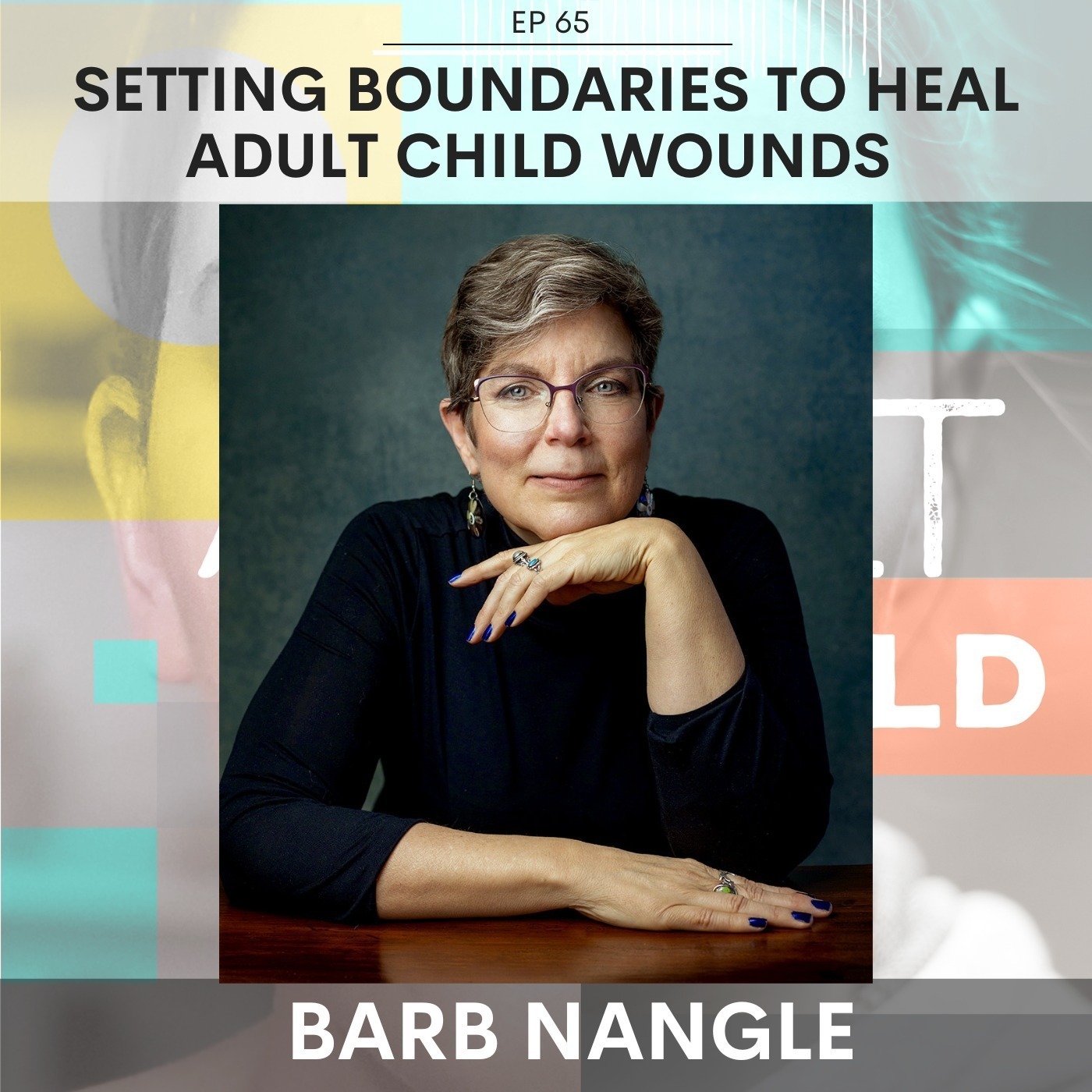
Loading summary
Transcript154 lines
- [00:00]
Andrea
So tell me if this sounds like you. You're the one holding it all together. You're the reliable one, the helper, the fixer. You're getting it done at work in your relationships, for your family. But inside you're exhausted. Rest feels impossible or even guilt inducing. Asking for help feels unsafe, maybe even a little shameful. Your body is always clenched. You're running on empty, but you can't stop. So here's what no one tells you. That hyper responsibility, that constant over functioning that is one of the most overlooked forms of functional freeze.
- [00:30]
Barb Nangle
We're.
- [00:30]
Andrea
We tend to think freeze looks like shutdown, like doing nothing. But sometimes freeze looks like doing everything. Fixing, helping, performing. All while disconnecting from yourself underneath it all. And here's the thing. You can't think your way out of this mindset. Hacks won't melt this freeze because it's not about mindset. It's your nervous system stuck in survival mode. It's about your body believing it's only safe if you keep doing. And I know plenty of you right now are hardcore relating to everything that I'm saying. Which is why I'm so excited about Breathe to Heal, a six week Somatic breath work core course designed exactly for this. Led by Teresa, a certified somatic breathwork practitioner and a fellow member of our show community, this course will help you reconnect with your body, regulate your nervous system and begin to feel safe enough to rest, slow down and just be. And y'all. This is a steal compared to most systematic healing programs out there. We start on Wednesday, May 14th at 8:30pm Eastern. It's all online. It's live on Zoom, so get your damn spot@adultchildpodcast.com breathe to heal. That's breathe with an e at the end or you can see the link in the show notes. Your nervous system has been waiting for this, so please don't leave it hanging.
- [01:35]
Teresa
The only people who get upset about you setting boundaries are the ones who are benefiting from you having none. My name is Andrea and this is Adult Child. What you holding on to? I just let it all go.
- [01:57]
Unknown
What's making you small now?
- [02:00]
Welcome back to Adult Child, where we take a deep dive into the impact of growing up in a dysfunctional family. Ahoy my dear Shit Shows. For any new listeners, my name is Andrea. I am a total and complete shit show and I am the captain of this hot mess of a ship. And if you're wondering what the hell is an adult child, it is someone who grew up in a dysfunctional family whose unresolved childhood wounds are surfacing in adulthood. And not in a good way. Okay, not in a good way.
- [02:33]
Barb Nangle
What does this look like?
- [02:35]
Unknown
People pleasing, approval seeking, an inability to say no, an overdeveloped sense of responsibility A track record of toxic relationships, whether that be in romance, friendship, work, A tendency to stay in relationships way past their due date Fear of people and authority figures, an addiction to negative excitement, AKA drama, chaos, a deep fear of abandonment an inability to feel emotions having reactions that are out of proportion to the situation at hand, Low self esteem, highly judgmental of oneself and others and if you related to, let's say three or more of those, you are definitely the right place. Okay, so for those of you who may not know, I am currently deep in the process of reimagining and relaunching this podcast. So after a profound period of breakdown that led to incredible breakthroughs both personally and creatively, I am more excited than ever to share with you the next chapter of this journey. This next phase is all all about transformation. Think of it as adult child 2.0, filled with even more heart and soul and raw truth. We will be exploring new depths and tackling our healing in ways we haven't before. So stay tuned. Things are about to get even more real, but as I gear up for this relaunch, I'll be taking you on a trip down memory lane. Over the course of this time, I will be providing you with oldies but goodies from from the Adult Child catalog from the past four years. This is also a perfect opportunity for you to binge on the wealth of episodes we have here in the Adult Child library and rediscover some gems that you might have missed or revisit your favorites with fresh ear. And if you're looking for ways to connect with me while I'm hard at work at this relaunch, you need to Damn the Join Shit Show. My online support community where I host four weekly Zoom support groups. This is a safe harbor for all of us to navigate this shit show of a healing journey together where we share, support, laugh, grow together. This is a support system in your back pocket at your fingertips. We also have a variety of small groups that focus on niche interests or struggles. We have several small groups that meet on a weekly or bi weekly basis, including a group for childhood sexual abuse, a marriage and divorce support group. We have a Dude group, a Shit Show Dudes group. We have an internal Family Systems parts work group. So if you haven't yet, this is a perfect time to damn the Join shit show where you will feel seen, heard and understood like never before. This is relational trauma. We heal relational trauma in safe relationships. This is a place where you can do so for less than a dollar a day. Less than a damn dollar a day.
- [05:41]
Teresa
Okay?
- [05:41]
Unknown
You'd be crazy not to try this shit out. See the link in the show notes to Damn the join. You can also find me on Instagram and TikTok at Adult Child Pod. Please also go follow me on YouTube as this whole relaunch will be on YouTube, Adult Child Podcast and and please, please, please whatever you do, give me a damn five star rating on Apple, on Spotify. Thank you, love you all and see you soon.
- [06:04]
So today we are joined by Barb Nangle, who is a fellow recovering adult child and shit show and she's also a boundaries coach. Andrea, are you speaking a foreign language? What is this word called boundaries? I know, it is also the first time I'm hearing it as well. But I guess a boundary is something that one sets and apparently it's something that adult children have a hard time setting. So we're going to be getting into boundaries. Well, first we're going to get into Barb's story. It's just a nice chat between two fellow travelers. You know, my favorite thing that she says in the interview is she makes a comment or she says this shares this comment that was made to her by two gentlemen who were both in AA and aca. And essentially what they told her was that, you know, you know, in aa, in the steps, it doesn't say that you have to stop drinking, but you can't recover unless you stop drinking. And in aca, it doesn't say in the steps that you have to set healthy boundaries. But in order to recover, you must learn how to set healthy boundaries. And you know, I often talk about how this adult child recovery process is about discovering our true selves. And boundaries are a way that we do this because boundaries are our limits that help us define the self. You know, they create the distinction of this is me and that is you. And unfortunately, most of us have a real hard time setting boundaries because we were not taught healthy boundaries growing up. Whether they were non existent or perhaps they were too rigid, our boundaries were typically violated in some form. Generally speaking, when we're talking about childhood abuse, neglect, trauma, there is some type of boundary violation that is going on there. So I was reading this article by Arielle Schwartz, who wrote the Complex PTSD workbook, and she talks about that there's these three common boundary violations that occur in early childhood or three common patterns. Invasion, abandonment, or a combination of a two. So I wanted to read this to you. So invasion. An invasion boundary violation is the result of a caregiver who is consistent misread your signals for disconnection. The parent may simply not recognize your need for separation. Or a parent might be using connection with you to soothe his or her own need to feel loved. Invasion can also be the result of abusive situations. If you felt invaded as a child, you might have a tendency to withdraw from relationships by developing a rigid boundary style. Maybe you have constructed walls around your most vulnerable feelings. When boundaries are too rigid, you can become isolated or carry a belief that you always have to take care of things yourself. So next we have abandonment. So an abandonment boundary violation is the result of a caregiver who is not responsive to your signals for connection. As a result, you learn to override your own natural rhythms of connection and disconnection, A survival instinct that propels you to seek connection at any cost. The impact of abandonment is that you learn to have a less defined boundary style so as to adapt to the needs of others. If you don't have this unbounded boundary style, you may feel hesitant to set limits with others for fear of rejection. Finally, a combination of the two. So invasion and abandonment. A combined injury is the result of a caregiver who is inconsistently or alternating between being invasive and unresponsive. As a result, it is difficult to find a reliable strategy to meet your needs for both connection and disconnection. This third and most common boundary injury can lead you to alternate between longing for connection and your desire to push people away when they get too close in a way that feels unsatisfying or disorganized. So when I think about the boundary violations that I endured as a child, I think it mostly came in the form of parentification. So I specifically think about my relationship with my dad. So there was invasion going on when he was using me as his emotional confidant and as his support related to my. My mother's drinking when he was having me search the house for booze with him. But then simultaneously there was abandonment, right? Because then he would abandon me. He would go out of town for work and leave me at home with my drunk mom. Um, so same thing goes, my mom too, you know, she was. She was such a wonderful mother when she was not drinking. But then there was a boundary violation when she was. Was drunk, right? Because I had to step into the role of. Of caretaker.
- [11:02]
Barb Nangle
And so that is.
- [11:03]
Unknown
That's violating the boundary of parent and child. So I've had to learn how to set boundaries. And it's not. It's been hard. It's been a process that my therapist has helped me with tremendously. And I would say it comes to me a lot more naturally. I don't feel as much guilt or fear or anxiety when I set these boundaries now. So really what it is, is, is figuring out what feels good for me. And I do find that. And as we're going to talk about in my conversation with Barb, you know, as I've developed the relationship with myself, as I feel more comfortable in myself, as I figure out who the fuck I am, it's gotten a whole hell of a lot easier to set boundaries. And it's felt a lot more comfortable to set boundaries. So that is my 2 cents for today.
- [11:54]
Teresa
All right.
- [11:54]
Andrea
Shit show.
- [11:54]
Teresa
Ladies.
- [11:55]
Andrea
Have you ever had those days where everything just feels so much damn harder than normal and you can't figure out why? I already know the answer to that question is yes. And boy, have I definitely had more than my fair share of those days and totally get just how frustrating this can be. But recently I've learned that sometimes it's not just stress, lack of sleep, a disregulated nervous system. It could also be my hormones at play. And that is where Happy Mammoth comes in. They offer a free two minute quiz that can help you uncover the root cause of your hormonal symptoms. It's super easy. Any shit show can do it. Just answer a few questions about what you've been going through and where you're at in life. After taking this quiz, you'll get personalized recommendations to help balance your hormones and start feeling better. So I took this hormone quiz myself. The quiz suggests that my body may be overloaded with estrogen, which is affecting me in all kinds of ways. And one of the recommendations that I got was to start taking Hormone Harmony, which helps with bloating, chronic fatigue, weight gain, mood swings, and more. And after adding it to my routine, I've definitely noticed a difference. Now, taking care of your hormones isn't just about feeling good right now. It's also about investing in our healing journey. And so, by taking this quiz, you'll learn more about your hormone balance, which will allow you to start making small, intentional changes to support you on this healing journey. Whether it's the Hormone Harmony or another Happy Mammoth product, the quiz helps guide you towards solutions that work specifically for you. So if you're ready to start feeling like yourself again, head over to happy mammoth.com and take their free 2 minute hormone quiz today to find out the ultimate answer to your stubborn hormonal issues. And for a limited time, you can also get 15 off your entire first order with my code adult child at checkout. That's happy mammoth.com and use the code adult child for 15 off today.
- [13:43]
Barb Nangle
All right, y'all. Well, it is my pleasure to introduce a fellow traveler, a fellow shit show, a fellow gal who likes to say fuck. And of higher power coaching and consulting, Ms. Barb Nangle.
- [14:04]
Teresa
Hi. Hey. So I actually do not think of myself as a shit show anymore. Well, I'm calling you. All right. I was a show.
- [14:14]
Barb Nangle
Do not for that to change.
- [14:16]
Teresa
Yeah, I just.
- [14:17]
Barb Nangle
We're gonna bring it out in you, okay? We're gonna make you one even if you never been one.
- [14:22]
Teresa
Yeah, I mean, I was a shit show, but I had no idea that I was a shit show. And I acted like everybody else was the problem, you know?
- [14:30]
Barb Nangle
I'm sure no one can relate to that.
- [14:33]
Teresa
I'm sure. Yeah.
- [14:35]
Barb Nangle
So you just shared before we stop started recording that you just finished a 20 week ACA step study and that this was the fourth time that you had gone through the steps. I'm curious if you can reflect upon the big. And maybe you can't remember for two or three, but if you could, it'd be great. But what do you feel like the big takeaways were from each time that you worked the steps? And maybe in particular this time, like, what did you learn? What did. What new did you learn about yourself or you know, what. What came up this time that hadn't come up in previous times?
- [15:16]
Teresa
So this time it was much smaller things. And I wish I had my book in front of me. I don't because I took notes. I'm having trouble accessing it, but there were a few things here and there, nothing gigantic. I will say that the third time that I did them was more profound than the second time that I did them. Specifically, when I was doing step five, I had a friend of mine. So the first time I did the steps was with a small group and it took us over two years. The second, third and fourth time I facilitated a 20 week step study and I did the steps with the group. But the first two times were before the pandemic in person. So time number three, I had a close friend of mine from ACA listen to my fifth step?
- [16:05]
Barb Nangle
Do you want to explain just in case some people aren't familiar with the fourth and fifth steps are.
- [16:09]
Teresa
Sure, yeah. So the Fourth step is take a searching and fearless moral inventory of our lives. And what I like to say that with the difference between the fourth step and ACA and other programs, at least in my experience, is in other programs, step four is what you did, and for an ACA is what happened to you. You can still get at what you did by way of what happened to you. And so the best way to illustrate that in my life was what happened to me was I grew up in a family that engaged in indirect communication. So this was a communication pattern laid down before I was born. No hope of growing up in that family knowing I was directly communicating. So what I did was gossip, right? So my defective character was gossip. But I feel blessed that I learned that in ACA before doing the recovery in another program, because I think in that I would have been just riddled with guilt and shame. So in any case, step four, searching and riddle.
- [17:02]
Barb Nangle
Regarding the gossip part or what?
- [17:04]
Teresa
Well, any. Any of the defects of character. But I think if I had found out that I was a gossip, I would have been like, oh, my God, I'm a piece of shit, rather than, oh, this came from somewhere. Because in aca, we're very clear. You are a product of your environment, whereas in my other recovery program, you're not allowed to look at your environment. You were only allowed to look at your own behavior. And I get that. That's important, but for me, as a traumatized person, not cool, you know? So step four, searching and feral, is moral inventory. This is where we come up with our defects of character. And step five, we share these with another person, our higher power and ourselves. And it's important to just be honest about who we are and what happened to us and all that. So I'm sharing this with my friend, and I'm talking about something I did to my little brother when I was probably 12 or 13. And I am fucking sobbing. I'm on the floor sobbing, and my friend is standing over me, and she points down at me and she says to me, barb, God loves you. God loves you no more and no less. And I was like, holy fucking shit. It was literally like I was a gaping wound. And she poured the love of God into that gaping wound. And I cannot tell you the level of healing that I got from that experience. I mean, that was just utterly profound. And that was the third time.
- [18:27]
Barb Nangle
Was that something that had come up on previous inventories?
- [18:30]
Teresa
It had, but it just. The way that I didn't sob like that. The person I shared it with, I mean, it Just was it just. You know, I feel like stuff comes up when our psyche is ready for us to deal with it.
- [18:48]
Barb Nangle
Yep. You know, no control over it.
- [18:51]
Teresa
Right. Yeah.
- [18:54]
Barb Nangle
That's amazing. What's the first time that you. So the first time.
- [18:59]
Unknown
The first time you ever did the.
- [19:00]
Barb Nangle
12 steps was through ACA, correct?
- [19:02]
Teresa
Yeah.
- [19:02]
Barb Nangle
So what was that first experience like?
- [19:05]
Teresa
Oh, brutal. Let me tell you something. I hit bottom with the sugar while doing aca fourth step.
- [19:12]
Barb Nangle
So tell me about how you learned that you were an adult child.
- [19:17]
Teresa
Well, first I learned that I was codependent, and I went to Coda, and about a couple weeks into that, I said to somebody, I think I need to be reparented. But I thought I made that up. I didn't know that was a thing. Right. So six weeks into my CODA recovery, I go to visit a friend on Cape Cod who's a longtime AA person. She's always just raved about aa. So I'm telling her about my code experience, and she was like, oh, let me see if I can find a meeting. I'll take you. Well, she couldn't, but she found an ACA Experience meeting. And I'm like, I don't identify as a child of an alcoholic. I never heard the. And dysfunctional family's part. So I was like, I'll go for you. Because her dad's an alcoholic. I walk in, A, they go, we reparent ourselves. I was like, what? And B, they read the laundry list. And I'm like, oh, my fucking God. And she tells me, I sobbed the whole meeting. I don't remember that. But I came home to New Haven. Oh, I bought the Big red book. I bought the yellow workbook, came home to New Haven, Connecticut and started coming to meetings, and I started reading the Big Red book by myself. And I'm reading it, I'm like, oh, my God, oh, my God, oh, my God. This is what happened. Oh, my God, this will happen. I didn't know something, quote, happened to me, but I was like, oh, my God, this explains everything. Yeah. So I think it was walking into the room that taught me that I was an adult child.
- [20:38]
Barb Nangle
You know, what a divinely inspired moment that there were no Coda meetings.
- [20:44]
Teresa
Yeah.
- [20:47]
Barb Nangle
So let's talk about your childhood.
- [20:50]
Teresa
Okay. So I've just, in the last few weeks, realized that my grandmother beings orphaned was abandonment. And my great grandfather on the other side was raised by some guy. We don't know who it was. That was some kind of abandonment. I never knew that before. I mean, okay, I knew these Things happened, but it never registered to me as that's generational abandonment. My father, his father was an alcoholic. His mother, the story was that she was in hypochondriac. She was the one that was orphaned. My father was a workaholic, heavy drinker, womanizer. My mom, quintessential codependent. When I was a kid, we called her the enabler. Codependent wasn't a word back then. We called her the enabler. We literally had an opium den in our basement. We didn't do opium, but we smoked a lot of weed and drank a lot. She said to me, when I was 14 years old, I would rather have you smoking weed in my house where I know where you are, than out in the streets. And we were like, yes. So when I was a kid, I was like, this is awesome. And when I was growing up, yeah, we had like the Kool Aid house when I was little. And just. It just transformed to when I was a teenager, it turned into like. Even if we all went out, we'd all get together at my house, smoke a few bowls, drink a few beers and then go out, you know, drinking and driving and stuff like that. And my mother just condoned it. She never used. She. I mean, I think she maybe had two glasses of wine ever that I ever saw, but she was super fucking codependent. My older brother, who's 18, nine, 17 months older than me, he is a dry drunk. He's an alcoholic. He. He was one of those super sloppy spittle alcoholics. And he. When he was 24, he got into a junk driving accident. Should have died, didn't. Went into rehab, got sober and went to AA for like two years, always. He was a staunch atheist his whole life. And for like, I don't know, maybe three months, he believed in God there. And then he left and he was like, fuck that. And he's been sober except for one time he drank when. To spite his wife because she got pregnant with another dude while she was married to my brother. And so he got drunk and then he realized, oh, I. I'm not that guy anymore. And I just did that despite her. That was about 15, 15 years ago. So he's 60 now and he is. He's an untreated adult child and he is a. He's a dry drunk. And he. So he has a job, but he let go of his cell phone years ago. He stopped doing email. And then my. One of his kids told me. His kids are adults. Told me a couple months ago that last summer his phone Got knocked out in a storm, and he hasn't repaired it. So in other words, his retreat from the world has gotten worse and worse and worse.
- [23:50]
Barb Nangle
Do you have to sound like a carrier pigeon?
- [23:53]
Teresa
Well, I remember when he said to me, if you want to talk to me, fucking call me on the phone. And I wanted to say, you sure you don't want me to send you a telegram? You know, like, postcard? And my younger brother pat, who was eight years younger than me, he died at 35 of Legionnaires disease. He was bipolar, but he was dual diagnosis, so his main drug of choice was marijuana, but he did many other drugs. He had a psychotic break when he was 20 and was in and out of the hospital many times severely debilitated by his bipolar disorder. A couple attempts of suicide, really just didn't want to live. So when he died, like, for him, blessing, it sucked ass for me, but I was clear that it was good for him. And then, interestingly, one time, probably the year or two before he died, he and I were taking a walk in the woods one day, and he stopped suddenly, turned around, and said to me, barb, I don't know what it is, but I have this sense of shame that is so profound it cannot possibly be from this lifetime. I'm going to do past life regression. Well, he never did. But fast forward to me getting into aca, I'm like, oh, this is where the shame came from. He was right. It wasn't from his lifetime. It was from the generations before. So it wasn't necessarily, necessarily his past life, but it was the past lives of those that went before. So one of the things I did as part of my healing journey was I bought copies of the Big Red Book. And I wrote in the front of them, this is for my brother Pat, that shame wasn't yours. And I learned that here in this book. And I donated books to the library and the hometown I grew up in. My father's hometown, my mother's hometown, and the town that my father was. My father was still alive at the time. And the library in that town as a way, like, in my mind, it's like a way of, like, taking the poison out of the roots and putting medicine in or something like that, because I finally understood what the hell he was talking about when he was like, I have this sense of shame that is so deep and profound, and there's nothing I've ever done in my life that warrants it. And, you know, ACA tells me, oh, that's that bundle of shame. And all the other crappy stuff that gets. I think of it as almost like poured down into us from the generations before us because they don't want it. So they're like, I'm giving it to you. You know?
- [26:29]
Barb Nangle
So basically what you're saying is that your family was the picture of mental wellness.
- [26:37]
Teresa
Basically. What's really funny is when I got into aca, I didn't get it. I didn't get why I was here. I knew I had the traits, but I was like, I didn't get the shit kicked out of me. I didn't get my bones broken. I didn't get raped, I didn't get burned. I didn't get down the stairs. But I have the traits. And it wasn't until I came to understand the relational trauma, you know, that the emotional invalidation, the gaslighting, the. You know, I call it like the drip, drip, drip of emotional invalidation and just not really feeling like. I remember when I was in my 30s, when my younger brother said to me something about mom is not in touch with her emotions. And I was like, really? And the more I thought about it, I'm like, you're right. She's not. Like, I needed to be told that in my 30s. And I was like, holy shit, you're right. She's so not. You know, and so like you, I always had food on the table. I lived in a house. I was physically safe most of the time. You know, my dad, a couple of times when I was in my late teens tried to strangle me, which was so fucking shocking to me because it was just not. It wasn't the pattern, you know, at least that I could remember. But I. And I also, when I got in recovery, I looked on the outside like I had my shit together. Like, I have a master's degree, I own a home, I pay my taxes. I volunteered all this stuff. Meanwhile, you know, I have this gigantically long string of dysfunctional relationships behind me. Romantic, I didn't know. Also, my friendships, my colleague relationships were dysfunctional, too. I knew that about my. About my. And I was also carrying around over 100 pounds of extra weight. And I had. I. By then, I wasn't drinking. I drank abusively until I was like, in my early 40s, and I just sort of stopped. But by then, I was well into the food. I also smoked weed for a long time. Long time. I mean, a lot of. Smoked a ton of weed in my life, and I smoked for a long time, but I just didn't have any idea how up I was or how up my family was. I just didn't get it. I just didn't.
- [29:11]
Barb Nangle
And was it like a slow burn or was it like all of a sudden the band aid was ripped off and you were like, holy shit.
- [29:19]
Teresa
It's hard to remember. I remember, like I said, I was reading, like, I'm literally reading the bigger red book going, holy shit, holy shit, holy shit, holy shit, holy shit. So I think it was probably Band Aid being ripped off, but then. Then a long, slow burn for a long time. You know, too, because when you do step four and you do those 12 different inventories in step four, and you're like, oh, let's do the Shame Inventory and let's do the Abandonment Inventory and the Denial inventory, it's like, oh, my God. Holy shit. You know, so there was a Band Aid, but then there was Slow Burn and a bunch of more Band Aids, you know? A bunch of more Band Aids, yeah.
- [29:59]
Barb Nangle
What role did you play in your home growing up?
- [30:01]
Teresa
You know, I went as an adult, I was the hero. I don't think I was any of them as a kid. I don't. I don't. I can't. Every time I read them, I'm like, ah, I don't know. As an adult, definitely. Definitely hero as an adult. But in my family, too, but not as a kid.
- [30:19]
Barb Nangle
So when you heard the laundry list for the first time, what trait was like the biggest slap in the face?
- [30:25]
Teresa
We'll do anything to hold on to a relationship. And you know what's funny? When I heard the laundry list, I thought I had seven traits. I have 13 of them. That's called denial, people. Yeah, I was in.
- [30:40]
Barb Nangle
I don't know, maybe I'm in denial because I don't think. I think I maybe have seven or so.
- [30:44]
Teresa
Yeah. Well, I mean, I feel like I had 13 of them. Some of them have been pretty well healed. Some of them. You know, I still, like. I would say for me, the most difficult one is addiction to excitement. Fuck. Yeah.
- [30:58]
Barb Nangle
That's why I'm watching the fucking Johnny Depp case. 24.
- [31:01]
Teresa
Yeah, I'm not. I'm not doing that. But I heard somebody, I was talking to a fellow traveler the other day, and they're like, oh, those are two fucking adult children. It's literally like, what?
- [31:08]
Barb Nangle
It is adult. It is so good.
- [31:11]
Teresa
Yeah. Yeah.
- [31:12]
Barb Nangle
So into it. I'm going to go into withdrawals now that it's over. Yeah. Addicted to excitement, too. How does that manifest for you? Still.
- [31:23]
Teresa
In my brain, like, I want to do 50 million things all the time. And I. And I do. I'm a busy person and I like to be a busy person and I get a lot of shit done. But relaxing, just sitting, like, I will be like, pick up my phone, you know, play a game or goose twirl on Instagram or something. Like, just luckily for me, I meditate for 15 minutes twice a day, thank God. And I also do lots of conscious contact and I do yoga and stuff like that because I really need to do that. But I remember in 2017, I went to the ACA convention and I went to a workshop called Addiction to Excitement. And the two women that led it made a very strong case that that is the addiction from which we need to abstain in this program. Because you can literally. They called it layering. You can, like, shame yourself right in front of people and they don't even know that you're doing it. And so you're getting this flood of adrenaline and cortisol and you can do it like. And like, oh, you wait to pay your taxes until the very last second. Or you drive your car until it's just on empty. Like, things like that. Because we're so used to living with the, you know, the fight or flight mode here. Yeah, yeah, all that.
- [32:39]
Barb Nangle
Yeah, just the producing the unmanageability.
- [32:45]
Teresa
Right. Because we think that's. Well, it is normal to us, you know, Like, I have a very high tolerance for dysfunction. Now. I understand. Just because my tolerance for dysfunction is high doesn't mean I have to, like, live up to that. Right.
- [33:01]
Barb Nangle
Yeah. You know, it's interesting for me is like, I definitely and still struggle with some of those things, you know, like everything that you just said. But I grew up in a home where it was. It was not that way. Like, it was hyper, hyper, hyper responsible.
- [33:17]
Teresa
Okay. Yeah.
- [33:19]
Barb Nangle
You know?
- [33:20]
Teresa
Yeah. I mean, I was hyper responsible. Well, I don't know if I was as a kid. I really don't think I was. I think. So something happened as an adult where I remember, like, the first time I moved out. Well, I moved out. I lived with a boyfriend. He left my brother, moved in for a little while. That's when he was, like, hitting bottom of the drinking. I was like, get the fuck out. If I'm going to be paying the rent by myself, I'm going to live by myself. And I remember when I, for the first time, lived by myself, I was like, oh, this is amazing. I'm like, I literally own every crack and crevice in this apartment. I'm like, if I have to eat fucking Ramen noodles and tuna fish sandwiches for the rest of my life. To live alone like this and be 100 responsible for me, I'm doing it. And I think that's when. When I went into hyper responsibility mode, like super responsible mode.
- [34:08]
Barb Nangle
I wish I had. Yeah, it's interesting, especially like with money stuff. So, I mean, my parents, it was like down to the penny, you know, like my mom had to balance the books down to the penny. There would be arguments if it was just like a few dollars off. So this, everything was on a budget. But you know, I, in turn in my adult child disease, became very financially irresponsible.
- [34:35]
Teresa
Well, I've had my bouts with financial stuff too. So when I was in my early 20s, I went to a mall with a friend and grabbed credit card applications from all the stores, applied to the mall, got them all, didn't. I did not understand how, how it works. What do you call compound interest? Didn't understand it. So I eventually paid all them off. Then I did it again. I racked up my. And then when my student loans came due, I declare bankruptcy. And I will tell you, Andrea, every fucking financial problem I've ever had my entire life has to do with codependence. Either I was trying to manage my image with people giving a shit what they thought about me, not what I thought of me or rescuing people, you know. So now that I've cleaned up the codependence, I am in the best financial position I've ever been in in my life, you know, and when I hit, when I hit codependent bottom with my homeless friend that was staying at my house for two months, I didn't even balance my checkbook because I didn't want to look at it. And that was one of the, that when I. So I declare bankruptcy in 99, when my student loans can do. By 2008, I bought a home. So obviously I transformed my life financially. And one of the things I did was I have to balance my checking account every single month. And I did. But for the last two months when he was around because I was so afraid to look on paper because I was driving him places, I was buying him food, I was buying him cigarettes. I was. Because he was homeless. He wanted like, he was like friends with homeless people. So I was like giving out a dollar here and a dollar there. And I had to actually do like the reparenting thing. I don't think I knew that's what it was yet when I finally went to look at those statements and balance the account. Yeah, I love this.
- [36:33]
Barb Nangle
When I hit my codependency bottom with the homeless Guy.
- [36:38]
Andrea
Can you please have that be the.
- [36:40]
Barb Nangle
Title of your book? Please write a memoir called When I Hit My Codependency Bottom with the Homeless Guy.
- [36:47]
Teresa
Yeah. Do you want me to back up a little bit and say what happened there? Okay, so. So I started. I volunteered for this project at my church serving homeless people. Right around the same time, this homeless guy named Dan started coming to the church as a. Like, a parishioner. And we became really friendly, and I was like, oh, this is perfect, divine timing. You know, God is bringing a homeless person for me to meet as a friend so that when I start this project, I'm not serving, like, the homeless. They're like people to me, right? So during a snowstorm, I invited him to stay at my home, and he did. And then he stayed another time and then another time, and then four months later, he was practically living at my house. And he. He was an addict and an alcoholic. He wasn't actively drinking at the time, but I think he was also a narcissist. And he f ed with my head like you would not believe. And I remember, for me, Dan the man was. I was on the floor in my basement. I had actually moved from my apartment into. Back into my condo because I had been renting it out to other people. I moved into my condo, and I was on the floor. And I now know that it was a trauma response. I didn't know that at the time. And I said to him he was doing something and fucked with my head. And I said to him, I'm having a flashback. And I meant an emotional flashback, and he thought I meant a drug flashback. I've never taken any kind of drug that would give me a flashback. But he leapt into, like, rescue mode, which was amazing to see him actually do something because he didn't do, like. He was the laziest I have ever met in my entire life. And of course, I let that. I just let it happen. But then I bitched about him behind his back, but he was like, you know, what are you seeing? What are you tasting? What are you hearing? And it turns out like that, like, getting in touch with your senses is really good to get you out of whatever kind of flashback you're having, whether it's drug or, you know, emotional or whatever. Now I know that I was having a trauma response, but I didn't know that then. It took me years, actually, to realize that, oh, that's what that was. You know, I ended up getting him to leave. I gave him some money. He said it was too much. And then I ended up actually bringing him. I live on the New Haven harbor. I brought him over to the other side, to the beach in West Haven. And then I was told by someone else that he was going to come back to my house. And I went and stayed at someone else's house for a couple nights just so that I wouldn't be here, because I knew that if he knocked on.
- [39:22]
Barb Nangle
The door, I let him in. Yeah.
- [39:25]
Teresa
You know, and then he just never came back. And then there was a couple times he actually came to the church. And one time, I, like, I texted my spot. My. My therapist, and I couldn't reach her. And I was. It was literally just this. It was a drama response. And then a few weeks later, after just a few weeks in Aca, I remember I was greeting at the door, and I knew. I somehow knew he was going to be there. And he walked up the stairs, and I didn't have the reaction. Something happened to me, and it was very clear. Like, I exuded. I would call it a boundary. Now, I didn't know that then, and I don't even know how I did it. But he didn't penetrate me the way that he did before, and he knew it. He could see that I was different. And I never saw him again after that.
- [40:21]
Barb Nangle
Man, I wish you, like, the story would have been so much better if, like, you had gotten married and had a couple of kids.
- [40:29]
Teresa
Or if you.
- [40:30]
Barb Nangle
Had, like, a slew of homeless guys that you let move in.
- [40:33]
Teresa
Yeah. No, no. And I. You know what? I wonder now? I've just, in the last, like, three weeks, allowed myself to start thinking about this. I've never even entertained this before. If that was my bottom and I hadn't gotten in recovery, what the would I do?
- [40:50]
Barb Nangle
You would have been living on the street, and Dan would have been living in your damn house.
- [40:53]
Teresa
Yeah. There you go. Yeah. You know, and I'd be like £550 and probably dead. I don't know. I mean, who knows?
- [41:01]
Barb Nangle
Hey, Dan, if you're listening right now, I'd like to have you on as a guest to rebut this. He died.
- [41:06]
Teresa
He died. Yeah.
- [41:09]
Barb Nangle
So let's talk about how the hell you got to Dan. What do you mean, like, the slew of other codependent relationships?
- [41:19]
Teresa
Yeah. So my romantic relationships were always codependent. I thought that my pattern was emotionally unavailable people. And it was. But it turns out, really, the real pattern was codependence. And also, it turns out. The reason that I attracted emotionally unavailable people was because I was emotionally unavailable. And I didn't know that because, you know, I didn't know my part in anything. But I also had codependent friendships. So I had. When I was in my teens, one of my friends dubbed it my under the wing syndrome. So I had two different friends, both for periods of time where I just sort of like took care of them, you know, and my mom even like a couple friends, she let our friends move into our house, you know, and. But my main, main codependent relationships were with my partners, my romantic partner. So I'm a heterosexual woman, so they're always. There are always men. And when I did the relationship inventory in aca, it was so clear, oh, here's where it began. And it got worse, and it got worse, and it got worse. So my last relationship before recovery was a five year relationship. And I actually said to the man, let me see if I can heal some of those wounds. I have that kind of power. And then at what point in the relationship?
- [42:38]
Barb Nangle
First date?
- [42:39]
Teresa
No, like couple months. First couple months. So one of the things I said to him, started dating, was, I will never live with you unless we're married. Because I have lived with like five guys before, and it was always because it was convenient, not because we wanted to move the relationship forward towards more intimacy. It was just like, well, we're both practically living together. It's, you know, it's a waste of money, blah, blah, blah, blah, blah. And so I was like, I'm not doing that because I fucking love living alone. And I'm not going to mess that up for something temporary, right? So then 10 months into the relationship, I have gallbladder surgery and he doesn't even come to visit me at my home when I get out. So what do I do? I go to him. Oh, and I stay at his place for a week for, quote, him to take care of me. Meanwhile, I rearrange his furniture because he had this office that he was calling, you know, his daughter's bedroom, even though she never came there anymore. And meanwhile, his son was sleeping in the living room. So I rearranged it and made it into the son's bedroom. I'm recovering from abdominal surgery, by the way. And after that week of recuperating at his home, I was like, oh my God, I love being with him so much, my mind. And I want to move in with him. And so I did. He would say to me for like three years, thank you so much for breaking your number One rule, which is another way of saying, thank you for violating your own damn boundaries. And let me tell you something. It took me. I remember precisely where I was. I was in my condo wiping down the kitchen table in probably 2015 or 16. So I was in recovery by then. And all of a sudden I went, oh, my God, that was a lie. I told people that I went to go stay with him so he could.
- [44:33]
Barb Nangle
Take care of me. I would totally have told people that.
- [44:36]
Teresa
Too, but I was telling. I believed it, Andrea. I fucking believed it. I didn't know. And all of a sudden, I'm wiping down my table. Oh, my God. That was a l. I was lying to myself and I lied to other people. So basically what I said was, oh, this is codependent enough for me. I'm in. You know? And then I moved in with him. And within, like, six weeks, we were in couples therapy. And the therapist first session says to him something like, you know when we wear the victim T shirt? And I was like, dude, you don't fucking say to victims that they're victims because they feel victimized by that. And he went to five of the six sessions that we signed up for, and he wouldn't go to the last one. And when I went to the last one, the therapist was like, what is it that you want me to tell you that you already know? And it just was not like this. What ended up happening was I ended up hating him and resenting the hell out of him because I went into a relationship like this. I have no needs. You don't have to meet any of my needs, because I actually don't have any. I'm here to meet your needs. And of course, that is not sustainable. So then I resented the shit out of him, and then I treated him like crap. And then finally. And I had people saying, like, you need to leave. You need to leave. You need to leave. And I had rented out my condo and moved into a house with him that we rented together that was big enough for his children, who were mostly grown by then, to live in. So I knew, like, if I'm leaving, I'm not just leaving him. His family has to move out of this house. And so I really felt like I needed to be 100% sure I needed to leave. And I finally, finally got it. And I remember I said to him, the way I told him was, remember how I used to be happy and I'm not now? Yeah, I do. And I go, I'd like us to live separately. And I didn't mean Break up. I just thought. I thought if I moved separately from him, I'd be able to like, get back to myself. What actually happened was I moved out and I was like, holy, I am never going back there again. And I just couldn't deal with it. I just couldn't. I just couldn't do it. And then, let's see, probably seven or eight months later is when the whole Dan thing happened. Dan thing? Well, no, that I met Dan, like probably four or five months later. And then the bottom thin happened like four or five months later after that, you know.
- [47:12]
Barb Nangle
So when you started doing this work, was there ever a point where you were like, I'm swearing off men forever?
- [47:19]
Teresa
No. Okay, so what happened? When I got into recovery, I was doing the steps with three other women. One was. So I was 52. There was another 52 old woman and two women that were like 60. So we were like, we're in. We're not fucking around because we have been living so long like this. We're not. But like, one of them was married, one of them was in a relationship, but it was really shitty. And one of them had just broken off a relationship. But then all the other women we were in recovery with were like, man hungry. Got a date, got a date, got a date. And I was like, okay, you know, I'd like to date. Six months into my ACA recovery, I started a dating relationship which was with a totally emotionally unavailable guy because he only wanted to talk on the phone and he wanted to have phone sex. And I, like, tried to and. But I actually was funny. When I started dating him, I thought I wasn't codependent anymore, which is. Of course you were. Yeah. And so that didn't last for very long, thank goodness. But when that ended, which was only. It was maybe a six week period of time. When that ended was probably September. My birthday's in March. And I had said to myself, you know what? I think I'm going to wait to date until after my birthday. Well, by then I had been in recovery even longer. And I was like, you know, I think I'm good. I don't need to date right now. And then I started saying, I think I'll wait until I'm done with the 12 steps to date. But all these women around me were like, date, I need to date. I need to date. And I was like, yeah, I don't. And so then when I got done with the 12 steps, I was like, it's not that I don't want to date. I'm not going on an app or anything. I'm not seeking it out. I will date if it comes to that, but I'm not, because I. First of all, I'm new, so, like, I don't know who this person is, what she's going to be, like, dating. But also I'm really enjoying my life because I didn't know who I was before I was Ms. Chameleon, you know, and so I was figuring out what I liked and what I didn't like. I was, you know, this is where the boundaries come in. Like, I was figuring out, like, the boundaries of Barb, like, where do I end and other people begin? And it was that, you know, I was in my 50s, and it was like, the first time that I started to understand I like this. I actually don't like that I like this. I'm not sure if I like this. And I was having such a good time, and I felt so comfortable in my own skin that I was like, I'm not really missing anything, you know? So I didn't swear men off by any means. But I also. My seeker, like, got shut down, you know, but not on purpose, you know?
- [50:14]
Andrea
Yeah.
- [50:14]
Barb Nangle
And now you're in a lovely relationship.
- [50:17]
Teresa
Yeah, yeah. I'm in a super fantastic, amazing relationship. It's incredible. I didn't even know this is possible. It's just really wonderful. And we're so happy. He's in recovery, I'm in recovery. And, you know, the promise in the AA big book that says we will intuitively know how to handle situations, which is the place that comes, that happens for me the most, is in my relationship. Just shit comes out of my mouth and I'm like, who is that?
- [50:47]
Barb Nangle
Who is.
- [50:47]
Teresa
Actually, Can I tell you a TMI story?
- [50:50]
Barb Nangle
Please.
- [50:51]
Teresa
Okay. So I told this in my meeting the other night, and I said to people, this might be too much information for some of you, and I apologize. But it's my story in this. I'm telling it. So he was over, and we were going to make love, and I had been partying, and I was like, I'm uncomfortable with you going down on me because I've been farting, so let's not do that. And he laughed, right? And we had a wonderful evening. And the next morning, he said something to me about it. We laughed again. We thought that was really funny. I said, you know, I've been thinking about this. What would I have done in the past, before recovery? How would I have handled that? I would have created a fight between me and my partner because I Didn't know how to directly communicate. I am uncomfortable with xyz. I could not do that. So instead of communicating directly, which I was not capable of, remember I told you about the family I grew up in? Yes. I would have been uncomfortable, not wanted to make love because of that. And then so I would have started a fight, which I would have blamed him for. Like, that was the story of my life. Like, I basically was constantly building a case against my partners for why they didn't love me and constantly just putting brick after brick after brick after brick and walls building a wall higher and fatter between me and my partner. Always, like, assuming this is not going to work out. Now. This was not conscious. I look back now I'm like, oh, my God, look at all.
- [52:25]
Barb Nangle
That's what you were doing. Yeah.
- [52:28]
Teresa
You know, and I'm just not. And so now I say things like, I'm uncomfortable with, you know, XYZ or would you mind doing the, you know, doing this? Or can we go over here? Or. I'm not really sure how to say this, but, you know, it's just stuff just comes out of me because I just tell the truth now. I just. Like, when I got in recovery, I thought I was honest. No, no, I wasn't. I was especially lying about people pleasing and food, but also all the other substances I did before. But I really believed I was honest, which is hilarious now. And now, like, honesty is like, bottom line for me. Like, I'm just not lying. If I need to lie, then I'm leaving. You know, I don't know what. Whatever the situation is, because I can't. I do still occasionally have the impulse to lie, but I don't do it.
- [53:23]
Barb Nangle
That should be your T shirt. If I'm lying, I'm leaving. So let's talk about boundaries.
- [53:31]
Teresa
Yeah. Yeah. I would say for me, boundaries have been an incredible tool. Excuse me. Incredible gift of recovery. And they have turned into an incredible tool.
- [53:42]
Barb Nangle
What the hell is a boundary?
- [53:45]
Teresa
So my belief of boundaries is that they are standards that I have for my life that I live by. And what most people think about, the part about boundaries, is that I communicate that to other people. There are some boundaries I have that I don't ever have to communicate with other people because they just affect me. But when we think about boundaries with other people, it's us communicating to other people. This is okay with me. This is not okay with me. And, you know, I would say that forming boundaries was absolutely integral into my recovery in aca and there was a couple of guys I know from aca, who are longtime ACA and AA guys, and both of them said this to me separately in slightly different ways, but they both said something like this. In aa, it doesn't say in the steps, stop drinking, but you cannot recover without stopping drinking. In ACA, it doesn't say in the steps, form healthy boundaries, but you cannot recover without forming healthy boundaries. And I think that's the absolute truth. And you know, promise number one in ACA is we will discover our real identity. Well, what that means is you will get boundaries. You will determine the boundaries of who you are and where you end and other people begin. And so when I think about, like, people would ask me, like, how the hell did you go from having no boundaries to having boundaries? And when I thought about it, I think for me, the absolute core of me being able to form healthy boundaries and sustain them was that I grew to care more what I think of me than what other people think of me. Now, this doesn't mean I don't care at all what other people think of me. Of course I do. I'm a recovered people pleaser. Also, I'm a human. I care about other people. I love people. Right? It means that I used to care so much more what other people thought about me that I just threw my own feelings about me under the bus. I threw my integrity out the window. I lied and said I like things I didn't like. I said that I things were okay with me that were not okay. I said I didn't like things that I did like because I was afraid that people would think that there was something wrong with me, that I liked those things. Things. And now, as an honest woman of integrity, I'm not willing to do that anymore. I care more about my honesty, my integrity than I do that you will like me. I want you to like me. But I don't, like, need you to like me the way that I used to, because guess what? I like me. And part of the reason I like me is one, I tell the truth. So I'm living in my integrity. I'm whole. And another part is that I actually take care of myself and I know who I am. All of that, to me, really, the process of forming boundaries got me to know who I am. It got me to show up for myself. It got me to build trust with myself, because I did not trust myself. And I especially didn't trust myself to pick partners. When I heard your episode on the Broken picker syndrome, I was like, oh, my God, I can't believe she's calling it that because I used to say to people, the only part of my dysfunctional relationships that I was willing to own was I acted like I had a broken picker. And the way I acted was like. It was like this lever that was broken, right? Well, I'm the picker. And it's not like it's just the picker that was broken. It was like I picked them bad, but then I held on to them bad, too. It's not like I just picked them bad.
- [57:23]
Barb Nangle
We're not just the claw. We're the whole damn machine, right?
- [57:27]
Teresa
And so I, you know, my. I'm my picker, and I'm healed and I'm whole. And so one of the reason, not one of the reason my. My podcast is called Fragmented to Whole Life Lessons from 12 Step Recovery is that when I look back at my life before recovery, I sort of felt like I was a bunch of fragmented pieces sort of floating around in space with space between them, so other people's shit could, like, penetrate into me. And recovery was the integration of those into one coherent whole and also the getting rid of the pieces that weren't authentically me. And so the way that I think of it now is that, like, I can be rocked by things that happen to me, but I cannot be shattered by them any longer because I'm whole. So shitty things still happen to me all the time. Not. Not anywhere near as frequently as they used to because I've stopped most of my drama, you know, but they don't take away from my wholeness. Whereas before, it was like I was just these shattered pieces, and I was constantly, like, in movement. I was in, you know, I had a sense of urgency at all times. I was a reactor rather than an actor. And now, like, I'm whole. I live from a place of wholeness, and things happen to me, but I know that I'm going to get through it. Like, literally nothing is ever going to be as bad as it ever was. It's just not.
- [59:00]
Barb Nangle
So a few things you talk about, like, the prompt, the first promise, like, becoming our authentic self. What comes first? Our authentic self, and then boundaries or boundaries and then our authentic self?
- [59:16]
Teresa
No, you figure out who your authentic self is when you start to set boundaries. Because setting boundaries, boundaries involves experimentation. If you don't know what you like and don't like, how would you know where to set the boundary, right? If you don't know who you are? So you make educated guesses, you know, Like, I know for me, I don't remember what it was. But the first time I remember setting a boundary, I was like, wham. Ooh. That was way too harsh. Now, if I had known it was going to be too harsh, then I wouldn't have done it, right? But I only knew that it was too harsh once I said it and I felt what it felt like. So I was like, okay, I need to back off a little bit next time. So that's what I mean when I say there's, like, this experiment, right? And so you start to like. I. I realized I don't like football, right? So I'm not going to be watching football anymore. I realized, you know, my family told me rock and roll is real music. Other music is shit. And it's not that I don't like rock and roll, but I didn't even allow myself to listen to other genres of music. I judged it, and one day, after a couple years in recovery, I was driving down the road, and I heard A Hotel California for the 750gajillionth time. Great song, but not when you hear it so much. And I was like. I snapped. I'm like, I'm done. And I just hit the scan button and I said, you know what? I don't care what genre it is. I don't care what the artist is, the album, what year it's from, what station it's on. Either I like or I don't like it. And it turns out I like pop music, I like dance music, I like indie rock, Right? But I didn't know that. I had to experiment and figure out Barb is a person who likes these kinds of music. And so my real identity is somebody who likes multiple kinds of music. But I didn't understand that until I did some experimentation.
- [61:13]
Barb Nangle
So when I was a little girl, and I think this obviously shows that I was emotionally disturbed, anytime I would hear Hotel California, I would have to plug my ears when it said, you can check out anytime you like, but you can never leave. That scared the fucking shit out of me.
- [61:29]
Teresa
It's pretty scary. It is pretty scary.
- [61:31]
Barb Nangle
Yeah, that was. That was really scary. One thing that I hear, you know, when we talk in my Patreon groups, when we talk about, like, boundaries and stuff, and one thing is, like, how do I even know. How do I even know what my needs are? You know, how do I. Specifically, with romantic relationships, it's, you know, I'll hear people say, I want to set boundaries, but I don't even know what my needs are.
- [61:53]
Teresa
Yeah. I mean, I think you can only do it through experimentation, you know, like, you can guess. You have an idea. What are your wants? Start with that. You know, like, I want somebody who likes me, for example. You know, like, I've dated people who didn't even really like me.
- [62:12]
Barb Nangle
Yeah, me too.
- [62:15]
Teresa
Like, why the fuck are you dating me if you don't like me? Right. But I, I put up with that. Right. So that seems. But I needed to tell myself that, oh, I think I want to date somebody who likes me. Like, let's start with just basic things like that. Or at you, like, talk to people. If you know people in healthy relationships, you know, maybe you don't. I know I didn't. Or if I did, I was like, they're weirdos, you know? But talk to people in healthy relationships and ask them what makes you feel loved, what makes you feel seen, what makes you feel heard and see what they say and see what resonates with you. Or talk to your friends and ask them, like, what do you think makes me feel seen? When have you seen me feel seen and heard? You know, because we want to be fully present in our relationships. Not hiding. I was hiding in every relationship. Doesn't work, by the way, you know. Yeah, I think drink and smoke and gamble and all that shit. All that crap.
- [63:25]
Barb Nangle
I think another issue that adult children have is we may set boundaries, but then we don't follow through with them.
- [63:34]
Teresa
Right? Yeah.
- [63:34]
Barb Nangle
So can you have an example, do you have an example in your life where you set a boundary, it was violated, and then you acted in accordance with the boundary that you had set instead of just letting them walk all over you?
- [63:47]
Teresa
Yeah, I mean, that's. That, that is the part of boundaries right there that everybody has a problem with. Because if you could just set a boundary and people honored it, then you'd be fine and you wouldn't have any difficulty and I wouldn't need to be a boundaries coach. Right. Yeah.
- [63:58]
Barb Nangle
As adult children, we're probably setting boundaries with clearly a lot of fucked up people who probably aren't a follower, but.
- [64:06]
Teresa
Probably as children, we're not setting boundaries because we don't even know they exist. No, I mean, I said as adult children. Oh, adult children. Yeah, yeah, yeah. Right? Yeah. So, you know, the reason that people don't honor your boundaries, there's, there's a myriad of reasons, but in the. For most people, it's not because they're dicks. It's because they don't believe you. You, because you never did it before and it's a new version of you. So just like, normally just repeating the boundary. For most situations, that's enough. Right. But depending on how egregious the violation is, then you just sort of have to jack it up. You have to have some kind of consequences. Most of the time, the consequences are I just repeat what I say. Like, I asked you not to put that there. Please don't put that there. I asked you not to put that there. Please don't put that there. Right. But then the next step is, what is the consequence if they keep putting that there? You have to do. Something has to change. If nothing changes, nothing changes. You have to do something. And the thing about boundaries is, especially like people that come to me in the beginning, what they want is they want to set a boundary because they want to control other people.
- [65:17]
Barb Nangle
Well, that was going to be my next question is how does one distinguish between a boundary and trying to control?
- [65:24]
Teresa
Yeah. So boundaries are for you. They're yours, and they're for you to manage. So if somebody's not honoring your boundary, that's on you. You have. You can't make somebody be someone. Turn someone in who honors your boundary. So, like, I'll give my brother as an example. He's a super loud person, screams really loud when he talks. It's just really loud. And I. One of my friends in recovery said to me, you know, Barb, people who feel heard don't need to yell. And I was like, oh, my God, that's an excellent point. So when I got into recovery, I realized, oh, wait, I don't actually have to put up with him yelling and screaming. I didn't know that. So I would say, listen, I hear you. It hurts my ears when you're so loud. And for like a half a sentence, he would be quieter, and then he would go back to yelling. And I kept trying to get him to not yell. And he's incapable of not yelling. Right. So I can set that boundary all day long. He is not capable of honoring it. So what do I have to do? I have to make an adjustment. Either I put up with his yelling or I adjust in some way. So the way I adjusted was I spend very little time with him, and I also make the time that I spend with him farther and fewer between because he's very triggering for me. It is extremely difficult for me to maintain my healthy boundaries and my. I'll call it decorum around him because, you know, people in our families push our buttons because they installed them. Right. So I can't turn my brother into somebody who doesn't yell. Yeah. So I was trying to control him with my boundary. And when I finally got the message like, I, I can't control him, it's my boundary. What am I going to do about it? So what I'm going to do is spend no more than 60 minutes with him at a time and I'm going to do it very infrequently. Does that answer your question?
- [67:29]
Barb Nangle
Yeah. So let's say, for example, we had somebody who either, let's say their partner is an active alcoholic or maybe their parent is. What would be an example of a boundary and what would be an example of trying to control someone?
- [67:47]
Teresa
I'm not going to spend time with you when you're drunk. I'm not going to pick you up when you're drunk. I'm not going to clean up your shit when you're drunk. Those are boundaries. Trying to control. Pouring their shit down the drain, shaming them. I mean, there's, I mean, I haven't had to do that in so long. I can't believe. I can't think of, of things. Just trying to make them stop drinking. You can't. Yeah, drinking.
- [68:24]
Barb Nangle
Yeah, yeah.
- [68:25]
Teresa
You know.
- [68:29]
Barb Nangle
Boundaries.
- [68:31]
Teresa
Yeah, it is.
- [68:32]
Barb Nangle
But it really does, I mean, I've noticed it so much with my family, you know, so fucking hard in the beginning and now it does. It still can be at times, but it comes more. A lot. It's a lot more, you know, second, I think the other thing too, that's important, it just came to me, I think another way, like boundary versus controlling. I think that some, when we set boundaries, we need to be clear and we don't need to be like over explaining things. And I think that when we're providing like so much extra explanation for a boundaries, in a sense, that's a way of controlling.
- [69:06]
Teresa
Yeah, I think because what we're trying to do is convince them that it's okay for us to have the boundary. And ultimately we're trying to convince ourselves. And the way that I, the way that I talk about my clients with that is don't give them more opportunities to engage with you. The fewer words the better. And also what I thought you were going to say is boundaries are clear, not murky, because we like to beat around the bush. Oh, yeah. Hint at things, don't hint at things. Direct communication is required. Don't do that. That's a boundary. Would you mind if you, you know, I would really like it if you really, if you just would stop doing that. Like, no, you say, please don't do that. There's no reason to be rude. I mean, if. If you ask somebody a bunch of times or if they're like inebriated or they won't take no for an answer or something like that, then fine, go ahead and be rude. Right. But for most of the time, be polite. Please don't do that.
- [70:04]
Barb Nangle
I remember when I first started working with my therapist and like communications with my parents, I would have like fucking three paragraphs and we'd get down to two sentences.
- [70:16]
Teresa
Right? Right. Yeah. Because we're trying to just. I mean, at least for me, I was trying to justify to myself why it was okay that I set that bound. Yes.
- [70:26]
Barb Nangle
Yeah. And control their reaction to our boundary.
- [70:29]
Teresa
Right. Yeah.
- [70:31]
Barb Nangle
And.
- [70:31]
Teresa
But the thing is, the more you say to them, the more opportunities they have to pick your stuff apart. But if you say, please don't do that, they might go, why? Because I asked you not to ask and answered.
- [70:45]
Barb Nangle
That's the one thing I've learned from watching all the objection, ask and answer.
- [70:50]
Teresa
Yeah.
- [70:51]
Barb Nangle
So what do you want to plug?
- [70:55]
Teresa
I want to plug my podcast, which is called Fragmented the Whole life lessons from 12 step recovery. They're 10 to 20 minute episodes of me sharing my experience, strength and hope. I started having guests every 10 episodes on episode 100. And actually Andrea was my last guest, so those are a little longer. And then I also do boundaries coaching, so my website is higher powercc.com I've got all kinds of free shit on there. I have like 18 episodes of my podcast specifically about boundaries. And then I'd also love if people followed me on Instagram at Higher power Coaching. I put all kinds of free shit on there too. About boundaries.
- [71:31]
Barb Nangle
Well, we need as much help as we can on boundaries.
- [71:34]
Teresa
Yeah, absolutely. I. I have a dream that all 8 billion people in this world will be differentiated individuated humans.
- [71:43]
Barb Nangle
Yes. Fingers crossed.
- [71:46]
Teresa
Yes.
- [71:47]
Barb Nangle
We'll start one at a time. One at a time, baby. Well, thank you so much. I'm so glad that our paths crossed.
- [71:54]
Teresa
Yeah, me too. I appreciate it. I really appreciate your podcast.
- [72:11]
Unknown
What's making you small now?
- [72:13]
Don't let all go.
- [72:15]
Teresa
What you got to do. Yeah.
- [72:18]
Unknown
Your wealth makes you an irresistible target to online criminals. According to Salt as Wealth, 41% of high net worth individuals report having been victims of financial crime. Unfortunately, off the shelf digital security solutions aren't robust enough to protect high profile individuals like you. So what can you do? Rely on concierge Digital security from reputation defender? Concierge Digital security is not just another app to install. It's a team of experts working in the background to protect you and your family behind the scenes. Reputation Defender bundles a suite of best in class security solutions covering virtually every aspect of your digital life, from digital identity to online privacy, identity fraud, insurance and home device protection. Your concierge helps manage all of these for you. Visit reputationdefender.com success to learn more or schedule your private consultation. That's reputationdefender.com success.