← Aeon Byte Gnostic Radio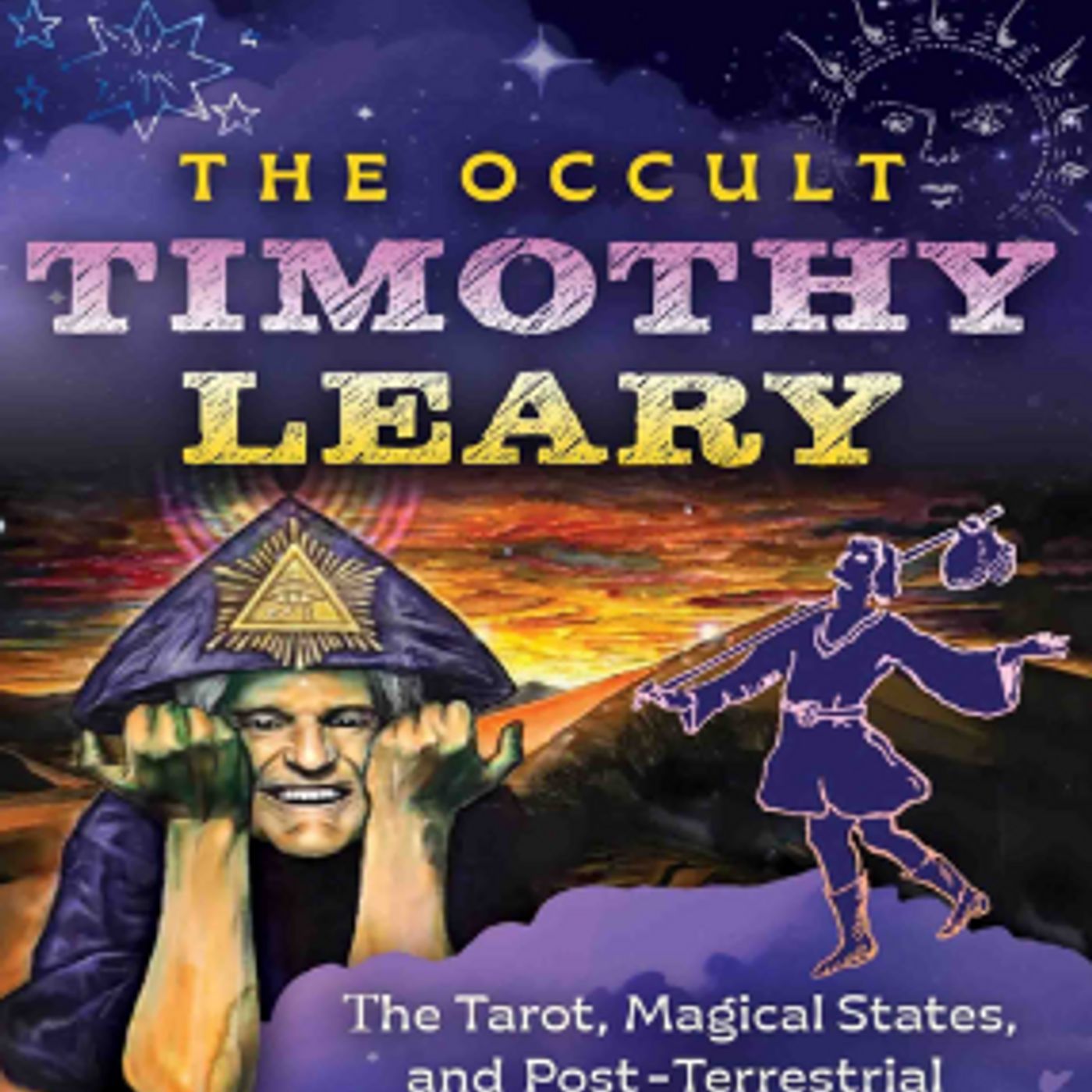
Aeon Byte Gnostic Radio
Joseph L. Flatley on The Occult Timothy Leary
01:06:36
Ready to turn on, tune in, and drop out into some serious gnosis? I’m joined by Joseph L. Flatley to discuss his new book, The Occult Timothy Leary: The Tarot, Magical States, and Post-Terrestrial Evolution.
Loading summary
Transcript120 lines
- [00:00]
Commercial Announcer
If you, your parent or spouse served in the military, you could join our family. Our members saved an average of $70 a month on auto insurance when they switched. Tap the banner or visit usaa.com join today to check your eligibility restrictions apply.
- [00:15]
Joseph L. Flatley (Lenny)
This podcast is sponsored by Talkspace. Last year I went through many different life changes. I needed to take a pause and examine how I was feeling in the inside to better show up for the ones who need me to to be my best version of myself. When you're navigating life's changes, Talkspace can help. Talkspace is the number one rated online therapy, bringing you professional support from licensed therapists and psychiatry providers that you can access anytime, anywhere. Living a busy life, navigating a long distance relationship, becoming a first stepfather, Talkspace made all of those journeys possible. I could speak with my therapist in the office. I could speak of my therapist in the comfort of my home. I was never alone. I Talkspace works with most major insurers and most insured members have a zero dollar copay. No insurance, no problem. Now get $80 off your first month with promo code space80 when you go to talkspace.com match with a licensed therapist today at talkspace.com save $80 with code space80@talkspace.com avoiding your unfinished home projects because you're not sure where to start.
- [01:19]
Moondog Vance
Thumbtack knows homes, so you don't have to.
- [01:22]
Joseph L. Flatley (Lenny)
Don't know the difference between matte paint,
- [01:23]
Moondog Vance
finish and satin or what that clunking
- [01:26]
Joseph L. Flatley (Lenny)
sound from your dryer is. With thumbtack, you don't have to be
- [01:29]
Moondog Vance
pro, you just have to hire one.
- [01:30]
Joseph L. Flatley (Lenny)
You can hire top rated pros, see
- [01:32]
Moondog Vance
price estimates and read reviews all on
- [01:34]
Joseph L. Flatley (Lenny)
the app download today. How does it work?
- [01:51]
Miguel Connor
It's an astrology thing.
- [01:52]
Joseph L. Flatley (Lenny)
It's called the cycle, dude. It's awesome. You put in your birth time and location and it tells you that the reason that your sitcom got canceled and your wife is the neighbor's while you're eating eggs to slim down so that somebody will is because the planet Saturn is trying to teach you how to process your emotions in a healthier way.
- [02:15]
Commercial Announcer
I'm glad you're finding it helpful.
- [02:17]
Joseph L. Flatley (Lenny)
It's awesome. Daddy, Mommy, I'll make me and save
- [02:29]
Miguel Connor
me from the hell of. Heresy. Shouldn't be this much fun, but it is. It just is. Especially when we lean in with those two introductory clips. One is from the movie Blink Twice and it shows techno lords in Silicon Valley taking things way to the extreme and you'll find out it's really very relevant to this show's theme. The other one is Nicholas Cage in Long Legs. Do we need an excuse to show Nicholas Cage? No, we do not. It should be default in any show meeting. Any, any, any place. So there you are because people are always curious about what show clips I use. And yes, you have arrived to AM by Gnostic Radio in one of the districts of, of the virtual Alexandria. Welcome to this Age of Hermes, these Philip K. Dick times and this. And what else can I say? This Philip K. Dick world Age of Hermes, Gnostic time. What else can I say? You have your own version and I'm sure you're right in how it works for you. My name is Miguel Connor and as always, I am your Pompadus of Gnosis, that madman across the waters of creation. That smell of colitas rising through the air of a world gone mad. Great to see everybody on this moon. Not moon day, but this Venus day. And I hope everybody's doing all right. And I hope you're working hard on that inner journey to find who you are and what reality is not. You are the final authority and you're going to do wonders. And you come here to get those unique Gnostic takes and gifts that you won't find anywhere else on the Internet and can work for you. Today I am very excited to be joined by Joseph L. Flatley. We'll call him Lenny because that's his, the name, he uses it. And he will be discussing his new book, the Occult, Timothy the Tarot, Magical States and Post Terrestrial Evolution. Joseph is an investigative journalist, author and publisher of the Fail State Update newsletter. His short films have been featured at Three Rivers Film Festival, Nonplus Fest and Desert Days. His books include New Age Grifter, Speaking of the Introduction, the True Story of Gabriel of Urantia and his Cosmic Family. Lenny, thank you very much for coming on the show.
- [05:16]
Joseph L. Flatley (Lenny)
Thank you. Very excited. Longtime fan, first time guest.
- [05:20]
Miguel Connor
Ah, great, thanks. Glad we could be of service and we really appreciate your time and what you and the book you created. And with us too we've got the Moondog Vance. Vance, how are you doing?
- [05:34]
Moondog Vance
I'm just fine. And interesting, we're talking about Timothy Leary because I actually saw him at the Keystone in Palo Alto one time and he was in his stand up comedy phase. I bet you know about that, Lenny.
- [05:48]
Joseph L. Flatley (Lenny)
Yeah, stand up philosopher.
- [05:50]
Moondog Vance
Yep.
- [05:50]
Joseph L. Flatley (Lenny)
Yeah, I've heard mixed reviews of his gigs. I don't know what you thought of it all.
- [05:56]
Moondog Vance
It was interesting because it was him. You know, he tried to be funny, but you know what can you do?
- [06:04]
Miguel Connor
Yeah. Well, we want to address all these stages that this giant of the esoterica has gone through. I think my first time was a lot simpler. First time I heard of Timothy Leary was in the Moody Blue song Legend of a Mind. And I was, you know, 13 and like, who the hell is this guy? And of course later on you learn.
- [06:25]
Joseph L. Flatley (Lenny)
Yeah, I mean it for. I mean, I was 14 and somebody handed me one of his books and it listed like the eight circuit model of consciousness, which, you know, I'm 14. What do I know? Nothing. But just, you know, it did. It created like, it gave me a template for like understanding the world. And I've just been fascinated by it ever since. And I. It hasn't run out of utility for me or, you know, it's. The more I've explored it, the more useful and interesting it's become. So I was excited to be able to do this book. And then of course they renamed it when I sent it to the publisher, the Occult Timothy Leary. So it'll sit on the shelf next to the Occult Elvis or the Occult Bowie or.
- [07:09]
Miguel Connor
Yeah, the Occult Sylvia Plath. Yeah, I mean, you got to go with the keywords in this day and age.
- [07:14]
Joseph L. Flatley (Lenny)
Exactly.
- [07:15]
Miguel Connor
The days of a cool title are over. We gotta serve the algorithms. Right?
- [07:20]
Joseph L. Flatley (Lenny)
Exactly.
- [07:22]
Miguel Connor
And get to the point. So awesome. I already see a good crowd there in the chats, as always. If you have a chat or I'm sorry, a question or a complaint against me or a question for Lenny, please, super chat them so we can get to them. And for everybody else, ye support AM Byte Gnostic Radio in any way you can. Again, I recently just put out my presentation on the dark side of Gnosticism and it's done very well and a lot of good information for members on the shadow side of Gnosticism because here we. We show all sides and everything casts a shadow and everything can be weaponized and everything is weaponized on this planet, including Timothy Leary. So. But we will certainly get into. So Lenny, you say you were fascinated with Larry. Is that. Was there a final impetus that made you write this book? Or what was the teleos behind writing this book?
- [08:22]
Joseph L. Flatley (Lenny)
You know, it's. It's rare that you have a subject and you know, you've written similar books. You know, it's rare that you have like a subject that's so well known or seemingly well known that you can find a unique angle on. And you know, I've been just real briefly for the people who may not know the eight circuit model of Consciousness is Leary's schema for looking at the various levels of human consciousness and kind of situating them on a continuum, I would say. And. And it gets a lot deeper than that, but that's the basics of it. And he splits it into two zones, so terrestrial and extraterrestrial. Terrestrial consciousness we all understand. You get up, you're hungry, you're pissed off at your boss, you have a cup of coffee, you have beer, you know, like terrestrial. And then there's this whole other layer that was kind of not very useful for me because I've not been to outer space and have not evolved past beyond Homo sapiens sapiens. And then one day. But, you know, I've been a little bit of a cult practitioner myself, and I kind of realized through my own work over the years that as you. And this is, you know, maybe intellectually we all understand this, but I had this realization where as you kind of go up the ladder of consciousness, it becomes. You reach a point where it's consciousness, but it's not located squarely in your body. It's, you know, we all have names for it. And the. When I finally had the understanding of that, the knowledge of it, gnosis, as opposed to, you know, an intellectual understanding, I felt like I finally know what the hell Timothy Leary was talking about. And. And then, you know, it. He wrote a really interesting book called the Game of Life that took these stages of consciousness and mapped them onto the tarot major arcana. And I was like. I was like, this can be so useful. And nobody, you know, people don't really take Leary seriously. He's been dead for 30 years. His books were not the easiest things to get through. They kind of have this like, post hippie, pre cyberpunk jargon that's kind of like loosey goosey. And, you know, he'll do things like he'll. He'll use like several names for the same concept in the same book and not even mention it. You're just supposed to, you know, I think he was trying to, like, break the bounds of literature or he was trying to do like a James Joyce thing, but not sure how effective it was. But the info is fascinating and I felt like it was time to give him a fair shake and to really look into his ideas. And, you know, I could have done that work and decided that there was nothing there, and then, you know, that would have been a bummer. But I. I kind of found that there is all that there and more
- [11:42]
Miguel Connor
and, yeah, a lot more. Quite an adventure too, so. Well, let's, let's unpack his life and get into some of your concepts and what you discovered. Of course, many who are listening are probably uninitiated into him. And it's been a while. I mean most people are in pop culture knowing from his famous advocate for LSD and the whole turn on, tune out and drop out concept. And then recently in the, whatever you want to call it, conspiracy, mystic, conspiratorial circles, it's all about, well, Timothy Leary, CIA. And that's been just in the last 10 years. That's, that's like a dead horse. What's your take on that, Lenny?
- [12:28]
Joseph L. Flatley (Lenny)
Well, you know, it was fascinating because that hasn't just been the last 10 years. I mean they've been talking about that since the 1960s. He went to prison and I'm gonna fudge the dates up.68 and, and you know, the counterculture. Yeah, he, he eventually the US government started spreading rumors that he was working with the government to like as an informant where or you know, a source or you know, trying to, basically trying to flip on the people that he worked with in the underground. And nobody, nobody was prosecuted because of anything he did. So if he was, if he was playing with the FBI, you know, if he was talking to the FBI, he was probably playing with the FBI, trying to get out while not ratting on his buddies. But you know, the 60s were a period they had COINTELPRO, they had the FBI going against the counterculture. The counterculture understood that you couldn't trust anything that the government said about anybody. Yep. For some reason they were more than happy to take the, the anti Leary propaganda or misinformation seriously. So you would have like, you know, so if you look at the underground press from the 70s when Leary was in prison, trying to get out of prison, they raped him through the coals. And it's only continued to this day. So, you know, the questions with Leary tend to be either was he an informant, which if he was, he wasn't a very good one, or was he a CIA asset, which apparently the Kaiser foundation of which he was a director. And just about every psychology program in the country was receiving money, you know, that was through MK Ultra. So there was some CIA money in the LSD business. He was the guru of lsd. But you can't say anything more than that about it. You can't say he definitely did or definitely didn't do. The counterculture is not very what you would call the culture then like kind of the conspiracy underground, whatever. Now they're not very good at what Robert Anton Wilson called maybe logic, which is, which is like, I mean that's the rallying cry and that's what people talk about like not coming to these premature conclusions. But you know, when you're on social media, when you're talking to people in this field, they don't seem to be able to grasp the concept or operate in that headspace, which I guess the algorithm is largely responsible. So I don't have an answer except to say that we don't really know what was going on with Leary and the government and to say anything else is, you know, being dishonest.
- [15:32]
Miguel Connor
Right, right. Like you said, there are arguments for arguments against and there was a time we would simply balance them out and go about our day. We didn't have to go to X and make a declarative system and that's it. Which is where we are today. Right. Very Manichean. Everything's black and white.
- [15:49]
Joseph L. Flatley (Lenny)
Absolutely.
- [15:51]
Miguel Connor
So it's, yeah, strange times. Yeah. And so let's talk about the 60s, obviously the counterculture and all that. But Larry started out as a Harvard professor. What turned him to the dark side or the esoterica, the mysticism? What made him gravitate to those areas?
- [16:11]
Joseph L. Flatley (Lenny)
Lenny, you know, he, he was really, he was never really satisfied with like the mainstream. I think he, he literally, the story he tells in flashbacks, I believe his autobiography is that he ended up at the University of Alabama because he was kicked out of West Point. And he literally just started at the beginning of the list of universities and Alabama was at the top and they accepted him. So he obviously didn't put much thought into that. Then he gets to Alabama and he wants to be a philosopher. His whole life he wants to be a philosopher. But the philosophy line, philosophy major line is way too long and the psychology line is right next to it and it's much shorter. So he ended up in the psychology program. So, so you know, he was just flying by the seat of his pants, it seems his, you know, his whole life. So he ends up through an accident of disorder as a lecturer at Harvard and you know, his first wife killed herself, unhappy marriage. You know, he's not comfortable in the straight laced world. Him and Richard Alpert, the future Baba Ram Dass are like the two guys at Harvard that are the non conformists. And he went on vacation in Mexico and took psilocybin and you know, his what he told the people that were president, President Leary said that I finally understand James Joyce's Ulysses. And from that point on the, I think his path was set, he was never going to fit in.
- [17:58]
Miguel Connor
And that's really, yeah, that was a, a thrust in his life. Whatever. What. Let's talk about some of his earlier breakthroughs or ideas. Tell the audience about the Concord Prison experiment.
- [18:13]
Joseph L. Flatley (Lenny)
Yeah, well they were, you know, they were trying to make psychology a science because it really wasn't. I mean talk about the replication process, maybe it still isn't. But at the time they were trying to think how can, you know, psychology and therapy and changing people's opinions, beliefs, thoughts, ideas so loosey goosey, how can we quantify it? And the figure that they came up with was the recidivism rate. So that's a very clear indicator. It's, you know, they've tracked X number of people who have been to prison, are likely to come back to prison. So if we can therapies, if we can develop a psychedelic therapy that works on prisoners and the recidivism rate is decreased, that's a number we can point to. So they, you know, they, they went to this prison and they developed, they developed kind of a neat, a unique type of group therapy. Group therapy was very like underground and not very well respected at the time, but he was one of the pioneers of that. So him and his team, you know, developed group therapy, psychedelic assisted group therapy. They would take psilocybin with the prisoners and, and it seemed to have some effect. I'm not going to try to guess the, the actual figures, the actual statistics, but what they found out is that you know, typical of Tim Leary and the reason he didn't fit in academic academia is they went in strong, they had some strong theoretical ideas that they were going to test. They didn't quite do the follow up. So Rick Doblin from Maps ended up going in and looking at all the papers afterwards, you know, all the, all the data and seeing that they didn't really change the recidivism rate at all, but it's because they kind of dropped the ball. They, they had all these people, they freed their mind, they let them out into society and then they tried to do their best to do follow up and to do subsequent therapy, which is what would have had to have happened in order for these changes to take hold. But they really didn't. So that's, that's something that like Leary and his supporters will claim was an unqualified success. But then you know, when we look at, look at everything 50 years later, it turns out that there probably was something there, but they didn't Achieve the, the aims that they were going for. Yeah, but it was, but it was important because it was an early example of how we can approach behavioral change and psychedelics and an institutional setting. And it's, you know, in a world where Timothy Leary wasn't vilified and wasn't thrown in prison for a joint or two joints or whatever could have been followed up on and could have been developed and could have, you know, and, and we're starting to do that work now, last 10, 20 years. But I mean, come on, that was 1965.
- [21:35]
Miguel Connor
Yeah, for sure. I mean, I know like Bill W. The founder of Alcoholics Anonymous, he was doing LSD therapy in the 60s, but then he got out once it became a. The powers that be decided to make it illegal. And of course, probably because it was. They're right, it was something to open the doorways of perception, could have helped people. And like you said it. We are back to it where these substances, substances can help heal and better your life and open. Expand our consciousness. And you say for, for the audience. What. So you said he, he smoked a couple of joints and what, got thrown in jail or.
- [22:14]
Joseph L. Flatley (Lenny)
Well, actually him and his family were going on vacation to Mexico. He had already been kicked out of Mexico. And during the Harvard years, during the summer, they had one year or two years in a row, I can't remember, they had held these kind of, you could call them psychedelic summer camps, psychedelic retreats, workshops in Mexico. And, and Leary, you know, eventually the Mexican government realized what was going on and kicked him out. And they gave him a letter. And I think, I think the specifics was he's not allowed to re. Enter, he's allowed to visit, but he's not allowed to work in Mexico or something. So him and his family drove into Mexico and returned away at the border. And when they came back through the border, his daughter, who was a minor at the time, had like two joints, a little bit of pot. I think she just had a little bit of pot. And he took responsibility. You know, it's his daughter. So that began the legal trouble with the United States government. And you know, Leary took big swings and there was a period of time where it seems like he was always hitting the ball. So he, instead of, you know, taking a slap on the wrist and, you know, getting a little fine or whatever, he fought this all the way to the Supreme Court. And there was actually a period of time where the marijuana tax was declared illegal and pot was technically legal in the United States for a very brief period of time because Timothy Leary won this Supreme Court case. And then like a year later, almost to the day, something very similar happened. A cop stop. Pulled him over and found. And I believe it was planted like a joint in the. In the ash ashtray of the car. And that started his legal problems again. And he didn't get off so lucky that time. He fought him, did not win, and ended up in prison in California.
- [24:27]
Miguel Connor
And. Yeah, and then he stayed there for a few years. And then there's, of course, the famous escape. Right. And him on the run.
- [24:34]
Joseph L. Flatley (Lenny)
Yeah, yeah. I'm so bad at dates, but I. Yeah, I don't even believe it was a year, but yeah, he. He cooked up a plan. His outside supporters cook up a plan with the Weather Underground and the Black Panthers where he climbed. He was. When he was sent to prison, they gave him a personality test to determine, like, where he belonged in the prison, if he was an escape risk and stuff. Luckily, him and his team had designed the personality test so he knew how to answer it and he answered it. So it was like, this guy's not very smart. He's not, you know, he's. He's. He's an old man. Put him in the garden, put him somewhere low key. So, you know, so they put him in this, like, minimum security prison. And he climbed a telephone pole, ran across the top of the prison, the cell block, shimmied over on a power line which, can you imagine, or, you know, you know, a cape, some sort of cable, and dropped on the other side of the fence. And Weather Underground picked him up and they drove his prison close down towards Mexico so that they. So the police would find it and thought that he was going to Mexico. And then he flew to Algiers where the Black Panthers had their. Had their kind of embassy in exile or their American government in exile. You know, Algeria had recently become independent, won its independence from France, and became a, you know, socialist government. And they really just saw stuff like this, like supporting the Black Panthers or supporting Timothy Leary as a, you know, propaganda prank, you know, And. And Tim, they. They didn't really know who he was and they didn't necessarily want him there. So, you know, you find these newspapers and it's like, leading black intellectual Timothy Leary is coming to Algeria because they had to, like, lie to the Algerian government to get them in, and they had to, like, bribe the Black Panthers because they didn't want them there. But he ended up in Algeria.
- [26:53]
Miguel Connor
Yeah. And then he's traveling and writing stuff, coming up with ideas. Eventually they nab him. And we're Afghanistan. And then he goes back and, yeah, the great story continues. And for his ideas, too, he believed that, like Gurdjieff, humans were robots and it was a question of just waking us up to our true nature. Right,
- [27:20]
Joseph L. Flatley (Lenny)
yeah. Gurdjieff was always a huge influence on him, and it was something that, you know, he never really necessarily took the time to, like. First of all, his work happened in different stages and he would just, you know, he lived a life of 10 men at least. So it's like, not always clear from his work where he gets these ideas. In fact, the Gurdjieff people in the United States didn't really seem to like Tim or his crew, probably the, the psychedelic drugs. But yeah, Gurchief was always a major influence. You go to, like, when you read accounts of Millbrook, his, his psychedelic compound that him and his, his team had in upstate New York in the mid to late 60s, you know, there's. They're experimenting as much with, like, Gurdjieffian techniques as they are with psychedelics.
- [28:21]
Miguel Connor
Yeah, for sure. Any he. Again, I know I don't, I don't want to go linear, but I don't want to get too far and I want to make sure we cover all of the quote, unquote theology. He really thought he was a reincarnation of Aleister Crowley.
- [28:35]
Joseph L. Flatley (Lenny)
He. He believed that now we're going into the, the eight circuits of consciousness and.
- [28:44]
Miguel Connor
Which he wrote while he was on the run. Right.
- [28:46]
Joseph L. Flatley (Lenny)
Well, he, he was in sort of. He, he developed it over years, but it was in prison that he really nailed it. And in a book called Neuro Neurologic. And he believed that one level of consciousness was the perception and communication with information at the level of DNA. And he believed that anybody who had a strong imprint or a strong influence on kind of the collective unconsciousness or your consciousness could be considered a reincarnation. So, yeah, you know, Tim was born in 26, Crowley died in 1947. But using Timothy Leary's definition of reincarnation, he could claim to be reincarnated. Reincarnation of Crowley. Yeah.
- [29:45]
Miguel Connor
I love it. Yeah. Well, break the rules. You know, mystics always think, well, we don't believe in linear time and space, and it's all an illusion. Why do we have to follow all these rules, you know, logical rules of mysticism? Right.
- [29:58]
Joseph L. Flatley (Lenny)
Yeah. I mean, the ultimate, I think, message lesson of all this, which, you know, can't be stated enough, is like, all these definitions and discussions are really very useful. They're not complete. They don't contain all the information. They don't complete contain the whole story. So. So yeah. So Leary and his colleagues Robert Anton Wilson and whoever else were very much aware that they were creating a framework for under. For working with a reality that is ultimately not understandable.
- [30:37]
Miguel Connor
Yeah, very true and very wise, very sapient. Vance, do you have a question or a question from the audience? Yeah.
- [30:46]
Moondog Vance
Let's start with Graham's question which is what are your thought on Neuro comics comic book that Lyri did 1979 with George DiCaprio Leo it's awesome.
- [30:58]
Joseph L. Flatley (Lenny)
It's amazing. This comic book. It was a one shot comic book. Last Gasp in San Francisco, the classic indie underground comic book publisher. And it's basically I mentioned in the beginning of the show about how impenetrable Leary's books can be. This was kind of like a rewriting of. It's almost like a children's book about the eight circuits of consciousness. And it's kind of like an adaptation of infopsychology, one of Tim's books, into something that's readable and amusing and the art's great. I wish it was available in print. You can find the PDF easily online. But it should be I wish it was in my collection. Great.
- [31:45]
Moondog Vance
Well grab the PDF I guess. Although I'm sure you have it already. Hey, I wonder if it was.
- [31:54]
Miguel Connor
Choose to show up with the bold
- [32:01]
Commercial Announcer
styling of the Mazda CX30. So you're running out of closet space. The good news, you don't need to stop shopping. You just need to start selling with the RealReal. The RealReal is the world's largest and most trusted resource for authenticated luxury resale. Whether it's that mini bag that can't even fit your phone or those boots you never fully broke in, the RealReal handles everything from photography and copywriting to shipping and pricing. So you can just sit back, get paid and make room for things that actually feel like you. And with 10,000 new arrivals every single day from top designers like Prada, Celine, Louis Vuitton and Loewe, all for up to 90% off retail, you're bound to find something perfectly on brand to fill that extra closet space with. Plus right now you can get an extra $100 to shop when you sell for the first time. Make room for what feels like you. Go to therealreal.com to start selling and get your extra $100 to keep shopping@therealreal.com that's therealreal.com terms apply. Lets talk groceries. Specifically your groceries with instacart you want your groceries just the way you like them, right? Well, the Instacart app lets you do just that. They have a new preference picker that lets you pick how ripe or unripe you want your bananas. Shoppers can see your preferences up front, helping guide their choices. Instacart get groceries just how you like. The sun shining, birds are singing and all feels right in the world until
- [33:33]
Miguel Connor
the season changes and suddenly you lose your motivation to get out of bed. In fact, one in five people experience some form of depression, no matter the
- [33:41]
Joseph L. Flatley (Lenny)
season or time of year.
- [33:43]
Commercial Announcer
At the American Psychiatric association foundation, our vision is to build a mentally healthy nation for all. Because we want you to live your best life and be your best you all year round.
- [33:53]
Joseph L. Flatley (Lenny)
Please visit mentallyhealthynation.org to learn more.
- [33:57]
Moondog Vance
Miguel, should we go over the eight levels of consciousness for the audience?
- [34:01]
Miguel Connor
Sure, we should address it.
- [34:03]
Moondog Vance
Yeah, go ahead. Lenny, can you go over the eight levels for us, the terrestrial and the post terrestrial levels?
- [34:09]
Joseph L. Flatley (Lenny)
Yeah, sir. So these, you know, these work. It's a lot of my headphones keep falling out. There's a few different. Like Leary, his ideas of often overlap and dis different disciplines. So the circuits are applicable to our conscious, our conscious states but also applicable to the stages of evolution. So like he would the earliest kind of most primitive circuit, we'll call them circuits, that's what he called them. Level of consciousness circuit is the oral or biosurvival circuit. And that is primarily concerned with our survival. It places reality on a kind of either or two dimensional plane. Either something is safe or dangerous. If it's safe, you go towards it, you're dangerous go, you float away from it. And it kind of. It first developed when the very first one celled organisms developed. But we, you know, but our consciousness, the way humans operate is very much has that same circuit on the, you know, the earliest level. So like a newborn could be say said to exist primarily in the biosurvival circuit. The second circuit he called emotional territorial. And it's about, it's basically about politics and that's why I have no respect for politics or politicians. You know, it's like it's all about power games. It's taking control. It's being a top dog or being the bottom dog. And it developed when mammals started developing pack hierarchies from there. The next level which I guess humans would start to experiment with as they start working with language time binding or semantic time binding. Because language not only allows us to formulate ideas but it allows us to transmit them through time. And then the final terrestrial circuit is the moral or social sexual circuit. And it's called that because, you know, when we reach sexual maturity, it's not. We aren't as, you know, as, as beings, as humans. We're not just having sex, but we're also starting families. We're creating morality, we're creating morality to preserve the family unit and also to preserve our genetic influence through, you know, our offspring. And really that's all that, it's kind of all that most of us experience. Like there are these other levels that Tim and his colleagues experience and you know, probably, presumably a lot of your readers have experienced or listeners through the use of like psychedelic drugs. But, but those are, but they're. Leary believed that those were reserved really. They're kept in the back of our mind for when we become a space faring species. And we'll need to have these new capabilities such as circuit five, the neurosomatic circuit. It's, it's the first circuit that when you. And when you use this circuit it detaches you from the first four circuit realities. So it's, it's kind of the prelude for becoming a spacefaring species. And he likened it, he said that the way to unlock that was basically thc. So when you're smoking a joint, you're kind of experiencing what you're experiencing a small taste of the neurosomatic circuit, the neurogenetic Circuit or Circuit 6, that would be akashic records that would be experiencing your DNA, communicating with your DNA. That would be any form of magic that involves leaving your non local, leaving yourself and you know, going to another world. Metaprogramming circuit circuit seven. That's kind of, that's when you, you start, when you reach the type of consciousness where you can start changing all the other circuits, all the other things about you that you don't like. And then the non local quantum circuit, circuit eight, that is, that's essentially cosmic consciousness. That's, that's. He thought, I don't know if this is scientifically accurate, but he thought that when man, when humankind went to the cosmos and entered like the black hole to center of the galaxy, that you would dissolve, you would no longer have anything to do with circuits one through seven. You would be part of the universe. And that's something that's so abstract that I can't even really wager a guess about much farther than that. But the first four circuits are very useful for people working in psychedelic therapy or just in any kind of therapy. In my book I've talked to, to clinicians who use those as a framework for, you know, treating patients or helping patients treat themselves. The next four really are useful when you talk about these novel states that you might, that a mystic or a yogi or advanced LSD adept might come across. And they're, they're much harder to discuss because they're so abstract. But yeah, in fact Circuit 8 was. Leary didn't kind of formulate that until later in the. Later in his work. He, for the first writing about the first writings of neurologic, which is what he called the science, restricted it to seven circuits. And then he kind of decided that there must be an eight circuit. I literally think he was going four and four. Like it's got to line up. The math has to be good. So it sounds right.
- [40:43]
Moondog Vance
Did he himself ever have a mystical experience, you know, the level eight, you know, through his LSD adventures or other?
- [40:50]
Joseph L. Flatley (Lenny)
Oh, I believe, yeah. He, yeah, if you, when you read his work, it's, it's very much. He was a mystic. Like he, he was absolutely a mystic. He was more of a mystic than he was a scientist. He, he was more of a mystic than anything else really. I mean like I, like I call his work pseudoscience. And I don't mean that in the, you know, in the way that we cast aspersions on anything we don't believe in. Oh, that's pseudoscience. But it's like he wasn't operating under a scientific framework. He knew science, he understood science, but he was talking about things that science could never quantify, like, you know, figuring out how many angels can fit on the head of a pin.
- [41:38]
Moondog Vance
You know, Parascience. Right, Parascience.
- [41:41]
Joseph L. Flatley (Lenny)
Yeah.
- [41:41]
Miguel Connor
Like, yeah, at the same time he, you're talking about. Yes, going to the stars, but he believed in extraterrestrial life. He had a Starseed transmission in prison. 73.
- [41:54]
Joseph L. Flatley (Lenny)
Yeah, so he, I believe he used the word starseed prior to the new age concept of the starseed. I think they kind of, they bought, you know, all these. When you get into the 70s and you get the New age, it's just like a mad, you know, mad, mad rush to borrow everybody's terms and add to it and sell you, you know, self printed stapled books and stuff. But he believed, yeah, he absolutely believed that higher intelligence existed elsewhere in the universe. He also absolutely believed that it was not physically present in this universe like he thought it would. He. If you said. Well, he, I mean, I'm basically quoting him. But if you told him that like some higher intelligence physically came from another part of the universe to like anally probe you or to like whatever, you know. He would say you're nuts. Like they're going to use the nervous system, they're going to use, you know, they're, they're not going to do anything so crude as hop into a physical ship and go across the galaxy. You know, he, he believed that, you know, what we call spirits or gods or whatever are higher intelligence communicating with us using the best technology, which is this, you know, billions year old biocomputer that's up here.
- [43:21]
Moondog Vance
Naturally he believed they were taking lsd, right. All the advanced space guys, I think,
- [43:28]
Joseph L. Flatley (Lenny)
I don't think they needed. It's us poor primitive humans that need molecules.
- [43:37]
Miguel Connor
That's what Jung always said. He wasn't against entheogens or psychedelics, but he said, you know, the human mind is an adventure in itself. You just go in and the high weirdness is there. And Lenny, but he also, again, he seems such, such a polymath when it comes to the esoteric. But he also thought that all the keys were about DNA and evolution too. Right?
- [44:02]
Joseph L. Flatley (Lenny)
Well, he, yeah, so, I mean he was using the science of his time, which is, you know, pretty much the science of our time. It wasn't that long ago to explain what mystics and adepts used their language to explain hundreds of years ago. Yeah, so like, so anything, anything that you know, someone a magician or an adept would experience, whether it's, you know, something, something from like effects magic to, to telekinesis or you know, telepathy rather, or any of these things that we, you know, our, our magical colleagues or ourselves have experienced can be fit into his schema of consciousness. It's just, I mean it really is, it's just like a framework for understanding consciousness and, but that takes in advance, that takes in not only mundane consciousness but these novel states that people don't experience unless they are, you know, either meditating for years or performing ceremonial magic or taking a heroic dose of mushrooms.
- [45:29]
Moondog Vance
Do you think that his, the last four kind of skewed towards, you know, the, the idea of taking the mind altering substances?
- [45:39]
Joseph L. Flatley (Lenny)
Well, I mean he thought that all eight levels of consciousness were unlocked by kind of specific chemical keys. If you want, if you want to experience like a pure, a pure undiluted circuit one experience, take a shot of heroin. Now I'm not, I'm not suggesting you do that, but I mean that is the chemical key for that or circuit two booze, you know, People drink, you know, people get drunk and all of a sudden either they're crying or they're a tough guy. They're rowdy, they know where they are on the, you know, on the, the ladder as far as like, who's the boss and who's not. Circuit three, that's more of like a speedy thing. You know, you get locked into, you know, you, you get a riddle in prescription and now you can concentrate and you get locked into word games and, you know, kind of that thing. Circuit four. I don't actually, I don't know what Circuit four would be. Whatever. Golf, coffee, oxytocin or something. Blue Chew.
- [46:52]
Miguel Connor
Yeah, yeah, Clockwork Orange gang.
- [46:56]
Joseph L. Flatley (Lenny)
Oh, yeah, A droog. You know. Circuit five, Marijuana. Circuit six, mushrooms. Circuit seven, lsd. Circuit eight, that's just. Circuit eight is so beyond human experience that that's, that's like what I mean, that's almost what basically what happens after you leave, you're no longer human. That's like. That's kind of like the catch all for everything. It's the like, you know, Cather top of the tree of life.
- [47:27]
Moondog Vance
It's interesting. I have a theory, I have a theory that every genre of music has an associated drug. And I wonder, did Timothy o' Leary ever make that kind of connection? You know, like, like bebop jazz music would be speed and of course the Grateful Dead for marijuana and so forth. There's alcohol music, you know, like the blues. Alcohol music, the gritty blues.
- [47:54]
Joseph L. Flatley (Lenny)
Well, he certainly wrote about his anthology of his 60s writing, the politics of Ecstasy. Politics of Ecstasy. He wrote about, you know, art as being different types of art being exemplified by different levels of consciousness or vice versa. There's an interesting essay he writes about the Beatles where he like kind of talks about each individual beetle as an archetypal type of a individual. But I mean, he recorded an album in the 1970s. A. A teenage kraut rock band called Ashra Temple recorded an album with him while he was a fugitive. He. It was called 7up because there were only seven circuits in the scheme at the time. And also because they were like filling up a 7 up bottle with acid and all taking hits from it, swigs from it. So. So he did this kind of like weird kraut rock, noisy spoken word album about the seven circuits. It's really cool. It's on Spotify or YouTube, however people listen to music.
- [49:09]
Miguel Connor
Very cool and something that we can connect to today. Speaking of his influence is a huge influence and impact on culture is his acronym Smile with A two with the after the I and the L, which basically summarizes the Larry's futuristic ver or vision. If you would. Could you explain that, Lenny?
- [49:36]
Joseph L. Flatley (Lenny)
Sure. Smile. So smi squared. Le. Space migration, intelligence increase and life extension. That was his formulation for, you know, why we are put on this planet. So I actually, when I went to New York Public Library, where they housed the Leary archives, I found a really cool letter that he wrote to Robert Anton Wilson where he's talking about, you know, Crowley's dictum, do what thou wilt. He said, that's great. But most thelemites, they go, you know, you ask, you know, do what that will is great. But you have to ask yourself, what will you do after, you know, after you've decided that you're going to do your will? He, yeah, Larry wrote in this letter that most thelemites make themselves pompous asses. But what he would suggest is smile. Space migration, intelligence increase, life extension. Space migration. Because we're not going to get past our four primitive circuits that are causing war, poverty, violence, etc. As long as we're stuck on this, this rock with limited natural resources. Intelligence increase. Because if you're still a dumb human, it doesn't matter if you, if you get off the planet. If you're Elon Musk and you make it to Mars, if you're still Elon Musk, you know, so there has to be a increased intelligence that corresponds with space migration and life extension. All three of these things work together. And you know, it's. If you're stuck on the Earth and you live to be, you know, 500 and you're not any smarter, you're not doing anybody any favors. He talked about how like hell to him would be, you know, we get life extension and he's stuck on the Earth listening to, you know, going to concerts with like 500 year old Frank Sinatra or 500 year old John Denver. So he's like, we need it all. And he saw it as, you know, Robert Anton Wilson, a great gift was given to me and to us all. I think when, while I was writing this book, hilarious press put out the Robert Anton Wilson's book Line of Light, which is a. An examination of Crowley that was not published until, was it 2024, I think. And. But that was a lot of the research for me. It was like, you know, it was like, oh my gosh, it was like the perfect reference book. So one of the things that Wilson Wilson did for Leary, or for, excuse me, for Crowley, what I did for Leary is, he goes through Crowley and kind of looks at how his work lines up with current science. And he kind of found all these passages in magic and theory and practice and other Crowley works that talk about cosmic consciousness and talk about seemingly talk about evolution and DNA, even though DNA wasn't a concept when Crowley wrote them. And in much the same way Leary's work like Smile or Turn On, Tune In, Drop Out, I mean that's magic. That's magical ritual right there. He discovered magical ritual by taking a bunch of acid with his friends and you know, stumbled upon it. So yeah, so Smile is a, it's not just like a science fiction or scientific idea. It's also a philosophical and spiritual technology.
- [53:31]
Miguel Connor
And you can see Smile today and much of perhaps speaking of the dark side, the shadow side of Timothy Leary, but you could see it running through Silicon Valley right in theage and space exploration, manipulating consciousness and DNA. All those things Elon Musk feel all those cats.
- [53:54]
Joseph L. Flatley (Lenny)
Well, and that to the point, you know, he, Leary would have said, because he basically said the same thing about the political figures of his time is that these are people stuck in like second circuit territorial minds frame. So they have like, you know, so now we're at a point as a species or as a culture or whatever where we have access to like these technologies, these advanced technologies, but we're still, you know, we're still babies, we're still like, like 4 year olds and so we're not using them. Well, you know, he saw like Leary wrote something really interesting. It's a, it's a brief, it's a brief passage in his book the Game of Life. And it's almost, probably, almost would seem flip if you, you know, if you were not in the right mood when you read it. But he talked about eugenics and he talked about Hitler specifically as like an immature response to the, to like the 6th Circuit. So 6th Circuit collective neurogenetic. It's, it's awareness of genes and it's awareness of, you know, something connecting humans of archetypes of a lot of these topics that Aon bite listeners would be familiar with. But it's not viewing them in a holistic or enlightened way. It's viewing them as, you know, an excuse for genocide, which is awful. Obviously it's sort of polluted with two. Right, yeah. Yeah, well, that's exactly it. So, so Leary believed that whatever, you know, as if you were using the, the schema, the eight circuit model to, to look at individual personality, which it can. We all have one of the first four circuits that we have, he called it imprint because he borrowed from imprinting Conrad Lorenz. But so I'll use his word. So, like, we all have, like, a circuit that is our most heavily imprinted. So, like, if Peter Thiel has the strongest imprint on circuit two, and it's a negative imprint in the sense that he always feels like he's got to be the boss or he's got to be a bully, every. All other information is going to be filtered through that. He's not going to look at any of these other questions without trying to figure out how can I make money off it? How can I be the boss of it? And that's why. That's why evolution in Leary's schema would be progressively relaxing the hold of the terrestrial imprints and then moving on to experiencing the extraterrestrial imprints. Anturo Ali, are you familiar with his work? He's. He's one of the new. The original Falcon Press writers. He. He expanded on Timothy Leary's work quite a bit. He passed away, like, two years ago. He kind of discovered. He worked with these circuits through his own spiritual practice for years and years and years and years and since the 80s. And he kind of discovered that there are connections between the first four in the human personality. There's connections between the first four circuits and the five through eight. So, like circuit one and circuit five are connected in a way that if you don't have a strong, healthy environment, a biosurvival circuit, then you're going to go off the deep end. If you indulge the neurosomatic circuit or the territorial, emotional. Territorial circuit corresponds to the collective neurogenetic circuit. So there's definitely some meditations or theorizing that can be done. If you pick up my book and read about the different circuits and think about how they're connected.
- [58:16]
Moondog Vance
Yeah.
- [58:17]
Joseph L. Flatley (Lenny)
What about love?
- [58:18]
Moondog Vance
I. I don't. I think these are all self, you know, almost solipsistic. Not solipsistic, but, you know, narcissistic type of a viewpoint. But there's no. There's no love in any of them that I see. Maybe I. I'm not seeing it.
- [58:36]
Joseph L. Flatley (Lenny)
I don't know that love is a circuit. I think it's more like a force or, you know, it's like. It's an emotion. Yeah. It's an emotion that kind of, you would hope would inform all of these. Right.
- [58:50]
Moondog Vance
Did Larry talk about love?
- [58:52]
Joseph L. Flatley (Lenny)
You know, I don't know that. I don't. I don't know. I Don't know that he addressed it in the way that you're describing. That's actually something I never thought of. I mean. I mean, in my mind, that's something that should be the basis of everything, Right? Yeah, it's like. It's like. What about gravity? It's like. Well, but I mean, that's a meditation, that song once.
- [59:19]
Miguel Connor
Yeah. I think probably more of empathy, because he really was. The foundation was how to free mankind. Right, Lenny? How to get us to our potential as human beings and as a culture and a society on Earth and in the universe.
- [59:35]
Joseph L. Flatley (Lenny)
Yeah. And I mean, he was. He was a Crowleyite. He was a. He was a Thalamite. He thought that love is the law, law of under will. And this is, you know, a technology for. Or a framework for understanding, you know, you know, dividing personality and spirituality and evolution into pieces. And. But I mean, for me, the most fascinating part is the. The correspondences with the tarot trumps. He, you know, he had. There are 22 trumps. He had 24 stages of evolution because each of these circuits had three stages. And so that meant he had to invent two tarot cards, but which I don't necessarily think he had too. But that's. That's.
- [60:30]
Miguel Connor
Yeah. One of the Star maker and the Velvet hole.
- [60:34]
Joseph L. Flatley (Lenny)
Yeah, that's what he called them. So his idea was that. So he was talking about, you know, when we get to Circuit eight, we're talking about the very end points of the end of the human experience, like, beyond, like, what we can even hope to achieve after we've climbed the ladder of evolution, which I don't think. I think you can fudge it and just say, well, maybe we'll sum it up in one card. Because it's all abstract and meaningless anyways. I mean, at that point, what the hell are you really talking about?
- [61:16]
Miguel Connor
Yeah, that's for sure. And to stress, your book is not just a history book. You have exercises and applications.
- [61:24]
Joseph L. Flatley (Lenny)
Yeah. Yeah. So, I mean, that was the kind of. The novel approach was kind of like where the rubber meets the road is like if. If Larry's writing can really be, you know, if Leary's stages of evolution in his circus can really be tied to tarot cards, then that means that reverse also has to be true. You have to be able to take tarot cards and do exercises and do whatever you do with tarot cards. And it has to be applicable to Leary's schema. So, again, it was like an experiment. Can I make this work? And I. I think it works. I. I Do readings with the, with Leary's version of the deck that I, I mean, he didn't, he didn't create a version of the tarot deck. I think my publisher was a little confused because I think they thought when I pitched the book, maybe I was not very clear. They thought that there was like a Timothy Leary tarot deck lying around, but there wasn't. So I had to make one for myself. And, and it works. It works really well. I mean, it's, you know, you know, this. Correspondences in Western occultism, astrology, the tree of Life, tarot cards, now Timothy Leary all correspond, correspond to each other. And if you look at, say. If you do a reading, a tarot reading, but then you also refer to like the astrological signs or symbols or concepts that the tarot cards read and read up on them. Tarot cards correspond to and read up on them. It adds a level of, you know, it adds another level of interpretation which, which. And I found that Leary, you know, you kind of had to tweak because Leary, like I said, he wasn't the clearest writer. And a lot of it was like this like weird pop science fiction jargon and. But you know, when you get down to the good stuff of what, what Leary was saying, what Robert Anton Wilson was saying, it's really, really interesting. So I think that's what my book is. I think it's kind of like a translation from Leary.
- [63:53]
Miguel Connor
Speak into English and you do have a great job. While we're getting to the advance, any last question from the audience?
- [64:01]
Moondog Vance
Yes, we did have one, didn't we? We had Frank Sidebottom, a member of our YouTube channel. Did Leary die tripping like Aldous Huxley? And I was just going to ask about Raw, but never mind. Now since you just talked about him.
- [64:22]
Joseph L. Flatley (Lenny)
Okay, yeah, no, I don't. I mean, Larry died of prostate cancer. By the time they caught it, it was inoperable and he was in great pain and not really it.
- [64:35]
Moondog Vance
Was he high though? Did he take LSD or something?
- [64:38]
Joseph L. Flatley (Lenny)
Well, they took. Well, I'm trying to get to that. It's not as simple as like he just took a hit. I mean he was like on his deathbed and he was incredible pain and not all there, but he did have a regimen and they put it on his website. He had a regimen of drugs and various drugs, psychedelic drugs and mind altering drugs, painkillers that he was taking. And I'm sure he had plenty of that in his body. I'm sure he had helium and pot and whatever But I don't know that he was tripping because, like, also when Huxley died, it was far different. His wife, Barbara Marks Huxley gave him LSD and guided him through a. Through a trip using Tibetan Book of the Dead. But Tim was too far gone at that point to undertake any, like, psychedelic experiments on his deathbed.
- [65:35]
Moondog Vance
Okay. You know, the other question I had as we end the show was that since he was familiar with Aldous Huxley's work and Aldous Huxley was definitely a. A big proponent of. I think he coined the term perennial philosophy. I'm surprised that Timothy Leary didn't hook on to that and, you know, associate the eighth level with, you know, the perennial philosophy.
- [66:01]
Joseph L. Flatley (Lenny)
Well, you know, when, when, when the Harvard Silas psilocybin experiment started working, you know, researching psychedelics, they quickly found that the academic literature was underwhelming, to say the least. So they reached out to anybody who had. Anybody who had plumbed these depths in the past. So the beats. Aldous Huxley. I think Aldous Huxley was like a. Was a fellow at Harvard or, you know, like Huxley was brought on to the team basically. So, yeah, so they, they worked together on this.
- [66:42]
Miguel Connor
Very interesting.
- [66:43]
Joseph L. Flatley (Lenny)
Great, thanks.
- [66:44]
Miguel Connor
Well, awesome. Well, we are getting to the end, I guess. One last question for me, Lenny. What do you think is his legacy on modern times?
- [66:55]
Joseph L. Flatley (Lenny)
That is a really good question because he's kind of forgotten. He's kind of, you know, he, you know, he's. I don't know what his legacy would be aside from like, whatever his legacy is, it's not his work in magic, mysticism, these things that are so important to so many people now. Maybe even more than were when he was writing about them. So I'm hoping that this book is like a small part in that renaissance. So ask. Ask me in five years.
- [67:33]
Miguel Connor
Okay.
- [67:34]
Joseph L. Flatley (Lenny)
We'll probably have a better answer for sure.
- [67:36]
Miguel Connor
For sure. Awesome. Well, we are at the end again. For the audience. This is an open podcast, but for members on Patreon, YouTube or AB prime, there is an audio bonus that summarizes thing. There will be some gated podcasts next week as we get our hands dirty into more intense Gnosticism, Anunnaki Book of Revelation, Archons, Quantum physics, and the Demiurge, the. So please join support. Join the revolution of the spirit and the mind and help keep growing this red pill cafeteria, as I call it. Yes, shining crazy diamonds. And yeah, great show, Lenny. I have your. Your website, I have your book, the Colt, Timothy Leary on the show notes. Anywhere else you want to send people.
- [68:28]
Joseph L. Flatley (Lenny)
Yeah. So my substack where I cover a lot of things, including Leary and Strange. This unique time we find ourselves in right now. It's called Failed State Update. You can Google that or you can just go to lennyflatly.substack.com that's the newsletter and if you go there, you'll get everything.
- [68:51]
Miguel Connor
Check it out, people. Check it out. Good content. Well, first I will say, Vance, thanks for keeping keeping us company on this ride.
- [69:00]
Moondog Vance
Oh, it's a great trip, wasn't it? I was glad to be here.
- [69:05]
Miguel Connor
No brown acid.
- [69:06]
Moondog Vance
Thanks, Lenny. And yeah, it was very interesting. Thanks for all your cool info on Timothy Leary.
- [69:12]
Joseph L. Flatley (Lenny)
Oh, thank you guys. It was a. Was a pleasure.
- [69:15]
Miguel Connor
It was a blast. Yes. Lenny, really appreciate you coming on the show. Glad you put this book out because these figures are all important, especially in this age where nobody knows what's up and down and nobody knows which is the way through. So they went through a lot of this stuff. So they have some wisdom and their ideas are perennial, as they say. So we'll keep doing it. We'll keep doing it. Yes. This is PKD approved for sure. Yeah. All these guys like Philip K. Dick, timothy Larry, Terrence McKenna, they're all trying to figure out this grand theory of everything and they gave us some great stuff. So we'll keep their memories alive. And Robert Anton Wilson, all those 70s cats. So. But that's it. We are at the end again. Please support AM Byte and next week we've got some great shows. Until then. Yes. Have a good weekend and I hope you get to the to the eighth level of your life, even if it's briefly. Take care everybody. And thanks.
- [70:18]
Joseph L. Flatley (Lenny)
Thanks, guys. So good.
- [70:19]
Commercial Announcer
So good. So good. Spring styles are at Nordstrom Rack stores now and they're up to 60% off. Stock up and save on Rag and Bone, Madewell, Vince, All Saints and more of your favorites. How did I not know Rack has Adidas? Why do we rock for the hottest deals, just so many good brands. Join the Nordy Club to unlock exclusive discounts. Shop new arrivals first and more. Plus buy online and pick up at your favorite Rack store for free. Great brands, great prices. That's why you Rack.
- [70:50]
Joseph L. Flatley (Lenny)
If you like the show, please take a moment to rate, review and subscribe. It really does help the show to grow. Thank you for listening.