← After Dark: Myths, Misdeeds & the Paranormal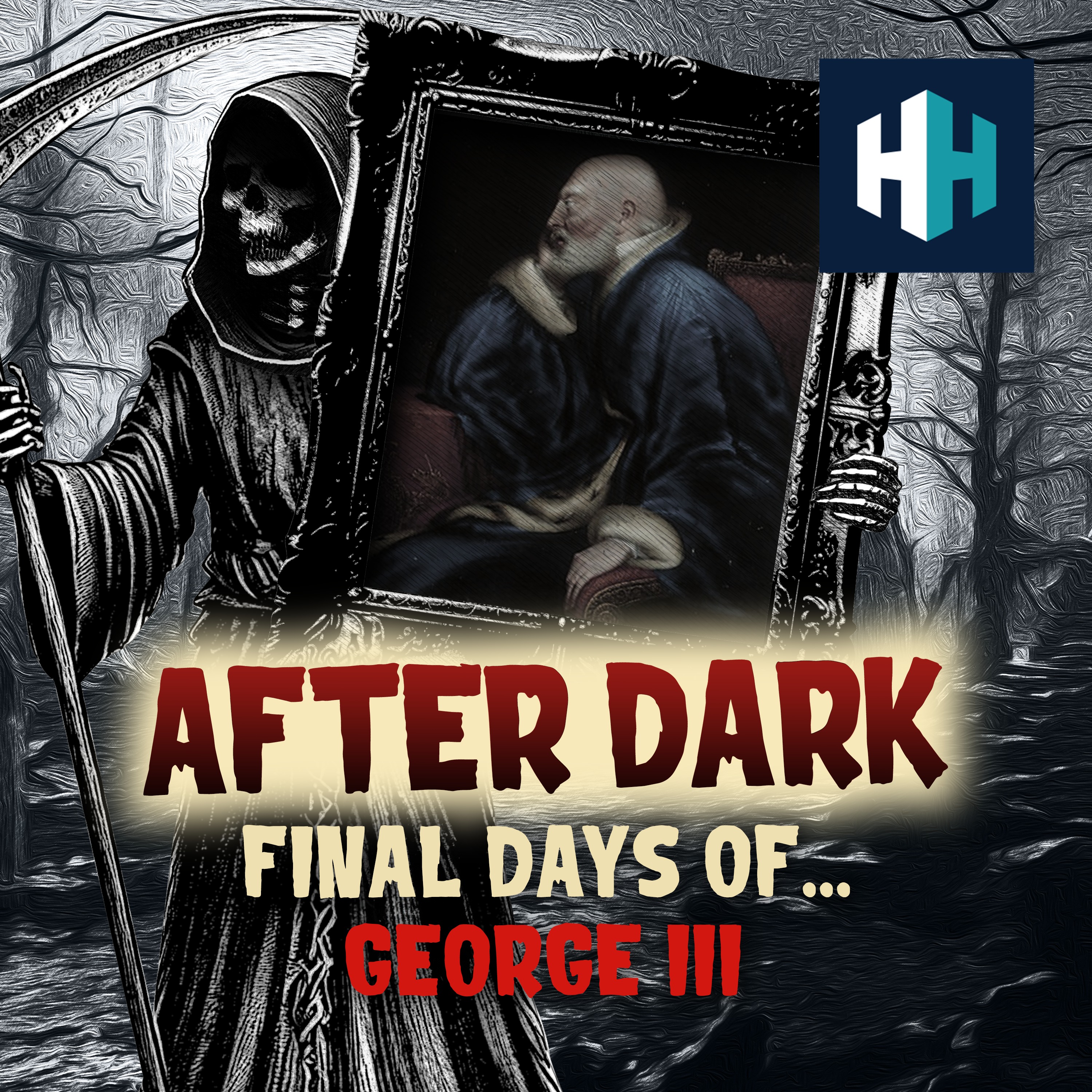
Loading summary
Transcript207 lines
- [00:00]
Anthony Delaney
Hi, we're your hosts Anthony Delaney and Maddy Pelling. And if you would like After Dark Myths, Misdeeds and the Paranormal ad free and get early access, Sign up to.
- [00:10]
Maddy Pelling
History Hit With a History Hit subscription, you can also watch hundreds of hours of original documentaries with top history presenters and enjoy a new release every week.
- [00:21]
Anthony Delaney
Sign up now by visiting historyhit.com subscribe.
- [00:27]
Ryan Reynolds
This podcast is brought to you by Sony Pictures Classics presenting on Swift Horses Starring Daisy Edgar Jones, Jacob Elordi, Will Poulter, Diego Calva and Sasha Calle. Muriel and her husband Lee are beginning a bright new life in California when he returns from the Korean War, but their newfound stability is upended by the arrival of Lee's charismatic brother, Julius, a wayward gambler with a secret past. A dangerous love triangle quickly forms when Julius takes off in search of the young card cheat he's fallen for. Muriel's longing for something more propels her into a secret life of her own, gambling on racehorses and exploring a love she never dreamed possible on Swift horses. Opens April 25, only in theaters. Get tickets now at onswifthorses.com Ryan Reynolds.
- [01:13]
Mint Mobile Representative
Here from IT Mobile I don't know if you knew this, but anyone can get the same Premium Wireless for $15 a month plan that I've been enjoying. It's not just for celebrities, so do like I did and have one of your assistant's assistants switch you to Mint Mobile today. I'm told it's super easy to do@mintmobile.com.
- [01:30]
Switch upfront payment of $45 for 3 month plan equivalent to $15 per month required intro rate first 3 months only, then full price plan options available, taxes and fees extra. See full terms@mintmobile.com Live from the Internet's.
- [01:44]
Vrbo Representative
Red carpet, it's Vrbo's 2025 vacation rentals of the Year, our annual showcase of the very best of Vrbo. Selected from over 2 million private vacation rentals, this year's list features breakout hits like a ski in, ski out, mountain chalet and a modern beach compound. With unobstructed ocean views and with discounts on select stays of one week or longer, these critically acclaimed homes might be more affordable than you'd think. Head over to vrbo.com that's vrbo to check out the official list and make it a vrbo.
- [02:14]
Maddy Pelling
Hello and welcome to After Dark. I'm Maddie.
- [02:17]
Anthony Delaney
And I'm Anthony.
- [02:18]
Maddy Pelling
And in this episode we are going to be looking at the final days of a king known as the Mad King and the monarch who lost America it is George III here to set the scene. Anthony, take it away.
- [02:36]
Anthony Delaney
George III is in his apartments at Windsor Castle, overlooking the North Terrace, where he and his family once spent happier times. The king is 81 years old. He's been wheeled to his harpsichord for the last time, where he now sits and plays, if we can call it playing. It is more a determined mangling of notes, in truth, for he is now blind and almost completely deaf. This isn't the George III you might know, the punching, biting, screaming, bleeding king frothing at the mouth as he raves through the night. Nor is it George, the despotic last king of America, a vestige of the old world even as the new one takes ever greater strides towards modernity and the promise of a fairer, more democratic form. Of that shirks foibles like crowns and scepters and ermine robes. No, instead, here is a monarch bent low before death, waiting to be summoned from his gilded surroundings and his many debilitating years of illness. Mercifully, he will not have to wait long. MUSIC PLAYED George now lies in his grand bed, suffocated with pneumonia, his beard a dazzling white. At 8.38pm on Saturday 29 January, in the year 1820, George III, the Mad King who lost America, passes peacefully away. He has been king for 49 years and 96 days. And so we ask, how did a once vigorous king and ruler of an empire descend into darkness, lost to madness and time? In this episode, we uncover the final tragic chapter in the life of George III and the forces that helped shape his. This is After Dark and this is the final days of King George ii.
- [04:55]
Maddy Pelling
Hello and welcome back to After Dark.
- [04:57]
Anthony Delaney
I'm Maddie and I am still Anthony.
- [04:59]
Maddy Pelling
And we are here with another Final Days of Episode. Now, if you haven't listened to them, we have so many to go back to. Through our catalogue, we've done Joan of Arc, we've done Marianne Antoinette, we've done Lady Jane Grey, she was a personal favourite. Thomas Cromwell, Anne Boleyn. Also, if you're interested in regency or long 18th century history, we've done an episode. Do you remember this one, Anthony?
- [05:20]
Anthony Delaney
No.
- [05:21]
Maddy Pelling
Go on, tell me who. Royal murder, 1810, death in St. James Palace.
- [05:27]
Anthony Delaney
I remember that one.
- [05:28]
Maddy Pelling
I loved that one. That was my episode. I was really excited to do that one that is all about George's son, Prince Ernest, and his valet, or valet. There was a lot of debate, I got a lot of messages about how I pronounce that. And you know what? Get over it, get over it.
- [05:42]
Anthony Delaney
Guys, so she's attacking the listeners. The wheels are off.
- [05:47]
Maddy Pelling
Valet, Valet. Right in. No, please don't. Today we are going to be talking about the final days of George III. Anthony, we're back in the 18th century.
- [05:56]
Anthony Delaney
The Georgians.
- [05:57]
Maddy Pelling
It's okay, guys, we're in our comfort zone. George is or was. He's dead. Spoiler alert. The longest reigning king, not Queen of Britain, he ruled from 1760 to 1820, which is. That is my favourite period of history.
- [06:15]
Anthony Delaney
This is very you, isn't it?
- [06:16]
Maddy Pelling
Yeah. There's so much change. There's the beginnings of Industrial Revolution, there's the French Revolution, the American Revolution, there's the Napoleonic wars, there's Austin, there's. The world that George leaves in 1820 is almost the beginning of the Victorian period. It's becoming a recognizably modern world. He sits across this immense period of history. He is known for two things, though, typically. One is his mental illness. He's dubbed the Mad King and also the King that lost America.
- [06:52]
Anthony Delaney
Yeah. It's a strange legacy that he has because his overall legacy, I think, almost lives in two different worlds. There's the domestic, familial, kind of bucolic legacy that he has and we'll talk about that. The Farmer George legacy.
- [07:07]
Maddy Pelling
Yes. For people who don't know, he was dubbed Farmer George in the press because of his interest in things like agriculture, but also he was fascinated by the stars as well, and astronomy, and he was a really intellectually curious person. But all that is very much limited to. I mean, he was, of course, like a patron of all these things and had huge impact in terms of sort of scientific and artistic knowledge being produced in this period. But we think of that as like a private practice of his.
- [07:34]
Anthony Delaney
Yeah, well. And yeah, and some people argue, I do not, that this is the beginning of the Royal Family as a concept, because they have that privacy that you're talking about.
- [07:44]
Maddy Pelling
See, that's interesting because I would say that comes much earlier.
- [07:46]
Anthony Delaney
Oh, it does come much earlier. But that's just you and me and we're.
- [07:49]
Maddy Pelling
Right, who's saying this?
- [07:51]
Anthony Delaney
Oh, anyway, look, we won't get into that, but it is. It's one of the things amidst all of this tumult and the revolutions that you're talking about the American Revolution and George having this reputation as having lost America and so vilified in America. Let's try and get to know the man himself a little bit clearer. So we have the dawn of the Hanoverian reign from 1714. Now, this isn't George III, it's his great grandfather, George I.
- [08:16]
Maddy Pelling
There's a lot of Georges. Three.
- [08:18]
Anthony Delaney
Well, four.
- [08:19]
Maddy Pelling
Well, four. But three within the time period we're talking about.
- [08:23]
Anthony Delaney
Well, actually, there's more than four, because. Go on. But yes, in the Georgian period, we have the four. George III, our George, he is born in 1738. He is the oldest son of Frederick, Prince of Wales, who does not become king, and Princess Augusta of Saxe Gotha. He comes to the throne, as you said, Maddie, in 1760, when he inherits from his grandfather. And it's important, I think, to know, when we're talking about George, that the nature of kingship has already changed at this point. We have gone from this concept of absolute monarchy, which means essentially the monarch is appointed by God, this person is sitting on the throne by divine right. There is nobody who can question that authority. But in the wake of the English Civil wars, the Republic and then the Restoration and then the glorious revolution in 1688, that concept of this divine right of kings has disappeared.
- [09:14]
Maddy Pelling
Absolutely. And by the time the Hanoverians come in with George I in 1714, they are deeply unpopular with a lot of the population of Britain. There are riots at that coronation. And George III's coronation in 1761 happens, months after he's become king, is a disaster. A jewel falls out of the crown. At one point, his queen consort, Queen Charlotte of Bridgerton fame, ladies and gentlemen, tries to go to the toilet that's been specially set up for her and for her use only, only to find the Prime Minister is in there not very well, and is just taking up that space that is aligned for her. So there's a lot that he has to prove. And already when he comes to the throne, things are going wrong. Symbolically, they're going wrong. He is open to criticism immediately, and he has a difficult reign, a tumultuous reign.
- [10:06]
Anthony Delaney
He does. And you kind of hinted at it there by his side is Charlotte, Charlotte Mecklenburg Strelitz, who he married when she was 17 and he was 22. So they are an arranged marriage, obviously, because all of these royal marriages at this level are. But there was love there. They cultivated love. Don't think, though, that just because of depictions in Bridgerton, it was an absolute love match. The King was expected to take mistresses, there were other lovers. So it wasn't necessarily what we would understand as a devoted love match, but in terms of royal marriages in the 18th century, it certainly was.
- [10:40]
Maddy Pelling
Their relationship is fascinating and we don't really have time to dwell on it here, but Charlotte, we'll Do another episode. Yeah, we'll do an episode on Charlotte because she's so fascinating and she, like George, was intellectually curious, artistically curious, and was a patron of so many different circles of intellectual exploration. She's really, really important in the 18th century in her own right. And in terms of what happens to George and actually how he's treated, you know, we're going to talk about his descent into madness. She holds on for as long as she can, trying to care for him, trying to be in his company and his presence, to treat him empathetically. She's a remarkable. Let's do an episode on her. But for now, let's stay with George. They have a lot of children.
- [11:22]
Anthony Delaney
Yeah, 15, I think. It's in my notes somewhere. Yes.
- [11:26]
Maddy Pelling
Arguably too many, some would say.
- [11:28]
Anthony Delaney
I would definitely say one is too many. 15 children, 13 of whom survive. Now, obviously, that's them being very successful. Well, that's George being a very successful mom and Charlotte being a very successful consort. They are securing the line. However, as with all of the Hanoverians, they fall out with their heir. There's always this tension with the heir.
- [11:50]
Maddy Pelling
There's so much intergenerational fighting and period.
- [11:53]
Anthony Delaney
Yeah, it's an interesting tension filled relationship and we will talk about that as we go through this episode a little bit. But this is always one of the things that's always appealed to me about George, even as an Irishman who not many of the monarchs do appeal. But George has this. The idea of Farmer George and they used to take the piss out of him slightly by calling him Farmer George.
- [12:13]
Maddy Pelling
It was everywhere in satire, it was a joke. He was a laughingstock because he. I agree, I can't help but like him to a certain extent. And I think, you know, we have a very sort of Hamilton esque vision of him in our popular culture. And that's not to say that he didn't occupy that space and he wasn't those things, but he is a very nuanced and interesting figure, actually, and I think a more empathetic one. The fact that he used to dress in normal gentleman's clothing a lot of the time, I think. I don't know about you, but for me, he's someone who. The crown sits uncomfortably on his head. And he doesn't always want to be in that spotlight. He wants to just get on with the things he's interested in. Whether that's doing a bit of farming, spot of farming, whether it's looking at the stars, whatever it is. He actually, in certain moments in his Life, in particular, resents having to step up and be king, I think, and.
- [13:00]
Anthony Delaney
I think it's really reflective of. We were talking earlier about the lack of absolute monarchy at this time. And so. So in many ways, the monarch is trying to find what his or her role is going, well, what do I do if I'm not controlling government in the same way that Charles I tried to, or Charles ii? Even Charles II after the Restoration still was technically an absolute monarch. So, you know, maybe he's finding his. And he's also particularly British in terms of the Hanoverians. That's when we kind of first really get a British Hanoverian, because the others are so still tied to the German principalities from which they came. Hanover.
- [13:38]
Maddy Pelling
Yeah. Well, George I, when he arrives as king in 1714, doesn't speak a word of English. Of course, by the time we get to George iii, they are more integrated in terms of British culture. And don't forget, Britain has only existed from the very earliest years of the 18th century. We talk about him in terms of his sort of personal, small, domestic life and who he was as a person, but he was, of course, also a figurehead for a vast empire. He's an incredibly powerful figure and a symbol of that empire and all of the violence and oppression that went with. He is the monarch who loses America as well. This is the other element of him, along with the madness that he's remembered for.
- [14:18]
Anthony Delaney
Yeah, so we're talking about the American Revolutionary War, which, you know, we always say 1776, but of course it's happening before that in 1775, and then the implications of the Declaration of independence in 76 last into 1783. So we're looking at a relatively long period of time. Some people just think it's this one year when we think about 76, but nonetheless, that's when the Declaration of Independence is declared. And more than half of the grievances that are listed in the Declaration of Independence, they're against George III himself. So it really is put at his doorstep and he becomes the figurehead for what they're trying to leave.
- [14:56]
Maddy Pelling
And he becomes a tyrant. Right. As well, you know, and he feels this loss really, really keenly. In the Royal Archives, there is a piece of paper that I have seen. I went there and I was doing some research on Queen Charlotte many years ago, where he wrote in his journal, America is Lost, the exclamation point at the end. And you see that in his handwriting, this moment of complete catastrophe across the pond. He's seen as a tyrant at home. This is a massive disaster for him, and it's one of the many blows against him that I suppose, contribute to the deterioration of his mental state. You know, he has a series of illnesses that come and go throughout his life but get progressively worse.
- [15:35]
Anthony Delaney
Yeah. It's interesting, isn't it? Because what we have is this man who is troubled by his loss of America. This is a huge failure in terms of a head of state. This is a huge failure. And it's a huge public failure and a huge, visible failure.
- [15:49]
Maddy Pelling
Yeah. And, you know, you talk about him not really knowing what his function is as a king. It is to lead this empire. He has to hold all of that together. And throughout this period, you know, we've got the Captain Cook voyages, we've got all this exploration, this expansion of empire, we've got slavery going on, you know, across the transatlantic world. Everything is growing, there's huge wealth. People are investing in this. And he drops the ball.
- [16:12]
Anthony Delaney
Yeah. And it's also. I think it's really worth noting at this point as well, that you were talking about, oh, there's this kind of, like, Farmer George thing, and it's all very cute and cozy. He is also the head of state that oversees the biggest expansion of the slave trade in America. You know, so he, Although he's not directly responsible, he is the head of that, and he has invested in that slave trade. So, you know, he is gaining beneficiaries.
- [16:36]
Maddy Pelling
Yeah, yeah.
- [16:36]
Anthony Delaney
Significantly. So I think it's important to keep that in mind. So in terms of him being portrayed as a kind of a nefarious agent in the American mindset at this time. Great. He is. But they're also not declaring that slavery is outlawed either. So there's nuance. There's nuance to it. But he saw these revolutionaries in America, George iii, and you're talking about that exclamation mark. He saw them as kind of bad children, which feeds into this idea of what the monarch is now, the kind of the father of empire, the father of nations. And these are his children who are like his real child, who goes on to be George iv, rebelling against him and acting out in their teenage years almost.
- [17:15]
Holly Fry
Yes.
- [17:15]
Maddy Pelling
Which, as we've said, is a sort of a key anxiety in the Georgian dynasty, these fathers and sons who cannot get on.
- [17:23]
Anthony Delaney
Yeah. And it's a loss. It's a huge loss as it is, that his relationship with his son is lost, but also that America is ultimately lost, too. And then you've hinted at it there, Matty, where there is always this theory Isn't there then that we move into maybe the George we know a little bit better when he descends into madness, or what's now referred to as madness, the madness of King George. And a lot of people try to kind of put that at the loss of America, going, oh, well, this is why he was so strained from the loss of America, that he lost his mind. Thoughts on that? What do you think in terms of how well that stands up? Do you think there's anything in it?
- [18:04]
Maddy Pelling
I think there is. I think that there are lots of other things going on with him as well. I don't think there's necessarily one contributing factor. There are other factors that I hope to explore in a book in the future, which I will not be sharing here currently, Anthony. But I think it's a culmination of lots of things, familial things, going on in his domestic life and his intellectual life, his frustration that he can't just be left alone to do the things that he wants to do, mixed with this immense pressure that's on him. And then this catastrophe of America that happens. And, you know, it's not just America we have at the end of the 1780s, we've got the French Revolution and all the terror that that brings across the Channel. It ain't that far away. People are executing the monarchs, the aristocracy, there are guillotines, there's blood in the streets. And there is a feeling in the 1790s that revolution could easily spread to Britain and that George himself and his family might be in danger. So there's.
- [18:59]
Anthony Delaney
I think it's a real danger too. Right. Let's be honest. Like, they are in some ways surrounded by rebellion in Ireland, revolution in America and France, they're surrounded by it.
- [19:09]
Maddy Pelling
There are lots and lots of conspiracies and pl in Britain to take down the monarchy. You know, this isn't just a debate that's happening on paper or some kind of intellectually abstract thing. This is something people are fighting to bring about in Britain as well.
- [19:23]
Anthony Delaney
But I think you're right. Despite those pressures, I think it would be naive to suggest that it's just those events and those pressures that are causing whatever form of madness or mental illness that we experience with George. And let's have a look at some of those episodes because they come in different episodes. The first major episode is 1788-1788. Then we have 1801, 1804, and these separate events last for a few months. So he comes and goes in lucidity and it's causing Kind of back channel discussions between politicians, other members of the royal family. Charlotte's playing her role and trying to keep this as under Rafael.
- [20:03]
Maddy Pelling
There's real fear. Yeah. And they try and keep this private. And yet within the royal household, the danger that George poses to himself and to other people is rapidly growing. You know, there's a really famous extract in the diary of Frances Burney, who is an amazing writer of the 18th century, but she was also a lady in waiting at the court. And she describes being chased around the garden, I think, at Kew palace by George. And she is terrified of what he's going to do to her. And that was not an uncommon experience for the women at court. And Charlotte eventually, as we're probably gonna go on to discuss eventually, can't see her husband anymore. She just can't bear it. So, you know, this isn't just a deterioration of his mind where he's becoming less and less powerful and more insular. This is. There are violent outbursts, there are moments of real fear from the people around him. And for George himself, this is scary stuff.
- [21:05]
Anthony Delaney
Absolutely. I think some of his fear was causing those physical outbursts. And it's not until 18 that we find a real disintegration of his mental capacity. We'll come to that. But let's start with what he was experiencing in 1788 and 1788.
- [21:20]
Maddy Pelling
Tell me some of the symptoms.
- [21:21]
Anthony Delaney
So famously, he would babble, talk incredibly fast about any subject and many subjects all at once. And he would just go and go and go until such times as it was seen that he was frothing from the mouth. And this is where this idea of real madness and discernible physical madness is.
- [21:38]
Maddy Pelling
That's so sad for a man who is, as we've said, so intellectually curious. He devours books on different subjects. He is someone who wants to be hands on and experiment with things. And you can just imagine that his mind is even in his healthy moments, full of information, full of enthusiasm, and it's all becoming jumbled. I mean, it's tragic.
- [21:58]
Anthony Delaney
Oh, it's really tragic. And he has. What's even more tragic is that he has this inability to discern reality from what is happening in his head, that overflow of information. So he starts talking to people who are not there, which, you know, is frightening for people at court because this is the head of state. And especially at a time when revolution is bubbling everywhere, we need somebody steady who's guiding the ship. And he's not in a position to do that. You mentioned he Gets violent. He does. He hits out at pages. There was one point at which he pinned the Prince to the wall. You know, you could talk about whether that was an elusive moment or not, because the relationship was pretty strained. But he is violent. You're talking about fear that Francis Bernie experienced while other people, the pages, his sons, his family are experiencing that too. And the press starts to get hold of this, despite Charlotte's, his Queen's best efforts. And so this starts to leak out into literate society and they know that the King is not well. And there's all this talk about him having shaken hands with an oak tree because he thought he was communing with it, and he thought it was the King of Prussia, I believe it was. So it's starting to worry people, but also people are laughing at him because they don't quite grasp what it is. He's lost his mind, as far as they're aware. So it's quite a harsh treatment he receives in the press. I think once the 88, 89 episode becomes public knowledge over the years, we'll.
- [23:26]
Maddy Pelling
Go on to talk about the other attacks in a moment and these other bouts of illness that he has. But over the years, there's been attempts to diagnose what was wrong with him. And every few years something will come out. This is the definitive answer of what was wrong. And then someone else will say, no, no, no, you can't possibly know. And we are always reticent when it comes to making these diagnoses in the past, but do we have a sense, is there today an understanding of what was possibly wrong with him, what was happening to him?
- [23:58]
Anthony Delaney
Yeah, I think the main point that most people agree on now is porphyria, which was a blood disease that was inherent within the roya, and that is traceable before this and afterwards as well. So we think that it's a side effect of that, but it's not straightforward. It's not just that, because the other people who had that illness didn't experience the same symptoms as he did. So he has a very acute sense of this particular illness, if indeed that's what it was. We also, as we shall see in later life, talk about potentially him having dementia. I think that's. That's quite likely, or some form of dementia. And then more recently, people have toyed with the idea that he potentially had some kind of bipolar disorder. I think what's clear is that, A, we don't know and.
- [24:49]
Maddy Pelling
And never will.
- [24:50]
Anthony Delaney
And never will. Not truly, and B, it's difficult to say whether this was something that was something more genetic or something that was affecting him in another way medically, but certainly it had a profound impact. And as a result, because the symptoms were so on show and so displayed, the treatment, especially to our eyes, seems very extreme.
- [25:12]
Maddy Pelling
Well, let's talk about the treatment then, because we don't know what this illness was from our modern perspective, but they certainly didn't know in the 18th century. They gave it a good go, though. And the famously medilist, as I'm sure will already know, that the treatment that George receives is extreme.
- [25:31]
Anthony Delaney
Yeah, to begin with, especially because it's interesting because the field of psychiatry, I suppose, as we know it now, is starting to emerge at this point, but it was nowhere near advanced, obviously, as we have it now. And so what you see as it goes on, as his illnesses progress, the treatment starts to become more humane, but not necessarily humane to our standards. So in the beginning, in the 1788-89 spell, what we see is he's being blistered. It's using a caustic powder put in his and his feet, leeches at his temples, he's being cupped. So, you know those hot cups that they put on your back or anywhere on your body really, to draw blood to the surface of the skin and then incisions are made to let that blood. So you know, that's taking its toll on the body in physical ways.
- [26:19]
Maddy Pelling
On the physical body, when you are already in a state of mental distress, to put it mildly.
- [26:24]
Anthony Delaney
Yeah. And then Charlotte intervenes because she goes, look, look, I can see what this is doing to him. She knows him better than anybody. This is too much.
- [26:31]
Maddy Pelling
Yeah. I mean, you get such an insight, don't you, into their relationship in this moment, that she does intervene and she's like, this is not working and it's cruel. And she tries to change the treatment plan and the doctors. Right?
- [26:42]
Anthony Delaney
She does, yeah. She gets a guy called Frances Willis who comes in and takes over. And Frances is an expert in running asylums, so she is very much on the idea that this is a mental illness of some. She wouldn't have used the term mental illness, but that's where she sees this as coming from. So she thinks it needs to be treated in that way. And Willis is far more concerned with calming his patients rather than working them up through cupping and cutting and leaching and all this kind of thing. He wants to calm them down, give them activities to engage the brains, almost distract them from some of the manic symptoms that they're experiencing.
- [27:15]
Maddy Pelling
He does tie Them in a straight jacket, though, and gags as well, doesn't he?
- [27:18]
Anthony Delaney
Yeah, yeah, yeah. So he still is.
- [27:19]
Maddy Pelling
From our perspective, it's hard to see this as human treatment.
- [27:23]
Anthony Delaney
Bear in mind, at the time, this was a huge advancement in humane treatment for disorders like this, or what was perceived to be disorders like this. So he is getting the most up to date treatment and. And obviously we can't hold modern treatment standards to somebody in the 16, 17, 80s, 1790s, but we. It's clear how much unknown is involved in this illness even then, as much as now.
- [27:50]
Maddy Pelling
So we've got George suffering with this first major attack. There are some discussions that I think there was a slightly earlier attack, I think in the 1760s, but this is generally billed as the first big moment of illness for him. And certainly when this is the moment when people start to become aware of it beyond the Royal family themselves. In this moment in 1789, towards the end of this bout, obviously we have the beginnings of the French Revolution. The Royal Family are executed at the beginning of the 1790s, but they're imprisoned for those years in between. It's a moment of incredible tension. And in Britain, as we've said, there's this anxiety that the King isn't up to snuff, that he is not in a position to lead this ship. And then we've got the problem of young Prince George.
- [28:32]
Anthony Delaney
Ugh. If I can bear George iii, I can't bear George iii. Do you like him?
- [28:37]
Maddy Pelling
No. So you know when people are like, who would you have to your historical dinner party? If he turned up, I would be kicking him out. He is horrendous.
- [28:45]
Anthony Delaney
I couldn't be bothered with him. Why have I taken the side of George iii? This is very odd to find myself in that situation.
- [28:51]
Maddy Pelling
George iv, I mean, I will say aesthetically, no.
- [28:54]
Anthony Delaney
See, I don't even like that. It's too late for me.
- [28:56]
Maddy Pelling
It's aesthetic, it's fun.
- [28:57]
Anthony Delaney
No, I'm just like, can I. Brighton Pavilion. I don't like Brighton Pavilion, so sorry, Brighton Pavilion.
- [29:02]
Maddy Pelling
But I love the wildness. Like, it's good fun. But he's. I mean, just give us an insight into him, please, Anthony, because. Oh, he's just.
- [29:10]
Anthony Delaney
Well, he wants power and factions of the government want him to have power so that they can more readily control what' in court. And he makes a play for Regency. Now, Regency basically means that the King is somehow incapacitated. Often you'd see a Regency when the King is a child, for instance, somebody would be appointed. So this is the same thing. The King is incapacitated. His son, who is the heir, so it makes logical sense.
- [29:38]
Maddy Pelling
Who is utterly untrustworthy is, like, literally spending. He's hemorrhaging money constantly. He's partying. He takes no responsibility for anything, ever. He is a nightmare. Not the kind of person you would want as the Regent.
- [29:54]
Anthony Delaney
And Charlotte certainly didn't want this either. You know, like, and his sisters didn't want this. This wasn't something that many people apart from the Opposition did want.
- [30:02]
Maddy Pelling
I think Charlotte should have been Regent.
- [30:03]
Anthony Delaney
Well, there was discussion, it was discussed, so it was certainly a possibility. He doesn't get it at this point, not at the 89 illness, thankfully, because George recovers, he starts to very much come back to himself. It's very clear to everybody at court that he's back to himself.
- [30:21]
Maddy Pelling
And there must have been such relief in this moment. Right. Because, of course, people at that stage don't know there's going to be these other bouts. They're thinking, that was a blip.
- [30:27]
Anthony Delaney
What was that?
- [30:28]
Maddy Pelling
Phew.
- [30:28]
Anthony Delaney
Yeah, yeah.
- [30:29]
Maddy Pelling
Now let's get back to holding the monarchy on a pedestal. Just don't look at what's happening in France. Everything's fine.
- [30:34]
Anthony Delaney
Just in time. So the Regency Bill doesn't go through in the end. Like, it got to bill point. It did pass in the House of Commons, but. But it didn't pass in the House of Lords, so we're safe enough on that sense. And then, because everybody had known that George III was unwell, when they hear he's recovered, there's actually huge celebrations. But I mean, anything.
- [30:54]
Maddy Pelling
Yeah. I think there's a massive thing at West. Is it Westminster Abbey. I think they have like a huge. Almost like a coronation style again.
- [31:01]
Anthony Delaney
Yeah, yeah, yeah.
- [31:02]
Maddy Pelling
And, you know, very much, I don't think we can necessarily use that to read the public mood. And certainly, as we've said, there was a lot of rumblings of unrest and a lot of calls for revolution in Britain, but in terms of the PR version that the palace is putting out, it's like everything's back to normal. Isn't George wonderful? What a great monarch he is. Don't worry that he lost America.
- [31:22]
Anthony Delaney
Yeah.
- [31:22]
Maddy Pelling
Don't think that.
- [31:23]
Anthony Delaney
Your dad's back, guys. Everything's gonna be fine. Steady the ship. Yeah. And there are street parties as well. So this is, you know, we are supposed to think, phew, we dodged a bullet there, and everything's absolutely fine.
- [31:33]
Maddy Pelling
Not the case.
- [31:34]
Anthony Delaney
But it's not the case. We got a few years. As I said, there was another bout in 1801 and 1804, but it's not until we get to 1810 that it's a re we don't recover after it. And by we, I mean not me.
- [31:48]
Maddy Pelling
Not the royal we.
- [31:50]
Anthony Delaney
We being George doesn't recover.
- [32:01]
Ryan Reynolds
This podcast is brought to you by Sony Pictures Classics presenting on Swift Horses starring Daisy Edgar Jones, Jacob Elordi, Will Poulter, Diego Calva and Sasha Calle. Muriel and her husband Lee are beginning a bright new life in California when he returns from the Korean War, but their newfound stability is upended by the arrival of Lee's charismatic brother, Julius, a wayward gambler with a secret past. A dangerous love triangle quickly forms when Julius takes off in search of the young card sheet he's fallen for. Muriel's longing for something more propels her into a secret life of her own, gambling on racehorses and exploring a love she never dreamed possible on Swift horses. Opens April 25th. Only in theaters. Get tickets now at onswifthorses.com Ryan Reynolds.
- [32:47]
Mint Mobile Representative
Here from Mint Mobile I don't know if you knew this, but anyone can get the same Premium Wireless for $15 a month plan that I've been enjoying. It's not just for celebrities, so do like I did and have one of your assistant's assistants switch you to Mint Mobile today. I'm told it's super easy to do@mintmobile.com.
- [33:04]
Switch upfront payment of $45 for 3 month plan equivalent to $15 per intro rate. First 3 months only, then full price plan options available, taxes and fees, extra fee, full terms@mintmobile.com Live from the Internet's.
- [33:17]
Vrbo Representative
Red carpet, it's Vrbo's 2025 Vacation Rentals of the Year. Selected from over 2 million private vacation rentals, this year's list features the best of vrbo and with weekly discounts on select stays, they might be more affordable than you think. See the list@vrbo.com and make it a.
- [33:31]
Holly Fry
VRBO Our Skin Tells a Story Join me, Holly Fry, and a slate of incredible guests as we are all inspired by their journeys with psoriasis. Along with these uplifting and candid personal histories, we take a step back into the bizarre and occasionally poisonous history of our skin and how we take care of it. Whether you're looking for inspiration on your own skincare journey or are curious about the sometimes strange history of how we treat our skin, you'll find genuine, empathetic, transformative conversations here on our skin. Listen to our skin on the iHeartRadio app, Apple Podcasts or wherever you get your podcast guests.
- [34:17]
Maddy Pelling
Right.
- [34:18]
Anthony Delaney
Well, this is the final days. So let's get to the final days or the give people what they want, the decade in the runoff to the final days. So this is. We've had the bouts in 1788 and 9. 1801. Yeah, 1804.
- [34:34]
Maddy Pelling
Those are three bouts from which he.
- [34:36]
Anthony Delaney
Recovers illness from which he recovers. But then this is kind of the beginning of the end. 18.
- [34:40]
Maddy Pelling
Did you like my maths?
- [34:42]
Anthony Delaney
Excellent. Counting on her fingers as well.
- [34:45]
Maddy Pelling
So this is the fourth bout, the fourth and final decade long bout. This is not the final days. This is the final years decade.
- [34:54]
Anthony Delaney
And so by 1810, then, George has suffered so much that he is almost blind. He's been on the throne for 50 years, is a long time, given the.
- [35:05]
Maddy Pelling
Climate around the world at this point and his illnesses. Yeah.
- [35:10]
Anthony Delaney
You know, and so there's again, we talk about celebrations when he's. Well, there's huge celebrations for his Golden Jubilee. But one thing we do notice, and this, you know, you might be forgiven for thinking this is slightly different because of the popularity of things like Bridgeton and Queen Charlotte by the time we get to 1810, because he's had recurrent bouts of illness in 1801 and 1804, those bouts have taken their toll on the marriage. And there is essentially a separation between George and Charlotte at this point for.
- [35:42]
Maddy Pelling
Her own safety in a lot of ways.
- [35:44]
Anthony Delaney
Yeah, yeah, she just. She just. I don't know. Listen, we could guess as to why she feels the need to. But he blames her. He blames her. George blames Charlotte for overseeing his. What he interprets in his kind of more difficult periods as his imprisonment. He feels like he's the king and why on earth is he being restrained?
- [36:06]
Maddy Pelling
And also, you know, you said earlier about potentially that there's an element of dementia here as well as the other mental illnesses. And for anyone who's, you know, experienced a relative with that, there's a lot of anger and a lot of blaming that goes on, often by patients who have dementia and a kind of, you know, a confusion and feeling threatened. And I see that in George. I mean, I'm not a medical doctor, I'm not diagnosing this in the past, but I really read that from an experience in my own family. Like, I can completely see that. Also, George and Charlotte's children start to die off in this period. There's a lot of deaths, and I think it's the youngest. I think it's Amelia, who George is particularly close to and really adores and she dies. And, and I think her death sort of been written into this story of his final descent into true madness and sort of irreparable damage that that is often listed as one of the major triggers that he just, he is so worn down by these losses throughout his life, whether it's family members or America or you know, this feeling of security, the relationship that he has with his son that George IV trashes, really, you know, has very little respect for his dad. And then you've got the separation with Charlotte that it's this culmination of personal and political disasters. Really?
- [37:36]
Anthony Delaney
I think so. No. And I do agree with you. I suppose my only caveat would be we, not you and I, human beings, historians are terrible for wanting to know the reasons for these things. And sometimes it's just there.
- [37:51]
Maddy Pelling
Well, you can't know what was happening inside someone else's head.
- [37:54]
Anthony Delaney
Yeah. And especially if it's like if it is a genetic thing and we always want to know what triggers it and why, why, why, why has this happened. But you know, Charlotte was experiencing these things too and she didn't have the same reaction. So it does feel like something that's more that he's more biologically or genetically inclined towards. And possibly this would have all have happened. I mean, you know, infant mortality rates are not what we would understand them as today for a lot of people. And that doesn't happen to most people. They don't experience the death of their children in the same way. One thing I will say is in his more lucid moments just before the 1810 bout, he knows it's coming on. He can feel that it's coming on. Which also to me suggests there being a medical thing where, you know, sometimes when you're just like, oh, I can feel I'm not right. I'm not sure what's wrong, but I can feel I'm not right.
- [38:46]
Maddy Pelling
And he's still self aware enough that he can self diagnose that.
- [38:49]
Anthony Delaney
Yes, because he says to his doctors, I'm quoting here, I feel I am going to be ill in the former way. And I request of you too that you will not be induced on any account to represent me as recovered till you are satisfied that I am perfectly so. By permitting me to go abroad on the last occasion, the physicians were the cause of my doing a great many absurd and foolish things. Now, the last occasion he's referring to there is his bout in 1804. So he's saying keep me away, like keep me safe.
- [39:20]
Maddy Pelling
Basically it's so tragic. And what I think that quote shows us is just how dependent George the monarch was on the people around him. And we're not necessarily talking about Parliament or the House of Lords, the House of Commons.
- [39:36]
Anthony Delaney
We're not even Charlotte now, not Charlotte. We're talking about.
- [39:38]
Maddy Pelling
We're talking about these medical men, and they are men who are surrounding him, who have been brought in, and he is. Is trusting them. They have power over the King of Britain, over this huge empire. He is this figurehead. And then there's this little circle of medical practitioners who are pulling the strings behind the scenes, and that he is. You know, he's saying, you have to treat me and you have to get me better, and I'm trusting you not to let me embarrass myself and only to be. Be put back into the world, onto the throne when you are satisfied that I'm not gonna do that.
- [40:19]
Anthony Delaney
It feels very much like that's the person saying that rather than that's the King saying that. Do you know what I mean? And, you know, talking about them being in charge of this figurehead, and he kind of even loses that status because the regency begins in 1811, and this time the future George IV does take over as regent. So the bill passes. They have no choice but to pass it. And from 1812, it's almost a good thing that that's happened because he stops recognizing any members of his family. He's really lost to the reality in the world.
- [40:50]
Maddy Pelling
He's virtually blind as well at this point, so, you know, he can't literally see anyone who's visiting him. What I find fascinating is just how removed he becomes from the world around him, not just as a human being in terms of his family relationships, but also as the king. Yes, there is a regency. George IV is sort of dealing with stuff in the distance as far as George III is concerned, but things like he doesn't even know when Britain wins the Battle of Waterloo, because, of course, the Napoleonic wars following the French Revolution are the backdrop of all these years. He's completely unaware of that. He doesn't know what's happening. These huge global struggles that are playing out on the continent, in Europe, but across these big empires, and there's all these moving parts. There's ships fighting in the sea, there's land battles going on. There's all this immense struggle for power across the globe where Britain is locked in with France in a world war. And he doesn't realize it.
- [41:47]
Anthony Delaney
No. And I suppose to a certain extent, they purposely keep all of that from him as well, rather than kind of tempt fate and potentially send him into an even worse spiral or whatever it might be. But he's, you know, he's, as you say, very much in the care of people who are not his family. At this point, when we talk about 1810 onwards, he's in the care of Robert William, who's the son of Francis Willis. Now, Francis was the asylum expert who Charlotte had brought into the frame in the 1788, 89 bout.
- [42:17]
Maddy Pelling
But it's not unusual, of course, in the 18th century and the early 19th century for that to be a family business in terms of running an asylum. Yeah. I think what always gets me about this period as well is that George, because he's surrounded by people who are essentially strangers, you know, he doesn't have any kind of emotional relationship with these people. He wouldn't choose to know them. Them. And obviously he can never be friends with them, really, and he's relying on them in all these different ways. And he starts to talk to people who aren't there. And I find this so tragic that he thinks he's having a conversation with Lord north, the Prime Minister. The Prime Minister, by the way, during the American revolution in the 1770s, not the prime Minister during the Regency period. He talks to Princess Amelia, his dead daughter, about her own funeral. I mean, it's just so, so it's piercingly sad. And, you know, he talks to his young son Octavius, who died in 1783 at the age of four. So his mind is bringing up these people who've gone from his life who are important and interestingly, yeah, ghosts from pivotal, damaging moments in his life. Losing America, the death of two of his children, that these are the things that are haunting him in his final years.
- [43:28]
Anthony Delaney
I mean, it's on a positive note. His daughters are generally with him at Windsor. Not always, they come and go, but for most of the time. And it's because of Princess Mary's extensive letter writing that we know some of the ins and outs of what is happening with his illnesses. Not just that, because actually we have some interesting. Let me read you some. His physicians are keeping some notes on the illness during this period of time.
- [43:51]
Maddy Pelling
Which is so remarkable that we have this insight.
- [43:54]
Anthony Delaney
It is. And here's the thing, like, okay, okay, so in November 1817, for instance, it's written that in this month, the King's beard was cut off with a pair of scissors by his own desire. This is the only circumstance deserving of being noticed. So, you know, we talked about the Gnashing and the howling and the biting and the physical violence in the earlier bouts. But what we see here is something far more sedate, I suppose. Fast forward to 1819 and he's saying, during this month, the king has gone on in his usual manner, drinking and sleeping like people in health, his mind constantly occupied with his usual fantasies. So it's not as violent a turn this time, but devastating nonetheless.
- [44:36]
Maddy Pelling
And he, in the art of this period as well, he is depicted. There are portraits of him in this moment, which I sort of find fascinating. You know, that that's a different kind of observation of the king whilst he's under all this kind of medical care, that artists are having some access to him, presumably limited. But there are paintings of him, and I'm looking at one here by the artist Joseph Lee. And this is a portrait of George when he is deaf and blind at this point, towards the very end of his life. And he's depicted as this pallid, fragile old man. He's virtually bald. He has. The beard in this painting that we hear from his physicians is cut off at one point and he. His face is haunted, contorted. He's got these very heavy brows. He's leaning his head on his hand and sort of looking off into the distance. And there's an absence about him. He's not really present. He's an empty shell of the person that he once was.
- [45:35]
Anthony Delaney
It is not a king. No, it doesn't look like a king. It's something far more tragic. It's something far more haunting, actually, the more you look at it. Actually. Actually, I've never seen a king depicted like this.
- [45:51]
Maddy Pelling
Powerless.
- [45:52]
Anthony Delaney
Yeah. In the 18th century just doesn't happen. He looks like a philosopher, maybe, or something like that, but he certainly doesn't look like a king. And actually he has that Hanoverian eyes bulging, which also makes him look even madder. His cheeks are quite tight and gaunt now that I'm looking at it even closer. And he's entirely bald, so. And yet he's surrounded in, you know, opulent furs and he's got this incredible blue cloak type stole thing around him. And the beautiful red material in the background he's sitting on, not quite a.
- [46:27]
Maddy Pelling
Throw on, which makes you think how much of that is the artist's intervention. You know, I doubt that George would sit for this portrait or wear those kind of items at this stage. You know, this is probably done from some preparatory sketches that the artist's been able to snatch during the 10 seconds he was allowed to see the king. If at all.
- [46:44]
Anthony Delaney
And we have to remember as well that at this point, it's a very lonely picture. Kind of, as you're saying, not this opulent, glamour filled thing because Princess Mary's gone because she's gotten married. So that's another person who's lost.
- [46:56]
Maddy Pelling
She's still alive, but one of the final allies.
- [46:59]
Anthony Delaney
Yeah. So by 1816, she's gone. 18, 18, Charlotte is dead. And that always surprised me. You know, Charlotte was well, but she still dies before him. So he's truly being left and he.
- [47:09]
Maddy Pelling
Doesn'T know that she died.
- [47:11]
Anthony Delaney
Yeah, I always wonder about this. That's certainly what we're left with. The physicians are saying he doesn't know.
- [47:15]
Maddy Pelling
Ye really, really gets to me, this story. Because, you know, as we said, there's nuance to their relationship. It's not necessarily the great love story that we've seen depicted on Netflix, but there was a deep connection between the two of them. And they have 15 children at least, you know, 15 surviving children that are born and that she leaves before him, but that he is unaware of it, supposedly. It's just such a sad end.
- [47:43]
Anthony Delaney
Yeah. And it just gets sadder. Frederick, his son, was put in charge of his, but he never comes to visit. So he's like, yeah, he's overseeing, he's signing off the things, but he has no kind of interest.
- [47:55]
Maddy Pelling
Well, do you think it's that he can't bear to.
- [47:57]
Anthony Delaney
No, I don't buy it. I don't. Yeah, obviously it's.
- [48:00]
Maddy Pelling
Yeah, it's like writing Frederick off here. I mean, we've written George off.
- [48:05]
Anthony Delaney
No, I don't buy it. You know what I really don't like, I don't know. He'd be perfectly fine to go and visit his father, like he would. There's enough people there, there's enough pages, there's enough doctors. Nobody's life is gonna be in danger in. With this level of security in place, he's going to be fine. I just think, you know, we're not dealing with. Despite the fact that he's a family man and often portrayed as the first royal family, this particular family. Families in the royal family don't operate in the same way as we understand modern families. State families in the eighteenth century didn't operate as we or the early nineteenth century didn't operate in the same way as we understand them today. So I think in terms of his obligations and his duty, he's actually in terms of what he should be doing for his father at this moment in time. Although I guess you could argue that he just sees. Well, actually, no, I'm signing off on his care. I'm overseeing it from a distance, albeit.
- [48:56]
Maddy Pelling
But I've done my duty.
- [48:57]
Anthony Delaney
I'm doing my duty in that sense. So, yeah, but then, you know, he dies and very unremark. You know, so often in these final days, it's someone's head's getting chopped off. Someone, this is happening. It's all.
- [49:09]
Maddy Pelling
But no, in the end, it's a scramble for power.
- [49:11]
Anthony Delaney
And, yeah, it just slips away, as so many people do. Again, it's a very humanizing death for George iii. And he has pneumonia when he dies. Probably the cause of his actual death is pneumonia or at least lung complications with breathing. And that's it. It's not a big dramatic beheading. The son doesn't, you know, George IV doesn't smother him with a pillow in order to get the throne. Finally, he just slips away. And again, it's something very human in that, despite the pomp and circumstance that surrounds kings, I suppose.
- [49:42]
Maddy Pelling
Mm.
- [49:52]
Ryan Reynolds
This podcast is brought to you by Sony Pictures Classics, presenting on Swift Horses starring Daisy Edgar Jones, Jacob Elordi, Will Poulter, Diego Calva and Sasha Calle. Muriel and her husband Lee are beginning a bright new life in California when he returns from the Korean War. But their newfound stability is upended by the arrival of Lee's charismatic brother, Julius, a wayward gambling gambler with a secret past. A dangerous love triangle quickly forms when Julius takes off in search of the young card cheat he's fallen for. Muriel's longing for something more propels her into a secret life of her own, gambling on racehorses and exploring a love she never dreamed possible. On Swift horses. Opens April 25th. Only in theaters. Get tickets now at onswifthorses.com Ryan Reynolds.
- [50:37]
Mint Mobile Representative
Here from Mint Mobile with a message for everyone. Paying Big Wireless way too much much. Please, for the love of everything good in this world, stop with Mint. You can get premium wireless for just $15 a month. Of course, if you enjoy overpaying. No judgments. But that's weird. Okay, one judgment anyway. Give it a try@mintmobile.com Switch upfront payment.
- [50:59]
Of $45 for 3 month plan equivalent to $15 per month required intro rate first 3 months only, then full price plan options available, taxes and fees extra. See full terms@mintmobile.com.
- [51:15]
Maddy Pelling
Tell me about the funeral because we spoke earlier about the coronation and how it has all these issues and mistakes and it's a little bit humiliating and it's a sort of rocky symbolic Beginning to what is an immensely long, important, eventful reign. What does the funeral look?
- [51:34]
Anthony Delaney
So it's more sombre and more controlled and more dignified than the coronation. Glad to hear that he lies in State on the 15th. Takes place from the 15th of Feb.
- [51:46]
Maddy Pelling
Presumably Frederick does bother to come to that.
- [51:48]
Anthony Delaney
Yeah, well, you know, you have to show up for those things. You have to be seen. To be seen. And then he's buried in St. George's Chapel in Windsor Castle, which was just there the other day, actually. And it's so bizarre because if you've been to St. George's because it's not very kingly.
- [52:03]
Maddy Pelling
Were you just popping in to see the Royal family?
- [52:05]
Anthony Delaney
Yeah, yeah, he was there, actually, but it was. Yeah, it's not the most. You know, when you go to Westminster Abbey, you're just like, yes, this is where kings and queens are buried. But George's doesn't have that. For some reason at Windsor it feels a little bit more like everyday domestic chapel Y almost. I mean, I'm exaggerating, obviously, it's quite opulent, but it's not quite. And we'd be familiar with this from the Queen's funeral recently. This is where that all took place. But when he's lying in stake, people are queuing around the block. There are shrieks of women and children and the police, so much as they were, were trying to control this kind of outpouring of grief. So a quote from the Globe newspaper describes the funeral procession the next day. They say that as the long array of the mourners in their sable costumes, of heralds in their gaudy tabards and princes of the blood in their sad colored mantles, moved by torchlight from the principal porch of windsor Castle to St. Paul. Not very far, by the way.
- [52:59]
Maddy Pelling
All right, novelistic, I know.
- [53:01]
Anthony Delaney
Just say the sentence, for God's sake. It presented a grand and imposing spectacle. The flourish of trumpets and the sound of the muffled drums mingling with the peal of the minute guns and the tolling of the death bell added to the solemnity of the scene. Drama.
- [53:18]
Maddy Pelling
That journalist was getting paid by the word.
- [53:21]
Anthony Delaney
Yeah, it's starting to feel very Dickensian, isn't it? Even though we're a few years off from that yet. But it's starting to feel distinctly 19th century as opposed to more 18 year old.
- [53:30]
Maddy Pelling
Yeah, yeah. We're like a generation away from Dickens right at this point. Don't quote me on that. Someone Google it. I love that there is dignity and spectacle to it. So George IV becomes king after this but we only have a decade of him. And then there's this new world. We have William briefly, and then we get Victoria in 1837 and there's. Yeah, this is such an interesting moment, the death and the funeral in particular of George iii, because it feels like the end of an era. You know, this has been this incredibly important reign. And then we get George IV coming to the throne, but only for a decade. And then we're into nearly the Victorian era. There's William in between, but there's a sense of the long 18th century that extends into the 19th century, maybe up to 1820, maybe up to 1837, depending on your perspective. But there's a sense that that world is finished. It's a sad goodbye to a king that reigned over so much change.
- [54:28]
Anthony Delaney
Yeah, sorry. The only reason I'm hesitating slightly is in the back of my mind, I'm always going rather than sad, potentially. It's a pathetic decline.
- [54:37]
Maddy Pelling
I also wonder, now, you say that the funeral is a spectacle.
- [54:42]
Anthony Delaney
Yeah.
- [54:42]
Maddy Pelling
But it's very written up in the press, possibly more than it was in reality. And, you know, you talk about the fact that he's buried at Windsor rather than, you know, somewhere in London, for example, and he is. I mean, I know that that's the traditional resting place of monarchs, but. But there's something a little bit quiet about it. And I wonder if there is a way, a sense in which the world has almost. For the decade before, from 1810, his last bout of illness, if there's a way in which the world has just left George behind and moved on without him.
- [55:18]
Anthony Delaney
It feels like that, doesn't it? If you think about what 1714 looked like when the Hanoverians come to the throne.
- [55:25]
Maddy Pelling
Own huge change.
- [55:27]
Anthony Delaney
Yeah. By the last real Hanoverian, because William is one, but George IV is the last Georgian king, let's say.
- [55:34]
Maddy Pelling
Oh, you're gonna get let.
- [55:35]
Anthony Delaney
I know. I am, I am, I am. Actually, also, nobody cares. It's just us because we're 18th century Australia.
- [55:40]
Maddy Pelling
Nobody cares about Williams, nobody cares about William anyway.
- [55:43]
Anthony Delaney
I bet you somebody does. And good on that person, whoever that is.
- [55:46]
Maddy Pelling
Look forward to that. I'd love to know more about William.
- [55:49]
Anthony Delaney
But it's a. Lyra wouldn't. I'll read it. It's a very different world, though. It's. It's so much more modern. Of course, a lot of that has got to do with the Industrial revolution that we talked about. All the actual.
- [56:00]
Maddy Pelling
It begins in George III's reign, let's not forget, you know, we think of it. We do think of it as a Victorian thing, but it really begins in that second half of the 18th century.
- [56:09]
Anthony Delaney
Yeah. So it's a different world. And as you say, I think as a result, he gets left behind because he's not able to reign in the traditional way a monarch might. And yet there was an awful lot of sympathy yet, but I guess also love and an outpouring of grief when he did die because of his father image.
- [56:27]
Maddy Pelling
There's not the same transference of power, though. I think that's the thing. It doesn't feel like a big moment in that way, because George IV has been the regent for the last nine years up to that point. So what do you think George's legacy should be? Ooh, big question.
- [56:44]
Anthony Delaney
For me, George's legacy is the manifestation, in the truest sense, of the decline of majesty. And I mean that institutionally as the concept of monarchy. I think when we're dealing with George I and the second, we're dealing with a period of adjustment and change by George III's reign, we've settled into this house, the Hanoverians, and we know what that is and we know what that looks like. And it is not what the Stuarts experienced. It is something very different, less powerful, more. It kind of feels like a relic of a different time. The monarchy I'm talking about not necessarily George. So I think he becomes, for me, when I think about him, beyond the madness, beyond the idea of America losing America, he's a symbol, almost accidentally, of a decline of majesty. And where monarchy starts to become something that is an idea, a figurehead ahead of state lacks power, though, not influence. We're dealing with a different beast. What about you?
- [57:53]
Maddy Pelling
I think for me, he's an amazing example of how your perspective can change depending on the history you've been taught, depending on the narrative that has been told to you. And in the pop culture that has emerged, well, that was going on, the discussions that were going on in the 18th century, but certainly the. The pop culture version that we've got today of George from America is as a tyrant, as someone at the head of this empire that was the machinery of it was the enslavement and exploitation of human beings. That this was someone who was greedy and unfair and unjust and wanted to rule over people he had no business ruling over. And that's all very valid. We also have George, the intellectually curious, experimenting, excited, passionate man, farmer George, someone who is interested in learning. You know, he presides over what becomes known as the Age of Enlightenment. This term is even bandied about in the 18th century. It's very self conscious. These are people in Britain in particular and you know, the Enlightenment happens elsewhere, of course, but in Britain it's about progress. Progress for some at the cost of others, let's be clear, but progress nonetheless. He presides over this moment of progress and I think he's an incredibly interesting, nuanced, complicated monarch. And I think the idea we have of him as either the mad monarch or the monarch who lost America, this tyrant needs reassessing. I think he can be those things. He is those things, but he is other things as well. And, and at the end of the day, he is this. He ends up being this tragic, diminished figure. And I think it's hard to feel anything other than human empathy for him in that moment when we're face to face with the reality of his death.
- [59:46]
Anthony Delaney
So there's George III and his final days and his final years, I suppose to a certain extent. Thank you for joining us either on the podcast or on YouTube. It's been a really interesting discussion. It's nice to sit with these topics sometimes and, and just take some time to kind of delve into them, especially when it's the 18th century, early 19th century and it's our era. So it's been really nice chatting about this today. I hope you enjoyed it. That same question that we were just asking. Let us know if you're watching on YouTube what your impression of George is after listening to this. Talk to us about what you think he has left the world. I'd be really interested to keep that conversation going in the comments. If you are listening as a podcast, then do leave us a five star review wherever you get your podcasts. It helps other people to discover what After Dark is all about and to keep these different conversations going now. We would also love to hear your ideas for different last days, final days of that we can do, but also just topics in general because it's one of the best ways that we can generate some of these new topics by asking you guys to let us know. So email us on afterdarkistoryhit.com that's after darkistoryhit.com and we shall have a look at some of those topics and hopefully, hopefully do an episode on those two. Anything else to add, Maddie, or are we leaving George there for today?
- [61:03]
Maddy Pelling
For today, yes. I'm desperate to do Queen Charlotte in the future. Let's do the final date.
- [61:07]
Anthony Delaney
There's more to be done on him, isn't there?
- [61:08]
Maddy Pelling
Absolutely.
- [61:09]
Anthony Delaney
We'll do it. We'll do it.
- [61:10]
Maddy Pelling
There really is.
- [61:10]
Anthony Delaney
Thank you for listening, thank you for watching, and we'll see you again soon.
- [61:20]
Intercom Representative
Hey, you know what would make your customer service help desk way better? Dumping it and then switching to intercom. But you're not quite ready to make that change. We get it. That's why fin, the world's leading AI customer service agent, is now available on every help desk. Fin can instantly resolve up to 80% of your tickets, which makes your customers happier and gets you off the customer service rep hiring treadmill Fin by Intercom, the leading customer service AI agent now available on every help desk.
- [61:49]
Ryan Reynolds
This podcast is brought to you by Sony Pictures Classics. Presenting on Swift Horses Starring Daisy Edgar Jones, Jacob Elordi, Will Poulter, Diego Calva and Sasha Calle. Muriel and her husband, Lee, are beginning a bright new life in California when he returns from the Korean War. But their newfound stability is upended by the arrival of Lee's charismatic brother, Julius, a wayward gambler with a secret past. A dangerous love triangle quickly forms when Julius takes off in search of the young card cheat he's fallen for. Muriel's longing for something more propels her into a secret life of her own, gambling on racehorses and exploring a love she never dreamed.
- [62:26]
Anthony Delaney
Possible.
- [62:26]
Ryan Reynolds
Possible on swift horses. Opens April 25th. Only in theaters. Get tickets now at onswifthorses. Com.