← After Dark: Myths, Misdeeds & the Paranormal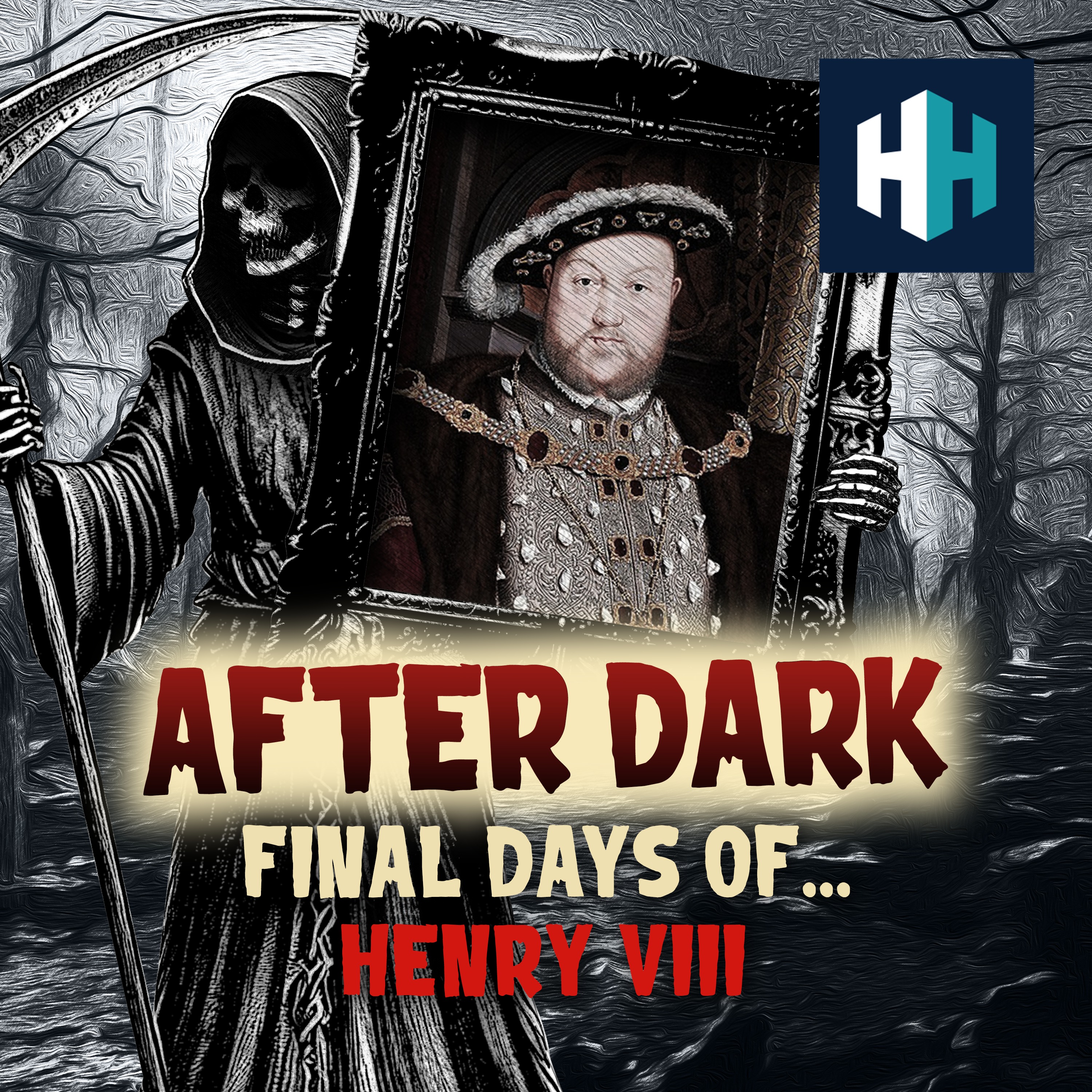
Loading summary
Transcript108 lines
- [00:00]
Anthony Delaney
Hi, we're your hosts Anthony Delaney and Maddy Pelling, and if you would like After Dark, Myths, Misdeeds and the Paranormal ad free and get early access, sign.
- [00:10]
Maddy Pelling
Up to History Hit With a History Hit subscription. You can also watch hundreds of hours of original documentaries with top history presenters and enjoy a new release every week.
- [00:21]
Anthony Delaney
Sign up now by visiting historyhit.com subscribe.
- [00:29]
Maddy Pelling
Acast Powers the World's Best Podcasts here's.
- [00:33]
Anthony Delaney
The show that we recommend. Hi, I'm Pace Case. And I'm Bachelor Clues.
- [00:39]
Maddy Pelling
We host Game of Roses, the world's.
- [00:42]
Anthony Delaney
Best reality TV podcast. We're covering every show in reality TV.
- [00:46]
Maddy Pelling
At the highest level possible. We analyze the Bachelor, Love Is Blind, Perfect Match, Vanderpump, and anything else you find yourself watching with wine and popcorn.
- [00:54]
Anthony Delaney
We break down errors, highlight plays, MVPs, and all the competitive elements that make reality TV a sport.
- [01:00]
Maddy Pelling
And we interview superstar players like bachelorette.
- [01:03]
Anthony Delaney
Kaitlyn Bristow and Big Brother champion Taylor Hale. If you want to know so much.
- [01:07]
Maddy Pelling
About reality TV, you can turn any casual conversation into a PhD level dissertation.
- [01:12]
Anthony Delaney
You definitely want to check out Game of Roses.
- [01:16]
Maddy Pelling
ACAST helps creators launch, grow and monetize their podcasts everywhere. Acast.com.
- [01:33]
Anthony Delaney
Winter 1546 Hampton Court palace the palace lies silent, save for the faint echo of footsteps on cold, polished stone. The tapestries hang heavy, their vibrant colors muted by time. Once the very image of Renaissance splendor, the palace gives the impression of age. Alongside its master, Henry VIII sits slumped in his throne like chair. No longer the robust warrior prince of his youth, his face is bloated, his once bright eyes dimmed. The king's body is a map of bruises, swollen joints and infected wounds. His legs, wrapped in layers of bandages, are a constant source of agony, the stench of infection barely masked by perfumes. He is rotting in real time. His very flesh betrays him in his mind. Echoes of glory linger of the jousting tournaments where his prowess on horseback dazzled courtiers and foreign dignitaries alike are distant memories now. So too are his dreams of leading victorious armies into battle, forging an English empire to rival any in Europe. The man who once embodied regal vitality is now a shadow of himself, a captive to his own failing body. And yet the country waits on his every word. Courtiers hover at the edge of the room, wary of his temper but keen to secure their place in a post Henry world. England itself seems to hold its breath, caught between the traditions of the past and and an uncertain future of reform. This is not the Henry of Hans Holbein, the Younger's famous portrait, a king who exudes power, authority and dominance. No. This is a man betrayed by time, consumed by the relentless advance of disease, and haunted by the unfulfilled dreams of a golden age that was never to materialize in his lifetime. As the hours slip by, Henry stares at the flickering flames in the hearth, his eyes clouded with pain and regret. Outside the walls of Hampton Court, the fate of a nation teet.
- [04:25]
Maddy Pelling
Hello and welcome to After Dark. I'm Maddie.
- [04:28]
Anthony Delaney
And I'm Anthony.
- [04:29]
Maddy Pelling
And we are back again with our Final Days series. We've done so many of these already. We've done Marie Antoinette. We've done Lady Jane Grey. We've done Anne Boleyn. We have so many more coming up for you and some are so exciting. I'm bursting with anticipation. But today we are doing, I suppose, one of history's greats and arguably history's worst person, and that is, of course, Henry viii. So, Anthony, what drew you to this subject? Because you are the person who's going to be taking us through this history today.
- [05:00]
Anthony Delaney
I had a realization recently where, you know, you and I are always like, oh, my God, I wish people loved the Georgians as much as they loved the Tudors because the Georgians are amazing and we're always kind of pontificating about the Georgians. But I had a realization recently that without the Tudors, I wouldn't be as into history as I am. So I was like, you know what? I need to re embrace that kind of instant love that I had of the tutors with lovely Dr. Mackay. I wonder where she is now. But she was my undergrad third year tutor and she looked like a tutor. She had blazing red hair, really pale skin, and I idolized her. So this is what I was like, right, I need to come back to do Henry viii.
- [05:38]
Maddy Pelling
Shout out to Anthony's lecturers there. I agree. I think it's the history that we're certainly in England, at least we are taught in school. We are absolutely, you know, well versed in it. We do the school plays, we do little projects. We build Tudor houses out of shoeboxes. We've done all of that. And I think it's the way into history for so many of us. So, yeah, I think whilst the Georgians are objectively the best of all the people from history, we will make room for the Tudors. We'll hold space for the Tudors. Shall we say.
- [06:11]
Anthony Delaney
No, not hold space.
- [06:13]
Maddy Pelling
Should we sing now?
- [06:14]
Anthony Delaney
Yeah, yeah, yeah. Please hold my finger, Maddy.
- [06:16]
Maddy Pelling
So let's get into a Little bit of context, then we're in, obviously, as this episode title suggests, the final days of Henry VIII's reign. What's going on?
- [06:26]
Anthony Delaney
So England at this time, as we know, as a result of his relationship with Anne Boleyn, the English Reformation, the consequences of that are still rippling throughout the country. We don't really know where that's going to end up at this particular moment in time, particularly at the end of Henry's reign. So things are religiously un. Dissolution of the monasteries. Well, it's left the country with economic instability, so we have the religious instability, but also this economic instability. There's also been cultural losses as a result of that dissolution and there is now an increasing deep divide between traditional Catholics and what is now identified as a rising Protestant faction in England. I think it's worthwhile pointing out as well that up in Scotland, Mary Queen of Scots is lurking in. In the shadows as a six year old. Well, she's not in Scotland actually, she's in France, isn't she? Because she's been taken there for her safety.
- [07:18]
Maddy Pelling
Good save there. Good save.
- [07:19]
Anthony Delaney
Yes, yes, yes. I do know some history. The point I'm making there is that the tensions between England and Scotland remain relatively high at this time and they have a nice clear line of inheritance that England is, you know, somewhat jealous of, I suppose.
- [07:35]
Maddy Pelling
And of course, as well, we have Henry's offspring, his children in this moment and the question marks over who is going to inherit the throne after their fathers died. Right, yeah.
- [07:44]
Anthony Delaney
And that's what I mean about Scotland. Scotland doesn't have those question marks in the same way. So therefore this instability is really prevalent at the end of Henry's reign. Then in France we have Francis I, who was, I guess, a sometimes rival, sometimes adversary of Henry viii, depending on what point in history you're talking about. Plenty of wars shared between the two of them, plenty of peace treaties, but it just shows the kind of instability that's also linking England to Europe. So painting a picture of instability, basically, is what's happening here.
- [08:16]
Maddy Pelling
Yeah. And I think, would you say it's fair to say that Henry's enemies are really sort of gathering at the gate? You know, there's the Holy Roman Empire. He's made, religiously speaking, so many enemies across Europe, really. And at home there are people plotting against him as well. And we also have his wives to consider in this moment. Which wife is he on? It's presumably the last one at this point.
- [08:38]
Anthony Delaney
He is. He doesn't sneak one in at the very end. He's on wife number six, which makes it Catherine Parr. She is forced to try and manage. Henry's kind of volatile. This is one of the things I really want to make clear during this. His temper is increasingly volatile because he's in so much pain. He's at the end of his life, he knows it. He hasn't necessarily achieved all the glittering things he wanted to, but she very much has a Protestant leaning and she is trying to sway power as much as she can towards that in the next reign. So that's kind of the context of the time that we're talking about. But before we kind of move on to look at the specifics of his final years, months and days, I have the Holbein picture, the very famous Holbein picture, for you to just give us a brief analysis of Mattie. We'll put this on socials as well, but I'm sure you'll be familiar with it. But just talk us through the Henry that's presented here because just remind us of what most people think of when they think of Henry viii, but what we're actually faced with then we'll see in the final days.
- [09:41]
Maddy Pelling
So this is the image of Henry that everyone has in their mind's eye. He is turned almost full frontal to the painter, not quite. He's slightly off kilter. He has this ridiculous stance. Do you remember the Tory Party power stance from a few years ago, with the legs wide apart? He's doing that.
- [10:01]
Anthony Delaney
You're gonna get in so much trouble for saying that. What is this Woke nonsense she's talking about?
- [10:06]
Maddy Pelling
I think it was a recognised thing within the Tory Party, right, that it was, you know, the MPs trained to kind of do this body language of power and stability. And that's very much what we see Henry doing here. It's a full length portrait, which means essentially it was very, very expensive to produce. There were multiple copies made of this and I don't know where the original Holbein copy is today, but there's. I know there's at least one in the Walker Art Gallery in Liverpool. I think there's one in the Metropolitan Museum of Art in New York, as there are multiple versions. And these would have been sent out to Henry's allies, as well as being hung in his own palaces and domestic spaces as well. So this is a tool for showing power and that is absolutely what we see in terms of the composition, in terms of how he's presented. So he has the classic Henry VIII outfit on, he's got the white stockings and Very elongated legs, by the way. We know from surviving armour that his legs were much, much shorter. So Holbein is, you know, really airbrushing the truth here. He's got these huge sort of shoulder, puffy shoulders, and he doesn't have a crown on. Interestingly, he does have some kind of doublet or hat. Excuse me. So sorry to all the Tudor fashion historians out there. I don't know the correct term for this. He is holding in one hand what looks like a croissant. I think it's a pair of gloves.
- [11:33]
Anthony Delaney
It's not a croissant, I tell you that.
- [11:36]
Maddy Pelling
Now, I feel like that would be in. Keep him, though.
- [11:38]
Anthony Delaney
Right.
- [11:39]
Maddy Pelling
And then on the other hand, he has a dagger and I think, you know, this is meant to show he's sort of ready for anything and he's still virile. But the most impressive element of this.
- [11:48]
Anthony Delaney
Painting.
- [11:53]
Maddy Pelling
Is the giant codpiece in the centre. This is the most obscene, unsubtle reference to his vigour and power that you can imagine. It's Trumpian in proportions. Again with the woke nonsense. But this is a king portraying himself in the late years of his life when we know his health is in reality declining. He's portraying himself as a virile, muscular, impressive, fearsome presence.
- [12:25]
Anthony Delaney
Very much like I am now, Maddie, of course. Virile, muscular, impressive presence.
- [12:31]
Maddy Pelling
Well, we're recording this from home and all I can see on the little computer screen is the giant quad piece.
- [12:37]
Anthony Delaney
Oh, God, that's terrible. That's a terrible image.
- [12:40]
Maddy Pelling
I will be talking to HR later.
- [12:41]
Anthony Delaney
Yes, you should. I will. In fact, I will be talking to HR as well. So that's. Yeah, that's it. Like, that's the kind of thing we're left with. I mean, if you think Henry VIII, that's what you think of. But we're in 1546 now, so let me give you a little bit more of an insight into what actual Henry looked like and was experiencing at this particular moment in time. So let's talk about his health issues. Henry at this point would have been what we would class as exceptionally overweight. He weighed about 28 stone, we estimate now, and that's 392 pounds by the end of his life. So he really had. He was. He was always a big man, but he had gained significant weight towards the end of his life. He is consuming huge quantities of meat and wine. He has leg ulcers. Now, these ulcers appeared after a jousting accident in 1536. So he's been dealing with this. This leg issue for 10 years by this point.
- [13:36]
Maddy Pelling
This is famously an injury that sort of reopens, doesn't it, over several years, and it's constantly sort of getting infected. And it stinks as well, I believe.
- [13:44]
Anthony Delaney
Apparently you can smell it. I think it's three rooms away. So, like, it's a really disgusting smell of rot. So that's, you know. And, yeah, three rooms away is apparently the distance.
- [13:55]
Maddy Pelling
I mean, to smell it across one room is unacceptable.
- [13:58]
Anthony Delaney
To smell it at all. Oh, my God. I mean, when you think about the Tudors, I'm sure somebody's written about Tudors and smells, but that has to be chapter one, right? That's just one of those things that he's quite disgusting.
- [14:10]
Maddy Pelling
And you've got to think about poor, poor Holbein in the room painting Henry and having to come into contact with him and sit for long periods of time observing him. And, I mean, I'm not sure how long the king would have sat for a portrait. Probably would have done some very quick preparatory sketches, and then Henry would have gone off to eat his meat and drink his wine, and then Holbein would have continued. But to be in the presence of someone like that and to have to sort of, I suppose, overlook the revoltingness of it in order to do your job, whether you're a courtier or whether you're an artist, painting the king and to sort of act in a way that is deferential to someone whose body, unfortunately, is in such a state and is so poignant in the room that you're in, in the space that you're in. You know, it must have been a strange time at court, I think, in terms of the senses, at least.
- [15:03]
Anthony Delaney
And they're constantly reopening these ulcers, of course, because physicians are having to drain them with hot pokers in order to take away what they're seeing as the humors at this particular time. And his legs are famously bad. They were described by the Spanish ambassador, Chapuis, as the worst legs in the world. That's quite a claim. But I always think I have quite bad legs.
- [15:25]
Maddy Pelling
But Henry the 8th.
- [15:28]
Anthony Delaney
Henry the 8th. I'll take comfort even you, Maddie.
- [15:32]
Maddy Pelling
He goes, Henry, then me, immediately afterwards. In my head.
- [15:37]
Anthony Delaney
We also think. I mean, you take this with a pinch of salt because this is after the fact diagnosis. But a lot of medical historians have said that he probably has. Well, he certainly has gout, we think, and very probably has kidney failure, too. So think about the level of discomfort that this man is in.
- [15:53]
Maddy Pelling
So he's physically limited. He is in a huge amount of pain, which, you know, you spoken about him being volatile in mood in this period. You would be, if you were in this much medical trouble, struggling to maintain your role as the head of state and to govern over your people. And the infighting that you're experiencing at court and the anxiety about your allies and your enemies across Europe and across the world, you know, this must have been a very, very difficult and complex time for him.
- [16:26]
Anthony Delaney
Yeah. And for those that surround him, as you're kind of insinuating there, because we have that kind of personal bodily turmoil that's happening for Henry himself, but then we also have the political turmoil that's unfolding around him. I kind of imagine him sat in the middle of this grand room and all of this intrigue and political back and forth is happening around him, and he's kind of the fulcrum that's conducting all of this. One of the main factions, of course, is the Seymour faction, and they're gaining power at this point, led by Edward Seymour. And Seymour wants to, I suppose, secure a Protestant dominance in the next reign, although he's setting it up very diligently already, while other conservative factions want a return to Catholicism.
- [17:13]
Maddy Pelling
So the Seymours, of course, are the surviving family of the third queen, Jane.
- [17:18]
Anthony Delaney
Seymour, and the faction who are going to be in charge in the following reign. In Edward's reign, Henry's son, because he will be a minor, so we know that there'll be some kind of a protectorate in place when Henry VIII dies and his son comes to the throne. So we have this religious back and forth that's bleeding into politics at the same time. But there were plots as well, throughout the final year, specifically. So we have Catherine Parr, who we said wife number six. She is almost tried for heresy, even though she's the. Who knows he could have fit in another wife. But she has made her opinions on religion known too widely, and she was very, as I said earlier, very much on the Protestant faction. And she debates that religion with Henry himself and the Bishop of Winchester, who's Stephen Gardiner at this time, he sees that Henry VIII is displeased with her Protestant leanings and he therefore undertakes an investigation. Her belongings are searched, her ladies are questioned, and there's even articles of arrest drawn up. But Catherine Sabbia, she is. And Catherine Parr deserves quite a bit more attention, I think, because she is quite savvy, and she rushes directly to Henry viii. She doesn't send anything by an intermediary. She goes straight to him, and she essentially begs him to forgive her, to understand where she was coming from. And she. Apparently, her submission is so eloquent that he does forgive her and he allows her to stay in place.
- [18:43]
Maddy Pelling
It's so fascinating, isn't it, because we know when he falls in love with Anne Boleyn so much earlier in his life, that it's her ability to debate her intellect as well as her sort of physical appeal that Henry is drawn to, that he loves this woman who is flirty and bold at court and can hold her own with all of the men and pushes the boundaries a little bit, and he finds that really thrilling. And then at this stage in his life, we see the exact opposite, where he just wants these queens that he has in quick succession to just know their place, to provide the function of producing heirs and to provide. Be quiet. Beyond that. And it's so grim. I mean, you know, this isn't breaking news that Henry VIII was a misogynist, but it's so grim that he woke.
- [19:30]
Anthony Delaney
Nonsense.
- [19:31]
Maddy Pelling
Yeah, woke. Nonsense again. Sorry. He gets to the point, he creates a climate in which the women he is marrying, his wives, have to not only tread on eggshells, but sometimes literally beg for their lives and their safety and sort of basic existence. It's. It must have been genuinely terrifying. And then you couple that with his physical presence and the stench of him, it's. Yeah. Fascinating and horrifying.
- [19:59]
Anthony Delaney
The other thing. And you talked about the grimness sometimes associated with Henry's reign, and the other thing that's associated quite closely with him is execution. Right. So we know that Henry VIII is constantly executing people. He laughed. We don't know exactly how many people were executed during Henry's reign. We know the final person was executed in January 1547, but it's thought that he had executed thousands of people and that he, not Mary, is the bloodiest monarch in English history. So his legacy is not, as we've said a couple of times already, this glittering thing that he would have wanted. In fact, it's a far more grim and deadly thing.
- [20:38]
Maddy Pelling
It interests me that in recent years, the term serial killer has been attached to him. And, you know, I suppose on a technicality, he's not killing the people himself. So can we really call him that? That's a very sort of modern. It's a very modern label, but it's not that far from the truth. You know, the body count, the death count associated with him here is unusually high for a monarch, even in this moment. You know, it's yeah, he is grim. Everything about him is grim. And he leaves behind not only this struggle for power and the Seymour's trying to build up that ring of protection around Edward the heir to the throne, who is a child and a sickly one at that, but there's also the religious climate in turmoil. The Queen is openly debating what the Church should be, what religion should be, with the monarch in front of people, and that gets her into trouble. There's the question mark of the legacy of the Reformation and what that's going to look like. And of course, there's predominantly Catholic Europe still knocking at the door, wanting to come in. So what is that moment like religiously, on the eve of his death?
- [21:51]
Anthony Delaney
It's very unsettled, it's very uncertain. People often say that Henry VIII mistakenly often say that Henry VIII introduced Protestantism into England. That is not the case. That doesn't happen until arguably the next reign, and certainly that's solidified by Elizabeth's reign. But bear in mind Catholicism comes back in favour during Mary I's reign. So settled Protestant nation by the end of Henry VII's reign. That's. I think people often think that that's the case. The Church of England at this point is not necessarily a Protestant church. It's a lot more complicated than that. What we're painting here overall, I think, is this bodily discomfort, this political discomfort and now this religious discomfort that you're talking about. So I think the only fair thing to do if you're in agreeance, Maddie, is to put the poor man out of his misery. 28-1-1547. Whitehall Pass Palace. The air is thick with the smell of incense and the acrid tang of medicines and compounds. The once vibrant king, who had dazzled Europe with his athleticism and charm, is now confined to his vast canopied bed. The room is oppressively warm. Courtiers tread softly, their whispers barely audible over the crackling hearth. Henry lies still, his massive frame barely shifting under the weight of heavy fur covers. His breathing is laboured, a rasping sound punctuated by fits of coughing. Around him gather his most trusted advisors, those brave enough to face the tyrant in his final moments. At his bedside is Archbishop Thomas Cranmer, the man who helped orchestrate England's breakthrough from Rome. Do you have faith in Christ, Sire? Cranmer asks softly, charging him to make some sign that he did. Henry, his lips cracked and voiceless, is said to have squeezed Cranmer's hand. It is his last gesture. In the early hours of 28 January 1547. Henry VIII dines outside. An icy. London is cloaked in an eerie silence as the news spreads. England's most infamous king is dead and the nation braces for what is to come next.
- [24:40]
Maddy Pelling
It strikes me as being a relatively soft, quiet, dignified death, albeit one at the end of long years of illness and pain. But when you compare that to the violence of the deaths of some of his queens and a lot of the people working underneath him, it is quite a stark difference. Now tell me this. Once he's dead and that moment has passed, how is he put to rest? How do you bury a man who has torn England apart, who has shaken everything that people hold dear, that they know, the world order, the hierarchy of everything, the economic health, the religious health of the country, everything has changed in his reign. He's changed culture, art, he's patronized people like Holbein. So he's changed the visual culture, the visual language. The way people see the world has changed. The way people depict power has changed. The way people, people understand the relationship between a monarch and a consort has changed. How do you put that to rest? And is there a celebration or is there a huge sigh of relief that he's gone?
- [25:56]
Anthony Delaney
I think it's more the sigh of relief because possibility lingers now. While he was there, there was a strange stasis in those final years, but now there's this possibility and things move. Well, I was going to say things move quite quickly thereafter. They do and they don't in that the king's body is taken. I always find the detail of lead lined coffins to be so evocative. I don't really know why. I think it's something about the idea of trying to preserve after death without the, you know, without all the chemicals that we have now. But just the lead lined coffin is always really interesting to me.
- [26:32]
Maddy Pelling
It brings you into that proximity with the physical body of the person. You can imagine them as a living being, but also as a dead body, I think. And it humanizes and brings closer the past, just that little detail, doesn't it?
- [26:47]
Anthony Delaney
And it's so practical. That's one of the things that always sticks out to me about it. I think it's just so practical. Lead lined, I don't know, I don't know. It always sticks in my mind. Anyway, he is transported in a lead lined coffin from Whitehall to Windsor Castle. Now this takes at the time a journey of two weeks. We're not rushing this, we're going through the streets. His coffin is on a chariot with a Mani wheeled wagon and it's covered in, as you can imagine, black velvet and it has heraldic banners on it. It's drawn by eight strong horses, ridden by eight children, if you don't mind. Like, very dramatic.
- [27:24]
Maddy Pelling
The children. Now that's a really interesting detail, isn't it, given, you know, Henry's lifelong quest to father as many legitimate heirs to the throne as possible. The children is a. Yeah, fascinating. And there's something sort of visual about the scale of that as well. Right. The sort of small children on these big horses.
- [27:44]
Anthony Delaney
Now, I told you that he was in a lead lined coffin. And so because that's used as a way to embalm at this point, and because of his obesity and life, it's thought that this whole ensemble of the coffin and Henry weighed more than half a ton. So this is a sizable thing. Yeah, yeah. It's really, like impactful.
- [28:05]
Maddy Pelling
And one of the things that I find so telling and consistent about him is I know that on top of his coffin there's an effigy of him, a model. I think it's made with wood and wax. And side note, I'm always fascinated by things made with wax because there's an uncanniness there, a reality of the flesh. But what it tells us is that even in death, Henry is editing the version of himself that he gives people. We have this rank, decomposing, stinking body beneath the effigy. You know, that's the reality of his death and his illness. It's so. On a human level, it's so appalling and so tragic. And then you've got this version of him atop it that is whitewashed, it's made grand and beautiful. And it's the Holbein treatment again, isn't it? And the fact that that continues, it's not surprising that it continues to his funeral, but it's just so consistent with everything we know about him in life and the way that he projects himself out to the world.
- [29:09]
Anthony Delaney
And you talk about the decomposing body, well, that played a role even during this period of his internment, in that it is believed. Now, some people will tell you that this is a story that was made up. And I'll say a bit more about that in a second. But it's believed that during this two week transition into Windsor that his body started to decompose so much that it also started to leak from the coffin.
- [29:34]
Maddy Pelling
So the lead lining wasn't helping anyone.
- [29:37]
Anthony Delaney
Yeah, yeah. But I also think it's like, even if that's not true, right? Even if it's a case that his body didn't leak, the fact that that story grows up, it says something about the royal decomposition, the decomposing of his royal power, the rot that had set in at the end of his reign. Because if it's apocryphal, then it's still trying to communicate something to us about Henry VIII after his life, you know.
- [30:04]
Maddy Pelling
And it's so interesting as well that of course he's heading to Windsor. And the way that monarchs are laid to rest in Windsor is so sanitised out of the sort of practical necessities, but also in terms of applying that dignity and that elevation to the remains of these people who are symbolic as well as physical beings. And in the 18th and 19th centuries, later on, you get antiquaries at, I think, at Westminster Abbey and out at Windsor as well, who uncover and open up the tombs of historic kings. And there are accounts then given about the level of preservation of these bodies, that they survive in surprising ways. And whether or not that's true, there's something there about the desire to imagine the monarch as being preserved in some way, preserved in history, their legacy preserved, and that being sort of tied to the physical remains that are put in place in such a symbolic site and setting and with such ceremony. And therefore, it's so fitting that Henry is oozing and rotting and he has this legacy that's sort of shot to pieces and that's full of holes and full of all these issues and complications and not what he set out to do. So, of course his body would be undignified at the end. That's the reality of it. But there's also a sort of layer of narrativisation on top of that. That absolutely makes sense.
- [31:34]
Anthony Delaney
His funeral is also a real indication of some of those instabilities and some of those conflicts that we were talking about earlier in the episode, where his ceremony is still steeped in so many Catholic, or what would be interpreted as Catholic traditions, elaborate prayers for his soul, for instance, and these were included. Despite the break from Rome, the ceremony is showing that tension. But his tomb is interesting, right? The aftermath of all of this, because it's left unfinished. And again, I have something to say about that in a second, but I'll give you the details. There was a planned monument that was going to be there. Right. It was going to be huge. It was going to be a gilded statue of himself. You know, you can see the whole thing. Yeah, yeah. It just was left. It was never complete because the funds and the political will for such extravagance had gone after he died. Now we are left with Henry VIII as probably being the most famous and impactful king of the Tudor era, or even of the early modern era, shall we say. But what does that tell us about the way people viewed him at the time? They were like, yeah, I couldn't be bothered finishing that. Do you know what I mean? Like, he survives with us in such real, immediate terms because of all of this visual culture that's left. But at the time, they're like, yeah, I'm not doing it. I'm not doing all that gold stuff. He can just rot away there. So it's interesting.
- [32:59]
Maddy Pelling
Well, I suppose one of the most pressing issues as they're laying him to rest is not only the smell and put him in the tomb as quick as possible and get your Tudor nosegays out to lighten the air. But the question of succession, who's going to then come to the throne, is such an immediate problem that there probably isn't that appetite to spend money and time and energy and effort commemorating someone who's left such a mess behind him. So tell me a little bit about the aftermath of the funeral and that rush for the succession.
- [33:35]
Anthony Delaney
It. Well, after all the drama and back and forth and this and that, and who's legitimate and who's not legitimate of his entire reign, you know, that really clouds his entire reign. The actual succession after he dies is very straightforward. Edward is established as his heir. Straightforward. Mary and Elizabeth are then successors if Edward dies childless, which, you know, spoiler he does. And this is really significant because his daughters had been pushed to the side prior to this, but this now legitimizes them in a document, despite any earlier disinheritance. So it's an important moment.
- [34:23]
Maddy Pelling
Yeah. It's interesting the way that he treats his daughters in the earliest years of their life, and the way that they are, as you say, kind of marginalized, illegitimized at points and pushed into dangerous positions. He manipulates them, he degrades them, he then elevates them, seemingly at his own will. You know, he uses them as pawns for whenever and whatever suits his purposes. And yet here they are, quite simply being named as successors if their brother should die. But the will is quite controversial, isn't it? Even though it is in and of itself relatively simple compared to the machinations that have come in the decades before, it still causes problems for people, doesn't it?
- [35:08]
Anthony Delaney
Yeah, this is the Tudor tumult, I suppose, very similar to some of the debates that surround the life of Richard iii. Scholars are not quite sure about the full legitimacy Henry VIII's will is legitimate, but the full legitimacy of some of the points within his will. So what we have is Edward Seymour, who is Henry VIII's brother in law, an uncle to the young prince, Prince Edward, and now uncle to the King, Edward vi. And he is supposedly, according to some scholars, a key figure in altering Henry VIII's will because he wanted to position himself in a dominant position around the regency council that would Govern during Edward VI's minority. So Seymour's goal was basically to secure himself as Lord Protector and grant almost monarchical authority to him while his nephew was a child, which he does. Apparently. These changes were made. There's even a date on 26th December, 1546. So not about a month or so before Henry knocks off the world. No. What's the pops is clogs. That's the one.
- [36:14]
Maddy Pelling
It's a normal Boxing Day activity just to change your will after you've had a colossal family argument the day before.
- [36:20]
Anthony Delaney
So it's thought that key changes were made to the will, including additional phrases that are added. You can see that they're added in later that give increased powers to the regency and council so that they are autonomous, basically. And this allowed Seymour to consolidate power quickly and bypass more traditional collective governance in the role of a usual protectorate. How did they do this, I hear you ask? Well, apparently through the dry stamp. So because Henry was so unwell for the last 18 months of his life, a dry stamp was used. And a dry stamp was basically a device that had his signature imprinted on it. And clerks would use this to basically stamp onto documents that needed his signature, and they had to be continuously pardoned for treason because of this. Because obviously you're not supposed to forge the. Or, you know, replicate the King's signature, but obviously it was necessary.
- [37:13]
Maddy Pelling
That's so interesting. And again, speaks to the body of the king and the products coming off him, including his signature as being the only legitimate form of power, and that it's tied to his physicality. And if you replicate that, that's an issue that's so interesting.
- [37:31]
Anthony Delaney
Now, I will say that this is all very much debated. There are other scholars who say that the will is legitimate. Henry was very much involved in any iteration that's left to us today. But it just, again, it speaks. I think if there's one thing we can come away with from this episode, it's about the instability that we have around Henry's final days and how that Shapes the reigns that come. So it's an interesting one. And I think we're left with a different figure. What we often think of when we think of Henry viii, that image of the Holbein portrait that you described at the beginning.
- [38:06]
Maddy Pelling
Answer me this very important final question. Who's your favourite of the six wives?
- [38:11]
Anthony Delaney
Anne Boleyn.
- [38:12]
Maddy Pelling
Why?
- [38:13]
Anthony Delaney
Well, I think Anne Boleyn is my favorite because although I like Jane Seymour too. Just let's put that out there. Anne Boleyn, because I enjoy the impact she had, the long term impact. She comes very close to power and she's aware of what that means. And I quite enjoy that for her. What about you?
- [38:35]
Maddy Pelling
Oh, I mean, I think it'll have to be the same because she does feel very modern to us now. The way that she behaves hurts some of her sort of aspirations and moves to get power feel recognisably modern to us. I don't know. I always think Catherine must have been incredibly strong and brave.
- [38:54]
Anthony Delaney
Can I change my answer? I need to change my answer. I don't know why I said that. Anne Boleyn is not my favourite. She is. I really like her. I respect her. Whatever. Catherine of Aragon is my favorite. I totally forgot about Catherine. How did I do that? She is my favorite. Absolutely. She is that resilience that she shows. That is one classy bish. I really like her.
- [39:14]
Maddy Pelling
Yeah. I will say though, Catherine Parr, the final queen. Good luck to you. You survived him. Well done.
- [39:20]
Anthony Delaney
But also Anne of Cleves. Hilarious. I am here for the Anne of Cleaves comedy show. Like, good for her. I mean, okay, not good for her, but like, still, like, I don't know, I just. I'm like, go on, Anne, be whoever you are yourself. I mean, it might get you killed.
- [39:34]
Maddy Pelling
Also famously played by Joss Stone in the BBC drama the Tudors.
- [39:39]
Anthony Delaney
I haven't seen that.
- [39:40]
Maddy Pelling
Oh, my God.
- [39:41]
Anthony Delaney
I was in the Tudors.
- [39:42]
Maddy Pelling
What?
- [39:43]
Anthony Delaney
Yeah, it was my first ever gig. Oh, no, hold on. Penny Dreadful. Yeah, yeah, yeah, yeah, it's fine. I was in it.
- [39:48]
Maddy Pelling
Excuse me, details.
- [39:49]
Anthony Delaney
Oh, I was just some page. I was just some page at page.
- [39:52]
Maddy Pelling
Number eight in a scene.
- [39:55]
Anthony Delaney
It was very that.
- [39:56]
Maddy Pelling
Oh, my God. Did you get to meet the. How are all the main cast? Oh, my God, I'm obsessed. We have so many questions off air that I'm gonna ask you about this.
- [40:03]
Anthony Delaney
Yeah, yeah. I will say this. At one point I was asked to make my eyes smaller. I do have very big eyes days, huh? Yeah. Anyway, I'll leave you with that thought.
- [40:11]
Maddy Pelling
Yeah, I have nothing to add to that. Thank you for listening to this episode of After Dark. As I said at the top, we have so many episodes already out and coming up in this series of the Final Days. So do check out those if you need more Tudor history and you don't already listen to not just the Tudors. First of all, what are you doing with your life? Second of all, head to wherever you get your podcast now to listen to the brilliant professor Susanna Lipscomb talking about that topic and more. If you want to get in touch with us and suggest episode topics, particularly if you want to tell us about a figure from history you would like to hear about in the Final Day series, you can email our producers@after darkstoryhit.com Acast powers the world's Best Podcasts Here's.
- [41:07]
Anthony Delaney
A show that we recommend. We all have bad days and sometimes bad weeks and maybe even bad years. But the good news is we don't have to figure out life all alone. I'm comedian Chris Duffy, host of ted's how to Be a Better Human podcast and our show is about the little ways that you can improve your life. Actual practical tips that you can put into place that will make your day to day better. Whether it is setting boundaries at work or rethinking how you clean your house, each episode has conversations with experts who share tips on how to navigate life's ups and downs. Find how to be a better human Wherever you're listening to this Acast helps.
- [41:46]
Maddy Pelling
Creators launch, grow and monetize their podcasts everywhere. Acast.com.