← After Dark: Myths, Misdeeds & the Paranormal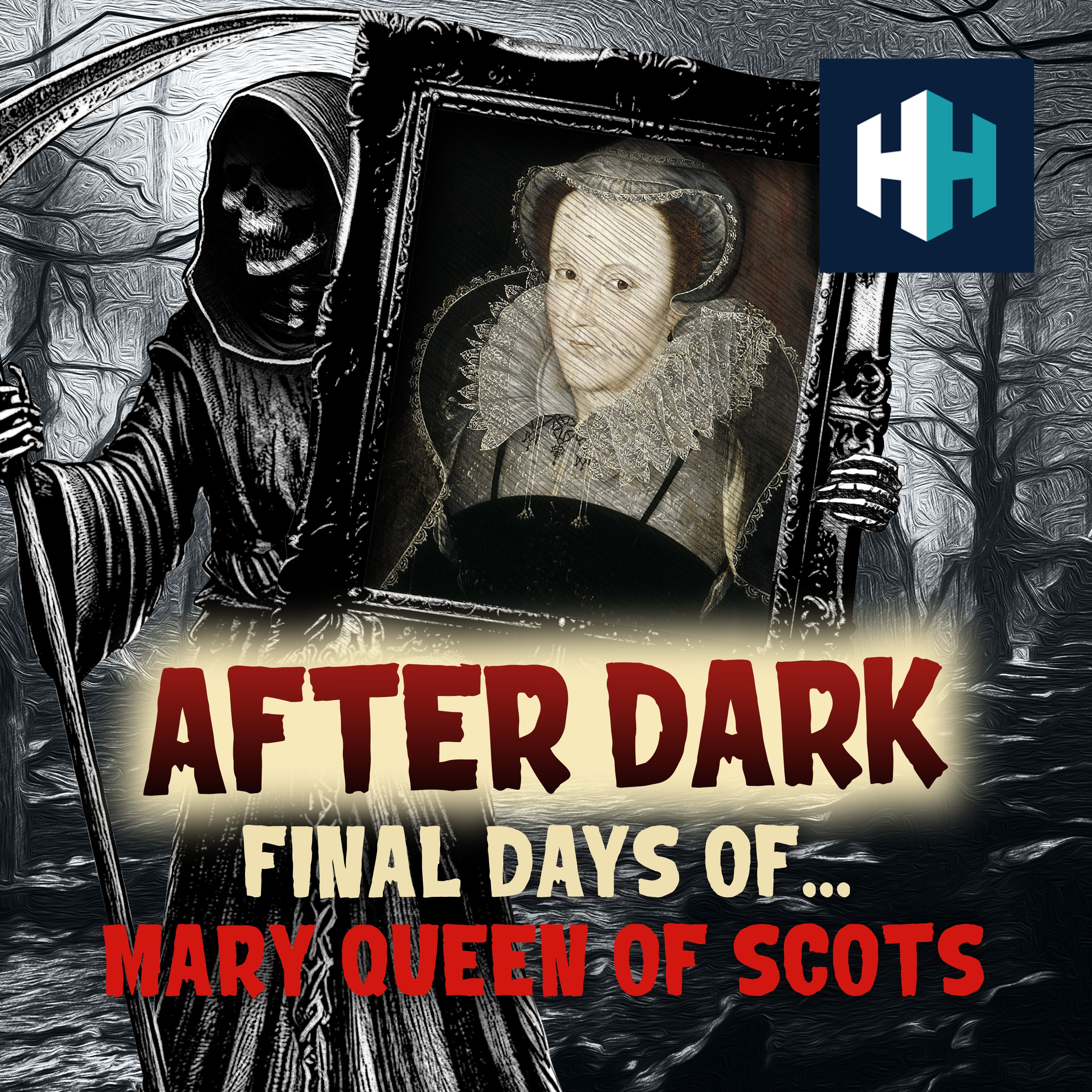
Loading summary
Transcript56 lines
- [00:00]
Anthony Delaney
Hi, we're your hosts Anthony Delaney and Maddy Pelling. And if you would like After Dark Myths, Misdeeds and the Paranormal, ad free and get early access.
- [00:10]
Maddy Pelling
Sign up to History Hit with a History Hit subscription. You can also watch hundreds of hours of original documentaries with top history presenters and enjoy a new release every week.
- [00:21]
Anthony Delaney
Sign up now by visiting historyhit.com subscribe Severance Season 2 is coming to Apple TV. What you all did five months ago was one of the most painful moments in the history of this company.
- [00:35]
Dr. Jade Scott
Our message got out. We're famous. All of us equally or one of us is like the star. What did you see?
- [00:40]
Anthony Delaney
My audi's wife was Ms. Casey.
- [00:44]
Maddy Pelling
So if you want to find out.
- [00:45]
Dr. Jade Scott
What happened to her, I'll help.
- [00:47]
Ryan Reynolds
She's still alive.
- [00:49]
Anthony Delaney
I want to see my wife.
- [00:50]
Dr. Jade Scott
He should have left.
- [00:52]
Anthony Delaney
Severance new season streaming January 17th only on Apple TV.
- [00:57]
Ryan Reynolds
Hey, I'm Ryan Reynolds. Recently I asked Mint Mobile's legal team if big wireless companies are allowed to raise prices due to inflation. They said yes. And then when I asked if raising prices technically violates those onerous two year contracts, they said, what the F are you talking about, you insane Hollywood. So to recap, we're cutting the price of mint unlimited from $30 a month to just $15 a month. Give it a try@mintmobile.com Switch $45 up.
- [01:23]
Dr. Jade Scott
Front payment equivalent to $15 per month.
- [01:24]
Joanna Teplin
New customers on first three month plan.
- [01:25]
Dr. Jade Scott
Only taxes and fees Extra Speed slower above 40 GB.
- [01:27]
Cli Shearer
Details it's official. Acast advertising is transcending audio. Marketers can now tap into audiences across all of a creator's channels, from social media to video, live events and beyond. And Acast new report proves it works. With 84% of podcast listeners having taken action after seeing brands promoted in a podcast first Omnichannel campaign. Get these insights and more by downloading the Full report at podcastpost2024acast.com.
- [01:59]
Anthony Delaney
Hello and welcome to After Dark. Today we are looking at the history of the final days of Mary Queen of Scots. But to set the scene, let me make way for our guest today, Dr. Jade Scott.
- [02:14]
Dr. Jade Scott
The sun was only just breaking through the clouds and the hard that had hung over the mud flats was finally evaporating. The tide had come in and the fishing skiff that had been beached was beginning to rise. With the water, the crew busied themselves, avoiding eye contact with the company on the rocks and with her in particular. Nonetheless, the ship's crew could not help but overhear one of this lady's companions as they made to speak. But she cut him off. The decision is made, she said simply. A small group had travelled with her from the lost battle of Langside, moving under the COVID of night, sharing sour milk and bedding down on mossy ground to rest. When they reached the abbey, she had told them her plan. They, of course, had all tried to dissuade her. She could not trust her cousin. Yet she was resolute. Mary, Queen of Scots had left her country and her people once before when she was a child. Then she had departed to fanfare and was eagerly anticipated at the French court and honoured the guest. Now, on a blustery day in the spring of 1568, she had been afforded no procession of ships, no fine royal wardrobe. In a small fishing boat, she sailed away from the Dumfriesshire coast in south west Scotland. The rain lashed as story filled hills fell away. For four hours, the small royal retinue would cut through the water and in all that time, Mary looked only ahead, towards England's shore. For it was in England that she had placed her hopes in the sisterly affection of a fellow queen, Elizabeth I of England. Perhaps she would have turned her head to look back at Scotland one last time had she known what lay in store and that she would never see her kingdom again.
- [04:21]
Anthony Delaney
Hello and welcome to After Dark. My name's Anthony.
- [04:24]
Maddy Pelling
And I'm Maddie.
- [04:25]
Anthony Delaney
And today we are talking about the final days of Mary Queen of Scots. Now, this is a figure I'm always really intrigued by because she is one of those queens that I think we think we know more about than we actually do. So it'll be interesting to get into this. And this, of course, is part of our series of final days episodes. So you can go back through those other episodes and find episodes on Marie Antoinette, Captain Cook, Anne Boleyn, of course, and Lady Jane Grey. We are going to be telling the story of Mary's 19 long years as prisoner of Elizabeth I and how they came to grisly end. But there are a lot of myths around this story, so we'll be trying to get to the real question here, which is, of course, who was the real Mary Queen of Scots? And to help us do that, you just heard her reading at the top of this episode. Our guest today is Dr. Jade Scott from the University of Glasgow, author of a new book about Mary Queen of Scots years in prison in England. It's called the Captive Queen Jade. When I heard about this, I just thought that was such a good capsule of time for a book. So that's so exciting. And she is an expert on letter writing culture in Scotland in the early modern period. And her research on Mary centered around the thousands of letters that Mary wrote that are in the archives all over the world. Jade, you're so welcome. Thank you for joining us in After Dark.
- [05:42]
Dr. Jade Scott
Thank you so much for having me. I'm very excited to be here, very excited to talk about Mary's last few years and then leading up to the very dramatic last few days, of course. So, yes, thanks so much for having me.
- [05:54]
Maddy Pelling
Well, you're very, very welcome. And you've made our job very easy by reading the opening narrative for us. We're sitting back and putting our feet up this time.
- [06:01]
Anthony Delaney
No, it's like a holiday today.
- [06:02]
Maddy Pelling
It's lovely. It's really nice. I could get used to this. So J.
- [06:04]
Dr. Jade Scott
Indeed.
- [06:05]
Maddy Pelling
Let's start maybe not with Mary the woman, the historical, factual person, but with some of the myths that surround it. Because as Anthony mentioned there, we think that we know who this person is. We think we know her story. And I'm sure listeners know a lot about her, about what happens to her, about her fate that's so famous. But beyond that, in preparation for this episode, I was trying to sort of think about what I know about her, and I realized that so much of it is based on storytelling on film and cinema and tv, as much as it is archival historical research. So what is the version of Mary that we've inherited over the years?
- [06:47]
Dr. Jade Scott
Yeah, definitely. I think that is absolutely fair to talk about Mary as being someone who has these different legends, I suppose, or myths, as you say, associated with her. And it is quite difficult to kind of delve beneath all of the years of romanticism on some part. But then on the other hand, you have this kind of group of people who've kind of demonized her. So I think that's the first thing, that's the first kind of big myth about Mary is that she's this very black and white character. She's either a woman who has been romanticized to such an extent that she's this idealized historical woman who never does anybody a bad turn, who is lovely to everyone and is absolutely made a victim of these really horrible men in Scotland and beyond. That's kind of first version of her. The alternative version of her, as I say, is much more kind of negative in tone, I suppose. And it's the idea that she is the wanton woman who had loads of different men, who was easily turned by a dashing good looks and was not a particularly serious Woman was not a queen who was particularly successful because she wanted to spend all her time dancing and doing all these Frenchified, I suppose, as the Scots would have called it, activities, and wasn't, you know, looking at the kind of serious business of ruling, wasn't looking at the serious business of the Reformation that had occurred in Scotland before she returns in 1561. And then, of course, she's kind of demonised because she's implicated in the murder of her second husband, Henry Stuart, Lord Darnley, and then her third husband ends up being the man who most likely killed that second husband. So she does have dramatic stories that have been laid at her door and people have interpreted them either as she is a victim or she is some kind of monstrous woman. So those are the kind of two main strands of the myth making that kind of stems all the way back from Mary's own lifetime. You know, there are people talking about what she does or what she doesn't do during her own personal reign in Scotland from 1561 until 1567, and then it continues on decades, generations, centuries after her death. So I think that's why with Mary, there is a lot of myths around her.
- [09:12]
Anthony Delaney
I think what you've just described there, Jade, is kind of iconic in many ways. Like, you're talking about murders and dancing and frivolity and all of this kind of thing, which, like, it's very appealing and it's why she endures to a certain extent. But I also get the impression that what you're reaching out beyond that is that there's something far more substantial going on here and something far more interesting and powerful and influential that gets so easily overlooked. And just as a way into that part of the conversation, let's talk about her positioning in terms of her inheritance. So, obviously, we know she's Queen of the Scots at this point, but she also is very well placed to take the English throne, should she so fancy it. Right, so that's a very powerful position to be in, particularly for a woman. So how does this shape who she actually is, as opposed to some of those myths that you're telling us about?
- [10:06]
Dr. Jade Scott
Yes, absolutely. This is at the centre, I think, of how Mary sees herself, and that's something I've tried to kind of tease out with her letters. Exactly that point, Anthony, that she is a ruling Queen of Scots. By the time she comes to England in 1568, she's been forced to abdicate from her throne in Scotland by various rebellious nobles, but she sees herself still as the ruling Queen of Scots. That she has been illegitimately forced from her throne. She also sees herself, as you say, as the legitimate heir to the English throne. And the reason for this is that she can trace her lineage back to what many in the 16th century would consider a more powerful, a more legitimate claim than that which Elizabeth has herself, because Mary is the granddaughter of Margaret Tudor, who is Henry VIII's sister. And then, of course, Mary is also the daughter of James V, who is Henry VIII's nephew, Margaret Tudor's son. So Mary is the embodiment of both the English royal line and the Scottish royal line. So she embodies both of these royal lines. And when it comes to who should inherit the throne or the kingdom of England should Elizabeth die childless, which, of course, lots of people are very, very concerned in the 16th century, Mary sees herself as she is the most legitimate person to take over that throne. She also recognizes that lots of other people see her as the most legitimate person to take over the English throne. She is born of a marriage that is not dissolved or annulled or ended in any way. You know, Mary's mother and father were married until his death. She is born within their wedlock in the kind of traditional sense of legitimacy of the 16th century. She has that one upmanship over Elizabeth, but she also recognizes that her right as potential queen of England is also something that's very much based on faith, which is what makes her such a difficult person for a lot of agents and courtiers at the English court in particular, because she sees herself as someone who is, you know, very much a devoted Catholic. But whilst she's been in Scotland as the reigning queen there, she's also very successfully managed and navigated the different religious factions at the court. She herself is a Catholic who celebrates Mass privately, but she maintains the kind of Protestant Reformation settlement that's happened before her return. So she sees herself as someone who can appeal to both parties, as it were. You know, she can appeal to both Catholics in Elizabeth's kingdom, who feel more and more persecuted as that reign goes on. But also she can kind of turn around and say, that doesn't mean I'm going to come in and sweep everything away. I'm not a threat. You know, I can navigate these difficult religious circumstances, so the kind of reformists at Elizabeth's court should also be appeased. Or that's how she sees it. Of course, they don't agree. So she sees herself as someone who absolutely is already a reigning queen and is someone who is the best place person to step into that next kingdom of England.
- [13:28]
Maddy Pelling
It's fascinating, Jade, that you give us a sense there of how Mary saw herself. And I think that's so important because as we've set out at the beginning, you know, there's so much mythology and different layers of narrative that have been added to her. And I suppose one of the first narratives that's really attached to her in the 17th century, and certainly it has all these interesting afterlives in the centuries afterwards, is this pitting against each other of Mary and Elizabeth as rulers, yes, but also as women. And I've been very interested in that in the 18th century. There's this massive revival of interest in this period and in the competition, if you like, between Mary and Elizabeth themselves. I'm kind of fascinated by that in her own lifetime. One of the main differences between Mary and Elizabeth is that Mary has spent time in France, hasn't she? And she. You mentioned that she has these sort of Frenchified manners, you know, that she takes part in these activities and performances of a kind of aristocracy, a kind of status that is a little bit foreign in terms of the court that she finds herself in Scotland. Can you tell us a little bit about her connection to France? Because I think it's so interesting, particularly in comparison to Elizabeth, who I think we all think of as this very English, sort of rational, sensible, quite plain woman. And that's not the case for Mary at all, is it?
- [14:45]
Dr. Jade Scott
Definitely. And I, for myself, that is the kind of thing that I have always been fascinated about, Mary, Queen of Scots. You know, even beyond doing the research specifically on her letters, it was always this juxtaposition, this kind of contest, as you say, Maddie, that places Mary alongside Elizabeth. And Mary, I always felt, got the worse end of the reputational interpretation, I suppose. Mary ends up being seen, as you say, as this quite flamboyant. And there's something kind of foreign about, you know, she spent a lot of time in France. Elizabeth, on the other hand, is rational. And I really like that you use that term, Maddie, because it's something that I think is a key thing that's held against Mary is that she's seen as this emotional, almost hysterical woman, both within her own lifetime and then with the memorialization. And that's held against her in this comparison with Elizabeth, who's seen as this very, as you say, you know, cool, collected, doesn't rule with her heart, but rules with her head. Whereas Mary's all about the heart, traditionally. That's what we're meant to believe. And part of that does come from these connections with France, I think. I think you're right. So Mary is actually taken to France when she's a child. So she goes in 1548, she's only about six years old, and she's taken there as part of negotiations for her to be betrothed to the French dauphin. So she becomes the wife of the heir to the kingdom of France in 1559. The Dauphin does inherit the kingdom when his father dies. And so for a very brief period of about a year or so, Mary does become Queen of France. So she also has this other kingdom to which she has very close ties that she has been, albeit as a consort in that particular circumstance, she has been a queen of three kingdoms. We can leave off the question of whether she's the queen of four kingdoms, Anthony, as to whether she's also actually the more legitimate person to take over the kingdom of Ireland. Yes, she sees herself as this queen of multiple kingdoms. And the French connection is something that when she returns to Scotland, there are certain factions who see this as being. You've spent too long there, you know, you've kind of forgotten how we do things here. And there are people who want to see that. And so they refuse to acknowledge anything that she does well to counter these kind of aspersions about her French experience. And it is something, as you see, that kind of has these very much gendered interpretations of. She's spent time in France, where she spends all her time dancing, she spends all her time socialising, she spends all her time flirting, of course, with these eligible young men, both before and after becoming queen. And there's this sense that she brings these manors back to Scotland and this is something that dour Presbyterian Scots are not happy with. And that is all part of this kind of myth that's built up around her. And it's certainly something that feeds into this kind of negative attention that she gets in comparison with Elizabeth.
- [17:56]
Joanna Teplin
Thursdays on abc. Get ready to move that bus. The beloved series Extreme Makeover Home Edition is making a triumphant return to kick off the new year. Join the makeover mavens Joanna Teplin and Cli Shearer as they hit the road on a mission to transform the lives of deserving families whose stories will truly touch your heart. With the help of the design team Arion Belizer and Wendell Holland, they have just four days, a race against time to rally communities, demolish old homes and rebuild not just houses, but lives. Get ready for those heartfelt moments filled with tears of joy, as Joanna and CLE dive deep into the emotional journeys of these families uncovering their struggles and beginning the healing process. It's not just about remodeling homes. It's about rebuilding hope one family at a time. So don't miss out on this incredible journey. New episodes of Extreme Makeover Home edition Thursdays at 8, 7 Central on ABC and stream next day on Hulu. You don't want to miss it.
- [18:59]
Ryan Reynolds
Hey, I'm Ryan Reynolds. At Mint Mobile, we like to do the opposite of what big wireless does. They charge you a lot, we charge you a little. So naturally, when they announced they'd be raising their prices due to inflation, we decided to deflate our prices due to not hating you. That's right. We're cutting the price of mint unlimited from $30 a month to just $15 a month. Give it a try@mintmobile.com Switch $45 upfront.
- [19:23]
Maddy Pelling
Payment equivalent to $15 per month.
- [19:25]
Joanna Teplin
New customers on first three month plan only taxes and fees, extra Speed slower above 40 GB.
- [19:29]
Cli Shearer
Details hey marketers, are you ready to discover the latest trends in podcast advertising? The Podcast Pulse report by acas packed with fresh audience insights into why podcasts are a must have marketing strategy. Learn how podcast audiences are more engaged than ever, why hosts are trusted voices for brands, and how niche shows are delivering massive impact. Download the report today at podcastpulse2024.acast.com.
- [20:04]
Anthony Delaney
So, Jade, you started this history by telling us about this particular moment in time when Mary, Queen of Scots, is leaving Scotland and she's going to England. What is she fleeing from in that particular instance?
- [20:18]
Dr. Jade Scott
So in July 1567, Mary is forced to abdicate from the throne of Scotland. This is all following on from a series of dramatic events that we can trace back to her decision to marry for the second time when she marries Henry Stuart. Lord Darnley. Lord Darnley is someone who is almost universally misliked at the Scottish court. Various factions kind of decide we're not standing for him as our king. And Mary actually herself very quickly realizes into that marriage that it's not a success, that Darnley is too politically immature to rule. These kind of rebellious Scots meet with Mary at Craigmiller Castle, and they say to her, you know, why don't you divorce him? He's awful. He's a really terrible consort. And we cannot countenance for one second the possibility of him being king in his own right should you die, Mary. So divorce him. And she says, no, I'm not going to divorce him. Because by this point, she's had her son James, who goes on to be James vi. And first. And I don't want to make any kind of claims against his legitimacy, so I refuse to divorce him. And the Scottish nobles kind of go, well, there are more permanent means of getting rid of husbands, if you're interested. And Mary, at least, I think what Mary does is go, I don't want to know the details. So I think she knows from that point that there is going to be an assassination of Darnley, but she doesn't want to know the details, so she can be kind of separate and maintain deniability. And Darnley is murdered. And very shortly after that, she remarries again, but she chooses to remarry for the third time. The man who is generally accepted as the person who organised the killing of Darnley, and that is the Earl of Bothwell. These two marriages cause a lot of political division in Scotland. There is a lot of unhappiness amongst various factions, and there is a raised rebellion against Mary and Bothwell by the Scottish nobles, and Bothwell and Mary lose that battle. And Mary is taken to be a captive at Lochleven Castle in Perthshire, and it's while she's there that they force her to abdicate. And she's there for about a year as a captive, and then she escapes. So she escapes from Lochleven castle in early May 1568, and she then has another battle against her nobles, who have been kind of ruling in her stead over the past year, and she loses that battle as well. And when she loses that battle at Langside, she makes the fateful decision that what she's going to do is cross over into England. And there are various of her supporters who say, this is the worst possible thing you can do, you really shouldn't do this. But she's made her mind up that that's where she's going to go. She's going to go and claim sanctuary in England. And I think she probably expects that it's not going to be straightforward. She probably thinks she'll have to spend some time in England to try and let things calm down a little bit, to try and convince Elizabeth and her supporters to give men and finances. But I do think she thinks I will be able to come back to Scotland and challenge these nobles who've rebelled. And in another case, it might take me a couple of years, but I think eventually, if I can't come back to Scotland, I will be permitted to travel on to France. And, of course, neither of those things actually happen. And she spends almost 20 years in England being moved around as a prisoner.
- [24:06]
Maddy Pelling
It strikes me just the extent to which Mary's gender rules her life. On the one hand, we have her as this powerful figure in her own right who is a monarch in several different kingdoms and has this status, but she's absolutely at the mercy, really, and the whims of a lot of the men around her. I mean, you talked about Darnley being politically immature, which side note, can I just say, that's the best reason to dump someone ever. He causes all kinds of problems for her, and she has to rely on male violence for him to be taken out of the picture. And then when she marries Bothwell, he has sexually assaulted her, hasn't he? The relationship there isn't one of loving tenderness and equality. Certainly not. And I suppose that's what makes her story so tragic as well, that once she crosses into England, she hopes to find an Elizabeth, that sisterly bond, that there is something of their gender that will unite them, that shared experience, that they're both women in very much patriarchal worlds, especially in the court, who are being pushed and pulled every which way by the men in their lives. And it's so sad and interesting and complicated that she doesn't find that alliance when she crosses over into England.
- [25:21]
Dr. Jade Scott
Yeah. And I think that is one of the genuine tragedies, I suppose, of her life, is that there is a potential opportunity, as you see, to have these two powerful women, but women who, as you say, who have power, but that power is very much mediated by lots of male figures around them, whether that's directly or implicitly. And so I think that is one of the tragedies of Mary's life, is that she doesn't find that sisterly support that she's looking for from Elizabeth. And I think part of that as well is she does make reference to the fact that they're cousins, they share blood, but she also does make reference to the fact that, you know, we are both women, but she doesn't just call herself and Elizabeth women. She makes sure to really emphasize the fact that we are both queens. So there is a gender bond that she's relying on, trying to pull towards Elizabeth to try and get benefits for herself, but there also is a sense of her status and of seeing herself as a queen. So even though she is very much hamstrung by the kind of gendered interactions that she has with her nobles at various points, as is Elizabeth, in different ways, and she does try to kind of share that experience with Elizabeth, but she very much makes the case right across these 20 years, which I just think is extraordinary, that regardless of how difficult things get for her, and at various points, they get very difficult indeed, you know, her actual lived experience becomes really quite unpleasant for her. She never, ever diminishes her own status. She only ever refers to herself as a queen. And she tries to emphasize to Elizabeth, even in periods where she's quite clearly frustrated and fed up with Elizabeth not doing more to support her. Even then, you know, she still positions herself as, I am your equal. We are the same. We are both queens. And it's that sense of not just are you abandoning a woman to this horrible fate, and she does talk about that, but as a queen, letting down another queen is absolutely unforgivable, because we are above all of these other people. We are above these men, you know, however much they might have political power in particular, we stand apart. We are of royal blood. And therefore, I think it's that when Elizabeth doesn't kind of give Mary what it is she's looking for, I think Mary is personally betrayed. Yes, absolutely. But she is absolutely dumbfounded that Elizabeth is not recognizing her queenship and acting accordingly.
- [28:13]
Anthony Delaney
I think that really feeds into this idea that I've developed, I think, over the time that we've been doing After Dark, which is this idea of not believing in the context of times where things like divine right are taken as the de facto position, that everybody believes that these monarchs are divinely appointed. And we know that that becomes a source of tension for Elizabeth later on in this story, and we'll talk. But at the same time, it so often feels to me like these supposed prescribed beliefs that are so entrenched or supposedly so entrenched in the 16th century, sometimes becoming convenient and then just get discarded. So, you know what you're getting at, Jade, There basically is that there is no way under God's law, God's rule, that Elizabeth could have discarded Mary, that she should have imprisoned her for 19 years. There's just no legitimate way to do that. However, that gets thrown out the window. The entire concept of monarchy falls apart in that relationship, in that sense. But talk to us a little bit about what those 19 years are like, then let's pivot to the kind of second part of this history so we're moving closer towards those final days. What do those days look like?
- [29:22]
Dr. Jade Scott
It's an interesting one, actually. And I find her everyday life, her lived experience, absolutely fascinating because it is something that is constrained by these concepts of royalty and the divine right to rule and things like that. And Mary's captive life really kind of embodies all the complexities of it and how people actually get round the prescriptions, as you say, Anthony. So Mary does see herself as a queen. She goes to extreme efforts to have this publicly displayed. The majority of the almost 20 years are spent in the custody of George Talbot, the Earl of Shrewsbury, and he holds her at various properties across Staffordshire and beyond. Some of them are relatively acceptable to Mary. She doesn't have a lot to say, usually. These are the properties, though, of Shrewsbury's formidable wife, known as Bess of Hardwicke. So when she gets to stay at Bess's properties, she tends to be a bit more comfortable, because Bess's properties are the most luxurious, most modern, most stylish properties that you can possibly get to in England in the 16th century. Bess's absolutely devoted to architecture and furnishings, and so Mary finds that easier. Other properties she absolutely detests, the famous one is Tutbury Castle. Mary spends a lot of time there and she absolutely loathes it. She says it's freezing cold all the time. She says it's draughty and that the drafts give her migraines, that the horrible moat around the property is always really, really unpleasant. And she says that makes her ill as well. So she does kind of have different experiences of where she's actually living. But regardless of where she ends up, she makes sure that she has the kind of cloth of state above her. So she has Scotland's royal arms above her at all times in her public rooms. She has them in her personal chamber as well, permanently, so that they're always on display, so that anyone who's in her company sees her in the position of Queen of Scots. She has luxurious fabrics to decorate the room. She spends quite a great deal of money on furnishing her apartments as far as possible, in a kind of royal, magnificent way. So she has lots of luxurious items on display. It's quite interesting, actually, because she pays for these items out of the finances that come to her from her French dauer properties. So she does still have an income at various points over those almost 20 years. Of course, that income becomes harder and harder for her to actually get her hands on. And as is always the case in these scenarios, when there's a distance between the person collecting the money and the person it's going to, funds are deviated away from where they should go. Poor Earl of Shrewsbury, though, he has this exact question on his mind all the time, Anthony, of how do you actually deal with, you know, both the divine right of royalty and the realities of. She is a prisoner. She's not a ruling queen in any shape or form, really, because he has to maintain her in a level of reception and hospitality that would be expected of a queen, but out of his own pocket. Elizabeth is supposed to give Shrewsbury an allowance to cover the cost of keeping Mary in her accustomed state, and it's very, very rarely paid, so Shrewsbury has to pay that out of his own pocket and it becomes financially devastating for him. It's a huge expense, the amount of money he has to spend on keeping her comfortable. She would argue she's not comfortable enough, but, you know, keeping her comfortable, reflecting her status, the security, of course, as well, to have people around her, soldiers, men, making sure that she's not going to make a break for it, as she has done in the past. So her everyday life is one that is both queenly but also very much a prisoner. It is really fascinating. You know, you read some of the records of the accounts that are spent on keeping her at these properties and you see the everyday kind of events. Like she's woken by guards changing over their watch as morning breaks each day, and same at night. That's what she would have heard when she was going to sleep at night. She would have heard the change of the guards and the drums marking the end of the shift, as it were, and they would change the men over. Her servants are basically told if they're found out and about after dark, they will be arrested and interrogated. Over 20 years, her circumstances become more and more constrained and she finds herself really trying to push against the physical deterioration that has on her personally. It's a really fascinating period and I think, again, that is a part of her life that it's very easy to just gloss over and go, you know, she's a prisoner for 20 years, full stop, and it's really easy to not actually look into, well, what is that actually like for her? What is she doing? You know, who does she see? And one of the things that's important to me is that she is spending a lot of time with women and the people she sees are women because she's not allowed official visitors as such. So she has her women around her and that's really who she's with every day for years and years.
- [34:41]
Joanna Teplin
Thursdays on abc. Get ready to move that bus. The beloved series Extreme Makeover Home Edition is making a triumphant return to kick off the new year. Join the makeover mavens, Joanna Teplin and Clee Shearer as they hit the road on a mission to transform the lives of deserving families whose stories will truly touch your heart. With the help of the design team Arion Belizer and Wendell Holland, they have just four days a race against time to rally communities, demolish old homes and rebuild not just houses, but lives. Get ready for those heartfelt moments filled with tears of joy as Joanna and Clee dive deep into the emotional journeys of these families, uncovering their struggles and beginning the healing process. It's not just about remodeling homes. It's about rebuilding hope, one family at a time. So don't miss out on this incredible journey. New episodes of Extreme Home edition, Thursdays at 8, 7 Central on ABC and stream next day on Hulu. You don't want to miss it.
- [35:51]
Maddy Pelling
It's fascinating, Jade, what you say about the domestic spaces in which she's held prisoner become at once this performance of courtliness and queenliness. And they are very politicized and political spaces in their own right, but they're also domestic spaces where she retreats, as you say, with predominantly women for company. And just thinking about, you know, we know that interior design was not an exclusively female job experience in the 16th and 17th century, nor was it for a lot of history, nor is it now. But there's something there about her using that space and in a very canny way, I think, which is fascinating. Let's talk about some of the other ways that she resists being a prisoner, though, because you've alluded there that she does try to escape. There are plots to escape the circumstances that she finds herself in as a prisoner. We want to talk specifically about the Babington plot because it's really crucial, isn't it, in her story? So tell us what's happening in that moment and what is the Babington plot?
- [36:48]
Dr. Jade Scott
The Babington plot is essentially the final plot in media's dramatic life and the 20 years that she spends in England. It starts off as being much like many of the others that have happened over the past few decades for her, just being a plot that intends to set Mary free, set her at liberty from her prison in England, and hopefully the intention will be that she'll be able to go back to Scotland and reclaim her throne there. That's the kind of basis of it, and that's the base for a lot of them. As I say, that happened over 20 years. But the Babington plot becomes the final plot in Mary's story because crucially, the plotters decide that the only realistic way of freeing Mary from her English prison and potentially restoring her to Scotland, is for Elizabeth to be assassinated. There can be no free Mary, Queen of Scots whilst Elizabeth lives. And this has obviously been building up over these almost 20 years of failed plots to get Mary out. And by the time we come to 1585, which is when the Babington plot really starts to ramp up and it then kind of carries over into 1586, when it is officially revealed, not discovered, because actually the English authorities, led by Sir Francis Walsingham, the great spymaster, as he's known, he's known about it for a while, but he intentionally waits to see how much evidence can we actually get against her, because she's managed to wriggle her way out of being implicated in previous plots. So we need a little bit more. We need something that's more concrete, we need to get something on her. And so he lets the plot develop and then he lets it develop actually to the point where the plotters decide were going to kill Elizabeth, which just sounds incredible that Walsinger would allow this to happen. But he needs it to go that far because he needs to have evidence that Mary is not just plotting to get herself free, she's plotting to harm Elizabeth. And when this is all revealed in 1586, the evidence is presented to Mary that she did plot to assassinate the Queen of England. And Mary absolutely refutes this. But Walsingham has gathered all these little pieces of evidence to hold against Mary, to say, you know, you're not just trying to get yourself free, you are actually trying to kill Elizabeth. And the key piece of evidence that he has against Mary is that he has intercepted a letter that Mary has written to Anthony Babington, who unfortunately gives his name to this final plot. And in this final letter between them, she has said, here is some general advice on what you might want to do to try and set me free. So this is the number of horses you'll need. And, you know, you might actually want to think about sending me to Ireland as a way of getting me out quickly rather than getting me back to Scotland directly. And it's this fascinating letter, but that's as far as she goes. However, when Walsingham intercepts it, he has his cryptographers decode it because it'd been written in a cipher, and when it's decoded, they go, oh, this is great, this is the evidence we need. And Moslingham goes, no, Elizabeth needs more. Like, for me to convince Elizabeth that Mary is plotting against her personally, we need something a bit more. So he has his cryptographers add in a little phrase in code to the letter that basically says, tell me the name of the six gentlemen who will kill the Queen. And it's that that absolutely seals Mary's fate. It is something that's fabricated, it's added in, it's something that wasn't there in the original. And when it comes to Mary's trial in 1586, she basically calls their bluff and goes, you know, yeah, okay, fine. Push comes to shove, I'll admit I did write to Anthony Babington, but I only ever said, here's how to help me. I never said, let's do anything to Elizabeth. And she says to Walsingham and the men present, she goes, show me the letter. Show me it. Show me where you can find this evidence in my hand. And Walsingham doesn't produce the letter because he knows he would then have to admit to there being this little extra bit that's been added in. By this point, they've gathered enough evidence that her fate is sealed anyway. But Mary is very aware that there have been these machinations going on and things have been altered, and she does challenge them. And I just think that's fantastic to think of her standing up at this trial and going, prove it. Show me where I did this. She knows the outcome. She knows by this point what's going to happen to her. But she still says, show me the evidence. Because I did not write that in my own hand. And this is the problem with coded letters, of course. You know, if you write them up in a code, they're there to disguise the contents. You're never going to sign it then, you know, you're going to leave your name off it. You know, you can't really prove that it's hers, you know, that it's her that's written them. If they're disguised by code and they.
- [41:53]
Anthony Delaney
Have no signature, the Babington plot is such a shit plot. Like, it's, it's. It's like, come on, Anthony, do better than that. Don't go, okay, this is what we're gonna do. We're gonna kill Elizabeth. No, think harder than that. And it's why Mary is actually quite smart. And just speaking on behalf of Ireland, which I do regularly, she would have been very welcome to just pop over to us for a few months until she got her feet back on the ground and she got stuff together, and then she could have headed on again if she wanted to. We probably would have taken care of her, but, you know, that's besides the point. You alluded Jade there to the fact that there was a trial. What does that trial look like? Who is she in front of and how long does it last? And then I think we probably all know the outcome, but give us a glimpse of that. Oh, and when you do, I'd love you to talk a little bit about the fact that in technically speaking, Mary Queen of Scots couldn't commit treason in England. But there's all your questions. 400 questions in one sentence. Go.
- [42:47]
Dr. Jade Scott
Yeah. So the trial is held at Fotheringhay Castle, which is the final property that she is taken to after this final Babington plot is revealed. As such, it occurs in October 1586 and it lasts a couple of days. And at first she does appear. She actually refuses to attend. In the first instance, when she's told, you're going to be put on trial for treason, she says, well, I won't attend. And William Cecil, actually Elizabeth's principal adviser, says, well, you know, it's going to go on whether you're there or not. And she goes, yeah, okay, actually, yeah, I'm going to go and I'm going to present my own case. But she has no legal representation. Of course, that's perfectly common in treason trials. You're not allowed to have any kind of representation. You're also not allowed to see the evidence against you. So you really are going in blind. But she does go and attend and she attends for a few days of the trial and as I say, she challenges the accusations of treason that are placed against her. She admits that she has corresponded with various different people, both local and internationally, who might help her become a free agent again. But she refuses to ever acknowledge that she would go any further than that. And at the trial, you know, there's all these kind of so called great men of the English court are on, are there kind of facing her. So Cecil's there and Walsingham is there and various other kind of figures from the English court are there. Elizabeth is not there. Elizabeth does not attend. So they never actually do get to meet one another in person. Despite what some movies would have us believe, they don't have that big climactic moment of meeting one another. Mary attends for a few days and then crucially, she asks Walsingham, are you an honest man? And he stands up and he's been really quite unwell for the few months leading up to this trial, but he's determined to be there. And he stands up at this trial and goes, madam, I am an honest man in my private life, but for My queen and for my country, I will do whatever it takes. And there is no honesty in my public life. And at that moment, I think Mary realizes, you know, there's literally nothing else she can do, and she leaves, decides to just walk out, and she doesn't return. The trial is basically kind of postponed. Nothing is really officially decided at that point. There's a kind of adjournment. And then a few weeks later, towards the end of October, the final judgment against her is announced and she is pronounced guilty of treason. Mary is not an English subject, and she makes that point repeatedly throughout the trial. On the days that she attends, she first of all says, you cannot try me for treason because I am a queen, and queens can't be tried, certainly not for treason. But if you are going to try me, this court has no jurisdiction over me because I am a Scot. I am not English. And Scotland is an independent kingdom in the 16th century. And it goes back to a point that William Cecil has been trying to navigate for the past 20 years. You know, how do we actually deal with this? How do we keep the Scots on side, but also try and direct things? And way back in 1568, when Mary first arrives in England, he basically refers to Scotland as a satellite state, which is incredibly problematic even for the nobles back in Scotland who are trying to rely on Elizabeth's support. They kind of have to go. We really don't agree with that, but we'll just pretend you never said it so that we can get the money and get the men that we need at this point in time. So, yes, the legality of Mary's final conviction is something that is challenged at the time and, of course, continues to be challenged to this day.
- [46:38]
Maddy Pelling
What strikes me, Jade, is that it's all such a big mess and that really, Mary is incredibly unlucky to be in this situation, that she is, for Elizabeth at least, a political problem rather than a viable threat in some ways. And we know that Elizabeth really hesitates over the trial and the conviction and that, you know, she has all this indecision. She doesn't know whether to go after Mary at all. And then at one point, I know that she asks the jailer to potentially kill Mary quietly rather than there be this public execution, because that requires this legal wrangling that you've laid out so brilliantly. Then we have Walsingham, you know, literally admitting to lying publicly in his public office to serve his queen. And it's so hard to step into that moment and to get one's head around Those machinations and all those moving parts. But I think it's important to remember, and this is what we've been trying to do throughout the series of the final days of that we've been doing, is to really get at the human beings at the heart of these stories. And that, you know, in a lot of cases, they die in difficult. What universally, but certainly from us, from a modern perspective, seem terrifying circumstances. And I'm looking at an image here of the final letter that Mary wrote before her execution. Six hours, I think, before. It's incredibly beautifully written. She has a really elegant hand. It's very even. It's very steady. It's very neat. It's very confident and queenly. Frankly, it doesn't look like the work of someone characterized in her own lifetime and in the decades afterwards as overly emotional, frivolous, or susceptible to flattery or romantic love that turns her head and stops her from being this stateswoman that she wants to become. That to me, this letter looks like the final work of someone confident in who they are when they go to their death. Do you think, is that a fair analysis of this document?
- [48:56]
Dr. Jade Scott
Absolutely. I think everything you've said there is absolutely the case with this final letter, Maddie. It's absolutely an embodiment of how she has presented herself and how she continues to present herself as you see, as a queen. First and foremost, as a queen, she doesn't hold back in the sense of, you know, I've been wronged. She talks about in this final letter how she's disgusted that she's to be killed as a common criminal, which, again, you know, reflects the fact that her queen, her queenship, is not being acknowledged as it should be. But it is someone who, I think is very stoic about what is about to happen to her. And I think part of the reason for that is that the final kind of judgment against Mary is issued at the end of October in 1586. But of course, she isn't executed until February of 1587. And as you say, Maddie, there's a lot of kind of back and forth with Elizabeth trying to have her bumped off quietly. They recognize her strength of character and her. Her ability to really just do her duty. And that sounds like an incredible phrase I know, to say, you know, she sees it as her duty to go to her death, but really she sees it as, this is an opportunity for me to show the world that I am a queen and that this is a queen who has been wronged by another queen.
- [50:19]
Anthony Delaney
She seemed like such a skilled stateswoman. And she seems like such a skillful queen. I'm just wondering what everybody thinks. If there was one change that Mary, Queen of Scots could have made to change her fate, what do you think that one thing would be like? Just in a sentence? For me, I think it might be marriage. The marriages, if we were to rewind back and do those differently, that might come with a different outcome. Maddie, what about you? And then we'll come to you. Jade, last.
- [50:50]
Maddy Pelling
Well, it seems to me that she's just such a victim of the things that are done to her that no matter what she tries to do or how she performs, and I think actually she is quite in control of what she can control. And as Jade says, she goes to her death acting like the queen that she thinks she is. I mean, let's be honest, setting foot in England was a mistake. Maybe don't do that. Jade, what about you?
- [51:12]
Dr. Jade Scott
Yeah, I think both of them are key, but for me as well, Anthony, it's the marriages. I think if she had married better, I suppose it's very easy to go, you know, okay, don't marry Bothwell. But as we've touched upon, she is coerced physically and emotionally into marrying Bothwell. But the Darnley marriage is a choice, and it is a bad choice. And I think if she could have changed one thing, it would be, don't marry Darnley, wait it out, be a bit more patient, and see if someone more suitable will come along. And that's obviously very easy for me to say, you know, looking back. But, yeah, the Darnley marriage is the worst decision I think she makes.
- [51:57]
Maddy Pelling
I think the key takeaways from this episode are interior design, very important, and also, don't marry politically immature men.
- [52:04]
Dr. Jade Scott
Yes, I think that is very fair.
- [52:10]
Anthony Delaney
Well, Jade, thank you so much. Jade is the author of Captive Queen. So if this has interested you, then definitely find her book and read it, because that's going to give you a real scope of some of the things we've been talking about today. To the rest of you, thank you so much for listening to After Dark. As ever, if you've enjoyed this episode, then don't forget to tell all your friends about it, your family, and leave us a five star review wherever you get your podcasts. Thanks for listening.