← After Dark: Myths, Misdeeds & the Paranormal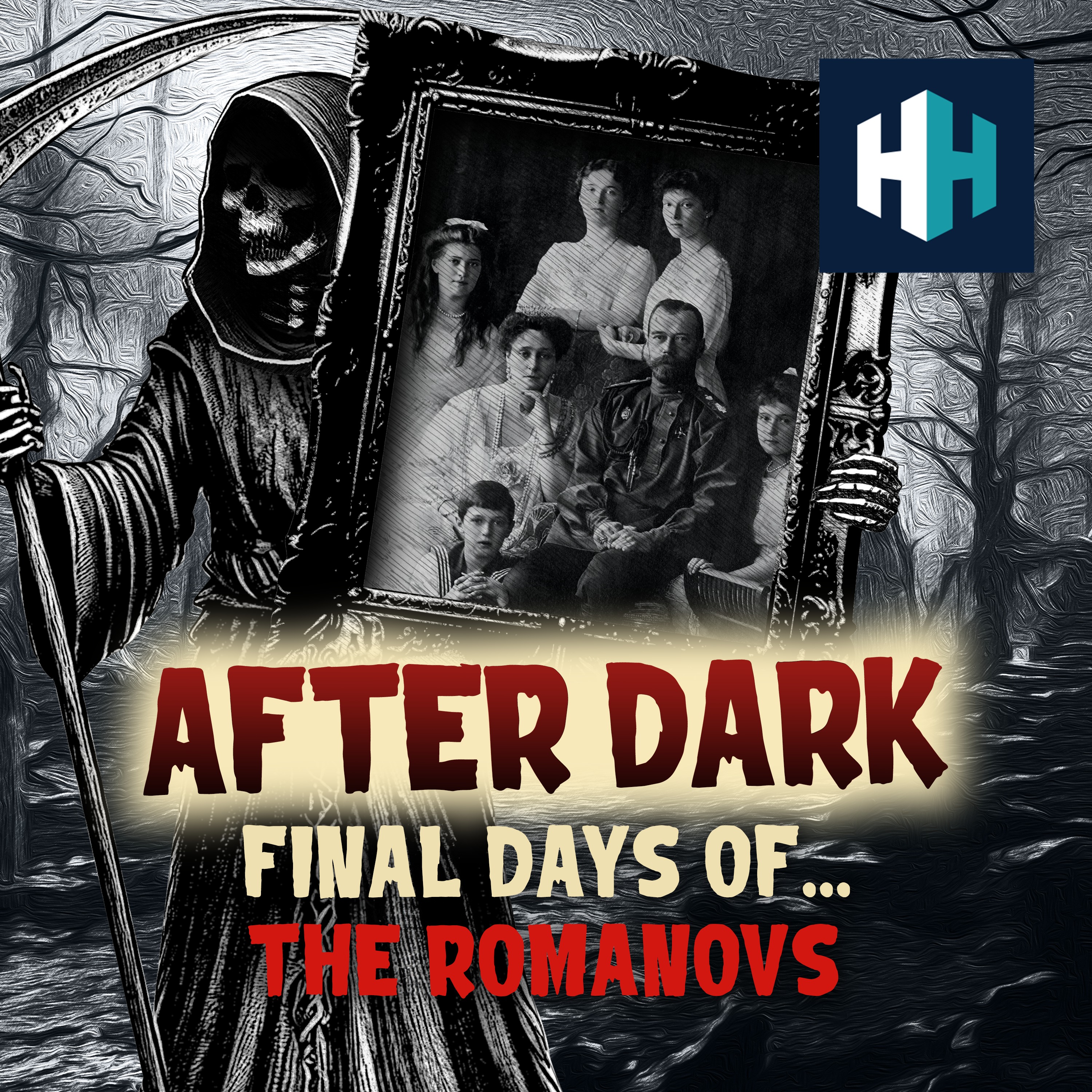
Loading summary
Transcript63 lines
- [00:00]
Anthony Delaney
Hi, we're your hosts Anthony Delaney and Maddy Pelling. And if you would like After Dark Myths, Misdeeds and the Paranormal ad free and get early access, Sign up to.
- [00:10]
Maddy Pelling
History Hit with a History Hit subscription. You can also watch hundreds of hours of original documentaries with top history presenters and enjoy a new release every week.
- [00:21]
Anthony Delaney
Sign up now by visiting historyhit.com subscribe.
- [00:29]
Maddy Pelling
Acast Powers the world's best podcasts.
- [00:33]
Anthony Delaney
Here's a show that we recommend.
- [00:37]
Helen Rapoport
This season on the Dream. Supplies are being provided by nurses who run out in the middle of the night and purchase diapers, but the hospital.
- [00:46]
Maddy Pelling
Is still charging as if they still have these items.
- [00:49]
Helen Rapoport
We are digging into every topic we've ever wanted to cover on this show.
- [00:54]
Maddy Pelling
It's a spinning plate analogy. The second that you stop spinning those plates, that crashes. So you can never stop working.
- [01:01]
Helen Rapoport
The Dream Season 4 comes at you weekly. Starting Monday, January 20th.
- [01:08]
Maddy Pelling
Acast helps creators launch, grow and monetize their podcasts everywhere. Acast.com.
- [01:25]
Anthony Delaney
Over 1,000 miles east of St. Petersburg in Moscow, just a little north of the town of Ekaterinburg, Russia, silver birch trees rustle together in a ravine. Besides the trains that occasionally pass by on the railway track, this stretch of wood is usually desolate. In August 2007, however, a team of amateur historians are scouring the ground. This is the site from which the remains of the Tsar Tsarina and three of their four daughters and four of their staff were exhumed a few decades before in 1995. The team are looking for the final missing members of the family, another daughter and the tsar's only son. 46 year old Sergei Plotnikov, a construction worker by trade, is advancing through the trees, poking at the ground with finding tools, when suddenly he hears a familiar sound. A scraping. Now this usually means he has made contact with one of two things, coal or bone. Plotnikov calls one of his friends over to examine his findings. Soon the site will be taken over by trained archaeologists. Plotnikov had indeed found human remains. A girl between the ages of 18 and 23 and a boy aged between 10 and 13. These were the final Romanov children to be found. But the damage to their bodies, the the brutality of their deaths in comparison to their titles, and the luxury suggested by a fragment of the fine fabric found with their remains begs the question, what could possibly have prompted such a dramatic, murderous fall from grace?
- [03:40]
Maddy Pelling
Hello and welcome to After Dark. I'm Maddie.
- [03:43]
Anthony Delaney
And I'm Anthony.
- [03:44]
Maddy Pelling
And today we are getting into one of the most requested, I think it's fair to say, episodes and you know what, we do say that a lot. We get a lot of requests, but this one really, really, really has been requested an awful lot. We're going to be talking about the royal Russian family, Tsar Nicholas, his wife Alexandra and their children. Joining us on this journey today to explain this history is Helen Rapoport. She is an expert, amongst other things, in the Russian Revolution and its context. So, Helen, we're so excited to have you on After Dark. Welcome.
- [04:16]
Helen Rapoport
Well, thank you very much for inviting me.
- [04:18]
Maddy Pelling
We've been talking off air about this moment of the discovery of some of the Romanov remains. And am I right in thinking that you were on the ground in that moment?
- [04:30]
Helen Rapoport
Well, I wasn't actually in the forest, but weirdly, I had gone to Ekaterinburg on a research trip in the summer, July of 2007, and I was actually in there in the city doing my research when they were out searching in the Kabtiaki forest when they found the remains. And unfortunately, I had literally almost got back inside my flat door. Having flown home, I got an email pinged in from one of my Russian contacts in Ekaterinburg, saying very excitedly, they found them, they found the remains. So everyone was incredibly thrilled. And I later, of course, I worked closely with one of the investigators who looked at the remains forensically.
- [05:17]
Maddy Pelling
It's so exciting to be able to get that proximity to history, and especially, you know, we often think about archaeology, uncovering the bodies of people from the distant past. And in this case, it's something so recent really in terms of human history, but so exciting to be able to have that proximity to it and to see it from that perspective before we get into the context of the fall of the Romanovs. Helen, because there's so much political, military, social, economic context here, can you just tell us who the family were? Who is in this family? Because I think what I want to hold on to throughout this conversation is the humanity of these people. They were human beings who lived and died in an incredible moment in history. So who were they?
- [06:04]
Helen Rapoport
Well, the Romanov family were the last great ruling dynasty of Russia. And they had been holding sway in Russia since 1613. They just, not long before the war, celebrated a very glorious tercentenary. And the focal point of the Romanov story was that final last family, the Russian imperial family, who were Tsar Nicholas ii, his German born wife, Alexandra of Hesse by Rhine, and their five children. And of course, the great aspect of the story which most people know is that they had the tragedy of waiting for a son to be born. Poor Alexandra had four daughters in succession. Finally, a son was born to the couple in 1904, who turned out to be a haemophiliac. And in a way, it's Alexei's haemophilia that really was the turning point for the tragedy of the family and, in a way, their downfall. So they were kind of doomed from the moment poor Alexei was born with haemophilia, because in Russia, the daughters would not have been allowed to succeed to the throne.
- [07:17]
Anthony Delaney
It's funny that you say there's this idea of doom, Helen, because doom is in the air slightly, if I'm not mistaken, because the context of what's happening in Russia. So we've talked about briefly what's happening within the family there, within the Romanovs themselves. But let's move out a little bit now and talk about what's happening in Russia. And there's a lot of trouble and unrest in Russia at this time, too, isn't there?
- [07:40]
Helen Rapoport
Well, Russia, as we all know, if you've read Yudo Stoevsky and you know a bit about Lenin and the revolution, it was a very turbulent country, increasingly so from the 1880s, after the assassination of Nicholas II's grandfather, Alexander II, there were huge protests and a growing revolutionary movement against the autocracy, the despotism of the Russian czars. And during the 1880s, it reared its head time and time again through violent political assassinations, attacks on government officials and dignitaries, to the point where it was a security nightmare for the Romanovs to protect the family from assassination. What happened after Alexander II was killed by a terrorist bomb in 1881 is that his son, Alexander III, reacted by introducing an extraordinarily repressive authoritarian regime that in a way, only fueled the flames of resentment and revolt even further. So by the time Nicholas unexpectedly became czar, his father died young of kidney disease. When he unexpectedly became czar in 1894, Russia was pretty much a boiling point. There was a huge, growing revolutionary movement. There was considerable oppression, deportation, executions, incarceration of revolutionaries, and sooner or later, it was going to blow, I suppose, as well.
- [09:16]
Maddy Pelling
The thing to remember about Russia is that it is this vast place and that it operated certainly at the beginning of the 20th century in this very strictly hierarchical system. And there was a huge divide, I think it's fair to say, between the wealthy and the impoverished, and then the economic system. In Russia, you've got the food, growth, and you start to see, I suppose, the fragility of that system. I'm thinking about famines that happen at the end of the 19th century that kill, I think, hundreds of thousands of people. You've got sort of racial and religious unrest with the pogroms against the Jews. And then, of course, in the beginning of the 20th century, you have the First World War adding to this as well. So how does war in Europe affect the Romanovs position in their already tense country? Because presumably that does have a huge knock on effect in Russia itself.
- [10:07]
Helen Rapoport
Well, war is an interesting thing, isn't it? It always begins with these great displays of patriotism and king and country rallies of the population, waving flags and saying, isn't it wonderful? And it was a bit like that in Russia, though, I have to say, first of all, that Nicholas was extremely reluctant to go to war. He really could see it was going to be a disastrous involvement for Russia, but he felt duty bound as a Russian Orthodox Slav to go to the defence of the Serbians, who were fellow Orthodox. So when he announced that Russia was going to go to war, initially, of course, with Serbia in August 1914, there was an enormous outpouring of patriotic acclaim and love and volunteering, and people thought Russia was going to go out and beat a lot of them. But it rapidly degenerated. The Russian war effort was spread along a huge eastern front and there were enormous problems very quickly with supplying the troops. They were poorly equipped, morale was low, they were poorly led. And then kind of the worst thing he could possibly have done was Nicholas decided to take over command of the army and he replaced his uncle, Grand Duke Nicolai, as commander, which fatally, as it will turn out, as you will see, took him out of Petrograd and once he was, Petersburg became Petrograd during the war because they wanted to lose the German name. Once Nicholas was removed from St Petersburg and out at Army HQ in Belarussia, he wasn't really very well informed about what was going on in Petrograd. Had he known how serious the situation was becoming, I'm sure he would have returned. But people deliberately kept the truth from him and his own wife downplayed the discontent at home. So that was a very serious error of Nicholas's to leave the country and go to the war front.
- [12:15]
Anthony Delaney
You speak about this discontent, Helen, and we've touched on it in the conversation so far. And it's impossible to talk about this period in Russian history without speaking about discontent. I wonder if you could paint a picture for us about the living conditions of people who are potentially living a very poor life, a very simple life in Russia, because Russia at this time is one of the poorest countries in Europe, and there's very high levels of unemployment. Could you give us an idea of what. What life would have been like for those people?
- [12:49]
Helen Rapoport
There was an enormous divide between urban and rural Russia. Russia was so vast. A country of many nationalities and religions and cultures. The peasants on the estates of Imperial Russia, pre revolutionary Russia, knew very little, next to nothing about what was going on in the big cities. In government, they toiled. They, you know, they tilled the land, they produced the food, and that was sent to the big cities. It was the big cities where the suffering became very serious and extreme, prompting mass protests and marches. And this is because there were huge areas of workers tenement blocks in and around say, Petrograd, particularly, working very long hours for poor wages, unable to feed their families properly. Now, the war effort was siphoning off a lot of the food from the people in the urban areas. So there was massive discontent. Very poor living conditions in these horrible, seedy tenements, the kind that you get in Dostoevsky, actually only a slightly early period, but. So that was really the flashpoint. The living conditions, the poor wages, the discontent of the industrial factory workers. In terms of the peasantry, well, they had had generations, decades, centuries of serfdom before they were freed in 1860, and after that, not a lot changed. They were given land as such, but their lives were a hard grind. But the peasantry in Russia didn't really rise up until after the revolution happened and news spread to them because at first they knew very little of what was going on in the cities. So when the news of revolution spread, then you get, in some regions, peasants rising up and burning and pillaging the estates of the people they work for.
- [14:49]
Maddy Pelling
So, Helen, on the one hand, we have this discontent, this growing discontent amongst the lower classes. As you say, there's poverty, there's food shortages, and resentment against the ruling class is building. Tell me about how the Romanovs view their own position, though, because they believe in the divine right of kings, don't they? They feel that they are God appointed. Do you think that's a mentality that shielded them from the reality of what was going on in Russia under them?
- [15:18]
Helen Rapoport
Yes, they had a very. Nicholas and Alexandra had this really sort of semi mystical concept of themselves as the little mother and the little father of Russia. That is, you know, the protective wings around the nation in a very religious sort of way. They had very little awareness of how the poor suffered. Occasionally. I think they saw signs of it when they went out during the war years. The girls are interesting in the War years, when they went out to Belorussia, to the front at Magearjof, and visited the troops, they sometimes saw an indication of the poverty in the more rural parts of the empire. And they were compassionate. They always were compassionate when they saw suffering, the children, even though they were very much living in a bubble, cut off from it all. But Alexander in particular had a very sort of stubborn, authoritarian belief, very stubborn belief that the peasants all loved them and looked up to them, and all this nonsense and protests and stuff going on in the big city would all fade away once the weather turned cold and they didn't want to go out of doors. So Nicholas, I think, had a conscience, but he was so overburdened just by the sheer task of being tsar of ruler of such an enormous nation, that he tended to shut himself away with Alexander out at Zasgou Silo, where they lived in the Alexander Palace. And I wouldn't say they deliberately turned a blind eye to things, but they lived in a bubble to protect Alexei. And also because of the constant risk of assassination and attack, it was a huge security nightmare protecting that family. And so they tended to spend most of their time out at Zaskoye Silo, come out for the odd occasion, for high days and holidays. But really, the last time the Russian people really saw the Roman office as a family together was during the tericentenary celebrations in 1913. And after that, the family all sort of put their shoulder to the wheel of the war effort. So the girls did nursing with their mother, and Nicholas went to the front.
- [17:40]
Maddy Pelling
It's really interesting, isn't it, that distance that is built up and built into the system of Russian royalty that they are, as you say, Helen, elevated and mystical in terms of how they appear to everyone else, and certainly in terms of how they understand their own role. Tell me about the Tsarina a little bit more, though, because we know that she has this relationship with her son who famously has very bad health, and we know we've covered on this podcast before. Her relationship or not, you know, there's a question mark over that with Rasputin, but she is incredibly unpopular by the time of the revolution, isn't she? So is that something that's been bubbling up for a long time, or does it happen in a relatively short period that the way that she's portrayed to people is flipped on its head and she's suddenly an enemy of the people?
- [18:31]
Helen Rapoport
Well, I think poor Alexandro didn't stand a chance, to be honest. People referred to her as the German woman. She was Always seen as an outsider, as hostile, as difficult, and she didn't make an effort to make people like her. I think it all stems from the fact that, as I said earlier, Nicholas very unexpectedly became Tsar in, I think it was November of 1894. They were engaged, but they weren't due to marry for at least a year. But once he became Tsar, the whole thing was rushed forward. They were married inside a fortnight. And right from day one there was this, as Anthony said, this sense of doom and foreboding because Pete, the peasants, who were very, very superstitious in Russia, referred to her as the funeral Tsarina, because she basically became Tsarina behind the corpse of Alexander III not long after his funeral. So in that kind of very superstitious Russian way, she was sort of doomed because she came to the throne on the back of the death of the previous Tsar, as it were. You've got to imagine she came from very provincial Hesseberi, which was a little, I wouldn't say tin pot, German duchy, but it wasn't that influential or wealthy or even well known. And here she is suddenly extracted from a very quiet court life at Hesse to the Imperial Russia and the Grand Winter palace and all the ceremony and bling and pageantry. She hated it. She was inherently extremely reserved, mistrustful of people, and she just shrunk back at the prospect of having all the hand kissing and processions. And so she hated all that. And what you find with Alexandra is very quickly, because she had very several quite serious health issues, she retreated. She used her health as an excuse to retreat from her duties. And of course, as her daughters grew up, they took her place. They went out with Daddy to openings and fetes and church ceremonies and a wonderful picture of them representing their mother at the Borodino centenary, which Alexandra didn't go to. So she, from day one only ever had a very small circle of close, trusted friends. She wanted just to be with Nikki and live a happy life, playing happy families, almost forgetting that they were rulers of this enormous empire. So that, you know, there's this terrible dichotomy. She was Tsarina of all this and yet she really just wanted to be mummy at home with her children. And she never endeared herself to the Russian people. They couldn't understand her. She wasn't people friendly at all. And that was the real difficulty with Alexandra. But everything she did was colored by her obsession with her boy, keeping her boy alive. And if that meant living in retreat at Zazkaya Silot, then so be it.
- [22:01]
Anthony Delaney
All of this foreboding, not just with the Tsarina, but in general, all of this foreboding that you're talking about, Helen, all of this doom, this comes to a head. Can you take us to February 1917 and give us a hint of the unrest that starts to unfold in a very specific way that leads to what we now call the Russian revolution?
- [22:24]
Helen Rapoport
Basically, by 1917, Russia had been in the war for three years. It had been a catastrophe for Imperial Russia. The army was demoralized. Revolutionary sort of subversive material was finding its way out to the army. There was massive disaffection in the army. Some of the men had no guns, no boots, they were poorly equipped, they weren't properly fed. And what food there was was being diverted to the army. So you can imag in the big cities, in the heart of a bitter, bitter Russian winter, you have got all these workers crowded into freezing cold tenement blocks without enough fuel, without enough food. And what triggered it is very interesting because it's a bit like the March on Versailles with the French Revolution. It was the mothers, it was the women who went out on the streets on Women's day, which is March 8th, our time. So it's 11 days back from that International Women's Day. They marched down the main drag, the Nevsky Prospect in Petrograd, banners demanding bread. So the initial protests were about food. The women were shouting, we can't feed our children, Give us food. And that snowballed because, of course, all these many, many various revolutionary groups, I mean, not just the Bolsheviks, anarchists, socialists, revolutionaries, you name it, there were lots of splinter groups, all came in on the coattails of the women, marching and protesting. So these marches got bigger and louder and more violent. And then it turned really ugly because, of course, the government called in the troops. And then there was that classic moment where the troops, particularly the Cossacks, the notorious Cossacks who charged the protesters in 1905 on Bloody Sunday, turned. They turned against the government and went to the side of the people. And that was the seminal moment where the army started taking the side of the people. And of course, in the midst of all this chaos, Alexandra is out at Zazkoj Silor with all her children, very ill with measles. The Tsar is right over with the army and Magalyov really not getting up to date information about the unrest in the streets. And when Alexandra did write to him, she said, oh, don't worry, they're just all having a bit of a protest. It'll all go home soon, you know, It'll all die down. It's a storm in a teacup. So his own wife misinformed him, his officials in the capital misinformed him deliberately of the seriousness of the situation. And so Nicholas didn't immediately get on a train and come back. He might possibly have been able to defuse things if he'd really come back and taken command, real serious authoritarian command of the situation. But of course, it just spiraled further and further out of control.
- [25:30]
Maddy Pelling
It's fascinating that it's that family dynamic and the marriage dynamic between the Tsar and Tsarina that actually, you know, I mean, of course, there are other considerations here, but it's her almost lying to him, playing down this concern and him taking her counsel on that, that is the big sort of disastrous decision. But we know that the Tsar isn't going to maintain the position that he's in. So what does happen next, Helen?
- [25:56]
Helen Rapoport
Well, I should say that Alexandra bombarded Nicholas with letters. There is a volume about, I'd say, two inches thick. The wartime correspondence, which luckily survived being destroyed because Nicholas kept all her letters, which is all these letters she was bombarding him with, and telegrams day in, day out, do this, do that, sack this person, you know, a point that. And she was kind of running the show and giving him bad advice. He had had better, more responsible people in government, people like the sadly assassinated Stolypin and one or two others. But most of the good people in the government been pushed out because Alexandra didn't get on with them. So she constantly was sending her advice out to Nicholas about what to do and what not to do. And he always trusted her judgment implicitly, and that is his failing. And so he didn't come back, and he should have done.
- [26:56]
Anthony Delaney
I'd love to know what the link between the Tsarina's judgment and Nicholas's abdication is, Helen, because that comes essentially next, doesn't it? So where do they both stand on that? Are they in agreement that that's what he should do and what prompts it?
- [27:13]
Helen Rapoport
The abdication, in a way, is a kind of minor tragedy in this story because there's Alexandra at the Alexander palace, and one of the reasons she couldn't get out if they'd got their act together really fast and got her on the train with the children was because they were all very sick with measles. So she's stuck there. Nicholas, over at army hq, is visited by two members of the Dumas, who pressurize him into the abdication. Now, it's a massively contentious moment in Russian history. But what happened was there's Nicholas isolated from his family and from good advisors, really, and he's pressurized into thinking for the good of the country, because the army was demoralized, because the level of desertion was horrendous from the army, that if he abdicated, it was for the sake of Russia, to pull Russia together, to keep Russia in the war effort, because he was very, very loyal to his wartime allies, Britain and France. So, under pressure, Nicholas agreed to abdicate at Maglieov and signed the order. He also, at the same time, having already taken private advice about Alexei, because he knew initially they wanted him to abdicate in favor of Alexei, which would have needed a regency because Alexei was too young. Nicholas made the decision because of Alexei's haemophilia and because he knew haemophiliacs then were unlikely to survive beyond their teenage years. He abdicated for his son, Alexei as well. And now the awful thing was, Alexandra knew nothing of this until the news, finally, I don't know, a day or two later, comes back to her that he has abdicated. And she was devastated. And I've always said, and I still stick to it, if Alexandra had been in the room with Nicholas at the time, she would never have allowed him to abdicate. She would have said, over my dead body. Because the one thing she clung to through absolute thick and thin was the autocracy. The imperial line must be preserved for her darling boy, Alexei. Her one great ambition was to ensure Alexei would one day be tsar. She would never have allowed Nicholas to abdicate. So there again, that's one of those big what ifs in history.
- [29:53]
Maddy Pelling
It's an astonishing moment, isn't it, Helen? For not only the family, this moment of abdication, but for Russia as well, and that the power structure, the way the country will now be managed, has completely shifted.
- [30:05]
Helen Rapoport
But, you know, there's an interesting thing that was said by the peasants. They're so used to the system, this great entrenched system of serfdom, which they never really got freed from. When they heard Nicholas ad abdicated, peasants were heard to say, well, who's going to be czar then? You know, there had to be someone in charge, someone up there, a kind of superhuman being in charge. They couldn't comprehend Russia becoming a republic. And so that created enormous, enormous problems. And then all the infighting and conflict that followed.
- [30:46]
Maddy Pelling
I suppose one of the most remarkable things in the moment of the abdication, though, is that the abdication itself is not enough, that the family are then Arrested. It's not enough simply to remove the Tsar from the throne. So tell me about the moment of that arrest, because that feels like another line being crossed. This is something that Russia cannot go back from. So what happens?
- [31:10]
Helen Rapoport
There was a terrible, turbulent period where people frantically tried to find a way of saving them, because after the revolution, Nicholas abdicated. He is eventually, within a couple of days, put on a train back to Petrograd because he said he wanted to be reunited with his family. That's all he cared about. Once he'd given up the throne, he was free. He actually felt relieved. All he cared about, absolute tunnel vision, was to get back to his children and his wife. So he's on the train coming back now. There was a tiny window of opportunity. Alexandra and the children were all under house arrest at Tzaskoe Silo. The children were only just beginning to recover from measles. If the new Provisional Government, which was totally chaotic anyway and disorganized, if they got their act together and got Alexandra and the children on a train, they might have got them north to Murmansk, because I think the Brits would have sent a ship if they'd done it within days. But they didn't. They couldn't get them out. The geography and the situation was just too difficult. And similarly, Nicholas was advised when he abdicated to not go back. Don't go back, get out of. Get. Go west, get out, get away. Because pretty much, it was pretty obvious if he went back, he too would be arrested. So by choosing to go back to his family, he sealed his own fate. And so there they were, all incarcerated in the Alexander Palace. What. What the hell could the Provisional Government do with them? They were in disarray. The Bolsheviks were controlling the railway lines. It would have been impossible within days to get the Romanovs out of Russia on a train. And they certainly couldn't take them west, because that's a war zone. That's the front. The only way to get them out, really, would have been north to Murmansk and onto a British destroyer. The south of Russia, central southern Russia, down to Crimea, where they might have got a boat, was in chaos. The peasants were rising up and burning the estates. The only other option, a train ride right across Siberia to Vladivostok. You see, the difficulty was astronomical. There was really no way of getting them out unless they had literally left Russia within, like, a day or two of the abdication. So they are stuck, they are trapped, and then this terrible tragedy begins to unfold.
- [34:04]
Anthony Delaney
On the 9th of March, 1917, the Petrograd Soviet Release the following. In view of information received that the Provisional Government has decided to permit Nicholas Romanov to depart for England and that he is at present on his way to Petrograd, the Executive Committee has resolved to take extraordinary steps immediately for his detention and arrest. Nicholas II disembarks the Imperial train at the Imperial railway pavilion at 11am he is dressed in a fur cap and a soldier's greatcoat. Here he will be collected by motorcar and taken to the palace that he and his family call home, Alexander Palace. As he steps from the train, tired but composed, there is a commotion behind him. Members of his staff are jumping back from the train, please. Fleeing down the platform, not looking back. The former Tsar continues on his journey towards the palace and his beloved family who await him there. On arrival, he is met at the gate by a sentry and admitted on the orders of a commandant. Nicholas Romanov is no longer the master of his own fate. Now, before we get into the next questions, I cut a bit from that narrative because the Russian pronunciation was a little bit too much for me. So the name of that Royal Pavilion, Helen, can you help us with it?
- [35:37]
Helen Rapoport
That was their own railway station at Tsarskoye Sialor.
- [35:41]
Maddy Pelling
Fantastic. It's an education having Helen on because she's also a fluent Russian speaker, which is incredibly useful for what we're doing today.
- [35:48]
Anthony Delaney
You may have guessed. I am not.
- [35:50]
Maddy Pelling
Anthony, you shock me. So, Helen, we have this moment now where the Tsar is entering what is essentially going to be house arrest, albeit house arrest in a palace. What is that like? Can you paint us a picture of how restrictive that would have been for the Tsar? Of course, this is a palace he spent time in, he's familiar with it. But this is in very different circumstances now, isn't it?
- [36:13]
Helen Rapoport
Well, remember, they're all living on wartime rations, which are pretty thin by 1917. And now there's a revolution, there are even more shortages, so there are levels of. Of privation. The place is cold, it's not properly heated. They're only restricted to certain rooms, so they're not swanning around in their glorious robes. Still, and being very regal, they had since the outbreak of war, voluntarily lived very pared down lives, all the family, because they felt, and this is to Alexandra's credit, that the family should live as the ordinary people should live during war and not go around looking ostentatious. And there was an interesting comment made that during the war the girls all wore plain skirts and blouses and woolly hats and looked very ordinary. And the people complained. They actually complained. They didn't look royal anymore. So they lived very modestly at the Alexander Palace. They grew vegetables, and they planted vegetables in the gardens to keep themselves busy, but also to support themselves with food. They chopped wood. They found things to do because, you know, they were kept incarcerated there right through until August. So they lived very simple lives. But for them, the one thing that mattered more than anything was still to be able to practice their religious faith. They weren't able to go out of the palace and across to the wonderful little church, the Fyodorovsky Garadok. So they had their own icon screen installed in a room in the palace. They were still able to worship, but everything was very pared down.
- [37:56]
Anthony Delaney
So, Helen, while they're there, they're under guard. Who is guarding them and how were they treated during that time?
- [38:05]
Helen Rapoport
Well, there are some sort of conflicting stories about that. Some of the guards that earn the actual commandant were fairly decent and respectful insofar as they were revolutionaries or employed by the Provisional Government. But some of the ordinary soldiers in the grounds, more generally guarding the family when they were outside, could be quite unpleasant and pass nasty remarks. They had to run the gauntlet a bit because some of the guards were very sympathetic and kind to them and others were not. They were aggressive.
- [38:39]
Maddy Pelling
I suppose that's sort of representative of the confusion that Russia was in in that moment. And, you know, you mentioned earlier, Helen, all those sort of splinter groups of different aggravators and protesters and revolutionaries, and that why would that not be represented in terms of the guards as well? Do you think there's a world in which the Tsar himself feels some kind of contentment in this moment? You've spoken about how he felt enormous pressure from his role as the Tsar, and that he wasn't always that adept at the craftsmanship of running a state, of being the head of that state. Now he's been sort of paired back to this simple life, and he's there with his family, albeit under very trying conditions. Do you think there's a part of him that is relieved not to be the Tsar anymore in this moment, or are they simply living under tremendous threat and fear every day?
- [39:37]
Helen Rapoport
Oh, he was enormously relieved. It was a massive burden being Tsar. And one thing I should have mentioned, the time he was happiest, I think, in his marriage to Alexandra were the war years out at Army HQ when he took Alexei with him for a while. They absolutely loved being with the army. He was a soldier through and through. Nicholas was an army man. That was the only thing he really knew, he was happiest always wearing his tunic and breeches. In fact, all the way through incarceration, he still kept his army tunic on, except they, much to his dismay and Alexandra's fury, they removed his epaulettes, they stripped him. So he was, in a way, happy and glad to be with his family. Because the fundamental of life for the Romanov family, apart from being together with each other, was to worship together, to practice their faith together, to be supportive of each other. They were a very, very devoted and united family. And I always say to people when they ask me about Nicholas, he may have been a far from perfect czar, but he was the most exemplary, hands on father. And throughout that entire time, he was the most loving and caring and devoted father. And that was, as I say, why, you know, he didn't run in the opposite direction when the revolution broke. So, yes, he enjoyed chopping wood. He was very physical. This is why the later treatment in Ekaterinburg, when they were literally shut in and couldn't hardly go outside at all, he couldn't bear not being physically active. So at Saska, he was, you know, clearing ice from the canals, he was digging the garden and planting vegetables. He was out in the fresh air being vigorous and active, and he was perfectly content with that and with reading books to his family in the evenings together in Alexandra's lilac boudoir, he was contented with very little.
- [41:42]
Anthony Delaney
And yet there must have been this idea of some form of life beyond this kind of house arrest, let's say, where they're under guard and revolution is unfolding. They must have had a hope. Helen, what was that hope? How did they see that resolution coming about for them as a family, not necessarily as Russia for Russia?
- [42:03]
Helen Rapoport
This is the interesting thing. When the revolution first broke, they very naively hoped, very first thought was, oh, they'll let us go and live quietly in our palace down at Levadia, the palace in Crimea, which they absolutely loved. They thought, we'll be no trouble, we'll go there. And they would have done, this is the awful thing, if they had been allowed to retreat there and just live quietly, modestly in Crimea, they would be more than happy to do so. But that was a complete no, no, they weren't allowed to do that. So the next best thing was, of course, Nicholas thought, well, and it was suggested to him, when there was this initial hope that they'd get them out to a ship, a British ship would come for them, was that he'd go to England. But it was always made clear. And this is where people get it wrong. Right from the opening sort of appeals to King George's government to take them in. It was always a given that it would only be temporary for the war years to evacuate them for the duration of the war. But as we know, George got very, very frightened and worried. There was massive political opposition to Nicholas and Alexandra coming. Not just George getting cold feet, but his entire government knew it was a dreadful political hot potato to bring a German tsaritsa to England in the middle of the war. So there were lots and lots of contributing factors to the whole issue of asylum. Well, in Britain, it wasn't really asylum ever. It would have been temporary refuge. So they very quickly discovered they were not going to be allowed to leave. And that meant okay, for now. They were at Szaskoye until things got very ugly. By the high summer of 1917, there was an attempted Bolshevik coup in July. And that was the writing on the wall. Because Kerensky's provisional government knew that sooner or later the mob are going to rampage out of Petrograd and storm the palace and basically lynch Nicholas and Alexandra so that Kerensky knew he had to move them further inland. Best place, of course, Siberia, the traditional home of captives under the Russian system.
- [44:21]
Anthony Delaney
Well, Helen, you have set that up perfectly for us because the this is part one of a two parter on the final days of the Romanovs. So to find out what happens next, tune in next week after we have spoken to Helen again. But if you can't wait that long, we already have an episode on Rasputin available to listen to right now. Thank you for listening and we'll see you again next time.
- [44:52]
Maddy Pelling
Acast powers the world's best podcasts.
- [44:56]
Anthony Delaney
Here's a show that we recommend.
- [45:01]
Marc Maron
Hey folks, it's Marc Maron from wtf. I've been talking to all kinds of famous people in my garage since 2009, including a sitting president. You know, I don't imagine you were flying in here on the chopper thinking like, you know, I am nervous about Mark.
- [45:16]
Maddy Pelling
No, I wasn't.
- [45:17]
Marc Maron
Okay, well, that's good. That would be a problem. It would be a problem if the.
- [45:20]
Helen Rapoport
President was feeling stressed about it.
- [45:22]
Marc Maron
Coming to my garage.
- [45:23]
Maddy Pelling
Coming to your garage.
- [45:24]
Marc Maron
And now there's even more wtf. When you subscribe to the full Marin to get weekly bonus content and all WTF episodes ad free. Listen to WTF wherever you get podcasts and subscribe to the full marin@go.acast.com WTF.
- [45:44]
Maddy Pelling
Acast helps creators launch grow and monetize their podcasts everywhere. Acast.com.