← After Dark: Myths, Misdeeds & the Paranormal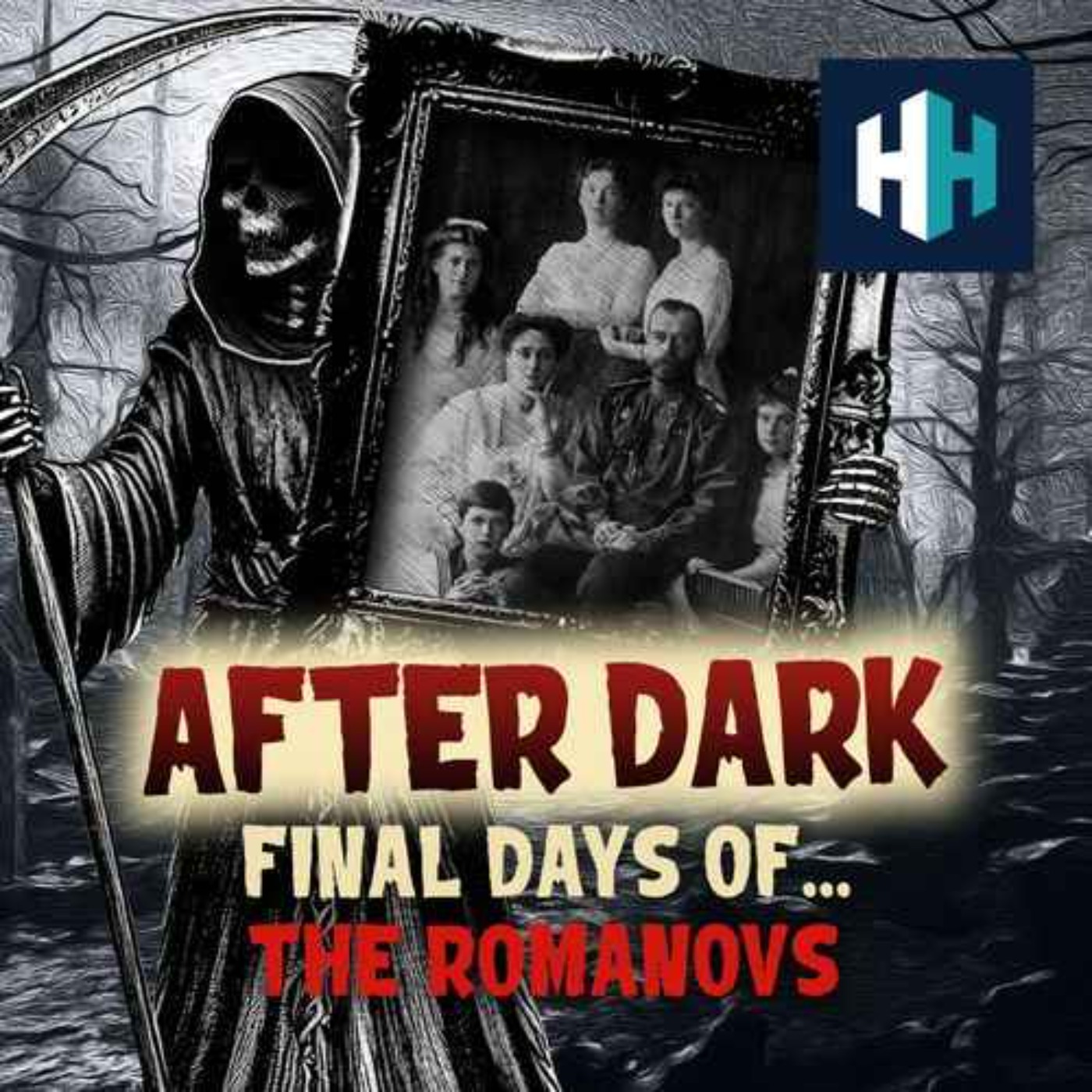
Loading summary
Transcript52 lines
- [00:00]
Anthony Delaney
Hi, we're your hosts Anthony Delaney and Maddy Pelling and if you would like After Dark, Myths, Misdeeds and the Paranormal ad free and get early access.
- [00:10]
Maddy Pelling
Sign up to History Hit with a History Hit subscription. You can also watch hundreds of hours of original documentaries with top history presenters and enjoy a new release every week.
- [00:21]
Anthony Delaney
Sign up now by visiting historyhit.com subscribe.
- [00:27]
Helen Rapoport
Did you know that parents rank financial literacy as the number one most difficult life skill to teach? Meet Greenlight, the debit card and money app for families. With Greenlight, you can send money to kids quickly, set up chores, automate allowance and keep an eye on your kids spending with real time notifications. Kids learn to earn, save and spend wisely and parents can rest easy knowing their kids are learning about money. With guardrails in place. Try Greenlight Risk free today@greenlight.com Listen Ryan.
- [01:01]
Ryan Reynolds
Reynolds here from Mint Mobile. I don't know if you knew this.
- [01:03]
Helen Rapoport
But anyone can get the same Premium Wireless for $15 a month plan that I've been enjoying.
- [01:09]
Ryan Reynolds
It's not just for celebrities, so do.
- [01:11]
Helen Rapoport
Like I did and have one of.
- [01:13]
Ryan Reynolds
Your assistant's assistants switch you to Mint Mobile today.
- [01:16]
Helen Rapoport
I'm told it's super easy to do@mintmobile.com Switch upfront payment of $45 for 3 month plan equivalent to $15 per month Required intro rate first 3 months only, then full price available, taxes and fees extra. See full terms@mintmobile.com if you're a maintenance supervisor for a commercial property, you've had to deal with everything from leaky faucets to flickering light bulbs. But nothing's worse than that ancient boiler that's lived in the building since the day it was built 50 years ago. It's enough to make anyone lose their cool. That's where Grainger comes in. With industrial grade products and dependable, fast delivery, Grainger can help with any challenge from worn out components to everyday necessities. Call clickranger.com or just stop by Ranger for the ones who get it done.
- [02:03]
Maddy Pelling
Hi there, it's Maddie. I'm just jumping in to let you know that this episode contains some sensitive content. So if that's not for you, check out our back catalogue of amazing episodes. And if you're sticking with us, enjoy. We join the Romanov family as they leave Alexander palace on 1st August 1917. Having had only a couple of days of warning, the seven Romanovs and their skeleton staff, including Alexandra's lady in waiting and the loyal family doctor, carry their bags from the wing in which they have been confined and converge in the semicircular hall. Bright and airy, with walls covered in smooth white artificial marble, this is a room filled with memories. It is here and in the portrait and billiard halls, through archways on either side, that in generations past, the Romanov family have welcomed guests for gala dinners, balls and receptions. In the portrait hall, guests would feast on cold hors d'oeuvres, bread, cheese and cold cuts, all washed down with French champagne and vodka. Next, the guests would flood into the semicircular hall. Tables adorned with silver ornaments and set for 10 or 20 guests would be placed around the hall, seating four or 500 in total. There would be a plate for each of the seven courses and a menu listing the food to come. Fish, soups, fowl, salad, entree, roast, dessert, then sweets. Servers would flit around, observing Russian court etiquette in which a meal never lasts more than an hour. Seasoned guests were careful never to place their cutlery down before finishing a course, lest their plate be whisked away. This room would buzz and glisten with life on those nights. For the young Romanov family, this has become less a space for entertaining the masses and more one of domesticity, as Nicholas, Alexandra, and their children made this their home. The semicircular hall was often a playground, indoor slides and toy cars prompting happy squeals of enjoyment that would reverberate around the high ceiling. And then there were Sundays when the family would sit, the servants behind them, to watch a silent movie or a slideshow projected onto the wall through a square hole. Quieter evenings, definitely, but moments cherished by all. During the summer, the double doors to the park at the front of the palace were often flung open. One could look through them for a clear view of the wide expanse of formal gardens. It's these doors that the family proceed through now once again open, this time in much more reserved circumstances. Weighed down with bags, dogs at their heels, together they step through the grand marble columns of the doorframe and take one more glance at the high ceilings of their family home, to which they will never return.
- [05:48]
Anthony Delaney
Hello, and welcome back to After Dark. My name is Anthony.
- [05:52]
Maddy Pelling
And I'm Maddie.
- [05:53]
Anthony Delaney
And we are once again so lucky to be joined by historian Helen Rapoport, who is going to take us through the final few months of the final imperial family of Russia. Now, in the first episode, which, if you haven't listened to, I would suggest that you go back and listen to that now. We left the royal family at the Alexander palace, and they were about to leave, and Helen was just about to take us on that journey, and it's that journey that we're going to talk about now. So, Helen, we'll get right into it because I know people will be eager to know what happens next. But we see a move again, don't we? The family are moved again, and this time they're moved from the Alexander Palace.
- [06:35]
Ryan Reynolds
Yes, the family were moved to a place called Tobolsk in Siberia. It's a very good choice, actually, because in winter it was completely locked in by snow and ice and pretty much inaccessible. So they were taken to Tobolsk to a place that was pretty much the only grand, well, not grand house, but substantial house in the town called the Governor's House. And they were incarcerated. Well, not exactly incarcerated. They were put under house arrest there. But at least the house had a sort of large area outside where they could walk and build a snow mountain. Actually, during the winter, the children played out and pulled a sledge around so they had some space to exercise, but they didn't have all the gardens and trees and the beautiful park that they'd had at the Alexander Palace. And the house was okay. I mean, they crammed in there with the few retainers they were able to take with them. But the house was perishingly cold. And you see in the girls letters to their friends, them talk about how desperately freezing cold the place was through that winter. And so they suffered the privations of everyone else. They were all on food rations and their life was very paired down. But it's interesting to go back to what I said earlier about their ability to be contented with very little. Was that Maria actually said at one point, the third daughter, Maria, she said they were very contented, they were very happy at Tobolsk. They were safe, they were with each other. And they would have been happy to carry on living in exile there if they had been allowed to.
- [08:25]
Maddy Pelling
Yes, in episode one, we spoke about their life under surveillance, under the guardianship of the soldiers who were keeping them there, and that they had certain routines and certain privileges, albeit under this constant threat and watchfulness. And here again, Helen, we see the family fall back on their religious faith. But also you mentioned there that the girls were still writing to their friends. I assume that those letters would have been opened and read by the people guarding them. But there is some level of freedom within this prison, isn't there?
- [09:05]
Ryan Reynolds
I mean, yes, certainly. All the time they were at Tobolsk, they were still able to write and send letters, receive letters, very occasional parcels of food and gifts from friends elsewhere in Russia. But the minute the Bolsheviks seized power in October 1917, the whole regime got much more strict because different guards were sent out and they were much more intimidating. The family were really kind of closed in on themselves, and there was less and less freedom as time went on there.
- [09:42]
Maddy Pelling
So, Helen, just give me a little bit of background there, because we have this initial revolution, and the Tsar, as we heard in episode one, abdicates. He abdicates on behalf of his son as well. That power structure is no longer in place. But in October 1917, there is what is now known as the October Revolution, and the Bolsheviks do take control. So how many different factions are there? What's going on in Russia? And why do the Bolsheviks prevail over other people?
- [10:07]
Ryan Reynolds
The Bolsheviks effect. I don't really like to call October a revolution. It wasn't. It was a couple. The Provisional Government had fallen apart. A lot to do with the distractions of trying to keep Russia in the war. It was an absolute nightmare trying to keep Russia in the war. By the time October came, there was so much disorganization, disagreement, inefficiency within the Provisional Government that it was dying a natural death when it came to the actual takeover by the Bolsheviks. They literally walked into the Winter Palace. Forget about the film Battleship Potyemkin. That's a nonsense. They didn't storm the palace. The Bolsheviks strolled in and proceeded. You know, a lot of the revolutionaries then proceeded to go down to the wine cellars and get very drunk. The Bolsheviks were canny. They were quick. They seized power. But it was very tenuous power for quite a long time. And the problem for the Bolsheviks having seized power is what on earth were they going to do with the Romanos? They didn't want to allow them out of Russia because the big fear for Lenin's government, of course, was if they allowed any of the Romanov family out of Russia, they could become a rallying point for a counter revolution. And in fact, that's what's happened, because there was already counter revolution and civil war brewing in Russia, even with them in captivity, because the forces known as the Whites were uniting with other factions and splinter groups fighting the Bolsheviks, particularly in Siberia. So what happened out at Tobolsk was things got increasingly dangerous, even keeping the Romanovs out at Tobolsk, because revolutionaries were vying to take control of the family. They had become political pawns. And the big turning point came in the New Year of 1918. The Bolsheviks pulled Russia out of the war. They made the Treaty of Brest Litovsk with the Germans pulled Russia out of the war. And Nicholas and Alexandra were both absolutely devastated by that, because Nicholas felt his decision to abdicate had been totally betrayed. And he was right. He should not have abdicated, because he abdicated for the sake of Russia, hoping it would unite Russia in the war effort. And it didn't. And now the Bolsheviks had made this awful political compromise. And the worst of it was people behind the scenes were saying, oh, well, the Kaiser will get them out. You know, the Kaiser will see this out to safety. And Nicholas and Alexandra both had said categorically to people who were eyewitnesses at tomorrow they would rather die than be saved by the Germans. So they sealed their own fleet, really then, because they would not leave Russia now, even if they were given the opportunity to do so.
- [13:08]
Anthony Delaney
You said earlier, Helen, that the Romanovs became a focal point for people who may have been against the Bolsheviks. And you said that they were wondering what to do with them. Well, the answer comes really in that they move them. That becomes one of the things they move them yet again. And this constant instability at this point now really must be shaping the experiences of the family more and more. I have a two point question for this, really. The first being, what was this move all about? Where did they go and what was it like for them? But more importantly, you have done an awful lot of research specifically on this next part of their lives, haven't you? And I'd just love to know, from your perspective as a historian, what was it about this part of this big moment in time that drew you to this specific place?
- [13:57]
Ryan Reynolds
It's very interesting. When it was first suggested to me that I write about the Romanovs, being a Russian specialist, I kind of winced and said, oh, no, I'm not interested in all the bling and palaces and stuff. And it was suggested I should look at the very end of their story. And because I have quite a visual imagination when I write my books, I do concentrate on narrative and imagery and quite a cinematic view of a story. When I looked at the end of the Romanov story, I realized when I looked at what material was available, that the last two weeks of their lives were an incredibly tense countdown to their murders. And that's why I decided to write my first book about them and called it Ekaterinburg, which was about their time the last two weeks in the apatie of house of Dekaterinburg, because the minute the Bolshevik government realized things were getting too hairy in Tobolsk, they decided they're going to have to move them to an even more entrenched position of control. And this is when they decided to move them to Akaterinburg, which is a place at a big junction of the railways in Siberia. It was also a heavily industrialized area, absolutely swarming with Red Guards, with committed hardline Bolsheviks. So they moved the family to a place called the Ipatiev House. It had been requisitioned by the Bolsheviks at very short notice and they moved the family there. And the guard was provided by volunteers, eager Bolshevik volunteers from the local factories and elsewhere, some soldiers as well, but mainly Bolshevik soldiers, but mainly volunteers who thought it was an honor to guard Nicholas the Bloody, you know, the horrible blood stained Tsar. And what is so ominous about the family's arrival at Ekaterinburg was first of all, the minute they walked through the door, the commandant told them, you are now entering a prison. No more special privileges, no more, you know, none of the things they'd been able to enjoy at Tobolsk and prior to that at Alexander Palace. This was a prison regime. No visitors, no mail in or out, no parcels, no nothing. Total, total isolation from the outside world. And to make it worse, the most frightening and symbolic thing about that imprisonment was that the Bolsheviks erected a double high palisade, a wooden palisade round the house, which meant that the outside one was guarded, in between the two was guarded, and then inside the second palisade was guarded. It was an absol fortress prison.
- [16:53]
Maddy Pelling
I'm looking at a photo of it now, actually, Helen in front of me, and it's a photo that is taken from outside of the house at a few paces and you can see that wooden balustrade all the way around. And you can see just a hint of the house behind. You can see the roof and some of the sort of architectural details there maybe some top windows, but they couldn't.
- [17:13]
Ryan Reynolds
See outside the windows. They painted the windows with whitewash so the family could not even see out of them. And through the heat of the summer, June, July, when it was stifling in the house, they begged them to allow just one, because the windows were sealed, to allow a little top window open here and there to get some fresh air in. So it was an incredibly oppressive situation to be in. They could hear what was going on outside. They could probably hear the distant gunfire from fighting because white and counter revolutionary forces were approaching Yekaterinburg along the Trans Siberian railroad. They could hear the coming and going of military equipment, of rattling artillery, you name it. Must have been very frightening. But they couldn't see and they couldn't speak to anyone or write to anyone to find out what was going on in the outside world.
- [18:09]
Maddy Pelling
Let's focus for a second on the relationship in that space then, in that incredibly pared back prison space that the family now find themselves in between the Roanobs themselves and the guards. As you mentioned, the guards are mostly volunteers from the local factories. These are people who have lived in, I suppose, relative poverty. They're now part of this huge movement. Russia as they know it in their lifetimes has completely changed. And we spoke in episode one about the mysticism around the royal family, that they were elevated, that they were deemed unearthly in some way and separate from everyone else. And of course, that has been completely broken down and eradicated now. So what must it have felt like for those volunteer guards to stand in the presence of these people? Did they see them just as people to be hated and reviled? Or do you think there was some element of that mysticism, that imagined difference that still endured in that space? Did they see them as separate from themselves?
- [19:14]
Ryan Reynolds
One of the things that was said by several of the young, and a lot of them were very young men, late teens, early 20s, young guards, is they were taken aback about how ordinary and relatable the family were. The girls were lovely. They chatted to them, they showed them their photograph albums. They asked them about their families. Even Urowarsky, the man, the commandant who organized the murders of the family in the house, said, well, Nicholas was actually quite a decent chap, really. If he hadn't been tsar, I wouldn't have wanted to kill him. This is the ghastliness of it all. There were an ordinary, decent, loving family. In any other situation, those guys probably would not have wanted or even thought about murdering them. And how any of them could have killed the children is beyond belief, really, because they were lovely children. They engaged well, the older two, less so. But Maria and Anastasia and Alexei did engage with the soldiers and chat to them insofar as they were able. You know, it's the thing you've heard of, of Stockholm syndrome, when people are kept captive in close proximity with their captors, they often develop relationships. And the girls did become quite, you know, friendly with the soldier and chatted to them. So there wasn't this awful hostility on the part of all their guards. Some of them were very anti and aggressive, but some were quite sympathetic to the Romanovs.
- [20:48]
Anthony Delaney
So what's very clear there is you mentioned the word murder, Helen. So we know that this, and probably people know anyway, this isn't going to end well. So how do we get to the point where we are moving the Romanovski quite consistently to the point where death seems to be their murder, seems to be the only way to dispose of them in any kind of meaningful way. How do we get to that point?
- [21:14]
Ryan Reynolds
Well, first of all, can I say it's very important we use the word murder. I get really annoyed by references to the execution of the Romanovs. They were not executed, they were not put on trial, they were not formally condemned. You know, we have to face the fact this was a brutal and terrifying murder. So, you know, that's the most important thing to bear in mind in terms of what to do with them. It rapidly became clear to Lenin's government they only held on to the family for as long as they thought they might be useful to them in some kind of bargaining power with the Germans. But they'd done the deal with the Germans and you know, with Brest Litovsk. And there was a big meeting in the Central Committee in Moscow in late June of 1918 where Lenin and his cohorts basically decided because of the situation with the violent civil war and the approaching anti Bolshevik forces, they were heading for Ekaterinburg. They knew Ekaterinburg was going to fall. Now what were they going to do? Were they going to sit and wait for the whites to rescue them or try and get them out? No. So it was basically agreed that when the time came, Lenin effectively rubber stamped permission for the local Ekaterinburg Bolsheviks to do away with the family because they were no longer of any use to them but they did not want them to fall into counter revolutionary hands. This was really important because they, they could have been used as a rallying point to fight back against the Bolsheviks. So it was basically decided that when the counter revolution was at the gates of Katerinburg, they would kill the family. Foreign.
- [23:24]
Helen Rapoport
This is Paige desorva from Giggly Squad. Opill is a game changer for sexual reproductive health. They're the first over the counter daily birth control pill available in the U.S. finally, the days of needing a prescription to get birth control are over. Opill is FDA approved, no prescription needed, full prescription strength, estrogen free and available online and at most major retailers. So when there's no prescription, no appointment, there's no hassle, no more waiting at the doctor's office to get a prescription. Opill will be easily accessed over the counter in store or online and will be ready for when you need it. Opill is available online and at most major retailers. Use code giggly for 25% off your first month of opill@opill.com dear old work platform. It's not you, it's us. Actually, it is you. Endless onboarding, constant IT bottlenecks. We've had enough. We need a platform that just gets us.
- [24:21]
Ryan Reynolds
And to be honest, we've met someone new.
- [24:23]
Helen Rapoport
They're called Monday.com and it was love at first onboarding. Their beautiful dashboards, their customizable workflows got.
- [24:31]
Anthony Delaney
Us floating on a digital cloud nine.
- [24:33]
Helen Rapoport
So no hard feelings, but we're moving on. Monday.com the first work platform you'll love to use. At 1-800-Flowers.com we know that connections are at the heart of being human. Whether celebrating life's joys or comforting during tough times, 1-800-Flowers helps you express what words can't. For nearly 50 years, millions have trusted 1-800-Flowers to deliver thoughtful gifts that help create lasting bonds. Because it's more than just a gift. It's your way of showing you care. Visit 1-800-flowers.com acast and connect today. That's 1-800-flowers. Com acast. Ryan Reynolds here from Mint Mobile with.
- [25:12]
Ryan Reynolds
A message for everyone paying big wireless way too much. Please, for the love of everything good.
- [25:17]
Helen Rapoport
In this world, stop with Mint. You can get premium wireless for just $15 a month.
- [25:22]
Ryan Reynolds
Of course, if you enjoy overpaying. No judgments. But that's weird. Okay, one judgment.
- [25:28]
Helen Rapoport
Anyway, give it a try@mintmobile.com Switch upfront payment of $45 for 3 month plan equivalent to 15 per month required intro rate first 3 months only, then full price plan options available, taxes and fees extra. See full terms@mintmobile.com.
- [25:50]
Maddy Pelling
So, Helen, this decision is made to murder the family. As you say, it's not an execution, it is a decision to murder them. Can you tell us what happens on that night? Blow by blow? Because it's remarkable when we think about the chaos of Russia at this moment and all these complex political machinations going on and these big shifts taking place. And then we have this house with this ordinary, relatable family inside as they appear now to people. And they're about to meet the end. So how does that night begin? What takes place?
- [26:28]
Ryan Reynolds
Well, there were just, I have to say, prior to that, there were discussions rather almost sometimes reading about them. It's almost like black comedy. It's so hideous. You know, Yurofsky and his cohorts went out to the forest to recce for a location to dump the bodies. And then about two nights before, when they knew they were going to kill them. Yurawski had to decide how. And they were having these absurd discussions about going into their rooms in the dead of night and dropping hand grenades on them or stabbing them and all these ridiculous discussions. And then eventually, well, Yurowski decided it had to be handguns. So the night before they decided to kill them, he issued the handguns. Now, the only trouble is that some of the men he issued the handguns too. They were old issue army Nagants, Russian army Nagants, they had one or two Colts and the OD better functioning gun. But as such, some of the men given guns to shoot with were not practice killers by any means. They had had no practice with those particular guns. They had had no experience in how you kill several people in a crowded basement room in the dark or semi darkness. So the whole thing was a monumentally hideous, shambolic, gruesome mess. They did not kill the family efficiently. And one of the most interesting things was I met up, I specially sought out. It took a lot of difficulty to find him, but I sought out a ballistics forensics expert who was an expert witness on court cases. So he'd done a lot of work with the use of guns and, you know, ballistics. And he talked me through how you kill people with guns and what happens when you crowd people into a room with killers who aren't very experienced. And it was very interesting because he explained to me how easy it is once there's chaos and smoke and screaming and people running around, how easy it is to miss and botch the killings. Which is why he said efficient assassins should have killed them in about 20 seconds. Instead, it took 20 minutes to finish the family off because the killers missed. They had to bayonet the girls. I mean, the only people who had a quick death really were Nicholas and Alexandra, because the minute the guy gave the order, Yurowski gave the order to shoot. All the killers wanted to claim that they shot the Tsar. So they all killed Nicholas, they all fired at Nicholas. So it was a hideous, hideous mess, the whole thing.
- [29:09]
Maddy Pelling
I'm sort of lost for words. I mean, it's so. It's so, as you say, Helen, gruesome and tragic and horrifying. Did the family themselves know that this was happening? Because we know that they were in their bedrooms in the house, that they were told in the night to get dressed and they were then sent to the basement. Do you think at that point they knew what was happening? Did they simply think they were being moved again?
- [29:34]
Ryan Reynolds
Well, this is a really big moot point. You know, $64,000 question, as they say. I think fundamentally Nicholas knew his head was on the block and sooner or later retribution was coming down the line to him. And I suspect Alexander, too, thought that she and her husband would be killed. Or even if they took Nicholas away to kill him, she would want to share his fate. No one ever thought they would kill the children. And when that night they sent them down, remember they had been moved before, summarily told, you know, you're going out to Tobolsk, and you know, they had been in a captive situation for a year now, over a year. So when they were taken down to the basement room, they were told they had to go there for their safety. There was gunfire and fighting. This is the Czechs army. Remnants of the Czechs coming back through with the White Russians, were approaching Yekachtenberg. And they took them down there for their safety and said, we're going to bring trucks and we're going to move you somewhere else. So initially they complied very meekly, very quietly, did as they were told, went down. I don't think they had any information that their moment had come. Nicholas had always been told that he would be put on a train and taken back to Moscow for a big show trial, because that's what Trotsky wanted and was planning. So he would never have expected being summarily killed like that. So I don't think in that sense, they knew the moment had come until it actually came. But one of the elder girls in particular, Olga, was very melancholic and had been quite ill, thin, anorexic, full of gloom and despair and apprehension that something was going to happen to her parents. She feared for her beloved father, yes, but I don't think she really. I think if any of them feared. I don't think they vocalized it to each other. Certainly Nicholas and Alexandra would not have wanted to frighten their children. But I think in his heart, Nicholas knew it was the end for him sooner or later. So they were taken down to this room, and in comes Yurovsky with a piece of paper and says, you're gonna be shot. Boom, boom. The people's revolution have decided. And bang. Then the killing started.
- [31:57]
Anthony Delaney
It is, as you say, Helen, and you paint such a clear picture of what it might have been like down there at that time and the confusion. I mean, I remember hearing that during my undergrad days, but I'd forgotten in the interim. And just for that chaos that ensued for those 20 minutes, so easy to forget how long that must have felt to the Family. Especially the family who weren't necessarily killed immediately, but, as we know, killed they all were.
- [32:26]
Ryan Reynolds
And their loyal servants, particularly the devoted family doctor, Dr. Boypkin. And the three servants, troupe, the footman, Kharitonov, the cook, and Anna Dimidova, the chambermaid, because they had voluntarily gone with the family to share their fate, as had other members of the entourage who had been with them in Tobolsk and before that at Alexander Palace. But of course, each time they were moved, the entourage was shrunk down. But those people shared their fate and their martyrdom as such.
- [33:00]
Maddy Pelling
One of the details that for me encapsulates this moment, where the brutality of the revolution and the now lost grandeur of the life the Romanovs have enjoyed comes together, is in the fact that a lot of the family had gems and jewels sewn into their clothing. I think I'm right in saying that.
- [33:20]
Ryan Reynolds
Was their insurance policy.
- [33:22]
Maddy Pelling
Yes. Now, it's often said that these jewels prolonged their deaths by protecting their bodies. Is there any truth to that?
- [33:32]
Ryan Reynolds
The bullets bounced off there, the jewels in their corsets. The bullets did not bounce off them. First of all, they didn't wear corsets. They were like loose fitting camisoles, where all through the winter in Tobosk, the girls and their mother had sat sewing the jewels and necklaces and odd sundry pearls, whatever it was, they had brought out of the Alexander palace with them, because they knew if ever they were allowed to go into exile, that was the only currency they had. So they disguised jewels behind buttons in hats, they hid them in their skirts, they sewed things into their camisoles. They even made a camisole for Alexei to wear. He had jewels concealed in his hat. They did not bounce off them. The reason that the children were not killed quickly was that the killers were incompetent and they couldn't shoot straight. And the room was full of smoke and dust and dirt and people screaming. And that's why they had to finish them off with bayonets.
- [34:31]
Anthony Delaney
Let's take us to the removal of the bodies then. Helen, what happens there?
- [34:37]
Ryan Reynolds
So they murdered the family. The room is running with blood. They have the seven members of the family and three retainers and their doctor, all those corpses to move. They shoved them, crammed them in a little rickety Fiat lorry and took them nine miles out into the Koptaki Forest to this place. They thought they were going to dump the bodies. They thought it was a mineshaft and they didn't blinking well bother to check properly. It was just A mine working, quite a shallow mine working. They threw the bodies in there, and then they go back to Katzenburg and Yurovsky. The commandant realizes all the local peasants are going to come and find the bodies in five minutes and there'll be holy relics. So the next night, he. He goes back, they dig out the bodies from this shallow area and move them about half a mile down the road to where they actually did bury most of the family in again, quite a shallow grave under a crude road through the forest and covered it with old railway sleepers. That's the site that was found by Geli Ryabo in the late 70s, actually. But they had to keep quiet about it. But when they took the bodies there to bury them, they thought they were going to be able to destroy the bodies with sulfuric acid or burning. I mean, again, total, total incompetence and lack of planning. So what Yurovsky said was, we'll take aside two of the children, which were Maria and Alexei, and try and burn their bodies. And that's why when the site was excavated finally, after the fall of communism in the early 90s, there were two corpses missing, because the bodies of Alexei and Maria were moved a few yards away and they tried to incinerate them, not very successfully. And those were the bodies that were found in 2007.
- [36:37]
Anthony Delaney
Well, that, as you say, brings us up to 2007, where we began at the start of episode one. So I think it's probably a very good place to finish. But before we go, Helen, I'd like to know what it was like being. I know you weren't necessarily in the forest, but what it was like being on the ground there in Russia when that discovery was being made. Was this something that was seen as culturally important? Were people aware that this was history in the making, or was it widespread when you were there?
- [37:06]
Ryan Reynolds
Well, all I knew when I was actually there doing the research, and of course, I deliberately went to Katerinburg for the July days. That's where they celebrate, or commemorate rather, the anniversary of the Romanov murders in Katerinburg every year with an enormous all night vigil, massive ceremonial church service so huge that you can't get everyone in the church and they're all pouring out of the doors and down the grassy banks all around. I was there for the all night vigil, and I did hear a rumor that they had been digging in the forest, but that's all I knew at the time. But Katerinburg, since the fall of communism, had become this incredible place of pilgrimage and commemoration where the Romanovs were remembered and commemorated every July 16th stroke 17th that night. And it's an extraordinary experience to go there and stand with the pilgrims. And in 2018 I had hoped to go but wasn't able to to for the hundredth anniversary. But I watched the live video of the ceremony that night. I think it was something like 200,000 people were there. It was astonishing. And so that has become this very emotive place of pilgrimage, of coming together to remember and celebrate and revere the Romanovs because they are very much part of the fabric of Russian Orthodoxy now.
- [38:38]
Anthony Delaney
Well, I think that is the perfect place to leave this two part episode on the Last Days, the Final Days of the Romanovs with Helen Rapoport as we've been speaking to you across both of these episodes. Helen, of course, as we've said, is the author of several books on this period. If you have enjoyed listening to this two part, then go and check out our other Final Days episodes. You can find the Final Days of Anne Boleyn in there. Leave us a five star review Wherever you get your podcasts, it helps other people to discover us. And until next time, happy listening.
- [39:22]
Helen Rapoport
If you're a facilities manager at a university, you know students rely on the cafeteria for breakfast, lunch, dinner and the occasional late night. So when a dishwasher breaks down and dirty plates pile up, the mess hall can turn messy in the blink of an eye. Enter Grainger. With over a million industrial grade products and fast delivery, the product you need now is never far away. So you can turn that dishwasher back into a lean, clean washing machine. Call click ranger.com or just stop by Granger for the ones who get it done. Did you know that parents rank financial literacy as the number one most difficult life skill to teach? Meet Greenlight, the debit card and money app for families. With Greenlight, you can send money to kids quickly, set up chores automate allowance, and keep an eye on your kids spending with real time notifications, kids learn to earn, save and spend wisely and parents can rest easy knowing their kids are learning about money with guardrails in place. Try Greenlight Risk free today@greenlight.com Listen.