← After Dark: Myths, Misdeeds & the Paranormal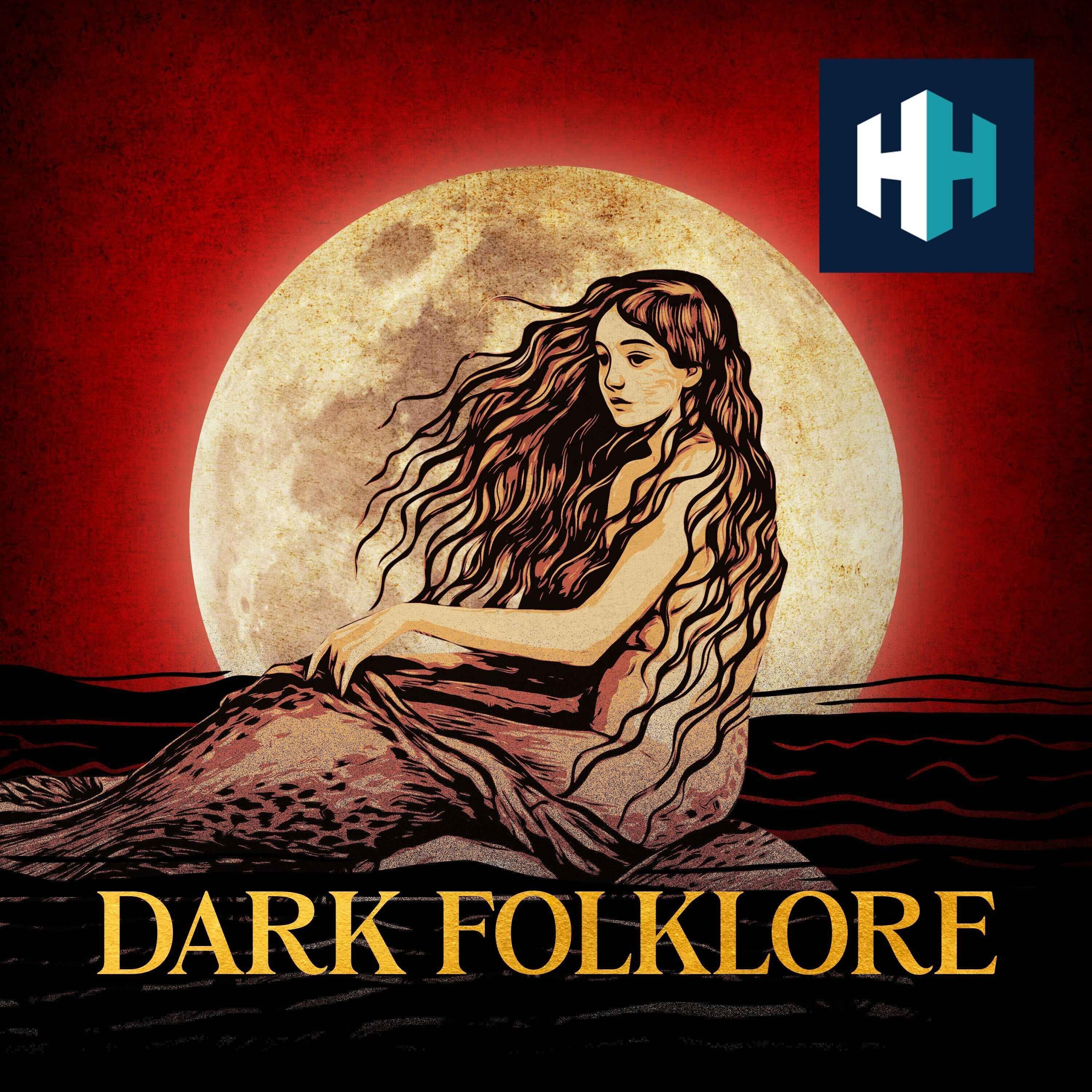
Loading summary
Transcript48 lines
- [00:00]
Anthony Delaney
Hi, we're your hosts Anthony Delaney and Maddy Pelling, and if you would like After Dark Myths, Misdeeds and the Paranormal ad free and get early access, Sign.
- [00:10]
Maddy Pelling
Up to History Hit with a History Hit subscription. You can also watch hundreds of hours of original documentaries with top history presenters and enjoy a new release every week.
- [00:21]
Anthony Delaney
Sign up now by visiting historyhit.com subscribe.
- [00:27]
Sleep Number Ad
They say opposites attract. That's why the Sleep Number Smart Bed is the best bed for couples. You can each choose what's right for you whenever you like. You like a bed that feels firm but they want soft. Sleep Number does that. You want to sleep cooler while they like to feel warm. Sleep Number does that too. Why choose a Sleep Number Smart Bed so you can choose your ideal comfort on either side. Sleep Number Smart beds start at $999. Price is higher in Alaska and Hawaii. Exclusively at a Sleep Number store near you. See store or sleepnumber.com for details.
- [01:00]
Holly Fry
Our Skin Tells a Story Join me, Holly Fry, and a slate of incredible guests as we are all inspired by their journeys with psoriasis. Along with these uplifting and candid personal histories, we take a step back into the bizarre and occasionally poisonous history of our skin and how we take care of it. Whether you're looking for inspiration on your own skincare journey or are curious about the sometimes strange history of how we treat our skin, you'll find genuine, empathetic, transformative conversations here on our skin. Listen to Our skin on the iHeartRadio app, Apple Podcasts, or wherever you get your podcasts.
- [01:48]
Donald Smith
Encounters with the Kay Three young hunters in the depth of winter set out into Glen A off the Dee Valley in the Cairngorms. After deer in the depth of winter, they headed up the glen. They came across three or four hinds. They took a first shot, they wounded a hind but didn't kill it, and the hinds turned up into the mountains and they followed. And soon they hit hard weather. The snow came down, darkness set in, and they were lost. Still, they could see the spur of blood. They kept going, but soon they had no idea where they were, how to get back towards the Dee Valley, whether they'd strayed off Glena. They spent that night in freezing conditions, huddled up against a big rock, just trying to survive, to keep warm. And when a weak sun came up the next morning, there beside them was a bothy, an old bothy with some smoke coming out of it. They went to the door. The door opened and there was an old woman in there, weathered face, deep blue eyes Long white hair tied back. Come in, she said, as if she were expecting them. Come in, she said. There's food here and there's some warmth. And she fed them. But then she turned to them. What did you do? She said to my children. Your children? The deer, she said. You shot that deer. Wounded but not killed. You should never hunt in that way. You should never take more deer than you need because they are my children. They belong to me. And they were terrified. They realized that this was the caill, the old mither, the mother of the dear people. But soon they fell asleep. And when they came to in the morning, the snow had passed, the light came up, but they were lying on open ground. And below them was the ruined remains of a bothy roofless. Nobody there, nobody in sight. They found their way back down Glena, down to the Dee. But they never, ever went hunting deer in Glena.
- [05:03]
Anthony Delaney
What a treat that we get to sit back and listen to a story on this episode. Hello and welcome to After Dark. My name's Anthony and I'm Maddie. And this month we are going to have four episodes and in each episode we're going to be looking at the dark side of folklore from across Scotland, Wales, Ireland and England. Now, as you might have guessed, we're starting with the dark side of Scottish folklore today and tales of the kayak, kelpies and selkies. Our guest who've just heard introducing the kayak, Donald Smith. And Donald has been at the very heart of Scottish storytelling traditions for decades. He is the founding director of the Scottish Storytelling Centre, which is if you've been to Scotland and been to Edinburgh, a landmark on the Royal Mile in Edinburgh. He is a storyteller and he has written and lectured widely on the folklore of Scotland. Donald, thank you for joining us on After Dark.
- [05:56]
Donald Smith
Great to be here. Great to meet everybody.
- [05:59]
Maddy Pelling
We're extremely excited to have you as a storyteller because that is such a big part of what we do here on the podcast. Donald, let's start with the kayak then, because you gave a flavour of her at the opening of this episode. But can you tell us a little bit more about who or what she is?
- [06:15]
Donald Smith
Sure. So the kayak is the most pervasive piece and yet little recognized piece of Scottish folklore. It's very, very old because the kayak, Carlin and Scott's kayak in Gaelic, seems to be some form of background weather goddess, a creator, the woman who stirs the powers of nature, who harnesses and creates the forces of the weather and the seasons. And she is remembered in endless place names and little local traditions. But I think for a long time she was shoved into the background because it kind of smacked of sort of fertility goddesses or power of nature. So that wasn't approved by the churches or by the schools. But her stories have persisted and are remembered in so many parts when they all have this kind of edge of this liminal thing, where you go over this slight edge and you experience something that's beyond the natural and yet in some way is connected with the powers of nature.
- [07:32]
Anthony Delaney
And you mentioned there, Donald, that this is quite an old tradition. Do we have any idea how long the kayak has been around for?
- [07:39]
Donald Smith
I think it's our oldest piece of folklore and is certainly prehistoric. One of the signs of that is that a lot of the really old folklore is about the making of the landscape. So the kayak, all the time, there's these little stories, you know, she forgets to put the lid in the well, and the next moment we've got Loch Awe. She uses the Corivreken whirlpool to do her washing. That's the third biggest whirlpool in the world, between the islands of Scarbo and Jura on Scotland's west coast. So she's associated with all these things, and then she's part of the change of the seasons, because the lore, and this is remembered in many places, is that the kayak imprisons her daughter, Bride, who is the goddess of spring, to prevent spring coming, and she unleashes the forces of storm and hurricane and all the rest of it. The wild, shaggy goats of the storm, the stories say. But eventually the spring keeps coming back and eventually wins over, and then the kayak they see becomes Bride in the next cycle. It's very deeply rooted, and it's in all the languages and in every part of Scotland. It certainly goes back into prehistory.
- [09:07]
Maddy Pelling
It's so interesting to me, Donald, because as an English outsider, this is not a character, a figure in the landscape that I'd ever come across. And it's so fascinating because you say she's so pervasive and that she's been around for so many centuries, if not millennia, and that she, you know, possibly at various points, fell out of favour. I'm thinking in particular, you know, your reference there to her being sort of tied to fertility and the seasons and things like that, and how that might have been seen, I suppose, as a sort of enemy of Christ. But do we have a sense of her appearance, what she looks like when she does manifest in Front of people. And does that change over time?
- [09:46]
Donald Smith
Yeah. So you have met the kayak? Absolutely. Indefinitely. You've been in Scotland, because kayak is Gaelic for a veiled one, and that word is later used for a nun. And the veiling refers to. So in our sort of landscape and climate, you look to the mountaintops to see where the weather's coming from. So they say the kayak, she's making the weather. So when the weather changes, as it often does, and the mist and the rain rolls in over the hills, that's the kayak. So it's in that encounter with these natural forces, storm, flood, snow, wind and the seasonal changes that we encounter the kayak. And I think the univers, the ality of the lore, is because of that connection with the world of nature. There's an aspect of the kayak sometimes called the gyre, Carlin in the Scots side, and Beira, where she's depicted as a hag. She's the hag of winter and is quite a horrifying and savage kind of creature. But then that's slightly balanced. As in so much of folklore, the dark and the light is kind of intertwined imbalance because of this cyclical thing that the old kayak or the mother, and, you know, the lure as she takes some drops from the water of the well of life and that ensures that she then returns as the maiden, as bride, the maiden of spring in the next seasonal cycle.
- [11:26]
Maddy Pelling
And is she worshipped explicitly, Donald, in the past and today as well? I mean, you talk about her being sort of tied to these cyclical celebrations throughout the year, and these are celebrations that survive. You know, we mark the beginning of spring, we mark the beginning of the autumn and winter. And do people still think about and talk about her in this terms?
- [11:47]
Donald Smith
So there's two bits to that. There's much older archaeology. We have, for example, the Ballahoolish goddess, who's an image of a Celtic goddess, or pre Celtic goddess, who clearly is somehow connected with the kayak lore. But then the kind of folklore, as opposed to perhaps a kind of, you know, neo pagan celebration of the goddess, and that happens. And you can see that as an aspect of feminism. In some ways, folklore takes things a little bit more phlegmatically. And I had my first personal encounter with this kayak lore was working on a farm in the Ochil Hills in Stirlingshire and Clapmannsh, and you used to be able to look across the valley towards what they called the Lomond Gap, towards Ben Lomond and Loch Lomond. And that was where the weather came from. If you wanted to know whether you should be turning the hay or leaving it alone, you had to look through that gap. And the old farm workers, they used to say, aye, aye, well, hey. To look at Maggie's hole. Maggie's hole, they said. And, you know, Maggie's vagina, the kayak, the old Carlin's vagina, that was where the weather was coming through. So there was a kind of. There's a certain sort of matter of factness about recognizing that power of nature as something that people had to live with day in and day out. And we're learning that lesson again the hard way, you know, Tell me about.
- [13:28]
Anthony Delaney
Janet Boyman and how the kayak feeds into her story, because I think it gives us a really good example. You know, this is going back to the 16th century and obviously the kayak goes further back again, but it just situates us in a different period of time than our own and gives people an insight into that history.
- [13:45]
Donald Smith
Sure. So Janet Bouman's a story I've also felt very connected with because it's set in the old town of Edinburgh, very close to where the storytelling centre is now. And she was a healer, a wise woman. And in the time post the Protestant Reformation, the church had fallen out with the king and he decided to throw them a scrap and he gave them the power of trying and condemning witches. And Janet was the first to fall under this really terrible edict. And in her testimony, she said she was dealing with this very difficult case, this guy who had this terrible fever and it couldn't break. And she went. Went to the wells on Arthur's seat to consult Arthur and his queen at the well. And of course, this is fascinating because in the Arthur lore, Arthur's seat, Arthur's a giant in the original lore, but. And his queen, and she was given this. Was this manifestation at the well, and she was told to take the man's shirt and to dip it three times into the icy water and then to put it straight on him. So that was like a febrifuge and the fever was broken. And of course, there was lots of talk about this remarkable cure because this guy had been given up for loss and it resulted in her being put in trial and executed. So she was the first under that statute to be executed as a witch. So it's interesting that that witchcraft thing, the connection with the older fertility and nature wisdom and all the rest of it, there's this sort of connection between the two and a kind of denigration of that older tradition yeah, that's so.
- [15:40]
Maddy Pelling
Interesting, isn't it, that we often think about women, particularly women, but men as well, accused of witchcraft in the early modern period as operating or being seen to operate outside of the church and that sort of paternalistic form of religion. And here it's so explicit and it's being tied to those more ancient ideas. Donald I'm interested in the fact that the kayak in this situation is sort of being likened to King Arthur's queen, because of course we know that King Arthur's queen is Guinevere. Why is she being interwoven with these other mythologies?
- [16:13]
Donald Smith
So there's this whole sense of the queen of the fairy realm linking with so that whole lore about the idea of a fairy people as that then connection with the older background sense of a female force of nature. Of course, the female queen of the fairies is an even more ambivalent figure in the lore though, you know, so there's this kind of dark and light interwound there. You know.
- [17:01]
Sleep Number Ad
They say opposites attract. That's why the Sleep Number Smart bed is the best bed for couples. You can each choose what's right for you whenever you like. You like a bed that feels firm, but they want soft. Sleep Number does that. You want to sleep cooler while they like to feel warm. Sleep Number does that too. Why choose a Sleep Number Smart bed so you can choose your ideal comfort on either side. Sleep Number Smart beds start at $999. Price is higher in Alaska and Hawaii. Exclusively at a Sleep Number store near you. C store or sleepnumber.com for details.
- [17:34]
Holly Fry
Our Skin tells a story. Join me, Holly Fry, and a slate of incredible guests as we are all inspired by their journeys with psoriasis. Along with these uplifting and candid personal histories, we take a step back into the bizarre and occasionally poisonous history of our skin and how we take care of it. Whether you're looking for inspiration on your own skincare journey or are curious about the sometimes strange history of how we treat our skin, you'll find genuine, empathetic, transformative conversations here on our skin. Listen to our skin on the iHeartRadio app, Apple Podcasts, or wherever you get your podcasts.
- [18:21]
Anthony Delaney
So let's move then, Donald from the the misty hills of the kayak and we'll go into the dark waters of the Locks in and around Scotland. I want to know, because I lived in Edinburgh for two years and one of the things that you pass very, very regularly are the heads of two giant horses, which locals will tell you are the Kelpies and I didn't know what a kelpie was. So for listeners who don't, could you tell us what a kelpie is and why? Well, why we should fear them, I suppose.
- [18:49]
Donald Smith
A kelpie is a water horse, an inhabitant of deep pools or rivers or lochs, and not often a sea creature. And very sinister, very dangerous, because the kelpie is an alluring, usually male, but occasionally female, is an alluring figure who seeks to draw in and attract young men or young women and to draw them down into the depths of the loch and drown them. So it's really thoroughly sinister and nasty. And I can't help feeling that the Andy Scott sculpted kelpies there at Falkirk and the River Forth have been misnamed. Those are not really dark, horrible, sinister creatures. They're much more the horses that are associated with Manon, the God of the sea, the racing horses. And that area is surrounded by places.
- [19:55]
Holly Fry
Clack.
- [19:55]
Donald Smith
Manon. Sla. Manon. So I think the folklore has got a wee bit crossed wires there. The kelpies really are seriously nasty. Those marvellous horse sculptures are quite inspiring, I think.
- [20:12]
Maddy Pelling
That's one of the things that I love, though, about folklore, is how it kind of shapeshifts over time and how people use it for their own meanings, I suppose, and their own interpretations. And that's the thing that, for me, anyway, keeps it alive. But I am curious, Donald, about, first of all, what horses are doing in water at all. I mean, they're not a natural creature that you would find under the waves, but also how exactly it is that they drown people, because they are predatory monsters in most of the stories told of them, aren't they?
- [20:40]
Donald Smith
So once you're on the back of a kelpie, you can't get off, you're attracted. And of course, the kelpies, often in the stories, they have these beautiful bridles, beautiful, intricate bridles. And it's just the people want to get on the horse and have the bridle, and then before they realize they're being dragged, galloping straight into the loch and down into the deep, and you just. You can't get off. Once you're on, you can't get off. And I think that that has to have a connection with the fact that water is very misleading in Scotland. You know, people say, oh, look at that beautiful water. I did this myself as a youngster. Let's plunge in and have a beautiful bathe. The sun shining down, and you get about five or six yards out and suddenly the temperature plummets because that is very, very deep, dark water. I think the Kelpie lore had a kind of purpose to scare people off. These dark and deep waters of which we have so many. So many. Like Loch Ness, which contains as much water as all the lochs and lakes of England and Wales put together.
- [21:59]
Anthony Delaney
And you mentioned Loch Ness there. Do you think there's any mythical crossover between the Loch Ness story and the story of the Kelpies?
- [22:07]
Donald Smith
No, I don't, actually. I was just illustrating the depth of the water. I think that Loch Ness thing is more connected with that idea of some kind of primeval dragon like serpent. Not fitting with the kelpie model.
- [22:22]
Maddy Pelling
Well, talking of occupied and spooky bodies of water, I want to talk to you, Donald, about selkies. Not kelpies, but selkies. Because I think these are possibly my favourite folkloric monster being ever.
- [22:37]
Anthony Delaney
Yeah, me too.
- [22:38]
Maddy Pelling
I think for anyone who hasn't heard of a selkie, Donald, tell us what these beings are. Because they're. They're really fascinating and quite complicated, I think.
- [22:48]
Donald Smith
So Selkies are creatures who can move between seal and human form. And the way in which that metamorphosis or transformation happens is often in some quite dramatic encounter between the human world and the natural world. So there is a dark side. Some people say that the Kelpies are the fairy folk of the sea. And that you can be lured into that underwater world to join those who have drowned, who only have an existence now below the sea in the kingdom of the selkies. But there's also another aspect to it where there's love that springs up between the seal and the cumin. And that that love endures beyond these metamorphosis and transformations. So there becomes a kind of tragic love story element to it. So it's very, very rich mythology. It's very old, I think it's a mythology and it's loved in Ireland and Scotland very distinctively. Rather than mermaid stories, for example. And people are very engaged with that lore in the stories.
- [24:07]
Anthony Delaney
I think it might be difficult for people to imagine these seal people as it is. Give us a description, Donald, of what? If you're encountering a selkie, what are you seeing?
- [24:16]
Donald Smith
It's a complete change to human form so that the selkie can remove their skin and then they are completely human. And classically, you get the situation that the selkies come onto shore and they take off their skins and they can dance by the shore. Beautiful young women, selkies dancing with the shore. And of course, some human comes and chances on this and falls in hopeless love and desire for one of these beautiful creatures. And to try and trap them and keep them in the shore, they steal the skin. That's the start of what is sometimes a tragic outcome, where they end up separated because eventually the woman finds the skin, resumes it and leaves. Or sometimes in these stories, eventually the human goes to the sea and transforms into a seal person and becomes a selkie. But the thing is, look in the eyes of a seal. Just look in a seal's eyes and you realize immediately where this closeness with humanity. These are mammals, and they have these gorgeous liquid brown eyes. And you think I have a connection with those creatures? I think that that's where the basis of it comes from.
- [25:39]
Maddy Pelling
I suppose the thing with seals as well is that they pop up quite unexpectedly. And they're quite curious creatures, aren't they? And I suppose what I'm about to say suggests that I've been at sea for many years and that is absolutely not the case, but that they will sort of gravitate towards fishing boats and things like that. And they are quite playful. People often sort of compare them to dogs or dogs of the sea. And I wonder if there's something in that proximity between man and animal, Donald, that has bred this kind of story. You know, we've talked so much in this episode about proximity to the landscape, relationship between man and nature, and especially these sort of cyclical powers and forces that are beyond our control. And I wonder if that's what's happening here with people living, particularly along the Scottish coast, that it's a way of explaining and I suppose elevating as well, something of that relationship.
- [26:30]
Donald Smith
Yeah, I think that's absolutely it. And both the people and the seals are trying to live from the fish. And that thing about a seal suddenly popping its head up and engaging with you is such a common experience. And, of course, the seal population is growing again in many parts and thriving. But then there's also a conflict side to that as well, where. So a lot of the selkie stories have violence in it, where the humans are hunting the cell keys. And that's endured to modern times. We have these awful cowls of seal pups where they're clubbed to death, and it's just a massacre, essentially. That's not legal any longer in Scotland and not allowed. So there's definitely this close relationship through nature and living on the shore and the sea. And that has a connecting side and also an aspect of conflict. And violence, where, again, I think that element of potential darkness can come into these selkie tales.
- [27:38]
Anthony Delaney
As the founding director of the Scottish Storytelling Centre, I'm really intrigued, Donald, to hear what and where you think you sit in the continuation of these traditions because they are so incredibly important to national identity and to linking people with. And I also, in the same breath, I'm wondering if there's anybody in particular that inspired you in hearing these stories, that you have now taken up that mantle and moved forward with them.
- [28:09]
Donald Smith
So I think the continuing of the telling of these stories, in the emotional engagement and the way in which people go on evolving and changing the stories in relation to our present circumstances, I think these stories feel, to many people more relevant than ever. But the great storyteller and folklorist that inspired me was the Scottish traveller. Stanley Robertson, came from the northeast of Scotland. The Scottish traveling people being not Romany, although there's been a bit of intermarriage with Romani families and communities. The Travellers are an indigenous Scottish and Irish tradition. And the thing was that they, even to this day, do not attend school to the same number of weeks. And, of course, in the past attended school not at all. So this oral tradition of songs and stories was their form of culture and education. So they had this very powerful sense of it. And Stanley had all that. He had a whole family network of singers and storytellers, and he encompassed all that. But he had that capacity to engage with a fresh, contemporary public. And he was a master of the supernatural, of the dark side. He could draw you in and scare the shit out of you, if you're permitted to say that on this august channel. But then he could also just turn on a sixpence and bring humor into it.
- [29:44]
Maddy Pelling
You've answered so brilliantly the next question that I was going to ask about the power, I suppose, of storytelling. We are going to get Donald to tell us one final story before we go. Donald, we'd love to hear a final story about the selkie. So take it away.
- [30:04]
Donald Smith
A selkie hunter, a skillful hunter of the seals, lived on a remote coast in the west of Scotland. When this one day, he was a careful hunter. He did not shoot, he did not damage the skins of the seals. He crept up carefully and he plunged his knife into the shoulder, the neck and shoulder, to kill the selkie there and cause least damage to the precious skin. And on this day, he had crept up behind a big bull seal. He had thrust the knife into the seal's neck. But the seal, although a large Creature had incredible strength and rapidity of movement. And the seal pulled itself away and plunged into the seal escape, taking the knife with him. Now, that night, a stranger came to the seal hunter's door and asked him to come to meet a friend on the cliff tops, where he said, this friend would like to purchase seal skins from you. So the seal hunter agreed to go. And he went up onto the cliff top and he's looking around, where is your friend that we're going to meet? And at this point, this figure, dark, clothed in a dark coat with a shadowy face, seized him round the shoulders, squeezed him tight, breathed into his mouth and jumped off the cliff, taking him down, down, down. Underwater, the seal hunter is losing his breath. A strange glow, a tunnel. He's pulled in and drawn into an underground cavern and taken there to a side chamber in which this old, old man is lying with a dagger thrust into his neck and shoulder. And the dark stranger points to the man and says, draw the knife and kiss the wound, for he who makes the wound must heal it. And the seal hunter goes forward and very nervously draws out the knife and kisses the wound, the pucker wound, which is full of pus and muck. And when he kisses it, it begins to close up and heal. And that old man then stands and recovers and is able again to be a seal by sea, a human by land or in this deep undersea. Now, that's a fairly typical story of an encounter between the seal people and humankind. And in that story, the seal hunter has a good ending. He's taken back by the dark stranger again. The stranger breathes into his lungs to give him air to burst through the surface of the water and return to his home. But then there's an added contemporary bit to that story. The seal hunter never hunts seals again and decides to establish a sanctuary for seals and spends the rest of his life looking after and caring for the seal people. So it's interesting, I think that's not a traditional end to that story. I think that's an ending that's been added to show this relationship, with its darks and its lights, between humanity and the natural world. The seal people and the people of the land goes on evolving and changing and communicated and shared the emotional experience of it through storytelling.
- [33:55]
Maddy Pelling
That's a perfect story to end on for so many reasons. And I think one of the big takeaways that I've had from this conversation actually is the ecological focus of so many of these folk tales and the interest in and the moralising of that relationship between human beings and the land, the sea, the weather, nature itself. And I think that's what I'm going to take from this, that actually the stories that we tell can serve different purposes and have, I suppose, universal messages in them, but also messages that do change over time and that we can make of them what we will. So thank you so very much for that. Anthony, Are you similarly enthralled by the story of the selkie? Or is it kelpies all the way for you?
- [34:39]
Anthony Delaney
No, it's Selkie. I think the selkie gets my vote. I think that's the takeaway. I'll be going from this episode. But Donald, thank you so much. It's been such a pleasure to be taking on these stories for for myself, for some of the first times I'm hearing some of these stories. So thank you so much for sharing them with us.
- [34:57]
Donald Smith
Not at all. As the Storyteller says, it's good to talk.
- [35:00]
Maddy Pelling
If you've enjoyed this episode, you can get in touch with the podcast@afterdarkhistoryhit.com and don't forget to leave us a five star review. Please and thank you. Wherever you listen to your podcast.
- [35:18]
Sleep Number Ad
They say opposites attract. That's why the Sleep Number Smart Bed is the best bed for couples. You can each choose what's right for you whenever you like. You like a bed that feels firm, but they want soft. Sleep Number does that. You want to sleep cooler while they like to feel warm. Sleep Number does that too. Why choose a Sleep Number Smart Bed so you can choose your ideal comfort on either side. Sleep Number Smart beds start at $999. Price is higher in Alaska and Hawaii. Exclusively at a Sleep Number store near you. C Store or Sleepnumb for details.
- [35:51]
Holly Fry
Our Skin Tells a Story. Join me, Holly Fry, and a slate of incredible guests as we are all inspired by their journeys with psoriasis. Along with these uplifting and candid personal histories, we take a step back into the bizarre and occasionally poisonous history of our skin and how we take care of it. Whether you're looking for inspiration on your own skincare journey or are curious about these sometimes strange, strange history of how we treat our skin, you'll find genuine, empathetic, transformative conversations here on Our Skin. Listen to Our skin on the iHeartRadio app, Apple Podcasts, or wherever you get your podcasts.