Loading summary
Transcript26 lines
- [00:00]
Mike Corey
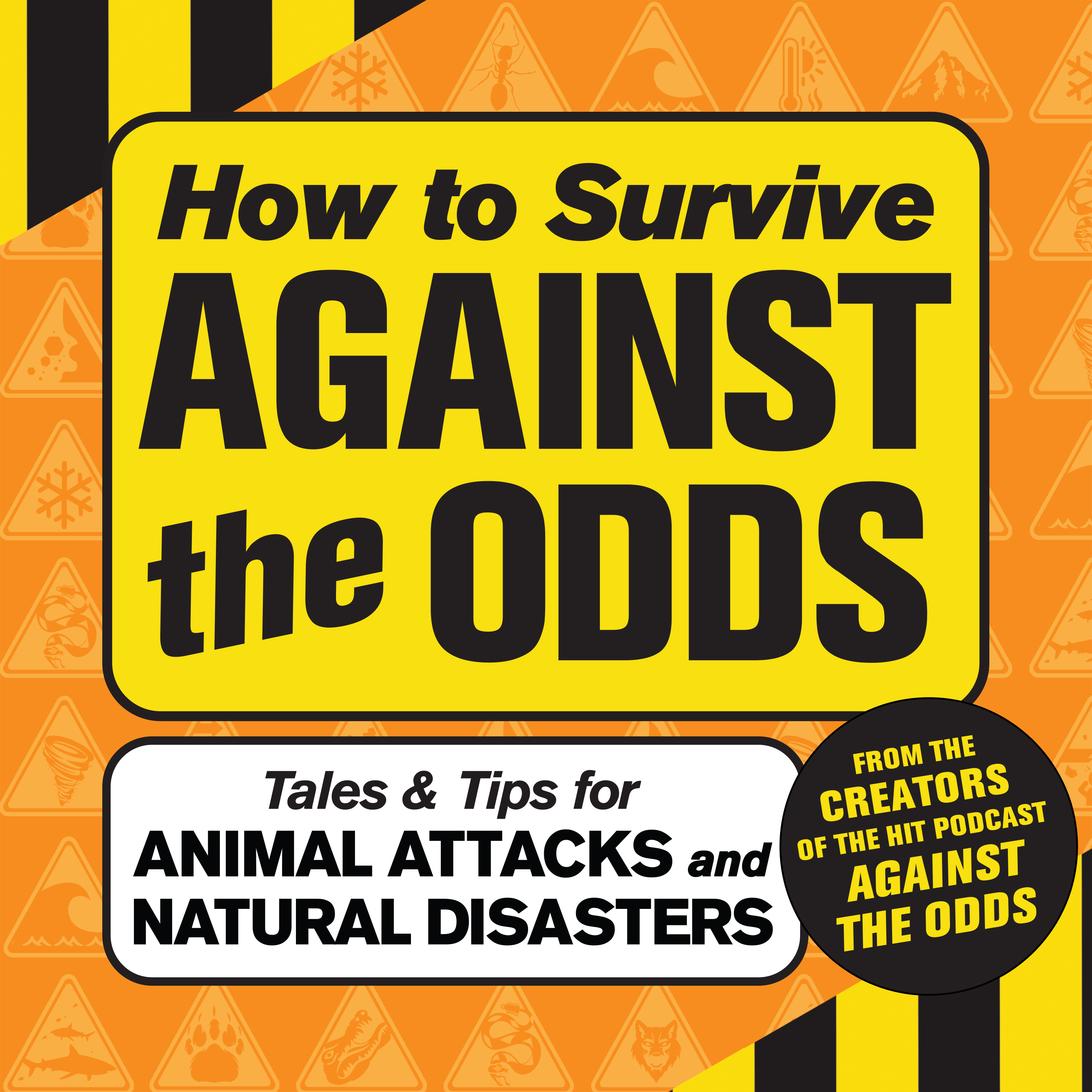
Wondery subscribers can listen to against the Odds early and ad free right now. Join Wondery in the Wondery app or on Apple Podcasts from Wondery. I'm Mike Corey and this is against the odds. For four years and over 200 episodes, our podcast has taken you inside some of history's most thrilling survival stories. We hope those stories have not only entertained, but educated and inspired too, by putting you in the shoes of everyday people who overcame seemingly insurmountable odds. We want you to come away from our show feeling like you too have what it takes to survive. Now we're taking those ideas one step further in a book inspired by our podcast. It's called how to Survive against the Odds Tales and Tips for Animal Attacks and Natural Disasters, and it's available now from HarperCollins Publishers. This is the only book of its kind that combines memorable survival stories with expert insights from top doctors and psychologists about what happens to your body and your mind during life or death situations. And each chapter includes vital tips on what to do and what not to do when faced with your own against the Odds scenario. The book covers everything from extreme environments like deserts and rainforests, to dangerous animals like rattlesnakes and crocodiles, to natural disasters like tornadoes and flash floods. In this special episode, we're offering an exclusive sneak preview of the audiobook edition of how to Survive against the Odds. You're about to hear the introduction to the book, written and narrated by me and my co host Cassie depechel, followed by a sample chapter, Buried by an Earthquake. We hope you enjoy. Introduction we humans have a superpower, one that we often overlook. We may not be able to sprint as fast as a cheetah, or climb through the treetops like an orangutan, or dart through the ocean waves like a dolphin, but we have a much more subtle ability. Whether we're trekking through the icy tundra, lost in the oppressive heat of the desert, caught in a tropical cyclone, or adrift at sea. We fight, we adapt, we problem solve, and ultimately we survive.
- [02:35]
Cassie DePechel
When facing life or death nightmare scenarios, we discover our true resilience. Even when the odds seem insurmountable, even when hope seems lost, humans rise to the challenge. We may emerge battered, bruised and shaken, but we triumph.
- [02:52]
Mike Corey
This book is rooted in that truth that everyday humans, including you, can overcome the impossible. It's written in the spirit of against the Odds, the hit podcast we co host for Wondery. Our show takes listeners inside incredible tales of human survival, sharing moment by moment details about how precisely the heroes of our stories persevered as with our show.
- [03:16]
Cassie DePechel
Every story you're about to read is true. While we do take liberties with some dialogue used in the chapters, we stick to the facts of each event because those don't need dramatizing. They're harrowing enough. But the stories aren't the only incredible part.
- [03:32]
Mike Corey
These pages go beyond our podcasts to explore how the human body is hardwired with an amazing array of mental and physiological tools that switch on by pure instinct when our lives are on the line. To understand these abilities and their limits, we've consulted medical experts who explain the fascinating science and inner workings of our bodies and minds during these extreme moments.
- [03:57]
Cassie DePechel
With the help of these experts, we explore real life examples of what happens when humans are plunged into harsh, unyielding environments from the Arctic to the Amazon rainforest, and how we fare in the face of natural disasters such as city engulfing wildfires or devastating tornadoes, as well as attacks from deadly predators such as rattlesnakes and great white sharks. For the fans of against the Odds podcast, many of these stories will be brand new, but we revisit a few familiar tales as well as use them to arm you with survival tips that could save your life.
- [04:32]
Mike Corey
Hosting against the Odds has given us a profound appreciation for the strength of the human spirit, and as adventure travelers and environmental advocates, we feel a strong connection through our own experiences to the stories of survival on our podcast and in this book. For Cassie, those challenges have included surviving 21 days naked in the Panamanian wilderness with nothing but forged food and water, competing in full and half ironman triathlons across five continents, and plunging into the frigid waters of Antarctica.
- [05:05]
Cassie DePechel
For Mike, it was buying a crocodile from a bushmeat seller after running out of food in the Congo rainforest, only to trade it later for a place to sleep and finding a real crystal skull in the black hole of Belize. Each experience has deepened our understanding and appreciation of humanity's ability to survive in every kind of extreme situation the natural world can throw at us.
- [05:29]
Mike Corey
We hope you never find yourself face to snout with a snarling grizzly bear, or swept away in a flash flood or fending off frostbite in an alpine blizzard.
- [05:39]
Cassie DePechel
But should the worst happen, this book's trove of practical tips will help you defy the odds.
- [05:45]
Mike Corey
Mike Corey and Cassie depechel, hosts of the against the Odds podcast.
- [05:53]
Lindsey Graham
Hi, I'm Lindsey Graham, the host of Wondery's American Scandal. In our latest series, a social worker in Tennessee becomes rich and powerful by selling babies on the black market. By the time her crimes are exposed. She's made a fortune and destroyed hundreds of families along the way. Follow American Scandal on the Wondery app or wherever you get your podcasts.
- [06:12]
Misha Brown
Hi, I'm Misha Brown and I'm the host of Wondery's podcast the Big Flop. Each episode, comedians join me to chronicle one of the biggest pop culture fails of all time and try to answer the age old question, who thought this was a good idea? Follow the Big Flop wherever you get your podcasts.
- [06:34]
Viral Dalal
Buried by an earthquake11 January 26, 8:35am his father's booming voice snaps Virule Dalol awake. Get up. Dalol grumbles. Please Dad, I need a few more minutes. The 24 year old is stretched out on a mattress on the floor, the only space available in this crowded second floor apartment in Bhuj, India, where he's on vacation with five members of his family. His father nudges him again. Fine, but move to the bed. I need to put your mattress in the other room. His dad points to a vacant bed that Dalal's brother occupied the night before. Dalal gets up with a groan and shuffles to the bed, wrapped in a comforter like a caterpillar. His father closes the blinds and and tosses another blanket onto his son. But as he starts to drift off again, Tall hears a rumble. He feels it too. It's like thunder, but stranger and growing louder. The floor begins shaking and the bed trembles. The nearby dresser skitters across the floor. The rumble quickly becomes a roar as the shaking intensifies. Suddenly, everything goes airborne. The dresser, a metal cupboard, the bed with Dalol still in it. It's as if they're free from gravity's pull. But in a split second, gravity returns to slam everything back upon the trembling floor. Again it happens, and again sounds of shattering glass rise over the rumble. The shaking is beyond violent now, like a series of explosions erupting from below. Earthquake. Dalol throws off the comforter and tries to get out of bed to make it to the door, but each time he rises, he's flung in a different direction. Chunks of plaster and concrete start raining from the ceiling. Walls give way, falling inward in large chunks. A 6 inch wide crack opens in the ceiling, exposing steel rebar within the concrete. Dust fills the air from the next room. Dalol's mother screams. A loosened slab of the concrete ceiling, as big as a car, teeters overhead, threatening to crush him. He rolls onto his side seconds before it crashes down. He's uninjured, but the whole ceiling is collapsing. His World goes black as he is tossed around, bumping into the concrete slab that nearly killed him. Fifteen seconds later, the shaking stops. Dalal can see nothing but dusty darkness. During a big earthquake, a single blow to the head or neck from falling debris can cause death due to skull fractures or brain bleeding. Or it may snap your neck and asphyxiate you. There's little you can do to prevent this beyond covering your head and neck. Mom, are you hurt? He shouts. The words barely leave his lips when he feels himself sliding. The entire room is on a tilt. Then he realizes it's not just this room. The entire eight story building is toppling. He reaches out to grab hold of something, but everything has come unmoored. He's falling now, lost in a cloud of cement chunks, broken bricks and glass. Dalal lands so hard on something that it knocks the wind out of him. He's flat on his back now, arms above his head in loose rubble. But still the building continues to implode around him. A concrete slab falls and stops just 2 inches above his face. If after the quake has subsided, you find yourself pinned under large debris such as a wall or ceiling, any crush injuries you may have sustained can be life threatening. When tissue and bone undergo prolonged compression, the crushed areas can die rapidly, requiring amputation. Releasing that pressure, however, can cause crush syndrome, which can kill you. Excess myoglobin, a protein in your skeletal and heart muscles, and other decaying cells from the injured muscle and tissue flood your kidneys, causing renal failure. If victims are under pain management, they may be happy right after rescue and die minutes later. This is sometimes called a smiling death. For a few seconds, it's eerily quiet. All Dalal hears are his own gasping breaths. Then a series of deafening bangs coming from overhead. Delal realizes that the upper floors of the eight floor building are pancaking down on top of him. He frees his hands and tries to press upward on the slab above him, afraid he's about to be crushed. But it won't budge. He's trapped. And if the slab above him jostles loose, he's dead. But for now anyway, there's stillness. It's over. Miraculously, he doesn't seem to have any injuries. He takes a breath and screams out for his family, each by name, his father, mother, brother, sister in law and two year old nephew. Dust fills his mouth every time he opens it, causing him to gag. Wiggling his hands to his chest, he's able to use the puny light on his wristwatch to see his tomb. Stifling concrete slabs surround him. He has 4 inches of space above his knees and feet, and jagged debris on either side means he can't push his arms or legs out. His head can rise 2 inches, but no more. The concrete prison is barely wider than two feet. His hands explore below him and feel a bedsheet. Somehow, he's still on the mattress. Now what?
- [12:13]
Cassie DePechel
In today's job market, finding the right talent can feel like searching for a needle in a haystack. Slow, frustrating, and often exhaust. But there's a better way. Indeed. When it comes to hiring, Indeed is all you need. With Indeed Sponsored Jobs listings jump to the front of the line, right where ideal candidates are looking. And it works. According to Indeed data, sponsored jobs get 45% more applications than regular posts. And here's something remarkable in the time it took to share this information, about 23 people just got hired through Indeed. The best part With Sponsored Jobs, there are no monthly fees or long term contracts. You only pay for results. And listeners of the show will get a $75 sponsored job credit. To get your jobs more visibility@ Indeed.com theodds just go to Indeed.com theodds right now and support our show by saying you heard about Indeed on this podcast. Indeed.comtheodds Terms and conditions apply. Need to hire?
- [13:11]
Lindsey Graham
You need Indeed As a contractor for the NSA, Edward Snowden had access to a range of top secret government programs. But as he learned more about these clandestine operations, he came to understand a devastating secret the government conducting mass surveillance on its own citizens. Hi, I'm Lindsey Graham, the host of Wondry's show American Scandal. We bring to life some of the biggest controversies in US History. Presidential lies, Environmental disasters, Corporate fraud. In our latest series, Whistleblower Edward Snowden changes the national conversation about privacy on the Internet as he risks his own freedom and his family's well being. Follow American Scandal on the Wondery app or wherever you get your podcasts. Listen to all episodes ad free and be the first to binge the newest season only on Wondery. You can join Wondery in the Wondery app, Apple Podcasts or Spotify. Start your free trial today.
- [14:07]
Viral Dalal
A 7.7 magnitude earthquake had just leveled Bhuj, a city of 150,000 in western India. Not only does Viral Dalal not know the extent of the destruction, he can't even accept that the apartment building in which he was sleeping just moments ago has been reduced to rubble. He doesn't think this is reality. He thinks it's a dream. Dalal's initial reaction of denial is completely normal. Our brains operate in a predictive model, explains Alex N. Sabo, a medical doctor and psychiatrist. It estimates what it thinks will happen next. So when that reality doesn't align with what we're seeing and experiencing, such as an earthquake, it'll lead to brain shock. Brain shock involves a massive release of noradrenaline that will take the frontal lobe, the part of the brain responsible for nuanced thinking, offline. And it will activate primitive survival mechanisms that are unconscious at first to freeze, fight or flee. The shock experience is remembered in the body as a shudder or shiver, a wave of heat or cold or a hollowing out of the insides, says Sabo. And it will be triggered in the future by the sounds or touch. The trembling of the earth, for instance, that occurred as the earthquake began. How can this happen? He screams. The words bounce off the concrete and echo in his ears. What about his family? Are they also trapped? Are they even alive? He tries willing himself to sleep, thinking that when he wakes up, his nightmare will be over. Then a numbness washes over him as shock sets in. I'm buried alive and there's no way out. He works his hands under his back. Bits of brick and glass shards from a broken overhead light had gotten between him and the mattress during the collapse, and they're poking his back. Takes time, but finally he clears them away. The air already feels stale, and Delal wonders how many cubic feet of it he needs to breathe every hour in order not to suffocate. When he inhales deeply, his expanding chest hits the slab above him. He decides it's best to take shallow breaths, unsure if his air will soon vanish. Negative thoughts cascade in his brain. Will an aftershock loosen the concrete slab above me and crush me to death? He forces despairing notions out. Those are the enemy of survival, he says aloud. He'll focus only on positive, helpful things. When trapped in a confined, dark space, the brain will start exploring itself, according to Sabo. Your mind will think of death and pain and anger. It'll be overwhelming, he says. And negative thoughts will trigger more negative thoughts. Except for the wristwatch's tiny light, which he uses sparingly, Delal lies in complete darkness. It's overwhelming, and he's feeling panicked. So to distract himself, he uses the watch to locate a small piece of metal, a bit of twisted light fixture. He turns off the light and starts to scratch at the concrete beside him, a bid to find the phone that was near the bed. After an hour, he turns on the light to examine his progress. Frustratingly it did nothing. Then the ground rumbles again. It's the aftershock he feared. His body shakes violently as he prepares for the slab to plummet down and crush him. But the slab doesn't budge, and the aftershock passes. Hours pass. No sounds. No anything. He tracks the passage of time on his watch. At the 14 hour mark, he hears his stomach growl. It's coming up on 24 hours since he last ate or drank. The pitch black surroundings are making him mentally uncomfortable. He wants to stretch, to stand, to do anything, and he can't. The only thing he can control, sort of, is his brain. Shock exists for a number of reasons, but the main one is to ensure we live past the event. Shock reduces our physical and emotional pain and helps us dissociate from the event, says Olga Turuchin, a medical doctor and psychiatrist. How we dissociate isn't known with certainty. Overall, our perception and the body's proprioception a series of signals that feed the brain information about our body's movement, location and position is not as reliable as we think, explains Turrichin. Under stressful situations, as Viril experienced, you can feel like you don't belong in your body or that your surroundings are not real. And even that doesn't always cooperate. He works to keep thinking of fond memories, such as favorite meals, places he's visited, and laughing with his family to avoid intense feelings of panic and anger. Somehow, he falls asleep. We can think away pain, too. There's cognitive relearning therapy that's effective for people with chronic pain, says Beth Palmisano, a medical doctor who specializes in pain management. The aim is to shift attention away from the pain, erratic thoughts and fears to more adaptive thought patterns. It can work in situations like Dalal experience, too. Thoughts and beliefs will influence physiological reactions, Palmisano says, noting that negative thinking can increase pain perception. People who associate pain with something larger than themselves can withstand more suffering, she says. If Viril thinks he needs to keep going for his family, that focus can help shift his perception of pain. He feels weird waking up in absolute blackness. No sounds of birds or bustling bouge traffic. It's the second day in the rubble, barely early in the morning. He hasn't run out of air yet, so he breathes normally. He's starving, so he imagines his favorite foods to make his mouth water, swallowing whatever saliva he's able to produce. It quells the hunger pangs, but only momentarily. What Dalal experienced when trapped was sensory deprivation, losing our senses as well as the ability to control Our environment is highly detrimental to our mental state. The brain is locked in our skull without any communication to the outside world, says Turing. It predicts and constructs about what's going on outside, but it uses information from our senses to do so. When we can't hear or see, we're not giving the brain any input to make an educated guess. But the brain still tries to come up with an explanation for the environment. It'll make up noises or visuals because the brain believes there must be something happening that we're not sensing. Dalal tries a new tactic. He hates eggplant, so he imagines that eggplant is the only available food. The trick works. The more he thinks of what he abhors, the more okay he is with being hungry. Aversion thinking doesn't work as well with thirst. He tries thinking about drowning in a flood. Then he thinks about the movie Titanic, imagining drowning after abandoning ship. It doesn't help. It's been 42 hours since he used the bathroom, and he doesn't want to waste the only liquid to which he has access. Dalal's fingers find a small dome shaped electrical covering that's attached to one of the slabs. He pries it off and uses it to collect, then drink three small portions of his own urine. It tastes vile, but it helps. How do you mentally prepare to drink your own urine? It's rationalizing, says Turichin. Ever look at an oyster before you eat it? You can talk yourself out of being disgusted by anything, even drinking urine. Our aversion to our own waste feces or urine is to keep us away from it, to prevent getting sick by bacteria. We're able to overcome this aversion with a certain amount of internal dialogue, believing that the benefits will outweigh the risks. And then you go for it. The first thought Dalal has on the fourth day is a dark one. Why even bother waking up exhausted and sore? It's harder to suppress negative thoughts. He heard some pinging noises yesterday, ones that sounded man made, but they stopped quickly. He's heard little else. He's still drinking his own urine, but the bitterness in his recycled waste has grown tenfold. He chokes down a meager portion now and wonders how much longer he can survive like this. Delal's decision to drink his own urine is ill advised. The body excretes waste, putting salt and toxins in the urine, says Turuchin. Urine is trying to get rid of salt. When you drink it, you're consuming the salt again, and that will further dehydrate you you lose moisture as you breathe, so you're only increasing your dehydration. Drinking your own urine is not recommended. Dalal's back is so stiff he's not sure he'd be able to get up even if the slab is removed. The big toe on his left foot is starting to go numb. All his muscles ache. His neck hurts the worst. He can only lift his head a few times an hour now, without immense pain. He stretches each limb, then his back. It feels a little better. In the evening, he hears dogs barking, allows screams until his throat is raw and his voice raspy. But the barking fades after a few minutes. Dalal's body ached from being immobile for days. Pain thresholds are complicated, modulated by factors like genetics, gender, culture, and even training, says Palmisano. When you train and prepare for stressful situations such as combat, your body can acclimate. And the pain perception can be less because it's expected for regular people under heavy stress, such as being buried alive in an earthquake, pain perception is usually increased. However, when we're subjected to a constant painful stimulus, the brain can respond by gradually reducing the body's response, says Palmisano. It's a defense system that makes things more tolerable. Back into the silent darkness around seven in the morning on the fifth day, Dalal hears something Human voices. People shouting. It's muffled but distinct. Then engines revving, machinery beeping. Next, a big rumble. Not an aftershock. It sounds more like debris being cleared away just beyond his feet. Help. He shouts. Anybody there? Delal repeats this cry every few seconds. Quiet. A voice from outside. Who is there?
- [25:23]
J.R. Martinez
The Medal of Honor is the highest military decoration in the United States. Recipients have done the improbable, showing immense bravery and sacrifice in the name of something much bigger than themselves.
- [25:35]
Viral Dalal
This medal is for the men who went down that day. It's for the families of those who didn't make it.
- [25:41]
J.R. Martinez
I'm J.R. martinez. I'm a U.S. army veteran myself, and I'm honored to tell you the stories of these heroes on the new season of Medal of Stories of Courage from Pushkin Industries and I Heart podcast. From Bud Day, who survived more than five years in the Vietnamese prison, to Alvin York, the most famous soldier of World War I. These are stories about people who have distinguished themselves by acts of valor going above and beyond the call of duty. You'll hear about what they they did, what it meant, and what their stories tell us about the nature of courage and sacrifice. Listen to Medal of Honor Wherever you get your podcast, you Know those creepy.
- [26:26]
Misha Brown
Stories that give you goosebumps? The ones that make you really question what's real? Well, what if I told you that some of the strangest, darkest and most mysterious stories are not found in haunted houses or abandoned forests, but instead in hospital rooms and doctor's offices? Hi, I'm Mr. Ballin, the host of Mr. Bolland's Medical Mysteries, and each week on my podcast you can expect to hear stories about bizarre illnesses no one can explain, miraculous recoveries that shouldn't have happened, and cases so baffling they stumped even the best doctors. So if you crave totally true and thoroughly twisted horror stories and mysteries, Mr. Bolland's medical mysteries should be your new go to weekly show. Listen to Mr. Bolland's medical mysteries on the Wondery app or wherever you get your podcasts. You can listen early and ad free right now by joining Wondery in the Wondery app or on Spotify or Apple Podcasts.
- [27:25]
Viral Dalal
Dalal shouts his name and hears it being repeated outside. A calm washes over him. I'm going to be free soon. But then a new worry. What if mistakes during rescue efforts lead to the slab smashing him? He yells this to the crew outside and suggests they start near his feet. When he hears tapping in that vicinity, he confirms that's the right spot. Sounds of concrete being chipped away fill Delisle's confined space. Then he hears metal rods snapping and debris being cleared. After half an hour, there's a sliver of light. I see daylight. Dalal yelps. Slowly, the hole widens. Rescuers carefully place supports inside the hole to prevent the slab from falling on Dalal. More minutes pass. Then a sensation on his foot. Someone's touching it down near his knee. Delisle sees it. The hand of one of the rescuers. He clasps it tightly. We've got you, viral, a voice from the outside says. You're gonna be okay. The 2001 BH earthquake lasted 90 seconds and killed more than 20,000 people, injured another 167,000 and demolished 340,000 buildings across eight cities in India. Tremors were felt as far away as Bangalore, more than 1,100 miles to the south. Biro Delal spent 100 hours buried under the debris from the collapsed apartment building under a pile of rubble 40ft high. When he was pulled from the rubble feet first, he didn't have a single scratch. Dalal was reluctant to go to the hospital to get checked out. He wanted to stay and help locate his parents, brother, sister in law and their two year old. Forced into an ambulance, DeLau returned to the rubble an hour later. He remained there until the bodies of his entire family were recovered. Of the six members of the Dalal family buried in the rubble, only he survived.
- [29:35]
Cassie DePechel
How to SURVIVE an EARTHQUAKE if you're outside when an earthquake starts, stay there. Move away from buildings, utility lines and any other structures. Lie down and wait out the shaking. If you're inside during an earthquake, there are several things to know that could save your life. Drop, cover. Hold. Get on your hands and knees before the earthquake can knock you down. Then get under a sturdy table or something that can protect you from falling debris. Nothing around. Cover your head and neck with your arms. Hold on to protective furniture or your head and neck until the shaking stops. Avoid doorways. You're safest under a table. What's most likely to injure you is flying or falling debris. Glass, cement, wood or bricks and doorways won't protect you from this. Move away from potential debris. You'll have a few seconds after the shaking starts to move before it intensifies, and you may become stuck in place, as Dalal was. Avoid being near anything made of glass or any furniture or items on walls that could land on you. Avoid cowering underneath anything on the ceiling, too, like light fixtures or fans. Avoid the center of the room. If you can't get under a table, move toward bare walls. The center of the room is typically the most dangerous place to shelter during an earthquake because if the ceiling collapses, that's the most likely spot for it to fall. Run. If the building collapses, you'll have little warning, but there will be signs. As Dalal saw, the ceiling will crack and the walls will separate. When this happens, do whatever you can to get out. Run toward the light if you're able. If the building is under three stories, windows are the best point of egress. Try to get to a stairwell in a taller building. They're sturdier. Protect your head and face. As the building collapses, cover your face and head with your hands, creating a buffer zone. As the debris settles, it'll give you an air pocket and some space around your head. Cover your mouth and nose. Plenty of the debris and dust knocked up into the air will be toxic to breathe. If you're able, cover your mouth and nose with something made of cloth, such as a T shirt. Stay in the present. If you're trapped like Dalal, maintaining presence of mind is a challenge. Being encased in concrete and darkness with inches to move would mentally challenge even the most well trained Navy seal, says Szabo Pair your thought process with the brainstem driven process of breathing to help you stay in the moment. Szabo recommends breathe in and say I'm breathing in, then breathe out and say I'm breathing out. Three rounds of this can focus the mind in the present, preventing you from thinking about the past or the future. Think positive Negative thinking leads to more negative bias about your outlook, says Tarikin. It will be difficult to focus on the fact that the sun is shining because negative thoughts feel congruent with your state of emotion and physical predicament, she says. Try to focus on positive memories as viral did, to keep from spiraling Think away Hunger Our consciousness is capable of believing it isn't hungry by thinking of hated foods. You need to believe it though, says Tarikin. Dive into the thought and repeat it to yourself. Averse memory coupling activates an area of the brain responsible for disgusting, so when you connect hunger with emotional disgust, it can tamp down your hunger feelings just at that moment. But Tarikin notes that Dalal's feeling of hunger would come back as soon as he stopped thinking about eggplant.
- [33:44]
Lindsey Graham
If you like against the Odds you can binge all episodes early and ad free right now by joining Wondery in the Wondery app or on Apple Podcasts. Prime members can listen ad free on Amazon Music. And before you go, tell us about yourself by filling out a short survey@wondery.com survey.
- [34:04]
Mike Corey
That was an exclusive sneak peek of the book how to Survive against the Odds Tales and Tips for Animal Attacks and Natural Disasters. To learn more and order your copy, visit survivalguidebook.com or check our Show Notes. I'm your host Mike Corey. Book audio in this episode was provided by HarperCollins Publishers. Audio engineer is Augustine Lim. Original theme music by Scott Velasquez and 2K for freeze on Sync. Series producers are Emily Frost and Alida Rosanski. Managing producer is Desi Blaylock. Senior managing producer is Colin Plews. Senior producer is Andy Herman. Executive producers are Jenny Lauer, Beckman, Stephanie Jens Marshall, Louie and Erin o' Flaherty. For Wondery.
- [35:03]
Nick and Jack
This is Nick and this is Jack. We're best friends, ex finance guys and resident 90s experts. And every week on our podcast, the Best Idea yet, we're bringing you the untold stories behind your favorite products. For instance, can you guess which billion dollar fashion company went viral thanks to a rhinestone covered tracksuit? Or which cartoon turned four turtles in into a global toy empire by accident? It started as a joke. Last one which cold beverage was so hated by Starbucks they actually ended up acquiring it. Spoiler the Frappuccino. Howard Schultz apparently thought cold coffee was super lame, and then he bought it. From Teenage Mutant Ninja Turtles to Juicy Couture to the Orange Mocha Frappuccino, Join us every week to learn how your favorite things got made. Follow the best idea yet on the Wonder app or wherever you get your podcasts. And you can listen early and ad free right now by joining Wondering Plus. And if this podcast lasts longer than 45 minutes, call your doctor.