← Against The Odds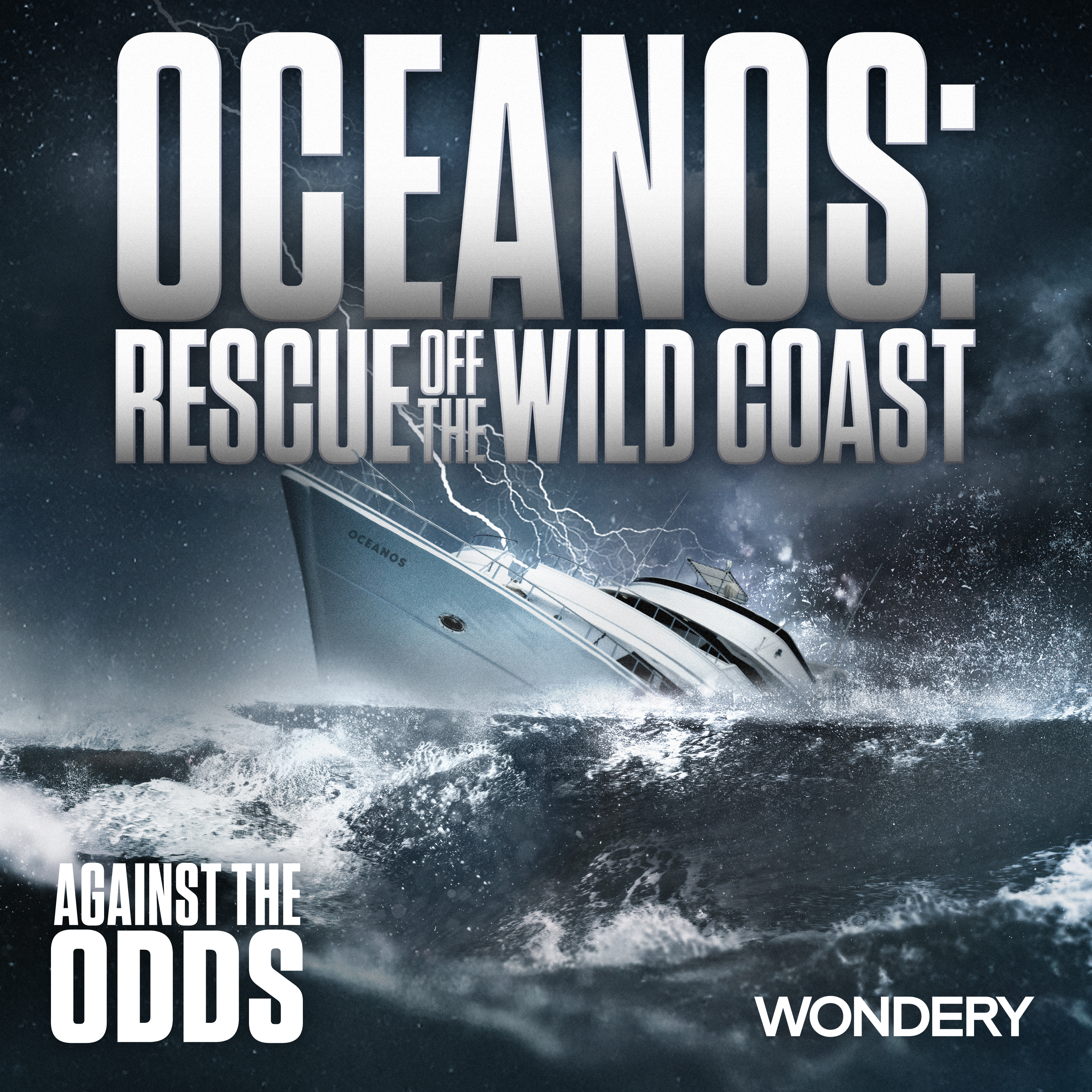
Loading summary
Transcript98 lines
- [00:00]
Cassie DePechel
Wondery subscribers can listen to against the Odds early and ad free right now. Join Wondery in the Wondery app or on Apple Podcasts.
- [00:10]
A Note to Listeners Stay tuned at the end of this episode to hear my conversation with Sean Evans, the author of how to Survive against the Tales and Tips for Animal Attacks and Natural Disasters, a new book inspired by our podcast from Wondery. I'm Cassie Depechel and this is against the Odds. The Maritime Code women and children first was established in 1852 after the HMS Birkenhead sank off South Africa's Wild Coast. Since then, the Birkenhead drill, as it became known, has been a time honored tradition in disasters at sea. But nearly 140 years later, on that very same stretch of coastline, the cruise ship Oceanos set sail into a brutal storm with 571 people aboard and soon it began taking on water. When it became clear the ship was going down, it wasn't the captain or his senior officers who upheld the code. Instead it was the ship's 35 year old cruise director, Lorraine Betts and her team of entertainers who rose to the challenge, organizing the evacuation, launching lifeboats and ultimately helping to ensure that every passenger survived. Hi Lorraine, thanks so much for joining me today.
- [01:57]
Lorraine Betts
Hi Cassie, thank you so much for having me.
- [02:00]
Cassie DePechel
So take us back to August 1991. You were 35 at the time and already an experienced cruise director. What was life like working on cruise ships then and what exactly did your job involve?
- [02:13]
Lorraine Betts
Well gosh, 35 plus years ago working on a cruise ship was a dream. I mean we used to cruise around the world. I worked for an expedition company, a Seattle based company and part timed with this South African company. My job involved organizing the entertainment the passengers would be receiving, the embarkation, the disembarkation, the type of shore excursions that they would be going on and coordinating all of that with the ship's personnel like the hotel department, the bridge, et cetera. I was keen to do these trips because I got to invent from scratch the itineraries that would take people out to the incredible Indian Ocean and visit unique places with unique fauna, flora and opportunities to learn about and take it all in.
- [03:06]
Cassie DePechel
I bet that sounds like so much fun and the people that you get to meet as well, right?
- [03:11]
Lorraine Betts
Oh definitely. Yes. It was a fantastic life to spend so much time visiting so many places.
- [03:17]
Cassie DePechel
How would you describe yourself as a cruise director?
- [03:20]
Lorraine Betts
Well, if people ask me what kind of a cruise director was I, I have to go to what I've heard people say about me that I'm quite bossy. I do have a natural ability to make people listen and I think people like to follow. They like to have instruction. And so that worked well for me.
- [03:41]
Cassie DePechel
So on August 3, 1991, the Oceanos was preparing to set sail on an overnight voyage up the eastern coast of South Africa and a massive storm had already descended. Were you concerned at all about setting off in such extreme weather?
- [03:57]
Lorraine Betts
You know, Cassie, I actually spent 10 years at sea and I spent most of that on much smaller ships, expedition ships, and the Oceanus was quite a bit bigger than that. So, no, I thought, you know, I think it was something like a force nine. So that didn't seem that scary to me. I was psyched and ready to go. But when I went up on the bridge and saw the port captain talking to our captain, Avranis, I could see there was some tension going on. And I wasn't quite sure why, but I had a sixth sense that something was going on. The sky was this weird, weird orangey red and it seemed almost sinister. I know it sounds, you know, like, why do you think that? But it did feel very strange. The weather felt odd.
- [04:49]
Cassie DePechel
Foreign against the Odds is brought to you by Progressive Insurance. Do you ever think about switching insurance companies to see if you could save some cash? Progressive makes it easy to see if you could save when you bundle your home and auto policies. Try it@progressive.com, progressive Casualty Insurance Company and affiliates. Potential savings will vary. Not available in all states. This message is brought to you by Apple Card. Each Apple product, like the iPhone 16, is thoughtfully designed by skilled designers. The titanium Apple Card is no different. It's laser etched, has no numbers, and it earns you daily cash on everything you buy, including 3% back on everything at Apple. Apply for Apple Card on your iPhone in minutes, subject to credit approval. Apple Card is issued by Goldman Sachs Bank USA, Salt Lake City branch terms and more@applecard.com the Oceanos had a history of maintenance issues. Did you have any concerns about the condition of the ship?
- [05:55]
Lorraine Betts
Funny you should ask. My staff and I joined the ship in the Seychelles, a group of islands in the Indian Ocean. And when the ship was coming into the port, she actually hit the pier, which was a cement pier, and made a big hole in the front of the bow.
- [06:12]
Cassie DePechel
Oh, my gosh.
- [06:14]
Lorraine Betts
I boarded with my team and we did a scout around the ship to introduce ourselves to the different decks, et cetera. And when we went down to where my office was going to be, I looked at the staff and I Said, you know, this thing's rotten. It stinks. We were joking and laughing, but no, I didn't think she was in great condition.
- [06:35]
Cassie DePechel
Early in the trip, passengers began complaining about a sewage smell in the lower cabins. Was that a red flag to you?
- [06:43]
Lorraine Betts
When you say a red flag? It was really quite bad. And, you know, I don't know how long these people have saved to go on a trip. And it stunk down there of sewerage. So I had a meeting with the engineering department and said, you know, you need to fix this, otherwise I'm going to close off those lower decks and we'll have to readjust the charter agreement because we won't be able to sell those cabins. So I think with that, the engineer felt he was under pressure and he had to actually do something.
- [07:12]
Cassie DePechel
I can't even imagine what a down.
- [07:14]
Lorraine Betts
Right. Yeah.
- [07:15]
Cassie DePechel
Despite the storm, Captain Evranis made the call to depart. Then, just after 9pm the ship's power went out. I mean, what was going through your mind at that moment?
- [07:25]
Lorraine Betts
Well, at that moment, there was a kind of a muffled bang. I was in my office with Julian Butler, one of the magicians, and he was helping me produce the daily program for distribution that evening. And I looked at him. The lights went out, and you'd expect them to come back on immediately, but they didn't. Just emergency lights came on, and the ship was sitting in the water, dead in the water. And the waves started slapping against the side of the vessel. And my office was right on the side of the ship. And I looked at him and went, this is really weird. I'm going to run up to the bridge and. And see what's going on. Get all the staff and keep the passengers in the main lounge, and I'll meet you there. Cause that was kind of halfway up to the bridge from the office. I ran up five flights to the bridge to find out what was going on.
- [08:19]
Cassie DePechel
In our series, we dramatized your multiple trips to the bridge to speak with the captain. But what do you remember about those moments?
- [08:26]
Lorraine Betts
When I got up to the bridge, I saw all the emergency radio equipment strewn across the bridge wing in a mess. The wires were tangled. It was just chaotic. And the chief engineer, who was a rather large man, was shouting hysterically into the emergency radio, Mayday, Mayday, Mayday. This is the ojeanos. May Day, Mayday. And I looked to my right, where the captain was just standing there in front of the radar, and he was just standing, doing nothing. And I went up to him and said, captain, what's going on what would you like us to do? Is there anything we can do, you know, instructions for the passengers or anything? So that's when I realized that it was actually not going very well.
- [09:17]
Cassie DePechel
So the captain tells you there's just some engine trouble, but it's nothing serious. Though as a precaution you should tell passengers to put on life jackets. It sounds like he didn't feel the need to tell you the truth, which perhaps wasn't out of character for him. What do you remember about your first meeting with Captain Evranis?
- [09:35]
Lorraine Betts
Oh, that was quite funny actually. I walked onto the bridge when I joined the vessel in Seychelles and introduced myself to him and said, morning Captain, I'm Lorraine Betts, I'm the charterers representative and your cruise director. He didn't even look at me. And so I repeated it and he said, if you want to talk to me, you call me God. So I thought it was quite funny. I did a sweeping bow very dramatically and said again, well, good morning, God. I'm Lorraine Betts, the charterer's representative. I'd like to introduce myself to you.
- [10:16]
Cassie DePechel
You must have loved that.
- [10:18]
Lorraine Betts
I don't know what it was, beyond belief really when you think about it afterwards.
- [10:23]
Cassie DePechel
Yeah. Well, do you think the captain was dismissive of you partly because you were a woman?
- [10:28]
Lorraine Betts
I think yes, yes, definitely. The crew was mainly all males with, you know, a few receptionists here and there and an assistant person that was female? Yeah, no, and it's not just women. They treated the Portuguese and Filipino crew dreadfully.
- [10:47]
Cassie DePechel
So the lights are out, the ship is dead in the water and the captain told you the ship was not sinking. Was there a specific moment when you realized this just isn't a power issue or a little engine trouble, this ship is going to sink?
- [11:03]
Lorraine Betts
Yes. I left the bridge and I said to the staff who had assembled outside the main lounge, I said, go to your cabins, get really comfortable, warm clothes on, non slip shoes and meet me back here. And Julian and I ran down together. We went to my office and I had brought with me about 10 ICOM radios. I said, we'll take these back up with us, I'll meet you at the lounge in a minute. I went to my cabin and I shut the door and I stood there for a second and my knees started shaking visibly and I just stood there shaking and I thought to myself, whoa, this is real, this is not good. I was just shaking and the door opened and my school friend who I had brought with me to work on board the ship, stood at my door and Said Lorraine, what are we supposed to do? I don't know what I'm supposed to do. And with her panic, I felt a sense of calm come over me. And I helped her get some warm gear on, grabbed the radios and said, meet me upstairs when you're ready. I knew then in my cabin that this was not going to have a good ending.
- [12:17]
Cassie DePechel
And was anyone telling you about the state of the water in the ship that was filling with water?
- [12:22]
Lorraine Betts
Yes. I had sent Moss Hills and Julian Butler down because Moss had a video camera, which turned out to be great because he did a lot of footage with that camera that was usable in the investigation. Afterwards, the two of them came back up in shock and said, there's water filling up downstairs. And they told me what level it was on. It wasn't up to my cabin yet, but it was certainly two decks below. Actually what was happening is that because of the work they had been doing, they hadn't closed off some one way valves properly. The sea chest was rotten and collapsed and water was coming in slowly but surely through the areas that use seawater, for example, cooling the engine, flushing toilets, that kind of thing. So we were basically slowly sinking through the toilets, filling up with seawater.
- [13:18]
Cassie DePechel
Wait, so the sea chest, can you give a little bit of a definition of what that is? For people who aren't aware, that is.
- [13:24]
Lorraine Betts
A sort of a rectangular piece of equipment, if you like, on the side of a ship that takes in seawater and then feeds it to the areas like the toilets and cooling the engine, et cetera. And that's usually the first place I would think that an inspection of a vessel before it goes to sea with the insurance company like Lloyds of London would look at.
- [13:48]
Cassie DePechel
Soon after word of flooding reached the bridge, most of the senior crew quickly abandoned ship. What was going through your mind when you saw this happen?
- [13:58]
Lorraine Betts
To this day, I am still flabbergasted. We had only two lifeboats that actually had engines. All the others were these old lifeboats with what they called Fleming gear. Basically a couple of little handles that you're supposed to turn to make a propeller work. And in flat calm sea that might get it moving at less than a knot. It's absolutely useless in rough seas. Yes. All the officers, bar none, were getting into the only two boats with engines, with luggage and leaving all their crew members and the passengers behind. The captain actually tried to get in the lifeboat himself and my wonderful assistant, Geraldine Mersein, held him back by the straps of his life jacket, held him back twice trying to get into that one lifeboat. He had his dog on board and he passed the dog, I think, to his wife and daughter who were already in the lifeboat. But we managed to hold him back.
- [15:06]
Cassie DePechel
Did the captain seem ashamed at all? Like, did he look at you in any weird way or.
- [15:12]
Lorraine Betts
No, no, he just stood like a blank face. He didn't look left, he didn't look right. He just looked blank, like the lady lights were on, but nobody was home.
- [15:29]
Cassie DePechel
With summer in full swing, don't waste money on pieces you'll only wear once or just for one season. That's where Quince comes in. Their clothes are timeless, feel luxurious, look elevated, and the quality is way beyond what you'd expect for the price. It's the kind of wardrobe upgrade that just clicks. Think 100% European linen tops starting at $30, washable silk dresses and shirts and soft cotton sweater. Versatile warm weather pieces you'll reach for again and again. The best part? Everything with Quince is half the cost of similar brands. I picked up the featherless quilted long puffer jacket from Quince. It's lightweight, incredibly well made, and a steal compared to similar luxury outerwear. I've been using it for the cooler summer nights and plan to bring it on breezy mountain getaways. Give your summer closet an upgrade with quince. Go to quince.com theodds for free shipping on your order and 365 day returns. That's Q U I-n c-e.com theodds to get free shipping and 365 day returns. Quince.com theodds you know how we all.
- [16:33]
Unknown
Have that one friend we go to with all our financial questions? I'm talking the one who gives you advice like no one else can. Well, meet Experian, your bff. And by that I mean big financial friend. I'm telling you, Experian is gonna be your go to app when it comes to taking control of your finances. And this big financial friend is always there for you. Just hanging out on your phone where we all kinda are. Anyway, Experian has a bunch of legit ways to help you save. And get this, the Experian app lets you check your FICO score. Matches you with credit cards and a bunch more totally BFF kind of things to help you manage your finances. Bet your other BFFs can't do all that, huh? Anyway, it's easy to have this big financial friend by your side. Just download the Experian app and get started for free. Trust me, you'll be up to speed with this BFF in no time. Results will vary. Credit offers, approvals and reward Programs based on FICO score 8 model and subject to lender terms. Offers not available in all states. See experian.com for details.
- [17:35]
Cassie DePechel
So your team included musicians, dancers, magicians. We feature several of them in our series, like Moss and Tracy Hills, Robin Boltman and Julian Butler. How did your group come together to start organizing the evacuation despite not being prepared for such a monumental task?
- [17:53]
Lorraine Betts
Well, when we were assembled outside the main lounge and we had gathered the passengers and put them in the main lounge and kept them there all night, with Moss and Robin in charge of entertaining them, I had help from some of the crew. I have to say that there were some Greeks that helped us, but it was mainly the Filipino crew who were the ship's personnel that stayed behind because they were left behind. And we came to start filling up the lifeboats and lowering them, and there was a third engineer, a Greek third engineer who stayed on board and helped us and a couple of Filipino crew. There was nobody else left to do the essential emergency evacuation procedures. Our lifeboats were not filled to capacity, which was a big mistake. That's why we had so many people left. At the end, you got myself and untrained crew members. I said, you know, don't you know how to do these things? They said, no, we haven't even had a lifeboat drill.
- [18:58]
Cassie DePechel
What were some of the biggest challenges getting passengers onto the lifeboats, especially in the middle of such a brutal storm?
- [19:05]
Lorraine Betts
Well, the ship was listing. It was dark, it was very windy. I'll use an example of the first lifeboat that we filled up. I actually had one of my wonderful staff, Lynn Gregg, in charge of that boat, and I actually put my grandmother in that boat with her, lowered the boat, and when they released the davits, which are these ropes that hang from a crane on either end of the lifeboat with a metal hook on the end. One of those hit my grandmother in the head. And I got a radio call from Lyn saying, lorraine, Lorraine, this is terrible. Bring us back up. The lifeboat is hitting against the side of the ship. It's going to break. And your grandmother's been hit on the head. So that was the first boat and the second last one. We filled it up with passengers and lowered it, but it didn't even reach the water because the ship was listing so much. And we did a serious. No, no. We actually brought it back up again and made the passengers disembark back on the ship. That is so dangerous.
- [20:13]
Cassie DePechel
Oh, my gosh. You and your staff tried to keep passengers and people calm. At what point did they start to realize that something was seriously wrong? And how did you keep panic from spreading?
- [20:26]
Lorraine Betts
Well, I'll answer the panic bit first. So what we did through the night, I kept going down to the lounge, and since there was no elect, there was no announcement system on the ship. So I used a foghorn to keep the passengers updated. Initially, I said it was a lifeboat drill. That's a joke. The engineer told me that we had burst a gasket and they were going to fix it. And I don't even know what a gasket is. Between you and me, to this day, I don't. And so I went to the lounge and made an announcement. We have a burst gasket and we're fixing it. Anybody who knows anything about gaskets knows that's rubbish.
- [21:04]
Cassie DePechel
Well, did anyone freak out?
- [21:06]
Lorraine Betts
No, the passengers did not freak out. One old pianist of our team, he started to panic outside the lounge, started shouting, I hate to say this, but I actually slapped him and said, get yourself together. Stand outside this lounge and do not allow anybody out. And the minute he had something to focus on, he was amazing. The rest of the night, he literally stood outside the lounge and would not allow anyone to leave. And the passengers, they were okay. They fell asleep. With the rocking of the ship, I noticed the bar was empty. There was not a single drink left. But at dawn, I realized that quite a few decks had filled up with water because Moss and Julian were constantly going down and feeding me information on where the water level was. And I said, well, you know, it's not up to me to keep people in an enclosed area. They've all got life jackets on. I'm going to move them all up to the back deck, which was at probably a 45 degree angle at this time. And I think when they came out of the warm lounge onto the deck.
- [22:17]
Cassie DePechel
They realized at daylight the next morning, helicopters finally arrived. What were the biggest challenges? Getting the hundreds of remaining passengers off the ship.
- [22:29]
Lorraine Betts
When this Navy SEAL dropped by helicopter onto the ship, he told us to get the people on the railing. We actually had a helipad, but there was no way they were gonna be able to land. And he gave us instructions to get the passengers lined up at the helipad and the back stern of the ship. And they had two helicopters that would be lifting people off. But when I saw how long it was taking, I mean, we were sinking at this point. They were never going to get these 200. And what was it I don't remember how many people off at this point. So we got Moss and Robin on the helipad, and there was a long line, crew members with suitcases, you name it. And we would pick people out of this line. I said, for example, I want agile people. Come with me. I said that to one woman. She said, I'm not agile. I said, well, you better get agile. And so we would warp them and help them to the lower side of the ship, holding onto the back of their life jackets. The bow was part of it was already in the water. And there was a second Navy SEAL diver picking people up with these Zodiac type boats. And as a wave came, we'd instruct them to jump with the waves. We gave them a little bit of a briefing saying, when the wave comes up, just jump with it. It'll take you away from the ship and that boat is waiting to pick you up. Don't worry about it. We took 64 passengers off the bow.
- [23:57]
Cassie DePechel
And meanwhile, you were also organizing people to be lifted off by the helicopter. And one of those who jumped in the harness was the captain.
- [24:07]
Lorraine Betts
Yes. During the night, the captain had stood holding onto a pole on the back deck where the pool buffet usually was. But the captain got somehow not. None of us know how he got into the line. And next thing, he was in the harness. It was. I think it was the Navy diver saw him in the harness and said, oh, there's no time to get him out. Just let him go. He's of no use here anyway. And so off he went, leaving us.
- [24:44]
Sean Evans
This new year, why not let Audible expand your life by listening and explore over 1 million audiobooks, podcasts, and exclusive Audible originals that'll inspire and motivate you. Tap into your well being with advice and insight from leading professionals and experts on better health, relationships, career, finance, investing, and more. Maybe you want to kick a bad habit or start a good one. If you're interested in learning how to master your emotions and hearing scientifically backed advice from. For using your emotions as a tool, may I suggest Shift by psychologist and bestseller author Dr. Ethan Cross? Trust me, listening on Audible can help you reach the goals you set for yourself. Start listening today when you sign up for a free 30 day trial at audible.com wondery that's audible.com wondery hey, grown ups. I'm Mindy Thomas. And I'm Guy Raz. And we're the host of the number one podcast for curious kids wow. In the world. Ah, Mindy. Can you believe we have our very own wow in the World stem toys. I totally can't believe it. Guy Raz. Eight years ago, when we started making wow in the world, we were on a mission to spread the latest wow discoveries in science and technology and innovation. And now we get to help kids discover these wows right at home. That's right. From the ultimate high flying flying air rocket to the light up terrarium, there's something for every wowzer in your world to play and tinker with. Grown ups. You can find wow in the world stem toys available now at select Walmart locations or online@walmart.com shop the wow. Now.
- [26:33]
Cassie DePechel
Toward the end of the rescue, as the ship was about to go down, you had to jump into the sea, into shark infested waters to get to a rubber lifeboat. What was that like? What was going through your mind then?
- [26:45]
Lorraine Betts
Well, I went up to the helipad and there were 12 people left. So I said to Robin and Martha said, I'm out of here. I'm going with the next lot off the bow. I grew up in the sea and I loved the sea and I wasn't afraid to jump in the sea. I jumped off that ship into the freezing cold water. It didn't even feel cold. It just felt, oh my God, I'm off. I'm off that ship.
- [27:10]
Cassie DePechel
Did you actually see the ship sink under the water? Fully.
- [27:14]
Lorraine Betts
You know, I was rescued and taken to the Ned Lloyd Mauritius ship. I asked to be taken there because I had been talking to the captain of the Ned Loyd Mauritius during the night and they called me and said, she's going down. I didn't turn around and look. I only saw it on abc, had a helicopter and took very good video of it. I saw it later. At the time, I did not want to look.
- [27:40]
Cassie DePechel
In the end, you and all 571 people on board made it to safety, including your grandmother. Was there a moment afterward when you and your staff looked at each other and were like, what the heck did we just go through and how did we pull that off?
- [27:57]
Lorraine Betts
Oh, very definitely. And to this day, we still can't believe what transpired that night. First of all, was the ship rotten? Secondly, the captain and all 11 officers abandoned their crew, their passengers. I mean, it was unbelievable.
- [28:18]
Cassie DePechel
Yeah. Were the captain and other senior crew ever held accountable for neglecting their duty?
- [28:24]
Lorraine Betts
Oh, my goodness, no. After the sinking, I ended up in East London, I think it was, and then flown to Durban where I met back up with my grandmother. And I was interviewed by the South African Department of Transport investigator. And I'm of An older generation, you know, and I couldn't believe even then that the captain had abandoned us. And I stood up for him. I don't think I'd do that again today. And Olympic airlines arrived with 12 maritime lawyers from Greece, and it was deemed an accident. So, no, nothing happened to them.
- [28:58]
Cassie DePechel
Did you have to, you know, go to therapy or anything? I mean, that might be too personal, but, like, how did that really affect you on a deeper level? Did you have nightmares about it or anything like that?
- [29:09]
Lorraine Betts
You know, Kirsty, that's a really interesting question. When we got taken ashore to this hotel in, I can never remember, it was Port Elizabeth at East of London. Somebody came up to me and said, we have a special team here from South African Airways who are post traumatic experts and would you like to speak to them? And I turned it down. But in retrospect, I would recommend that people do speak to somebody. I just kept it all inside.
- [29:41]
Cassie DePechel
So what did you go on to do after this harrowing experience and how did it shape you going forward?
- [29:47]
Lorraine Betts
Well, I've always thought of myself as an extremely lucky person. I flew back to Seattle and I was only home five days when one of our expedition leaders in the South Pacific had a medical emergency. And that was it. I went to Fiji and I continued working on expedition ships for a few more years and started my own business. And an experience like that teaches you to wake up every morning and make the most of every day. And for me, that if you really want to do anything, you can. And against all odds, all these people made it off alive.
- [30:27]
Cassie DePechel
Well, thank you so much, Laureen, for sharing your story and taking the time with me today.
- [30:33]
Lorraine Betts
Thank you.
- [30:36]
Cassie DePechel
Joining me now is journalist and author Shawn Evans. Sean wrote our new book, how to Survive against the Odds Tales and Tips for Animal Attacks and Natural Disasters. Inspired by this podcast, the book takes you inside the stories of everyday people confronted by life or death situations, using tips and insights from medical experts to show you how they survived nature's most extreme scenarios and how you can too. Some of the stories will be familiar to longtime listeners, but we've included many brand new stories and survival scenarios. We're going to talk with Sean about some of his favorite anecdotes and advice from the book. Sean, welcome to the show.
- [31:16]
Sean Evans
Hi, thanks for having me.
- [31:18]
Cassie DePechel
Sean, to kick things off, I know you've had some close calls of your own. Do you want to share one?
- [31:23]
Sean Evans
Yes. I was a passenger in a car that got driven off a mountain, Thelma and Louise style in California. We flew out about 200ft and down about 150ft. And we barrel rolled three times, all with the top down. We were uninjured. It was an incredibly safe car. It was a McLaren sports car. And the way that they make those, there's a carbon fiber tub that kind of kept us all in there. And it was a miracle that we landed wheels down because the doors opened up. So if we had been on our roof, we would not have been able to get out of the car. But I remember climbing up the mountain back up towards the road, which was a very steep incline. It was like a 20 degree grade, dirt, loam, pricker bushes. We got up to the top and the California Highway Patrol officer who had arrived, he had body bags because he said most of the people who go over that cliff do not survive a lot of motorcycle accidents. But he said, well, at least you missed all the rattlers because there's a lot of rattlesnakes. And I just could not believe the luck. I could not imagine having survived a car crash like that only to then get bit by a rattlesnake.
- [32:33]
Cassie DePechel
Wow. Yeah. That would be the unluckiest thing ever. Geez.
- [32:37]
Sean Evans
We got lucky twice.
- [32:39]
Cassie DePechel
And what were you most excited about when you started working on this project?
- [32:44]
Sean Evans
What got me most excited about the book was the physiology elements behind how we survive and how we're hard coded to survive. It was super interesting to talk to all of the medical experts, the doctors, the psychiatrists about what goes on in our bodies in times of super stress, fight and flight, and when we're facing down these kinds of things. And to hear them unpack. The science behind what your body does naturally was really interesting. You know, your brain is arguably the most powerful tool that you have. The power of positive thinking is actually great. It helps you dissociate from shock. It releases hormones and endorphins and other neurotransmitters in milliseconds that can actually help stem pain, but also make sure that you stay alive.
- [33:30]
Cassie DePechel
How would you describe this bug? Who is it for?
- [33:33]
Sean Evans
The book is for really anybody who likes a tale of drama in real life. These are harrowing tales that can kind of get your palms a little slick. It's for people who really kind of nerd out about the science of our body and understanding more about how your brain works and how your body responds. And it's for people who like to get off the grid and go to these far flung places and have adventure.
- [33:59]
Cassie DePechel
Can you share a favorite story from the book?
- [34:02]
Sean Evans
There's a couple. When I Started writing the book. The first chapter that we worked on was an avalanche in Washington state. A group of skiers had gone up and purposefully hiked past a do not cross avalanche high risk sign. And then they were skiing down. I think nine of them were caught in an avalanche. Three of them perished. And while I was writing that chapter, I was out in Utah skiing in the backcountry. And one of the guys I was with was like, oh, let's just go back here. And sure enough, it was the exact same sign that I had just written the book. We were fine, thank God. But I, you know, there was that little alarm bell in the back of my head going off. So that chapter has a little bit of personal resonance. There's a chapter about a woman named Ada Blackjack, An Inuit woman who went in the early 1900s on an expedition off the northwest coast of America to find some islands in the Bering Strait. She didn't want to go. She was very young. It was a one year expedition that would have taken her away from her sick child. He had tuberculosis, but she needed to do this to get the money to care for him. But she hated the outdoors. She feared polar bears, and she hated guns. All of the men died. And she was alone on this island with a gun, facing down polar bears, shooting seals, fending for herself. It was her and the expedition cat named Vic. And these two got bonded and she survived there for more than a year by herself. And she ultimately was reunited with her son and everything worked out. But that was a really good one.
- [35:40]
Cassie DePechel
That's actually my favorite one. Mainly because of the cat thing too. I'm like, you know, cat lady. But the fact that the cat was there and survived through all of that.
- [35:48]
Sean Evans
As well, it's such a cool story. Yeah. I mean, I can't imagine having the results resolve to get up and keep going in that scenario, Especially if you knew you never wanted to be there in the first place. It'd probably be real easy to just kind of give up.
- [36:00]
Cassie DePechel
Yeah, totally. For the survival tips in the book, you consulted with a bunch of experts. What did you learn from them? Tell me something that kind of stood out for you.
- [36:10]
Sean Evans
I talked to ER doctors, We talked to psychiatrists, psychologists, and a pain management doctor. The most interesting thing and the most actionable thing I think for everybody is just how simple the act of controlling your breath in a time of fight, orf flight can reset parts of your brain and reset your body's response to stress. First responders call this box breathing. It's when you breathe in for four seconds, hold for four seconds, breathe out for four seconds, and repeat. That simple act actually does help you calm down. It helps you get focus, and it resets your brain from basically like the reptilian I must react to into I can start thinking about what I need to do better. And that was arguably the most interesting thing. And whenever you're stressed, if you get in a heated argument with your boss, or if you're just angry behind the wheel of the car, it does work. It works to reset your mental state.
- [37:07]
Cassie DePechel
So this book covers a lot. Whether it's being lost at sea, getting mauled by a bear, being buried in an earthquake. I'm curious, what's one piece of advice that contradicts advice you'd previously heard or.
- [37:20]
Sean Evans
Maybe thought, if you're being chased by a alligator or a crocodile, run straight down, zigzag. Because if you're. If you're zigzagging, you are more likely to fall. They can outrun you. So zigzagging will only slow you down. And don't look back. The more that you look back, the more likely that you are to fall. So that would be one piece of advice. Another one is if you are actually bitten by a snake or any kind of venomous animal or insect, do not suck out the poison and do not cut. You know, there's some belief that you can cut it with a small knife and that you'll let it bleed. Do not do that. It's a higher risk of infection. And also you introduce the poison in your mouth. And then the other one that I liked was drinking your own urine. Do not do that. There's so much salt that drinking your own urine, especially when you're dehydrated, will actually further dehydrate you more. The gentleman in the Buried in an earthquake tried that. A gentleman lost in the desert tried that. It didn't work for either of them. You also can't really get good water from cactuses or other plants. You know, people think that you can cut a tree or a plant and suck the water out. Doesn't really sustain you. Instead, you're supposed to make what's called a solar still. Like, just use a piece of plastic over a hole, put the vegetation in the hole, put the plastic over it, the water will evaporate out of the vegetation and then it'll come down the sides of the plastic, and then you'll have drinkable water.
- [38:50]
Cassie DePechel
Interesting. I gotta say something that surprised me as well, was so, like, I always thought that if you encounter A bear, I'm probably the only person that heard this. But climb up a tree. And they can climb trees, obviously. I don't know why that's always stuck with me, but it's the differentiation between a grizzly bear and a black bear and what to do in those specific situations. I grew up on the east coast and like, I love hiking and so it's something to definitely be aware of. And the black bear, we always learned growing up to kind of like be big and scare them away. But I didn't know for the grizzly bear you're supposed to just like lay there and play dead. And I don't know if I could do that. I would probably climb up the tree, honestly, in sheer fear or something.
- [39:30]
Sean Evans
Yeah. If it's black, fight back. If it's brown, lie down. If it's white, say goodnight. I think is the the rule for be they can climb trees for sure. In the bear chapter, we learned that you're supposed to lay down, you're not supposed to fight back. A grizzly went after a hiker in the backwoods. The grizzly was protecting its cub. He had gotten between it and its cub. And there's a belief that grizzly bears, once they think that the threat is neutralized, which is you being still, they back off. So that's why it's recommended to just kind of lay there. She had him in her mouth and was shaking him like a rag doll. His face got mauled, his neck got mauled, his arm was bitten. But he did not fight back and he was released after a brief attack.
- [40:15]
Cassie DePechel
What was something that you learned that you're going to keep in your back pocket just in case or what's something you might do differently yourself after writing this book?
- [40:25]
Sean Evans
There's a few things that I learned. One, if I'm going into kind of like a really backwoods kind of far flung area, let people know where you're going before you go. Let them know where you'll be and when you plan to be back. Right. Because a lot of these people not knowing where they were ended up being a big problem later on. And it was really hard to find them. Bringing the right amount of gear, particularly to moderate your own body's temperature, is vital. So having the right clothes, having the right emergency blankets and kinds of things in case you do get stranded and then having a satellite for would probably be good. And then the last thing was if I was really going somewhere crazy, bring quick clotting powder, which is what the army medics use in the field. In case you actually get a serious wound. It's a powder that you pour into a gaping wound and the cauterizes the bleeding chemically. I would bring that well.
- [41:16]
Cassie DePechel
Sean Evans, thanks so much for joining us. I for one loved reading the book and learned a lot.
- [41:23]
Sean Evans
Thanks for having me.
- [41:24]
Cassie DePechel
How to Survive against the Odds is available now wherever you get your books. Click the link in the episode description for more. If you like against the Odds, you can binge all episodes early and ad free right now by joining Wondery in.
- [41:46]
Lorraine Betts
The Wondery app or on Apple Podcasts.
- [41:48]
Cassie DePechel
Prime members can listen ad free on Amazon Music. And before you go, tell us about yourself by filling out a short survey@wondery.com.
- [41:56]
Lorraine Betts
Survey.
- [42:02]
Cassie DePechel
This is the fourth and final episode of our series Oceanos Rescue off the Wild Coast. Thanks so much to my guest Lorraine Betts, who worked as cruise Director aboard Oceanos in 1991. Today Lorraine owns Ship to Shore, a global expedition cruise outfitting company. I'm your host Cassie DePechel. This episode was produced by Polly Stryker. Our senior interview producer is Peter Arcuni. Audio engineer is Sergio Enriquez. Original theme music by Scott Velasquez and 2K for Freesound Sync series produced by Alita Rozanski. Managing producer is Desi Blaylock. Senior managing producer is Ryan Lohr. Senior producer is Rachel Matlow. Executive producers are Jenny Lahr, Beckman, Stephanie Jens, Marcia, Louie and Erin o' Flaherty. For wondering.
- [43:00]
Behind the closed doors of government offices and military compounds, there are hidden stories and buried secrets from the darkest corners of history. From COVID experiments pushing the boundaries of science to operations so secretive they were barely whispered about. Each week on Redacted Declassified Mysteries, we pull back the curtain on These hidden histories, 100% true and verifiable stories that expose the shadowy underbelly of power. Consider Operation Paperclip, where former Nazi scientists were brought to America after World War II not as prisoners but as assets to advance US intelligence during the Cold War. These aren't just old conspiracy theories. They're thoroughly investigated accounts that reveal the uncomfortable truths still shaping our world today. The stories are real. The secrets are shocking. Follow Declassified Mysteries on the Wondery app or wherever you get your podcasts. You can listen to redacted early and ad free right now on Wondery.