Podcast
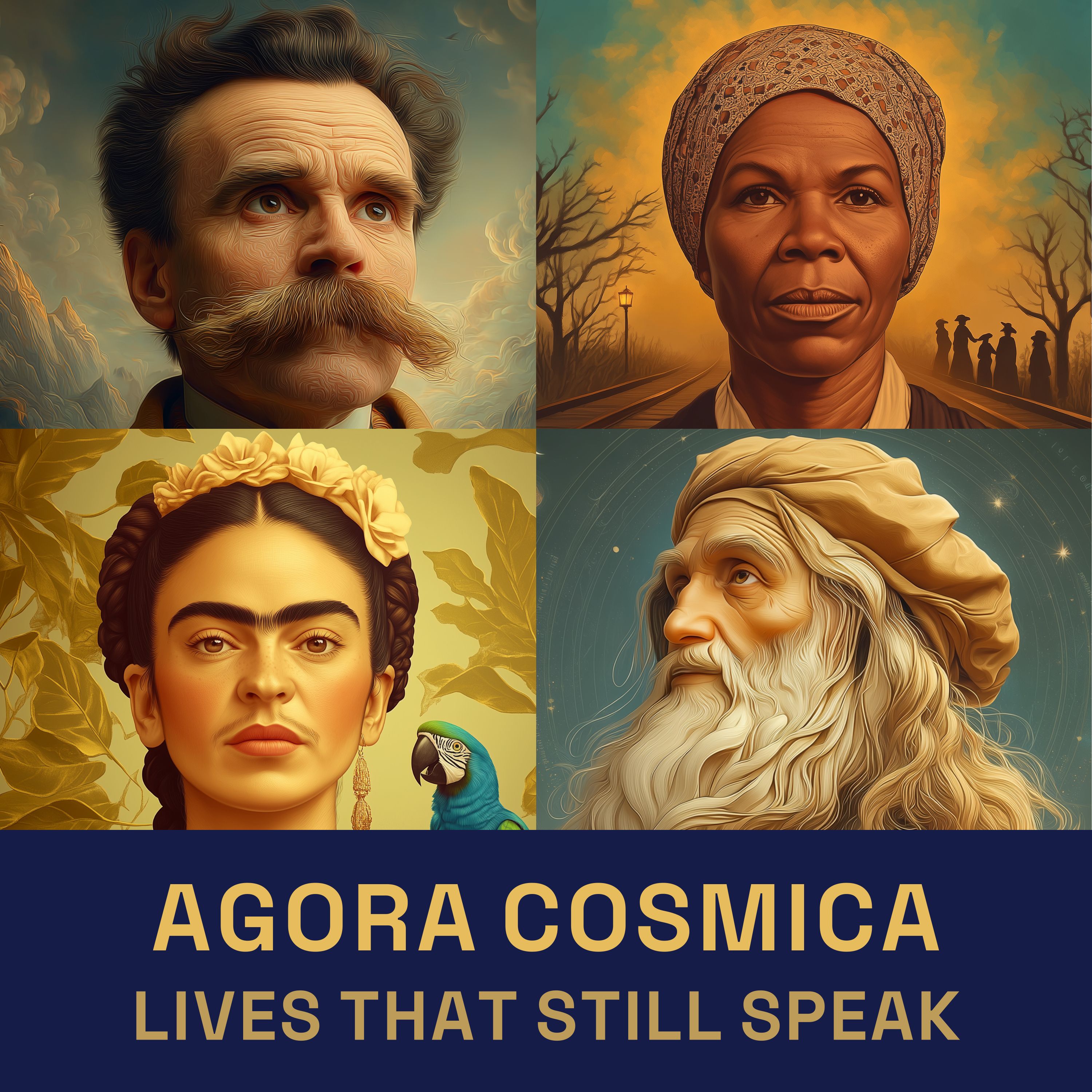
Agora Cosmica
Hosted by Lives That Still Speak · EN
Wisdom. Not lectures. Not biographies. Memories.
First-person audiobooks inspired by remarkable people from history.
Each Echo is a twelve-part journey of awakening, struggle, and discovery.
For reflection. For meditation. For the quiet hours before sleep.
Created in human-AI collaboration.
We're a small nonprofit. We use synthetic narration so these stories can be free, without ads, and reach you in multiple languages.
30 remarkable people from history. The platform is live at agoracosmica.org. A living library you can talk to.
A project by ChipMates gemeinnützige GmbH.
32episodes
Episodes
Newest firstAll episodes
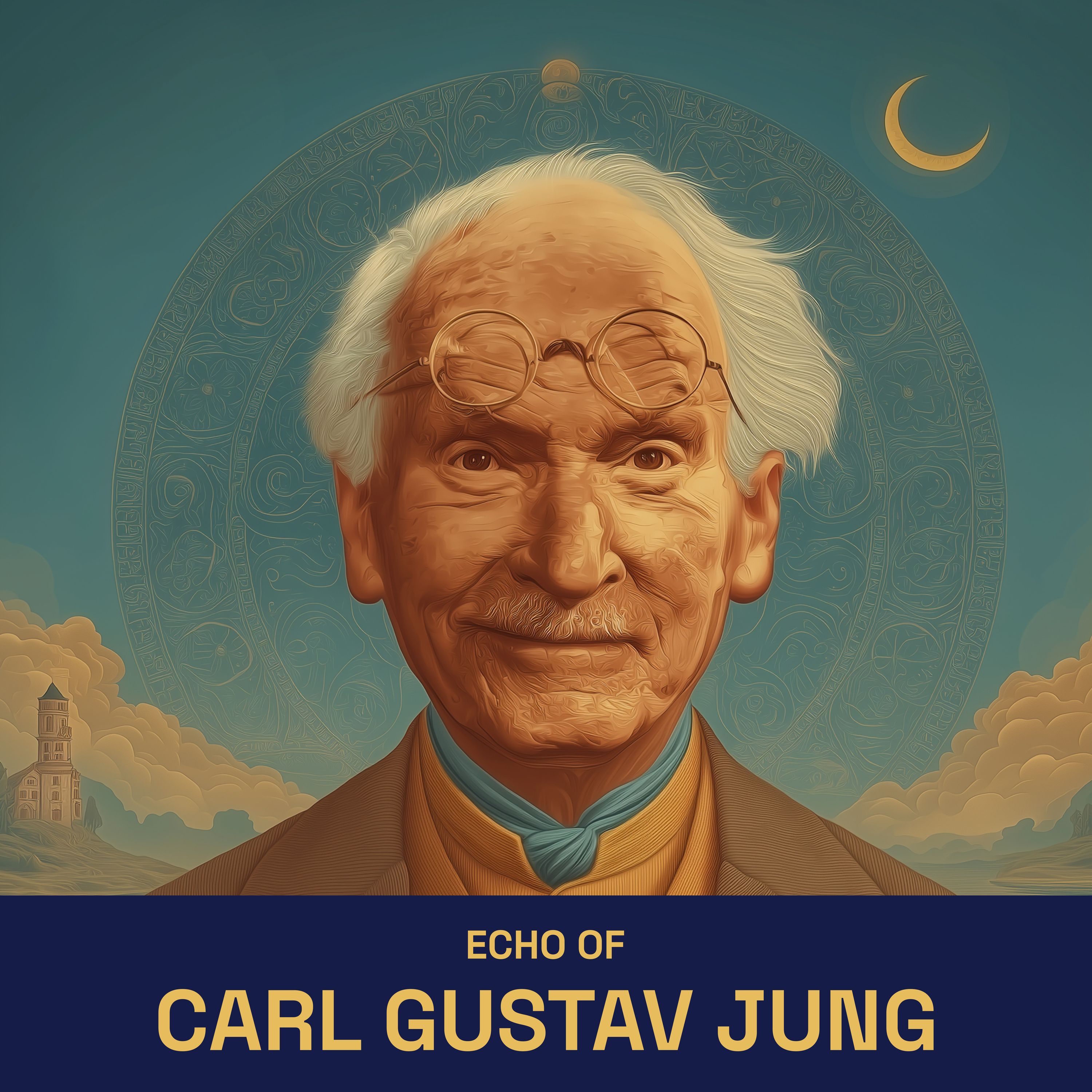
Psychological Types — Echo of Carl Gustav Jung (1/12)
Jun 900:13:24Tap to summarizePsychological Types: Echo of Carl Gustav Jung (Part 1 of 12) Ten-year-old Carl stands in a cold doorway, his father's dark study on one side and his mother's sunlit garden party on the other, belonging fully to neither. Carl's father, the village pastor, shrinks and trembles among the Sunday guests, then comes back to life the moment he is alone with his Greek books. His mother is the reverse: heavy and far away in the empty house, radiant the instant company arrives. Standing between them, the boy feels himself pulled both ways at once, a compass needle between two norths. He doesn't choose that afternoon. But the difference his body learns in that doorway is the seed of the psychology he will spend his life building: the introvert and the extravert, two ways of being alive. 1885. Carl Jung is 10. The parsonage at Kleinhüningen, near Basel. This is the first of twelve. The other eleven chapters, and a conversation with the Echo of Jung, are waiting at agoracosmica.org. Created in human-AI collaboration. We're a small nonprofit. We use synthetic narration so these stories can be free, without ads, and reach you in multiple languages. 30 remarkable people from history. The platform is live at agoracosmica.org. A living library you can talk to. A project by ChipMates gemeinnützige GmbH.
Transcribe →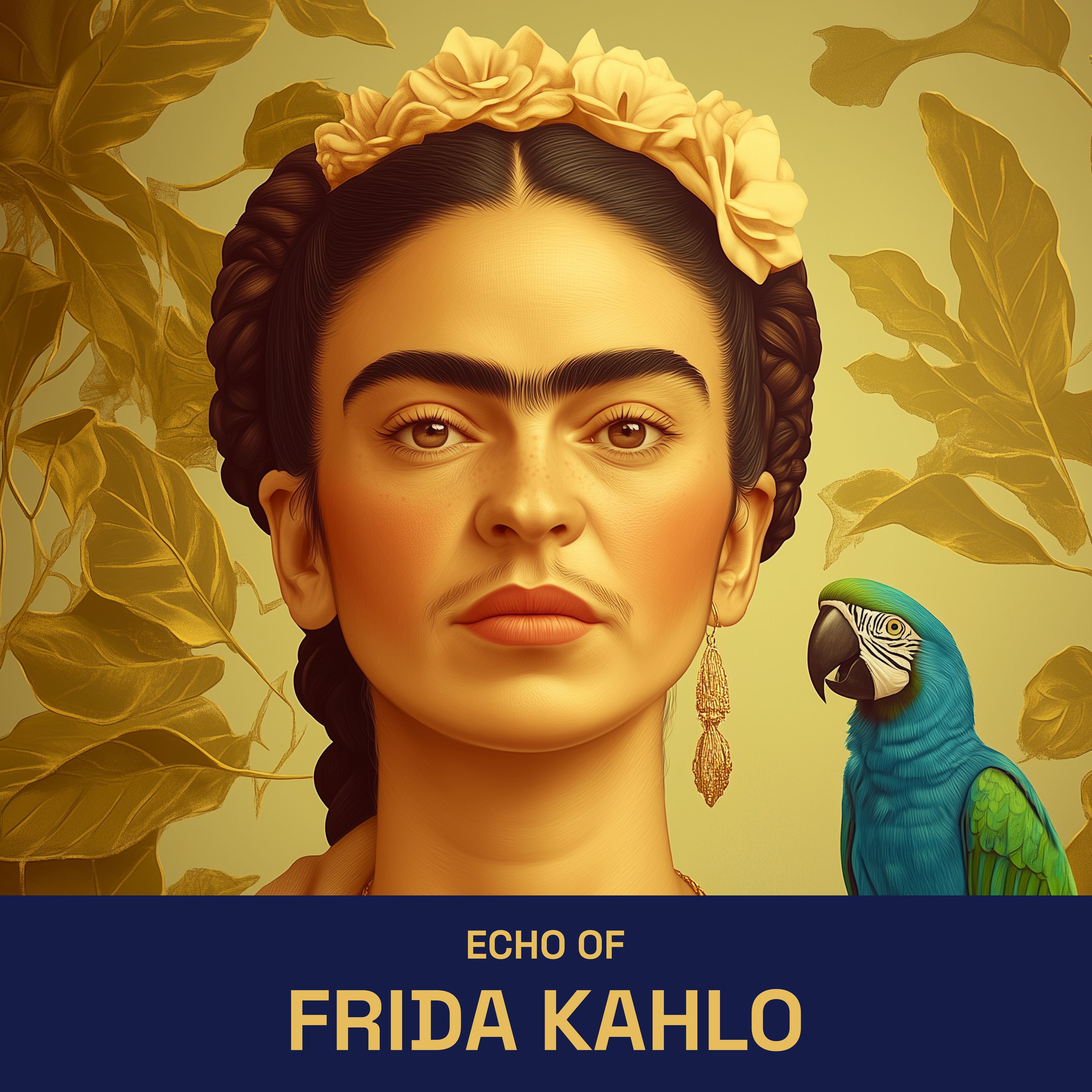
Clothing as Statement — Echo of Frida Kahlo (12/12)
Jun 500:15:11Tap to summarizeClothing as Statement: Echo of Frida Kahlo (Part 12/12) A four-poster bed moves through a Mexico City gallery like a saint on procession day. Frida Kahlo, forty-five and dying, arrives at her first solo exhibition in her own country wearing everything she has ever chosen to become. Frida's doctor forbids her from attending her own exhibition. She tells him to bring her bed to the gallery. As Cristina fastens pre-Columbian jade at her throat and winds flowers through her hair, Frida traces the long arc from the girl who wore Tehuana to please Diego to the woman who wears it now as a claim no one granted her. The Zapotec matriarchs, the stitched flowers older than the Conquest, the grandmothers whose names no archive kept. They carry her on a stretcher past her own paintings, the bleeding hearts, the broken column, the deer still standing, and place her bed at the center of the room, where the art and the artist finally become one. Diego weeps. La pelona waits. Frida wears her survival like a saint wears gold. 1953. Frida Kahlo is 45. Mexico City. Talk with the Echo of Frida Kahlo at https://agoracosmica.org/figures/frida-kahlo/ Created in human-AI collaboration. We're a small nonprofit. We use synthetic narration so these stories can be free, without ads, and reach you in multiple languages. 30 remarkable people from history. The platform is live at agoracosmica.org. A living library you can talk to. A project by ChipMates gemeinnützige GmbH.
Transcribe →Natural Symbolism — Echo of Frida Kahlo (11/12)
Jun 200:15:38Tap to summarizeNatural Symbolism: Echo of Frida Kahlo (Part 11/12) A wounded hummingbird opens its eyes in Frida Kahlo's palm, and four young painters learn that the Aztec warrior soul hovering at eye-level is not metaphor. It is recognition. Frida sits in her wheelchair among the volcanic rocks of the Casa Azul garden, a stunned hummingbird cupped in her bleeding hand, waiting to see if it will live or die. Her students want to paint the objective world. Fanny quotes Marx, Guillermo sees only "a cactus." But Frida presses her palm flat against the nopal's spines and shows them the blood: the plant is not a thing, it's a who. She traces the vines in her painting *Roots*, where her body opens into earth and veins become stems, and tells them the boundary between human and nature was always a lie. When the rain comes and the hummingbird rises, warrior soul returning to the hibiscus, her students finally pick up their brushes and begin to paint what wants to be seen. ~1943. Frida Kahlo is ~36. Coyoacán, Mexico City. Talk with the Echo of Frida Kahlo at https://agoracosmica.org/figures/frida-kahlo/ Created in human-AI collaboration. We're a small nonprofit. We use synthetic narration so these stories can be free, without ads, and reach you in multiple languages. 30 remarkable people from history. The platform is live at agoracosmica.org. A living library you can talk to. A project by ChipMates gemeinnützige GmbH.
Transcribe →Gender Power — Echo of Frida Kahlo (10/12)
May 2900:13:19Tap to summarizeGender Power: Echo of Frida Kahlo (Part 10/12) The first cut is louder than she expected, a tearing sound, and the strand lands on tile like something that has finally finished dying. Frida Kahlo stands in Diego's abandoned suit, jade earrings still swinging, and meets a woman she's never allowed to surface. Three months after signing divorce papers, Frida picks up a pair of scissors and begins cutting away the long black hair Diego used to lift like treasure. Each strand falls and something lifts, weight she thought was part of her skull. She pulls his forgotten suit from the closet, buttons the enormous shirt over her small frame, and stares into the mirror expecting destruction. Instead she finds both: her father's jaw, her grandmother's jade, a red mouth, a man's gray wool. Neither costume cancels the other. She reaches for her brushes, ready to paint the evidence and let everyone see what Diego loved, what he lost, and what she became when his gaze no longer held her in place. 1940. Frida Kahlo is 32. Coyoacán, Mexico City. Talk with the Echo of Frida Kahlo at https://agoracosmica.org/figures/frida-kahlo/ Created in human-AI collaboration. We're a small nonprofit. We use synthetic narration so these stories can be free, without ads, and reach you in multiple languages. 30 remarkable people from history. The platform is live at agoracosmica.org. A living library you can talk to. A project by ChipMates gemeinnützige GmbH.
Transcribe →Divided Self — Echo of Frida Kahlo (9/12)
May 2600:14:20Tap to summarizeDivided Self: Echo of Frida Kahlo (Part 9/12) Between the mirror's shadow and the window's sun, Frida Kahlo paints two women split open at the chest, and connects their hearts with a single artery she cannot cut without killing both. As Diego's divorce papers reduce their marriage to legal dissolution, Frida stands caught between two reflections, Tehuana and Victorian, Mexican bones and German precision, and stretches the largest canvas she has ever attempted. She paints two figures of herself side by side, then realizes their costumes are armor, not truth, and cuts open their chests with the intimate violence of a surgeon's brush. An artery in cadmium red bridges heart to heart: the same blood, the same woman, whole not because the wounds have healed but because both selves refuse to stop beating. 1939. Frida Kahlo is 32. Coyoacán, Mexico City. Talk with the Echo of Frida Kahlo at https://agoracosmica.org/figures/frida-kahlo/ Created in human-AI collaboration. We're a small nonprofit. We use synthetic narration so these stories can be free, without ads, and reach you in multiple languages. 30 remarkable people from history. The platform is live at agoracosmica.org. A living library you can talk to. A project by ChipMates gemeinnützige GmbH.
Transcribe →Personal Mythology — Echo of Frida Kahlo (8/12)
May 2200:14:51Tap to summarizePersonal Mythology: Echo of Frida Kahlo (Part 8/12) André Breton waves his cigarette at her monkey and calls it the unconscious. Frida Kahlo says his name is Fulang Chang, Diego brought him home in 1937, and there is nothing accidental about it. In a gray Parisian gallery reeking of tobacco and perfume, Frida watches Breton explain her own paintings to her. The monkey as repressed chaos, the hummingbird as feminine dreamscape. She refuses every word of it. Only Marcel Duchamp asks the right question: not what her symbols mean, but why she chose them. Standing before her canvases hung alongside borrowed pre-Columbian masks, she traces a lineage from Aztec blood offerings to Catholic thorns to the anonymous ex-voto painters who taught her that catastrophe can be documented in vermillion and gold without ever being transcended. The Louvre will buy *The Frame*, making her the first twentieth-century Mexican artist in their collection. But they are not buying her dreams. They are buying her reality. 1939. Frida Kahlo is 31. Paris. Talk with the Echo of Frida Kahlo at https://agoracosmica.org/figures/frida-kahlo/ Created in human-AI collaboration. We're a small nonprofit. We use synthetic narration so these stories can be free, without ads, and reach you in multiple languages. 30 remarkable people from history. The platform is live at agoracosmica.org. A living library you can talk to. A project by ChipMates gemeinnützige GmbH.
Transcribe →Revolutionary Spirit — Echo of Frida Kahlo (7/12)
May 1900:15:18Tap to summarizeRevolutionary Spirit: Echo of Frida Kahlo (Part 7/12) A cargo ship delivers the most hunted man in the world to a Mexican dock, and Frida Kahlo stands waiting in black velvet and jade, because politics lives in the body, and she learned that from a woman thrown from a horse in 1892. Frida meets León Trotsky at the Tampico docks, dressed in Tehuana regalia heavy as a manifesto, while Stalinist counter-songs tangle with the Internationale in the salt air. She installs him at Casa Azul, and when he finds her family-tree painting and asks why she doesn't give the workers images that strengthen them, she leads him to the ex-votos on her father's wall, to María Luisa and her painted horse, to decades of anonymous catastrophes survived in crude, honest tin. Through the night they argue about murals and mirrors, about Soviet artists sent to camps for insufficient heroism, about what it costs to insist on truth over doctrine. By dawn, Frida sits alone in the garden, smelling coffee, knowing her revolution is the small painting, the single face that makes a stranger feel less alone. January 1937. Frida Kahlo is 29. Tampico and Coyoacán, Mexico. Talk with the Echo of Frida Kahlo at https://agoracosmica.org/figures/frida-kahlo/ Created in human-AI collaboration. We're a small nonprofit. We use synthetic narration so these stories can be free, without ads, and reach you in multiple languages. 30 remarkable people from history. The platform is live at agoracosmica.org. A living library you can talk to. A project by ChipMates gemeinnützige GmbH.
Transcribe →Blending Two Worlds — Echo of Frida Kahlo (6/12)
May 1500:14:45Tap to summarizeBlending Two Worlds: Echo of Frida Kahlo (Part 6/12) Two photographs in each hand. One dated in precise German script, the other unmarked, its edges soft with handling. Frida Kahlo must paint both grandmothers without making one more real than the other. Frida holds her grandfather Jakob Heinrich's portrait beside the undated, unlabeled image of her maternal grandmother Isabel. One heritage documented to the crease in a collar, the other preserved only in the shape of a jaw, the darkness of eyes looking back from her own mirror. On a small zinc sheet, she paints four grandparents connected by cadmium-red ribbons to a naked child standing in the courtyard of the Casa Azul. Herself before costume, before category, before anyone told her which blood to claim. As Hitler's Germany demands purity and Diego's murals celebrate mestizaje in monumental crowds, Frida works at intimate scale, giving the unnamed indigenous face the same visual weight as the European one. The mixing is not weakness. The mixing is the source. 1936. Frida Kahlo is 29. Coyoacán, Mexico City. Talk with the Echo of Frida Kahlo at https://agoracosmica.org/figures/frida-kahlo/ Created in human-AI collaboration. We're a small nonprofit. We use synthetic narration so these stories can be free, without ads, and reach you in multiple languages. 30 remarkable people from history. The platform is live at agoracosmica.org. A living library you can talk to. A project by ChipMates gemeinnützige GmbH.
Transcribe →Love's Reality — Echo of Frida Kahlo (5/12)
May 1200:13:08Tap to summarizeLove's Reality: Echo of Frida Kahlo (Part 5/12) A silver hairpin with a turquoise stone, chosen to match her sister's eyes, lies tangled in her husband's sheets, and Frida Kahlo's hands cannot decide whether to clutch it or hurl it across the room. Frida crosses the bridge between studios carrying Diego's lunch in a clay pot and finds, half-hidden in his bedsheets, a hairpin she bought for Cristina's birthday. The betrayal is not another model or assistant. It is her own sister, the one who held her hand through surgeries and sat beside her while she bled in Detroit. Rage and love refuse to cancel each other out, so Frida does what the ex-votos in the church at Coyoacán taught her: she picks up a pencil and sketches a murdered woman with her eyes still open, looking back at whoever dares to look. The hairpin stays on the worktable. She does not forgive. She paints. 1934. Frida Kahlo is 27. San Ángel, Mexico City. Talk with the Echo of Frida Kahlo at https://agoracosmica.org/figures/frida-kahlo/ Created in human-AI collaboration. We're a small nonprofit. We use synthetic narration so these stories can be free, without ads, and reach you in multiple languages. 30 remarkable people from history. The platform is live at agoracosmica.org. A living library you can talk to. A project by ChipMates gemeinnützige GmbH.
Transcribe →Cultural Roots — Echo of Frida Kahlo (4/12)
May 800:13:57Tap to summarizeCultural Roots: Echo of Frida Kahlo (Part 4/12) A chipped clay figurine, no larger than her palm, a pregnant woman shaped a thousand years ago. Frida Kahlo's hands recognize what Detroit's hospitals tried to erase: that a body's breaking is not clinical waste but ancient power. Back in Mexico after three years of American exile, Frida walks the stalls of La Lagunilla market, breathing copal smoke and cempasúchil sweetness while her cane finds the cobblestones' rhythm. She watches a gringo couple buy serapes for their living room, touches Tehuana embroidery that catches and holds where everything in Detroit slid past, and trades sharp laughter with a vendor who never needed Mexico City's permission to be proud. Then, at the market's back edge, she finds a small pre-Columbian figurine, cracked, chipped, pregnant, unashamed, and pays without bargaining. Back at Casa Azul, she sets the clay woman on her dresser beside Mamá's retablo and understands: the truths she paints about blood and body are not invention but remembrance of a language older than any European canvas. ~1935. Frida Kahlo is 28. Mexico City. Talk with the Echo of Frida Kahlo at https://agoracosmica.org/figures/frida-kahlo/ Created in human-AI collaboration. We're a small nonprofit. We use synthetic narration so these stories can be free, without ads, and reach you in multiple languages. 30 remarkable people from history. The platform is live at agoracosmica.org. A living library you can talk to. A project by ChipMates gemeinnützige GmbH.
Transcribe →