← Alan Watts Being in the Way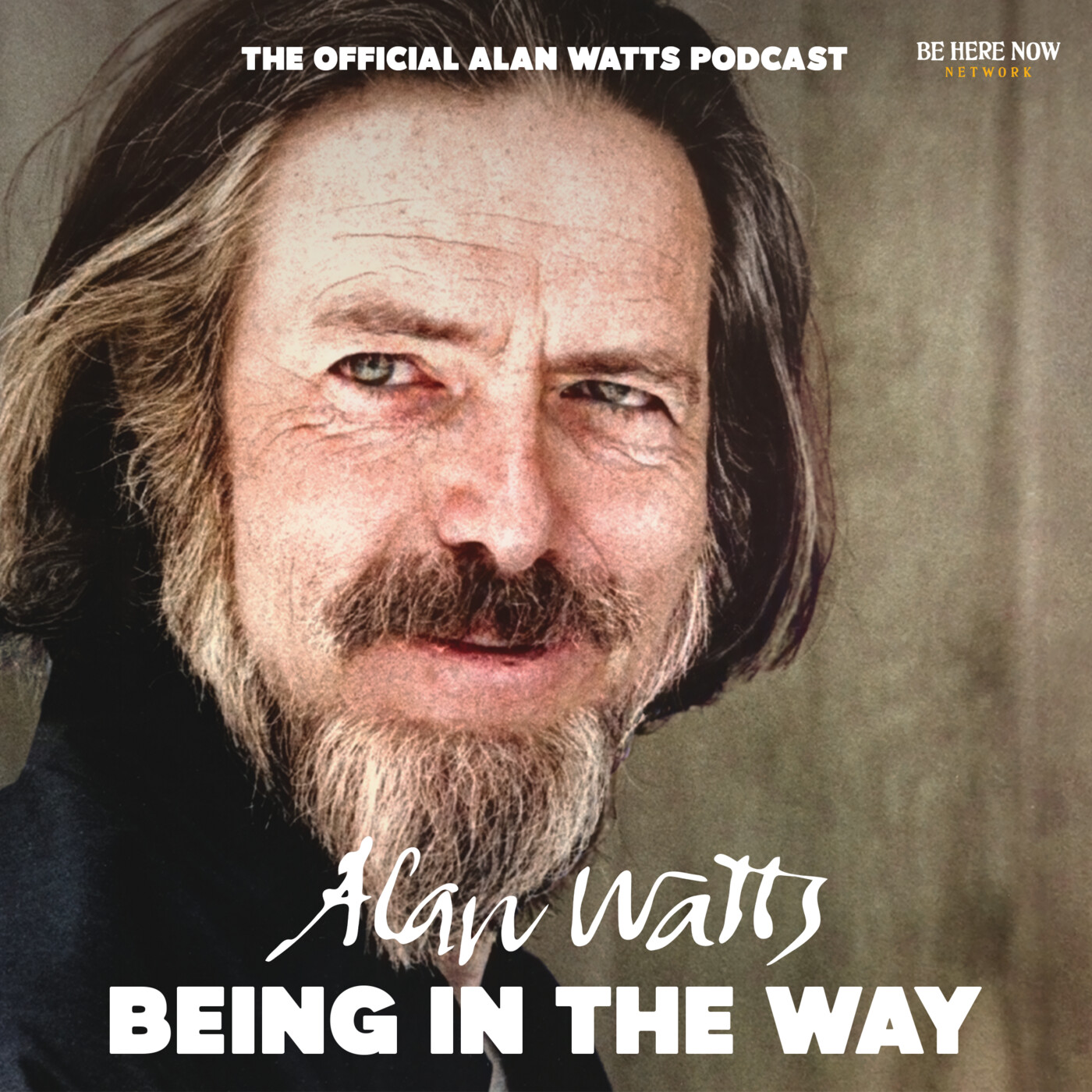
Loading summary
Transcript11 lines
- [00:03]
Podcast Host
This episode is sponsored by BetterHelp. Is this a summer to survive or a summer to thrive? For some, summer is their favorite season. Travel picks up, kids are out of school, and adventure is the focus for others. Juggling it all can be tough and lead to overwhelm and counting down the minutes until the kids are back in school. And many worry they're wasting the precious days of sunshine. Don't forget to take care of yourself during this busy season. Therapy can help you understand your needs, feel more confident setting boundaries, and create a version of summer that feels right for you. With over 30,000 therapists, BetterHelp is the world's largest online therapy platform, having served more than 6 million people globally. They do the initial matching work for you so you can focus on your therapy goals. If you aren't happy with your match, you can switch to a different therapist at any time. You don't have to say yes to everything. This summer, find support in therapy, sign up and get 10% off@betterhelp.com Alan that's better. H E L P.com Allen
- [01:27]
Be Here Now Network Representative
over the last 10 years, the BE Here Now Network has had more than 100 million streams. That is so many people being touched by the wisdom of Jack Kornfield, Ram Dass, Alan Watts, and all of our other beautiful teachers. And if all of you wisdom seekers could donate just $5 this month, we could accomplish our goal of keeping these teachings accessible. And until the end of June, your donation will be matched. So $5 will turn into $10. And $10 from everyone who sees this could get us to our birthday goal. So for be here now network's 10th anniversary, please consider donating even just $5. Thank you. Donate today at behearnownetwork.com forward/10years, 10 y e a R s.
- [02:20]
Alan Watts
You all know what reality is and it doesn't have to be explained to you. And if you try to define it, you become a professional philosopher and you will eventually shrivel up and die. But you know what it is.
- [02:39]
Mark Watts
Welcome to the Alan Watts Podcast Being in the Way. I'm your host, Mark Watts, and today we're going to be hearing more new material on Taoism. This is a session called Flow and it's from a seminar by that name given by my father and by Charlotte Silver in the mid-60s in New York City at Charlotte's loft and together they did sessions there on sensory awareness. And my father would give the audio part, the verbal part of the presentation presentation, and Charlotte would lead awareness exercises and also physical movement pieces that were really Fine art, all kinds of interesting permutations of movement arts that she had perfected over the years. So this is a meditation, a guided meditation on flow with Alan Watts. And today's podcast is brought to you in conjunction with the Ram Dass Be Here now podcast network. And our theme music is by Zakir Hussain, courtesy of Moment Records. Now here's Alan Watts in a guided meditation on flow.
- [03:49]
Alan Watts
So then, I was talking to you this morning about the dynamics of energy, about the way in which we select vibrations, and about the basic principles of meditation as it is understood in yoga and in Buddhism and in Zen. As a process for bringing about mental quiet, which is not pure passivity, mental limpness, just as physical relaxation is not physical limpness, as if you were a wet rag over a clothesline. In the process of meditation, one is completely aware of all sensory inputs. You don't try to shut off your senses. And although it may be helpful, say, to begin in meditation by closing the eyes, in the Zen philosophy of meditation, you don't close your eyes. If you do, you are called a denizen of the dark cavern. You look at the floor in front of you about four feet, and you allow the light to play with your
- [05:53]
Mark Watts
eyes
- [05:56]
Alan Watts
without putting any names on these patterns of light and shade and color. Just as you allow the sound waves in the air to play with your ears. But you don't put any name upon it. You allow yourself to be in a non conceptual way. Now, the importance of this, the practical effect, although when you are in meditation, you are not concerned with practical effects, practical effects accrue as a byproduct, just as happiness, which cannot be pursued is only a byproduct of being interested in something else. But the disease of civilization is that we confuse the world of symbols with the world of reality. As I said this morning, you all know what reality is and it doesn't have to be explained to you. And if you try to define it, you become a professional philosopher and you will eventually shrivel up and die. But you know what it is? It's this. So we are in a very serious condition in the world today. We are trying to make as the goals of life the attainment of pleasures that really exist on paper only. And the chief example of this is lots of money. There are no limits to the amount of money you can make. If you're sufficiently clever and sufficiently ruthless, you can go on and on and on and on. But there are very strict limits to the amount of beef you can eat at one meal, to the amount of Girls you can give to whom you can give adequate satisfaction to the number of houses you can live in, to the amount of clothes you can wear, you can have. Supposing you wore three suits a day and you wanted to be different all the time. All right, there are 365 days to the year. Multiply that by three and that's enough for anyone with dresses. Also then that there is a real limit. And you would consider if you were wearing a completely different suit for one third of the day and you never wore it again, after a while, that would become a bit absurd. You might find a favorite suit, one that you felt suited you. What is a suit except something that suits you and you would go back to it and you would want that one again. Same with a woman. You find you've got a favorite one and you want to go back to her and keep her around, see? And you have a house. You can have hundreds of houses if you're very rich, but you find you have a favorite one and you want to go back. So there are limits to what we can enjoy in a material, physical, real sense. Although I must say, when I say real, and I also join with that the word physical and material, the real world is not necessarily physical or material. The ideas that come out of the history of Western culture that we say physical or material, these are purely conceptual. You see, when somebody says, I'm a materialist and I think there is nothing but, but material, see, and all the spiritual stuff is just fantasy. The idea of material is itself fantasy. These flowers are not material. Material is an idea, is a concept. These flowers you can only understand by looking at them and feeling them. We don't know what they are. We see the patterns of energy and the delight of them. But a person who says, well, this is just material, doesn't realize that he's some kind of a fantast. He's trying to say, he's trying to put his personality up against the spiritual people who say the real thing in life is beyond all these things that we see and hear on. There is a happy land far, far away. You know, there is some kind of a thing beyond all this. And that's a kind of one upmanship. People in religion are the worst game players in the world. They're always trying to out face each other and say, well, you don't have quite the right conception. Even among the most orthodox confraternities, say orthodox Catholic theologians, they're always trying to one up each other, say, yes, you believe that your explanation of the doctrine of the Trinity is very correct. But there are certain subtle respects in which you haven't quite got the point. And they go round and round and round on this forever. Because it's not really religion at all. It's a form of personality, a contest. Because everybody in the world almost is challenging someone else to say, you're not real, are you? You're not really sincere. You don't actually mean what you say. Do you love me? Do you really love me? Prove it. I don't think you can. Everybody's going. So everybody's frightened, everybody's guilty. And everybody else knows how to exploit everybody else's fear. And guilt and emotions say, like guilt are absolutely useless because they always frustrate their own objective. Guilt is supposed to make you good, but it's like alcoholism. The more terrible an alcoholic feels about his dependence on alcohol, the more he drinks. Same. The same with jealousy. If I am jealous of the girl I love, terribly jealous, and won't allow her to have any other men, she hates me all the more for being jealous of her. I can't keep a girl by being jealous of her and she can't keep me by the invest process. So all those emotions deny themselves. So. We have to see. That all these games of spiritual one upmanship, we have to see through them. Every guru, spiritual teacher comes on like he's got something that you don't have. More insight, more relaxation, more happiness, more oneness with God, whatever it may be. And this is the bait which catches you. Now, there are two kinds of gurus. One kind of guru really believes he's got more than you have and he can do nothing for you except lead you into a bag. That's the ordinary minister who believes that he is a representative of the true and authentic religion and that he is going to get you into the church and he's going to get you hooked on the religion so that you become a religious addict. And so of course, so long as you're a religious addict, just like an addict on heroin will have to fork out 50 bucks a day to get his connection. So you're going to have to tithe your income or whatever it is to pay off the mortgage on the church buildings and to keep the clergy alive. That's why they want to get you hooked on it. There's another kind of guru, he makes his living in an entirely different way. He wants to get rid of you. He's got some way of liberating you so that you can function on your own without having any guru at all. And without belonging to any religion, because he treats his doctrine, his practice as medicine, not as diet. And eventually you take the medicine, you understand, and you can function on your own and you go away. But when you go away, you say hey to everybody else. I got this guru, you know, he was just fabulous and he set me free. So what happens is the this kind of guru, instead of having a permanent group of followers, has a big turnover and he gets on all right. I'm just explaining the economics of spirituality. And there's another side to this, incidentally. Wherever a guru happens to liberate people instead of enslaving them, other people will want to do the same thing. That's all right if you're a close type guru with a, you know, want people to stick around to pay the mortgage. You don't want any other gurus in competition with you because that's taking away the business. I had a very funny adventure in Thailand. I was wandering around a temple and I was sort of looking, my gaze was cast downwards and I suddenly came across a bookstall and there was a book on the kind of meditation they do in Southern Buddhism. And I said, oh, I was just sort of talking out loud to myself, that must be Satipatthana. And a voice said, you practice satipatthana? And I looked up and there was a yellow robed monk who spoke English, standing in charge of the bookstore. He's kind of red eyed. And I looked at him and said, well, not exactly. I practice Zen or Zen, not Satipatthana. Well, I said, it's all kind of the same thing. It's like yoga. No, no, Satipatthana, not yog. Now listen, I said, you Buddhists are supposed to be open minded and believe that there are many, many ways of realization. No satipatthana, only correct way. Well, I said, you talk like a Roman Catholic. They say they have the only true way. I said, you know what you like. You've got a ferry boat concession, a ferryboat concession to take a ferry across the river. And a few miles down the river somebody else opens up a ferry boat and you complain to the police and the government say he shouldn't open up because he's in competition with me. Now, the truth of the matter is this, I'm talking still about the economics of spirituality. In London there's a street called Harley street where every eminent physician and surgeon wants to have an office. This was years ago. And so Harley street became completely full with physicians and surgeons. Well, you would say, naturally, they were all in Competition with each other. But nothing of the kind happened. They all became equally prosperous. So that they had to open up Wimpole street, which was the next street to Harlow Street. And when they had filled that up, they opened up Welbeck street, which ran along next to it. And when they filled that up, they got Queen Anne street, which run parallel. And the whole area is nothing but physicians, surgeons and dentists. And they are all fantastically prosperous because they've got the right address. See, once you've got into Harley street, you're there. So it's like you're a guru and you set up in Sausalito or Big Sur or Hollywood, whatever, you know, you're in the right place and we can take any number and they'll all. The more we have, the more prosperous everybody will be. This is the economics of plenty. And it's all based, you see, if you really work it right, it's based on a big turnover. You don't try to capture people. You don't try to make them faithful to you. You don't want to tie them up. But you see, if you do that and you set them all free, you really get them going. That's what you're supposed to do. That's your job, to liberate them. And then they're grateful and they send their friends to you. So. The. The craft of mysticism. You see, I just want to be very frank with you because after all, you pay to come to these seminars. And in India it's considered very, very immoral to ask for money for spiritual teaching. But that's a different culture from ours. In the United States, it would be immoral not to ask money. Because in the United States, people disrespect anything. They get free and they have to give money as a token of their sincerity. Just as say in India or in China, you have to give something else. You have to wait a long time. You have to be persistent in token of your sincerity. But in this country, the hang up is money. So naturally one asks for money. A person like myself only needs a relatively small amount of money. And so if you make an awful lot of it by being a successful guru, you give the rest away or do something creative and imaginative. Allen Ginsberg has a foundation. He makes a great deal of money by being a crazy poet. And he gives all that he doesn't need to help other poets. So then. The point I'm making is this meditation. You are not trying to gain anything, to alter your state of mind from what it is now into some other state which you think it ought to be in. You are centering in where you are. But you see, the difficulty for us with this is that we do everything, we even eat, we play, we dance under the fundamental assumption that all this is good for us. We go to concerts to improve our culture, to the theatre, to the movie, in order to be able to say we have become more educated, we have improved. And as a result of this kind of motivation, we don't really do those things at all. If you go to the concert to become more cultured, you are not really listening. So meditation, above all things, because it's got a slightly disciplinary flavor to it, a slightly religious flavor to it, is something that people use somehow to get ahead in the game of spiritual one upmanship. And I get sick and tired of people who go and study Zen and come back and brag about the long hours of meditation they put in and how much their legs hurt and what a great ordeal it was and how good it was for them and how you who haven't gone through this discipline are a kind of underling. See, I've had this put on me for years because I didn't go to Japan and didn't sit around in Zendos and worked it my own way. And they say, well, you're just a dilettante. See, you haven't suffered as much as we have and you really ought to suffer. You ought to put up with those long, long endurance tests. Now, the reason why in meditation one sits in a certain way, whether you sit like I'm sitting now, or whether you sit in the lotus posture, your legs become a little uncomfortable. And the reason for that is not self punitive, it's merely that it helps you to stay awake, That's all. And if you don't, if you got, you know, if you were floated in a hot tub with supporters in a completely dark room in one of the sensory deprivation chamber, you would very likely go to sleep. But the point in meditation is to be wide awake without, however, the intellectual chatter going on in the head. And so a posture which involves a very certain subordinate degree of discomfort keeps you awake. Actually, when you get used to sitting this way, I can sit this way without extreme discomfort for at least 40 minutes, even longer, and it becomes natural. But as I explained, the point is to be wide, wide awake and aware of your total sensory input without confusing it with the symbolic world of words and concepts, so that you experience life naked and directly, Experience you naked and directly, without having in your head the concept of who you are as a role player, as a personality, as an ego. And this becomes, in due course, a very pleasant thing to do. So that meditation becomes not something that you put in so much time at, like you might put in time in a jail, but becomes a pleasure. Of course, from the point of view of our religion in the United States, that's almost sinful. Religion isn't supposed to be a pleasure because it's supposed to be joining with Christ and suffering on the cross. Look, there's enough inevitable suffering going on anyhow. You're going to die one of these days. Everybody encounters difficulties in their lives. You don't need to go out of your way to seek them. So now there are two fundamental approaches to meditation. One, you see, this morning, Charlotte was getting us to bounce on our heels and to stretch as tightly as we could to overcome gravity. And then after that, she said, see what happens when you don't do it? So one of the methods of meditation is to stretch as tightly as possible, to concentrate with your whole energy on a point, and to use the maximum amount of effort. You say in yoga, there's an exercise called kumbha, which is a way of breathing, which is. It's a kind of force, holding the breath as long and as tightly as you can. That was like the stretching we did. That's like those people who say in the Tendai Temple up on Mount Hiei over Kyoto who practice bowing, thousands and thousands of bowings. They stand up, they kneel down and prostrate themselves on the floor, get up again, stand up, kneel down, prostrate them on the floor. And there are those Tibetan monks who do the Lungompa do, running through the mountain trails with enormous leaps. And they do like Nijinsky could do, those leaps where, you know, you pause a little bit in the air and seem to overcome gravity and then drop again, and they go on and on and on, bouncing along a road. Or there are other pilgrims who prostrate themselves at every step, traveling a long journey. There are people who run the streets of Kyoto, a hundred miles through the streets of Kyoto every day at a jog trot. There are all kinds of things like that where you work yourself to a limit in struggle, because in doing that, you get a thing which runners call second wind. And second wind in running is where you are no longer running, but it runs you where, in other words, the ego energy in the running is displaced and the energy of the whole organism takes over. And that is all the energy of the whole universe. When you get second wind so you get second wind in this fierce kind of meditation. Alternatively, there's another way in. And in this way is a kind of so called easy way, and one uses it for a different type of personality. There are certain people who must have the difficult way because they don't know they exist unless they're sitting on a spike. And those, those kind of people who don't believe they're real unless they hurt have to follow the difficult way. But there is a subtle way, which is the Taoistic approach, wherein instead of trying to master and dominate your body mind, you let go of it
- [32:11]
Mark Watts
and
- [32:11]
Alan Watts
you let it do whatever it wants to do. Let's suppose for the sake of example, for a moment you just close your eyes and allow your eardrums to respond to any sound going on. There are no proper sounds or improper sounds. You may feel free to shift, shuffle, cough, sneeze as you will. Don't try to identify, locate or name the sounds that you hear. Just let the rippling air play with your eardrum. And as you hear the sound of my voice coming across to you, listen to what I have to say simply as tones. Your brain will take care of understanding you. Don't try to understand. In other words, allow your ears to hear anything they want to hear. And to assist you in this, keep your tongues relaxed in the lower jaw, Listening to every sound in the whole field of air vibrations as you would listen to music, as he would listen to Bach or Ravi Shankar, without trying to see any meaning. There is no hurry. This is what there is. Well, now, of course, one can do that through all the senses, not just the ears, but the body feeling, skin contact, the breath, sense of smell, taste, and also, of course, the eyes. It's more difficult to do it with the eyes because our culture, as Marshall McLuhan has pointed out, is excessively visual. And because of the Gutenberg galaxy, because of making sense out of print and the enormous valuation placed on literacy, we've overbalanced one sense, which is the visual sense. When we say to somebody, you smell, that's uncomplimentary, we should say, of course, correctly, you stink. If we mean you have a bad smell. But everything connected with smell is repressed. And therefore, because we still continue to smell, it is an unconscious sense through which we relate to each other in ways that we don't know. You take an instinctive liking to someone because you like the smell, but you don't know that. You take an instinctive dislike to someone because you don't like the smell, but you don't know that all sorts of things, all sorts of messages are passed through the nose, but we are not aware of them. We don't have an adequate vocabulary of smell. Only three adjectives in English are associated with smell uniquely. Acrid, pungent, fragrant. All the others are associated with borrowed from other senses. Think how many adjectives we have for vision, for sound, for taste. Although taste, of course, is inseparable from smell. So the second way of meditation, which I was demonstrating to you, allowing your ears to hear whatever they want to hear. In the same way you allow your breath to breathe any way it wants to breathe. You allow your muscle, skin, feeling, you know, the sense of touch, to feel any way it wants to feel. You allow your eyes to see anything they want to see. And finally, you allow your mind to think anything it wants to think, let it go. This is the relaxed way. The other way is the tense way. They come to the same conclusion. You go around this way. Take the right hand path and go there. Take the left hand path and go there. I'm not going to evaluate between one and the other. It's up to the individual. But the way Charlotte and I have been interested in for a long time is the way which is natural, which doesn't force things, and which lets the organism, with its own inner sense of what is correct, do it by itself. So if you will, let your mind see alone. You don't try to concentrate it. You don't try to discipline it. You merely let it do whatever it wants to do. Whatever thoughts want to flow through your head, let them flow. Don't try either to get with them and make something of it. And don't try to stop them. Just let them go. Besides, who are you as distinct from your thoughts, as distinct from your visual, auditory, tactile, olfactory sensations? Who might intervene and say you do otherwise? Because when we get that terrific split between our experience, our feelings, our sensations on the one hand. And on the other, something called the experiencer, the control agent who has and who directs all these things. There's the root of our trouble. Because we are confusing ourselves with an image of ourselves. And under those circumstances, we define the living organism as a material object, the body which corrupts and which is somehow antithetical to spirit, not realizing that the idea of the body as something antithetical to spirit is purely a conception. This is not a conception. And as we see it now from the standpoint of 20th century quantum physics, it's a shimmering phenomenon of electrical energy. It's a light show. This isn't what we used to think of as physical at all. You know, block, chunky stuff. It's a zizzing dance. It's like fire. That's the meaning of the Buddhist figure Fudo, this guy with a sword in one hand and a rope in the other, with a fierce face and flames all around. Fudo means immovable. He's showing you everything is fine. Just like I said this morning. A flame seems to be a flame. A flame, a thing that sticks in one position. So Fudo, this flaming God, with a sword which cuts off all entanglements. And the rope, I don't know what the rope's for. Maybe just for wiggling. He cuts loose our conceptions so that we can see this all too solid flesh dissolved.
- [43:16]
Mark Watts
You've been listening to FLO in a guided meditation on being in the Way, the Alan Watts Podcast. I'm your host, Mark Watts, and today we've been exploring a unique recording that is also part of the book Dao for Now, which is now available in both digital and print format. This program is also available on the play.AlanWatts.org network. That's play.AlanWatts.org online. And there it will come up both as a seminar session and also as a series called Philosophy of the Dao, which includes three sessions from the Philosophy of the Dao series and a session, an extended session of the Flow Meditations. Again, I'm your host, Mark Watts. This has been Alan Watts in Being in the Way. Our theme music is by Zakir Hussain, courtesy of Moment Records. And this podcast has been produced in conjunction with the Ram Dass Be Here now podcast Network.
- [44:22]
Podcast Host
Sa.