← All Of It with Alison Stewart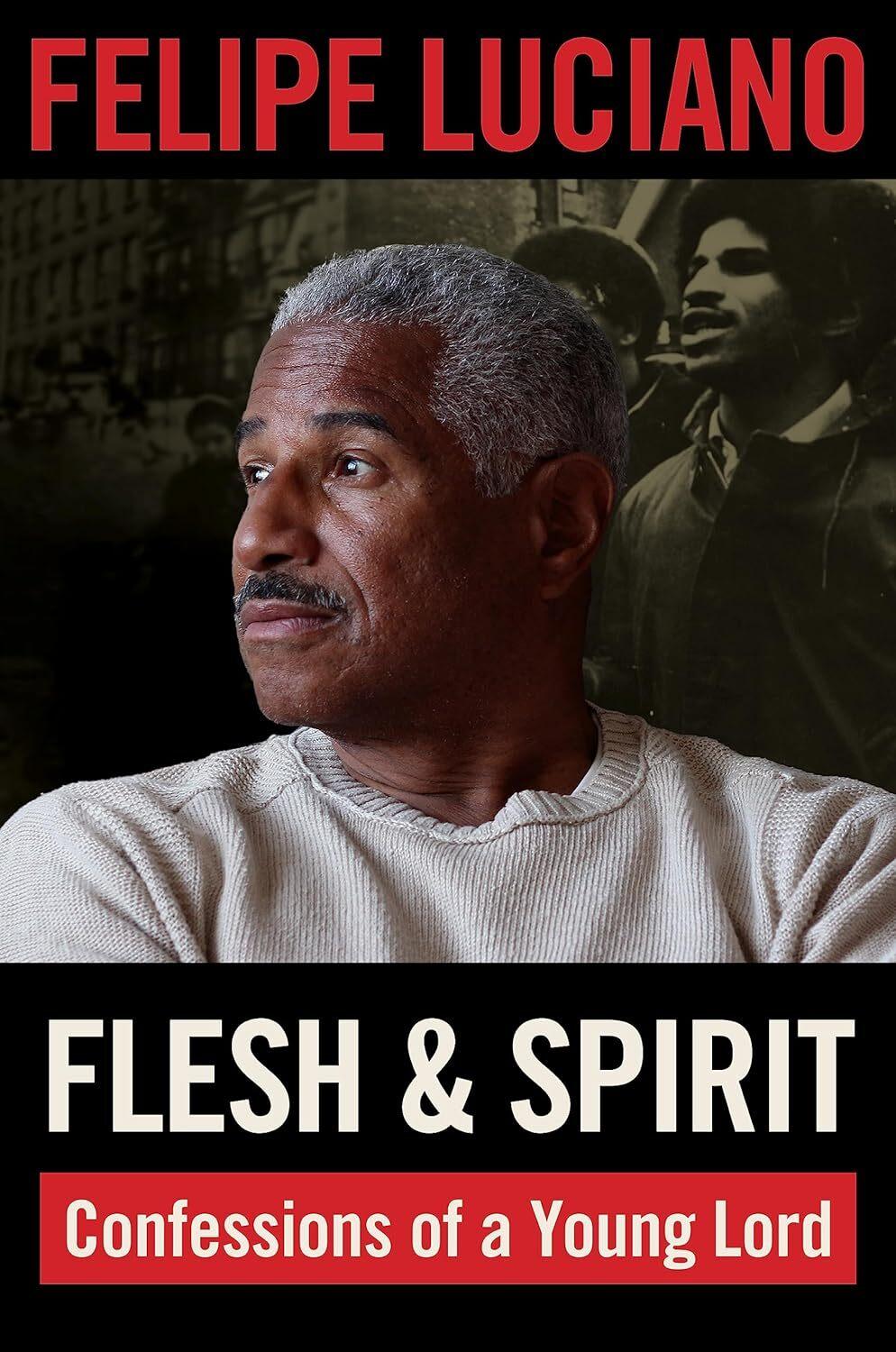
All Of It with Alison Stewart
A Black Puerto Rican Man’s Odyssey from Gang Life to Activism
00:25:28
Felipe Luciano's new memoir touches on his transformation from incarcerated gang member to founder of the Young Lords Party.
Loading summary
Transcript64 lines
- [00:02]
A
Surprise beach day. No excuses. I'm in. Gimme five. With Bix Soleil Glide Razor, you'll have hydrated, smooth skin that's ready to go on the fly. No shave cream needed. You can prep, shave, and hydrate all in one step thanks to moisture bars that hydrate your skin during and after shaving. 5 flexible blades hug your skin for a close shave. Glide into smooth. It's your time to shine with bixsolil. Buy now at Amazon and Walmart. Ready? Your skin looks amazing.
- [00:28]
B
So smooth and beach ready. Let's go. I' ma put you on, nephew. All right, unc.
- [00:34]
A
Welcome to McDonald's. Can I take your order, miss?
- [00:36]
B
I've been hitting up McDonald's for years. Now it's back. We need snack wraps. What's a snack wrap? It's the return of something great. Snack wrap is back.
- [00:47]
A
Did you know Tide has been upgraded to provide an even better clean in cold water? Tide is specifically designed to fight any stain you throw at it. Even in cold butter. Yep. Chocolate ice cream. Sure thing. Barbecue sauce. Tide's got you covered. You don't need to use warm water. Additionally, Tide pods let you confidently fight tough stains with new coldzyme technology. Just remember, if it's gotta be clean, it's gotta be tide. A BetterHelp ad. Louis Capaldi partnered with BetterHelp to get word out about how important therapy can be.
- [01:23]
B
I struggle most weeks to like, get up, get myself up and ready and go to therapy or whatever. Like even like to open the laptop to talk to my therapist. Sometimes can be really difficult. But I do it because I realize how important it is for me to continue to feel good. I felt the best I've felt in a long time through therapy.
- [01:40]
A
Learn more about online therapy@betterhelp.com.
- [01:48]
B
Listener supported WNYC studios.
- [02:02]
A
This is all of it from WNYC. I'm Alison Stewart. If you grew up in the area like I did, you may remember Felipe Luciano as a WNYC news anchor in the mid-70s. It was a long road to that point, given that the first line of Luciano's candid new memoir is, quote, I didn't mean to kill him, but I certainly wanted him dead. The hymn refers to a man named Larry who attacked Luciano's brother in 1964. Luciano confronted the man and as he writes, describing himself after that moment, I was a skinny, five seven, 16, year old black Puerto Rican who belonged to the All City Chorus, who loved history and music and who had just helped kill someone. He went to prison where he learned and saw a lot after being incarcerated while applying for a job, the employer noticed how smart he was and encouraged him to think about college. It took some coaxing, but he did. He immersed himself in poetry and activism, which he put into action when he co founded the New York chapter of the Young Lords. What started out as a street gang in Chicago went on to become a civil rights group fighting for Latino empowerment and transformation, mirrored in his personal life. He writes about this in his memoir, Flesh and Confessions of a Young Lord. Felipe Luciano joins us today. Felipe, welcome to all of it.
- [03:17]
B
Thank you very much. Alison, how are you?
- [03:19]
A
I'm doing well, sir. How are you?
- [03:21]
B
I'm very well. Have we met before?
- [03:23]
A
I think we have. In the Wayback Machine.
- [03:25]
B
I saw you. Yeah, I saw your face. And I said, I've seen this woman. I've seen her before, and I just can't put it together. I can't put the two together. But in any case, I'm happy that you're there and I'm happy I'm here.
- [03:35]
A
Oh, thank you so much. Why did you want to write this memoir at this particular point in your life, sir?
- [03:42]
B
I had to get rid of the demons, Allison. Yeah, they were legion. They were all over me. The past pulls you back into a vortex that sometimes is not only self incriminating, but also makes you impotent creatively. You can't move forward until you let the past go. And I mean cut it severely, cut it with the sharpest knife you can. I couldn't do that. It surrounded me. It permeated every core of my being. So I had to write the book. Put out, put. Put it all down on paper. Just lay it out and then move.
- [04:14]
A
Forward in the book. When you first introduce us to your teenage self, you write about Philip with a ph instead of Felipe.
- [04:23]
B
P H, L, I, P. Yes.
- [04:25]
A
Why?
- [04:28]
B
Philip was the child who watched Disney every week. I knew all of the series. I knew zero. I knew Cisco and Pancho. I knew everything that Disney had done. I watched this stuff without any discretion. I loved it. It was my babysitter. It was my dream. It was everything to me. I didn't know that I was taking on values that were not necessarily values that were being fought out in the streets. Civil rights had no meaning to me until I went to jail. When I went to jail, I realized that all of the stuff that I had been reading about in the newspapers was very real. Allison. People were being killed because they were black. There was such a thing as injustice. I believed in meritocracy. I used to read the biographies of Patton and Eisenhower and Albert Schweisster. Those are the people I grew up with. I didn't grow up with Martin. I didn't grow up with Malcolm. It was when I went to jail that I realized, wait a minute, something is wrong. There was a complete confrontation with self. The psyche had to change, and it did.
- [05:37]
A
In the memoir, you referenced two different neighborhoods you grew up in, Harlem and Canarsie, and you said you didn't choose Canarsie, you got exiled there.
- [05:45]
B
Yes.
- [05:45]
A
How did your family end up with Canarsi?
- [05:48]
B
Well, NYShow, though they may not admit that today had a policy that if you were on welfare and you were a single mother, they would give you the most, the more dangerous, the more brutal projects. Brownsville projects, Brookline projects, Marcy Avenue projects. If you were a nice, if you were a couple that they felt there was promise in, they would put you in the Edenwall projects, which are up in the Bronx, Eden Wall now, just as bad as the others. But that was a nice place to be. They put you in white communities so that you had a chance at some chance of success. That didn't happen with us. We were always put in the worst projects in the world. The only project that I remember that was pretty much violence, less violent, less was the Johnson projects on 112 street between 3rd and Lexington, 165 east on the 12th street, which is where I spent the first 10 years of my life. And it was wonderful. I remember it being almost idyllic.
- [06:42]
A
Oh, we've lost Felipe Luciano is. He's on a phone line. Our phone line just disappeared. So what we're going to do is we're going to take a quick break, and hopefully after the break, we'll have Felipe Luciano back to continue discussing his memoir, Flesh and Spirit, Confessions of a Young Lord. This is all of it on wnyc. I'm Alison Stewart. My guest this hour is Felipe Luciano. His new memoir is called Flesh and Confessions of a Young Lord. Felipe, when you were in Canarsie, you joined a gang and you wrote in your memoir, the bonds for this gang were born of a desperate need for protection. And it didn't matter where you were born or what language you spoke in the house, Gullah or Spanish. What what were the rules that most people, gang members, lived by at this time? What was the code and why was it important?
- [07:34]
B
The code was that the love had to be translated into physical reality. You couldn't say, you're my boy and not jump in to help him when he's in danger. You couldn't say that you were a gang member and not stand up to other gangs. You had to eat in his house. You had to sleep in his bed. You had to love his mother. And so I grew up with a black and Puerto Rican unity that is unheard of today. I hear about black and Puerto Rican unity today, but I'm talking about being so close to this guy that you would kill if you had to, to defend him. That's the way I grew up. I missed those days. I know that we were antisocial. I know we did things that would not be considered good boy stuff. But the gangs, in many ways, saved my life. I was able to use the principles of the gang to keep the young lords alive. You love that guy. That guy is your boy. And by the way, that also included women. We used to call them debs. But you love your family to this day. My kids are always surprised when someone calls me. I need your help. I leave everything and I go there immediately. It's. It's. It's a spirit inside that says, that's my boy. That's my brother. And it didn't matter if you were from South Carolina, from Beaufort, South Carolina, and spoke with a deep, geechy accent, or you were from Ponce, Puerto Rico. We have these bonds. I know. Guys, let me give you an example. Daffer Dan. Dapper Dan is an entrepreneur up in Harlem. Do you know him, Alison?
- [09:03]
A
Oh, yes. Oh, yes.
- [09:03]
B
He is the most incredible black man, by the way. He dances Latin music better than me. He grew up in that period, and he knows how to mumble. So. And I knew how to dance. To smoke into miracles. That's the kind of interconnected intersectionality of black and Puerto Rican cultures that I believe in. I don't know if it exists today. I hope it does, but I don't see it manifested often on the streets. We were family. And so when one member is attacked, it's a wrap. The Puerto Rican culture is so circlish. It demands that if one is hurt, all of you go down. And many, many, many brothers have told me, I hate fighting you guys, because once I hit this kid and he may have started it, the whole family comes out. They scream from the rooftops. The third aunt of the. Of the guy that you're fighting comes out. She doesn't even know him. Latinos are like that. We believe in family. It's amazing, but that's what I grew up. And in the projects, it was like when I. I spoke to my cousin who was part of this gang carnage chaplain. And I said, look, Paul has been hurt. He said, don't worry about it. When do you want me there? It was like that. And he called. All of most of the guys I got busted were all African American. There was no such thing as, well, I'm not gonna go because he's Puerto Rican. Out of the question. And so we grew up with eating, eating all of the food that black folks ate. Black eyed peas. What else? Stewed chicken. It was. And they ate benil and rice and beans. To this day, we talk about, laugh about how we grew up in each other's culture. It was a beautiful time to be alive.
- [10:41]
A
Sounds like being part of this group was also really emotionally fortifying for you. Not just physically, not just protection. And you're going to take care of that one because that one took care of you. But there's an emotional element. Is that right, Allison?
- [10:54]
B
Allison? It was my life.
- [10:56]
A
Yeah.
- [10:56]
B
I grew up knowing that if I walked outside that door, I was not going to be killed. I grew up feeling the embrace of big, big brothers. I remember they were growing them big in 66 and 64. I knew some South Carolina brothers that were like they used to. I knew one guy with forearms that was so thick. I told him, how did you get your forearms this big? Do you lift weight? He said, no, man. I just used to lift hay and throw it onto the quagon. So I grew up with a love for black people that is beyond description. It's hard to describe it, but because it's internal, it's spiritual. And by the same token, there are many, many black people who grew up with Puerto Ricans that speak with Puerto Rican accents. You say, how is it possible that this blue black brother speaks with a Puerto Rican accent? That's the kind of intimacy that I demand of any culture, of any friendship, I guess.
- [11:45]
A
Felipe Luciano, the name of his memoir is Flesh and Spirit Confessions of a Young Lord. I wanted to be clear about how and the circumstances of why you ended up in prison. Your brother was attacked by a rival gang member, man named Larry. You confronted him alongside with your friends and cousin, and it was a fight, and Larry was fatally stabbed. You didn't stab him, but you saw who did, hid the weapon. That's what landed you in trouble. What intention did you have? Do you remember back in the moment when you were. When you first you and your peeps went out and confronted Larry?
- [12:22]
B
Alison, I'm going to say this as slowly and as unemotionally as I can, because I always get emotional. I talk about this, okay? I knew he was going to die. I knew that these were his last days, his last breaths, because he had violated the code that was inviolable. You do not hurt someone who has nothing to do with your failure. They went down. He and his gang had gone down the night before and. And had beaten up on some Puerto Ricans. They came back into the party that my brother was in and they beat him up. They beat him all four or five blocks. In fact, as he was about to stab him, his hand was in a vertical stance and he looked at my mother, came on the stage and said, please. And he stopped. Thank God. But I knew that my brother almost was gone. I knew at that point he was going to die. I had no problems with it. That was the code of the streets. You play, you pay, you don't, you die. And I said, he has to go. And so it was very clear to me. I didn't understand how much time I would do. I just knew that he had to go. And I don't understand if people where Puerto Ricans on a certain level are very primal, they're very tribal. There's some black folk like this too. They just. It's the law of the streets. There is. No one's going to protect you. The cops are not going to protect you. No D.A. is going to. You don't have the money to get a high priced lawyer. You have to take this person out. You don't go to the cops. You don't say, look, my brother was hit and I want this guy taken down. You already know that's futile. So you've got to take the law into your own hands, because if not, your family will be the marks, the victims for the rest of their lives. My mother had to move eventually.
- [13:57]
A
Right, Right when you got.
- [14:00]
B
That's where it was at.
- [14:01]
A
Yeah. When you got out of prison. This is part. It was, I thought, really touching in the memoir is that you apply for a job and this person can tell you're smart and like sort of test you about language and words.
- [14:15]
B
And you keep passing the tests, Ms. Francis.
- [14:16]
A
You keep passing the tests. And did you believe in yourself the way she believed in you?
- [14:23]
B
Oh, hell no. Yeah, Allison, that's why I went to jail. I didn't know that I was smart. My mother didn't tell me I was smart. She said, you know, you're kind of bright, but I didn't know I was brilliant, if you can use that word. My teachers would tell me But I didn't. I didn't know. I had a lot of insecurity about my intelligence. Finally, when I went to this person, Ms. Francis, I had to do a typing test. She said, I passed it. She said, you. Do you know the meaning of these words? And of course, I was at Anglopher. I had. I knew all of the words that I was typing. And then she gave me another test. I think it was an IQ test. And she ran out of the room. Do you know what you've done? Do you know what you've done? At which point my heart sank. I said, man, I blew this. I said, you passed. You don't deserve to be just picking up garbage because I wanted a garbage job. She said, what you need to do is go to school now. My heart sank because I didn't think I deserved more than a garbage job. Well, sure enough, she got me into Queens College. I met a guy named Franz Mulholland, Mr. Mulholland, in the SEEK program. Search for Education, Elevation and Knowledge. And I began in Queens College. And for me, that was the beginning of my. Of my intellectual foray into literature, into politics, into science, into physics, into Jewish relations, into black culture. The whole thing began to make sense once I was in Queens College. I took political science courses, I took sociology courses. Of course I wrote. And under the direction of a woman named Joy Meinhart, who I love very dearly, I began to write. And that's how it started. But Queens College, for me, I can't. It was like going into nirvana. It was like walking into heaven. It was golden. For once, I could sit down with someone and discuss something intellectual without someone coming up to me, oh, you're just trying to be white man. You're just trying to be a white man. Nothing like that. I could discuss everything. Sex, criminology, zoology, physio. I could discuss these things without being seen as odd.
- [16:19]
A
What would you say to a young person, brown or black person today, who's like, you know, no, man, college. That's a white thing. It's not for me. I'm not doing it. No interest.
- [16:29]
B
I have two reactions, and you have to judge. You have to look at the person and immediately figure out what their souls are and where their souls are. If it is a mild person who has been beaten down by his mother, father, or the environment, you have to grab them by the her by the shoulders, shake them violently, and say, sit down. I want to talk to you about something. And begin to imbue them with platitudes. You have to tell them how beautiful they are. You have to tell them they are capable, that they are capable of great things. You have to imbue them with a strength that they've never had before. No one tells people you're brilliant, you're beautiful. I don't care if you're fat. I don't care if you're light skinned. I don't care if you almost look white as a black person or black as a black person. You have to tell them and you have to touch them. I touch their nappy hair, I kiss them on the cheek. I tell them you are beautiful and you can do this and I'll be here for you. On the other hand, if you find somebody who's very tough on the outside but you know, has a tender side inside, you have to sit with them calmly and just begin to talk about your own fears. Talk about how scared you were of going into a white citadel with no preparation. I thought that the high school education that I had would suffice. It would not. I got my GED in jail. I didn't know that I could handle topics as complex and as obtuse as aesthetics. In Florida, I got an A plus in aesthetics. Go figure. I had a guy named John McDermott who was wonderful in Queens College. And I realized that I had a. I had an inclination and a predilection for philosophy. I have been raised on the Old Testament, so I knew all this esoteric stuff. I didn't know that. So you have to figure out an individual program for that particular person and then carry through. Because they're going to be calling you all the time. They're going to be saying, I just got screened up by my mother. I got, you know, I was almost attacked by my stepfather or my uncle. Understand the violation is the middle word in uptown. And you have to buoy them up, fill them not with air, but with substance. And most of them can do it.
- [18:28]
A
Fine. Meet them where they are and then go forward.
- [18:31]
B
That's right, where they are. And have them also step out of their communities. We get isolated. Do you know a lot of people in Brooklyn have never been to Manhattan? They call it the city, Alison, the city. As if it's some nirvana. Oh, I'm going to the city. What are you talking about? This is the city. So if I had my dreamers, I'd take all of that money that we're spending on education and make sure that each one of these kids, black, Puerto Rican, Asian, poor, white, goes into Montana, Wyoming, goes into places like Kansas. Get to know this Country. You can't be an American if you don't know this country. I have seen these places. I've seen the wheat fields of Illinois, the wheat fields of Nevada. I've seen the strawberry fields of California. It is the most. We have a beautiful country. We don't know it now. Our politics are completely awry. We have humans who mess it up. But this country physically is gorgeous. How do you get people to say, I met a guy, a tobacco farmer, when I was. I did a speech in Idaho, in Iowa. I'm sorry. And I met a tobacco farmer who sat with me. We were having a drink, and I could see at a Trump sign on. So I began a small conversation with him. And he looked at me, and I can't explain through the eyes that he gave me. It was like, oh, my God, you know me, huh? So I was talking about, how many. How many. How much yield does he get per acre? I'm interested in farmers. I love farmers. And he took. He said, I get about saying. He gave me the number. I said, that's interesting. Do you use personal Said, what do you use? And so we began to talk. And I talked to him about Cuba and how Cuba has to work out their yield per acre. And he looked at me and said, son, do you know all of this? I said, yes, I do. I'm interested in. And I'm a city boy. He gave me his hand. I can't believe. I said, it's the strongest grip I've ever had. And he said, whenever you're in this part of town, you come see me. Now, this guy's going to vote for Trump, but he's going to love me and he's going to like me, and I'm going to love him and like him. It was a wonderful experience. We got a country that we need to know. We need to know it intimately. We need to know it's innards. We need to know why we love this country. And we need to begin to talk about progress and benevolence, compassion and love. That's what we need to do. That doesn't mean we sit there passively and take what we'll be given. We need to start fighting for this country, and we need to fight it in a way that provides a pathway, a pathway to greatness. This country is great. We've forgotten how great we are. And I'm not talking about Trump great. I'm talking about. This is a country that made the Peace Corps. This is the country that liberated Europe from Nazism. We gotta be careful it doesn't happen again.
- [20:56]
A
We have a caller who wants to know how you form the Young Lords. What brought you together? And I think that's what they really want to know. The early days of the Young Lords.
- [21:08]
B
I was working with the East Wind. We had a lot. The Last Poets, who are the godfathers of rap, by the way. We were doing stuff that was incredible, political stuff that would have been. That would have been. How can we put it? Would have been stigmatized today. But we were doing poetic stuff that was very militant. And I would also give lectures on black culture. Some Puerto Ricans kept on coming to the lectures. I was speaking on Thus Spake Zarathustra, the Nietzsche treatise. And in came five Puerto Ricans. And they stayed there for a few. I wonder what are they doing here? I never saw Puerto Ricans in my group. One of them was a guy named Mickey Melendez. It was Mickey Melendez, David Perez, Denise Oliver and Robert Ortiz. They came and they said, we would like you to join after one of the lectures. I was sweating. We'd like you to join our group called the Sociedad de Albizo Campos. Albizu Campos is the Malcolm X of Puerto Rico. I said, okay, but I don't believe you guys are ready for armed struggle. Because I was very much into that at that time. And they said, give us a chance. I said, I can't give you a chance. I'm putting my life on the line. So I didn't. It started with that. Some students who want. They were all from the University of Old Westbury, which I had never heard of. With those few, we started a study group. The study group. We went into activism. We started sweeping up the streets. We had some confrontations with the sanitation department. And then after that, we decided to become full time activists, full time revolutionaries. We didn't know what we were getting ourselves into. Had we known, we probably would have backed off. We were what, 16, 17. I was just. I had just come out of jail. I was 66. I was 18. I didn't know what was going on. But sure enough, we moved in. We started working. And when we saw the repression, when we saw what. What happened, just simply because we wanted to clean the streets, we knew we were on the right track. So that group, that core group, became the Young Lords organization. We had gone to Chicago. There was a guy named Chacha Jimenez who started a group there, mentored by Fred Hampton, by the way, who's a brilliant black revolutionary of the Black Panthers. And he said, why don't you guys Start becoming political. Rather than fighting each other in gang warfare, why don't you start a political group? He did. Chacha Jimenez started that group. We heard about him. We went to Chicago. I didn't go. The others went, and they got a charter from him. They came to New York and said, we're going to be the Young World's Organization. I said, who are they? So we started talking. We found out we love their style. We love their commitment. We love their substance. We. We became the Young Lords organization in New York and began to make history in New York, particularly around the issue of health.
- [23:42]
A
Right. Some people know that. They know the documentary takeover.
- [23:47]
B
Yes. That was Lincoln Hospital.
- [23:50]
A
Yep. Is that the. Is that the thing you're the most proud of in terms of your time with the Young Lords?
- [23:57]
B
You know what I'm most proud of, Allison? I'm most proud not of the individual offenses that we took. I'm most proud that we stood up to a nation state that didn't see us as human beings. I'm most proud that we stood there. We were the first Puerto Rican organization to stand up as men and women and say, you are not going to call us peons. You're not going to treat us like Cisco and Pancho. You're not going to treat us like cute Cesar Romeros. We are not that. We are black. We are brown, we are white, we are beige. We are. We're Puerto Ricans. And we were the first here. And we're going to make sure that you know who we are. Our island is a colony. You know it, we know it. We want our island free. No one had ever said that in an organized way in this. In the United States. We were the first ones to do it. This is not to say it wasn't being done. Albizu Campos had done this in 1950. Independence was a strain within the political spectrum of the island of Puerto Rico that had been there for years, but it had never really taken root in America. We decided to do that in the United States, and we fought hard. We got our bones broken, but we did it. And so to this day, I'm very proud, not so much proud of the individual. I'm proud that we have breakfast programs all over New York. We started a breakfast program in a church. We took over. We're happy about that. They now have lunch and dinner and everything else. We're proud that we were the initiators of a new Lincoln Hospital, which is on 149th street off Grand Concourse. I'm proud of that. But I'm mostly proud that this is the first time an organized group, a collective group, through concerted effort, we're able to achieve justice in this country for Puerto Ricans and for Latinos.
- [25:30]
A
You're such an intense fellow. What do you do to relax?
- [25:35]
B
You know something? I was just telling my friend it's hard for me to relax, Allison. I'm so emotional these days. At my age, I cry at the drop of a hat. The reason I wrote the book is I had to get all of these images out of my mind. There is a new. There's a. There's a new reality going on. It has to do with AI. It has to do with these computer images, the iPhone. Everyone is reading these little. What do they call them? Blurbs. No one is reading Allison. No one is reading the Federalist Papers. No one is reading John Brown. No one is reading the Bacon Revolt, the Bacon Rebellion. No one is reading what this country stood for. It is not what you think it is. This is an incredibly diverse and complicated country. I mean, the first people who came here saw Native Americans, who are my forebears, because 90% of all black Americans have Native American blood in them. I don't care how you look at it. I don't care if you think you're. That you have Native American blood in you. So we have. But they came here, took the land, and refused to refuse to listen to the Native Americans. I would not have ecological problems.
- [26:40]
A
I'm going to interrupt you for a second because this is disproven. My point. I asked you how you relaxed.
- [26:47]
B
I. What I do. You know what I do, Allison? I watch a movie. I go to here. I listen to music. That's what I do.
- [26:55]
A
Love it.
- [26:56]
B
And I play with my grandchildren.
- [26:58]
A
That's even better. Name of the memoir, Flesh and Spirit, Confessions of a Young Lord. My guest has been Felipe Luciano. It is a pleasure to talk to you, sir.
- [27:08]
B
Thank you, ma'. Am. Thank you for having me. And I think you're Native American, too.
- [27:12]
A
Yeah, that's. That's.
- [27:14]
B
That's.
- [27:14]
A
That's what the old folks say. There's more. All of it on the way. I'll meet you right back here after the news.
- [27:21]
B
I'm gonna put you on, nephew. All right, unk.
- [27:23]
A
Welcome to McDonald's. Can I take your order, miss?
- [27:25]
B
I've been hitting up McDonald's for years. Now it's back. We need snack wraps. What's a snack wrap? It's the return of something great. Snack wrap is back. It's not rocket science. Grayscale has been educating investors on crypto for over a decade. Grayscale Invest in your share of the future. Investing involves risk and possible loss of principal. Visit grayscale.com for more information.