← All Of It with Alison Stewart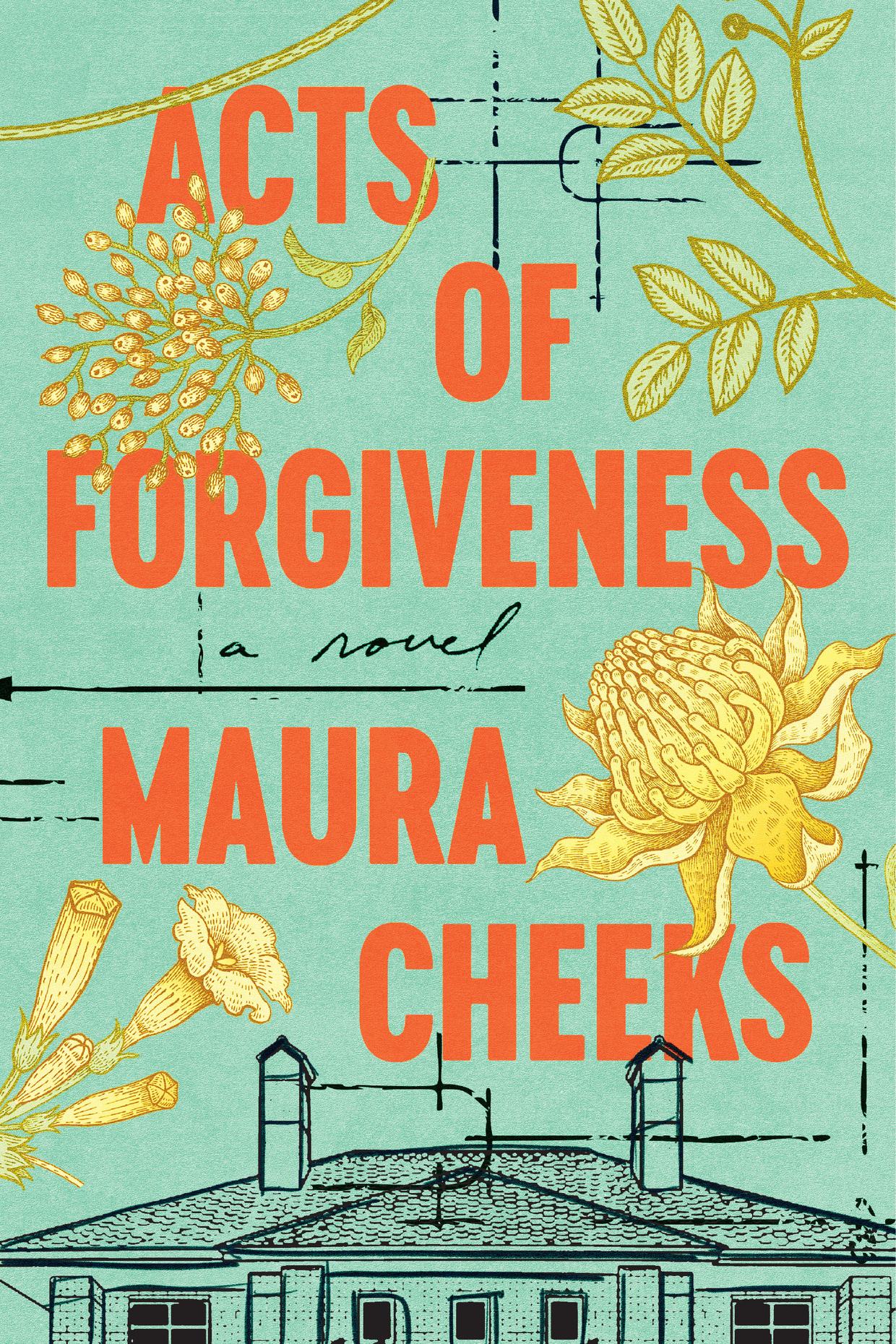
All Of It with Alison Stewart
A Debut Novel Imagines a Future that Includes Reparations
00:20:38
In the debut novel from author Maura Cheeks set in a fictional version of America where the House passes reparations passed in the Forgiveness Act.
Loading summary
Transcript72 lines
- [00:00]
A
Foreign this is all of it from wnyc. I'm Matt Katz filling in for Alison Stewart. A debut novel tells the story of the Revels, a black family in Philadelphia hoping to save their struggling family business after the nation passes new legislation for reparations. It's titled Acts of Forgiveness, named for the piece of legislation featured in the novel. The takes place in a fictionalized America, one where the newly elected president, Elizabeth Johnson, a descendant of the 17th president, Andrew Johnson, strives to make an apology for the trafficking and enslavement of Africans on behalf of the United States government. The bill would allow black families to claim up to $175,000. But in order to qualify, the rebels must prove that they are, in fact, the descendants of slaves. This payout would mean a lot to Willie Revelle, who gave up a career as a journalist to her father's struggling construction company. Acts of Forgiveness, a novel, is on shelves today, and author Maura Cheeks joins us to discuss. In 2019, Maura Cheeks published an article in the Atlantic headlined American wealth is Broken, which would later inspire the idea for the book. Maura, welcome to all of it.
- [01:22]
B
Thank you for having me.
- [01:23]
A
We're very glad you're here. I just mentioned the article, and I got to start there. You wrote this article for the Atlantic about your your family's successes and challenges in an attempt to achieve the American dream. It was a way using your experience, but also brought in the larger experience of black Americans. Was there a light bulb moment during the process of exploring your own family's history, how it echoed the African American experience through the decades that the novel came from? Was it literally in the process of writing and reporting that piece?
- [01:58]
B
I would say it came about a few months after I finished, and I continue to have questions about why we haven't seriously pursued a federal reparations program looking at sort of the systemic inequalities that persist over decades. And then I started to feel like fiction was a better way to explore those questions.
- [02:23]
A
And were you using your own? I mean, in the Atlantic article, you talk about your own family's experience, and were there elements of that that you incorporated into the novel, like actual you maybe change a name here or there, but really kind of incorporating your own family's true history into the novel?
- [02:41]
B
Yeah, there are definitely pieces. I grew up in Philadelphia, and the book is set largely in Philadelphia. And so I would say some of my family, his family's history forms the initial sort of structure of the Revel family. But it's highly fictionalized, for sure.
- [03:00]
A
So reparations is obviously, that's the. That's kind of a big theme in here. What other themes were you looking to explore in the book, and what other themes did you explore in the book?
- [03:11]
B
Yeah, I mean, it touches on female ambition. We look at Willie Revels, the protagonist, and what she has to give up in order for her family business to continue existing. It touches on what women in general are asked to forgive so that their families can persevere and ancestral power. It talks a lot about the power of our ancestors and where we come from and how those stories influence who we are today, even if we may not explicitly know who our ancestors are.
- [03:43]
A
We just had a segment on writing, and the author came in talking about the different ways of writing and getting started to write. And you did something interesting in the novel. You jumped back and forth in time. Was that a way to get to those ancestral pieces? Was that your writing technique?
- [04:00]
B
A little bit. And I wanted to have readers really connect with Willi Revel's childhood. So you get a little bit of what it was like growing up in Philadelphia for her and what the house, explicitly, what the house means to the family. Yeah.
- [04:17]
A
Did you do a good deal of research to understand what, you know, Philadelphia in the middle of the 20th century and before might have been like?
- [04:25]
B
Yeah, I did a lot of research for Philadelphia. And then a character goes to Mississippi in the book. So I did a lot of research there in terms of. Of the documents that she was going to be digging into in the archives.
- [04:35]
A
Oh, cool. So there was a journalistic element to the novel writing. In a piece you wrote in the New York Times a couple of weeks ago, you said that when you were trying to sell this novel, it was pitched to publishers as, quote, speculative fiction, but only slightly. How did new conversations about reparations that we've just heard really, in the last few years, maybe beginning with Ta Nehisi Coates article about a decade ago. How did that fuel your writing and maybe even help you get this story published?
- [05:06]
B
Yeah, I would say I started writing the book in 2019 when the Conversation about reparations was different than it is today. You know, in 2020, obviously, we had the brutal murder of George Floyd and Brianna Taylor and Ahmaud Arbery. And that made the topic of conversation about reparations come to the forefront in a different way. And so it, you know, it urged me to continue writing the book. I wouldn't say it was the events of 2020 didn't make me start writing the book, but it really fueled my Energy to finish it. And I think those events contributed to the reception that the book is getting because reparations isn't as far fetched. It obviously hasn't passed at the federal level, but I think the way that we talk about reparations has changed, given those events.
- [05:58]
A
What's changed? Catch us up where we are in America now in terms of the beginnings of experiments and actually, you know, issuing reparations.
- [06:08]
B
Yeah, I mean, there have been local policies that have changed. So Evanston has passed a local reparations policy.
- [06:14]
A
Evanston, Illinois.
- [06:15]
B
Evanston, Illinois. Where residents can receive housing grants. And then there have been a bunch of local initiatives that have passed, including in Philadelphia there was. There's a reparations task force that was formed in order to study housing reparations might be applied in that community. So there's different pockets of local initiatives that have begun passing, which is great and you know, wasn't necessarily the case when I first started writing the book.
- [06:43]
A
And at the federal level, I mean, it's hard to imagine Congress doing anything, let alone passing something of this, of this degree. But there, there are, there are. I know Cory Booker, Senator from New Jersey, has brought this up. There are efforts also to at least explore this. Right. At the federal level.
- [06:59]
B
Yeah. At the federal level. HR40 would be the first step to get it passed at the federal level, which is just a commission to study reparations, to study the impact of slavery and put forth reparation proposals. So that would be the first step at the federal level is to actually pass HR40.
- [07:19]
A
In the novel, we're introduced to different generations of the rebels or black family. And in Philadelphia. And I was curious why you wanted to explore this concept of reparations through a single family. I mean, I guess other options might have been through a community or geographic. Geographic location with a lot of different families. What was the, what was your thought process there?
- [07:45]
B
Yeah, I think the conversation about reparations often gets stuck in politics and numbers and statistics. And I wanted to put some humanity back in the conversation and show what it would be like for one family if a federal reparations policy passed and to really explore the humanity of it. Because that essentially is what reparations is about.
- [08:09]
A
Yeah. The main character, Willie Revel, the daughter of the business owner who becomes a journalist and a mother. How would you describe her?
- [08:20]
B
She's ambitious, loyal, a little bit bitter at times.
- [08:26]
A
You know, knowing your, your history in journalism and starting to read the book, it was hard to. I could separate the two. But I did wonder if there Was some of you in, in Willie did. Is there, is there some of you in Willie?
- [08:40]
B
I would say there are definitely pieces of me and Willie. I think what I wanted to explore with her giving up journalism is some of those sacrifices that people are forced to make between their passion and then making a living. Right. So I think for Willie, you really get the sense that she had to give up her passion in order for her family's business to continue existing because her family relies on that business for their livelihood.
- [09:05]
A
But when you have generational wealth, it's a lot easier for the successive generations to pursue their passions.
- [09:10]
B
Right.
- [09:11]
A
Which is obviously the, the, the whole concept behind reparations. Right. In the, in the prologue, we learn about Willie's grandfather, Marcus Revell, a veteran who attempted to get the VA to co sign and a mortgage for a home near his family and community. But he was, he was denied. This is very early on in the, in the novel. Why open with his story? Is this representative of something that was extremely common?
- [09:41]
B
Yeah, I touch on this in the Atlantic article. So the, the impact of the GI Bill and how it benefited certain families. And I wanted to explore, well, what would happen, you know, what happened to those families who were denied the benefits of the GI Bill. So that's why I focused on him. And that's, that's where the book starts, is to really, you see the effects of that right, of him being denied the benefits of the GI Bill. In his case, he wanted a mortgage and he, he was not approved to get one.
- [10:09]
A
And the consequences of that go on for, for how long? I mean, him not getting a mortgage?
- [10:14]
B
Yeah, well, it will in the book. It goes on for about three decades.
- [10:19]
A
I believe, so until, until the, I guess before the reparations. But like that in other circumstances in the real world, I mean, being denied a mortgage in 1950 can result in no home or home ownership for many generations to come.
- [10:37]
B
Right, right, right.
- [10:40]
A
What life lessons did Marcus Revel pass along to his son, who is Willy's father, about family? And then how does then Max pass this on to Willy?
- [10:52]
B
Yeah, I think with Max you really get the sense that he wants to achieve success at all costs. And so he watched his father struggle and be defeated in some respects. And he wants to go on the opposite side of that. And he wants to his business to be successful no matter what. And so because of that, he makes certain decisions about who he is willing to work with in order to be successful.
- [11:22]
A
How invested are the, the rest of his family in, in his drive for success in this which is. Comes in the form of the construction business. How does the rest of the family feel about this? And how do they. Do they want to work with him? Do they want to, you know, be part of this family business and establish that kind of a kind of security, financial security?
- [11:43]
B
Well, it's tough because they like their lifestyle. Right. So on the one hand, they want to preserve that, but they also know that it comes at a cost, that they have no cushion to fall back on, and that they exist in that position because of the sacrifices that he's made and the choices that he continues to make.
- [12:00]
A
In your piece for the Atlantic, you called black wealth delicate. What does the path look like for African Americans to obtain wealth in this country? How is black wealth delicate for those who haven't considered the experience and considered how actions and things that happened decades, centuries ago are very relevant today?
- [12:25]
B
Well, I'm not a policy expert, so I will say that. But I think because black people were denied the opportunity to build wealth for so long, obviously the cushion is smaller.
- [12:39]
A
Because they were denied wealth and not just. And give us a little brief history lesson, if you could, because it's not just slavery. Right. It's for the century after slavery, too.
- [12:49]
B
Yeah. I mean, in the book, what I specifically touch on is the impacts of redlining, for example, I think, you know, being denied. I touch on in my Atlantic article being denied the opportunity to tap into Social Security benefits, for instance, because they were denied to certain classes of workers, most of whom were black. Education is another example that I sort of touch on in the book in a. In a different way.
- [13:20]
A
You talk. I mean, so much of the book is. Is about money. And in the article in the Atlantic, you had written that Americans are generally uncomfortable talking about money. We use careers, homes, and clothing to stand as proxies for money. Have you always been comfortable talking about money and wealth and these sorts of economic issues?
- [13:42]
B
No, not at all.
- [13:44]
A
Is that why you wanted to put this into a fictionalized format, to talk about an issue that you think is important but have not always necessarily felt comfortable talking about?
- [13:53]
B
Yeah. And, I mean, I grew up extremely privileged, and I was just interested in exploring the way that my family handled money and talked about wealth in comparison to my white peers? Right. And so that was sort of the genesis of the Atlantic article, and then digging a little bit further into what that looks like. You know, black people are in a monolith. Right. So they. The way that they or we deal with wealth is going to be different based on your upbringing and a lot of different factors. But that was sort of the genesis for me is just looking at, you know, how I grew up and my privilege and then sort of breaking that apart about how that differed from a lot of white classmates who had a larger cushion to fall back on and what those generational. Generational structures of wealth looked like.
- [14:45]
A
You kind of had a unique vantage point. You're black American, but your father was in the NBA, and you had, you said, you described it as a privileged upbringing, but so you were with kind of wealthy white kids at school. But then those kids also came. Many of them probably came from generations of wealth, and they were more accustomed to it, whereas your father did not grow up with a good deal of money. So that's a very. That's a unique perspective. The Forgiveness act, this is the reparations bill that you imagine passing in a future Congress. What are, what would it take in America today, do you think, to get to that point where there is a president who signs a reparations bill into law?
- [15:34]
B
Well, I explore in the book. You know, the president in the book is related to Andrew Johnson, because I wanted to imagine if somebody was in power who felt a deep personal responsibility for what has transpired and what they might do in order to make sure a federal reparations program actually passes if that were the case. I don't think that's realistically going to happen in our country in the near future. And so I think for it to pass again, I think HR40 would have to pass first. And then based on the recommendations that that commission puts forward, then we could actually talk about what happens and what a federal program would look like.
- [16:22]
A
In the book, wealthier black people of a. Of a certain higher economic class are targeted by protesters who oppose the Forgiveness act, who oppose reparations. Is that something you foresee is, like, if this were to get closer to happening, is that something you foresee being. Being a challenge, being an issue like, oh, well, there's Barack Obama. He's wealthy. Why would we give reparations to a family like that?
- [16:48]
B
I don't know. I think the pushback that I see and that I hear when you bring up reparations is, well, would everyone get the same amount? Would wealthy, wealthier black Americans be entitled to the same amount as everyone else? So I could definitely foresee the pushback. The extent to which it turns a little bit violent, as it does in the book, I don't know. I would hope that's not the case. But I think that that is a. A common strain of feedback which Is that there seems to be. There is hesitation against granting all black Americans reparations and assuming that everyone would get the same amount, regardless of the amount of wealth that they have.
- [17:29]
A
Right. What. What does the Revel family have to do to prove that they are descendants of slaves and therefore eligible for reparations?
- [17:38]
B
In the book, they, you know, Willie goes on a journey to Mississippi to actually look in the archives and try to piece together their family history. And so that was meant to mimic the difficulty that African Americans have in retracing our lineage. Part of that is drawn from my own inability to trace my family past the American South.
- [17:59]
A
Oh, you tried and were unable to figure out your descendants going back that far?
- [18:07]
B
Yeah. In conversations with my grandmother and, you know, trying to piece together certain. Certain parts of our history, I, you know, I continue to hit a wall. And so that inspired a little bit of Willie's journal journey when she is at the archives and, like, digging in the documents and sort of, you know, I did research into what types of documents would you have to look at if you have certain pieces of information, if you know that there was a marriage, but you don't know the date. And just given that so much of black people's history has been erased and the records weren't kept, it's extremely difficult to actually, in some cases, piece that together.
- [18:49]
A
And that could be a challenge if this were to come to pass. Like, there just might not be a way for people to prove somehow that they were in the American South 200 years ago, that their family was. Well, before I let you go, I understand that you are opening a new book bookstore in Brooklyn.
- [19:08]
B
I am, yes.
- [19:09]
A
Tell us about that.
- [19:10]
B
Yes, it's called Liz's Book Bar. It's in Carroll Gardens. It should be open in June.
- [19:16]
A
Wow.
- [19:16]
B
And, yeah, we'll sell books, coffee, beer, and wine.
- [19:20]
A
What inspired you to open a bookstore?
- [19:22]
B
I've always wanted to open a bookstore. I've always wanted to create a space where people can sit and connect with each other and talk about the books that they love. And so it's named after my grandmother, who really, you know, she inspired me to love reading, and we were always going to bookstores when I was younger.
- [19:39]
A
That's Liz.
- [19:40]
B
Yes.
- [19:40]
A
Excellent. Very good. Well, congratulations on your new novel. Acts of Forgiveness by Maura Cheeks is out now, and. And the bookstore is opening in June. In June. Very good. Thanks very much for. For coming on all of it. I hope the experience of selling the book and talking about this fraught political issue is. Is a meaningful one for you.
- [20:03]
B
Thank you so much for having me.
- [20:05]
A
Our pleasure. And that's all of it. Join us tomorrow, I'll be speaking with Chris Satch, also known as the Plant doctor, about how to get your plants ready for spring and troubleshoot houseplant problems. Plus, we'll talk to the Oscar nominated cinematographer of Maestro. Thanks for listening. Fresh AIR is coming up next.
- [20:39]
B
Since WNYC's first broadcast in 1924, we've.
- [20:43]
A
Been dedicated to creating the kind of content we know the world needs.
- [20:47]
B
In addition to this award winning reporting, your sponsorship also supports inspiring storytelling and.
- [20:52]
A
Extraordinary music that is free and accessible to all.
- [20:55]
B
To get in touch and find out more, visit sponsorship.wnyc.org.