Loading summary
Transcript96 lines
- [00:00]
Progressive Insurance Announcer
WNYC Studios is brought to you by Progressive Insurance. Insurance isn't One size fits all. That's why drivers have enjoyed Progressive's Name your Price Tool for years. Now. With the Name youe Price Tool, you tell them what you want to pay and they'll show you options that fit your budget. So whether you're picking out your first policy or just looking for something that works better for you and your family, they make it easy to see your options. Visit progressive.com, find a rate that works for you with the Name youe Price Tool. Progressive Casualty Insurance Company and affiliates Price and Coverage Match, limited by state law. All of it is supported by Memorial Sloan Kettering Cancer Center. In a small, groundbreaking clinical trial, 100% of participants with a specific type of rectal cancer saw their tumors disappear using immunotherapy alone. Researchers at MSK are now studying this approach in cancers of the stomach, liver, and more, and a majority of tumors are disappearing. For MSK Giving day, all gifts will be tripled. Learn more@msk.org all of it.
- [01:09]
David Fuerst
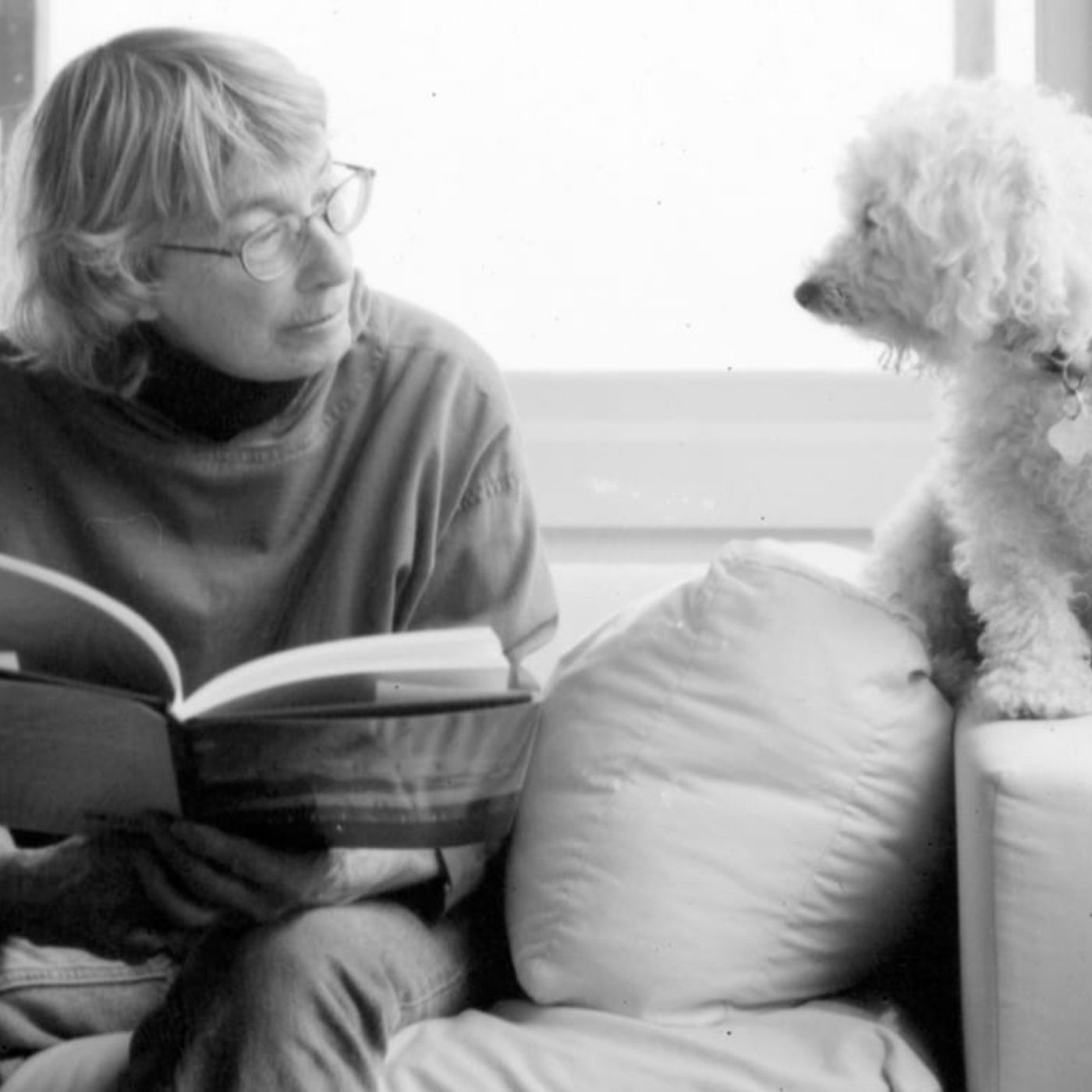
It's all of it on wnyc. I'm David Fuerst, and for Alison Stewart, even if you don't recognize the name Mary Oliver, you might have come across her work. Maybe you're familiar with the question from her poem the Summer Day, which goes, tell me, what is it you plan to do with your one wild and precious life? Mary Oliver did a lot with her life. She is one of the great American poets of the 20th century, perhaps best known for capturing the beauty of the natural world. She lived a large portion of her adult life in Provincetown, Massachusetts, with her partner, Molly Malone Cook, and there she spent a lot of time exploring nature and writing poetry and for a period working as Norman Mailer's assistant. She didn't get famous until she was in her 40s, and even after that she became a star. She remained a private person. There's a new documentary called Mary Saved by the Beauty of the World that takes a closer look at her life and work. It has a cast including fans of her poetry like Stephen Colbert, Oprah Winfrey and Steve Buscemi, and filmmaker John Waters, who was one of Mary Oliver's close friends. Our guests today are Sasha Waters, who directed the film, and Gabrielle Calvacaresi, a poet who is featured in the documentary There, the author of the New Economy, which was a finalist for the National Book Award for Poetry. Welcome, both of you.
- [02:40]
Sasha Waters
Thank you so much, David. I'm so happy to be here.
- [02:44]
David Fuerst
Oh, I'm not Sure, if we can hear Gabrielle, but maybe we can see if we can get her help. But if you want to see the movie, it is out tomorrow. And there is an early screening and a Q and A tonight at the IFC center in Manhattan. That's happening at 6:30. That is sold out. But screenings begin tomorrow at the IFC Center.
- [03:04]
Sasha Waters
Right, at the IFC Center. And I will be doing a Q and A tomorrow night as well at ifc. And the film will also open at the Jacob Burns Film center in Pleasantville, New York, for anyone who's listening from a little north of the city.
- [03:17]
David Fuerst
Okay, so, Sasha, tell us about the idea for this film. What about Mary Oliver's life and work? Did you want people to learn that maybe they did not know before?
- [03:28]
John Waters (filmmaker)
Sure.
- [03:28]
Sasha Waters
I mean, I think Mary Oliver is the kind of poet, the kind of person who, when you mention her name, people either know who she is right away and are huge fans, or the opposite. Like, they've heard her name, but they really have no idea who she was. But again, I think you mentioned that one line, tell me, what is it you plan to do with your one wild and precious life that really resonates with people? And they go, aha, that's Mary Oliver. Okay. So I think this idea of, you know, Mary when she was alive and even when she was sort of ascendant in what we might call her celebrity in the later years of her life, she really wanted the attention to be on her work, not on her. In her letters, she will tell her publishers, please sell the work. Don't sell me. But I do think people are so curious about Mary as a person and her life. And her life story really is in some ways like a fairy tale, that we wanted to showcase the poetry, some of the really wonderful beloved poems, some of the less well known poems, but also get to know who the writer was behind the poetry as well.
- [04:39]
David Fuerst
And she certainly gave all appearances as a private person. Do you think she would be resistant to the idea of such a documentary?
- [04:49]
Sasha Waters
Yes. Well, I mean, let's say. I mean, I think that. I think. I don't know whether or not she was approached to be the subject of a documentary while she was still alive. But, you know, she did agree to be the subject of a biography. So Lindsay Whelan is her biographer, and she's featured in the film and was also a very important consultant on the film project throughout the research and the editing process. And so she did. She did work with Lindsay while she was still alive. Lindsay is still working on the biography there's so much rich material to dig into there. So I think that she did know that her life story, not just the poetry but also her life story, had something for that could help people in the world, you know? And so I feel like when she left behind her archive, she knew that she was doing it in such a way that other people would find it, you know, would dig into it. The letters, the correspondence, the fan mail,
- [05:50]
David Fuerst
et cetera, the whole life. We're also here with poet Gabrielle Calvocoresi. And can we hear you? Let's see.
- [05:56]
Sasha Waters
Hi, Gabby.
- [05:56]
Gabrielle Calvacaresi
Hello.
- [05:57]
Sasha Waters
Yes, Gabby, I miss you.
- [05:59]
Gabrielle Calvacaresi
Hi, North Carolina. Hi, Sasha.
- [06:01]
Sasha Waters
We've got to get together in North Carolina before too long, since I'm normally based in Virginia.
- [06:05]
David Fuerst
Well, we're just hanging out here today,
- [06:07]
Gabrielle Calvacaresi
so stay on the heat, though. It's very hot.
- [06:09]
Jill (Caller from Philadelphia)
I know.
- [06:09]
Sasha Waters
It's hot here, too.
- [06:10]
David Fuerst
It's hot here, too. We're gonna be at 100 today, so thanks for that. Thanks for the reminder. So, Gabrielle, could you tell us a little bit about her partner, Molly Malone Cook, who was a photograph they got together when Mary was quite young. Right. And they remained together until Molly's death in 2005.
- [06:31]
Gabrielle Calvacaresi
Yeah. I think one of the things Sasha and I imagine you would agree, and I think it's one of the reasons people are really interested in Mary, is Mary was also part of a great love story. And that's something many of us want for ourselves. Some of us are lucky to have it. Some of us keep dreaming about it. But Molly Malone Cook was a person who was an artist in her own right, a profound reader, and also someone who, through the course of Mary's career, gave Mary what is perhaps the greatest wealth of all, which is privacy and time for them to get their work done. Right. One of the things that I was always struck by when I heard about Molly, and that has been before Mary died. And then also when I'm on the road talking about Mary Oliver. Often people who knew both of them will come and say hello to me, is that Molly was this sort of fortress and wall between Mary and the outside world in terms of what she saw as part of her commitment job. However we want to talk about it was to give Mary space and time to write poems. They were a couple who lived out in Provincetown, Massachusetts, for much of their life, had really no money to speak of, but they made a life together in which Mary could make art, where Molly could be taking photographs, working in this remarkable bookstore, doing all kinds of things that really allowed Mary to become the poet that we think of today as giving us the poems that, you know, a lot of people would say have really changed their lives.
- [08:23]
Sasha Waters
Absolutely.
- [08:24]
David Fuerst
One of my favorite moments in the documentary, and I'm not gonna do justice to it because I'm not gonna remember it exactly right. But at one point in the documentary, we hear Mary Oliver say that they were talkers, the two, and that they carried on a conversation that lasted for four decades. And it's such a beautiful moment.
- [08:48]
Gabrielle Calvacaresi
Yeah, that's something I've always heard about them. And, you know, a little bit like Emily Dickinson, we hear a lot about Mary as a kind of hermit. But the truth is that while she was very private, she had a very strong social circle and they were always talking to each other. But one thing I found on the road, and I imagine some. Sasha, you found this as you talk to people. There were a lot of friends, there were a lot of people who were part of their lives and conversation was a big part of that.
- [09:20]
Sasha Waters
Absolutely. And I think the year round community in Provincetown is so small that you would just sort of naturally be bonded to the people who are there through the winter. And maybe you're having deep conversations and talking about books or maybe you're just running into people at the Stop and Shop or the old iga.
- [09:41]
Jill (Caller from Philadelphia)
Right.
- [09:42]
Sasha Waters
Seeing those people who are the year round residents of this small, tight knit community and listeners.
- [09:49]
David Fuerst
We would like to invite you to join this conversation as well. We want to hear from you. Do you have a favorite Mary Oliver poem that you want to shout out? What have her poems meant to you and how have they influenced your worldview? Do you think about her work when you go out in nature or when you're grieving or when you're pondering what to do with your life? Maybe all of the above. Give us a call. 212-433-9692. That's 212-433-WNYC. And I want to play a clip from the documentary. So much of Mary Oliver's work is about nature and the natural world. I want to play a clip from the documentary, her talking about her relationship to nature. And we'll hear a few voices in this clip.
- [10:40]
John Waters (filmmaker)
I call it primary Sources. Some people go to the library, but I went to the woods.
- [10:50]
Mark Doughty
She went into the woods with her questions, which is exactly what the great proponents of her tradition in American poetry encouraged her to do. Emerson, Whitman, Thoreau say, you don't need a spiritual teacher. You need to go out into the world. And look,
- [11:05]
John Waters (filmmaker)
I drive people crazy because I Can sit for two hours and look at the clouds and be very silent, and I'm having a nice time. And sometimes I'm with people who say, this is kind of nuts.
- [11:17]
Mark Doughty
I would say to Mary, I know you're crawling around the woods, talking to animals. They're gonna put you in a mental institution. And then she got bit once by a badger. I said, that's what you get. She was down there, you know, helping him build the dam. Get out of there.
- [11:32]
Jill (Caller from Philadelphia)
Okay.
- [11:33]
David Fuerst
That was undoubtedly the voice right there of filmmaker John Waters speaking at the end. And just to clarify, Sasha Waters. No relation.
- [11:42]
Sasha Waters
No relation. But my father was an artist whose name was John Waters, and also John Waters. My father was the only John Waters in New York City when I was growing up. I mean, when, you know, I grew up in New York City. And my. Yes, my dad, John Waters, was the only John Waters in the phone book. And so, sorry, this is a little bit of an aside, but there was a time in the, you know, like in the late 70s and early 80s when John Waters, the filmmaker, was ascendant, but people didn't necessarily associate him with Baltimore. And so my dad, being the only John Waters in New York City, would get these invitations to parties and nightclubs at the Palladium area. It was later than Studio 54, addressed to John Waters, the filmmaker. And so he would bring them home to me when I was in high school, and I would go. And so when I met John.
- [12:32]
David Fuerst
You're not gonna pass up that invitation?
- [12:34]
Sasha Waters
No, of course not. So when I met John, the filmmaker, I had to apologize to him for stealing all of his party invitations when I was in high school.
- [12:43]
David Fuerst
I like to suspect that he was totally okay with that.
- [12:46]
Sasha Waters
He was okay with that.
- [12:47]
David Fuerst
That's an incredible. If any, aside you have along those lines, please jump right in, because the lesson there is if you get an invitation.
- [12:55]
Helen (Caller from Brooklyn)
That's right.
- [12:55]
David Fuerst
You just go to a John Waters party. You go.
- [12:58]
Sasha Waters
Right? I do. Also, I want to say, though, that was John in the clip, and he's so funny through the film, which is important, because I think it's important to have these moments of laughter and levity in a film that is also dealing with some heavy subject matter. But I do want to say the first voice we hear in that clip after Mary's is the great poet Mark Doughty, who was Gabrielle's teacher and has taught in so many places at Sarah Lawrence, where Gabrielle went, at nyu, at Columbia, at Iowa. And he is someone who, I think, really, even though we talk in the film about How Mary was ignored by a lot of people in the academy. Mark Doughty was someone that really, I think, always taught her work and passed that tradition of nature poetry along to a younger generation. Wouldn't you say so, Gabby?
- [13:45]
Gabrielle Calvacaresi
Oh, yeah. Mark was my very first poetry teacher, which is just a wild thing to say at Sarah Lawrence College. And, you know, I was thinking about it, that was 1992. So that's the year the Selected Poems, I think, comes out. That green cover, that sort of iconic cover. And, yeah, Mark, I had gotten the book and I had looked through it, but I had been reading it, but it was really Mark and also the poet Michael Klein also, who was in Provincetown at that time, who really taught me about Mary Oliver. Yeah. Mark has been one of the great proponents of Mary's work since I knew him.
- [14:23]
David Fuerst
Was she disregarded by some, because some people consider nature poetry to be something that shouldn't be in the same category as other poetry. I guess I just don't understand.
- [14:36]
Sasha Waters
I think. I mean, I would say Gabrielle could probably speak to this with more and deeper knowledge than I have, but, I mean, my understanding. I mean, I think in some ways, just like in any art form, there are rising and falling trends and styles. And so there was a moment where poetry, particularly poetry by women, was quite confessional. Mary's not kind of in that vein, but I don't know, Gabby, do you want to add on to that?
- [15:03]
Gabrielle Calvacaresi
Yeah, I mean, I think there are a lot of. There are a lot of different reasons that maybe. And it's. It's.
- [15:09]
David Fuerst
I mean, sometimes popularity, maybe.
- [15:12]
Gabrielle Calvacaresi
Yeah, absolutely. I mean, I think among poets, there was probably. There was certainly jealousy. You know, I think that this idea of, you know, on one hand, the poems are not confessional. And yet, like a person who's gonna say to you, you know, what are you gonna do with your one wild and precious life? And say it to you in a way that is not judgmental, that is not saying, like, your life is a piece of trash right now. What are you gonna do with it? But it's actually saying, you know, I'm sitting here, I'm looking at you. I'm gonna ask you this question, and. And I'm going to. I'm going to. There's a feeling of, I'm going to wait for the answer, too. And maybe there isn't one that's really radical. And I think, particularly in that moment, I think Mary Oliver was probably pretty threatening to a lot of people. At the same time, it's really interesting to say that At a moment where, you know, she was packing 5,000 seat theaters a lot. Most people loved her.
- [16:11]
David Fuerst
And we're getting a good number of calls coming through right now. We'd love to have you join this conversation. The number 212-12-433-9692. That's 212-433, WNYC. I'll take a call in just a second. But a quick question here. Jerry asks a question about logistics. One of the you mentioned that you're gonna be in Pleasantville, New York with the film. Can you tell me once again when that is and where the venue is?
- [16:42]
Sasha Waters
Sure. I actually personally will not be in Pleasantville with the film, but it does open at the Jacob Burns film Center tomorrow, July 3rd, and I believe it's playing for at least a week.
- [16:53]
David Fuerst
Okay, so good alternate programming for the 250th weekend.
- [16:58]
Sasha Waters
Yes. And it's also opening in Provincetown in Miami tomorrow.
- [17:01]
David Fuerst
And will there be air conditioning in both theaters?
- [17:03]
Sasha Waters
There will be so much air conditioning in all of these theaters. Everywhere it's screening, there is ample air conditioning.
- [17:10]
David Fuerst
Ok, so it's a win.
- [17:12]
Sasha Waters
Get out there and see it.
- [17:12]
David Fuerst
It's a win all around.
- [17:13]
Sasha Waters
Definitely.
- [17:14]
David Fuerst
All right. Let's take a call. You're listening to all of it here on wnyc. We are talking about the poet Mary Ol and the brand new documentary about her work and her life. It is called Mary Saved by the Beauty of the World. Jill calling from Philadelphia. Welcome.
- [17:33]
Jill (Caller from Philadelphia)
Thanks so much. I called because I wanted to weigh in with my favorite Mary Oliver poem, which is moles from her collection called American Primitive.
- [17:44]
David Fuerst
Okay. You're getting thumbs up all around the room here.
- [17:47]
Gabrielle Calvacaresi
That's a deep cut, too.
- [17:48]
David Fuerst
I love that deep cut. Talk about it, Gabrielle. Talk about that poem. You know that one?
- [17:57]
Gabrielle Calvacaresi
Yeah, I just, I mean. Well, is the. Is the caller still on?
- [18:01]
David Fuerst
Jill, you still there?
- [18:02]
Helen (Caller from Brooklyn)
Yeah. Yeah.
- [18:03]
Gabrielle Calvacaresi
What do you love about moles?
- [18:04]
Jill (Caller from Philadelphia)
Yes, I am.
- [18:05]
Progressive Insurance Announcer
Yeah.
- [18:06]
David Fuerst
What?
- [18:06]
Jill (Caller from Philadelphia)
I used to read Moles when I was on the subway in Manhattan and it would make me feel like I was taking a mini retreat into nature with Mary instead of being in a tunnel with hundreds of other people.
- [18:19]
Mark Doughty
Wow.
- [18:19]
Sasha Waters
I love that in a moment where
- [18:22]
Gabrielle Calvacaresi
you were possibly a mole moving through these tunnels, all of a sudden there you are in the natural world. That's Mary.
- [18:30]
Jill (Caller from Philadelphia)
Oh, yeah. It was amazing. And I used to bring her poetry on the subway a lot because it did transport me in a way that nothing else did. Not even an amazing novel that, you know, Page Turner would do the same thing that her Poetry would.
- [18:47]
David Fuerst
That's great, Jill. And you're transporting us right now, so thanks for sharing. Let's also hear from Helen calling in from Brooklyn. Welcome to all of it.
- [18:57]
Helen (Caller from Brooklyn)
Thank you. I live in Brooklyn. I'm a poet myself. And when I taught an ecology class at Pratt in the 1970s, I think it was I found the Grasshopper was, I think published in the New Yorker. And I had not heard of her before. I hadn't read her work, but that poem just jumped off the page in the New Yorker. And I shared it with my class because first of all, it's a very specific description of the very close up observation of not just grasshopper as a platonic idea, but this grasshopper and how it is eating. And then she moves beyond that way of close observation to that extraordinary question. So I shared it with my students and have been not just reading that, but her other poems whenever I get a chance to. And if I can, I'm looking through the House of Light poems by Mary Oliver, which has a cover. It's published by Beacon Press in Boston. It has a cover by a Provincetown, the very tip of the harbor where it turns and this great book. And all you see is the sky and the sea and the stretch of brown sand and it's painted by Arthur Cullen, who was a. A personal friend of mine and who is friends with them. So that's my one degree of separation.
- [20:46]
David Fuerst
Wow. Helen, thank you so much for sharing that. And great to hear about the Grasshopper. That's a poem that is very much featured in the documentary.
- [20:54]
Sasha Waters
So, you know, Mary has so many poems. I don't know if there is a poem titled the Grasshopper. So I think she might be thinking of the poem, the title of which is actually the Summer Day, which does feature quite a detailed.
- [21:08]
David Fuerst
Where that description meditation comes in.
- [21:09]
Sasha Waters
Meditation of a grasshopper. Yes. And so the Summer Day is featured in the film. It's read both by Stephen Colbert and Jason Reynolds.
- [21:20]
David Fuerst
I have to mention Stephen Colbert begins the film and pops up several times and he has a great deal of difficulty. Well, he's not read. Sounds like he's doing it from memory. I was going to say reading the piece that he wants to read, but
- [21:36]
Sasha Waters
he is reading it.
- [21:36]
David Fuerst
He is reading it, but he is. Yes, he so not stumbling over words,
- [21:41]
Sasha Waters
but emotionally, but he's emotional. And I learned that Stephen Colbert was a fan of Mary Oliver's because one evening on his show more than a year ago, he had a guest on and he happened to mention to this guest that he sends that poem, the summer day to his children every year on the first day of summer. So we were in the midst of production, and a number of people sent me this clip from the show or texted me and said, oh, my goodness. Stephen Colbert is a. Is a Mary Oliver fan. And so luckily we were able to reach out to his team and film with him, and it was a really wonderful experience. He's a huge reader and lover of poetry. He has memorized a tremendous amount. So he's. He comes to his. His love of poetry from a very deep and long standing place.
- [22:33]
David Fuerst
I think we're just about out of time, which is so upsetting because I have about a thousand other questions I want to ask you. But maybe just because we heard about Provincetown right there. Maybe just some thoughts, Gabrielle, about her life in Provincetown.
- [22:49]
Gabrielle Calvacaresi
Yeah, I mean, it's really something to move to the edge of the world. And Provincetown is a kind of ending, the kind of continental ending at the same time that it's also a real beginning for a lot of people. It's a. It's a place where lots of different kinds of folks come together. But certainly thinking about the LGBTQ community, that is a space of tremendous welcome and a place where one can, yes, have privacy, make your art the light there is so extraordinary. It's also a place where you can sort of redefine, come to a new understanding of who you might be. One of the things Mary Oliver says in one of her remarkable essays is she talks about making for herself a handsome life. And I always think, like, that's something you can do in Provincetown. You can decide who you want to be in the world and then go out and do it. It was interesting. The last speaker, I believe Helen, was talking about the grasshopper, and you were Talking about this July 4th weekend and seeing Mary Oliver's movie. One of the most patriotic things we can do is pay attention and really, really look, really take in the vast tapestry of the. Maybe it's the beech forest, maybe it's a beaver marsh. Maybe it's Commercial street in Provincetown. And, you know, the folks on the ferry was really someone who.
- [24:30]
David Fuerst
Oh, I think we lost you there,
- [24:31]
Sasha Waters
but I'll jump in.
- [24:33]
David Fuerst
Let me just jump in quickly say, because we're just about out of time.
- [24:35]
Sasha Waters
I was just gonna say, or maybe if you can't get to Provincetown, read a Mary Oliver poem on the subway.
- [24:40]
David Fuerst
Read it. Or check out the new documentary. Come see the film Mary Oliver Saved by the Beauty of the World. There is a preview tonight. Regular screenings begin tomorrow at the IFC Center. Manhattan Director Sasha Waters and poet Gabrielle Calva Caressi, thank you both for joining us today.
- [24:56]
Sasha Waters
Thank you so much.
- [24:57]
Amica Insurance Announcer
They say if you want to go fast, go alone. But if you want to go far, go together. At Amica Insurance, we're built for our customers and prioritize your needs. Visit amica.com and get a quote today. Need a boost? Sometimes all it takes is tapping into your inner cool. Icebreaker's gum helps you unleash the confidence within. Each chew releases a rush of icy flavor powered by cooling flavor crystals, sending a wave of refreshment to reinvigorate all your senses. Icebreaker's convenient pack fits everywhere, from car cup holders to backpack pockets, so you can find your cool wherever you go. Grab Icebreaker's gum online or at a store near you.