← All Of It with Alison Stewart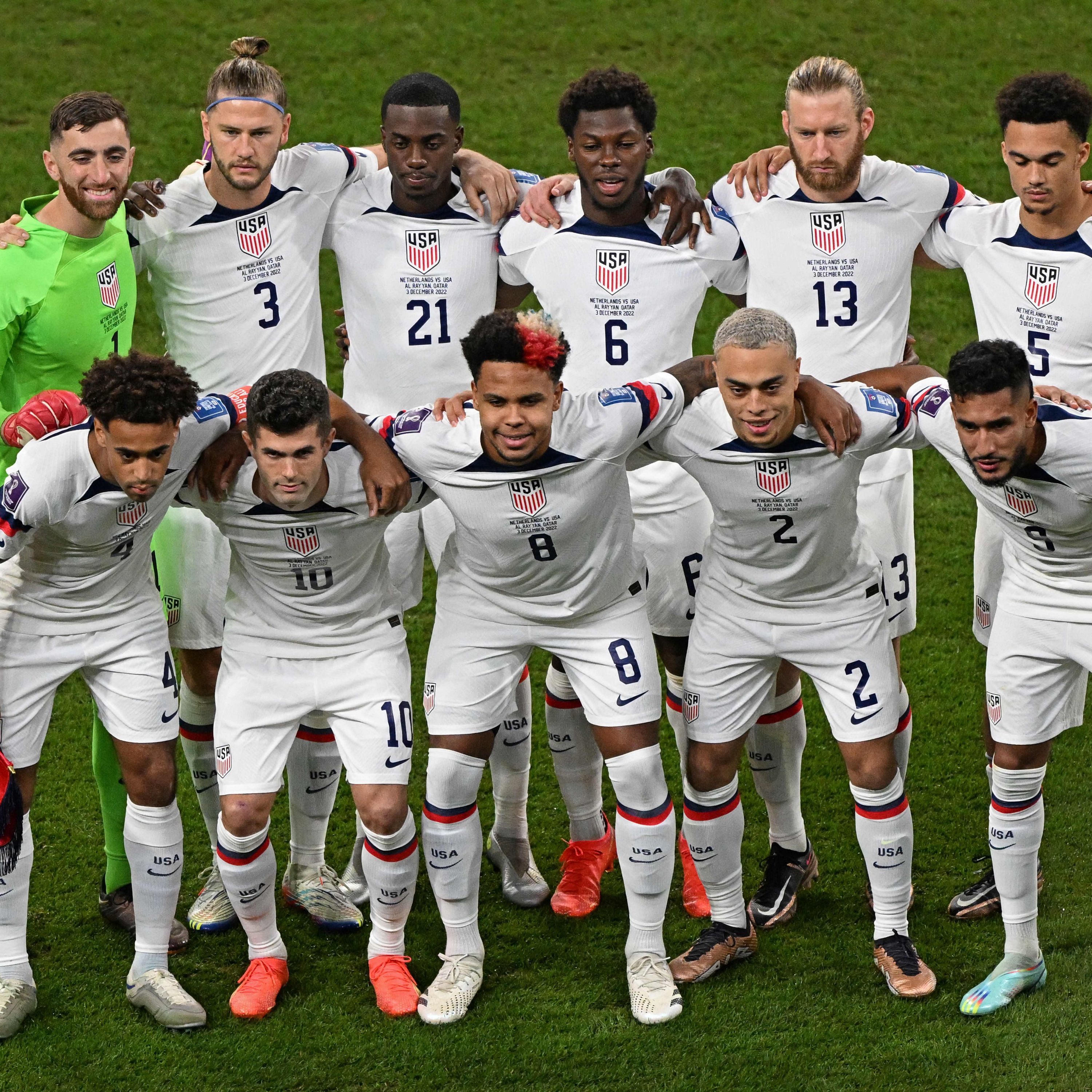
All Of It with Alison Stewart
A Documentary Shadows the U.S. Men's National Soccer Team in the Leadup to the World Cup
00:27:24
Loading summary
Transcript62 lines
- [00:00]
Progressive Insurance Announcer
All of it is supported by Progressive Insurance. You chose to hit play on this podcast today. Smart Choice. Make another smart choice with Auto Quote Explorer to compare rates for multiple car insurance companies all at once. Try it@progressive.com Progressive Casualty Insurance Company and affiliates not available in all states or situations. Prices vary based on how you buy.
- [00:29]
Alison Stewart
This is all of it on wnyc. I'm Alex. Hi, I'm Alison Stewart. In just over two weeks, we will meet in person at the New York Public Library to discuss this month's get lit with Olivet Book Club pick. We are reading Ghost Town by Tom Parotta. It's about a young boy grappling with grief in 1970s New Jersey. And we have a very special musical guest this month, they Might Be Giants. It's all happening on Wednesday, May 27th. Tickets are free. As of right now, they are sold out. But all is not lost. You can register for the live stream. And you know what? Keep checking back because sometimes, sometimes the library is able to make more tickets available as the date gets closer.
- [01:08]
Rand Getlin
You heard it from me.
- [01:10]
Alison Stewart
In the meantime, you can read the novel, courtesy of our partners at the NYPL. Head to wnyc.org getlit for more information. Again, that's wnyc.org getlit now let's get this hour started with the United States against the world. 2026 is a big year for soccer. We're just 31 away from the Men's World cup hosted jointly by the United States, Mexico and Canada. The final will be in New Jersey in July and many fans already complaining about the extraordinary high prices to attend the matches. Now, unlike most nations around the world, soccer has never been the most popular sport in this country. The players on the men's national team are less known than other athletes. But this decade, a new generation of players has emerged that are starting to change that. They're dubbed the golden generation of US men's soccer. A new documentary spent four years embedded with the US team as it prepared for 2026. From the 2022 World cup in Qatar to the rocky last few years of bad results, a fired coach and a lost momentum, the five part documentary is called United States against the world. Part one airs tomorrow night on HBO at 9pm My guest now is director and executive producer Rand Getlin. Hey Rand, Nice to meet you.
- [02:36]
Rand Getlin
Hi Allison. How are you?
- [02:37]
Alison Stewart
I'm doing great. Many fans have labeled this group the golden generation of United States men's soccer team. Why are they called the golden generation?
- [02:47]
Rand Getlin
Yeah, so you've got a group of young guys from all over the United States of America who are out playing at the most massive clubs on the planet, often in Europe. Clubs like AC Milan and Juventus and we have guys at Leeds and Crystal Palace. And you know, it's just a unique moment in time for American soccer as they continue to push for global legitimacy. You have a bunch of, you know, young American guys that are representing us everywhere, all over the world. So they, and they're, you know, incredibly talented guys who want to change the way that the world views soccer in this country. So yeah, there's a lot of hope on their shoulders. Yeah.
- [03:24]
Alison Stewart
I wonder, has this generation of players embrace that label?
- [03:28]
Rand Getlin
Yeah, look, I think that they are very level headed about it. They are very clear they want to make this country proud. There's nothing they care more about. And they give everything in order to, to kind of chase that end. And so I don't know that they buy into, you know, the golden generation moniker internally. They don't have egos like that. They really are a group of earnest, hard working, humble, hungry young guys. And you know, the show shows you, shows the viewer how much adversity they have to overcome in order to chase that kind of goal. To hopefully make the people on the other end of the television care about this team and their journey.
- [04:04]
Alison Stewart
You had a lot of access to the team.
- [04:06]
Caller Host / Producer
You're inside the locker room and the
- [04:08]
Alison Stewart
practices, even in players personal lives. What was your pitch to U.S. soccer
- [04:13]
Caller Host / Producer
to allow you to have this kind of access?
- [04:16]
Rand Getlin
Yeah, well, one thing that's cool about it, and U.S. soccer has been a fantastic partner. You know, the project started with the players we had worked with. Tyler Adams, who became the captain of the US men's national team when he was 19 or 20 years old, saying, I want to one day become the captain of the US Men's National Team. Fast forward a few years and he ends up being the captain at the 2022 World Cup. So we had such a wonderful experience working together and we learned so much about his story and everything he and his family had overcome. And they're New Yorkers, you know, special family. And we were just like, man, how can you not root for these folks? Are all your teammates like this? And he was like, my teammates are amazing. So from there it was just kind of like, okay, well we need to go to U.S. soccer and, and let them know that we would love nothing more than to tell this story at scale. And U.S. soccer and the U.S. players association importantly all came together to make this possible with us.
- [05:03]
Caller Host / Producer
So how much oversight did U.S. soccer have on what you could shoot? And Ashley, what made the final cut?
- [05:08]
Rand Getlin
Yeah, almost none, which was fantastic. We're so appreciative of them understanding and we made it clear at the outset, I come from a journalistic background and I need to make sure that we're telling an honest and true story. And if it was going to be sanitized, it probably wasn't worth any of our time. And thankfully U.S. soccer and the U.S. players association were like, we saw the work that you did with Tyler. We trust you to tell this story in a deep, nuanced way. That does not mean we're not going to cover bad stuff. We're going to cover the tough stuff. It's in the show. You'll see it. We're in the locker room after really tough losses where most people get kicked out. They let us remain. And. And yeah, we just never had an issue from an editorial perspective with anybody involved in the process which we think makes it a particularly compelling story. You know, we really went out and intended to tell the truest version of it. Not the sensationalist version of it, not the whitewashed version of it, but the true version of it. And I think fans will really appreciate and enjoy that.
- [06:01]
Caller Host / Producer
Listeners, are you excited to watch the U.S. men's team at the World Cup? If you're a fan who's a player, we should look out. Our Phone number is 2124-3396-9221-2433. WNYC. What's your realistic goal for the men's soccer team?
- [06:17]
Alison Stewart
What is your hope the effect of
- [06:19]
Caller Host / Producer
the World cup will have on the popularity of soccer in this country? Our number is 2124-3396-9221-2433. WNYC. My guest is executive producer and director Rand Getlin. We're hearing about a five part documentary series that follows the U. S. Men's soccer team. It's called United States against the world. The 2026 World cup is in many ways linked back to America's failure to qualify for the 2018 World Cup. It was a big reality check. It hit you in the gut when you watch the series. What was the impact of that failure?
- [06:55]
Rand Getlin
I might have missed it, but at the World cup you're asking about. Yeah, I mean, look, these guys at the time, they were the second youngest team in the tournament and, and yet they had such high hopes that, you know, again, their number, their North Star, they're making, you know, in a lot of cases, millions of dollars playing the abroad and these massive clubs where they're adored. And, and, and yet to a man, you say, what would be the biggest honor in your life? Playing for the US Men's national team. So it's, it's more a calling than, you know, a profession. And I think that that's what people will understand. So when they lose anywhere, it is devastating, you know, and when you're in the locker room, you can feel that one of the knocks on this team, if you listen to the, the louder voices out there, and we've had a unique perspective over the four years of like listening to the loudest voices screaming and telling you they know exactly what's going on and we're on the inside and kind of like clenching our teeth, so to speak, because we can't say what's really going on. We've got a show coming up. But in reality, you know, these guys care deeply, deeply about this team, about this country and about their performances. So when they lose in, at the World cup, they went out in the round of 16, so they made it out of the group, which was, which was solid. They did what they were expected to do, but that's, that's not enough for them. They really want to do something no team before them has ever done to move the sport forward. So it's hard, it's always hard to see them lose. They care a lot. It's hard, not when you're following for four years, to not see how much they care. And so you feel those losses, it's. Empathy is, you know, important in a filmmaker and we certainly have it in bunches. So it's always hard to see these guys not get what they're aspiring to.
- [08:22]
Alison Stewart
So this is the first generation of American World cup players who as teenagers were mostly signed to play for European leagues, and now they're gonna be playing for USA in the World Cup. How has this difference influenced their relationship with the national team?
- [08:36]
Rand Getlin
Yeah, so I think that there's all these really cool elements of, of this team, you know, one of them that we loved and one of the primary reasons why we were in it is storytellers is this isn't a soccer explainer, it's a human pressure story. Right. You're looking at young players who carry expectation, family, identity, failure, belief, and obviously the weight of a home World cup once in a 32 year thing. And so, you know, I think the, the players who choose to represent the United States, and I use that word very intentionally because there are a number of players on the team who have come from other places around the planet that have American passports or a connection to the United States, but have chosen to represent this country for their national team, in addition to a bunch of what we call homegrown guys who are here their whole lives and have gone abroad. And so I think that it's like the best of America. Right. It's one of these things where you're looking like this is a group of guys that come from different backgrounds, different ethnicities, different socioeconomic situations. And yet when they get together, the last thing that they ever have focused on is that all are all the things that divide them. Right. They think about what brings them together, how can they wrap their arms around each other and. And go out and do spectacular things for this country. And you just think like with. With everything going on in the world, it's a message that I think people need to see. So the players, you know, love this team. I can't, cannot emphasize that enough. All of them in a way that is difficult to explain. And I think that the country, once they get to know these guys and their families, the villages that help them get here, because it's never just them. It's always this incredible constellation of people that are push same direction. I think once people get to know them and hopefully that'll happen through the show, they will fall in love with them and, and follow them and, and. And you hope that that's a durable connection between the fans, the players and. And all of it pushing in a better direction for the country.
- [10:16]
Alison Stewart
Yeah. Let's listen to a clip from your
- [10:18]
Caller Host / Producer
documentary, United States against the World. It's from part three of the doc where the players address their differences.
- [10:24]
Alison Stewart
The first voice we'll hear is the mother of player who grew up abroad but chose to play for the U.S.
- [10:31]
Raul (Caller)
america is very far. Why do you want to go to America? You see, that's where I was born.
- [10:39]
US Men's Soccer Player
It can be equally as strong, if not stronger, when you purposely align yourself with something that you feel connected to and you feel that you want to support and build.
- [10:48]
It's really special that we all come from different backgrounds, but then we come together as international team for one go.
- [10:56]
Priceline Advertiser
It doesn't look one specific way to be American. It doesn't sound one specific way to be American. This is the beauty of being American,
- [11:05]
US Men's Soccer Player
playing for such a diverse country. It does mean a lot to me. What we represent is very beautiful to see, and I think that's what makes us strong.
- [11:12]
We have problems in the US like, we're not going to push those to the Side. But when we can shine the light on what we're doing right, we're able to represent our country in the best way possible
- [11:23]
to come together with our various upbringings, with our various religious beliefs. Football is that unifying vessel.
- [11:34]
Caller Host / Producer
So, Ran, what are the international soccer rules around how a player can decide what team they play for?
- [11:41]
Rand Getlin
Yeah, so there's a variety of ways you can end up playing for a variety of countries. So the first young man who you heard speak in that piece, I believe, was a guy named Eunice Musa. I'll give you him as an example. He was eligible to play for four different countries. He was born in New York. He was raised between Italy and England and had Ghanaian citizenship through his parents.
- [12:02]
Caller Host / Producer
Wow.
- [12:03]
Rand Getlin
And so, you know, yeah, really unique. So he could have played for four countries. His dad had immigrated to Italy in search for a better life from Ghana and had a really rough go of it. It was very difficult for them as black folks in Italy, and especially out in the suburb they were outside of Venice. It was just, unfortunately, a very racist time in the world. And. And. And so he couldn't even find an apartment. He was sleeping in his car for six months to try and make this thing happen for his family. Fast forward. Many years later, they moved to England because it was so tough in Italy, and they found some difficulties in England as well. Later on, the young man becomes a star soccer player, and four countries are demanding that, you know, are begging for him to come play for them, basically. And what. What a change. You know, there were three countries that his father felt he didn't belong in or couldn't survive in or couldn't succeed in. And yet America was this bastion of hope. And so, yeah, for Eunice, it was like, I want to go play for that country. I want to. That's part of my. My background, and I want to go do that. Other people come in through. Through, you know, various things. You're born here, you have an American passport, and Paul Tenorio lays it out in the show much more eloquently. But there are a number of different ways in international soccer that you can find a way to play for a country. And so the biggest fit part of that is they do have optionality. It's not like they're born into it and they have to do this. And so every player that chooses to play for the US It's. It's a really big deal.
- [13:24]
Caller Host / Producer
Let's take a call. This is Raul calling in from Queens. Hey, Raul, thanks for taking the time to call all of it. You're on the air.
- [13:32]
Raul (Caller)
Hey, good afternoon. I love it when you say that. Thanks for taking the time to call. Thank you so much for saying that. I'm enjoying the conversation. I'm from Colombia. My dad used to watch pele play. So, you know, it's an amazing sport. I couldn't understand when they said, you know, the world series. And I'm like, you know, what do you mean, the world series? Only the US Is playing, you know, sort of to baseball. I'm like, what does that mean? You know, so I love the sport and I think the American team has really shown. Yeah. That, you know, that they have the blood, that it's in their heart. They play really well. I see that. Yet I'm really torn because tickets are way too expensive. I'm right by city field and I cannot afford to go see a game. So I decided to boycott the world cup because it's just, you know, all of us, they're human, they're, you know, they go out and they play the heart out, but, you know, just other people are benefiting. Other countries on our beat allowed to play. So it's really unfair for us to cheer and all of this with a lot of limitations and just the price of tickets too. So that's what I wanted to say. I'm boycotting the world cup. I'm looking forward to seeing this film. Soccer. It's an amazing game. Thank you so much for having this topic.
- [15:07]
Caller Host / Producer
Thanks, Raul. Let's talk to. Aaron is calling from Brooklyn. Hi, Aaron, you're on the air.
- [15:13]
Aaron (Caller)
Hi. I'm just curious, do any of the people on the men's team who play abroad, do they or have experience playing abroad in general? Club, association football, do they have any frustrations when they come back to the states and they're just. No one knows who they are because, you know, the promotion of soccer in America has a futility to it in comparison to baseball, where they can't even fill a stadium. But a lot of people know about it.
- [15:42]
Alison Stewart
That's a really good question. You know, u. S. Crowds are definitely smaller. Fans in central American nations, they always pack stadiums. How much does that weigh against the at for the athletes? How, what is what, what's their response?
- [15:55]
Rand Getlin
Yeah, I would say it's. It's an awesome insight. It is true. Like, I'll give you an example. We were in Houston, Texas for the gold cup final in 2025, and it's a 72,000 person stadium. And I bet you if you go back and you audit the audience, there were 70,000 fans of Mexico who was in the final with the United states and about 2,000American fans. That's what it felt like in the stadium. And you see it in the show. It's just a sea of Mexico fans smack dab in Texas, which is supposed to be the most all American, you know, state in the country. So it weighs on them. Okay. But it's not something I think you used word frustrated. They're not frustrated. They're disappointed that they have not done enough to change that dynamic. That's what I mean by they're a special group of guys. They look at it as like, well, we need to give the fans something to cheer for. And so when they make it to a final and you still don't have, you know, more than a couple thousand fans in the stands, it is disappointing to them. It hurts them for sure. And you see that in the show and they address it like it actually hurts them. They say a lot of stuff that's polished in the media, but in reality, like, like they're, they, it devastates them. So they're going to give everything they've got to try to change that outcome to ensure that, you know, when the World cup rolls around, people have a reason to cheer for them and support them and hopefully that lasts, you know, long beyond this World cup.
- [17:12]
Alison Stewart
We're talking about a new five part documentary series that follows the US Men's soccer team. It's called United States against the World. My guest is executive producer and director Ran Getlin. Are you excited to watch the U.S. men's team at the World Cup? If you're a fan, what's hope for the team or maybe have a great memory of watching the US Team in World Cups from the past. What's your story? Give us a call at 2124-3396-9221-2433. WNYC.
- [17:42]
Caller Host / Producer
We'll be back.
- [17:52]
Alison Stewart
You're listening to all of it on wnyc. I'm Alison Steward. My guest is executive producer and director Ran Getlin. We're talking about a new five part docum series that follows the US Men's soccer team over the last four years. It's titled United States against the World. Tell me about Greg Berthalter. Did I say this last name right?
- [18:15]
Rand Getlin
Yeah, Berhalter. Yep.
- [18:16]
Alison Stewart
Yeah. He was originally brought on into rebuild the team as a coach. Let's go back in the wayback machine. What was his vision? To revive the culture.
- [18:27]
Rand Getlin
Yeah. So in 2018, the U.S. men's National Team misses the World cup, it's a national failure. We had made every World cup since 1990 until that point. And so it's kind of assumed that the US would be at the World cup every year. Not that we would, you know, we've never had like a deep run, but we would be there. And so when they missed it in 2018, it was, it was a massive gut punch for the country and fans of this team and the sport. So Greg Burhalter, when he was hired, started fresh and he said, I'm going to, you know, bring in a new team that's young, diverse, hungry. Their, their moniker at the time was bdr. Bold, diverse, relentless. And, and that's what he wanted them to be. And he wanted them to be unconstrained from past results. And so that's what he did. And he built that group from 2018 through 2022. They had a great performance at their, a very solid performance at the World cup, the 2022 World cup, but wanted more and he was able to continue on in his capacity as head coach. In 2024, they had a bad result at Copa America and they bounced out of the group stage, which was a massive failure. And as it happens in sports, unfortunately, Greg lost his job with the US Men's national team. So he was a guy who we saw every day work his tail off. He cared so much. If you cut the guy, he bleeds red, white and blue. And, you know, one thing you can never say about him is that he was going to allow anyone to outwork him or care more about the details. So we thought he was phenomenal. And in, you know, the way that sports is, it's a results driven business. You don't win enough, unfortunately, you got to move on. And so, yeah, bad result at Copa ended up, you know, removing him from the gig. And it was devastating for him because he wanted to coach the U.S. on home soil. He played for the U.S. men's National Team, so he was hoping to come back as a coach as well. But I bet you if you go over to Greg's house on, you know, first game day, he and his wife and his family will be the loudest ones cheering for the team. They love the US Men's national team and I'll always support who replaced him. He was replaced by an international superstar, a guy named Maurizio Pochettino, a fantastic coach who has European pedigree, Played at a team in Barcelona coming up and then went on to coach at a number of big clubs. And he took Tottenham to a European final, which is a big deal. Champions League final, and that was a club that had not made it that far. I don't believe at that point. He then went on to coach PSG with Messi, Neymar, Mbappe, some of the biggest stars on the planet. And when Greg unfortunately lost his job, Maurizio was hired to come in and try and help the team take that
- [20:53]
Caller Host / Producer
next step that this text says. I know this isn't the exact segment, but just want to highlight that we have a soccer dynasty in the US Already, and it's the women's soccer team. Part of the reason is because we were way ahead of the curve investing in women's soccer here and incredibly far behind on the men's front. I encourage anyone who loves the sport to follow our women's national soccer team, especially during the Women's World Cup. Is it true that investment in women's soccer was stronger here than in men's soccer?
- [21:22]
Rand Getlin
Oh, I would say, you know, there's no question that there. There are a number of things that led to the women being so successful, but their success is incredible. And of course, the men would love to replicate that level of success. In fact, the entire world has been chasing the US Women's team. So it's not just the level of investment in the women's game. I think investment in the men's game has been huge. For instance, in 1994, when the first World cup came around, there was no mls. Now we have a meaningful league where superstars like, like Lionel Messi are coming to play. Then you have multiple billion dollar franchises. So it is, you know, very difficult to help the. All of us, right. Like, understand what a big deal a home World cup is. And I think that the men look at what the women have been able to accomplish all over the world, right. And all of their success. And they're proud of them, and they support them and they want to make fans proud. And so, yeah, the women are unbelievable. And we hope that fans of the women's team will also support the men, because at the end of the day, they're both out here trying to represent the country in the best way possible.
- [22:23]
Caller Host / Producer
One thing that was kind of interesting in the doc was a generational divide between the older players who used to play for the national team and the new generation. What's the tension there?
- [22:35]
Rand Getlin
Yeah, I'm glad you picked that out. Look, you know, when this older gen, the older generation we're talking about, there's a lot of legends in that generation, guys that these young guys on the team now, grew up watching, and they were their heroes. And so it's always a little bit tough when. When the older generation, you know, they transition into new careers. Many of them have landed in media, and they've got strong opinions, some of them, some much stronger than others, with a lot more edge. And. And of course, the players on the current team hear that stuff. So it's a little like having your heroes throw, throw, you know, lightning bolts at you from. From on high, and it changes the dynamic. It makes it harder to kind of like hero worship guys who are trying to te down. And if you talk to the older generation. And again, this. I'm painting with a broad brush here, but, like, they would say, well, we're not trying to tear them down. We're just trying to be honest, and we demand more of them. And I think two things can be true. I think it is true that the team needs to perform better. They want to perform better. They are doing everything in their power to perform better. And also, you know, there are ways to provide constructive criticism and ways to provide criticism that is not constructive. And so I think that at the end of the day, like, there needs to be a coming together between these two generations, because they're all part of one fraternity, as it were. You know, the United States men's national team has. Has a lot of instances or more instances of fathers and sons or mothers and daughters that are coming up, at least through the youth ranks, and we're starting to see some of that come together for the. For the national teams, for the senior national teams. So I think that, like, hopefully it's a big. It's a big family. Sometimes there's divides in families, but we say this in sports, winning cures all. If the team goes out and they make the country proud, all those people that have been throwing barbs at them will be cheering for them. So they know it. The players on this current team understand we have to go out and force people to appreciate our results, because that's all that anybody actually cares about. The effort, the intention, the sacrifice that matters. And I hope our show helps people contextualize that. The wins and losses are just one part of the equation. But as of today, you don't win games, you don't get praised in sports. It's the nature of the beast. And the guys know that.
- [24:34]
Alison Stewart
This text says, do the players express opinions on the current state of immigration enforcement?
- [24:41]
Rand Getlin
Yeah, I mean, the. The players are very outspoken. Like, if you look at their track record, and this is one of the Reasons why we loved them so much is. Is, you know, they stand up for the right things. They've been that way since moment one. You go back to the 2022 cycle and look at what happened in the wake of. I'll give you an example of where their heads are at. They had a do or die game against Iran at the last game of the group stage. If they don't win this game, they don't make it out of the group and they don't advance at the World Cup. They have to win. They can't just draw. So Iran just needs a draw and the US has to win. And they go out and they gut it out, and they pull off a 10 win off of a Christian Pulisic goal. And at the end of the game, what do they do? Do they start celebrating immediately? The vast majority. And the answer is no. They went over and they began to hug their counterparts, the people they just played against on the Iranian team. Why? At the time, they were going through the Iranians, a tough moment. It was when the protests were going on with women removing their hijabs and the crackdown on that behavior. And so the Iranian team chose at the World cup to not sing the Iranian national anthem, which at the time was a big, big deal. And so they were all under threat of much more than just losing a game. Game. But they had to win the game, right, to try to protect themselves, and they didn't. And so the first thing on our team's mind in the wake of that game, winning a massive game for the. For the US at the World cup, was to go console the Iranian players so they feel deeply and they speak out when they can. Obviously, you know, in sports, you got to be a little bit careful because there's all kinds of dynamics there, but, like, yes, they stand up for what's right. They, in their private lives, do a lot of charity work, a lot of work in the community. They care. Care deeply about other humans, and that's to a man. I mean, they're a really wonderful group of guys. And. And, yeah, I. I think that as they get older, they'll express more opinions on more things in the political realm. But for now, they're trying to do everything they can to make the country proud and. And represent us that way.
- [26:29]
Caller Host / Producer
All right, tell me three players I should watch.
- [26:32]
Rand Getlin
Well, you definitely got to watch out for Tyler Adams. He captained the 2022 team. Unbelievable guy from Wappinger's Falls, New York. You know, I. The words that I could use probably end up in the expletive realm for whatever kind of vigor he has. But like real fun to watch. Then you got a guy named Sergino Dest. He is a guy that plays right back world class, played at Barcelona for a time, AC Milan for a time and is now at PSV in the Netherlands. His father was a service member and he's probably our flashiest player. The most fun to watch, kind of street ballish stuff out there and a great guy. And then you of course got to pay attention to Christian Pulisic. You know, he's the captain of the team. He's someone that everyone pays attention to and you know where he goes, the team usually follows. So when he's on fire, we're a very difficult team to beat. But there's so many other guys I can name, you know, to only give you three. I got six others in mind right now. But. But yeah, I hope you watch the show. I hope you get to know them. It airs tomorrow night on hbo. They are special human beings and deserve our support for that alone. And if they can go out and win some games at the World cup, great. All the more fun for the country.
- [27:40]
Alison Stewart
My guest has been executive producer and director Rand Getlin. Thanks for joining us Rand.
- [27:44]
Rand Getlin
Thank you. I appreciate you.
- [27:48]
Hotels.com Advertiser
Hotels.com is the place you go to book hundreds of thousands of hotels. It's exactly what it sounds like. Just like save your way from hotels.com is exactly what it sounds like. Choose to save now with an instant discount or bank that discount as rewards for later. Your trip. Your call Save your way exclusively@hotels.com it's all in the name.
- [28:04]
Priceline Advertiser
It only happens every four years and this time it's here. The biggest tournament in the world.
- [28:08]
Raul (Caller)
World.
- [28:08]
Priceline Advertiser
Stadiums shaking, flags waving. This is history and you want to be there. But real life can make it tough. Work busy schedules and the price. That's where Priceline comes in. Priceline has millions of deals on flights, hotels and rental cars so you can go see it live. So find a great deal and make the trip happen. Rally the crew. Go see the game live. Turn your dream trip into reality. Book now with Priceline.