← All Of It with Alison Stewart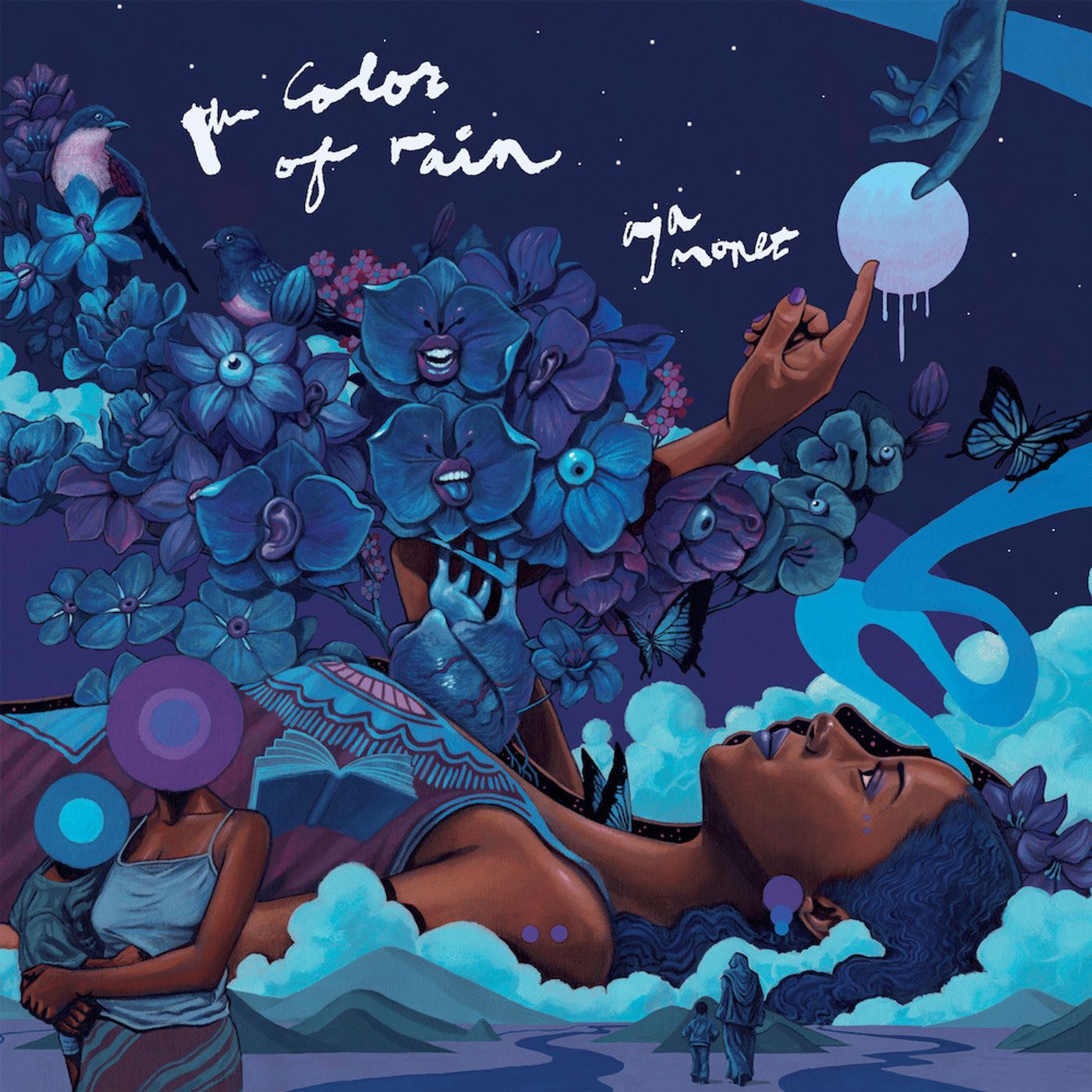
All Of It with Alison Stewart
A Listening Party with Brooklyn-born poet aja monet Ahead of Carnegie Hall
00:21:49
Loading summary
Transcript37 lines
- [00:08]
A
This is all of it. I'm Alison Stewart live from the WNYC studios in soho. Thank you for sharing part of your day with us. I'm grateful that you're here. Coming up on the show today, Sam Yeoh is here to talk about his new book the Monk's Mindset, Finding stillness in a world that won't stop moving. We'll learn about a new exhibit at the New York Botanical Garden called Flower Power. And one of the founders of Photoville will join us to talk about the 15th year, its celebration this year and how they're celebrating the event. And Harlem based artist Kim Dakers is here to talk about a new exhibit of the intricate and beautiful sculptures she makes from recycled tires. That's our plan. So let's get this started with Brooklyn born poet, vocalist and composer Aja Monet. Now it's time for a listening party with Brookenborn poet, vocalist and composer Aja Monet who will be performing tonight at Carnegie Hall. Her latest project invites listeners to slow down and look inward. It also reimagines what community could potentially look and feel like. It is titled the Color of Rain. The release is a follow up to her Grammy nominated 2023 debut, when the Poems do what they do and her 2025 poetry collection Florida Water. Co produced by Monet drummer Justin Brown and Michelle and Dicello. The new album glides through Joel, jazz, soul and hip hop, creating a sound that feels both intimate but also urgent. The Color of Rain is out this Friday, May 22nd, and tonight Aja Monet takes stage at Carnegie hall at 7pm Aja, welcome to the studio.
- [01:50]
B
Thank you for having me. That was an incredible introduction.
- [01:53]
A
Well, it's every time I say Carnegie. We'll talk about that later. Let's talk about the album first. The Color of Rain is the title of your latest release. What? How did you land on that phrase?
- [02:03]
B
I think it encapsulates what I feel about contemplation, the importance for contemplation, that in a time where we have to, we're forced to kind of be thrust into urgency and action and response that we do need the ability to contemplate, to feel, to dream, to imagine and to be with those we love so we can create the world that we want to see. But it doesn't make it any less urgent, you know, to show up and to be present with one another. It's just a matter of recognizing that we still need that meditative, reflective, introspective state in order to like show up better in the world.
- [02:41]
A
Last Year you published a collection of poems titled Florida Water. And now you have a new album called the Color of Rain. What is the importance of water in your life?
- [02:52]
B
Well, I think the title comes from the last poem and song on the record called Indigo. And it was kind of just a question that my partner, Justin Brown asked, and I was like, I feel like the color of rain. It was a very weird, abstract response to a question. And I think a big part of water is that it's cleansing. You know, it has a lot of strength and force when it's. When we deal with, you know, thinking about the ocean or storms and thundering. But it also has this ability to be very gentle and tender and intimate with. With one's. With texture and touch. And so I think we think of bodies of water as. As a part of that, but also that we are. We are made up of water. Right? And so our connection to water will always be. We need it. We need it to survive. We need it to. To. To. To cleanse and to. I think, yeah, to exist. We can't exist without it. So I think that's why it continually shows up. Ever since I was a child, I had a very deep relationship with water and baths and cleansing and the rain, and especially summer rain, which, you know, it's on the forecast. It said today rain might be coming. So I guess this is the right day for the Color of rain.
- [04:15]
A
Last time you were in the studio. Well, couple times before, in 2023, it was to discuss your debut album. When you thought about this album, what did you learn from your debut project that taught you about the structuring of an album and building an album?
- [04:31]
B
Well, working on this project, I had a little bit more sisterly support from the incredible Michelle Andegi Ocello. And she's made so many records over the years. She's just such an incredible, I would say, like Sensei of sonic sound. You know, of sonic. Of the sonics. Sensei of the sonics. I think that's what I would say. And she's a poet, and she has a really deep, profound respect for poetry. And so I think coming into the studio with her, I didn't feel like there was tension around which place more importance on what part of the album. Like, is music more important is live instrumentation, is the musicians? More important is the words, you know, and sometimes you. When you're dealing with, like, really great musicians, some of them have really great egos and you're navigating and kind of walking that line of like, do people actually Know what we're doing with language. Do they understand what a poem actually is? And I think Michelle did. She sees poems as musical explorations of depth and meaning. And I think she recognizes that poetry is music and music is poetry, and there's this symbiotic relationship, so I didn't have to prove myself. And there was a lot of experimentation and invitation to explore, to expand, to try new ideas. And Justin Brown is incredible, one of the best drummers of our time. It was fun to play and to just not be so. The first album felt more like Live Cafe. We're trying to make people feel like they're in the room with us in a specific kind of way. And I think this record is a little different. It's a little close to the ear in a more intimate way. And also, I've changed. I've toured the last two to three years, so I've grown in my recitation, in my tone, and my ability to show up in the music. Yeah.
- [06:31]
A
I was going to ask you, what was something that you wanted to push yourself on this album?
- [06:36]
B
Ooh. I think. I don't know if I thought about what I wanted to push myself on. I think I just wanted to be. I wanted the writing to be reflective of, you know, the times that I was in and what I was experiencing. I wanted it to feel intentional and that way. The last record, some of the poems I had been reciting for years, and sadly, they were still relevant, but they weren't as, like, urgent in the moment. They were stuff that I'd sat with for some time. This was less like poems that I had been sitting with for a period of time. We had experienced. And we are experiencing a time in this country where we're facing multiple genocides that we're bearing witness to. And that really impacted, I think, so much of how we felt as artists, as performers, as touring musicians, as people, as citizens of the world. And so I think, what is the role of art? What is the role? You know, there's days where you feel like, why am I even doing this? Is this even worth doing? And then you go out into the world and you see that. You know, no, people need to get off the Internet. You know, they need to get off social media, and we need to be together and we need to express what it is that we're going through together. So I think this record was more interpersonal and intimate in that way. Like, this is what I'm feeling. Are y' all feeling. This is. You know, do you see what's going on. And then how do we talk about that? You know, how do we. How do we get to a place where we can. We can commune around the issues that deeply concern us and imagine. I really thought about surrealism a lot during this record. I think that was a big part of. I was studying a lot about, I think about the Negritu poets years ago, when my first time on radio was on WBAI with Bob Holman. And he was the first person to ever tell me that I. That I reminded him of the surrealist. And I didn't know what that meant at the time. So I studied the Negritu poets. And in the recent years, I've been spending more time with them and revisiting them. And a lot of surrealists were so impactful and important and saw themselves super integral, especially during the rise of fascism. So we have like this hyper realist existence that we're in where everything feels so overwhelming and super intense. And so then what does that mean for the artist? What is our role at this time? And I think looking at some of the artists during fascists, the rise of fascist regimes, they embodied a bit more surrealist, a surrealist imagination. And they were trying to get people to understand. Well, we're living quite through surreal times and there's other ways to exist. There are other ways for us to be. So let's explore what that could look like, you know.
- [09:16]
A
My guest is Aja Monet. We're previewing her new album, the Color of Rain, which is releasing this Friday. Let's listen to a track track called Elsewhere. What is the message you wanted to communicate?
- [09:29]
B
Well, this song is dedicated to Sly Stone, who passed away, who transitioned last year. And it was two days after he transitioned that we were in the studio with Michelle and. And I told her I wanted to do something in memorial to him into. In the energy and the spirit that he inspired in us. And his daughter's on the track, who's also a radio personality. Novena Carmel, she does the intro. And Georgia Ann Muldro. And was this sort of divine convening of us all.
- [09:59]
A
Let's listen to Elsewhere. Let's see. There it is.
- [10:21]
B
What's going on? You are tuned in to Elsewhere Radio, where we got all rhythm, no algorithm. And if you're ready to take flight into the great unknown, I've got something new just for you. So strap in and stay tuned for the best in Surreal blues from Aja Monet.
- [10:48]
A
Every day
- [10:51]
B
we be somebodyness when the street lights in your veins go on and some are Walking up and down the sidewalk of your grin Diamonds twinkling on the street the thirst of our
- [11:09]
A
cool
- [11:14]
B
on the shorelines of a sma Washing up against moon shuttle lit eyes Freeing impulses Whereas folk we lord Oz. You touched on this earlier in the face of death.
- [11:30]
A
What do you think the role of a poet is in community?
- [11:36]
B
In community, I think it's to be truthful and sincere and to be of service to the people that. The truth that people need, I think at that moment. And to be honest with yourself, I think you can't really be honest with anybody else unless you're true to your own craft and story. So I think it develops and shows up in different ways. But for me, I think poets like June Jordan, Sekou Sundiata, Amir Baraka, Sonia Sanchez, Jane Cortez, they're all examples of poets that were in community. And what that meant was they had people, other people outside of themselves in mind when they were creating that they didn't just. It wasn't just this insular, selfish, individualistic perspective that it was a perspective of how do we bring more people into. Into the poem and see the poem as urgent and of service.
- [12:41]
A
That's interesting because on one hand you have people these days and social media and everything. It encourages their individualism. That's the good side. The bad side is it encourages isolation from people. How do you balance those two? How do you balance those two?
- [12:57]
B
Well, I grew up in a time before social media, so I know what it's like to be in community with people. YEAGEN X. Yeah, I know, right. And I think that's what we try to pass. That's what we have to pass on. And I think part of what we're doing with this record is, you know, Carnegie's a great opportunity to be with people in pres. Of course, growing up in New York and being able to perform, but being on tour, one of the things we're encouraging people is to get out of their homes and to be with each other. Because that was something. I grew up going to New York City and going to the New York and Poets Cafe and going to the Bowery Poetry Club and you know, bar 13 and all these cafes. Culture shock. There was different venues and community centers. You know, being at part of Urban Word NYC and teachers and writers. There were physical spaces, third spaces for us to be around and with each other. And in that you felt apart, you felt connected. And I think that, that, you know, you don't really realize the importance of that until you don't have it.
- [13:57]
A
Well, Covid. Yeah, yeah, for a lot of people, just disrupted that.
- [14:01]
B
It. Yeah, it shifted everything. And so I think we were already on our way with the Internet kind of taking a toll on. On the psychological, emotional reality. But I think we've yet to really admit that what we're experiencing right now, I mean, these people are being sued, the owners of these companies, with reason, because they have psychological impact that is manifesting physically in people's lives. So if we know that to be true, then we have to be intentional about getting people offline and together and creating experiences for us to be together. And so that's why we still see the communion of gathering at shows, at cafes, at bookstores, at, you know, spaces that allow us to be with each other, to argue, to disagree, to imagine, you know, to express, to let loose. Those are some of the most important sacred spaces we have right now.
- [14:54]
A
My guest is poet, vocalist and composer Aja Monet. We're previewing her new album, the Color of Rain. It releases this Friday. This is a second track. It's called Hollyweird. It starts out with the fires in California. When did you write this trek?
- [15:10]
B
Right during the fires last year, because I moved to LA and I've been living there with my partner. And so in the midst of everything going on, it was really. It was intense. You know, it still is. There's a fire actually going on right now that's really concerning the community. So this environmentalism, environmental issues that we're facing show up in different ways on the front lines of different communities. And learning about LA and how that shows up through the fires, I mean, it's really, really intense. And it means we have to take heed to the issue issues that we need to address.
- [15:43]
A
You know, there are so many issues in this song. Let's listen to a little bit of Hollyweird.
- [15:49]
B
The universe is university the tow truck tricksters try to boost the tires of the people pawns pedaling for the state Every job, every job can undone by the will of the worker who sees fit to serve a good greater than petty personal pocket delusions Troops are everywhere a country torn apart Doom scrolling debris but what can you do for me? Cash at me in my caption get over, get ahead culture open tabs generation in the echo chambers of greed A bunch of individuals who want to go viral over commentary all caps baby boomer text threads no spying havin don't as doorknobs when people show you who they are be leave them.
- [17:05]
A
I just like the end of that song. I'm Curious. How much room is there for spontaneity when you record? Or do you have it all planned out?
- [17:14]
B
No, nothing's ever really planned. That's what I liked about. That's what I love about working with musicians who have a background in jazz, you know, who understand the African tradition of what I call freedom music. But, you know, the ability to improvise and meet the moment and be of service to the moment and allow yourself to be used. And so I think the first record, I was really trying to preserve the energy of that when the poems do what they do. And then this record, we had demos of poems that I kind of was working through or ideas I had. And my partner created music around that. Justin Brown was working really hard with me to try to just imagine what we could make. And Michelle was like, okay, y' all work in the studio and then send me what you have and we can figure it out. And then we had one day or, no, three days in LA where we were, or four days where we were all together with a band with Daniel Minstras and Joshua Johnson and Bernis Travis and Jermaine Paul and Justin Brown and Michelle and DeGiocello and Corey Henry came in and sat in. And when we were all together in the room, that was part of my goal was like, there's something in the energy of just everyone playing together at the same time and being present and it not being controlled. That happens. And if you can capture it and you can get it in in the right time, it can be really special. And that's kind of what happened with Hollyweird. You know, Michelle just gave the directive and. And then we all started and it was like the first take was the only take there ever was, you know. Yeah, we didn't do anything else with it. So there's some post production stuff with vocals we added and Georgia Ann Moultro with her breaths and she's just brilliant musician. But for the most part, that was all in one take.
- [19:05]
A
You're performing at Carnegie hall tonight? Yeah. You're from New York? Yeah. What does that mean for you?
- [19:12]
B
Oh, well, I've been sharing. I've put out an email list and I was like, man, it means so much because one of the workers from Carnegie hall ended up sending me a DM with photos of him being the person that actually put the poster up on the wall. And he knew me from the Nuyorican from way back when when I was performing at the Nyorican. And now he's working at Carnegie hall and he Sees my face on the poster and he's like, wow, I'm so proud. And that was just really touching to see like somebody who's a. Who's one of the working class people that makes the Carnegie work, you know, and run and the Nuyorican, these spaces. And they've seen my trajectory and they're of my trajectory. And so that's special. But also just growing up in New York City public schools and having great teachers, I went, I went to District 2 public schools and I had really great teachers who took us on field trips and, you know, took us to museums and theaters and concert halls, and Carnegie is one of them. You know, I remember, I think we saw like an Orpheus orchestra. We were studying the Greek mythology or something and we saw, you know, this incredible ensemble at Carnegie Hall. So, you know, it's special. It just, it touches your little kid heart that you get to see something you saw as a kid and then now you're a part of that legacy, you're a part of that story. And as a poet, I mean, that's even more special and sweet because I never thought I would be doing that. You know, I never thought I would be here at Carnegie hall performing poems. It's at the Zanko hall, so maybe I'll get to the big, big theater one day. But it's still pretty special, you know, there's tickets still available, a few left. So if anyone wants to come tonight and see us and support us, please come through. I think it's gonna be a special night. It means the world.
- [20:57]
A
The album is called the Color of Rain. My guest has been Aja Monet. We're gonna go out on the last track. This is called Melting Clocks. Anything you wanna tell us about this? Yeah.
- [21:09]
B
Time isn't real, so, you know, don't let it get you down. And realize that all we have is now. Don't think too much about the future. Take advantage of now. That's all we got.
- [21:21]
A
This is Aja Monet. Thanks, Aja, for coming by.
- [21:23]
B
Thank you for having me. The change of a state murmurs between space. The year grew older the further we saw it. A silver strand of breath. Eyes as wombs. We tell time by how deep we bury the memory. We tell time by the space between here and there. Sound lingering in the ether.
- [21:50]
A
Hi, I'm Maggie Smith, poet and host of the Slowdown. Each weekday I share a poem and a moment of reflection, helping you turn listening into a daily ritual. It's five minutes to slow down, pay attention and begin the day. With intention. Find it in your favorite podcast app and make the Slowdown your new daily poetry practice.