← All Of It with Alison Stewart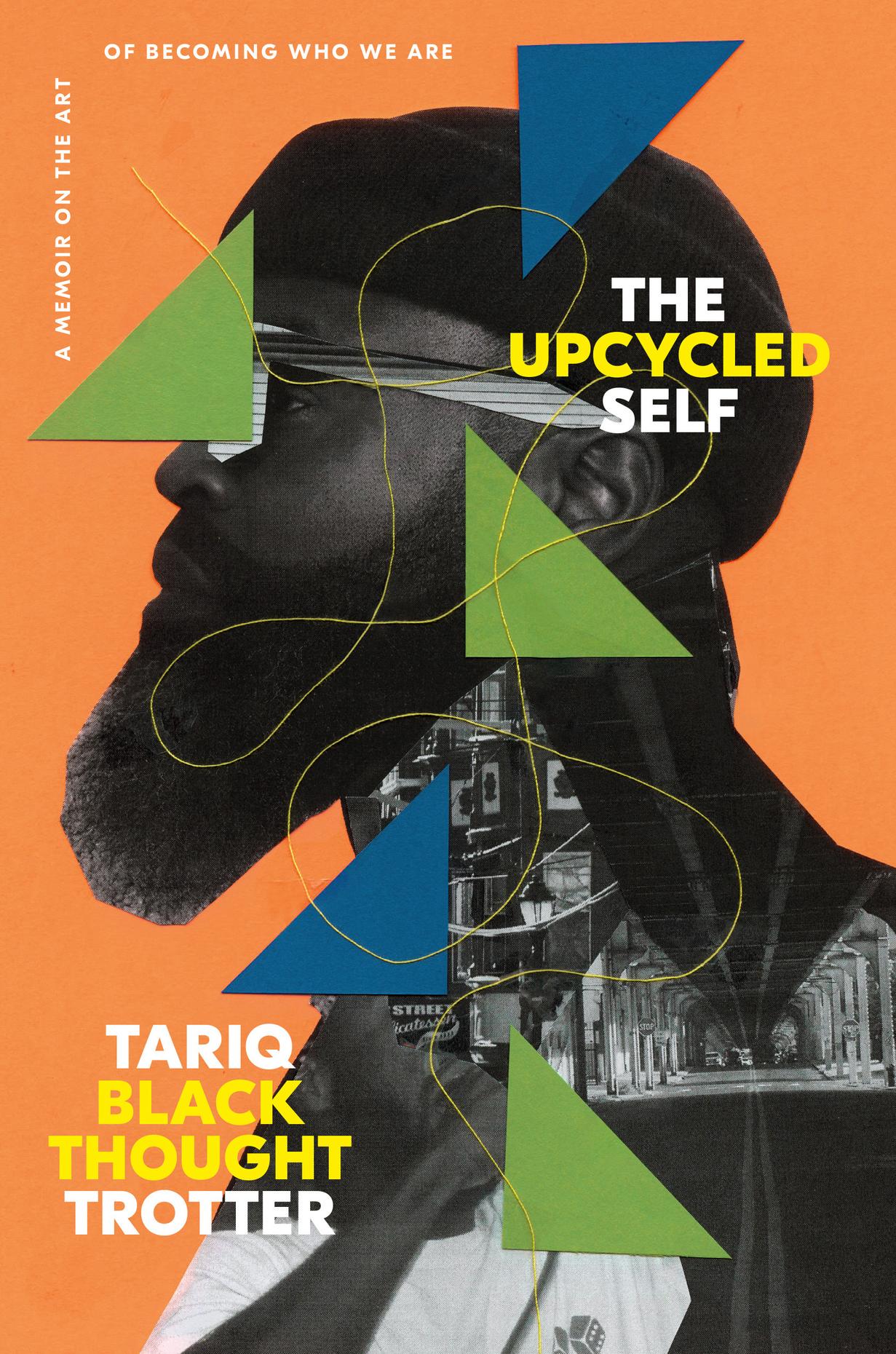
All Of It with Alison Stewart
A Memoir from Black Thought
00:24:03
Black Thought has written a memoir about his childhood growing up in Philadelphia.
Loading summary
Transcript45 lines
- [00:00]
A
Your new beginning starts now. Dr. Horton has new construction homes available in Ellensburg and throughout the greater Seattle area. With spacious floor plans, flexible living spaces and home technology packages, you can enjoy more cozy moments and sweet memories in your beautiful new home. With new home communities opening in Ellensburg and throughout the Seattle area, Dr. Horton has the ideal home for you. Learn more@drhorton.com.au Dr. Horton, America's builder and equal Housing Opportunity Builder.
- [00:31]
B
I'mma put you on nephew.
- [00:33]
A
All right unc, welcome to McDonald's. Can I take your order?
- [00:35]
B
Ms. I've been hitting up McDonald's for years. Now it's back. We need snack wraps. What's a snack wrap? It's the return of something great. Snack wrap is back.
- [00:46]
A
Some days call for sleek and straight, others for slouchy and relaxed. Whatever your vibe, Old Navy has the denim fits to match. From extra high rise to barrel. It's not just a mood, it's a whole style range. And with jeans starting at just 22 doll, you can collect them all. Snatched waist go extra high rise straight lived in staple vintage slim, low slung and laid back, slouchy wide. You've got range. Your denim drawer should too. Premium fabric deluxe details your perfect pair or weights. Shop in store or online at oldnavy.com@rxbar they believe in simple nutrition without the BS. That's why they said NO to artificial ingredients and yes to deliver intentional transparent nutrition. Try their original 12 gram protein bar, the nut butter and oat bar or minis. Rxbar the proud sponsor of no BS. Use code RXBAR on RXBAR.com for 25% off, subject to full terms and conditions and to change. Valid until September 30, 2025 and may not be combined with other offers. See rxbar.com for full details and limitations.
- [01:51]
B
Listener Supported WNYC Studios.
- [02:03]
A
You are listening to ALL of it. I'm Alison Stewart live from the WNYC Studios in soho. Thank you for sharing part of your day with us. The Grammy nominations were announced on Friday, so we wanted to shout out some friends of the show who made the long list. Former Album of the Year winner Jon Batiste once again appears in the top three categories, Album, Song and Record of the Year, in addition to three other nominations. You can still check out our recent Listening Party live event with Jon Batiste when he broke down his latest album, World Music Radio Live in the Green Space. And in the Best New Artist, a quick shout out to former all of it guest Noah Kahan and the War and Treaty and Fun Fact. Every nominee in the Best Americana Album category came on the show for a listening party or performance. So congrats to Alison Russell, Rodney Crowell, Brandi Clark, Jason Isbell and Rhiannon Giddens. Also shout out to Leve, Ricky Lee, Jo Arouj, Aftab, Vijay Iyer, Boydgenius Black, Pumas, Asia Monet and the many, many other nominated musicians who have called in or stopped by our show, including our next guest, Black Thought. Composer, actor and lead emcee of the Roots. Tariq Trotter, AKA Black Thought, has written a memoir and he takes us into the big and small details about his life growing up in South Philly. Take, for example, this passage that comes Cherik accidentally caused a fire that burned down the family home when he was just six years old. They move around as his mom tries to keep things stable, he writes. I was a latchkey kid given a graying white shoelace with my front door key knotted into its center that was draped over my head every morning and dropped back on the kitchen table every afternoon upon my return. Always before my mother's 6pm arrival from her job as a hotel housekeeper downtown, she would leave for work before the sun came up. Coming home after the sun had gone down, I remember her putting that key around my neck and kissing me goodbye for the day. On those gray winter mornings when your breath suspended just above your mouth, too cold and dense to go any further. What followed were years of uncertainty, moving from house to house, getting spended, kicked out of school. But this story is not just about hardship. We learn how Tariq was laying the foundation for the artist he is today, his love of drawing and witnessing the cultural birth of hip hop. And that day in high school when he first met his Roots co founder Amir Kweslov Thompson in the principal's office and later decided to start a band. The Upcycled A Memoir on the Art of Becoming who We Are is out tomorrow, and with me now is its author, fresh off his Grammy nomination for his song Love Letter in the Best Rap Performance category, Tariq Trotter. Hi Tariq.
- [04:48]
B
Hey, how's it going? Thank you so much for having me.
- [04:50]
A
It's going forward. Some of the details in this book are raw. They're honest. Some of them are difficult moments from your life. How was it for you emotionally sitting down and writing all this?
- [05:05]
B
It was a heavy lift. It was a pretty heavy emotional lift for me, but one that I think was much needed, you know. So it was, you know, it was cathartic and the whole experience has been a sort of therapy, you know, so it's also.
- [05:23]
A
There are just moments of levity after that passage. I just read you talk about putting your lunch in a Dukes of Hazzard lunchbox with the Confederate flag on it and describing a little black boy walking down the street with a Confederate lunchbox.
- [05:39]
B
Yeah. And I definitely wasn't the only one, but, you know, who to thunk.
- [05:44]
A
How do you recall all those details? Did you keep a diary, a journal? Did you have to sit down and really think about the details? Or were they. Or were they fresh for you?
- [05:57]
B
A lot of the stuff has remained fresh for me. Some of the emotional stuff was, you know, I had to dig a little deeper to reach. But, yeah, I mean, these are, for better or worse, some of my fondest memories. Right. You know, as I, you know, recall the time that I spent with my mother and, you know, the. The time before the fire, even, you know, not. Not long after the fire, it was. I was still, you know, a child. You know what I'm saying? And there's. There's always been. I guess we always long to return to that child. You know, some of us. Some of us, you know, never. Never grow up, Grow up, Grow out of it. But, you know, then once you grow out of it, you just long to return in so many different ways. So for me, yeah, those are the memories that. Those are my. That's my comfort space. You know what I mean? And it was this. In this book, I was just able to give the. I guess I always talk about the listener, but I guess the beholder, you know, entree into myself in that way.
- [07:10]
A
And I want to be clear about this fire. It's not like you were like a tiny pyromaniac. You were just playing, and it got out of hand. You were playing with the army men, and you had an accident with a lighter. And this is before everything was childproofed. And you really get at the heart of that. It wasn't just things and possessions that were lost that day. As you look back as an adult, what was lost in that fire, On.
- [07:35]
B
A deeper level, I think on a deeper level, what was lost in the fire was just a sense of security and a sense of stability that I don't know if I've ever felt since. Right. But I think my family did an awesome job. You know, when I was a young person, having experienced loss and tragedy at such a young age, my family did an awesome job in sort of. In sheltering me from that and then sort of seeing. Making sure, you know, When I was a kid that, you know, I was as. I was affected as. As. As little as possible by, you know, again, I don't want to give away, I want to spoil all of the events of the book, but, you know, by the wind, by the time that fire had taken place, when I burned down the house at 6, that, you know, I'd already experienced, you know, some great, great trauma. And I think, yeah, my family had. Had protected me from that. So, you know, just kudos to them. And I think because of that, that's, again, why some of those memories that, you know, one would think I wouldn't want to revisit are some of my. Still some of my fondest, you know, memories to recollect.
- [08:52]
A
Your mom, she cared for you. She, you know, moms. We're moms. You go out for your kid, you. You will lay down for your child.
- [09:00]
B
Absolutely.
- [09:00]
A
But we're human beings. Mothers are human beings. So how would you describe your mother when she was at her best, and how would you describe her when she was having a tough time?
- [09:13]
B
You know, I think, you know, at her best, my mother was a superhero. You know, my mother was, you know, the stuff of legend. And I'm, you know, even at her worst, right. When she wasn't in the greatest shape. I've never gone without. Right. You know what I'm saying? I've always been aware of the valleys and peaks of it all. And there have been points, times where it was way more difficult to acquire the essentials, but we always figured it out. And for a lot of that time, many of those periods of my life, it was just she and I, you know, so we were all we had. Even though I did have a half brother. You know, I mean, she had another child. My brother was, you know, he and I, we didn't spend that much time coming up together again, you know, for various reasons and some of which are, you know, discussed in the beginning of the book.
- [10:20]
A
Your mom's mom, Minnie, your late grandmother who passed and you live with her for a while and you write at Minnie's. I learned of the beauty of true intimacy. What was that home environment like? Why. Why did you choose the word intimacy?
- [10:42]
B
You know, my grandmother was just, like, fiercely private, and she was, you know, she was a pillar of every community that she was a part of, right. Of her church community, of our neighborhood, of the city in that, you know, she was one of the people who ran an office called the Mayor's Office of Community Services. So she, you know, just was always about, you Know, the community life and, you know, being of service, but also, you know, just being, you know, super private and holding our family, you know, goings on and, you know, what took place behind closed doors, she sort of kept behind closed doors. She was big on, you know, as the sun went down, we had to draw the curtains and blinds and, you know, lock the door sort of thing. And you know, she was just always protective of that. So I think I have a comparable sort of appreciation for just that family level of, you know, familial intimacy is what I think, you know, I'm sort of referencing. And in my grandmother and her husband, who I, you know, referred to as my grandfather, even though he wasn't my mother's father, you know, I got that. You know, I saw an example that I think I needed, you know, when I needed the sorts of. My mother was always a role model, but she was an unorthodox sort of role model. And you know, my grandmother, my grandparents were more traditional, you know, so I was able to get both sides of the coin in that way.
- [12:19]
A
You end the book writing about your role as a father today and you sort of talk about the idea that your kids lives are privileged compared to yours and you'd love to give them a. You would like to give them a broader experience.
- [12:31]
B
Yeah, yeah.
- [12:32]
A
How do you speak to them about your childhood and how do you speak to them about the broader experience, the one that most people experience, or more people experience than having their dad's a famous rapper and actor and has plays off Broadway and has all these great things and a great sweater and, you.
- [12:48]
B
Know, I think, you know, I just would love for them to have a well rounded point of reference as to just what goes on in the world. I mean, there's so much that I think I was personally in that, you know, just we people who were from where I'm from and from when, you know, the point in time that I come from is we have, we, you know, many of us had to grow up, you know, fast, sometimes ahead of our time, sometimes too soon. But I don't think that, you know, there is, you know, there was also some value in that, right, in that level of maturity or, you know, self sufficiency as a young person. So I wish I was able to bestow some of that upon my kids, you know, without hurting them, without, you know, traumatizing them, without, you know, them having to go through it in real time in the ways that, you know, me and so many of my peers sort of had to do it. But you know, the honest truth, the sad truth is that it's difficult, it's hard to even engage them in those conversations because it feels like fictitious, right? It feels like a thing of, you know, it's a fantasy. Like that's the stuff that they only see in TV and on TV and have heard from other people's stories. They're just, you know, they've been blessed in that way. So, you know, I think at the end of the day, I think I strive for my children to understand the privilege that they have and, you know, just the ways and so many ways in which that, you know, privilege sort of differs from what my experience was. But yeah, you know, I don't. It's not like I want them to experience what I did, you know what I mean? But I would love for them to. You know, I think my kids could use some toughening up. Right.
- [14:38]
A
I have a friend. You make me think of my friend who lives in Beverly Hills, who's. We talk about this a lot with his, with his kids. He's like, how do I teach my kid about value and hustle and grit when my neighbors DJ Khaled and they're trick or treating on a golf court.
- [14:52]
B
Exactly. You know, you know, sometimes I take my kids to places where I used to reside or my old school building, stuff like that. Or, you know, I take them, yeah, we used to play on the street here. I used to sell lemonade here. You know, this is my newspaper rap. But again, it's hard to get them to engage. So I, you know, I've learned not to impress it upon them. And just the other night we were leaving another book event in, in Philadelphia and we were, you know, on our way home and before we left the city, my 8 year old son, he asked, he said, hey, you know, is there any, the next time we come to Philly, could we stop at one of, at your old house? You know, so he had, you know, taken an authentic, you know, honest interest in that now. And at the point at which he asked, we happened to be just a half a block away from the house that I burned down. So I looked up and, you know, he was asking me that question. We were there. So, yeah, I got to take him down that street and he got to see my first, you know, where the playground that I played in and the house I burned down and that whole thing, you know, but in an authentic way. So I think that's how it has to happen, you know, and they were telling me, you know, knock on the door and stuff And I was like, I think that's doing a bit more. I'm not gonna. I'm not gonna go knock on somebody's door like, hey, I burned this house down in 1979, you know, and not expect to get, you know, like, run off their lawn. So I didn't. I didn't stop. But, yeah, I got a chance to show it to my son.
- [16:21]
A
That's very meaningful. That's meaningful for sure. My guest is Tariq Trotter. The name of the memoir is the Upcycled Self A Memoir on the Art of Becoming who We Are. By the way, Tariq will be in conversation at BAM tomorrow with Jon Stewart at 8pm since we were talking about Philly and being in Philly, you write a lot about this sort of specific South Philly code. You learned growing up, what was unique and useful about this code, and then what was something you had to unlearn about this code as you matured?
- [16:51]
B
I think, you know, as a young person, it's. It's that code that, you know, keeps us alive, right? It is the code that, you know, stands off, would be aggressors before, you know, it's too late. Right. It's a safety net. It's an airbag of sorts that we move through life with. But that airbag is less malleable. You know what I mean? It's more like the suit of armor or a thick layer of skin sometimes I refer to as callous or scar tissue. But, yeah, you know, we're cocooned in that. And this is, you know, what we move through life with, you know, in the hopes that it serves as our, you know, protective. It's a layer, a line of defense, a force field. Right. But, you know, after, you know, when you're extracted from that direct environment, it just. It doesn't serve you in the same way. And, you know, sometimes it ceases to serve one, you know, completely. So, you know, what the upcycle self is about is. Is the wisdom, right. You know, that one acquires through their lived experience. And, you know, how we're able to distinguish the difference? You know, one of my favorite designers is a brother. His name is. His name is Waleed. I think his last name is pronounced Al Dimirich, but his line is called by Walid. And, you know, his. His mission statement is, I think it' Luxury of zero waste. And he creates, you know, clothing and home goods and accessories and stuff that are. That are one of one because, you know, he elevates his fashion design to high art in that way. And that, you know, he, you know, he uses scraps of silk from, you know, the 18th century mixed with. He sort of high loads his materials and uses. He makes do with, you know, what he's able to find and what he's able to scrape together and what it, you know, the result is that if I buy say two of the same items from Boba Lead, they're going to be two completely different items, even if they're the same skew. And I think, you know, there's something beautiful in that and I think there's something comparable in the way he elevates his fashion design to how I've always aspired to elevate, you know, like the art of the mc, Right. So just, you know, the repurposing of our lived experiences and traumas and, you know, the emotional and spiritual baggage that we carry to arrive at something of higher or even just a different value than the original is what this book and what this part of my life is sort of about.
- [19:51]
A
You wrote your first rap at nine. What does a nine year old Tariq rap about?
- [19:55]
B
At nine, I was already big into reference books. I was huge into encyclopedias and dictionaries, thesauruses. So as I recall, that initial rap was something. It was based on the cadence of Kumo D and the Treacherous Three. And they had like this super rapping cadence where they rapped. It was almost double time. It was like, if you probably remember, JJ fad, their song Supersonic, where they go, you know, summer llama, llama, llama, llama, llama. So it was, I rapped, you know, words. No summer llamas, but actual words. And I think I remember just looking for all as many words as possible that would rhyme with like devastating and other words that ended in aiding and. Yeah. And then I sort of ran with it and the rest is history. But I caught the bug at nine and that's when I started writing songs.
- [20:51]
A
Visual art was really important to you. You write in your book, Visual art. That was mine. When did you realize that visual art was gonna be so important to you? Not just as something you could accomplish, but an important part of you?
- [21:05]
B
I think I realized the importance of visual art in retrospect. You know, I think it's something that I've taken for granted as a young person, as one does, and I didn't really understand it. But you know, what I got from my, out of my exposure to the arts is my worldview, like my perspective. Right. Once an artist, you're gonna see the world the way an artist sees the world. And it really just made a difference in everything, the way I experience everything. So anyway, I think you. Over time, I also came to realize, and this is something I always touch on, I came to realize that the medium is ever evolving. Like the mediums are almost interchangeable at this point. To me, it's a perspective, it's a way that you view the world. It's the way that you approach the creative process that makes one the artist. So if I'm writing a bit to do in standup comedy, if I'm gonna do a painting at home, or drawing a sketch or a picture, or trying to paint a picture with words, with my storytelling, it's all coming from the same place and I'm calling on the same experiences.
- [22:24]
A
My guest is Tariq Trotter. The name of his memoir is the Upcycled A Memoir on the Art of Becoming who We Are. We've been talking a lot about the art, we've been talking a lot about emot development. And I think it's really important to point out that's what the book is mostly about. But there's also just really some devastating real life incidents that you write about. And you write about very candidly about how the crack epidemic hit your family, hit your mom particularly. What is a moment that was just really hard in your life to live through? I'll stop there. What was a moment in your life that was just hard to live through?
- [23:08]
B
I would say, you know, the loss of my mother, you know, experiencing, you know, my mother's murder at, you know, at the age that, you know, I had to sort of deal with that experience which was, you know, 15 or maybe I just turned 16, but I think I was 15 because my birthday's in October. My mother was murdered, you know, in the summer. Yeah. So I think I was, you know, 15, about to turn 16. And, you know, you think about, you know, loss, trauma. Again, it wasn't my first traumatic experience, but I'd always, you know, I had a conversation with myself and I'd always felt like, you know, at least I still have my mom. Right. And I was like, you know, God forbid, if anything were to ever happen to my mother, you know, I would just fly off the handle. I'm gonna be, you know, a different person. I'm gonna, you know, you think you'll be drive. Driven to insanity and, you know, quite possibly violence or, you know, you'd be driven to. To give up. Right. You know, in life, on whatever, you know, journey I may have already, you know, may it already begun at that point. So, you know, but then it. You know, what happens? Trauma hits, and you can't really control the ways in which it affects you. So I think it definitely, you know, affected me in all of those ways that I mentioned. But, you know, the way it affected me the most was as a motivating factor. And it gave me hope and it gave me clarity as to what I was here to do and what purpose I was sort of destined to serve, you know? So, yeah, that's where it sort of came from.
- [24:53]
A
The name of the memoir is the Upcycled Self A Memoir on the Art of Becoming who We Are. It is out tomorrow. Tariq Trotter will be in conversation at BAM tomorrow with Jon Stewart at 8pm Tariq, thank you so much for being with us and being so candid.
- [25:08]
B
Oh, no, thank you. Thanks for having me.
- [25:10]
A
Let's go out on something from Organics.
- [25:18]
B
I rip the vocal back flip yo, the kid is a bad pro I could drip and hip and then dip into calypso I to's amigo which means I got stitchio Makes you wonder about my number Guess my address on my PO Here's a hint I'm from Phillip with Adele but not the Rio well, I'm guessing here Here is like exactly where the bego now we got the Philadelphia why not top it off with an A? The Philadelphia prismatic way I'm straight from Philly silly for rocket down a hill Philly just like I said before I swore my scully when it's chilly My.
- [25:44]
A
Cap is from the layup Little something from Tariq Chowder, also known as Black Thought, from his first demo album Organics.
- [25:59]
B
I'm gonna put you on, nephew. All right, unc.
- [26:01]
A
Welcome to McDonald's. Can I take your order, miss?
- [26:04]
B
I've been hitting up McDonald's for years. Now it's back. We need snack wraps. What's a snack wrap? It's the return of something great. Snack wrap is back.
- [26:14]
A
At Capella University, we believe accessible education can make a difference. That's why we offer scholarship opportunities to all eligible students. Un futuro diferente esta mas cerca de lo que cres con Capella University. Learn more at Capella. Eduardo.