← All Of It with Alison Stewart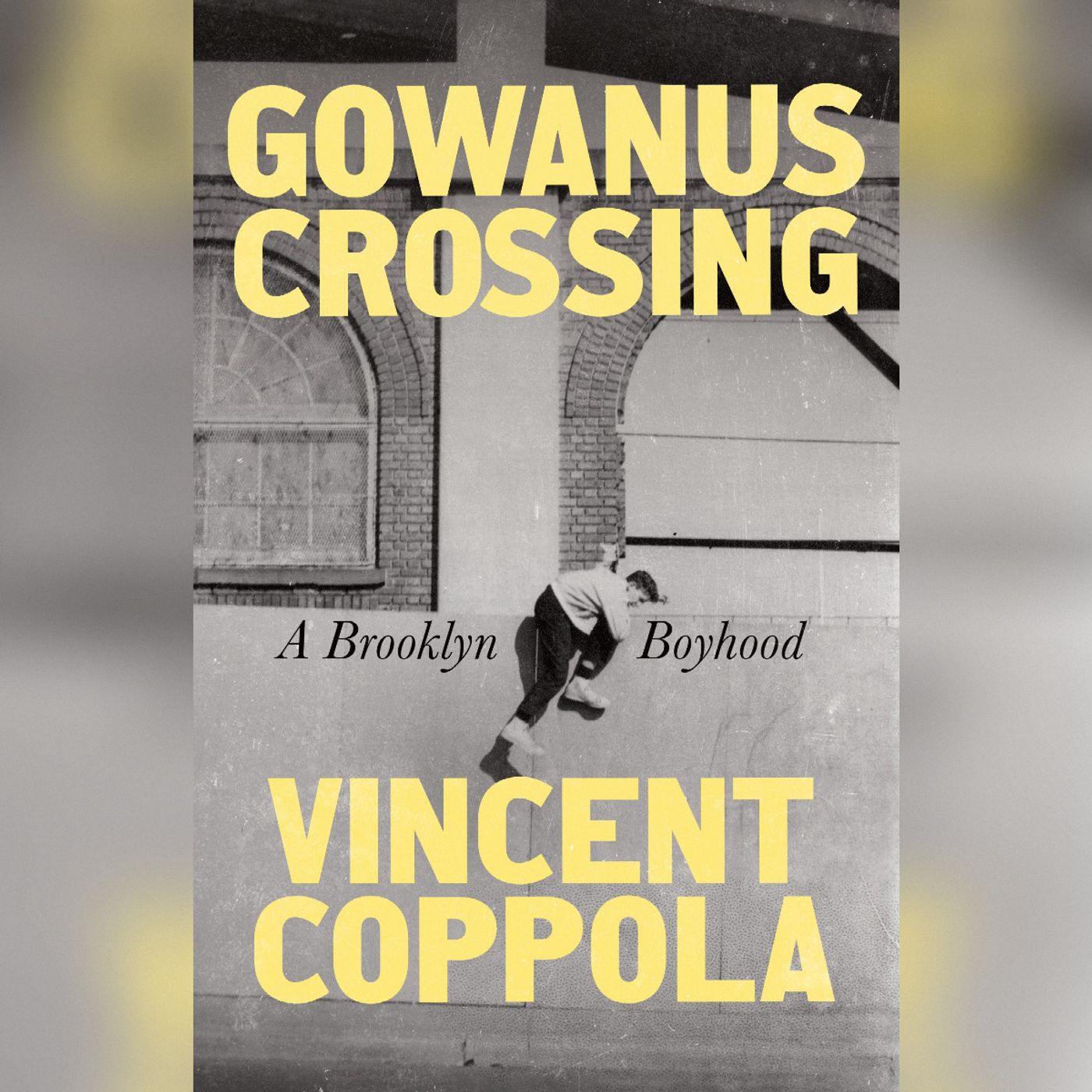
Loading summary
Transcript35 lines
- [00:00]
Vincent Coppola
Foreign.
- [00:09]
Alison Stewart
This is all of it. I'm Alison Stewart. Let's talk about Gowanus. The Gowanus Canal was created in the mid-1800s from tidal wetlands and creeks. Now for generations, it was a dumping ground for everything from industrial chemicals to sewage. Today, it's a federally soup a federal Superfund site undergoing a massive redevelopment project. Over the past couple of decades, an onslaught of luxury housing and trendy restaurants have emerged. But before Gowanus became shorthand for Brooklyn Transformation, it was a working class Italian neighborhood. In his new memoir, Gowanus, a Brooklyn boyhood journalist, Vincent Coppola takes us back to the Brooklyn of the 50s and 60s, back when kids treated the toxic canal as their playground, when the Catholic Church loomed large and organized crime was part of the backdrop of everyday life. Vincent has been a journalist for more than 30 years and he joins me now to discuss the book and his memories of growing up and in the neighborhood. Thanks for joining us.
- [01:05]
Vincent Coppola
It's good to be here. Thank you.
- [01:07]
Alison Stewart
So what made you finally sit down after being a journalist for so many years? What made you sit down and write a memoir?
- [01:13]
Vincent Coppola
Well, honestly, the canal is so polluted. And when I hit my 50s and early 60s, I was diagnosed with stage four cancer. And it lays you up. You don't know if you're going to live or die. It was throat cancer and I'd never smoked a cigarette. So I traced it, at least in my mind, back to that pollution. And I had time on my hands. I didn't know how much time. And I started drifting back to a world that I was comfortable with, familiar with, and strangely enough, I missed it. And I wanted to try and recreate it. And that's what led to me writing the stories that became this book.
- [02:05]
Alison Stewart
Would you mind reading a little bit from the prologue?
- [02:10]
Vincent Coppola
Sure. Brooklyn is a mythic place. Gowanus is its Nile, pestilent and fertile, forever reborn and reimagined, mother to motherless. Brooklyn's wanderers, poets, misfits, dreamers, junkies and schemers to the immigrant poor, landed on its fatal shores. When I was growing up, no one would have mistaken the Gowanus for the Nile or any other living body of water. It was an open sewer, stagnant, reeking, sluggish, meandering from Butler street, today's Boreham Hill, through a graveyard of decayed 19th century repair facilities, industrial plants, abandoned warehouses, dying marine repair facilities, rotting docks, its future already passed. I played pirates on half sunken barges, sought treasure among barrels of glittering industrial chemicals, climbed ladders and threw hatches of gigantic rusted marine diesel engines. I watched boats leaking fuel oil churn through the canal, crews desperate to escape the stench. And sometimes, in the light behind the jaw. John P. Carlson Ink Factory I glimpsed men dumping medical waste and other unmentionable things into the glistening green water.
- [04:00]
Interviewer/Host
That was Vincent Coppola reading from his memoir, Gowanus A Brooklyn Boyhood. Throughout the book, you described the factories and the warehouses and the docks and even. Even the polluted water with sort of a sense of wonder a little bit. What felt magical despite all these other issues?
- [04:21]
Vincent Coppola
Well, our culture, it was a. Basically a peasant, Italian rural culture dropped into this part of Brooklyn. And I was a bookish boy. I love to read in a culture where really reading was not valued. You made. My dad was a dock worker. Most of the men in the neighborhood were dock workers. And in those days, you made a living with your hands, sometimes your fists, but rarely your mind. And I was a bookish kid, and my dad and my uncles, big husky Italian guys would tell me, everything, you know is in a book, as if there was something wrong with that. You know, I think, therefore, I don't exist. And that was a world, but it did. It did feed your imagination. And I had a great imagination. Not so much to escape, because this was my world, but how many kids could play on rusting ships and, you know, go into factories where there were chemicals spilled around and pretend you were a scientist or finding treasure? So it was a world that fueled a kid like me.
- [05:49]
Interviewer/Host
The Church, the Catholic Church, is in this book. It's a lot in this book. What role did the church play in everyday life in Gowanus?
- [05:57]
Vincent Coppola
That's another question. Well, again, honestly, our government in Gowanus was really wise guys. And the Mafia, they were our role model. And I described the neighborhood lovingly as a kind of a snow globe. And in that globe, on one side were wise guys, and on the other side was the church. And I went to Catholic school. I got a good education, but I was really beaten as a troublemaker, put in the back of the class because I got tired of saying the rosaries every day without feeling it. And sure enough, as we now know, the head of the altar boys, a priest, was molesting kids left and right. And this went on for generations, and no one was ever the wiser. And when I wrote this book, I mean, to write this book, had to go back through social media to dig out and find people and families. And one of the things they said to me when I mentioned that this priest had molested generations of young boys. I mean, as young as seven. They said to me, let the dead rest in peace. You know, I'm a Newsweek reporter. The dead do not rest in peace in my world. I mean, I wanted to learn and find out and tell a story.
- [07:41]
Interviewer/Host
We're talking to Vincent Coppola about his new memoir, Guanas Crossing, which looks at his growing up in northwestern part of Brooklyn in the 50s and the. Hey, listeners, we want to hear from you. What do you remember about Gowanus and the surrounding neighborhoods? Maybe you grew up there. Maybe. Remember the waterfront, the factories, the canal, the longshoremen? Or maybe you moved there more recently and have watched the neighborhood change firsthand. Our phone number is 212-433-WNYC 212-433-9692. Let's talk to Gio, who lives in Manhattan. Hey, Gio, thanks for calling, all of it.
- [08:17]
Gio
Hi, I'm calling from Manhattan. Vinny, congratulations on your book. I read your Gowanus Crossing blog. I love it. My family is from President Street. We had the stable on President Street. I know your family. I know your brothers, your mom, Gloria with the red hair. Goannis is a neighborhood of neighbors who watched out for each other. It was. There were people doing heroin, you know, in the neighborhood, but there were also people who would watch out for you. And that's what I remember most about the neighborhood. Just really wonderful neighbors. Sit outside on beach chairs in the summertime, put the fire hydrant on, and, you know, that's what we did. It was a beautiful place to grow up. And I'm really happy that some of my family still live in the house where my grandparents came many, many years ago.
- [09:16]
Alison Stewart
Thank you so much for calling, Gio. Your family is at the heart of the story. Tell us about the Coppola family.
- [09:24]
Vincent Coppola
Well, what my former neighbor said is completely true. And when I was sick 15 years ago, I really craved that sense of community and neighborliness that was part and parcel. So it wasn't the end of the world, a dead end. It was lively, thriving, often funny, and people looked out for one another. So, yeah, my family, my mother's family, Giordano's, my great grandparents arrived on the gowanus in the 1890s. So we were there forever. My one of my great grandfather had seven sons. These were all bigger than life characters. My grandfather was a prize fighter. Two other guys were wrestlers. Two other guys became Fiorello Liguari's bodyguard. So this was an immigrant community that was really grabbing on to things and seeing what they could do with themselves. And I admired them so much after time passed and that enthusiasm, I guess, kind of petered out. And instead of achieving, which I always wanted to do, we were kind of caught in the stagnation. And drugs, as she said, came in. My own brother was a heroin addict. Half my friends died of drugs or drug related aids. So there was a tragedy that bothered me so much because these were good people and they didn't have opportunities. Nobody cared about us. That canal was polluted from the 1920s and only when it began to gentrify, suddenly there was a move to clean it up and make it the Venice of Brooklyn and all this malarkey, but we were trapped there. I was so isolated. And I'm not saying this negatively. I live three subway stops from lower Manhattan and I didn't go to Central park until I was 20 years old.
- [11:57]
Gio
Wow.
- [11:57]
Vincent Coppola
That's how enclosed it was.
- [12:00]
Alison Stewart
We got a text here that says, ask Vinnie about the importance of stoop and stoop culture around Brooklyn at that time. Soup stoop, the stoop for the house.
- [12:13]
Vincent Coppola
I don't know where that's coming from, but, well, food was. Food is more important of our community. We were poor, but we were never broke. And to this day, my memories of the great meals. And we would have block parties outside, you know, with hundreds of people, everybody cooking. And it was a great community. My grandparents, the Giordano's. Every Sunday there would be 30 of us and I had 35 first cousins living within three blocks of us. And we'd all eat outside on the sidewalk at a long table. And you can almost ask a passing driver to pass the food. It was that out in the open and that world is really gone.
- [13:08]
Alison Stewart
We're talking about his new memoir, Gowanus Crossing. I'm talking with journalist Vincent Coppola. You write about the racial tensions that emerge as black and Puerto Rican families
- [13:18]
Interviewer/Host
began to move into the area. How has your understanding of those dynamics changed?
- [13:24]
Vincent Coppola
Well, it wasn't just black and Puerto Rican. It was such a closely knit, closed community. The strangest thing, there were projects where blacks and Puerto Ricans were at odds with the Italians and there were street gangs and all that. Gowanus was known if you lived there, not as Gowanus, but as South Brooklyn. So we were South Brooklyn boys. But anybody trying to come in was considered not a friend you haven't yet met, but a stranger. Hare Krishna's moved in the middle of all of this.
- [14:09]
Alison Stewart
That's. Yeah, tell me about that a little bit. I'M curious about that. The Hare Krishna is how they moved in.
- [14:15]
Vincent Coppola
They just showed up, 30 of them, you know, right in the middle of this Italian neighborhood, among all the, you know, restaurants and grocery stores and fruits vendors and bookies and this social club, and here comes 40 people. They could have come from a flying saucer, just dropped in the middle of it. And they were not really welcomed. I mean, they did the most outrageous thing you could have done. They took over an old convent. And this is still a very Catholic neighborhood, you know, where women dress their kids in sackcloth on St Francis Day. Here come the Hare Krishna's, and the first thing they do is smash a statue that was in this convent and bring it outside and throw it in the backyard. They made enemies, as you can imagine, for forever.
- [15:21]
Interviewer/Host
I wanted to ask you a little
- [15:22]
Vincent Coppola
bit about the Vietnam and, you know, offending people left and right. But that was their world, and we had our world.
- [15:31]
Interviewer/Host
And talking about your world, let's talk about the Vietnam era. Was there a divide in values among the people who lived in Goannis around Vietnam?
- [15:42]
Vincent Coppola
My father fought in the Pacific in extremely heavy combat, and I am convinced today that he had ptsd, no doubt because his moods would vary from loving and gentle to rageful. Vietnam, strangely enough, well, some tiny percentage of all eligible young men during that era, maybe 7 or 17%, were drafted. I would think in Goannis, it was more like 5%, because, as I said earlier, that wasn't our government. And I had my uncles with these big burly policemen, and they'd always say, college boy, when are you going to go in the Army? And my father would say, get away from my son, because he knew. So one sense, he's this convert, a conservative guy, and on the other, he was cynical and he knew what war is like. So not many of my friends went to Vietnam. One of them, who I celebrate in a chapter, did go. He was an Italian immigrant, and he enlisted, and the rest of us were trying not to go. He enlisted, and sure enough, he died in Vietnam. And he's a chapter in my book. His name was Ernie Palmeri, and I won't ever forget him.
- [17:17]
Alison Stewart
One last question. How did your training as a journalist help you write your memoir?
- [17:24]
Vincent Coppola
Well, a lot of these people, as I said earlier, I mean, they know me, they love me, they know my family. I had three other brothers, but I was always a kind of a troublemaker. And at first they didn't want to. They thought I was going to, like, crucify the neighborhood and make them look dumb and angry and ugly. But after a while, you know, I've lived in the South. I've been in every Southern town. I've done hundreds of interviews, a lot with poor people. And one of the people from my old neighborhood, one day she told me, you've given me back my life. And that was the greatest compliment. That justifies the whole book and it really justifies my life that I could recreate a world that I really love and had value to it. And I was up there a few weeks ago, you know, on a book tour type thing. And I went back and we mentioned streets were teeming with children, noise and food and fun and music. And now I go back to today's Gowanus with its high rise buildings and garden clubs. It's dead silent, dead silent. Is that an improvement? Not to me. And that's the world I missed and I tried to create. And I think I'm lucky enough to have recreated it.
- [18:59]
Alison Stewart
The book is called Gowanus Crossing. It's by Vincent Coppola. Thank you so much for joining us.
- [19:04]
Vincent Coppola
Thank you.
- [19:08]
Alison Stewart
So a listener texted in about this segment. This will be my book about or set in New York City for our Summer Reading Challenge. Yeah, we got a summer reading challenge here at Olivet. We're challenging readers to read books and six different books and categories by Labor Day weekend. If you finish, you get a prize. You've got until July 4th. To sign up, head to wnyc.org summerreadingchallenge to find out how to learn about all the categories. The categories are a book published in 2026, a book about the US history or American historical fiction for the 250 anniversary of the American Revolution, a book set in or written by an author from one of the 48 countries participating in the World Cup. Or you can read a classic. Or you can read a work of genre fiction in fantasy, science fiction, romance, horror, mystery or thriller or a book set in New York like Gowanus Crossing. And a special bonus, the New York Public Library Summer Book Club selection is the City we became by N.K. jemisin. Go to wnyc.org summerreadingchallenge for more details.
- [20:18]
Progressive Insurance Announcer
You're listening to this podcast so you've got a curious mind. Here's a helpful Drivers who switch and save with Progressive save over $900 on average. Visit progressive.com to see if you could save on car insurance, Progressive Casualty Insurance Company and affiliates. National average 12 month savings of $946 by new customers surveyed who saved with Progressive between June 2024 and May 2025. Potential savings will vary.
- [20:44]
DISH Announcer
DISH has been connecting communities like yours for the last 45 years, providing the TV you love at a price you can trust. Watch live sports, news and the latest movies, plus your favorite streaming apps, all in one place. Switch to DISH today and lock in the lowest price in satellite TV, starting at $89.99 a month with our two year price guarantee. Call 888-add-D dish or visit dish.com today.