← All Of It with Alison Stewart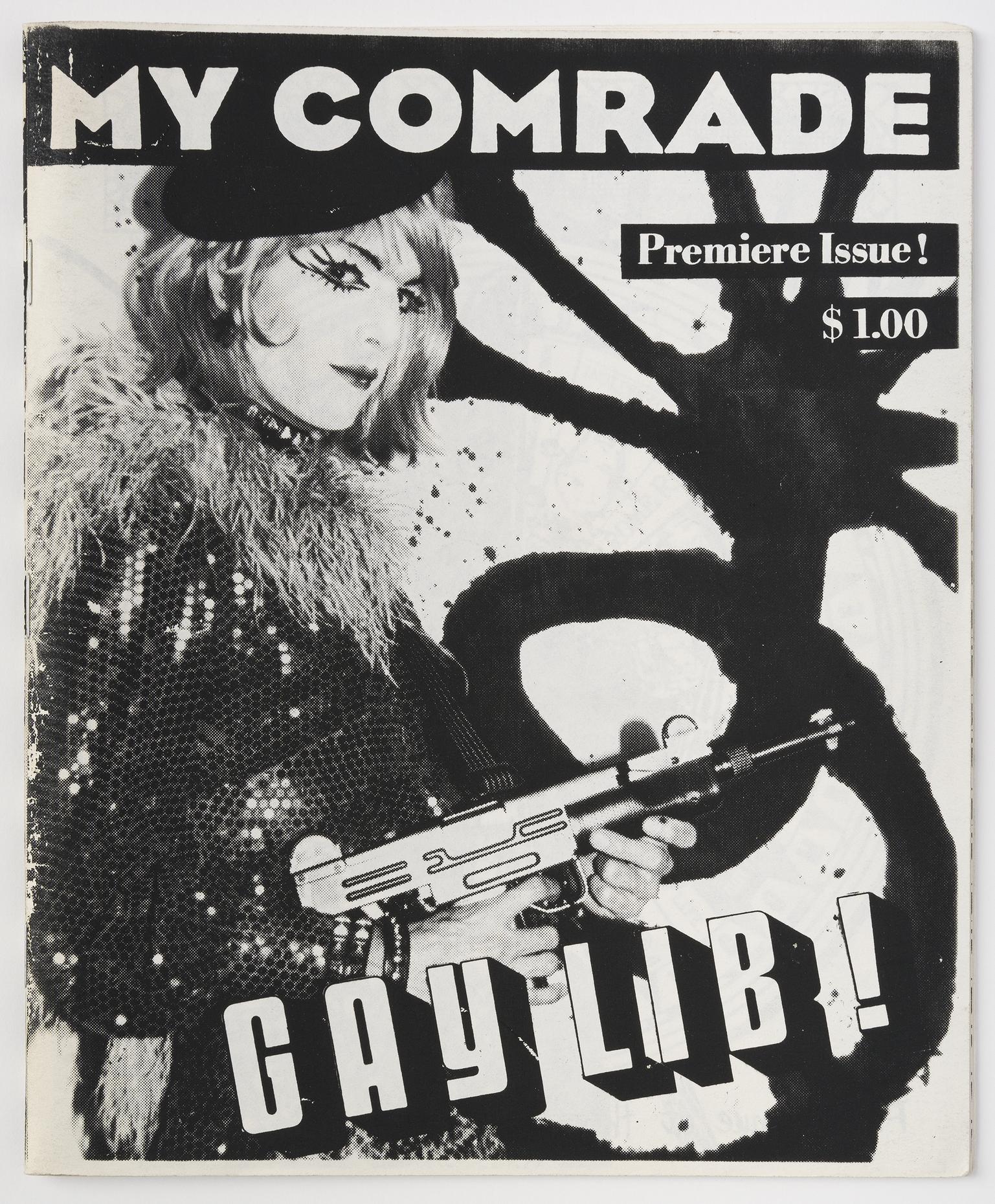
All Of It with Alison Stewart
A New Zine Exhibit at Brooklyn Museum
00:16:41
The Brooklyn Museum’s newest exhibit opens Friday Nov. 17. It’s called “Copy Machine Manifestos: Artists Who Make Zines.”
Loading summary
Transcript33 lines
- [00:00]
Megan Roope
Are you ready to change your mind about your body? We are flipping the script on fitness making movement that feels good and fits your life. I'm Megan Roope, celebrity trainer and founder of the Sculpt Society. I created this online fitness platform to be uplifting and flexible with sculpt, strength and dance cardio classes. From a 10 minute quickie to a 50 minute sweat, you will find programs for every stage of a woman's life including prenatal, postpartum, bridal and more. Start your two week free trial at thesculptsociety.com podcast.
- [00:30]
McDonald's Customer
I' ma put you on nephew.
- [00:31]
McDonald's Employee
All right unc. Welcome to McDonald's. Can I take your order miss?
- [00:34]
McDonald's Customer
I've been hitting up McDonald's for years. Now it's back. We need snack wraps. What's a snack wrap? It's the return of something great. Snack wrap is back.
- [00:46]
Marshall's Advertiser
Oh my gosh. Have you been to Marshall's lately? They have all the brand name and designer pieces you love, but without the jaw dropping price tags. Alright, so here's the you should never have to compromise between quality and price. And at Marshall's you don't have to. Marshalls believes everyone deserves access to the good stuff and that's why their buyers hustle around the clock to make it happen for you. Visit a Marshalls store near you or shop online@marshalls.com.
- [01:18]
McDonald's Customer
Listener support WNYC Studios.
- [01:31]
Alison Stewart
This is all of It on WC. Welcome to NYC. I'm Alison Stewart. The Brooklyn Museum has a new exhibit opening today. It's called Copy Machine Manifestos. Artists who make zines. A zine, of course, is the shortened version of magazine, but zines are more than smaller versions of their corporate cousins. They're typically do it yourself endeavors, curated and crafted as acts of artistry themselves, as well as providing a platform for individual expression. Listen to how zine artist Niall G. Kim Kaliske frames his work. He says, quote, paper and language are the two most essential tools for zine making, aside from a copier or a printer. It is really helpful for me to be surrounded physically by the material image in the liminal space of selecting and framing. It is as if the paper and I are having a tactile conversation. This conversation becomes the language of the zine, the content. The Brooklyn Museum's exhibit includes more than 800 images from the world of zines from the 1970s to today, broken out in categories like the Punk Explosion, Critical Promiscuity, something called Subcultural Topologies. It is open now as of today, and you can catch it at the Brooklyn Museum until March. And this weekend the museum is getting extra ziny because on Sunday they're hosting a zine fair put on by the nonprofit publisher Printed Matters, which will feature more than 60 zines and zine makers currently putting out work. Joining me now to talk about all of it, please welcome Brandon Joseph, professor of modern and contemporary art at Columbia University and one of the contributing curators to the exhibit. Welcome to all of it.
- [03:11]
Brandon Joseph
Thank you. Thanks for having me.
- [03:13]
Alison Stewart
Listeners, give us a call to shout out the zines in your life, past and present. Maybe you are or used to be a zine maker or maybe you are a subscriber to a punk zine or a queer or feminist zine or an art zine that made you feel like part of a community. Maybe you felt seen in a zine. Give us a call, 212-433-W NYC 212-433-9692. You can call in two, join us on the air or you can text to us at that number or you can tell us about it on our social media at all of it. Wnyc. So, Brendan, you know, we know what a pamphlet is or a flyer or a brochure. What makes a zine a zine?
- [03:53]
Brandon Joseph
Well, historically, zines have been related, as you said at the opening, to magazines, but they've also been related to all of those publications, independent publications that you just mentioned, but also to what was known as the fanzine. So we think of zines and the zines in the exhibition are largely like this, as photocopied. You know, the classic zine might be regular 8 and a half by 11 paper, photocopied, stapled, folded in half and stapled. But zines actually begin in the 1930s in mimeograph form. And they were the same chick, cheap, quick, ephemeral and usually self made publications. But they were related integrally to fan culture. They started around science fiction fandom, they moved into comic book fandom. They they ultimately in the early 70s, move into rock fandom, even before punk rock happens. And so there are fan communities that are that are interested in certain comics or certain types of music and often, almost all the time. Actually, part of the ethos of these fanzines is that they're very open to reader feedback and participation. So they welcome correspondence, they welcome contributions, they welcome mentioning other types of zines. So they're more open and collaborative with a community than your typical magazine that has a sort of gatekeeper function of editors and others. So they're really open to creating and fostering senses of community in that sense.
- [05:33]
Alison Stewart
Some of the wall text explains that the earliest zines came out of something called mail art networks. What was mail art?
- [05:42]
Brandon Joseph
Yeah, so our exhibition, the exhibition that Drew Sawyer and I put together is not all zines, of course, but it's zines particularly done by artists. And the earliest zines in our exhibition are from. Well, the earliest is November 69, but basically from the 70s on. And there was a group in the 70s that was national and international that was interested in correspondence art. They were interested in making things that were cheap and ephemeral again and that could be mailed to other people. And it was also a sense of feedback. You would mail your piece to someone and they would mail you another piece, or maybe they would even take the piece you mailed to them and modify it and send it on to somebody else. And the earliest artist zines that we chronicle in the exhibition are really ones that came out of these type of networks. So for instance, we have. There's one instance, which is in one case, actually physical case, of a publication that was called the New York Correspondence School Weekly Breeder. Right. So it was a joke on Weekly Reader. And it started as a one page mailer that was sent around and then another person took it over. So the first person was Ken Friedman, artist. The next was Stu Horn, an artist in Philadelphia. And Stu Horn took that and made it a two page mailer. And then it was passed on to a man named Tim Mancusi in San Francisco, an artist, and he made it into a full fledged zine of 35 pages. So, and often these correspondence zines basically gathered mail that was sent to them artists, mail that was sent to them images, texts, et cetera, collated it, reproduced it, bound it often with just a staple and sometimes with just a paperclip, and then sent it out and distributed it to other people. So that was. So not all correspondence art ended up in these little magazines. But some of the earliest artist zines that we chronicle come out of these distributed network communities that were really using the postal system as an alternative to the High Art Museum as a place to show and disseminate their work.
- [08:11]
Radio Host
My guest is Brandon Joseph, co curator of Copy Machine Manifestos, Artists who Make Zines. It's at the Brooklyn Museum. It opens today. He's a professor of Modern and Contemporary art in the Department of Art History and Archaeology at Columbia University. I do have to ask about manifestos.
- [08:29]
Brandon Joseph
Yes.
- [08:30]
Alison Stewart
Why is that in the title?
- [08:32]
Brandon Joseph
Well, the term, the title, Copy Machine Manifestos was actually taken from an article that was published in the San Francisco Bay Guardian in the 1990s that was talking about the explosion of queer zines in the early 1990s. And that was the title of the, of the article. And we liked it because first of all, it foregrounds the copy machine. But second of all, many of these zines that we found over and over and over again. So I just mentioned that Correspondence Art was sort of an alternative to the Hyard Museum. Very often the zine comes out of people that want to take the means of production to get their voice told and against something that they perceive as anywhere from oppressive to just plain boring. They want an alternative. And often the zine contains manifestos in it. This is what we're doing. This is why we're doing it. And just as often, the zine itself acts as a manifesto in its form and in its content. Whether it says this is a manifesto or not, it serves as a calling card, as advertisement, as a billboard of a particular person or a particular group's point of view. And so that artistic and activist dimension of zines, we like the way that the title foregrounded it. And of course, manifesto is something that, you know, if you're a card carrying art historian or a frequent museum visitor, you know that manifestos are often associated with art movements. So it's a very art historical term too, while it's also an activist term. And we like the way that it's switched between activism and art, because that's exactly what these zines largely do.
- [10:27]
Alison Stewart
Let's take a call. Jerry is calling from Nassau County. Jerry, thank you for calling wnyc. You're on the air.
- [10:34]
Caller
Thanks. Thanks for the trip down memory lane. I feel like I'm back in 1990. Do you have any copies of Fact Sheet 5 in your exhibition or any works by Ray Johnson, who was like the godfather of mail art?
- [10:51]
Brandon Joseph
Well, we don't have backseat 5. We knew of Factseat 5. And we. That was a clearinghouse in itself, a network. It was a zine that actually allowed you to connect to other zines. But we do have Ray Johnson. We have an original piece of Ray Johnson, original drawing by Ray Johnson that he submitted to the West Bay Dadaist, which is one of the early correspondence zines. And we have a work by an artist, John Dowd, who was close to Ray Johnson, who made a collage sort of in homage to and was sent to Ray Johnson. We did do research in the Ray Johnson Estates archives too, for this exhibition. And most of the artists in the first section. There are six sections in the exhibition. In the first section were in male correspondence dialogue with Ray Johnson. So he was a very central figure.
- [11:53]
Radio Host
Let's talk to Cliff calling in from Manhattan.
- [11:56]
Alison Stewart
Cliff, thank you so much for calling all of it.
- [11:59]
Caller
Well, thank you for the program. I am involved in correspondence art and in the 80s was involved in a zine called Secret Love, which is a gay male zine. And my question is, is Todd's Copy Center, Todd's Copy Shop, mentioned in the exhibit? It was an enormously popular place for zine makers here in the 80s, I guess.
- [12:29]
Brandon Joseph
Yes, it was in. Is it in Greenwich Village? West Village, I forget. Yeah, yeah, yes. It's not specifically mentioned, but artists did mention it and, and utilize it. Kate Hud, David Wojnarowicz, artists that are in the exhibition. I think, I believe Kate, huh, worked there. She worked at a copy shop. I think it was that one. And so yeah, the copy shop was itself a node of production and often of distribution as well. People would make their photocopy zines there and maybe leave them there. You know, the record store was also not a site of production, but a note of distribution, certainly, even if your zine was not necessarily one that related to music. So yeah, these sites are very important for the history of zines. We chose to emphasize in the exhibition more the sites, these sites of distribution. So for instance, we feature the Spew Festival, which happened two or three times and was one of the first queer zine conferences where people came together. We featured 1974 Confluence of Correspondence artists in Los Angeles called the Deca Dance and which was a sort of faux Hollywood style award show that happened in Los Angeles was a couple years in the making where all of these correspondence artists from Vancouver, New York, the Bay Area, in San Francisco, Los Angeles, Toronto, all came together in this to stage this giant happening which was an award show. But it was also the first place that many of them met each other in person. And so these moments where the virtual network becomes a real place of engagement is something that we foreground from the deca dance in 74 all the way to Devin Morris's brown paper zine fair in the 2000 teens.
- [14:37]
Radio Host
Throughout the exhibition, the publicans the publications are also eclectic and original. But can you pick out any connective tissue among the zines that come out of our area or out of Brooklyn and really have Brooklyn ness about them?
- [14:50]
Brandon Joseph
Well, there's a lot of. The exhibition actually begins. That first publication that I talked about, November 69, was done by John Dowd and Stanley Steller. John Dowd was lived in Park Slope. That was where his studio and home was. He worked at the Eagle Bar in the West Village. He was a graphic designer. He was a pop artist before that. And so he dao to land, which is what in the correspondence art network he called his studio was located in Brooklyn. So the exhibition begins in Brooklyn. We have an opening piece when you come in, which is by Yousef Hassan, Kwame Sorrel of Black Mass Publishing in collaboration with Ari Markopoulos and the musician, rapper and musician Mike, AKA DJ Black Power. So all of them have Brooklyn connections and roots in the front of the exhibition. And when we get to the end, which is the last section, the sixth section of contemporary artists, many are also Brooklyn based. So Candace Williams, who just moved from Los Angeles to Brooklyn, Devin Morris, who had moved a couple of years before from Baltimore to Brooklyn, Netta Bomani. I don't know if Lucinia Cruz lives in Brooklyn or not, but Pat McCarthy does. So we have a lot. There's a through line of Brooklyn that starts and ends the exhibition, but we also have Manhattan, Los Angeles, San Francisco, Chicago, Guadalajara, Mexico City, Toronto, Vancouver are all pretty important nodes throughout this exhibition.
- [16:40]
Radio Host
As we said on Sunday from 11 to 6 at the Brooklyn Museum, you can catch the Sunday zine fair put on by the nonprofit Printed Matters. How would you describe the zine landscape today, given everything we've been talking about? We've got about a minute.
- [16:54]
Brandon Joseph
Zines are incredibly popular now, especially amongst artists. And they're just a way, I think, for artists, especially in a sometimes burgeoning art market, to be able to make work that can be bought cheaply, given away, that can have that community function and network function that people can take a zine or have a zine from an artist for $5, whereas maybe they can't buy a painting for, you know, the higher prices that there are. And really, as we worked on this exhibition from 2019 to now, we really saw a wave of production. So it's as popular now as it's ever been. And the Printed Matter zine fair on Sunday is really going to feature that.
- [17:45]
Radio Host
The name of the exhibit is Copy Machine Manifestos, artists who make zines. It's at the Brooklyn Museum and it opened today. My guest has been Bre Brandon Joseph, professor at Columbia University, one of the co curators. Thank you so much for joining us and congratulations on the show.
- [18:02]
Brandon Joseph
Thank you for having me. It's been a pleasure.
- [18:04]
McDonald's Customer
I'm gonna put you on, nephew.
- [18:05]
McDonald's Employee
All right, unc, welcome to McDonald's. Can I take your order, miss.
- [18:08]
McDonald's Customer
I've been hitting up McDonald's for years. Now it's back. We need snack wraps. What's a snack wrap? It's the return of something great. Snack wrap is back.
- [18:20]
Marshall's Advertiser
Oh my gosh. Have you been to Marshall's lately? They have all the brand name and designer pieces you love, but without the jaw dropping price tags. Alright, so here's the you should never have to compromise between quality and price. And at Marshall's, you don't have to. Marshall's believes everyone deserves access to the good stuff and that's why their buyers hustle around the clock. To make it happen for you, visit a Marshalls store near you or shop online@marshalls.com.