← All Of It with Alison Stewart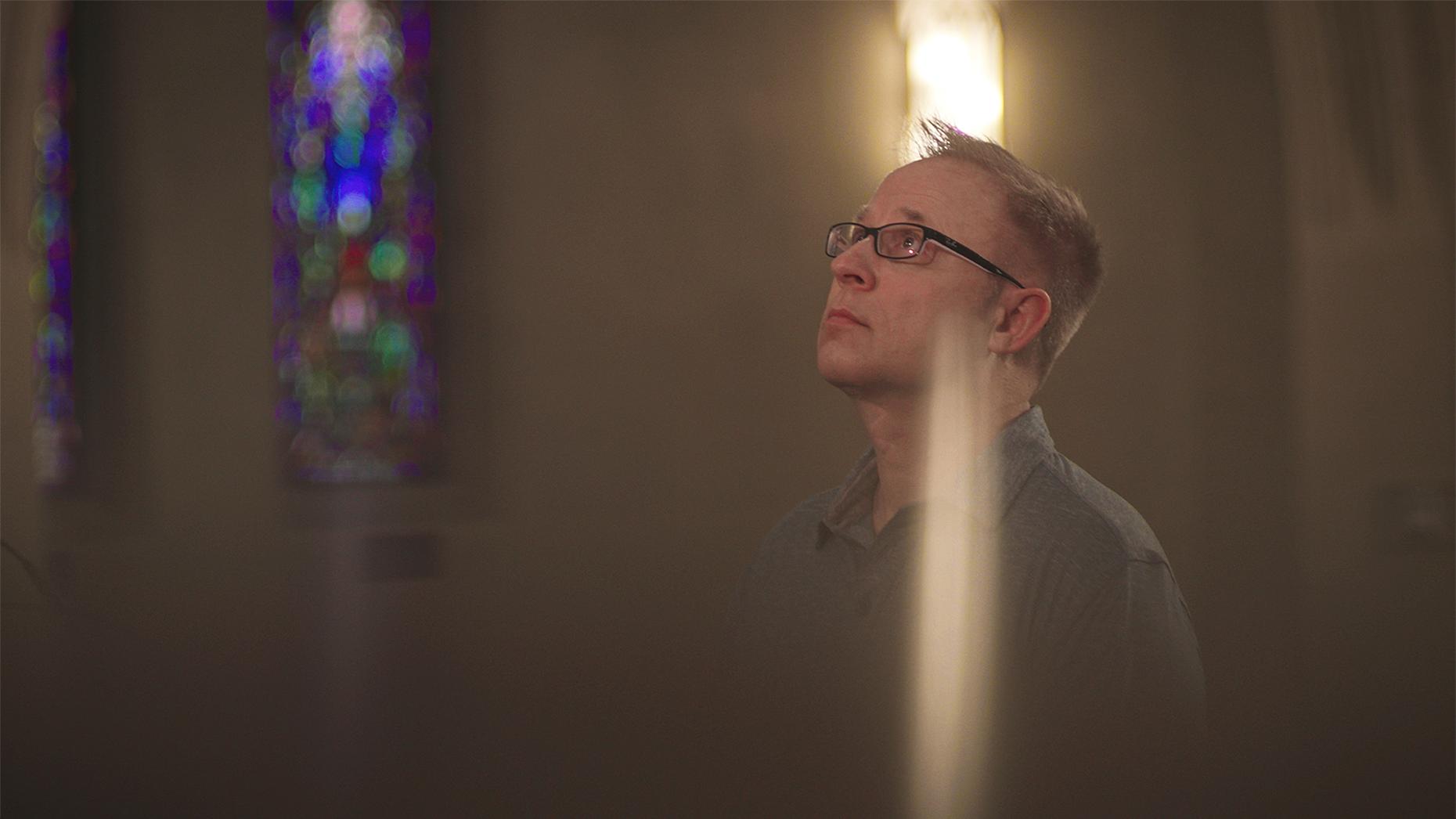
All Of It with Alison Stewart
A Possible Bible Mistranslation That Changed America
00:29:53
A new documentary explores the 1946 translation of the Bible that included the word "homosexual" for the first time.
Loading summary
Transcript52 lines
- [00:02]
Bix Soleil Razor Advertiser
Surprise. Beach day. No excuses. I'm in. Gimme five. With Bix Soleil Glide Razor, you'll have hydrated, smooth skin that's ready to go on the fly. No shave cream needed. You can prep, shave and hydrate all in one step thanks to moisture bars that hydrate your skin during and after shaving. 5 flexible blades hug your skin for a close shave. Glide into smooth. It's your time to shine with bixsolil. Buy now at Amazon and Walmart. Ready? Your skin looks amazing. So smooth and beach ready.
- [00:29]
Rocky Rogio
Let's go.
- [00:31]
Uncle/Nephew Characters
I' ma put you on, nephew.
- [00:33]
Reverend David
All right, unk.
- [00:34]
Alison Stewart
Welcome to McDonald's.
- [00:35]
Rocky Rogio
Can I take your order, miss?
- [00:36]
Uncle/Nephew Characters
I've been hitting up McDonald's for years. Now it's back. We need snack wraps. What's a snack wrap? It's the return of something great. Snack wrap is back. Listener supported WNYC Studios.
- [01:06]
Alison Stewart
This is all of it. I'm Alison Stewart live from the WNYC studios in soho. Thank you for sharing part of your day with me. If you're feeling a little overwhelmed because the holidays are upon us, we got you. Coming up tomorrow, we'll speak with food writer Jake Cohen, who will help us get our Hanukkah celebrations together. On Monday, strategist editor Maxine Builder joins us to brainstorm last minute gifts. And on Thursday, we'll speak with Lauren Iannati, the editor of Real simple how to be a great holiday host. We are gonna have a lot of fun celebrating the holidays and in those conversations, we wanna include your calls and questions. That's in the future. But let's get this hour started with something very serious and important. A conversation about language, the Bible and homophobia.
- [01:58]
Interviewer/Host
The documentary 1946, the mistranslation that shifted Culture made waves on the festival circuit last year. It stirred up contro among some conservative Christian groups, and now you can finally see it in theaters. The film claims that the Bible's inclusion of the word homosexual was a consequential translation mistake. The film is by Sharon Rocky Ruggiero, herself a member of the LGBTQIA community with her own complex relationship with Christianity. Her father is a pastor who still preaches that being gay is sinful. In her search for a way to reconcile being queer and Christian, Rocky encountered the exciting work of Kathy Baldock and Ed Oxford, both deeply religious people. Kathy and Ed taught Rocky that the first time the word homosexual ever appeared in the Bible was in 1946, as a result of a decision by a Revised Standard Version translation committee working on a new translation of the Bible. Just a bunch of guys around a table in 1940s. There's even a picture of them at work. Kathy and Ed turned to the archives at Yale University to find out how the decision was made and cast doubt on the validity of the initial translation. A translation the committee itself ended up revising in the 1970s. The full title of film is 1946 the Mistranslation that Shifted Culture. It is in theaters now. Rocky Ruggiero, welcome to all of it.
- [03:19]
Rocky Rogio
Thank you, Allison, for having me.
- [03:21]
Interviewer/Host
So, Rocky, your father's a pastor, and you do start this film with your personal story, if you don't mind sharing. What messages did you get in your household about growing up, about queerness?
- [03:34]
Rocky Rogio
Well, growing up in my household, we never really heard directly from my father's mouth or even on the pulpit about, like, example, using the verses against a queer person or really heavy rhetoric against queer people. It just was in the air. And it. It's always been in the air. And some of the things that really I didn't even understand as a child maybe would pick up conversations from adults, or at least the understanding that homosexual was bad, dirty, wrong, disgusting, definitely not welcome. And so later on, once my father had discovered that I was one of those boogeymans that everybody talks about, you know, that's when he really started to use his platform to, in his mind, help. He really wanted to help me because he was fearful my. For my eternal soul. He really believed that homosexuals or queer people, LGBTQIA plus, as we say, do not inherit the kingdom of God. And he's grown since then, where he might say, you can be same sex attracted, but you still can't act on it. And that's a whole nother story. But, you know, the rhetoric has changed as the experience has changed. But again, it's just kind of always been in the air. And anybody who grew up in the 80s and 90s kind of knows this. And that's when it became politicized, as we see in the film. And that's when we see malice within these translations in the Bible being turned as a weapon against the queer community and being politicized with the Moral Majority.
- [05:09]
Alison Stewart
And, Rocky, I think I added an extra syllable to your last name. Would you say it for me?
- [05:13]
Rocky Rogio
Yeah, it's Rogio. Rogio. Thank you. Yeah, no worries. And thank you for asking. I know we usually do that ahead of time, but I'm just so. It's so awesome to even be talking with y'. All.
- [05:24]
Alison Stewart
Rocky Roggio is the director of 1946 the mistranslation that shifted culture. Rocky, would you read for us the passage that really is at the heart of this, the one that includes the word homosexual? It's Corinthians 6, 9, 10.
- [05:40]
Rocky Rogio
Sure. The thesis verse is. So the verse in the Revised Standard Version would be homosexuals would not inherit the kingdom of God. And what it does is it's basically going through a vice list of all of these different types of people that will not inherit the kingdom of God. And when the word homosexual was put in, what the translation committee was trying to do was modernize the King James version, which was the most popular version at the time and hadn't been updated since 1611. So they really were just trying to find some new language to use to describe these people groups that St. Paul was referencing that would not inherit the kingdom of God. And there's a whole history around this verse of what it. They've been translated for over 2000 years. And we can see the history of abuse, exploitation, of pederasty, of prostitution, sex for money, and always mostly power over people. These connotations are very heavy in that verse. But we don't just look at the first Corinthians 6, 9, 10. We do do an apologetic on all of the clobber passages that then the word homosexual spread from that first mistranslation to then the verses in the 70s where we see it in six different passages where it just doesn't belong. So we felt it was important to lay out that history as well and examine those verses for their historical and cultural context to help lay out some understanding.
- [07:20]
Interviewer/Host
So, yeah, when the word homosexual became a translation of two words from the Greek that were combined into one, what were those words? And after speaking with experts about them, how can we mostly closely translate those words?
- [07:34]
Rocky Rogio
So the Greek words are malakoi and arsenicoitai. And the malakoi would be the passive participant in the sex act. There is a sex act going on here. And the arsenal koitai would be the active participant in that sex act. But what we need to ask ourselves is, what is going on here? And what is Paul really condemning? And so when we lay out the history, we look at the malakoy, and the malakoy is the person that's being feminized, they're being penetrated. No, you know, that's just the language. So but in that person, if it's. If it. It's, you know, usually sex with a slave, it's sex with a child, it's sex for money, or it's just, again, this power over someone. But the malakoi could be is also really just translated as soft. Like, we can see that actual meaning used throughout scripture and in other words, documents. So we can say that that means soft or really a coward. And so when you feminize a woman, it's the worst thing that you could be as the man. This is all patriarchy, misogyny is a woman. And so it's like, well, we still do this today on the schoolyard. You're a sissy, you're a pansy, and all of these other things that we do to call people like a woman. And so that would be more of an understanding of what the malakoi is. And then the arsenicoitai is derived from arson and koitai from the Levitical passages. So we do go back to the Levitical passages in the Septuagint, which is the Greek version of the Hebrew Bible. So the Hebrew Bible translated into Greek, which is what Paul would have used. And we believe that Paul combined that word arson, which is male, and koitai, which means bed. So man bed or male bed is probably the definition of the word. But again, this is. It's. If anybody says they know exactly what the word means, as Kathy says in the film, they don't because it's never defined. It's not as easily definable as the malakoid. We only see it used in very little literature outside of St. Paul's letter in Corinthians. And then again, we see it in First Timothy and it's always listed as a vice list. It's almost like it's been copy and pasted from First Corinthians and put into the Acts of John and the Sibylline oracles and other ancient documents that we see it in, which is very few. So it just. As we look at the history of it, we think that it was, again, slang. It was something that was familiar, even if St. Paul made it up. It was something that was familiar with what was going on with these sex acts that were abusive, that were causing harm to other people and that were not loving, consensual. And all of the things that we understand to be of same sex attracted people, homosexual, pure people. Anybody that falls outside of the binary, a sexual minority. He wasn't talking about those things. And so the film tries to explain that in its easiest form. There's a lot of heavy stuff here, as you can imagine. So we had a very difficult time. And Jill Woodward is our editor. She's a New Yorker. She's amazing. If anybody's listening, look at her work, hire her. But we had a very. And Jen, Jenna Serbu, our writer producer, the three of us had the task of taking, whittling down what's the most important information around this mistranslation. To lay out a conversation and get us to really start to break down this mistranslation and delve further and get everyone to watch all the different audiences. You know, the name of the film.
- [11:21]
Alison Stewart
Is 1946 the mistranslation that Shifted Culture. My guest is its director, Rocky Rogio. I do want to read that passage in full and then ask you a follow up question. So the passage is, or do you not know that wrongdoers will not inherit the kingdom of God? Do not be deceived. Neither the sexually immoral, nor idolaters, nor adulterers, nor homosexuals, nor thieves, nor the greedy, nor drunken drunkards, nor slanderers, nor swindlers will inherit the kingdom of God. So in that transit, who was this committee that worked on the translation in 1946? What was truly the goal?
- [11:58]
Rocky Rogio
So the goal was to modernize the Old English and make it accessible for people. And what makes Kathy a really good researcher is she's able to look at the data and present the information. So she went in assuming that these men were like out to get the dirty, filthy homosexuals, you know, and they're sure she, she, like most of us, assumed there was malice initially behind this mistranslation. There's also assumptions around the World War II and all these other things that were going out as homosexuals were starting to come out of the closet and being more seen. All of these assumptions were made. But when she and Ed searched through the archives, they didn't see that. They saw 22 men who did the best that they could. Maybe one or two of them had some malice in them, but we don't know. We can only assume. But the data shows that they, they really didn't. There wasn't any discussion around it at all. So we don't really know what made them turn to that, except for looking into the culture, if they're trying to modernize the word. At the time of the culture, homosexuals were associated with having a mental disorder, being delinquent, being all of these deviant type things. And they were also associated with pedophilia, unfortunately, and, and rape and just different things that were not true. And so looking into the culture, the homosexual took on that malakoi and arsenicoi and just combined it. But then later on, when they were challenged by David, in the letter, which was a very well written letter with an appendix stating, hey, you made a mistake and this is why they had the whereabouts to say, you know what, we're going to look at this and we see what you're saying. And then in 71, when they were able to update their translation, they had to wait 10 years because of a contract. They went back to those letters and they voted 7 to 3 to change it to sexual pervert, which is still a problematic translation they have since the new Revised Standard version, updated edition 2022, which just came out last year, now says illicit sex amongst men, which forces the reader to say, okay, well, what's illicit and with whom? And gets us to really think about these themes and these tones and not just a blanket statement of homosexual, which is a group of people and not an act. You could be a homosexual and have never done anything. This is about doing abuses against someone. So, yeah, they don't see malice. We see an intention for making. And to that end, they actually, they got hit for doing things like making Mary a young woman, which was more original to the Greek. They were actually a very academic, well put together committee and with integrity. And they got slammed for that because I guess you can't be a virgin and a young woman at the same time. And they did some other things like took the divinity of Christ away because they said, surely this is the son of. This is a son, a God instead of the Son of the God. And so that's why other translation committees in the 70s made their version, their modern version of the English Bible, to pull away from what the RSV was labeled a communist Bible. Don't read it. And new translations wanted to come in and put together their version of the Bible so that Mary can now be a young woman and all of these different things. So it is important how to look at the committees to see who is putting together the translations that you are reading, what schools do they go to, what are their intentions? Are they working to be with integrity? Or are they working to uplift their identity politics and marginalize other ideas? Because we can see that in modern translations and translations in general, you can see malice for sure.
- [15:49]
Interviewer/Host
We're talking about the film 1946, the mistranslation that shifted culture. It's in theaters now. After the break, we'll talk about the two intrepid researchers at the center of the film. We'll talk a little bit about some of the backlash as well as some of the issues around translation that Rocky just brought up. Stay with us. This is all of it.
- [16:18]
Alison Stewart
This is all of it on wnyc. I'm Alison Stewart. My guest is Sharon Rocky Roggio, the director of the film 1946, the mistranslation that Shifted Culture. The film is about the moment, the backstory, the who, how, where, and why the word homosexual was added to the Bible in 1946. So our two intrepid researchers that you follow in the film are Kathy and Ed. They are both deeply faithful people, but they're not academics, they're not employ by a research institution, they're not historians, they're not linguists. How do they get involved with looking at this addition of homosexual to the Bible?
- [16:57]
Rocky Rogio
Isn't that pretty amazing? Two lay people were the ones to open those archives at Yale University for the first time since they had been sealed. All of these people who are writing anti queer the theology books and all of these things against the LGBTQ community never asked the question, who made the decision to put the word homosexual in the Bible and why? And so their stories are fascina, which was one of the reasons why I was like, I have to tell this story besides Reverend David, which I'm sure we'll get into in a little bit. But Kathy and Ed were, you know, so Kathy's story was just through relationship, meeting a lesbian woman, and instead of her trying to evangelize her, she just did relationship, and they became friends. And she's like, I just don't understand why God couldn't love my gay friend. I love my gay friend. And it started her to really examine these things. And Kathy's work is phenomenal. You can follow her@c canyonwalkerconnections.com and she has a first book called Repairing the Breach between the LGBT Community and the Church. And her second book is going to be about this film, Forging a Sacred Weapon, how the Bible Became Anti Gay. But she's an engineer by trade and has an amazing ability to break down history and lay out the pieces for us. So her work lays out 2000 years of human sexuality. So seen through multiple lenses, what's going on in politics and religion and science and in psychology. And as we know more, how are we changing and doing better? And so I encourage you to take a look at Kathy. And then while Kathy was doing her seminars and teaching about this 1946 mistranslation, Ed was in one of her seminars in 2016, and he found it very hard to believe that the word homosexual was just added in the Bible in 1946. And as a queer Christian, someone who struggled his Whole life with suicidal ideation and, and intimacy and fitting in in a Christian world, which he didn't fit in because he was queer. And a queer world that he didn't fit in because he was Christian, he felt compelled to do the work himself. So he started buying old Bibles, lexicons, dictionaries, and his book collection is very impressive. And so he woos Kathy to come over to his house and do some work together. And from there he was the one that discovered that the archives were at Yale University. He makes a phone call, they go to Yale, that's 2017. They find the letter. You know, and so it's just an amazing story of two people really wanting to get to the truth for their own personal. But also once they knew this information, just like me, I felt compelled, I have to share it with the world, which is why I made this movie.
- [19:39]
Alison Stewart
When they dig into the archives at Yale, Ed and Cathy encountered this letter that was sent to the committee that was doing the revisions. And they received it in 1959. It was from a young man about the translation. Here's a bit from the moment that they found the letter in the archives. This is from 1946, the mistranslation that shifted culture.
- [19:58]
Narrator/Voice Actor
I was going through a roll and at the top I saw the word homosexual in First Corinthians 6, 9, 10. And I stopped, I said, ed, I think I found something. It was a letter, and it was written October 22, 1959, from a little town in Canada, in Quebec. Okay, so I'm reading this for the first time. After much study in this matter, I have come to the conclusion that homosexual is not only an inadequate translation of these two Greek words and, oh, this.
- [20:27]
Rocky Rogio
Is exactly what we are looking for.
- [20:29]
Narrator/Voice Actor
This is it.
- [20:31]
Alison Stewart
So how did the committee respond to this letter from this young religious man saying, hey, I think this translation's wrong.
- [20:38]
Rocky Rogio
Yeah. So they wrote him back within three weeks, which is pretty amazing. And Dr. Vigle was very good at writing everyone back. There was a well kept trace of letters. So again, the committee just was really concerned with the general public and people in general and what they were doing. And so they said, we see your point. He. And then he offered a suggestion. How amazing. He said, how about those who participate in homosexual acts? So see, he's starting to get it. It's not just you could be queer and have never done anything. And so this is about acting and abuse against other people. And so he said, we are not able to update this for 10 years. We'll look at it when we, when we reconvene, it was a very short letter, but then David wrote back and said, no, you're still not getting it. It's not homosexual acts, it's homosexual vices, which is very different. And so it has, again, this abuse connotation to it. And that's why we think they went with sexual perverts in the 70s, which is still not a great translation, but have since made it as accurate as they can. With what we know of what we can only assume the ancient writers were.
- [21:52]
Interviewer/Host
Applying, Kathy ended up being able to track down this young man who wrote the letter. His name's David, who ended up becoming a reverend who is also gay. Now, of course, he's older. Let's hear a bit of him talking about how he views this movement to address the translation as part of his second calling. This is from the film 1946. The mistranslation that shifted culture.
- [22:17]
Reverend David
Everything just fell into place. I could see the whole pattern all the way. Being in town at the university with a theological background that provided me with knowledge of New Testament Greek that allowed me to write to Dr. Weigel, who was a sympathetic kind of person who accepted what I had to say. And then the church I was in ruled by the general counsel that sexual orientation should not be a barrier to either for membership or for ministry in the church. And then receiving a phone call from Kathy Baldock, the director of Canyon Walker Connections. She is the means of my true feeling of a second calling. I used to think I was called to pastoral ministry in spite of being gay. And I decided after your phone call that I was called to ministry because I was gay.
- [23:26]
Alison Stewart
Rocky, what did David tell you about how he reconciled his sexual identity with his faith, especially in the 50s and 60s?
- [23:36]
Rocky Rogio
Yeah. Well, first off, that's my favorite scene in the movie there.
- [23:39]
Alison Stewart
Standing ovation.
- [23:40]
Rocky Rogio
Oh, yeah. And then, you know, Mary Lambert did our original music. All the music was made by Mary and that. And then she just hit the keys and Kathy turns to the camera and she has this smile, and it's just a powerful moment. And that was one of the first scenes that we cut. But Reverend David has been very open since coming out in his 80s about his experience growing up and as you can imagine, in the 40s and 50s. This is something you definitely don't talk about. And there was no example. No, you know, just some. He tells about a story of finding a book at a newsstand high up on the shelf that talked about homosexual love and he hid it in a newspaper to buy it, you know, without the salesperson seeing it. Because when he was 12 years old, up until even then, this was probably 16. When he sees this book, he thought he was the only queer person in the world. He didn't know what was going on with him. He didn't understand, like, what is this? And then he found that book and then realized that there were more people like him. And that's why media is so important and representation is so important. But it's just a darling story. And it's, it's wonderful though, to see the progression in our culture where now we do have more representation, but we do a, we do a nice job in the film of laying out that timeline of him and then his experience of his call to ministry and answering the call, even though he knew he was same sex, attracted and had an honest conversation with God about it and never hid any, Hid, hid himself from God, you know, was just, this is just who I am. And was able to answer the call. So it's just a beautiful story. And once I learned that this man who wrote this letter in 1959, a 21 year old seminary student who wrote this beautiful letter, is alive, I'm like, I have to interview this man. And we've been to Vancouver island where he lives. And Reverend David did die though, in January 2023, after the movie premiered at DOC NYC and he got to see the film and be a part of it. And everything he says at the end of the film, feeling that this is his second calling, is amazing, that he is now a piece of this history and we have this letter to be able to. I'll end with this, lead with, this is an indisputable fact. The Bible was mistranslated. We have the evidence. And so we made a film that empathetically and graciously goes through the motions to again engage in a conversation, whether you're atheist, Christian, hurt by the church, LGBTQ conservative. To get to the bottom of this so we can all recognize that we're equal participants in this thing called life and we need to do better with how we use the Bible against people. So I hope y' all go and see the film and see Reverend David's story and Kathy, Annette and everyone in the movie.
- [26:33]
Alison Stewart
The film has been getting a lot of coverage and some blowback from Christian outlets. The Christian Post wrote, the bottom line is that when the literal historical grammatical method is used to interpret the writings of Paul on this topic, we find.
- [26:44]
Interviewer/Host
The impossible can't be used to validate homosexual behavior. A post on the Christian website Stand.
- [26:49]
Alison Stewart
To reason reads, the good news is.
- [26:51]
Interviewer/Host
That it's easy spot the fallacies in this film. The bad news is that many people won't before admitting though the film has not been released. I've watched trailers, read the film's website, and have closely followed the news of its development. What has been challenging in dealing with.
- [27:06]
Alison Stewart
Blowback from Christian groups and what has been the response from the LGBTQ community?
- [27:12]
Interviewer/Host
Some of it, anyway.
- [27:13]
Rocky Rogio
It's more frustrating to get the pushback from all of the conservatives. It would be one thing if they watched the movie and then gave their critiques and then we can have a conversation, but, I mean, we've had hundreds, if not thousands of and we even had a book written about us on why our movie is wrong. And it's just old bibliography, copy and paste and just watch the movie would be my thing. So it's really just frustrating, but it's also encouraging. They're reposting things, and then people who need to hear this information will see it. They're putting our linking our website in our trailer. So I encourage people to take a look, even if you disagree. For the LGBTQ community, it's been mixed. The first time I got some real hate from some members in the community that I'm a part of, I completely understand. I understand why people wouldn't want me to be working in this space. And the church has done so much damage. And so to anyone that feels that pain, we hear you and we are with you, and we hope that you can see the value in the work that we're doing, knowing that the church isn't going anywhere, and we can see how it's now seeping more into our culture with our politics and this. The separation of church and state is getting is no more. And so we need to really examine how we use the text in laws and be very mindful of that. And so we really just want to have an honest conversation with everyone around this, and we understand the hurt. So. But then from someone who still holds on to their queer faith, it's been very transformative to hear the stories. I met a man who was on this journey and doing so much research for months, and he showed me his journal. Yesterday I was at the theater. I'm in Los Angeles, and we're playing in North Hollywood this week along with the Angelica in New York City. And he's like, I was just doing so much work. And then last night I found that your movie was playing in North Hollywood. And he took the day off, drove up from Orange county, happened to be there in the theater. And he's like, your story is my story. And I feel heard. And now I feel he can live confidently as a queer Christian. And other people will DM me, send me a direct message and say, you know, I'm in a queer relationship, and I okay with it. I've kind of put away the shame. But now after seeing your film, I realize that it's not a sin. I never once thought that being gay wasn't a sin. And so that's really encouraging to know that people are starting to recognize this and move away from that shame. Now, also, for someone who is a heterosexual person who may have been an oppressor or. Or believes that homosexuality is. Is a sin, we've also heard from them saying that we need to do better on this. We see what you're saying, and they. They feel guilty then for some of the shame they have put maybe on one of their loved ones or the queer community. So it's wonderful to see. I love meeting people in the theaters. We're going to be in Los Angeles tonight with Q&As all day. Actually, we have four screenings today in Hollywood. Yep, I'll be there all day. And then today's our last day at the Angelica. So if you're in New York City, Village east, please come see our film. Three screenings today. And if not, we're hopefully doing streaming soon. We're still working on that.
- [30:37]
Interviewer/Host
The name of the film is 1946. The mistranslation that Shifted Culture. I've been speaking with this director, Sharon Rocky Rogio. Thank you for being with us and sharing your reporting.
- [30:46]
Rocky Rogio
Amazing. Thank you, Allison.
- [30:51]
Bix Soleil Razor Advertiser
Surprise Beach Day. No excuses. I'm in. Give me five. With Bix Soleil Glide Razor, you'll have hydrated, smooth skin that's ready to go on the fly. No shave cream needed. You can prep, shave, and hydrate all in one step thanks to moisture bars that hydrate your skin during and after shaving. 5 flexible blades hug your skin for a close shave. Glide into smooth. It's your time to shine with bixsolil. Buy now at Amazon and Walmart. Ready? Your skin looks amazing. So smooth and beach.
- [31:18]
Interviewer/Host
Ready?
- [31:18]
Rocky Rogio
Let's go.
- [31:20]
Uncle/Nephew Characters
I'm gonna put you on, nephew.
- [31:22]
Reverend David
All right, unc.
- [31:22]
Alison Stewart
Welcome to McDonald's.
- [31:23]
Rocky Rogio
Can I take your order, miss?
- [31:25]
Uncle/Nephew Characters
I've been hitting up McDonald's for years. Now it's back. We need snack wraps. What's a snack wrap? It's the return of something great. Snack wrap is back.