← All Of It with Alison Stewart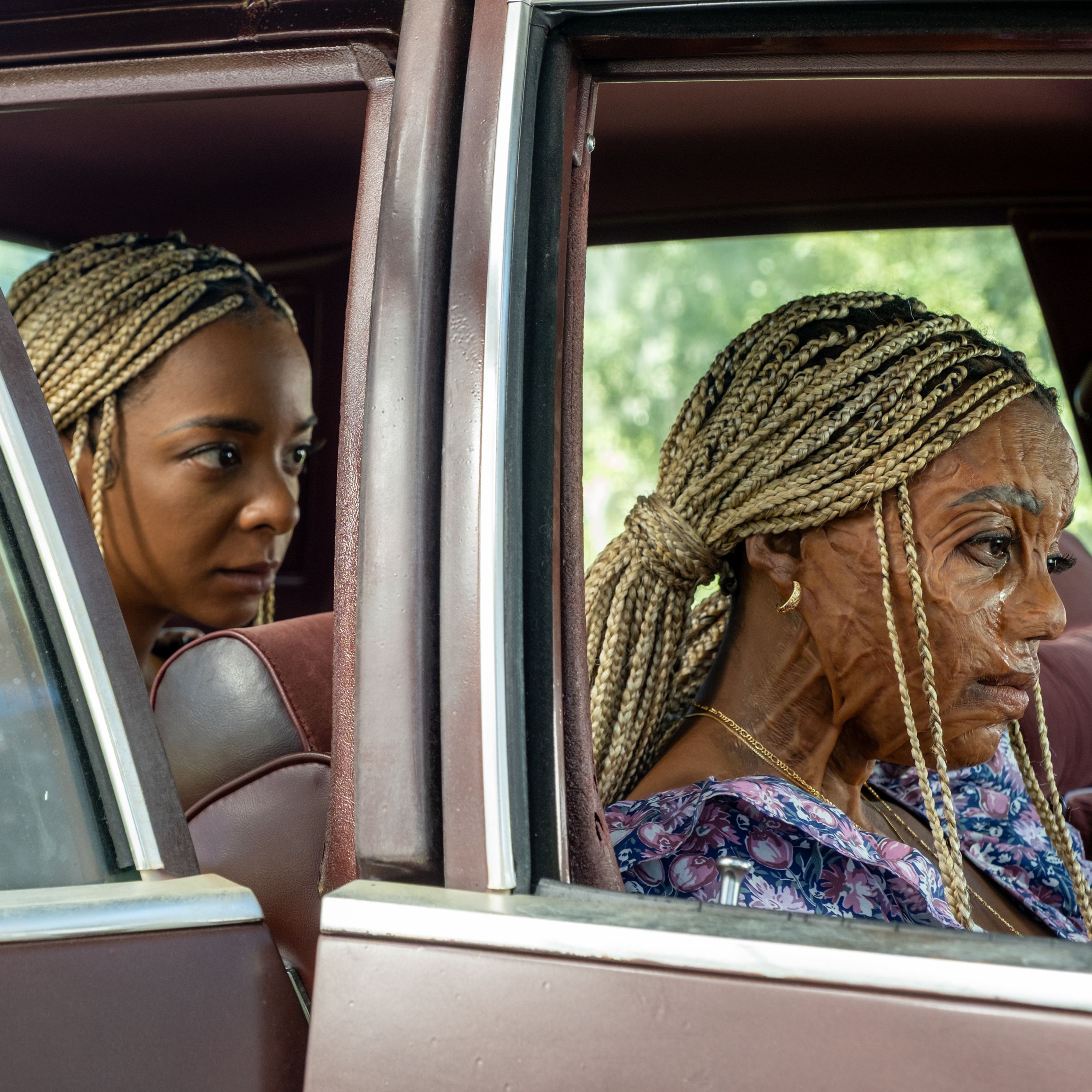
All Of It with Alison Stewart
Actors Kara Young and Mallori Johnson Star as Sisters in a New Revenge Thriller Film
00:25:30
Loading summary
Transcript70 lines
- [00:00]
Odoo Sponsor
WNYC Studios is supported by Odoo. When you buy business software from lots of vendors, the costs add up and it gets complicated and confusing. Odoo solves this. It's a single company that sells a suite of enterprise apps that handles everything from accounting to inventory to sales. Odoo is all connected on a single platform in a simple and affordable way. You can save money without missing out on the features you need. Check out Odoo at o d o o.com that's o d o o.com.
- [00:38]
Alison Stewart
This is all of it. I'm Alison Stewart live from the WNYC Studios in soho. Thank you for spending part of your day with us. I'm really grateful that you're here. Coming up on the show, we'll talk about Mental Health, a mental health organization which is honoring the life of Gavin Creel, a beloved member of the Broadway community who died last year. Playwright Kirkland and actor Joe Tapper join us to talk about production of Thornton Wilder's unfinished play the Emporium and will speak with the Tony nominated actor and playwright from the Broadway show Giant. That's the plan. So let's get this started with two actors of both stage and screen. Two actors you can see on stage now in New York can Carrie Young in Proof and Mallory Johnson in the Receptionist also woke up to terrific news about their new movie. The film Is got is earned 97% on Rotten Tomatoes in its first weekend. A thriller slash gothic tale follows twins on a mission to seek revenge on their father who set the girl's mother on fire in front of them when the girls were little. It left all three of them with life altering scars, both physical and emotional. Racine was spared mostly from the fire. Shania was burned mostly on her face at the request of their estranged dying mom to quote, make your daddy dead. The two road trip across the country looking for their father and wonder what things would have been like if they hadn't ended up cycling through foster care homes and live some semblance of normal lives. As they encounter siblings they didn't know, they had new wives and ultimately their dad, it becomes clear that the path to vengeance is isn't easy and rage is sometimes hard to rein in, as an Indie review states. An Indie Wire review states Young and Johnson are addicting to watch, crafting a sibling dynamic that feels honest, volatile, loving and frighteningly fragile all at once. The film is got is is based on Alicia Harris 2018 Obie Award winning play. It's now playing in theaters to me now is discussed to Discuss is Cara Young, who stars as Racine Care. It's always nice to see you.
- [02:50]
Kara Young
Good to see you, too.
- [02:50]
Alison Stewart
And also, we wanted to say hi to Mallory Johnson and welcome to the show.
- [02:56]
Kara Young
Hi.
- [02:56]
Mallory Johnson
Thank you for having me.
- [02:58]
Alison Stewart
So, Kara, I understand you were a big fan of Alicia Harris play.
- [03:01]
Kara Young
Huge.
- [03:02]
Alison Stewart
Okay.
- [03:02]
Kara Young
Huge.
- [03:03]
Alison Stewart
What did you see in that play that excited you?
- [03:06]
Kara Young
These two young women on a journey in a very small theater, and the way that they went from place to place to place. I mean, I remember. I remember specifically remember the scene with Jessica Francis Dukes, who played Mama, and then also Taego Bougear, who played Man. And I remember the wall coming down in that soho Rep theater. So this is like soho Rep, you know. You know, that small theater. Soho Rep is like, there's always something that sort of changes the space. And I just remember being an audience member and being completely in awe of the story. And when that wall came down and I was like. And, yeah, it was. There was just so many. There was so many, like, oh, snap. Oh, my God, what's going on? Oh, yeah. I just remember it so vividly.
- [03:55]
Alison Stewart
Mallory, what were some of the conversations that you had with Alicia about her visions for these characters in the film?
- [04:02]
Mallory Johnson
Yeah, I mean, there was so many conversations. What's so smart about what Alicia did is she treated this like we were working on an actual play. She brought us in early. We had actual rehearsals. I think we even had a zoom meeting. I forgot to say this. I've been.
- [04:17]
Kara Young
We did.
- [04:18]
Mallory Johnson
I've been forgetting to say this, too, but we. We had a zoom meeting. Like, we, like almost like a couple months prior to shooting, where we talked. We read through. We had a read through. Oh, my God, I totally forgot this. We had a read through with just me, Kara, and Alicia, and we talked about. We talked about our intentions with the work. We talked about our characters. Alicia, I remember, specifically for my character, talked about how Anaya was to be represented and the thoughts about what she felt about her being, quote, unquote, ugly in the film and how that is really a representation of something that a lot of black women have to deal with in terms of desirability and having to be, you know, grow up in a world where we are considered the least desirable, even though we have. We're beautiful and we find this strength in ourselves. And that's actually a part of our growing pains, a lot of. A part of our experience of having growing pains, as in Black Womanhood. And so she talked about that, and we. Yeah, we just. We had so many moments where Alicia would just pour into us her thoughts about the character. She was very, very clear about what she wanted this to be and who she wanted us to be. And, yeah, we were in constant conversation.
- [05:42]
Alison Stewart
How is it helpful having a film director who's got a foot in theater?
- [05:46]
Kara Young
Hmm. You know, so. So Alicia Harris is making her directorial debut as a filmmaker. As a director. And so. But when you think about someone who has created this story from its inception, like, she is the creator of Is God Is, and the journey that it's taken in all of these years and her adapting it into a screenplay, you. I mean, there's no choice but to put all of your trust in the creator. And so, you know, she's a visionary. And so you're getting the true vision of a visionary when this is their everything, you know, and this is their baby. So there was like, a. An overwhelming amount of what it means to just, like, fall and go and fly and understand that you're a part of something bigger than yourself. You know, it's the story itself, I believe, like, this. It's so. We were just talking about it in the waiting room, like, the green room. It's just so Greek. It's so.
- [06:49]
Alison Stewart
It is.
- [06:49]
Kara Young
It's like, you know, these big questions that it's almost like you were talking about, like, why did Medea kill her children? You know, with like, these really huge, huge questions that are sort of always kind of waited in. In the air when people leave. Leave the theater. You know, it's been quite beautiful, the responses that we've been getting. Mallory and I went on Friday night for the 11pm showing at the AMC on 42nd street with, like, Schubert. With, like, Schubert's security.
- [07:21]
Alison Stewart
After everything.
- [07:23]
Mallory Johnson
Yeah, after.
- [07:24]
Kara Young
After the whole day. It was a long day, Alison. And we went after our shows and it was, you know, Schubert family, people from the Music Box, people from the Booth Theater, people from the Hays, and me and Mallory, and it was just like, whoa, this is sitting with people differently. You know, there's some of these lines where you talk about when, you know, the repetition of ugly or when somebody calls. When one of the other black characters calls another black character stupid. And, like, what that activates and like, what are these lines that hold so much history, not only in our America, but within each other, within our community? What is the history of our communities? And how do we heal from the histories that. And the violence that have been even inflicted upon us by the white patriarchy, by the patriarchy, by white supremacy, et cetera, et cetera? How do we heal within Ourselves. I'm sorry, I went on.
- [08:26]
Alison Stewart
No, that was a beautiful tangent. That was beautifully said. We're talking about the film Is God Is, which is showing now. My guests are Carrie Young and Mallory Johnson. So how would you describe your characters? Shania. I got Shania written here, so I pronounce it right. Anaya and Racine, when we first meet them, how would you describe them? Mallory?
- [08:49]
Mallory Johnson
I. You know, that's a good question. Well, I think that what's really, really cool is that Alicia has attached these kind of titles to them. So when you first. When you see them in the trailer, you know, Racine is introduced as the rough one. Anaya is the quiet one. But then when you actually watch the movie, it becomes a lot more complex. I think that when you're introduced to them, the titles say it all. You know, Anaya is someone who is a lot more timid, less voc. You know, because of the way that they're raised. Racine kind of has to be the protector, the defender, the mouthpiece for them. And I would say that Anaya has this kind of codependent relationship with Racine where she needs her. She needs her to be her protector, her defender. But she's also. When you see her, when you're introduced to her, you see that she has this quiet hope for more, for more out of her life. And that seed, I think you see that kind of grow as the film goes on.
- [10:00]
Kara Young
Yeah, I feel like Raistine is the protector, is the person who's navigating their world in the sense. Because, you know, there's a line that kind of. You kind of understand. It breaks my heart when I watch the film and I'm watching Mallory Johnson do her thing. It's like really just. It kind of cracks open their entire history, their entire history, their world of having to create their life for themselves, not knowing who they are before they get that letter from their mom. They have gone through the foster care system. They have. They are resilient women, young women, obviously codependent to each other because they have survived so much together as sisters, as twins. Thank God they ended up together, right? There's that thing. Thank God they ended up together. But because of Nya's scars and my less visible scars, I can communicate with the world. So there's an overwhelming responsibility that I have over us. And it's so interesting because that line that you have that I don't want to reveal, but there's a line that you have, and it's like. Like how much of my communication with Everyone is. My. My eyes are her eyes, too. So it's like, how much am I holding? How much of our hearts are we holding? And how much is. Is a Nile holding of me? And the. There's a word for this, and there's a scientific word for. For this, but it's sort of like the infinity symbol, where it's like that we're so connected.
- [11:35]
Alison Stewart
Symbiotic.
- [11:36]
Kara Young
Symbiotic. That's what I was looking for. This symbiotic relationship that we have. The symbiosis of us is so intertwined that we're holding very probably completely different spectrum of emotions, but perhaps maybe in the same weight of what it means to feel something. But I am holding it differently in the spectrum of where. The way she might be holding it on the opposite end, it's just like. Yeah.
- [12:09]
Alison Stewart
I want to ask you a nuts and bolts kind of question, Mallory. Your makeup that you had to go through.
- [12:14]
Kara Young
Yeah.
- [12:14]
Alison Stewart
How long did that take? What did you think about as it was developing across your face?
- [12:20]
Mallory Johnson
Yeah, it took, like, on the longer side, about four hours, four and a half hours. On the shorter side, about three and a half. And it was really interesting. You know, that was a journey for me as an actor. I had never worked with prosthetics before in my life. They had told me that it was going to affect, you know, the way that I emote, and I. I didn't know what that entailed. I didn't know what they meant by. Until we got halfway into the filming process. And, you know, I would watch footage back, and it's so interesting. With film, you have to understand what your face does so carefully. Like, you know, when you move an eyebrow. If I were to move an eyebrow in life right now, Right. The film, the camera can pick up all these micro expressions, and that's what makes film so cool. It's life in its, like, purest form. But when you have prosthetics on, you know, it can mute a lot of those micro expressions. Micro expressions. It can kind of swallow things that can come a little bit easier and softer when you don't have anything over your face. And so I had to literally relearn my face. It was intense. I mean, it was a huge learning curve. I just remember having a lot of conversations with Alicia about it, too, where she would be like, come in the truck. Let me show you what you're doing. Let me show you what your face is doing. And so I would have to do an actor's literal nightmare, which is like, look in the mirror and see what my face was doing during a scene and then have to see, like, which ways that I could turn so that things could be read. Because there is a. There is a part of her face that is a little bit less scarred than the other. So I would have to adjust the way that I was, like, turning my head and things like that. It was a really interesting process. But it was also beautiful, though, because I had never been able to see a physical transformation happen before me. As an actor, it's all in your imagination, right? Your character is, most of the time, happening internally. You're making these transformations before you step on set in your mind. But when I was in the chair, I was literally seeing my character be crafted on me in real time. And so it was actually really beautiful. It was amazing. I had never been able to transform like that so totally and put on my character's, like, skin. It was. It was amazing. Me and Kara would often. I would often, like, turn to Kara and see her with her eyes closed. And sometimes we would just, like, close our eyes and. I don't know how you felt, but I just sometimes felt like I was, like, turning into a literal different person.
- [15:10]
Kara Young
Same, same. Because it's like there's the physical. The physical trauma that has been that this is most of their lives. This is all that they know as people growing into young adults and then an adult. This is all that we know. So, like, that. What does it mean to live with your physical trauma on you? You know, and not knowing what those scars represent at certain times in the story? You know, because you're shooting a film, you're shooting out a sequence sometimes. So it's like, where are we in our journeys of, like, knowing that this is our existence, yet we don't know where it comes from yet? You know, there's something really kind of powerful about physical trauma in representation, perhaps the symbology around, like, trauma and not knowing where it comes from.
- [16:04]
Alison Stewart
It's interesting because they both. They have sort of a similar background in terms of trauma, but they both respond to it really differently.
- [16:13]
Mallory Johnson
Yeah.
- [16:14]
Alison Stewart
How would you describe the way your character responds to trauma, Mallory?
- [16:18]
Mallory Johnson
Ooh. I mean, I think that she has completely inverted herself inward. I think that she. Her trauma response actually is acceptance, actually. This is something that I talked about with Alicia extensively, too, about how Anaya, I don't think is necessarily angry when we meet her. I don't think that anger is her first go to. It's not her first instinct to lash out at what the world has done to her. I think that sometimes when something so traumatic and devastating happens to us, a lot of survivors can have this impulse to. To just kind of accept their. That that may be their place in the world. Right. And that's just how it is. And that's a. That's a form of. Of protection. Right. If you accept that this is the way that things are and. And don't have to wish for more, then you don't have to be hurt. Because in wishing for more, that causes more harm, that causes more. More damage. Exactly. Thank you so much. Exactly. Even when you're asking, you have a great line like, I love that. That about you. Ever wonder what it's like to scrape off your scars, what we look like? And Anaya's like, it doesn't do me any good to wonder. And I think that just says so much about her and the way that she has internalized her trauma, her disfigurement. She's just kind of like, this is how it is and this is how I am. And I don't wish for more, you know, but I think that she quietly does, actually. It's complex, so.
- [18:10]
Kara Young
It's like, so complex. Yeah, that was. That was good. I love this movie the way I was, like, thinking about, because it's like all of the levels, it's like this. This wild. This wild, beautiful, colorful mission of a justified rage. But the rage has so many colors to it, you know, it's like. It's like every. Every scope of an emotion, you know, just like in what it is, has so many colors to it. It's not just one thing. It's not just one thing any or any time, you know, and so for you to be like that, there's an acceptance of who she is, but then, you know, then, you know, but then the hopefulness of what life is, that's like, so. Wow. It's so profound.
- [19:02]
Mallory Johnson
I also. And not. Sorry to jump out. That just made me think too, like, we're not just one thing. I think that's also like, the incredible message about this film, too, is showing the full spectrum of humanity, of who black women as a whole are, survivors as a whole are. We're not a monolith. We don't exist in a monolith. And I think that Alicia so beautifully interprets that in this piece of the full spectrum of our humanity as a people, as a community.
- [19:35]
Alison Stewart
Literally, how important was it to have Tessa Thompson as a producer?
- [19:38]
Kara Young
So important? I mean, Tessa is one of the advocates of this story, and she's been so influential on Making it happen. And she's been so, so supportive. So supportive, so kind, so kind, so sweet, so generous. I mean, it's like, wow.
- [19:58]
Alison Stewart
Well, now we're talking about rage.
- [20:00]
Mallory Johnson
Okay. By the way, this is a new.
- [20:03]
Alison Stewart
We're talking to Carrie Young and Mallory Johnson about their new film, Is God Is, which is now showing in theaters. Let's listen to a clip from the film.
- [20:11]
Kara Young
Ooh.
- [20:12]
Alison Stewart
This is Racine and Anaya, and they're discussing how they are going to go about killing their father. This is from. Is God Is.
- [20:20]
Kara Young
I know. We'll push him off a building.
- [20:23]
Mallory Johnson
What if he grabbed one of us on the way down?
- [20:26]
Kara Young
What if we knock him out, then push him off the building?
- [20:29]
Mallory Johnson
How hard you have to hit someone to knock him out?
- [20:33]
Kara Young
I don't like it. You don't like none of it.
- [20:36]
Mallory Johnson
See, we ain't killers.
- [20:38]
Kara Young
We come from a man who tried to kill our mama and a mama who wants to kill that man. Send the blood.
- [20:46]
Alison Stewart
Racine, what did you discover was underneath her anger? What is underneath her anger in this film?
- [20:53]
Kara Young
What is underneath Racine's anger? So, I mean, when we really, like so like our lives, we meet these young women, and, you know, this is all in the trailer. So, you know. But we meet these young women, and, you know, they get a letter from their mom. And so this whole. Their whole lives, they have been. They have made a world for themselves, you know, a world that looks. They're living in their joy. They're doing their thing. They know how to survive. They know how to fight for what they need because they have what they have, and they are okay together. And they get a letter, and their mom says that she's dying, and so we have to go visit our mother. And so there's. To me, there's, like, this wild thing that happens. It's like, what happens when you don't know who you are? What happens when you don't know where you come from? Like, that question period, right? And then mom says, this is where your scars come from. And then all of a sudden, now I know. And now it's about the justification for God, our God, our creator, our mama. And that's how I refer to a God, our mama, as God. And I think that where it comes from is like, I didn't know. Now I know. And now I have to. How dare you? What's the word? Blank. God. How dare you defy God. How dare you try to harm God? How dare you try to harm the woman who carried your children for nine months and you know, I look at the history of Ruby, AKA God, in that, and, like, meeting her for the first time and what that experience must have been like. What is it? What happens when you meet your mother for the first time? The people who. Your family for the first time? I mean, there's just like, where does it come from? It's like, I wonder what the opposite of that is of, like, the love. The love that I have for her that I didn't even know existed when I first meet her, to seeing what the story and the history is of us and the fact that we could have been. We could have been saved. We could this. We didn't have to go through this. Where is that violence coming from? Why did he do that? Why did he choose to do that? And I think it's all of that. Of what. What. What sits underneath it. It's so fresh. It's such a fresh thing.
- [23:48]
Alison Stewart
Yeah. Mallory, what do you hope people talk about when they leave the theater?
- [23:53]
Mallory Johnson
Oh, God, I hope that. I hope that the conversations actually are diverse. You know, I want people to talk about. Because it's so complex. Actually, my brother just called me last night. He saw it, and he was like, I got so many thoughts now. Like, I got so many thoughts, like,
- [24:15]
Kara Young
where do I even start? It's a Greek tragedy. It's biblical. Like,
- [24:22]
Mallory Johnson
it's biblical allegory. Right. And so there's so many things that can be broken down about this. I mean, and I want, actually people to talk about all of it. I'm so excited for people to talk about all of it. Cause I think it deserves it. And Alicia's work is so not one dimensional. It's like the type of art that deserves to be broken down for years and years and years.
- [24:45]
Kara Young
Oh, yeah.
- [24:46]
Mallory Johnson
But, man, what do I hope? I. I think. I hope that, you know, because this really is such a love letter to black women. This is such a. This is so for us. And I really hope that black women feel that and talk about how they could identify with these two girls who really just wanted redemption for themselves. They just wanted justification for why things were the way that they were in the world that they grew up in. And I think that we often are so burdened with that question in our lives as black women. We're so burdened by the question of why, why, why does the world have to exist in the way that it exists, where it doesn't protect us and we have to be the protectors of each other. And so I hope that that's at the. I hope that that can be at the forefront of a lot of these discussions.
- [25:49]
Kara Young
Agreed.
- [25:50]
Alison Stewart
The name of the film is Is God Is it is showing in theaters now. You should go.
- [25:54]
Kara Young
Yes.
- [25:55]
Alison Stewart
It stars Kara Young and Mallory Johnson. Thanks for being here.
- [25:57]
Mallory Johnson
Thank you, Alison. Thank you so much for having us. All new drinks are now at McDonald's
- [26:04]
Kara Young
like the Strawberry Watermelon Refresher and the
- [26:06]
Mallory Johnson
Sprite Berry Blast topped with cold foam. Who knew ice cold drinks could be so fire? Try them all now at McDonald's.
- [26:15]
Kara Young
Refreshers contain caffeine.
- [26:17]
Marshall's Advertiser
Oh my gosh. Have you been to Marshall's lately? They have all the brand name and designer pieces you love, but without the jaw dropping price tags. Alright, so here's the should never have to compromise between quality and price. And at Marshall's you don't have to. Marshalls believes everyone deserves access to the good stuff and that's why their buyers hustle around the clock. To make it happen for you, visit a Marshall store near you or shop online at marshalls. Com.