Loading summary
Transcript111 lines
- [00:09]
Host
This is all of it.
- [00:10]
Alison Stewart
I'm Alison Stewart. Thank you for spending part of your day with us. I'm grateful you're listening. All summer we've been celebrating the nation's 250th birthday by sharing some of our
- [00:20]
Narrator/Producer
Deep dive full bio conversations about some
- [00:23]
Alison Stewart
great figures of American history.
- [00:25]
Narrator/Producer
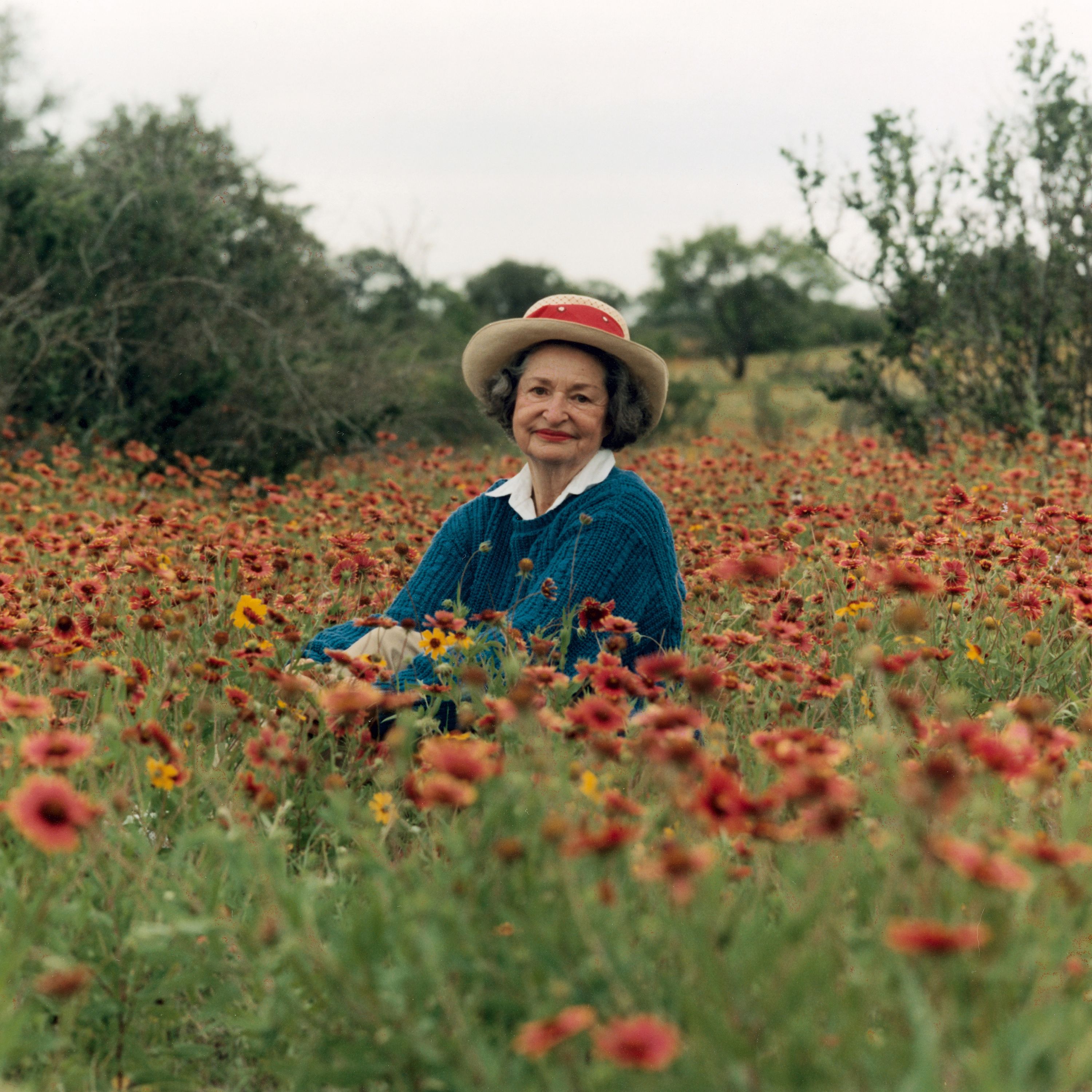
This hour we'll be talking about the first lady and environmentalist Lady Bird Johnson with author Julia Sweig, who wrote the book Lady Bird Hiding in Plain Sight. So you may be thinking 500 pages devoted to LBJ's wife, the nice lady from Texas who wanted to plant flowers. This book disrupts that well worn history around Lady Bird to reveal that Claudia Alta Taylor Johnson was not only a first lady to Lyndon Johnson, but also a wise advisor, a seasoned pro, one who knew politics and optics. And while Lady Bird maintained a cool, coiffed exterior, she had fiery opinions and thoughts, lots of them. Author Julia Swig heard those opinions via the more than 850 of Lady Bird's audio diary entries, about 120 hours of recordings, some recently released and never heard before. Because of this rich trove, the book inspired a podcast of the same name hosted by the author.
- [01:30]
Alison Stewart
Let's listen to a bit of the trailer of the podcast, Hiding in Plain Sight that sets up the series and our discussion.
- [01:37]
Narrator/Voice Actor
Of course, the 1960s have been pored over and dissected, but what I found in these diaries is surprising.
- [01:45]
Julia Sweig
It's new.
- [01:45]
LBJ Advisor
Give me Ms. Johnson right quick.
- [01:47]
Lady Bird Johnson (Audio Diary)
Yes, Mr. President. I wrote out for Lyndon about a nine page analysis.
- [01:51]
Narrator/Voice Actor
This is a story about the power of a political partnership, one that somehow doesn't show up in the many, many accounts of LBJ's presidency.
- [02:00]
Lady Bird Johnson (Voice Actor)
During the statement, there was too much looking down and I think it was a little too fast. I'd say it was a good B plus. How do you feel about it?
- [02:08]
LBJ Advisor
I thought it was much better than last week.
- [02:10]
Julia Sweig
A partnership she recorded as she and
- [02:13]
Narrator/Voice Actor
Lyndon tried to navigate the turmoil of the 1960s from political upheaval.
- [02:19]
Lady Bird Johnson (Audio Diary)
Most of them carried signs that said
- [02:21]
Lady Bird Johnson (Voice Actor)
Lady Bird beautify Vietnam shot to race riots.
- [02:25]
LBJ Advisor
Chicago's west side is a patchwork of violence, rock throwing of news of Dr.
- [02:29]
Narrator/Voice Actor
King's assassination to her complicated relationships with other key people from the time.
- [02:34]
Jackie Kennedy (Voice Actor)
Bertha Kitt, whose outburst yesterday at a White House.
- [02:36]
Julia Sweig
What I said to Mrs. Johnson upset her. I don't know why it should upset her.
- [02:39]
Lady Bird Johnson (Audio Diary)
I was telling her the truth. I found myself in front of Mrs. Jacqueline and Kennedy. I felt extreme hostility. Was it because I was alive?
- [02:47]
LBJ Advisor
I just don't believe that I have the physical and mental strength to carry the responsibility.
- [02:53]
Lady Bird Johnson (Audio Diary)
There was much talk of the big question. He wants to get out. There is no way out.
- [03:00]
Narrator/Voice Actor
As for that thing, she's best remembered for that program they called Beautification.
- [03:06]
Lady Bird Johnson (Audio Diary)
I think you also know what lies beneath that rather inadequate word.
- [03:11]
Narrator/Voice Actor
It goes a whole lot deeper than we ever knew.
- [03:15]
Host
So we begin at the beginnings, the origin story of Lady Bird Johnson and of the biography Hiding in Plain Sight. Before we start talking about Lady Bird, Julia, I want to talk about you and how you got interested in writing a book about Lady Bird and creating a podcast about her.
- [03:37]
Julia Sweig
Well, I wanted to write a book about women and power, very broadly speaking. I had spent 15 years or more in the foreign policy space in a world that was where the gender imbalance was just incredibly profound. Often the only woman in the room and experienced that in Washington, D.C. so when I went about looking for a topic, I didn't have Lady Bird in mind. I had that broad theme and then discovered that when she was in the White House, she kept this vast audio diary. Some of it had been published. And then when I started the research, the LBJ library started to release the full unredacted transcripts and original recordings of that diary. So starting to listen to it and then read all of the secondary literature on the LBJ presidency, I realized, you know, this is a woman who's married to, and in this long time political and financial partnership and marriage with the president most associated with the concept of power in the American 20th century. There's my topic, especially because her material, to my mind, adds so much to how we think about the LBJ presidency. And then back to that topic of woman in power. Plus, her voice, as you'll hear, is very, very entrancing to listen to. So having that original audio really drew me in. And the second thing and that leads to the podcast is because there's so much audio and because I personally wanted to explore working in a different medium, not just writing long form and short form, but doing audio storytelling. I have a longtime friend and creative collaborator, Adam Pincus, and we started putting together the idea of converting this story into. Into pretty much, well, we call it a podcast, but it's an audio documentary. And she really. And again, the 1960s and the LBJ presidency. There's so much material there for listeners to hear the story, and it adds so much, I think, to the printed words on page experience of that moment.
- [05:55]
Host
Lady Bird Johnson was born Claudia Elsa Taylor in Carnac, Texas, and was given this nickname Lady Bird or Bird as a child. How did she come to have this nickname and why did it stick?
- [06:07]
Julia Sweig
Well, Lady Bird was the full nickname. Lyndon Johnson later called her Bird. But Lady Bird was given to her by one of her early caregivers when she was very, very young. Toddler. She was raised by her mother, but her mother died when she was five, when Lady Bird was five years old. The caregiver was a descendant of enslaved people in Deep East Texas. And that's who raised Lady Bird Johnson. Why the name stuck, that I have no idea. You know, that kind of diminutive, feminized way of talking about a little girl and then even a teenager and a full grown woman, that stuck with her. And I think it's a product of the times. Her given name was Claudia, which is a name of a lot more gravitas. And she talked about the difference much, much later in her life.
- [07:03]
Host
And what was that difference?
- [07:05]
Julia Sweig
Well, there's a moment where we hear in 1968, now I'm jumping way ahead, where she makes a very serious speech to the American Institute of Architects, July of 1968.
- [07:20]
Lady Bird Johnson (Voice Actor)
Right.
- [07:20]
Julia Sweig
We've had tumult and polarization and uprisings in American cities a lot over housing and police brutality and the lack of access to nature in American cities is part of it. And she puts the blame squarely on the architecture profession for buying into the chase after federal dollars to raise these huge tower and plaza spaces, raise raisd after urban renewal has raised raced neighborhoods all over the country. In any case, she gives a serious speech which is an indictment and is given after the applause, an Azalea called Mrs. LBJ. And she muses into her recording device later at the White House. You know, it was one of those moments when I wish I had been Claudia all my life. And in a way, I think Claudia is the. What she's saying there is that diminutive of Lady Bird deprived her of being seen as such a woman of substance that she really was.
- [08:28]
Host
My guest is Julia Swigg. We're talking about her book, Lady Bird Johnson, Hiding in Plain Sight. She clearly had a keen intellect. She went to the University of Texas in around 1930. What were her original career aspirations?
- [08:44]
Julia Sweig
You know, she thought of herself when she was in Texas. She first did a degree in history and then an initial additional certification in journalism. She initially thought of herself as becoming a teacher, staying around Texas near her father, or maybe not farther afield than Austin. But she also mused about traveling as far away as Hawaii or Alaska to teach. And that's before either of those places were still. So she had this, I think, duality of being pulled to a more ambitious, faraway part of the world, although in a pretty, you know, gendered profession of teaching at the time, or even just staying and getting married and redecorating the house and being a more of a traditional Southern privileged woman.
- [09:43]
Host
So Lady Bird Taylor meets Lyndon Baines Johnson in 1934. Where were they both in their lives? How did they meet?
- [09:53]
Julia Sweig
Well, Lady Bird had just finished college and she was figuring out whether she was going to go and try to teach somewhere else. She had planned a trip to Washington D.C. and a friend of hers said, you know, if you're going to go to Washington D.C. you should really. Lady Bird had dated a lot, I should say, so she wasn't new to the dating scene. But a friend, a mutual friend said, you're going to Washington, you should meet this aide to a member of Congress, Lyndon Baines Johnson. And Lady Bird and her friend came to Washington D.C. she didn't meet him here. She decided not to. By here I mean I'm speaking from Washington D.C. but shortly thereafter they did go on their first date in Austin, Texas. And at the end of that day, and he at the time was, you know, an ambitious young man thinking about whether to go to law school. The job of being a congressional staffer, as with today, is a traditional entry point into politics for some people who want to become run for office themselves. And he was one of those people. He asked her to marry him at the end of their first date and she was totally taken aback by it. That ensued. Then a six week correspondence, very heady phone, you know, long distance phone calls, scratchy wire, letters back and forth. And he then drove from Washington D.C. now we're in November of 1934 to Carnac, Texas, to her father's home, her home, which was called the Brick House, and essentially gave her an ultimatum like, agree to marry me now or this is over. And she did.
- [11:45]
Host
So LBJ is this power player, Senate Majority Leader when JFK asks him to be on the ticket. Now, Lady Bird was very much a Texan and I'm sort of curious, you know, we'll hear a little bit about how Lyndon felt about it all. But what was her view of entering this national stage and joining the Kennedy ticket?
- [12:07]
Julia Sweig
Well, you know, Lyndon had been ambivalent about whether he himself was going to run in the 1960 Democratic primary. He winds up doing so, but sort of half heartedly so by the time they get to the 1960 convention in Los Angeles, of the Democratic Party. He's run sort of a lame campaign. Kennedy has a national operation. LBJ loses in the first ballot, and Kennedy soon comes out on top. And so when the Kennedys, JFK goes to LBJ and Lady Bird to ask if he'll join the vice presidential ticket. To Lady Bird, initially, her recommendation is that LBJ not do it. She doesn't want it. She thinks that this will deprive him of his standing and status and power. And she's right about that. That his domain in the Senate and dominance there is total. And so she worries that by conceding to the second slot on the presidential ticket, this will be very bad for LBJ. But over the course of this kind of famous 24 hour period in Los Angeles, they both come around to realizing, and she describes it as like swallowing a nettle, thick and sticky, and it hurt, that they had no choice. They had to take that bitter pill. And because to say no would be also, with a Democrat in the White House, extremely neutering in a way to lbj, because the White House would be running the legislative agenda, sort of bypassing LBJ if he were still in the Senate. So it was better for the sake of the party and for his own standing to accept the number two slot.
- [14:04]
Host
Let's play a clip of that scene from the podcast Hiding in Plain Sight.
- [14:08]
Narrator/Voice Actor
Kennedy talked with the delegates about his fast ascent, and he was nothing but gracious toward Lyndon Johnson.
- [14:14]
Jackie Kennedy (Voice Actor)
I have found it extremely beneficial serving in the Senate, Senator Johnson as leader. I think if I emerge successfully in this convention, it will be the result of watching Senator Johnson proceed around the Senate for the last eight years.
- [14:29]
Narrator/Voice Actor
The Kennedys knew LBJ could help them with Texas. So Jack went to see the Johnsons at their hotel to see if LBJ would swallow his pride, give up his prime place in the Senate, and help JFK take the White House in exchange for the worst job in American government, Vice president. For both the Johnsons, it was a crushing moment.
- [14:51]
Lady Bird Johnson (Voice Actor)
It was sort of like trying to swallow a nettle. Hurt. Sticky, spiny. He didn't want the job, but he felt an enormous sense of obligation to the Democratic Party.
- [15:05]
Host
How did Lady Bird Johnson view. View the Kennedys and specifically Jackie Kennedy? Because there was a line that stuck out to me where she described the other Senate wives, including herself, as sort of dull, I think wrens or dull, dull birds.
- [15:22]
Julia Sweig
Gray wrens. Gray wrens.
- [15:24]
Host
As compared to Jackie, this beautiful bird. How did she view the Kennedys and
- [15:30]
Julia Sweig
Jackie, the bird of beautiful plumage? And we were just a Bunch of gray wrens. Jackie comes to Washington when they get married in 1953. She had actually lived here when she was growing up, but in Washington, D.C. when she was growing up, but, you know, initially again in the 1950s. Lady Bird is almost 20 years older than Jackie and she sees it as her responsibility to bring this younger Senate spouse into the fold. She's aware of that. Jackie comes from a totally different culture of debutante and France and science po and a world that isn't anything like Lady Bird's. But in the Washington context, Lady Bird just feels kind of that it's her responsibility to raise Jackie into this and introduce her into the world of politics toward Jack Kennedy, you know, again before 1960. She sees him as a young up and coming rising star. She understands that about him. It isn't really until the two families and the two political operations start to come together that the relationships get a little bit muddier when the script flips and the Kennedys are on top of. But even once that happens, Lady Bird's view towards Jackie is maternal, almost Right. Jackie is battling with miscarriages. She is not game to go on the campaign trail. Lady Bird's been doing that now for a couple of decades and she's happy to go do it as Jackie's surrogate. And she behaves that way. She travels all over the country with Rose Kennedy, with the sisters. She, she brings them into Texas to try to diffuse the anti Catholic bias. She really puts her political capital at the service of Jackie Kennedy and Jack Kennedy.
- [17:37]
Alison Stewart
The book is called Lady Bird Hiding in Plain Sight. We'll hear more about Lady Bird Johnson's life and career with author Julia Sweig after a quick break. This is ALL OF it. Welcome back to ALL OF it. I'm Alison Stewart and we continue the series American History Fridays in honor of our country's 250th anniversary of independence. Every Friday we'll be sharing highlights from our full bio, conversations about some of the great leaders who have helped shape the nation. This hour we're talking about a first lady who devoted herself to conservation and environmentalism and who became one of the most influential members during his tenure in the White House. That first lady is Lady Bird Johnson. So let's pick up the conversation where we left off with author Julia Sweig, whose book is called Lady Bird Hiding in Plain Sight.
- [18:43]
Host
So I get access to more than 850 of Lady Bird's audio diary entries, about 120 hours of recordings, some recently released, some never heard before. The tapes reveal A woman often in control, keeping track of everything, every detail of every day, including the day that President John F. Kennedy went to Dallas and did not come home alive. The book has a companion podcast, and here's a clip from it of Lady Bird describing what happened on November 22, 1963. This is from Hiding in Plain Sight, the podcast hosted by author Julius Wig.
- [19:20]
Lady Bird Johnson (Audio Diary)
Friday, November 22nd. It all began so beautifully. After a drizzle in the morning, the sun came out bright and beautiful. We were going into Dallas.
- [19:34]
Narrator/Voice Actor
Inside a dimly lit exhibit space at the LBJ Library in Austin, Texas, a motion sensor triggers a recording. A soft, deliberate voice fills the room.
- [19:44]
Lady Bird Johnson (Audio Diary)
Room in the lead car, President Mrs. Kennedy. And then a Secret Service car full of men. And then our car.
- [19:53]
Narrator/Voice Actor
Lt's the voice of Lady Bird Johnson, the wife of Lyndon Johnson.
- [20:00]
Lady Bird Johnson (Audio Diary)
Mrs. Kennedy's dress was stained blood. That immaculate woman.
- [20:07]
Narrator/Voice Actor
I was so struck by that voice and the detail she made managed to
- [20:10]
Lady Bird Johnson (Audio Diary)
capture, exquisitely dressed and caked in blood. I asked her if I couldn't get somebody to come in to help her change. She says, oh, no, that's all right. Perhaps later. And then with an element of fierceness, she said, I want them to see what they have done to Jack.
- [20:34]
Host
Those are from the audio diaries of Lady Bird Johnson. Within hours, Lyndon Baines Johnson became the 36th president of the United States and Lady Bird became First Lady, a role she quietly transformed. And while LBJ wanted to serve and heal his country, he wasn't sure about running for president in 1964.
- [20:51]
Alison Stewart
And when he couldn't make up his
- [20:53]
Host
mind, he turned to his wife, who kind of had it all planned out, as we learn in this installment of Lady Bird Johnson, Hiding in Plain sight with Julius Sweig. We heard in the intro, Julia, Lady Bird Johnson's recollections of the day that John F. Kennedy was assassinated and the aftermath of the assassination. As you listen to the recordings, what was noticeable about her skin of observation?
- [21:32]
Julia Sweig
Yeah, her power of recall, the details she is able to muster when she herself has been through this incredible trauma and tragedy. And yet she can bring detail and emotion and pacing and straight tory to the arc of the narration of that day, both in terms of the exact moment leading up to the assassination, when she hears the shot, the images of Jackie's body draped over Jack and Pink, the experience on Air Force One. And I'll tell you, Alison, I didn't discover this until after the book had gone to. She always had as part of this political operation. They were in these little spiral notebooks with her and she took shorthand notes about everything. Well, she had one of those when they went to Dallas. So on Air Force One, on that flight back, she's taking notes about what she's just experienced. If you can get your head around the capacity for control that that would require. So when she records that first entry, she's even got her journalist's notes that give it that verisimilitude that we hear
- [22:54]
Host
in the book. We learn, and I think people have known this, but we really get a sense of how truly ambivalent LBJ was about being president and about running for the presidency in 1964, which leads to something called the Huntland Strategy Memo. This is actually how you start the book. Lady Bird Johnson hiding in plain sight. What was the origin of the Huntland Strategy Memo? And I'll first tell people what it was and then we can talk about what it means.
- [23:25]
Julia Sweig
Okay. Well, first, the Huntland Strategy Memo is a term that I gave to a document that I found and I'll explain why. It's a handwritten nine page analysis that Lady Bird Johnson wrote to LBJ in May of 1964. And it's in a folder at the LBJ library called Campaign Lady Bird Johnson to Lyndon Johnson. What it is is a memo really that lays out the pros and cons of Lyndon either running in November of 1964 or, or announcing to the country that he's going to step down and not run for his own term in his own right at all. Because. So I renamed it just unilaterally. But I think the naming of a document elevating it from the word letter to Strategy Memo is an attempt to give it the significance to his presidency and to her and their partnership that is really due. He, in May of 1964 is watching the potential already for Vietnam to derail his and their domestic policy ambitions. Right. He's starting to push the War on Poverty legislation, civil rights legislation is already stuck in Congress. The Kennedy War Council that he inherited, that he kept on board is pushing him to escalate in Vietnam to. He can't see a way to withdraw. And he knows that escalating has huge consequences for the country, for the boys he's going to send to war and for his presidency. So he, you know, he's a guy that's anxious and that ruminates and turns over every stone when he's thinking through things. So he says to her, look, could you lay out for me this analysis? What are the pros, what are the cons, and what do you think I should do. And that's exactly what she does. And she concludes, she says, look, you know, you can step down and here's a draft statement that I'm going to write for you, which she writes of what it would feel like to tell the country that you're getting out of politics. Now. She's like, you can do that, but you're too young to retire. And if you go back to the ranch now and step out of the arena, you'll be miserable. And, oh, by the way, so will I. And then she says, what you should do is you should run in November and you'll probably win. And then in February or March of 1968, and this is where I think this is so important to her role in shaping the arc of his presidency. In February or March of 1968, you can announce that you won't be running for a second term. And of course, March 31, 1968, is the day that he says to the world, surprising everybody but Lady Bird and a few others, that he won't be running for a second term. So the Hutland Strategy Memo sets the arc of the presidency in terms of chronology and foresees the issues that the Johnson presidency is going to wrestle with. Just four months after they take, they come into the White House.
- [26:54]
Host
I want to ask you about this interesting moment in the book because it really plays out beautifully. In the podcast of the same name, we learned that one of their most trusted members of their inner circle, Walter Jenkins, is picked up what appears to him having been looking for gay sex or gay company. He's a married man with, I think, six children. LBJ's team, the lawyers, Abe and all, they just want to distance themselves. But, but Lady Bird has a very different idea and she's very clear about it. Tell us a little bit about what she wants, and then we can actually hear them debated out in a clip from the podcast.
- [27:33]
Julia Sweig
Okay. I think of this as the October surprise of the 1964 election when Lady Bird is campaigning in the South. Lyndon's also outside of Washington campaigning. It's October of 64, and they. And she comes back to the White House and as you say, Walter Jenkins, an aide of 30 years, very, very close personal friend, political operator, intimate with the Johnsons, has been arrested in this gay sex encounter at a YMCA near the White House. And Liz Carpenter, who I mentioned, who's there, her main press aide and chief of staff and political advisor, brings us to Lady Bird. And Lady Bird calls LBJ and says, look, my strategy and our strategy around this ought to be that we make a very quick public statement supporting Walter Jenkins. We say that we're going and that we organize a job for him back in our media company in Texas and that we essentially embrace his humanity rather than vilify him. In the meantime, Lyndon, as you mentioned, Abe Fortas, longtime lawyer by then, I think is not quite yet, but he's going to be associate justice on the Supreme Court. And Clark Clifford, one of these traditional wise men of Washington, D.C. have told LBJ that what he should do is basically throw Walter Dinkins under the bus and distance himself as quickly as possible, not offer him a job, let him stay checked into the hospital, get the press to kill the story and bury this as quickly as possible. Because Goldwater, Barry Goldwater of Arizona, the GOP candidate, is going to destroy the Johnsons and Lyndon Johnson and potentially risk the election over this. Lady Bird calls him and says, I'm going to be making a statement that's going to embrace Walter. I think we should offer him a job.
- [29:38]
Host
Let's play a clip of that scene from the podcast Hiding in Plain Sight.
- [29:42]
Lady Bird Johnson (Voice Actor)
I would like to do two things about Walter. I would like to offer him the number two job at ktbc. Do you hear me?
- [29:54]
Narrator/Voice Actor
KTBC is the Johnson's television station in Austin. LBJ not on board.
- [30:00]
LBJ Advisor
I wouldn't do anything along that line now.
- [30:03]
Narrator/Voice Actor
But Lady Bird knows they're not going to be able to hide from this thing.
- [30:07]
Lady Bird Johnson (Voice Actor)
I don't think that's right. When questioned, and I will be questioned, I'm going to say that this is incredible for a man that I've known all these years, a devout Catholic, the father of six children, a happily married husband. It can only be a small nervous breakdown.
- [30:29]
Narrator/Voice Actor
LBJ would rather stick to his lawyer, Abe Fortas plan.
- [30:33]
LBJ Advisor
I wouldn't say anything because it's not something for you to get involved in. Now, whatever you do, don't do anything raised. Talk to Clark and Abe.
- [30:41]
Narrator/Voice Actor
Lady Bird has actually gotten ahead of that.
- [30:43]
Lady Bird Johnson (Voice Actor)
All right. Abe approves of the job offer. Abe approves of the statement.
- [30:49]
LBJ Advisor
What?
- [30:49]
Narrator/Voice Actor
She's already called both of them.
- [30:52]
Lady Bird Johnson (Voice Actor)
Abe approve of the job offer offer. Abe approves of such a statement when questioned.
- [31:00]
LBJ Advisor
Well, talk to Clark.
- [31:01]
Lady Bird Johnson (Voice Actor)
I must say that Clark does not approve of the latter.
- [31:05]
Narrator/Voice Actor
Neither does the president.
- [31:06]
LBJ Advisor
I don't see any reason to know publicly because then you confirm it. You approve that you're part of it, everything else. You just can't do that to the presidency, honey. Don't think you realize the first lady can't be doing it.
- [31:20]
Julia Sweig
By the end of this 14 minute discussion, she has moved Lyndon Johnson to embrace the strategy that she's undertaken already. And I think it's a stunning indication of how much of a back and forth between the two of them there is, how much influence and power she has over him and of her humanity and grace. She says to him in so many words, you know, if we don't do this, we're gonna lose the morale and the support of our own staff, staff whose family members were closeted or who themselves may have been closeted. And she never says that explicitly, but that I think is one of the things that she's saying. And he comes around.
- [32:02]
Alison Stewart
I'm speaking with Julia Sweig, author of the book Lady Bird Hiding in Plain Sight. We'll hear more about Lady Bird's life and career after a quick break. This is all of it. This is all of it on wnyc. I'm Alison Stewart. We're talking about Lady Bird Johnson, the first lady who skillfully navigated the politics and polarization of her husband's presidency and who is known for having devoted herself to conservation and environmentalism. So let's pick up the conversation where we left off with Julia Swig, whose book is called Lady Bird Hiding in Plain Sight.
- [32:53]
Host
So far we've learned that Lady Bird was raised by extended family because her mother died when she was a child. Just at five, Lady Bird majored in college in history and journalism, married LBJ about 10 weeks after meeting him, poured her family money into his political career, and upon becoming first lady under tragic circumstances, seized upon the chance to change the office. Which brings us to today and her central issue, environmentalism. Only back then it was branded as beautification, much to her chagrin later in life, most people associate Lady Bird with planting wildflowers, especially the bluebonnets, along the highways in her home state of Texas. She had a bigger agenda than wildflowers and sought allies in local and federal government as well as the private sector with varying degrees of success. Run one reason the tumult of her husband's foreign and domestic policies in the 1960s. Investing in parks, protecting the ocean and promoting nature appreciation was a hard sell when young men were dying in an unpopular war and black Americans were fighting for basic rights. We begin today's full bio with a discussion of what Lady Bird Johnson had hoped to accomplish as first lady and what she was able to actually do. One of the misconceptions about Lady Bird is that she just planted a lot of flowers. You know, the bluebells bluebonnets, all of that. But she really steeped herself in, in urban policy and planning. What was interesting about it to her, and what did she want to accomplish by thinking about beautification in urban spaces?
- [34:42]
Julia Sweig
Well, going back to her childhood, she talks a lot about having spent, especially when she lost her mother, a lot of time in nature and how much solace she got from nature. So by the time she's a grown woman and she's in Washington D.C. she is somebody who is, who does a lot of hiking in the ranch, who is very connected to the natural environment. And she's also a person who swims a lot and feels good swimming and feels good in the open air, feels her full humanity when she's in touch with the natural environment. The interest in American cities, I think, is largely unknown.
- [35:27]
Lady Bird Johnson (Voice Actor)
Right.
- [35:28]
Julia Sweig
We think about the highway beautification plan, planting flowers along American and Texas highways. We think about all of these blossoms that are in bloom right now in Washington D.C. that of course, were part of her legacy. But American cities had since the 1940s and throughout 50s and early 60s gone through this tremendous upheaval with urban renewal, with all the end with the construction of new highways. And many, many communities of color were dispersed and destroyed and displaced as a result. And the firmament of debate at the time about the American cities was precisely how to recover from the wreckage of urban renewal. First efforts, let's call it Urban Renewal 1.0. What she wanted to accomplish and the place where she focused most on this was actually Washington, D.C. was to bring together the idea connected to the Great Society of LBJ's overall approach to domestic affairs to connect civil rights and what we call today environmental justice, access to nature. And Washington, D.C. had, was at the time the country's largest black majority city. It was also a place that had zero representation in Congress, didn't even have a city council or its own mayor at the time. And the Johnsons, Lyndon Johnson and Lady Bird, were big supporters of home rule, which was the precursor to D.C. statehood, which is something that's very much on the mind right now. So in Washington D.C. the way the city is organized, you have a part of the city that's very, very white and pretty developed, with plenty of green space. That's northwest Washington, but in the other three quadrants, northeast, north, southwest, southeast, all, especially along the Anacostia river, there's all this undeveloped but still segregated green space where the majority of Washington's most underserved black communities were living. And so she tried to bring together the idea of developing that green space and desegregating it so that the actual people living there could have the kind of access to nature and recreation that she valued so much to make herself whole and to make everyone closer to their, you know, achieve their human capacity.
- [38:04]
Host
She writes. You write later on in the book that, you know, she was very aware that all of these things that she was talking about, green infrastructure, urban planning, had been framed as beautification. And that that wasn't.
- [38:22]
Julia Sweig
That
- [38:25]
Host
almost belittled it. It almost made it the things the ladies do. And she write in the book, she later said, I'll never forgive Linden's boys for turning my environmental agenda into a beautification project. But I went ahead and talked about wildflowers so as not to scare anybody, because I knew if the people came to love wildflowers, they'd eventually care about the land that grew them. Why was it framed as beautification? What was behind that?
- [38:57]
Julia Sweig
Well, the politics of the environmental movement were such that, I mean, it was early days for the environmental movement. And I think beautification was again, kind of like her name, Lady Bird.
- [39:09]
Lady Bird Johnson (Audio Diary)
Right.
- [39:10]
Julia Sweig
It was a euphemism that cloaked the substance and influence that she really had or had the potential to have. And it was a way of kind of doing the politics of the issue with the country.
- [39:23]
Lady Bird Johnson (Voice Actor)
Right.
- [39:23]
Julia Sweig
This is at the same time that we have the Keep America Beautiful campaign. It's the same time where Americans are throwing their trash out of their windows as they're driving or just littering. And the concepts of taking care of one's environment was not popular. It was a public consciousness raising effort that she had to go through. So calling it beautification was in a way of sort of camel's nose, under the tent approach initially. But then of course, this ornamental implication and substance to it starts to stick and she starts to be criticized for it. So she needs to find a way to move to that more effect fundamental approach that really gets to the guts of how. Of our relationship to the built environment and our access to green space.
- [40:23]
Host
This full bio edition is about Lady Bird Johnson. The name of the book is Lady Bird Johnson Hiding in Plain Sight. I'm speaking with its author, Julia Zweig. So, you know, all of this work that she's trying to do about the environment and about urban planning and infrastructure and beautification is against the backdrop of the Vietnam War, escalating. What did she see as her role as first lady when having to address Vietnam?
- [40:52]
Julia Sweig
Well, you know, her evolution on Vietnam is a really interesting one. And I don't think she thought of your question, Alison. What does she see as her role as First Lady? I think her first issue was to try to figure out as LBJ's partner.
- [41:16]
Lady Bird Johnson (Audio Diary)
Right.
- [41:16]
Julia Sweig
First lady is kind of the public, outward facing role that you're talking about, but the inward facing role was what is LBJ going to do about this and how can I help him get his domestic agenda met and, and approach his decisions on Vietnam in a way that won't undermine that? So, you know, her early take on Vietnam is a little bit cavalier. She's got this line early on where she runs into McGeorge Bundy in the White House right in the middle of the lead up to the Gulf of tonkin Resolution in 1964. And she says, I ran into Bundy and I think we might have a small war on our hands, she says, and she's a little bit cheeky about it, but, you know, the war really does start to not only, you know, hit home in a bazillion ways, but as she's trying to enact her environmental agenda or her work on Head Start or any of the other outward facing activities that the First Lady's public job entails, she runs into Vietnam War protests all the time. And that continues and continues and continues. She doesn't start loosening her own grip on her commitment to his decision to escalate until the end of 1967. It takes her that long.
- [42:52]
Host
I think Julia Wright, in the book, at the beginning of 1968, Lady Bird came to believe, quote, the presidency was no longer a place from which she and her husband could do their best for their country or their family. What was the main reason that she thought they could no longer be effective?
- [43:13]
Julia Sweig
Well, the protest movement against the war really hit hard to her when she, she goes up to New England at the end of 1967, in the fall of 1967, and she is trying to sprinkle her fairy dust on the launching of two environmental studies programs at Williams and at Yale. And I shouldn't demean it by saying sprinkle her fairy dust.
- [43:41]
Lady Bird Johnson (Voice Actor)
Right.
- [43:41]
Julia Sweig
By then she is seeing herself as a committed environmentalist and she's trying to promote an interdisable disciplinary approach to environmental studies. It's quite visionary. But she gets up there and she's totally drowned out by anti war protesters and she has lost her ability to distance herself. She had, I think, benefited from her own stature and standing and being the first lady and being a little bit more untouchable compared to Lyndon around Vietnam. But that wall totally falls by fall of 67. And she's just a target, just like LBJ. And she comes back and she says, you know, I really can't be in a bubble. She thinks that the campus protesters are themselves kind of fascist and that it's not cool to do anything but oppose the Vietnam War. She doesn't like that uniformity, but she still feels and sees that the country has turned against them. So I do think it's really Vietnam number one. And number two, she, as we talked about, is very mindful of LBJ's life on this planet and of the potential that in a second term he might become very ill while in office or die. And she wants to try to have a life with him after the presidency. So his health and his well being, their ability to enjoy grandkids and one another and get out of the limelight and keep him alive, is another huge piece of it for her and for him.
- [45:20]
Host
Lyndon Baines Johnson died in 1973. Lady Bird was barely 60 years old. I believe she lived another 34 years. What was memorable about this time in her life life, her later years?
- [45:36]
Julia Sweig
I think if she were to answer that question, it. It's that after a totally consuming life with that blizzard of activity, Lyndon Johnson, that demanding, needy, anxiety ridden ball of energy and emotion and brilliance, human, she had the ability to calm things down. Like they had no work life balance during their years together. But in her post presidency, as they call it, she spent time traveling all over the world with her grandchildren and her daughters and with her friends. And she, you know, she had more of the kind of life that a travel bug like her had maybe imagined she would have, but as a private citizen, more or less so way, way, way toned down. The other thing that she spent her time doing was building up the LBJ Presidential Library, which is, as an institution, a place that's, it's part of the National Archives system. But each presidential library kind of has the character of the president and first ladies, the mark they want to put on it. And both of them, and Lady Bird in particular, given her training, were interested in as much transparency as possible because their presidency was so tarnished by Vietnam that they knew that the whole story would have to be told much, much later. Lady Bird's the person who in 1995 makes the decision to release the secret LBJ tapes that he recorded in the White House. And she's, of course, the person who authorizes the release, the total release of her own tapes, in addition to so many other documents about the presidency.
- [47:30]
Host
The title of the book is Hiding in Plain Sight. What had been hidden about Lady Bird Johnson all these years?
- [47:39]
Julia Sweig
Well, I mean, almost everything. Because, you know, if she's a person who seems to have this two dimensionality to her looking as an outsider. What had been hidden was her power and influence in shaping LBJ's presidency, his reliance on her for his, for advice as a strategist, her environmentalism that lay behind that euphemism called beautification, and I think her sheer grit and intelligence in the ability to master so many different issues. The last thing I'll say, Alison, and we didn't talk about this so much, is actually her feminism. She was a person too, who I think took as a matter of right and destiny that women herself included, but other women have a duty to be political actors, to participate on the national, local and world stage, to actually, you know, she talked about the total woman, the complete woman. 20 years before Helen Gurley Brown said that women ought to be able to have it all. And I think it's masqueraded in that, that sort of quaffed first lady image that she put out. But her feminism is also an important and surprising aspect of this woman.
- [49:18]
Alison Stewart
That was my conversation with Julia Sweig, author of the book Lady Bird Hiding in Plain Sight, and the host of the podcast by the same name. And that is all of it for today. All of it is produced by Kate Hines, Jordan Loff, Simon Close, Zach Goterer Cohen EL Malik Anderson, Luke Green and Sasha Lindon Cohen. Our interns are Emma Lee and Joey Jerva. Megan Rine is the head of Live Radio. Our engineers are Juliana Fonda and Anthony Messina. Luscious Jackson does our music. If you missed any segments this week, catch up by listening to our podcast, available on your podcast platform of choice. If you like what you hear, please leave us a great rating. Have a great weekend, everybody. I'm Alison Stewart. I appreciate you listening and I appreciate you. I'll meet you back here next time.