Loading summary
Transcript106 lines
- [00:08]
A
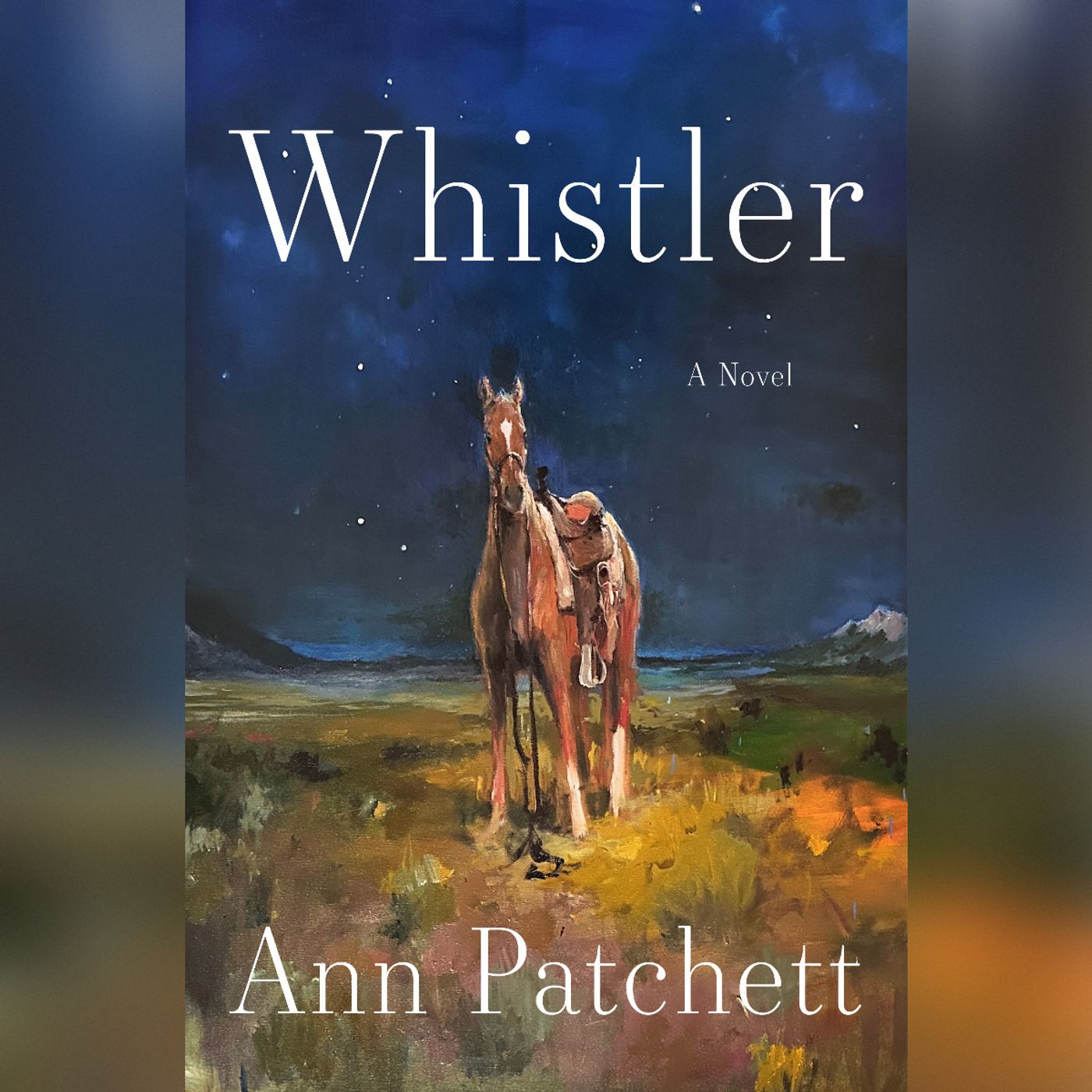
This is all of it on wnyc. I'm Alison Stewart. We have officially launched our all of It Summer Reading Challenge. We're challenging readers to read books in six different categories by Labor Day weekend. And if you finish, you get a prize. You've only got until July 4th to sign up, so head to wnyc.org summerreadingchallenge to find out how and to learn about all of the categories. And if you're looking for a new book, we've got you covered. Ann Patchett's 10th novel is titled Whistler, and it's out today. Whistler is not the main character. Whistler refers to a horse hero in a story that a dad tells his kid about during a difficult time. Actually, it's a stepfather who tells this story to his precocious stepdaughter. It's the late 1970s. Eddie and Daphne were thick as thieves for two years. She was nine and was married to her, and he was married to her mom for a short period of time. She was bookish. He was in publishing. They understood one another. It was a magical time for Eddie and Daphne. Until it wasn't. After a bad accident involving Daphne, Abigail, her mom, banished Eddie from their life. Ultimately, Abigail took up with a third spouse. Flash forward, And Daphne is 53 years old, and Eddie appears in her life again, older, charming, wise, and full of answers to a time in her life which she's put in a box. The book is interesting because there are no bad guys, only some bad situations where people try to survive. Ann Patchett is the author of the bestselling novels Tom Lake and the Dutch House, which was a finalist for the Pulitzer Prize. Today is pub day for her latest work, Whistler. And it is nice to see you once again.
- [01:52]
B
Oh, I am so happy to see you. And, man, I would love a copy of that because I feel like you just explained the novel so much better than I ever have, and I didn't
- [02:02]
A
give that much away.
- [02:03]
B
No, it was the perfect elevator pitch. It was really good.
- [02:06]
A
So. So the book starts in the Metropolitan Museum of Art. What's Daphne doing there?
- [02:10]
B
Daphne is taking the day off with her husband, Jonathan. She's a schoolteacher. Her semester's over. He's getting ready to take a trip. They live in Bronxville in Westchester, and so they just decided to take a day in the city, go to the museum. And Jonathan notices that someone is following them.
- [02:28]
A
But she thinks, you know, they have a running joke. Daphne once told him, old guys are really into me.
- [02:33]
B
Yes.
- [02:35]
A
Are they? Or is she into older guys?
- [02:37]
B
No, I think older guys are really into her. It's been very interesting, that whole concept, because I've had a couple of older guys who have interviewed me said, oh, yeah, I know women like this. I know women who just can never find anybody their own age because they're so intimidating. And so they wind up being a magnet for older guys.
- [03:01]
A
So right off the bat, Eddie Triplett enters the story. What did you observe about the qualities a gentleman would have that Eddie would have?
- [03:12]
B
He has on a pink shirt and gray slacks, and he's trying to make himself invisible. There's absolutely nothing aggressive about the way he's following them. And as soon as he sees them seeing him, he immediately runs into another room. So there's just. You can tell right away he's gonna be a sweet guy.
- [03:38]
A
Daphne passes a Charles Ray sculpture, Two Horses, right before they meet. What do the horses come to represent in the story?
- [03:46]
B
Well, of course, there is a horse on the COVID And so she's not thinking about Eddie or her past, but when she sees the Charles Ray sculpture Two Horses, she's just mesmerized by it, which anybody would be mesmerized by it because it's a great piece of art. But it sets the scene for Eddie coming back because all those years ago when they were in a car accident, he tells her a story about a horse.
- [04:15]
A
Eddie is instantly charming, a classic New York gentleman. He works in publishing, not really thinking about quitting so much. He knows how to live life.
- [04:25]
B
Well. Yes.
- [04:26]
A
What do you think Eddie is missing in his life?
- [04:29]
B
Well, maybe he's missing Daphne. I mean, it's not that he's missing connection because he has a ton of friends. You know, it could be that Eddie isn't missing anything, that Eddie just loves her and is so happy to include her. I don't think that he's trying to fill a space in his life, nor do I think she's trying to fill a space in her life. But they are crazy about each other, and they feel like this is an incredible second chance. This is a really, really romantic novel about two people who are not having a romantic relationship, but they love each other.
- [05:11]
A
It's interesting. Just in the first couple of pages, we're not quite sure about Eddie.
- [05:14]
B
Sure, right.
- [05:15]
A
This guy's, like, lurking. Lurking around, like, what's going on? What did you want the reader to initially think about Eddie or to consider about Eddie before we recognize he's a wonderful guy? He's a mensch?
- [05:29]
B
Yeah. Well, you know, Jonathan says, look, there's somebody following you? Aren't you? Don't you want to know? Aren't you interested? And Daphne's like, I'm not interested in a man who's staring at me or following me. And I think that women, women in the city, you've all had that moment where you think, oh, I'm clocking this person, but I'm not going to let bother me. And so she's making a decision that this is not going to be a creepy situation. She's just going to ignore it. But basically, anytime there is a man following you and staring at you, it is de facto a creepy situation. Therefore, you think, well, then Eddie must be a creepy guy. And once you find out it's her stepfather, all the creepy bells and whistles go off. Because we've all read Lolita and we're triggered by the notion of a long, absent stepfather. But that's not what it is at all.
- [06:30]
C
My guest is Ann Patchett.
- [06:32]
A
Her new novel is called Whistler, about
- [06:34]
C
a woman and her stepfather who must reconcile their past. In the book, we discover Daphne has incredible fond memories of Eddie, and she's about nine years old. Why did you choose nine?
- [06:46]
B
I just think that nine is a great age. Nine, you have some autonomy. You're allowed to make your own choices when you're nine, not all of the choices, but you're trusted. If you have earned that trust and you have a personality and you could go off and have an adventure. Twelve, you're getting into the attitude zone. Seven, you just don't have any autonomy at all. So nine is nice.
- [07:17]
C
Daphne is surprised by Eddie's being there. It's a really welcome surprise in her life. Why is she so welcoming to a man who was essentially erased from her life? Her mother exiled her from the family,
- [07:34]
B
but she didn't, and that's a really important thing. She didn't make a choice. She didn't get to make that choice. She loved Eddie. When she finds out that her mother is divorcing Eddie and her mother says, I'm divorcing because he wrecked the car and you were in the car and he could have hurt you, that turns out to not be the case, but she says, no, no, no, no, no, you can't get rid of Eddie. But she doesn't have a say and she doesn't have a voice in what is the most important relationship in her life. So that's a really, really hard thing to deal with. And people say to her in the book, her husband says later, why didn't you ever try to find him. And I think, why didn't you try to find him later? But we didn't have the Internet back then. We didn't have any way of finding somebody. If your mother said, this person is gone, you didn't have a clue how you were going to find him. And you didn't think, well, when I'm older, I will find him. You just had to take your mother's word for it.
- [08:41]
C
There was an interesting passage. After Abigail tells Eddie to hit the road because of this accident, she packs up all his belongings and she has them mailed to his friends.
- [08:52]
B
Yeah.
- [08:53]
C
And in the book, Daphne says, that's aggressive. But the other thing that should be said is, oh, my poor mother.
- [09:00]
B
Yeah.
- [09:02]
C
In that moment, what does she realize about her mom?
- [09:05]
B
One of the arcs of this story is that Daphne, at 53, kind of got frozen in time with her mother. At 9, her mother did something that made her mad. And she's been mad at her mother or ever since. And over the course of the novel, she starts to see her mother as an adult and she starts to realize that her mother had some really hard choices and tough situations that she had to navigate on her own with two kids. And Daphne never cut her any slack. So when she says, oh, my poor mother, it's the opening up of her heart to her mother and finally thinking, oh, this couldn't have been easy. Daphne's birth father left because he was a fisherman and he just wanted to be on the boat all the time and never come home and be with the family. And so Abigail basically loses her first husband to the sea and then she loses her second husband. And Daphne's like, wow, that was really tough. And then she marries a third self help author.
- [10:14]
A
Marriage. How much did Abigail's choice of husbands have to do with her girls? Was she trying to find a stable place for them?
- [10:24]
B
If she was, she didn't do a good job.
- [10:28]
A
Not really.
- [10:29]
B
Not really.
- [10:30]
A
Daphne's sister Lita is a therapist, a well known one, and she's the first person she tells about her encounter with Eddie at the museum.
- [10:38]
B
That's right.
- [10:40]
A
Why does Daphne tell her sister Lita rather than truly call her mom?
- [10:44]
B
It just doesn't even occur to her to call her mom. She wants to go straight to her sister because her sister is her family. She's her confidant and kind of her true love. I mean, the two sisters have a beautiful relationship, but Lida is great at explaining things. And one of the things that I have been thinking about so much lately with my own Sister Heather is. Is that we are each other's memory. And so if something happens and I'm trying to remember something from the past, I immediately go to my sister and say, okay, wait, when we lived in that house, what year did we move into that house? Wait, what year did that thing happen that happened to us? And we each have half of the story. So when you're writing a novel, you take aspects of your life and you give it to your characters. And so that relationship between those two sisters in which they each remember part of something. And at one point, Lita says, you want to hear something crazy? You never told me about the car accident. And Daphne said, of course I did. And she said, yeah, but I was 7. And we never talked about it again.
- [12:04]
A
Wow, that's interesting. Are you and your sister close in age?
- [12:07]
B
We're three and a half years apart, and my sister is older. And my sister just remembers everything, it seems to me. But because she was three and a half years older, all of the different things that happened and we went through, she was older. She really was much better at remembering.
- [12:26]
A
It's interesting because my sister is 10
- [12:28]
B
years older than I am.
- [12:29]
A
So there was like 10 years of life in our family where I didn't exist. And it was a very different story. And we've talked about that quite a bit. She's like, do you remember that point? I was like, I wasn't around then.
- [12:40]
B
Yeah.
- [12:40]
A
And then she left for college when I was seven. And I. Do you remember when that happened?
- [12:43]
C
She was like, no, I was away at school.
- [12:45]
B
And it was so.
- [12:45]
A
It was. It's kind of interesting.
- [12:47]
B
So have you ever heard of a book by Michael Gilmore called Shot through the Heart? No, but I'm ready to go on. Oh, it's amazing. And it's a nonfiction book. And Michael Gilmore was the brother, the much, much younger brother of Gary Gilmore who was executed. The Norman Mailer book, the Executioner's Song, and this book. Michael Gilmore was a famous reporter for Rolling Stone. And he had this violent, troubled family, or Gary and the older brother did. And then he came along so many years later. And his father, who beat the older boys, was a kind of sweet, broken old man. Oh, it's interesting. It's so fascinating how in that same family structure, we have such different experiences.
- [13:38]
A
My guest is Ann Patchett.
- [13:39]
C
We're talking about her new novel, Whistler.
- [13:42]
A
The daughters names Daphne and Lita.
- [13:44]
B
You mention it in the book.
- [13:45]
A
They come with great meaning. Was that intentional, or was that just something you did to keep yourself entertained?
- [13:54]
B
It was both. I mean, I. I like the idea of the mother having taken a course in Greek mythology in college. And she' swhat it shows is that the mother is serious. She wants to be a serious intellectual. And she names her two daughters after characters in Greek mythology. Unfortunately, she names her two daughters after two characters in Greek mythology. Daphne is almost raped and so is turned into a tree. And Leda is raped by Zeus, who turns himself into a swan. And she has eggs after that. So it's both funny and not so funny.
- [14:37]
A
Oh, that's interesting. She has eggs because that's Leda, right?
- [14:40]
B
Yeah. Leta has eggs.
- [14:41]
A
Okay, good. This makes me feel better because Daphne is often called Duck.
- [14:46]
B
Whoa.
- [14:47]
A
By Eddie.
- [14:47]
B
There you go.
- [14:49]
A
And it sort of catches her when she's called Duck by him.
- [14:54]
B
Yeah.
- [14:55]
A
What does the name Duck do for her?
- [14:58]
B
It just is such a poignant reminder of how close they were. And it's like an electrical connection when he says duck, because he didn't call her Duck very often. And no one else ever called her Duck again. But that was his little pet name for her. And as soon as he says duck, they are together again.
- [15:25]
A
We're talking to Ann Patchett. Her new novel is called Whistler. We'll have more after a quick break. This is all of it. Oh, you're listening to all of it on wnyc. I'm Alison Stewart. My guest is Ann Patchett. She has a new novel out called Whistler, about a woman and her stepfather who must reconcile their past. All right, we get to the date. January 18, 1980. That's when the accident happens. Is there anything special about that date?
- [16:02]
B
No, but I looked it up on the calendar because it had to be a certain day of the week, because it had to do with school being out and all of these different things that were happening. And so I wanted it to be cold and snowy and a Friday.
- [16:20]
A
The accident happens. And to keep Daphne calm, Eddie tells her the story about a woman and her horse, Whistler. The horse is on the COVID of the book and how they essentially save one another. And it's a story within a story of your story. How did you come to the idea of a story within the story?
- [16:37]
B
Okay, so I don't have children. And one of the things that always trips me up is I can never remember the milestones or when things can happen. Like, I don't remember when a child speaks or when they walk or if somebody says, my kid's in the third grade. I'm not really sure, you know? So the idea of Eddie telling Daphne a story, which winds up being a really inappropriate story. He should not be telling her this story. But he doesn't know. Like, he wants to comfort her and entertain her and take her mind off the problems and. And he just read this book proposal in his office that day, and he's like, I'll tell her that story. And then he starts it and it's a disastrous story to be telling a nine year old in a car accident. But she doesn't want him to stop because she has to find out. So that's how it started. Like, I want a story in which Eddie is in over his head and yet he has to keep going. And it does turn out to be the right story, but it makes such a huge impression on Daphne that she really carries this story with her for the rest of her life. People know you because of your great
- [17:59]
A
work, but also you own a bookstore, right? Parnesses Bookstore in Nashville. And there are shout outs to books in this book. In this book, the Loneliness of Sonya and Sonny, that gets a shout out from somebody. Do you think these characters would read this book or is this just a shout out?
- [18:15]
B
Oh, no, definitely. These are readers. These are very, very serious readers. I can't do anything without recommending books. I can't walk down the street without stopping somebody and recommending a book. And so when I was writing this book, I had just finished reading Kieran Desai's the Loneliness of Sonja and Sunny. And I was so rhapsodic about that novel, and I was like, of course I'm gonna put it in the book that I'm writing. But I put in the Bee Sting. I put in Independent People by Haldor Laxness. Like, anytime the characters are talking, they're recommending books because it's who they are.
- [18:58]
A
Yes. Eddie's in publishing and the mom is in publishing at one point. And I asked you to read the description of his office.
- [19:07]
B
Oh, good, good.
- [19:08]
A
I'd love you to read that. And we can talk about it on the other side.
- [19:10]
B
Yes. His office was buried in books, and I wanted to read all of them. I wanted to sit in a chair with every book he'd ever sat with, Think about him thinking through all of those sentences and pages and chapters. Here was his heart in these books. He had loved them, and so I would love them. I had the feeling that all the books in the hallway were inching their way in for their terminal stop. Eddie had a good window. I remember going to his office at the old Houghton Mifflin on Park street, the one that had once been a closet. This is where they store the Eddies, he had said to me then. It used to be impossible to get anything done here, he said, picking up a stack of manuscripts from the second chair so I could sit. He sat down at his desk. There were always meetings and new interns and somebody wanting to come in and shut the door so they could share the latest palace intrigue. I would go home at night and do my editing at the breakfast table, which meant I was either at work or working at home or sleeping. But now everyone prefers to work at home except for me, because I'm the opposite. I'm tired of working at home. Now I can work in my office and no one bothers me. Some days I go to the cooler and fill up my little cup with water and bring it back to the desk and I don't pass another living soul. Excellent for my productivity, but sad. Of course, young people learn by osmosis, and now they don't get to knock on my door and ask me what a semicolon is supposed to do. I guess someone else will tell them I wasn't going to be around forever anyway. So you think you'll retire? Eddie laughed. I think I'll die. Which I suppose is a form of retiring. That Ed, they'll say he was very tiring.
- [21:14]
A
That's Ann Patchett reading for her novel Whistler. Retirement is an issue in this book.
- [21:18]
B
It is.
- [21:20]
A
Why did you want to make retirement an issue? Is that something you think about?
- [21:23]
B
Yes, I think about it constantly because my husband talks about retiring, or I should say, my husband used to talk about retiring. For 15 years all we talked about was whether or not he was going to retire. And then he retired for three weeks and he was miserable and he got a different job. He's a doctor and he went back to teach medical residents, and he's so happy now because he did retire and he got it behind him. But one of the sub themes in this book is when do you retire? How do you feel about it? What do you do when you retire? And it comes up a lot and it becomes kind of a metaphor for death.
- [22:10]
A
From this point on we learn about Daphne's life, Eddie's life, Abigail's life, even her other two husband's lives. And the thing is, no one's a bad guy in this book. They have flaws, but nobody's really evil. What's the challenge of writing a book where there's, like, there's not someone to gang up on?
- [22:28]
B
Well, it's Funny. I think about this a lot in terms of my own life. There's a lot of sadness and suffering, terrible things going on in the world. But in my own life, everybody's nice in the bookstore. Everybody's nice. My family, my friends, walking the dog, going to the grocery store. I'm kind of amazed at how people help one another and are kind to one another. And I want to see that represented in literary fiction, because I feel like there are some of the greatest minds in literature writing about people being horrible to one another. And that's covered. That's good. That's good. They've done a great job. But the other part of it isn't covered. So, yeah, that is a challenge. How do you write a picnic about a sunny day? Really easy to write a picnic in which the river rises and the lightning strikes and the fire starts and whatever, you're trampled by ants. But it's harder to write a book about. Lovely picnic. And I also think it's what we need. It's what we need right now. We need some representation of people being loving and kind to one another, because it's out there at your bookstore.
- [23:50]
A
Parnassus. You interview authors constantly. What have you learned by interviewing authors?
- [23:58]
B
I've learned to keep my mouth shut. I've learned that to be a great interviewer is like being a great bridesmaid. You take all of your energy and your light and you shine it on another person. And so often I'm interviewing an author and they're telling a story, and I want to say, oh, my gosh, that happened to me, too. Oh, I know exactly how that felt. Let me tell you. And I just think, keep your mouth shut. And that's a great lesson in life. Listen, just let people tell their stories. Shine your light and your interest on them. People so want to feel your attention, and it's the greatest gift you can give.
- [24:48]
A
You were kind enough to put together a list for our summer reading challenge. So let's get to it. A book published in 2026, aside from Whistler, but you can read.
- [25:00]
B
What do you think? So many great ones, but I'm gonna pick the Left and the Lucky by Willie Valton, because I think you've probably already read Kin by Tayari Jones, and maybe you've already read John of John by Douglas Stuart, but maybe you haven't read the Left and the Lucky. And it's a great book about people who are having hardscrabble lives, working for a living. Willie Valten is the Steinbeck of our time. A Novel about a house painter and the kid with a rough life next door.
- [25:33]
A
A book about United States history or American historical fiction. This is for our 250th celebration.
- [25:40]
B
Doris Kearns Goodwin gives the great banquet of appropriate titles for this category. And I have read every single one of her books. And I'm going to say her most recent, An Unfinished Love Story, which is about the fact that she worked for Johnson and loved him. And her husband, Dick Goodwin, worked for Bobby Kennedy and loved him. And it's about that time in history, but also about the conflict in their marriage that was represented by Kennedy and Johnson.
- [26:14]
C
A book set in or written by
- [26:15]
A
an author from One of the 48 countries participating in the World Cup, Scotland.
- [26:21]
B
Maggie O' Farrell Land. Also published today. My Pub Day sister. I love Maggie O. Farrell's book. And this one, Land is the best. And people say, well, it can't be better than Hamnet. Better than Hamnet.
- [26:34]
C
I believe she's gonna be on the
- [26:35]
B
show in a couple of weeks. That's so good. This is just a classic and the hardest one to pick. It is hard. So I picked Portrait of a Lady by Henry James because not only is it one of my all time favorite books, it was the favorite novel of my friend Jim Fox, who Whistler is dedicated to a work of genre fiction. Okay, so I'm gonna say Jonathan Strange and Mr. Norrell by Susanna Clark. Fantasy, huge. It's 800 pages. You might say, I don't wanna read a book that's 800 pages. But all I can tell you is at the end you're gonna read it again. And the audio is amazing because I read it and then I listened to it.
- [27:21]
C
And finally a book set or set in New York.
- [27:24]
B
Okay, that's easy. Harlem Shuffle, Colson Whitehead set in Harlem in the 70s. Because then you will go on and read Crook Manifesto set in Harlem in the. Oh, wait, Harlem shuffle is the 60s. Crook manifesto is the 70s. And then you will be ready to read Cool Machine, which is the last book in the trilogy. I love Colson's work. I've read all of the books and these three books are hands down, my favorite.
- [27:55]
C
All right, And Whistler could be a book set in New York or a
- [28:00]
A
book published in 2026. So you should read it.
- [28:03]
C
Ann Patchett, her new novel is called Whistler.
- [28:06]
B
Thank you for being with us. Thank you so much.
- [28:09]
D
Flowing ad budget on metrics that look great til the CFO sees them. That's bullspend. And marketers are calling it out in
- [28:17]
A
dash Confessions I remember telling my boss, it'll be good for the brand when leads were slow.
- [28:24]
B
Yeah, it wasn't.
- [28:26]
D
Cut the bull. Spend LinkedIn lets you target by company, job title and more. Advertise on LinkedIn. Spend $250 on your first campaign and get a $250 credit. Go to LinkedIn.com campaign terms and conditions apply. Finding ways to be financially savvy is a smart move. And knowing you could be saving money for the things you really want, like that dream home or new ride, is a great feeling. That's why the State Farm Personal Price Plan can help you save when you choose to bundle home and auto bundling. Just another way to save with a personal price plan. Head to statefarm.com to get a quote. Prices are based on rating plans that vary by state. Coverage options are selected by the customer. Availability, amount of discounts and savings and eligibility vary by state.