Loading summary
Transcript29 lines
- [00:00]
Host
All of it is supported by Progressive Insurance. You chose to hit play on this podcast today. Smart choice. Make another smart choice with Auto Quote Explorer to compare rates from multiple car insurance companies all at once. Try it@progressive.com Progressive Casualty Insurance Company and affiliates. Not available in all states or situations. Prices vary based on how you buy.
- [00:32]
Alison Stewart
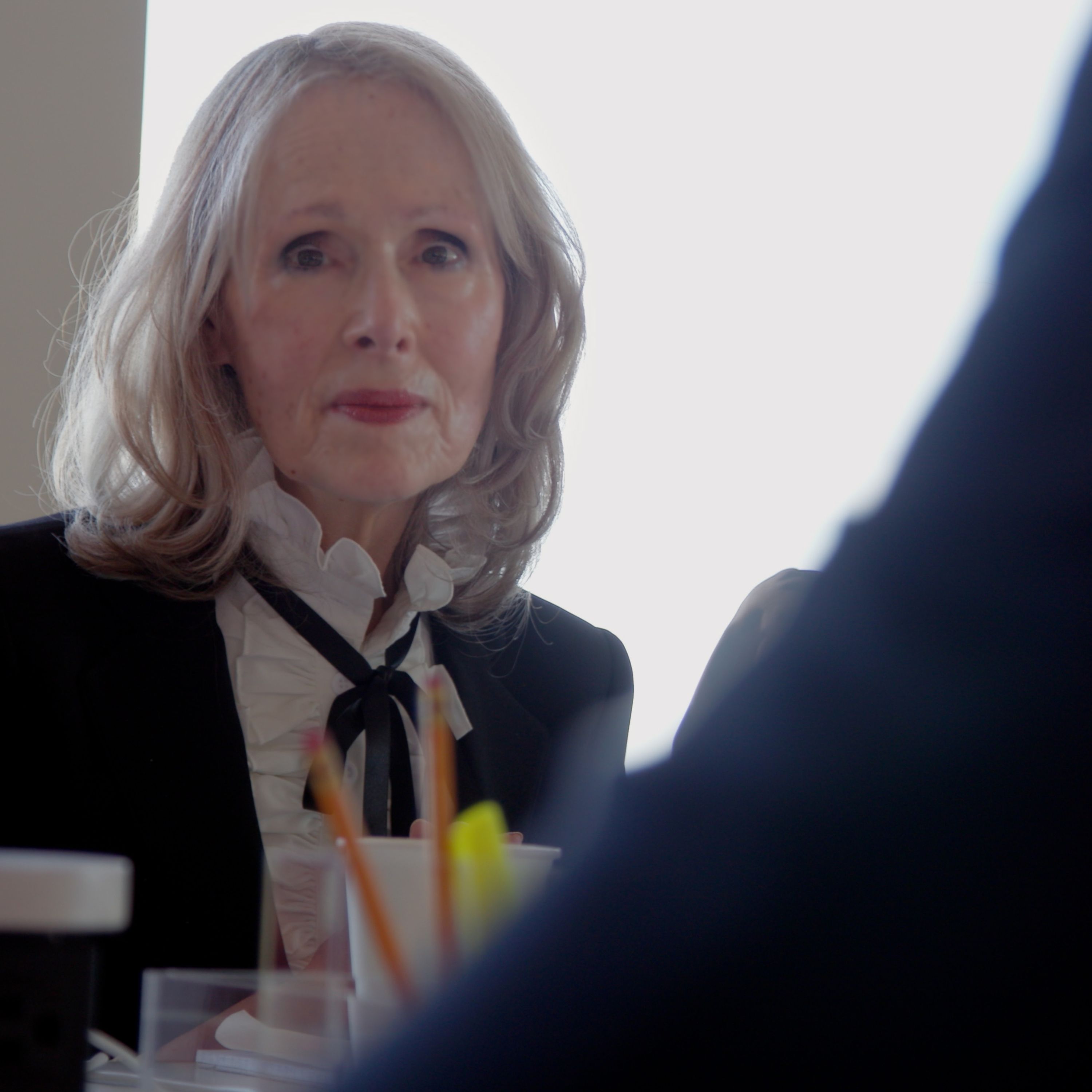
This is all of it. I'm Alison Stewart. In 2023, a jury in a civil trial in New York found President Donald Trump liable for sexually abusing writer E. Jean Carroll in the dressing room of bergdorf Goodman in 1996. In 2024, a jury decided that the president must pay her $83.3 million for defamation after he made many inflammatory statements about Carol. And just last week, an appeals court ruled that Trump didn't have to pay it until the Supreme Court weighed in. But director Ivy Maripol doesn't want audiences just to know the story of E. Jean Carol's assault or her legal battles. She also wants to get them to know E. Jean, the journalist, the celebrated advice columnist, and her Take me as I am personality. Ask E. Jean follows E. Jean Carroll throughout the two trials, but also tells the story of her life and career. And after a successful run on the film festival circuit, the doc is getting a theatrical release at IFC center starting tomorrow. When director Ivy Maripol joined me on the show to talk about it, I started by asking her to describe how her relationship with Eugene Carroll began.
- [01:46]
Ivy Maripol
Well, six years ago, I read the COVID story in New York Magazine that she, the excerpt from her book was published in New York Magazine that a lot of people I know in New York read. And I immediately tried to reach out to her as I was so struck by how she told her story. And so I was rebuffed at first. Yes, she, she had really no interest in, in having a documentary made about her at that point. And there were other filmmakers who were trying to chase her down as well. And I just, you know, I can, you know, the first. No. For a documentary filmmaker, usually we don't even hear it.
- [02:30]
Host
Yes, Right. True.
- [02:32]
Ivy Maripol
So I went ahead and I, and I, and I kept trying to reach out to her. And then a mutual friend, a colleague of hers, recognized my name and suggested that she have a look at some of my work, particularly the film I made about Roy Cohn for HBO that came out in 2019 that I actually talked to you about, I remember. And, and Eugene was quite struck with that film. And so that opened the door for me and we began, and that was the beginning of the pandemic. So we Actually first met over Zoom, where I got to have a glimpse at her fantastic home in the background and became even more intrigued by her
- [03:10]
Host
as you sat down with her and decided, okay, we're going to do this documentary. Was anything considered off limits?
- [03:19]
Ivy Maripol
Interesting. You know, at the start, no, we, you know, we. We were kind of flying blind a little bit. Only because, you know, her. The trials really hadn't. They hadn't begun. So she. It was such early days that. But because, as you mentioned at the top, I was so interested in her life before we started there, and I think, you know, that was, you know, exciting for. For both of us to delve into that. So off. Right off the top, we did. There was nothing off limits. What. What happened eventually is, you know, during the trials, I mean, I really thought we. The film was really not even. It wasn't clear we were ever going to be able to complete it because the, you know, once she was. They were in the courtroom, I was not able to film anymore. And we weren't sure we would continue because that was obviously the priority. So. So, no, I mean, really, there wasn't. There was nothing off limits with Eugene. I mean, she is, you know, she is completely herself. And I think, you know, that was, you know, one of the things that. That. That really drew me to her.
- [04:29]
Host
What's a question that you had about Eugene Carroll that you wanted to answer in this documentary?
- [04:37]
Ivy Maripol
I wanted to understand how, you know, it's kind of. It's interesting because it's almost like a question that I couldn't ask her directly and that I had to learn from watching her shows from the mid-90s where she had the ASCII Jean show, and then also the video depositions that we were able to use in the film that are so powerful because it's where she had to tell her whole story direct, you know, for. On the record, for the court. And so I think what I wanted to understand was how someone who was so just as powerful, outsized, strong figure, a woman who really made her way herself, so independent, so strong, had buried these painful, traumatic events. And to watch her. Her discover within herself and reckon with the fact that she had suffered, which is a word that she can barely eek out in the depositions.
- [05:46]
Host
Why can she barely eek it out? What is it in her that makes it difficult for her to say that?
- [05:53]
Ivy Maripol
Well, I think it's difficult for most women to say that, and I think that's what we're getting at in this film as well, to. To admit to yourself that something that you had buried and put aside or, you know, or, or rejected or decided that, oh, that's, I'm okay. I can deal with this. You know, it's kind of this armor that we, all that we wear. And I think she just could, you know, she just was not able to live the way she did and, and accept that until she was ready at age 75 and inspired by the MeToo movement to, to tell the story and understand what it means personally, but also for other people. When you tell your story out loud and you share it. But it's, you know, she is a member of the silent generation, and it's the, it's, there's a, you know, the reason it's called the silent generation is because they just bury that pain. And I just think it's, it's, it's an incredible, it's incredibly powerful when someone from the silent generation is speaking out. And for younger women, for all of us, for men, everyone, it's just, it's, it's, there's, there is something that is activated in all of us when, when someone like E. Jean Carroll comes forward.
- [07:19]
Host
My guest is director Ivy Miropol. We're discussing her new documentary, Ask E. Jean, which follows advice columnist E. Jean Carroll. It tells her life story leading up to her legal ordeal with Donald Trump. It was interesting to get to learn a little bit about her, that she was born in 1943. She grew up in Fort Wayne, Indiana. Seems like she would be born in a New York department store. How does Eugene describe her mother? Because her mother seemed like she was a really big influence.
- [07:51]
Ivy Maripol
Oh, yeah, it's, it's, it's fantastic. And I mean, we use Eugene's voice throughout the film. I mean, she is really telling her own story. But we're also using her writer's voice because we had access to audiobooks. And so when she describes her mother, she says, you know, she's a redheaded man rattling Republican politician who, you know, I mean, she's a force. You know, she describes her mother as someone who just was an absolute force, but on the other hand also was the what would be ready, you know, with the kids all dressed nicely and, you know, hair brushed and the drink in hand to greet her husband Eugene's father. So she's quite traditional family role, but also clearly a very outspoken, vibrant and strong woman.
- [08:49]
Host
It's interesting, you said you used the audio books to have, used to get, use her audio, but she had to write them. What did you find that was special about her writing?
- [09:00]
Ivy Maripol
Oh, I You know, she. She has this uncanny ability. Well, first of all, she's just so funny. She's so. She's just very funny. And she's a gonzo journalist. She puts herself in her stories. And so it's her. Her voice is just so distinct. But what. What's really special about it in this context as well is that she could make you laugh out loud while also talking about some of the most. The darkest things. I mean, that was what struck me about the original piece in New York magazine. And I thought, you know, women who are sexually assaulted and come forward have to. Are. Are pushed into this box to, you know, to be. To look and appear to be victims. You know, as. As, you know, you have to be, like, quiet and kind of seem. Seem almost that you're. You're shrinking. And with Eugene, it was the opposite. You know, she just said, this is what happened. I'm going to tell the story in detail. So she tells the story of what happened in Bergdorf Goodman, and she doesn't leave out details. Like the fact that while they're shopping for a gift for a woman that Donald Trump has asked her to help him shop for, she describes in detail that he. You know, he. They're looking. She suggests hats, and he's petting one of the hats, like it's a. Like it's an animal. You know, that I just. I found that so remarkable. And it's. And it's really because women, you know, are. Are not allowed in this society. And even with the whole. The MeToo movement, as wonderful as that was and inspiring as was, the women who came forward still were kind of kept in this box. And I think, you know what? Eugene is so herself that she is saying, I can be funny, I can be fun, I can love my life and still be this person who was traumatized, and I can say it all.
- [10:54]
Host
And we do want to give out the number for Rainn's National Sexual Assault Hotline while we're having this conversation. It's 1-800-656-4673. Did want to say that a big part of the documentary. It's sure, of course, is Eugene reliving her career. What did she seem most proud of her career?
- [11:18]
Ivy Maripol
Oh, you know, she. Oh, that is a great question. And because it's one of the things we actually had to, you know, we had to pick and choose so many things. Allison, because she had. Did. She was just.
- [11:32]
Host
You had an abundance of material, let's say that.
- [11:34]
Ivy Maripol
Exactly. I mean, it was, you know, but I guess that's you know, that's a good thing. We, you know, she. She's very proud of some of the big articles that she. That she wrote, and one in particular that we did not even end. And this is. I'm glad I get to talk about this just briefly. She traveled to New guinea on her own, like, to a remote place where no white people had ever been. And she. No women had ever been, to, like, meet this, you know, a tribe of. Where it was all men, apparently. And it was for Playboy magazine. I hope I'm not getting that wrong. And it was just an incredible. I think she was just so proud of herself that she did that, and because it is an incredible feat. I mean, she still has the backpack that she wore that she carried through, and it was quite dangerous. She probably, you know, it was probably. There were moments where she could have died, and she. I think she was just quite, quite proud of herself for that. But even from the beginning, when, I mean, in the film, we talk about how she takes Fran Leibowitz camping, and I think, you know, she has such great ideas for kind of taking people out of their comfort zones and seeing who they really are in those situations and those. I, I think she's very proud of her. Her work as a gonzo journalist, and I know some people aren't going to like that to hear this, but I think she's a better gonzo journalist than Hunter S. Thompson.
- [13:03]
Alison Stewart
Really.
- [13:06]
Ivy Maripol
I do. I. I just, I. I personally find her voice more. Even more engaging. But, you know, and, and she's, she's not as well known, clearly. But I, I hope this film helps her become more known.
- [13:21]
Host
She's more well known as an advice columnist. Ask Eugene in the magazines as well as on television. Why is she someone that is so good at giving women the truth, the hard truth, even if it's, even if it's a really tough statement that she's got to give.
- [13:42]
Ivy Maripol
Well, I think because she does it with such humor and, and love, and she will say that she wasn't doing that in the past. Part of what we, what we deal with in the film is E. Jean looking back and reckoning with the fact that she. She was not. She feels she was not as good a friend to women as she should have been. And she personally was, you know, believe these things as well. So it wasn't. She was. She actually was living that way herself. And the advice she was giving reflects that. And she doesn't like looking back at that. And I try to remind her that a lot. But at the same time. And this is why it's so complicated and interesting and important to grapple with that it's not black and white. She also was giving advice like, you know, to, you see it in the film, to a woman, for instance, who is very bored at home and she's got a child and she's clearly, she'd never been to college, she doesn't have a job, the kid, she drops the kid off at school. She doesn't have anything to do. And Eugene is saying, go to the community college, go to school. Why not do it, Find your way. And so at the same time, she might have been giving advice that she's not so proud of anymore. She also was giving that kind of advice, empowering women. What she, what she, the way she was so good at it is because she, she, she just would zero in on. And she even does it to me now. I mean, she's a, she's a great friend, a person to have in your life who, who can give you real advice because she, because she listens also. I mean, she just really listens. And that's what she says in the film too. She learned from her readers, from the people who are writing to her. She's listening.
- [15:26]
Host
Would you say she learned her Pat, from her past attitudes when it came to sexual harassment and misconduct? You included a clip of her talking about Anita Hill in A Not Sympathetic Man?
- [15:36]
Ivy Maripol
That's right, yes. Oh, well, now, I mean, yes, now she looks back at that with horror. She really, she very much dislikes that, that clip. Obviously she's, that she's not proud of that and, but she's a, she was living in that time period and that's what we want to show. I mean, I'm, there's no blame on Eugene for who she was in the past. It's just what I would like to, to come out of this film is understanding and that this was, that was the world she was living in because she was trying to make it as an independent journalist and a journalist in a completely male dominated world. And she was, this is the, you know, the heyday of the magazine world in New York City. And she was the first female editor at Outside magazine and Esquire and Playboy and had a seat at the table with, with all the, all the boys at Elaine's and, and you know, she had to compromise things in her own life and, and, and, and kind of contort her view of things in order to succeed.
- [16:44]
Host
Eugene says at one point in the documentary she was not a political person before all of this happened with Donald Trump and President Trump. How would she describe her relationship with politics now?
- [17:01]
Ivy Maripol
Well, she, I mean, I think she is, she has become quite politicized and she's paying attention and she is, she's become an activist in, in certain areas. I mean, she, she went to Albany and helped lobby for the Adult Survivors act that gave the a window for victims of assault to file in court just as she did. And she continues to, you know, I just think it's, it's made her, I mean, I guess, and if you want to just say more, much more aware and engaged in political life.
- [17:45]
Alison Stewart
That was my conversation with documentary filmmaker Ivy Maripole. Her film Ask E. Jean will be playing at the IFC Theater starting tomorrow. Coming up, we'll preview our next get lit with all of it book club event next Wednesday. Author Tom Parotta joins us to talk about his novel Ghost Town. Stick around.
- [18:14]
Ivy Maripol
All new drinks are now at McDonald's like the Strawberry Watermelon Refresher and the Sprite Berry Blast topped with with cold foam. Who knew ice cold drinks could be so fire? Try them all now at McDonald's. Refreshers contain caffeine. When you're craving something extra delicious, extra saucy and extra extra, there's Applebee's all you can eat, an unlimited spread of flavorful favorites for just $15.99. You get all the tender signature riblets, all the crispy boneless wings, all the golden brown double crunch shrimp and endless classic fries, all at a price that hits just right. Applebee's all you can eat for just $15.99 per person per order. Now that's eating good in the neighborhood. Limited time only, so hurry into your nearest Applebee's today.