← All Of It with Alison Stewart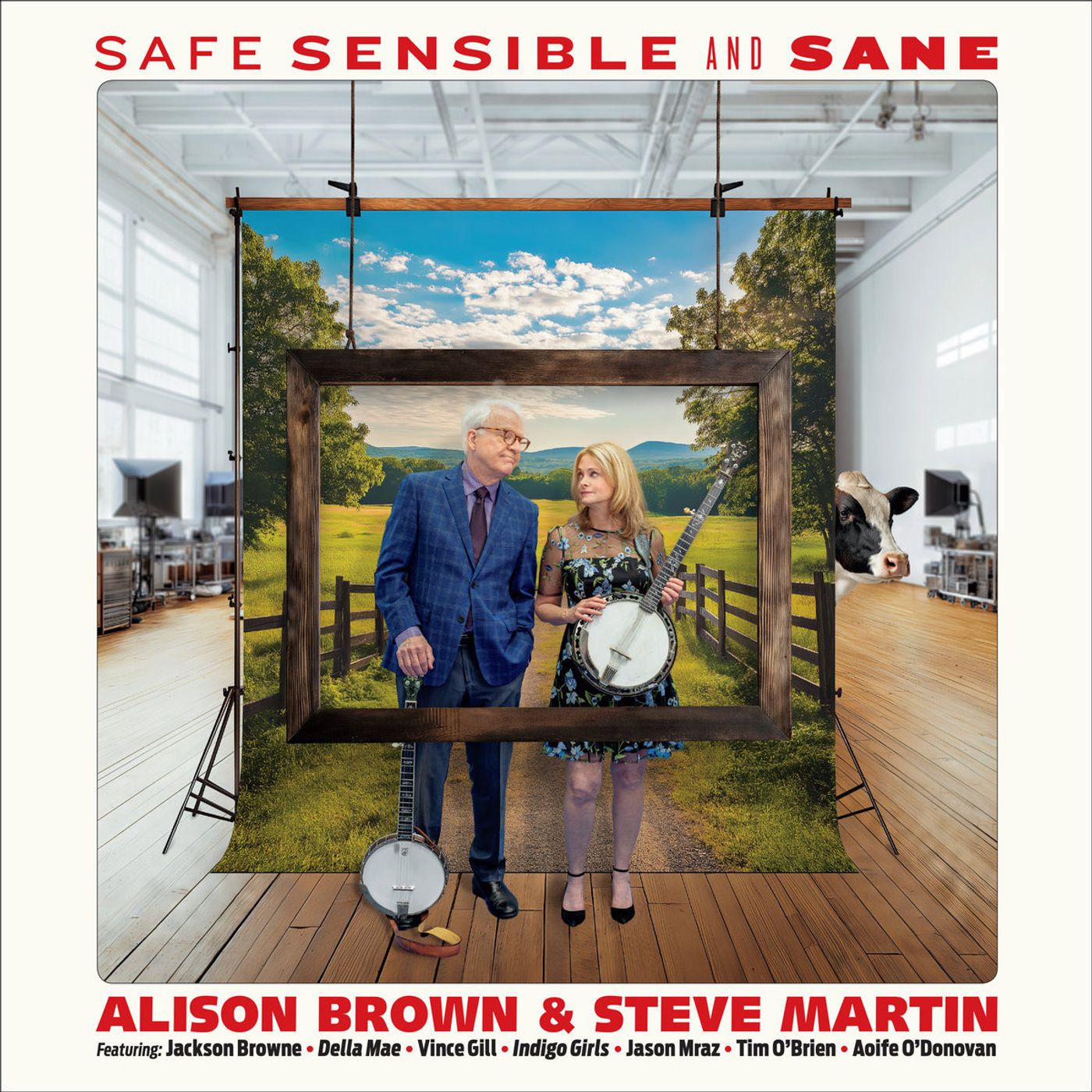
All Of It with Alison Stewart
Banjo Players Steve Martin and Alison Brown Perform and Talk Fingerstyle
00:14:44
Loading summary
Transcript72 lines
- [00:00]
Progressive Insurance Announcer
WNYC Studios is brought to you by Progressive Insurance. Insurance isn't one size fits all. That's why drivers have enjoyed Progressive's name your Price Tool for years. Now, with the Name youe Price Tool, you tell them what you want to pay and they'll show you options that fit your budget. So whether you're picking out your first policy or just looking for something that works better for you and your family, they make it easy to see your options. Visit progressive.com, find a rate that works for you with the Name youe Price Tool. Progressive Casualty Insurance Company and affiliates Price and Coverage Match limited by state law.
- [00:38]
Alison Stewart
This is all of it on wnyc. I'm Alison Stewart. Coming up this hour, New York magazine cartoonist Harry Bliss talks about his graphic memoir, you Can Never Die. And artist Carol Bevey discusses her ongoing exhibition at the Guggenheim. Now let's get things started with some music from from Steve Martin and Alison Brown. Grammy Award winning musicians Alison Brown and Steve Martin brought their banjos into the WNYC Studios last fall for a rollicking finger picking time. The duo released the album safe, Sensible and Sane, which was recently nominated by the International Bluegrass Music association for several awards including Song of the Year. It features vocalists like Vince Gill, Jason Mraz, and Indigo Girls. And sometimes Allison and Steve just play like they did in our studio right across the desk from me. Here's our conversation.
- [01:40]
Alison Brown
Well, my favorite story about this tune is just how inspired I was by Steve's claw hammer style of banjo playing, which is a more traditional style than the three finger style I play that involves metal picks. His style involves brushing the strings of the nails of his right hand. And I hadn't thought about that style too much or realized how versatile it was until I really started collaborating with Steve. And he played me a beautiful three, four time melody that he'd written for clawhammer banjo. So that was what inspired me to think about what we could do with that idea.
- [02:11]
Alison Stewart
Explain to civilians what a claw hammer banjo is.
- [02:14]
Steve Martin
Well, it's a style. Why don't you play a quick three finger lick?
- [02:18]
Alison Brown
Yeah.
- [02:23]
Steve Martin
And this is a claw hammer sound. That's it. But the difference is and not the audience doesn't really need to know this, but she's playing with picks on her fingers and plucking upward and I'm playing climb with the back of my finger and striking down.
- [02:47]
Alison Stewart
Alison just explained what she admired about your playing. What did you admire about her playing?
- [02:51]
Steve Martin
Well, Alison is one of the great banjo players. She's won Banjo Player of the Year from the international bluegrass music association, which is not easy to win. And she also plays in multiple styles. I mean, we have songs on her record that are bossa nova, that are calypso, that are irish, that are american bluegrass. So she's really the leader in those different styles.
- [03:17]
Alison Stewart
The album is called safe, sensible, and sane. Alison, is there an arc to the album, or is this just songs that you liked?
- [03:25]
Alison Brown
Well, you know, we wrote these songs kind of one at a time Without a specific theme or a specific agenda. Actually, we didn't really even think we were writing an album. We were just writing music together. But I do think there's an arc. I mean, the record starts off with just the two banjos talking to each other, Just a little banjo conversation, and then builds up to, like, Steve was saying, like, some different directions that I don't think we really intended when we started off the bossa nova feel or caribbean feeling. And then at the end, we take it back to just the banches.
- [03:54]
Alison Stewart
There's a song on it called new cluck old hen. It's a reimagination of an appalachian tune, I believe.
- [04:00]
Steve Martin
Yes. The song sorry, I have this little morning cough. The song is about 150 years old. I research it a bit, and it's always been one of my favorite melodies to play on the banjo. And I looked up the lyrics, and I was aware of the lyrics, and they struck me as, you know, like a 19th century kind of nonsense song. And I thought, gee, I hate to waste this beautiful melody on a lyric that, to me was, you know, kind of fun, but little silly as about a chicken that can lay either eight eggs or 10 eggs. And so I reimagined it, as we say today, and came up with new lyrics. And then we realized the song was a little bit misogynist, so we fixed
- [04:44]
Alison Stewart
that with della may.
- [04:46]
Steve Martin
This band gave a nice comeback at the end.
- [04:50]
Alison Stewart
Well, let's listen to new cluck ult old hen from safe, sensible and sane.
- [04:55]
Steve Martin
She took my dream she took my hope she got my house in row a note she sold my car, she got my friends All I have for dinner is a taco old hen
- [05:08]
Amica Insurance Announcer
that's
- [05:09]
Alison Brown
right,
- [05:35]
Unidentified Speaker (possibly Alison Brown or Steve Martin during music)
You called me up. Can I come back? You got your bags already packed? I said, honey, you made your choice. She's your win and I'm your loss. The kids are happy with their new dad, Unlike you. He's a high school grad. We're as happy as a whippoorwill. You can color it at the red cat crib Cluck Old hen, cluck old hen Cluck, cluck, cluck like a cluck old hen Cluck old hen Cluck old hen
- [06:07]
Alison Stewart
that's new. Cluck old hen. From the album Safe, Sensible and Sane. My guests are Steve Martin, Alison Brown, and they're banjos. Steve, when you're writing for music, you've written for tv, you've written for yourself. How is it different? And you're writing music?
- [06:26]
Steve Martin
Oh, well, I had to figure out how to write lyrics. I couldn't. I mean, yes, I did write the lyrics to King Tut, but I really had to think about it. And I was talking to Earl Scruggs one day, and I could figure out I could write a song for the banjo, but I couldn't figure out how to overlay lyrics. And so I asked Earl Scruggs, I said, what. What do you play when you play backup? And he said, well, I just play the melody. And I go, oh, so I can write a song and then write lyrics to the. My melody? Right, okay. It sounds like a simple thing, but it took me a while. You know, I think musical lyrics are more forgiving. You know, you might not put it in prose, but you can get away with murder.
- [07:18]
Alison Stewart
All right, you've brought your banjos with you. What are you gonna play for us today?
- [07:24]
Alison Brown
Well, we'll play a little bit of a double banjo tune that's on the record, actually. But, you know, the essence of it. I really love the way the two banjos sing together. It's a tune that Steve came up with the title for. It's called let's get out of Here.
- [07:35]
Amica Insurance Announcer
One.
- [08:59]
Unidentified Speaker (possibly Alison Brown or Steve Martin during music)
Yay.
- [09:00]
Alison Stewart
Wait a second. I'm doing videos here.
- [09:04]
Progressive Insurance Announcer
One Band.
- [09:04]
Alison Stewart
Band. That was Steve Martin.
- [09:06]
Steve Martin
It is so much fun to play with Allison.
- [09:08]
Amica Insurance Announcer
This really is.
- [09:08]
Alison Brown
We got a lot of Steve. So fun.
- [09:10]
Steve Martin
We're locked together there.
- [09:11]
Alison Stewart
Alison, you started playing banjo when you were a kid. You went to college, you went to Harvard, you got your MBA from ucla. When did it become clear to you, you know what? This is going to become my life's work, playing banjo?
- [09:27]
Alison Brown
Yes. Well, you know, I'm still thinking about it, really. It's kind of an interesting profession. I don't know. I've always really, really loved the banjo. And I think it was a stint as an investment banker that really made me appreciate how much I loved the banjo. When I realized that I just didn't have as much of an affinity for tax exempt debt as I did the music of Earl Scruggs, so. But it was really a series of baby steps, and I Get a chance through, you know, Compass Records, which is the label I co founded with Gary west, my husband, 30 years ago this year.
- [10:00]
Steve Martin
Wow.
- [10:00]
Alison Brown
And yeah, it's hard to believe. So we get a chance to like, do the business side of things and support roots music that way and then play music too. So it's really the best of both worlds.
- [10:09]
Alison Stewart
What was the moment when you were an investment banker and you thought, I'm not going to do this anymore?
- [10:14]
Alison Brown
Oh, gosh, it was probably one of those all nighters with a, you know, proposal for a bond refunding somewhere.
- [10:23]
Steve Martin
Sounds fascinating.
- [10:25]
Alison Stewart
Steve, when did you pick up the banjo? The very, very first time?
- [10:28]
Steve Martin
Well, I picked it up when I was about 16 and I made a mistake because I heard the banjo with the Kingston Trio and bluegrass music and I didn't realize there were two types of banjo. There's a four string banjo and a five string banjo. And so my girlfriend at the time, you know, I'm 16 and her father had a four string banjo. So I'm trying to play bluegrass on a four string, which is impossible. And although Irish people can do
- [10:58]
Progressive Insurance Announcer
so.
- [10:58]
Steve Martin
Then I, in my class was John McEwen who became a member of the Nitty Gritty Dirt Band and was a banjo player already. And they said, well, there's a guy who plays. So I went and that's when I got straight. You know, I got a five string banjo and I paid $200, I still have it. And that's when I started playing.
- [11:17]
Alison Stewart
And at first you incorporated in your comedy act a little bit?
- [11:20]
Steve Martin
Well, yeah, because I'm, you know, as a young comedian, the thing that's the hardest to acquire is material. So I threw everything I had at it. I could play the banjo, I recited poetry, I did a magic act, I juggled. I did everything to get it up to the 20 minute requirement. And if it was a bad night, if the audience wasn't with me, my 20 minutes would shrink to 12.
- [11:50]
Alison Stewart
How many banjos do you have, Alison?
- [11:52]
Alison Brown
Well, I think that I only have about, you know, 15, but I'm told that I have quite a few more.
- [12:00]
Alison Stewart
Do you have a favorite? A favorite one?
- [12:03]
Alison Brown
Well, the one I'm playing right now is one of my favorite ones. It was made in the Czech Republic in.
- [12:07]
Alison Stewart
Oh, it's beautiful. In Prague.
- [12:08]
Alison Brown
Yep. By a builder who was so committed to learning how to play the banjo during. During the Soviet occupation that he had to smuggle the Earl Scruggs book in text, only figure out how to make his own banjo and how to plate his own Picks and it's really a great instrument. It has a great sound.
- [12:24]
Alison Stewart
That's so beautiful. Just the way it looks is gorgeous.
- [12:27]
Steve Martin
Banjos lend themselves to decoration. There's a lot of inlay on the neck and you can see I have another one. This is silver, but the other one's gold. Can be very fancy.
- [12:38]
Alison Stewart
How many do you have?
- [12:39]
Steve Martin
Well, I have about the same. I mean, you know, you gotta have one wherever you go.
- [12:45]
Alison Stewart
So it's gotta be a banjo wherever you go.
- [12:49]
Steve Martin
I mean, when I first started learning to play, I'd get a banjo and put one in every room. So no matter where I went, I didn't have to go back to the other end of the house to get it to help me learn.
- [13:01]
Alison Brown
Perfect.
- [13:02]
Alison Stewart
My guests are Grammy Award winning musicians Steve Martin and Alison Brown. Were discussing their new album, Safe, Sensible and Sane. Where does the title come from?
- [13:12]
Steve Martin
Well, it's a confession that one of our songs is called Safe, Sensible Insane. It's sung by Jason Mraz and it has a calypso kind of beat to it.
- [13:24]
Alison Brown
Yeah, definitely Caribbean vibe.
- [13:25]
Steve Martin
But what happened was I was, you know, I'm a writer, so I have a lot of thesauruses and different books and kind of collect, you know, word books. And I had a book that was written in the 1930s on how to improve your letter writing. And there was one section that listed these phrases that were like, we should look them up. There's like one of things you can put in your letter, like thank you for the frank statement of your affairs. These are supposed to elevate your letter writing. And Safe, Sensible and Sane was one.
- [14:01]
Alison Brown
Yeah.
- [14:02]
Steve Martin
Anyway, there was a whole list and I thought they sounded like music lyrics, so I copied them out, wrote them down, and then one day I just. And I said, Alison, these sound to me like music lyrics. And she arranged them so they could kind of rhyme and then she set them to this, their, you know, calypso sound. And the truth is they're nonsense. But Jason Mraz, we all agree that the more we sing them, the more sense they make.
- [14:33]
Alison Stewart
Honestly. Yeah. Even saying it out loud. Would you play us out a little bit?
- [14:38]
Steve Martin
Sure. The swing song.
- [14:39]
Alison Brown
Swing song, yeah.
- [14:40]
Steve Martin
1, 2, 3, 4.
- [14:54]
Alison Stewart
That was my conversation with Steve Martin and Alison Brown. Their album is titled Safe, Sensible and Sane. Up next, another collaborator of Steve Martin's, cartoonist Harry Bliss, discusses his graphic memoir, you Can Never Die. This is all of it.
- [15:16]
Steve Martin
Can you grab one more thing? I'll come back up for you.
- [15:19]
Amica Insurance Announcer
At Ameca Insurance, we know you'll always find ways to look out for the people you love. And with Amica Life Insurance, we'll help build a plan to make sure you always can. We're here to help protect the life you've built. Really? I'm gonna have another one. Amica empathy is our best policy. Visit amica.com and get a quote today.