← All Of It with Alison Stewart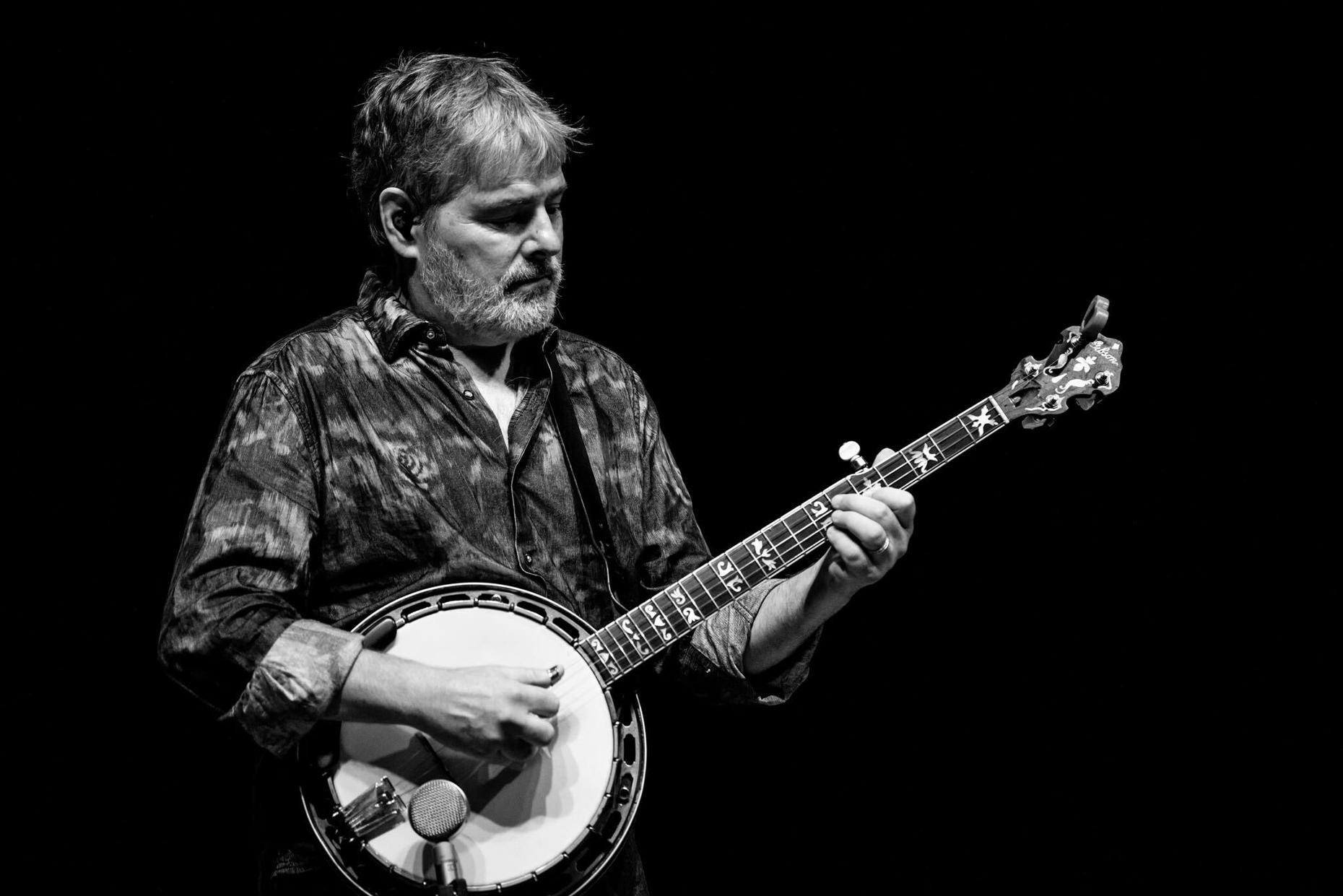
All Of It with Alison Stewart
Béla Fleck Interprets 'Rhapsody In Blue' on Composition's 100th Anniversary
00:33:47
Béla Fleck has a new album commemorating the one hundredth anniversary of George Gershwin's "Rhapsody In Blue."
Loading summary
Transcript60 lines
- [00:04]
Bela Fleck
Listener support WNYC Studios.
- [00:16]
Alison Stewart
This is all of it. I'm Alison Stewart live from the WNYC studio in soho. Thank you so much for spending part of your day with us. I'm really grateful you're here. On today's show, we're talking music of the past, present and future. You know Josh Radner as an actor, actor from the TV as well as a new play at the Public Theater. But he's also a musician and he has a solo debut album out. We'll hear from Josh and some of his music and we're launching our annual Public Song project and we'll talk about how you can participate. We'll also hear from a musician who is participating, one Artura O'. Farrell. And learn about the musical history of the 1920s from musicologist and author Anna Chilenza. And we'll hear how artists are taking inspiration from one of the most influential pieces of music created in that decade. Artists like Lara Downs and the artistic directors of the orchestral collective called the Knights, who are launching a multi year series called the Rhapsody Project in honor of the hundredth centennial of Rhapsody in Blue. And that is where we start the show today with a celebration of the Gershwin classic, but with a twist and a twang. At the recent Grammy Awards, banjo virtuoso Bella Fleck earned his 16th and 17th Grammys for best contemporary instrumental album and best global music Performance. Now in a new project, Fleck turns his sights to his hometown, New York City, and the music of George Gershwin. Gershwin's Rhapsody in Blue premiered today, February 12, 1924, at the Aeolian hall in Manhattan. Hastily written a month before its premiere, it has become an American classic celebrated for its blending of traditional European classical and new American jazz music. Out today for the Rhapsody centennial, Belaflec is releasing an album titled Rhapsody in Blue with several versions of the piece, including its opening track, rhapsody in Bluegrass, a rootsy riff on the composition featuring Bella and his bluegrass band. To mark the release, we're excited to share an exclusive solo performance of the tune from Belafleck right here from the WNYC Studios, here's Bella Affleck with Rhapsody in Blue. It thank you so much for being here. First of all.
- [06:10]
Bela Fleck
My pleasure. Good to be with you.
- [06:12]
Alison Stewart
When do you remember developing an appreciation for Rhapsody and Blue?
- [06:17]
Bela Fleck
Well, it all started when I was very young and I got to go to the Thalia movie theater, which was on, let's see, it was on 95th street between Broadway and West End, five blocks from where I grew up. And they had played old Movies there. And I got to see the Rhapsody in Blue movie. My Uncle Steve took me there, and it blew my mind. You know, at that age, I'm not exactly sure what year it was, but I was definitely in the age group where you could really have quite an experience seeing something like that you'd never seen before. I'd never really heard an orchestra before. The story of George Gershwin in that movie was that biopic. Is that what they call it?
- [06:54]
Alison Stewart
Biopic. Biopic. We'll go for either one.
- [06:56]
Bela Fleck
Yeah. So it was tomato, tomato, Very romantic and sad when he died. And then as time went on, I discovered he actually lived right around the corner from where I lived a few years later. And he became part of the New York Gestalt as years went on. So this was before I even played the banjo.
- [07:14]
Alison Stewart
Wow.
- [07:14]
Bela Fleck
So I just loved it. I just loved the piece, loved his story. And he was a hero around still around the Upper west side, you know, in the community of musicians and people that I knew, and I guess my family. My uncle was a big, big fan of his, too. Steve Rose and my uncle. So, yeah, then I learned to play the banjo when I was around 15, and when I was a senior at Music and Art High school up on 135th street, they played that piece for the semiannual, the final performance of the school year, and two different pianists played it. And I got to play banjo in the orchestra, which was just a strum part that was there in the original performance. But I was lusting after that piano part at this point. I was playing the banjo quite a lot, and I was really curious about all the music that was in. That piano part was just blew my mind. I loved it.
- [08:06]
Interviewer/Host
That was my next question. When did you start to appreciate the musicianship of Rhapsody in Blue?
- [08:13]
Bela Fleck
I think it was one of my first great musical experiences seeing that movie, even though seeing it now, it's so stylized. And if you ever get a chance to watch it, it's really funny how they shot the orchestra piece, but it was very romantic, and the music was a hero. George was the hero, of course, but so was the music. And so that was the first time. But every time I heard it, I was knocked out by it. And even after I left New York and started trying to make a career playing banjo music, I would occasionally check in with that piece and listen to it and go, that's still great. I still love that piece. And then fast forward to pandemic times, and I had a lot of time on my hands, and I started exploring what would it be like to try to actually play the piano part, which was clearly going to be impossible and is impossible because a pianist has 10 fingers they can play with at the same time. I've got three that pluck they have, you know, the whole piano to play. And there's just a lot of things that are just impossible to play on the banjo the way you could play it on a piano. But there are things you can play and ways to make it work. And I always like to try to figure out how to make things work.
- [09:20]
Alison Stewart
What was the first step to making it work? What was the first sort of big leap you had to take?
- [09:24]
Bela Fleck
Well, I mean, there's a first entrance when the piano comes in very short, and that was the first thing, like, can I play that? And when I figured out how to play that, after a week or so, a couple of weeks, what tuning do I need to be in? Do I need to change the pitch of the banjo? I finally found a setting where it seemed possible. And then once I had the first couple of measures, first few bars, I was like, well, that's possible. Let's see what happens next. And I just started working my way through the piece, kind of a measure at a time, in no hurry, with never really expecting it to all work out. I figured I was going to hit a roadblock at a certain point that was going to go, oh, can't do that. Can't do this piece. But until that happened, I was going to keep on, you know, exploring measure by measure, trying to figure out how to do it. And then I did so many rewrites of the banjo part as I figured out what was possible. The first draft was unplayable because I was trying to do so much of the piano part. It was not actually physically playable, but I just kept on simplifying slowly because I didn't want to lose anything I didn't have to lose. And as I got to know it, I got to where it was viable, a version of it.
- [10:33]
Interviewer/Host
You mentioned the obstacles.
- [10:34]
Bela Fleck
Yeah.
- [10:35]
Interviewer/Host
What was one of the obstacles and how did you get around it?
- [10:39]
Bela Fleck
Well, range, like, sometimes you can play the melody in a position, but you can't play the counterparts. And then you have to decide, can the melody be on the bottom and the counterparts be on the top or in the middle or. What do I have to lose here? Some things are just start at the bottom of the piano and work themselves all the way up to the top of the piano. I don't have that range. I've got three octaves, basically. To work with. But I was encouraged by the fact that there had been so many different versions of Rhapsody over the years. And even, you know, there was a harmonica version that a guy named Larry Adler did. And at Gershwin's harmonica version. Yeah, he'd go out and play it with orchestras. And Gershwin liked it quite. He was fond of it. And the piece had been done so many different ways. Also had a secret weapon, which is that my wife Abigail went to Washburn. Washburn, yeah. She went to college at Colorado College. And there was a fellow there named Ryan Banilet or Ryan Benali. I always say it wrong, but anyway, sorry, Ryan, but he wrote a book about this piece. And so when Abby did the commencement speech at her school and I met him, he gave me this book. It's called Arranging Gershwin. And it's kind of the history of the piece and how it's written. And then after he passed, how the history of the piece after he left. And it's one of the most rearranged, redone pieces in the classical repertoire. So there was a certain license there to explore it and try different things. Also, you know, like, by then, Marcus Roberts had done a very jazz version of it. And gosh, if you're on a United airplane, you might see an open paw version of it, which I kind of wish wasn't true, but, you know, there it is.
- [12:27]
Alison Stewart
I'm speaking to Bella Fleck about his new album, Rhapsody in Blue. Featuring new versions of George Gershwin's composition. The piece turns 100 today. Rhapsody in Bluegrass. Sorry, when did that come to you?
- [12:40]
Bela Fleck
I still feel bad about that one. Well, it occurred to me just. Yeah, I just. I cringe even thinking about it. I mean, I cringed thinking about it. And I cringed when I called up Brian Sutton, the guitar player, and said, would you come over and try this idea with me and see what you think? And he came over and we started playing and I stopped cringing, was like, well, this sounds cool. I actually think this is actually good. One of the problems is Rhapsody is only about 18 minutes long, the orchestra version. So what was gonna go on this record and how was I gonna get it out in time for the anniversary? Which was really important to me, even just for my own personal reasons. I wanted to get it out on the 100th anniversary. So I'm only up to 18 minutes on this record now. What am I gonna do? So I started thinking about it and I thought, well, you know, Earl Scruggs was born within a few weeks of. Of the premier, his hundred year birthday. Well, he was born on January 6, 1924. Rhapsody was premiered on February 12 of 24. So for some reason, that kind of gave me some extra firepower and license to explore this idea because they were happening kind of in, you know, the same world, the same. Same airspace, at least. So, anyway, we tried it out and taught it to this great band with Sierra hull and Michael Cleveland, Brian sutton, Mark schatz, and Justin Moses, and came up with a good version of it. And now we were still only up to 30 minutes of music, which still felt kind of short. And at that point, I was starting to scramble for, like, the clock was ticking down, and how was I going to get. It wasn't just that. The creative side was also very important to me. So then the idea of exploring what kind of a blue. Is there a blues version of this? That would be fun. That would be. You know, by this point, I was kind of proud of the bluegrass version because it sounded like such a horrible idea. The fact that it actually sounded good was a success. You know, I love when people have low expectations. I mean, that's been my whole career. You know, it's like, oh, jazz on a banjo. Horrible idea. Oh, it's okay until it's not. It doesn't suck. It does. Just has to not suck if I do it. It doesn't actually have to be good. It just has to not really suck.
- [15:00]
Interviewer/Host
I think you're selling yourself short.
- [15:01]
Bela Fleck
So the bluegrass version didn't suck. So I was pretty thrilled. And then I started trying to think about this blues version and tried some different ideas and finally settled in on doing it with Jerry Douglas and Sam Bush, who are my old pals, but they're really blues guys. And then Victor wooten came in and played electric bass on it, too, from the fleck tones, and we came up with a different way to look at it. So when they started out, I was really trying to play the piece. I didn't want to. I wanted to play with an orchestra and play the piano part and play what was written, what was created by George Gershwin. And I didn't want it to be a blue bluegrass orchestra thing. But once that was done, with the bluegrass version and the blues version, I felt a lot of freedom to try stuff and explore and mess with it. And so I'm glad that happened, because otherwise, I would have. You know, if I had done, for instance, another classical work or even written a concerto to go with it, I wouldn't have explored the piece as much as I got to.
- [15:53]
Interviewer/Host
Well, let's hear that. Rhapsody in Blues. Let's play it it.
- [16:22]
Alison Stewart
Sam. My guest is Bella Fleck. We're talking about his new album, Rhapsody in Blue, featuring different versions like this one, Rhapsody in blues, on the 100th anniversary of the song. What do you think these variations of Rhapsody in Blue reveal about the original version and about the composition?
- [17:18]
Bela Fleck
I think it just reveals that he wrote some great tunes. I mean, I think George Gershwin first and foremost just wrote great tunes. And also, I love the do it yourself thing about George Gershwin, that he was a guy who was like, you want a piano concerto? I think I can do that. Blah, blah, blah. Three weeks later, Rhapsody and Blues. You know, concerto and F. He wanted to write something that incorporated jazz and black music. Oh, I'll go down to, you know, Charleston and study it, check out the scene and come back with, you know, with this piece or with Porgy and Bess or things like that, pop songs. And it was just like to tell me what you want, I'll do it. I can do anything. I think he was very confident and very able, but he also did it his own way. And so he's one of those. Those guys. And I relate to that because with the banjo, there's a lot of areas that haven't been mapped or it hasn't been played. In certain situations, I have to figure it out. I'm always trying to figure it out, and I try to be confident that it'll work out, and often it does. But you have to believe. You have to just kind of go, I'm going to do this. I'm going to do this. I don't know how to do this. I'm going to figure it out. And you figure out something.
- [18:29]
Alison Stewart
Yeah, the not knowing how to do it is how you figure it out.
- [18:32]
Bela Fleck
Right. But it also creates trial and error. Exactly. But it also creates a different final product than a person. If you say, let's get someone to write a concerto, when you get someone who writes concertos all day long, then it's going to be more of the type of concerto we expect to hear. But if you get someone who's never done one, they may do something that is a little different, and it'll have strengths and weaknesses based on that. And so that's my world. I'm usually trying to figure that out. And I win and lose because of that.
- [19:00]
Alison Stewart
You're listening to my conversation with Bela Fleck about his new album, Rhapsody in Blue, which is out Today on the 100th anniversary of the premiere of Gershwin's original. After the break, Fleck will Play an unrecorded and unreleased Gershwin composition written specifically for. Wait for it. Banjo, which Bela Fleck discovered in the Library of Congress archives. This is all of it. This is all of it. From wnyc, I'm Alison Stewart. Today is the hundredth anniversary of the premiere of Rhapsody in Blue right here in New York City. And to mark the centennial, banjo virtuoso Bella Fleck is releasing an album of new variations of on the composition. The album also features other work by Gershwin, including a piece written for banjo, never before recorded or released. Here's more of my conversation with Bela Fleck. The album features a piece titled Unidentified, which George Gershwin wrote for the banjo. Where did this composition come from? What condition was it in when you found it?
- [20:14]
Bela Fleck
Yeah, so my friend and Abby's school partner, Ryan, came to the rescue here. He came to Nashville, where we did the first premiere of me playing Rhapsody with the orchestra. And afterwards, we were talking, and again, he's the person who gave me who wrote the book about Rhapsody. And he asked me, what else are you going to do with the piece? And I told him about the bluegrass version. I was thinking about the blues version. And I had been thinking also about some solo piano stuff of Gershwin's, including Rialto Ripples, which I also ended up recording. Just really cool solo piano music, very much in a ragtime kind of world. Right. And so anyway, he thought about that, and a few weeks later, he got in touch with me. He said, hey, I was snooping around the Library of Congress, and I found a Gershwin banjo tune. And so what it was was one page of music handwritten by George Gershwin. No chords written in just the single lines, Occasional chords written in the second part where he wanted particular voicings, but he knew what chords were, so he didn't need to write them down except in these spots. And it was just basically a simple ragtime tune with a couple of Gershwini quirks.
- [21:37]
Interviewer/Host
Hear it? You're going to perform it for us.
- [21:38]
Bela Fleck
All right, let's see how I do.
- [24:55]
Interviewer/Host
That was Unidentified by George Gershwin, performed by Bella Fleck. It's on his new album, Rhapsody in Blue. Before your performance, you mentioned Rialto Ripples, a ragtime piece that gershwin composed in 1916 for piano. What made you want to record this one?
- [25:11]
Bela Fleck
Oh, I just liked it. It was just sometimes you hear a piece and you go, I'd like to know how that works. I'd like to be inside that piece, seeing how it works. And it was catchy. I just liked it. Sometimes you hear stuff and you go, well, that's nice, but I don't need. I'm not attracted to it. But I was attracted to that one right from the beginning. And I'm pretty sure my uncle sent me that one first. My uncle Steve.
- [25:30]
Interviewer/Host
Uncle Steve, yeah. All goes back to Uncle Stephen.
- [25:32]
Bela Fleck
Stephen Ryan. Steven Ryan, yeah. Dedicated to those guys. It is.
- [25:37]
Interviewer/Host
Well, let's hear Rialto Ripples.
- [25:57]
Alison Stewart
Sam.
- [26:36]
Interviewer/Host
I love that. It sounds like he's talking to you. He's telling you a story. I'm not sure what the story is, but I'm enjoying it.
- [26:43]
Bela Fleck
Well, good.
- [26:44]
Interviewer/Host
Do you understand what I mean when you hear. When you're listening to it, I'm like, oh. And he's just finished that sentence, and he started the next sentence, and now he's telling me the funny part. And now. Oh, wait, we're gonna slow down and get some backstory here.
- [26:54]
Bela Fleck
I'm with you. And sometimes people who play piano well will rush through the pieces. And the story aspect doesn't always come through, but that's a mark of a great pianist at whatever speed that it comes through. I was looking this up while we were listening because he co wrote it with somebody and sometimes we forget that that was a co write with someone named Will Donaldson. But, yeah, I didn't know any of this music. Again, if you're a pianist, you would know all this rap and have had a chance to, you know, get it under your fingers. But for me, it was new, and I think I played it slower than most people play it. Like people might go. So I took it a little bit more evocative, partly because I didn't have as much time to learn it, but partly because I liked it that way.
- [27:35]
Interviewer/Host
Yeah.
- [27:36]
Bela Fleck
Yeah.
- [27:36]
Interviewer/Host
I also was picturing dancers. I was picturing people and finery.
- [27:40]
Bela Fleck
Yeah.
- [27:40]
Interviewer/Host
So it almost looks like a promenade on a warm day. I don't know. That's where my brain went as I hear that trap.
- [27:45]
Bela Fleck
I'm with you.
- [27:46]
Alison Stewart
Today's the 100th anniversary of Rhapsody in Blue, and you're releasing the album today.
- [27:50]
Interviewer/Host
Is there any plan to perform your album live?
- [27:54]
Bela Fleck
I'm going to be playing with the bluegrass band whenever we're out, we play it now, and it's really fun because nobody expects it comes out of nowhere.
- [28:03]
Interviewer/Host
Oh, nice.
- [28:03]
Bela Fleck
Yeah. Well, that'll be over now that the record's out, but. And then I'm playing with maybe eight or ten symphonies over the course of the year. I'll be playing the piano part with, including Cleveland, which is exciting since they're one of the Top, top cats. But I want to play it. Oh, and then I'll be playing it here in New York on the 4th of May at Carnegie Hall. Well, there's that. That would be a big deal. Yeah, that would be a big deal. Yeah. Or that. And the bluegrass band will be there. When I say the bluegrass again, I'm talking about these. You know, every single person in the band should be mentioned every time because they're all stars in their own right. But I'm sure we'll be playing it. We'll be playing the orchestra version with a great orchestra led by Eric Jacobson of the Knights and other orchestras.
- [28:51]
Interviewer/Host
Oh, nice.
- [28:51]
Bela Fleck
Yeah. And Bruce Hornsby will be there, will be doing some stuff. Zakir Hussain will be there. Annette Cohen will be there and will be doing some duets of different kinds. But the big thing is Rhapsody and the excitement of getting to play that piece in that room.
- [29:05]
Interviewer/Host
For me, the name of the album.
- [29:08]
Alison Stewart
Is Rhapsody in Blue. It drops today featuring new versions of George Gershwin's composition. It is from Bella Fleck. You're going to play us out.
- [29:16]
Bela Fleck
Okay.
- [29:16]
Alison Stewart
Bella, thank you so much for coming to the studio.
- [29:18]
Bela Fleck
My pleasure.
- [33:19]
Alison Stewart
That was Bela Fleck. His new album, Rhapsody in Blue is out today. On the 100th anniversary of Gershwin's original composition and in the spirit of adaptation and centennials, we're launching the 2024 edition of the Public Song Project today. Stick around for more info about this year's installment of the listener sourced songbook. It'll happen near the end of the show today. You can find out how you can get involved alongside music like Bella Fleck or you can go right now to wnyc.org publicsongproject Coming up next, we'll dig deeper into the legacy of Gershwin's Rhapsody in Blue with more musicians drawing on the composition for new projects.
- [33:56]
Multicare Announcer
For 140 years, MultiCare has been in Washington prioritizing long term solutions, partnering with local communities and expanding access to care. Together, we're building a healthier future. Learn more@ multicare.org NYC now delivers breaking news, top headlines and in depth coverage from WNYC and Gothamist every morning, midday and evening. By sponsoring our programming, you'll reach a community of passionate listeners in an uncluttered audio experience. Visit sponsorship.wnyc.org to learn more.