← All Of It with Alison Stewart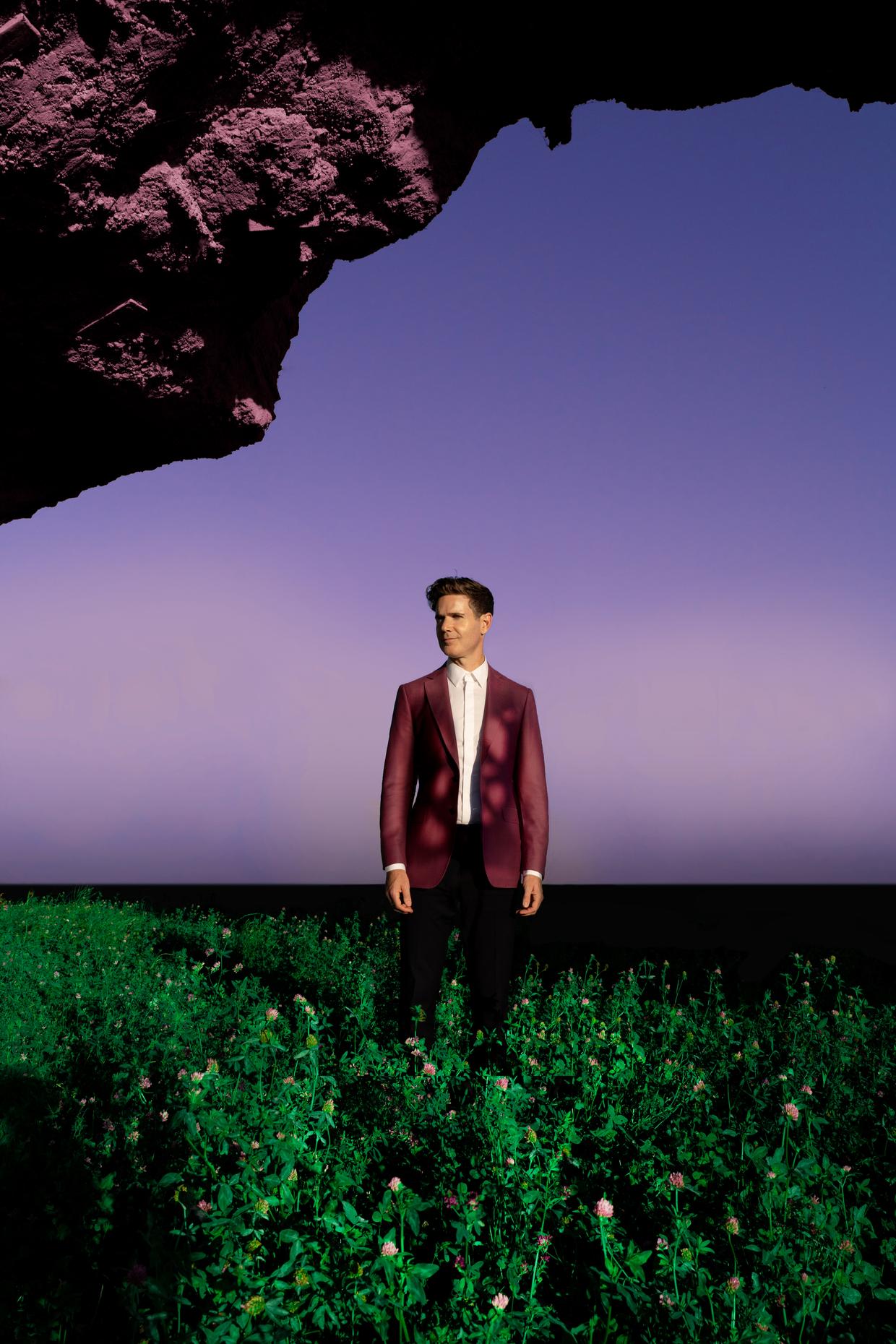
All Of It with Alison Stewart
Ben Wendel: 'All One' (Grammy Listening Party)
00:25:07
Musician Ben Wendel joins to talk about his album, 'All One,' which is nominated at this year's Grammys for Best Contemporary Instrumental Album.
Loading summary
Transcript64 lines
- [00:00]
Alison Stewart
Attention party people. You're officially invited to the party Shop at Michael's where you'll find hundreds of new Items starting at 99 cents with an expanded selection of party wear, balloons with helium included on select styles, decorations and more. Michaels is your one stop shop for celebrating everything from birthdays to bachelorette parties and baby showers to golden anniversaries. Visit Michaels store or michaels.com today to supply your next party.
- [00:27]
Ben Wendell
I'm going to put you on, nephew. All right, unc.
- [00:30]
Alison Stewart
Welcome to McDonald's. Can I take your order, miss?
- [00:32]
Ben Wendell
Been hitting up McDonald's for years. Now it's back. We need snack wraps. What's a snack wrap? It's the return of something great. Snack wrap is back.
- [00:43]
Alison Stewart
Oh my gosh. Have you been to Marshall's lately? They have all the brand name and designer pieces you love, but without the jaw dropping price tags. Alright, so here's the truth. You should never have to compromise between quality and price. And at Marshall's, you don't have to. Marshalls believes everyone deserves access to the good stuff and that's why their buyers hustle around the clock. To make it happen for you, visit a Marshalls store near you or shop.
- [01:08]
Ben Wendell
Online@Marshalls.Com suffering from dry, tired, irritated eyes. Don't let dry eyes win. Use Sustain Pro. It hydrates, restores and protects dry eyes for up to 12 hours. Triple action dry eye relief listener support WNYC Studios.
- [01:42]
Alison Stewart
This is all of it on wnyc. I'm Alison Stewart. As we get closer to the Grammys, we continue our series of Grammy listening parties with saxophonist, bassoonist and composer Ben Wendell. Wendell's album All One is nominated in the best contemporary instrumental album category. Let's listen to the first song on the album. This is I Loves yous, Porgy with vocals from Cecile McLaurin Salvant.
- [02:10]
Ben Wendell
I love you, Porgy. Don't let him take me don't let him handle me and drive me mad if you can keep me I want to stay here with you forever and I'll be glad I love you, Porky. Don't let him take me don't let him handle me with his hot hand if you can keep me I want to stay here with you forever I've got my man.
- [03:33]
Alison Stewart
In the song, you hear lots of elements, but it's the work of Wendell alone. It's a pandemic album made completely by himself and featuring one collaborator on each song. So all that layering and orchestral arrangements you hear, that's just him. Joining me now in studio For a Grammy listening party is Ben Wendell. Ben, welcome to the studio.
- [03:50]
Ben Wendell
Thank you so much.
- [03:50]
Alison Stewart
Alison, what was the original idea for this album?
- [03:53]
Ben Wendell
The original idea? I think the original idea was this was the fruition of a childhood obsession and dream. Basically, I. I started playing saxophone and bassoon when I was very young. I was obsessed with orchestral music and playing in the marching band and wind ensemble. I just loved being surrounded by woodwinds. It felt very special to me. And I think as an adult, you know, I'm in the middle of the pandemic. I'm experimenting with this technique called overdubbing. And I thought, what if I were to just create these little orchestras and go to that safe space that reminds me of being a kid?
- [04:32]
Alison Stewart
Which came first, the sax or the bassoon?
- [04:36]
Ben Wendell
In the beginning. In the beginning, there was the saxophone.
- [04:41]
Alison Stewart
And then what a. I can understand as a kid what appeals about a saxophone.
- [04:45]
Ben Wendell
Yes.
- [04:45]
Alison Stewart
What drew you to the bassoon?
- [04:47]
Ben Wendell
The bassoon. Well, to be honest, I was very lucky. I was in a public school that had a strong music department that was in Santa Monica. They had an orchestra, and they were invited to go to Spain and Germany for a youth competition. They needed a second bassoon player. I just did it because I wanted to go to Europe with my friends, and I had no idea that I agreed to learn this crazy medieval instrument. But then I really loved it, and I loved the sound of it. It's really quite an extraordinary instrument.
- [05:19]
Alison Stewart
When you began working on this project, you just explained the original idea. When did the idea of collaborators come in?
- [05:26]
Ben Wendell
You know, I think I'm finally at the age where I can sort of look back at what I've done so far, and there's definitely a clear pattern, which is that I really love collaborating. I just love it. I love learning through the process of working with people that I think are extraordinary. And so that was just yet again, this natural feeling of, you know, I'm sort of experimenting with making these little orchestras. But I just had to reach out to people that I knew as friends or not even as friends that I. I've always admired and wanted to work with. So that's how it started.
- [06:03]
Alison Stewart
Follow up on the making with collaboration, knowing that you always, always liked it. What felt different about it during the pandemic? Did it take on more meaning because we weren't seeing people, or was it more awkward? How did the collaboration feel different?
- [06:19]
Ben Wendell
It was both. It definitely took on more meaning during that period of time. I was actually, believe it or not, moving around quite a bit with my wife. I won't get into all the details, but needless to say, during the course of that period of time, I was quote unquote, stranded in Hawaii, then in Los Angeles, then in Paris than in Amsterdam. And so the album was made as we were moving around and kind of reinventing the wheel in each city. But for example, the track that you just played with Cecile McLaurin Savant, I mean, it was very surreal. I never got to see anybody in person. And so I remember calling her. I think she was in New York at the time, and I put her on speakerphone and I said, yeah, yeah, yeah, can we. Can we do the song together? Okay, let's find the key. And we literally played a duet over the phone. And I think I was in Maui and she was in Brooklyn. I don't even know. And, you know, but that connection and being able to focus on that space, it really. It really fed my soul during that time.
- [07:22]
Alison Stewart
What made Cecile McLaurin savant the person that you wanted specifically for this song?
- [07:27]
Ben Wendell
You know, sometimes in the creative process, something pops into your head and you just don't question it. So I've always greatly admired Cecile. She's just remarkable. And I think I was messing around with an arrangement of I Love Zu Porgy, and I just literally saw her in my mind's eye and I knew she would be incredible on it. So it's not much deeper than that.
- [07:54]
Alison Stewart
And that's a standard that's been performed by Ella and Nina Simone, so many people. What were the conversations like with Cecile about how do we do this? It's such a well known song. How do we make it our own? How do we honor what it is?
- [08:09]
Ben Wendell
Well, in the case of Cecile, actually, honestly, in the case of most of the people I collaborate with, the whole reason I do it is they are already such incredibly fully formed artists that I don't want to guide them too much. I kind of want to see what they do and then react to it. So in the case of Cecile, we had some conversations about it. I mean, Gershwin has always been one of my musical heroes. But in terms of what she did, I literally didn't know what she was going to do, and it was just extraordinary. And what she did actually was very surprising. And when she sent me back the vocals and I put it together with what I had recorded, I actually adjusted some of what I had recorded to kind of accommodate what she did. So there was this sort of weird digital back and forth that was happening. A very slow conversation.
- [09:00]
Alison Stewart
My Guest is Ben Wendell. The name of the album is All One. It is nominated in the Best Contemporary Instrumental Album category. We're having a Grammy listening party for the album. So you said something. You've said it twice. And I thought, I have to ask him what he means. She said, I make these little orchestras. I'm making little orchestras. What does that mean, practically, when you're making a little orchestra by yourself, what's happening?
- [09:23]
Ben Wendell
Yeah, so there's this technique called overdubbing. It's been around for quite some time. So basically, it allows you to layer audio tracks on top of each other. And I'm proud to say, I think, in terms of layering upwards of 30 bassoons and saxophones, this may be the first album that has attempted this. But, yeah, what that means is that essentially I had to envision all of these interlocking voices, and I had to play in a way that's very complicated. I don't know how to say it correctly, but basically, I had to play in a way where, let's say, I had to access different personalities within myself to give the sense that it was 30 different musicians. Because actually, there's this thing that happens when you use the overdubbing technique where you can hear this kind of sameness. There's this sort of feeling like, oh, I think I recognize it's one person. So I. I did all kinds of stuff. I recorded the different instruments in different rooms, different microphones, and then literally behaved differently as I was tracking everything. So it's a bit of a. Bit of a magic trick.
- [10:34]
Alison Stewart
Well, with all that in mind, let's hear another song throughout featuring guitarist Bill Frissell. We're gonna play a minute and a half from the beginning. What would you like people to listen for at the top of the song?
- [10:45]
Ben Wendell
Oh, my God. Well, I mean, Bill Frizzell is absolutely one of my heroes. He sort of transcends his instrument. I guess the thing to listen for would be how these instruments speak to each other. The combination of bassoon, sax. I'm also using effects pedals, which is not very common, commonly used with saxophone and bassoon.
- [11:07]
Alison Stewart
Let's take a listen. So what is it about the bassoon and the saxophone, Ben, that they complement each other?
- [12:42]
Ben Wendell
Yeah, it's really interesting. They're instruments that are on the opposite sides of a timeline. The bassoon, literally is a very old instrument. It's a medieval instrument. And quite frankly, it hasn't been updated that much. It's still very difficult to play. Meanwhile, the saxophone was built in the middle 1800s. It's a very new instrument and took on a life of its own. It kind of didn't quite fit in with the orchestra like it was intended. And as you know, it essentially took over the world. It ended up in, obviously, jazz and marching band and all these different worlds in the pop world. So, personally, I love the combination of saxophone and bassoon because it really is this. This weird combination of new and old. The bassoon, really, when I hear the bassoon, I feel like it's an ancient sound. And when I hear the saxophone, it feels like the sound of the future. And in a way, you know, music is kind of timeless in the sense that when you have this old and new intersecting, then it's sort of like time becomes irrelevant in a way. So I love the feeling of those two instruments kind of colliding.
- [14:01]
Alison Stewart
And I also loved how forward the guitar, how Bill Frissell's guitar was very forward and bright and leading. But not overwhelming.
- [14:12]
Ben Wendell
Totally. I mean, definitely for me, having these different guests, you know, these are like my love letters to these guests. So I'm glad that you heard it that way. I mean, these are offerings to master musicians, and so I wanted him to be in the forefront.
- [14:32]
Alison Stewart
My guest is Ben Wendell. The name of the album is All One. It is nominated for a Grammy for Best Contemporary Instrumental Album. In that category, we are having a listening party. He's a saxophonist, bassoonist, and composer. Working in this way by yourself with all these different layers, did you have to unlearn anything? Did you have to remind yourself, like, I don't have to do that, or, oh, I need to break that rule in this case?
- [14:57]
Ben Wendell
That's such an amazing question, actually. If anything, I had to learn new things. And I think that's actually what I love about the creative process and what I call the musicians path, which is. It's just a path of learning, you know. So in doing this, there were so many technical challenges to figuring out, okay, how do I accommodate these guests? How do I combine these instruments? And every single track was different. I wouldn't say, yeah, I didn't have to unlearn anything, but I. Yeah, I had to. I had to sort of expand my understanding of how things would work. So, you know, for example, with. I'm trying to think with Jose James is a guest on the album. And for example, with him, we happened to be in Amsterdam at the same time. I thought of this idea, okay, how about I have him come over and sing tenderly, completely acapella, alone, without a track, without anytime or anything. Like that. And. And then I'm going to build an orchestra around him. So to do this was incredibly technically challenging, and. But I loved the challenge, and I learned so much doing it. So that's just an example.
- [16:06]
Alison Stewart
Well, I. We pulled tenderly oh. So we can listen to it. Let's take a listen.
- [16:23]
Ben Wendell
The caress the trees tenderly the trembling trees Embrace the breeze tenderly Then you and I came wandering by and lost Lost in a sight were we the show was kissed by sin Tenderly I can't forget how two hearts meant breathlessly.
- [18:19]
Alison Stewart
That is from the album All One. My guest is Ben Wendell. So that happened while you were in Amsterdam, and I believe you said Maui, Paris, New York. So legit. How long did it take to make this album?
- [18:32]
Ben Wendell
It took from beginning to end. Yeah. Maybe almost two years. You know, it would. It just happened in pieces. You know, every time that we. That we moved, we were basically living out of four suitcases, and I had my bassoon and my sacks with me every time we moved. I had to kind of figure out a place to record and all of these kind of things. It was very challenging. But in the case of Jose and that experience. Yeah, he happened to be in Amsterdam with his wife. We were. We were kind of became Covid bubble buddies. And that is the song that he sang to his wife on their wedding. And so it was very, very precious to him. And. Yeah. But. Yeah, perfect example of something that I had literally never done before. He just sang that with. I gave him a starting pitch, and he just sang it exactly as he wanted. No click, no time, no nothing. And then I just literally wrote that orchestra around him. And it was really my favorite moment was inviting him back maybe a month later, after I had laid down the orchestra and just, you know, say, put on the headphones, Tell me what you think. So then suddenly he heard this whole world around this performance that he just sang completely on his own. And anyway, that was very gratifying for me. He was happy with what he heard.
- [19:58]
Alison Stewart
Given that you made this during the pandemic, when you listen back to it now, we're in a very different place culturally and socially. Obviously, people need to be still careful about COVID but we're out and about and we're in the world. Does it sound different to you now?
- [20:16]
Ben Wendell
Yes. I was thinking about just being here with you. It's interesting how music sounds different even with who's listening to it with you. So just being in this room with you and listening to it, definitely, I feel some time traveling happening, and it's interesting to hear that music and realize that there is a feeling that runs through all of it, which was that feeling that was very hard to describe. I mean, I think it was different for everyone during the Pandemic, but it was certainly a mixture of, yeah, joy and sadness and loneliness and a desire for connection.
- [20:57]
Alison Stewart
Let's play the track Wanderers. And this features Terrence Blanchard, longtime friend, someone you just wanted to work with. I don't know. What's your relationship with Terrence?
- [21:07]
Ben Wendell
Terrence, yeah, just longtime hero. I mean, both as a film composer. Well, now an operatic composer. And all of his albums. Yeah, he was just someone that was always on my. My bucket list. And, yeah, I just. I. I think I just reached out to him. I told him what my idea was. I played him one of the tracks I had already done, and he was on board. And now we're friends. I'm getting to play with him in the New York Phil this coming weekend, and it's just an absolute joy to be around folks like that and learn from them.
- [21:45]
Alison Stewart
Let's hear Wanderers.
- [22:04]
Ben Wendell
Sam.
- [22:45]
Alison Stewart
So I see that you, Ben and Terrence are going to be, as you mentioned, at Lincoln Center. It's called Film score live on January 28th. Is it what it sounds like?
- [22:55]
Ben Wendell
Yeah. Yeah. I'm so excited. Yeah, it's going to be his music, and I think it's the New York Phil playing with his group, the E Collective, and I'm going to be a guest. There's going to be also Liz Wright and Kurt Elling, and. Yeah, what can I say? This is. I have to pinch myself in those moments, you know, like, oh, I'm doing that.
- [23:16]
Alison Stewart
Oh, enjoy it as well.
- [23:17]
Ben Wendell
Thank you.
- [23:19]
Alison Stewart
Where were you when you found out your album was nominated for a Grammy?
- [23:22]
Ben Wendell
I was at home. My wife was home. At that moment. I was on a phone call and with someone. I don't know who I was. I was speaking to a friend in Europe, and suddenly I started getting a lot of text notifications. I had completely forgotten that that was the day of the announcements. And so I just kept ignoring the. You know, I don't even know what we were discussing. But then at a certain point, a friend of mine who actually had won the Grammy last year, the great Taylor Eichstie, a piano player that I play with quite a bit. Then I saw him try to call me, and I said, hmm. So I told the friend. The friend. I was like, you know, man, I think I need to get up the call. I think maybe. I think I just got nominated for a Grammy. Really? You know. And, yeah, it was great. I was so glad to not know that that had happened. That's the best way to find out.
- [24:15]
Alison Stewart
Ben Wendell is nominated for a Grammy for all one in the best contemporary instrumental album category. Thank you so much for coming to the studio.
- [24:24]
Ben Wendell
Thank you so much, Alison, for having me. Thank you.
- [24:26]
Alison Stewart
We're going to go out on Speak Joy from the album all one.
- [26:05]
Ben Wendell
Letting.
- [26:05]
Alison Stewart
You know on tomorrow's show, celebrated chef Jamie Oliver. His latest cookbook features 200 recipes from salads to desserts. Each one only has five main ingredients. He'll join me in studio to talk about five ingredients Mediterranean. And he will take your questions and calls about cooking that is happening tomorrow. I'm Alison Stewart. I appreciate you listening. I appreciate you, and I will meet you back here next time.
- [26:40]
Ben Wendell
I don't mean to interrupt your meal, but I love Geico's fast and friendly claim service.
- [26:45]
Alison Stewart
Well, that's how Geico gets 97% customer satisfaction.
- [26:48]
Ben Wendell
Yeah. I'll let you get back to your food.
- [26:51]
Alison Stewart
So are you just gonna watch me eat?
- [26:53]
Ben Wendell
Get more than just savings. Get more with Geico. I'm gonna put you on, nephew. All right.
- [26:57]
Alison Stewart
Welcome to McDonald's. Can I take your order, miss?
- [27:00]
Ben Wendell
I've been hitting up McDonald's for years. Now it's back. We need snack wraps. What's a snack wrap? It's the return of something great. Snack wrap is back.