← All Of It with Alison Stewart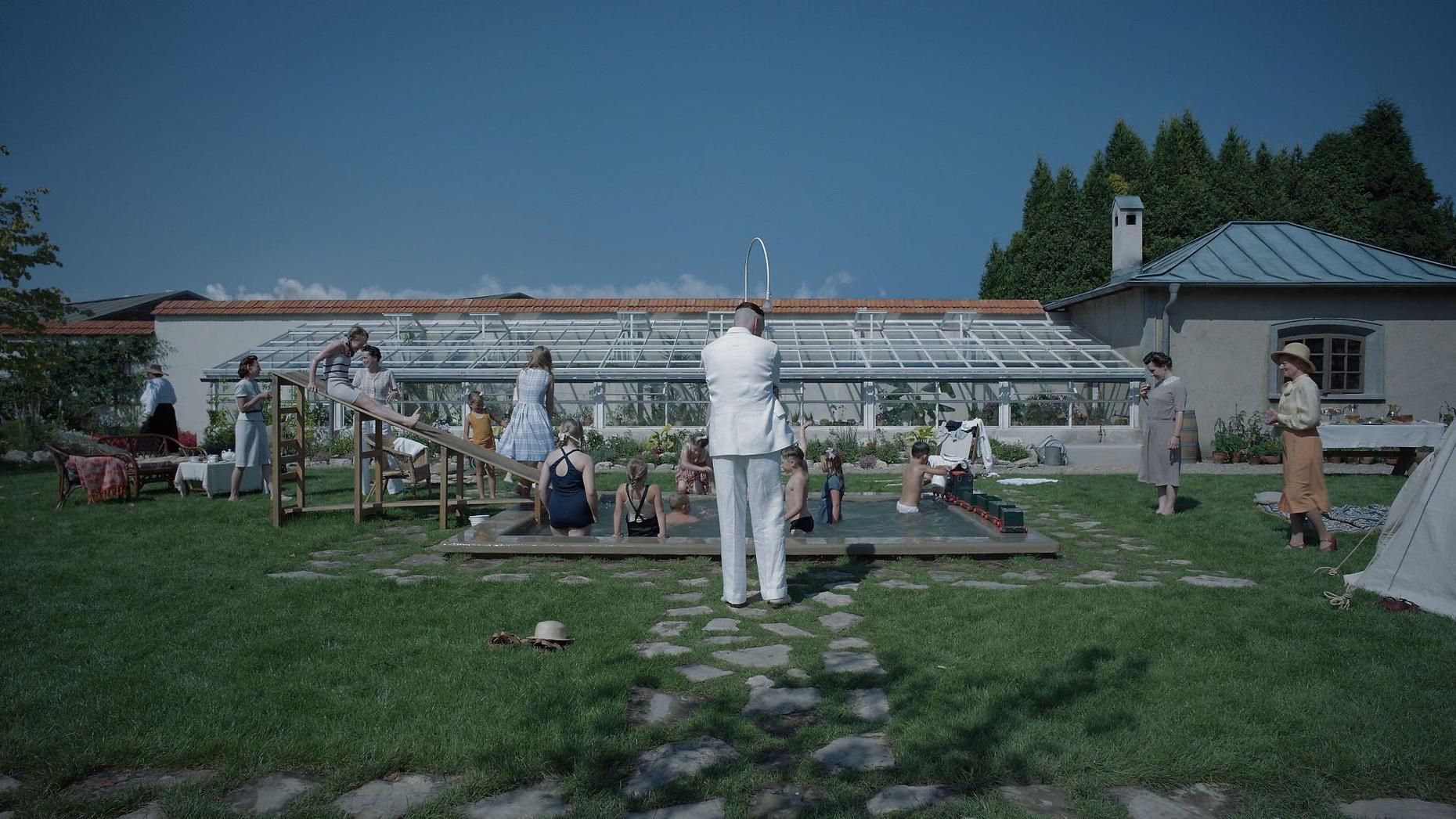
All Of It with Alison Stewart
Best Sound: Johnnie Burn for 'The Zone of Interest' (The Big Picture)
00:23:14
We speak with the sound designer of 'The Zone of Interest,' as part of our series, The Big Picture.
Loading summary
Transcript56 lines
- [00:02]
Bix Soleil Advertiser
Surprise beach day. No excuses. I'm in. Gimme five. With Bix Soleil Glide Razor, you'll have hydrated, smooth skin that's ready to go on the fly. No shave cream needed. You can prep, shave and hydrate all in one step thanks to moisture bars that hydrate your skin during and after shaving. 5 flexible blades hug your skin for a close shave. Glide into smooth. It's your time to shine with bixsolil. Buy now at Amazon and Walmart. Ready? Your skin looks amazing. So smooth and beach ready.
- [00:29]
Johnny Byrne
Let's go.
- [00:32]
Sling TV Advertiser
With networks like Fox News, cnn, MSNBC and more. Sling is the best way to get the news you care about, which is great for everyone. Well, almost everyone. Where's that dang paperboy?
- [00:44]
Johnny Byrne
I need my news outdated and rolled.
- [00:47]
Sling TV Advertiser
Up like a burrito. Finally. Now I can read all about what happened forever ago. Get the most important news delivered reliably at the best price. Sling lets you do that. Visit sling.comnews to see your offer. Next Level Pet people will do anything for their dogs. That means treating them with next level protection from parasites with nexguard Plus, a Foxalaner Moxidectin and parental chewable tablets. Nexguard Plus Chews provide one and done monthly protection against fleas, ticks, heartworm disease, roundworms and hookworms, all in a tasty beef flavored chew. Use with caution in dogs with a history of seizures or neurologic disorders. Dogs should be tested for existing heartworm infection prior to starting a preventive. Ask your vet about nexguard Plus Chews. Listener Support WNYC Studios.
- [01:52]
Alison Stewart
This is all of it from wnyc. I'm Alison Stewart. As part of our ongoing series the Big Picture spotlighting Oscar nominees who work behind the camera, we turn to Best Picture nominee the Zone of Interest and its sound designer. The power of the film is as much about what you don't see and what you do hear. In the film we meet Auschwitz commandant Rudolf Haas and his wife Hedwig and their children living a lovely home in a lovely home with a verdant garden and all that separates them from the concentration camp is a wall and wire. Neither can stop the sounds of the atrocities occurring feet away. Thanks to the work of Oscar nominated sound designer Johnny Byrne. The camp is always present. Gunshots Ech. While the kids splash in a pool, dogs bark and people scream while Hedwig tends lovingly to her dahlias. And then there's this constant rumbling, a kind of menacing hum which we come to realize is the horrifying noise of the crematorium. This is just white noise. To the family who seem to go about their daily life unbothered by the sounds of genocide happening right outside their windows. Johnny Byrne did diligent historical research for his work on this film. He has been quite busy. He was a sound designer for Poor Things, which is also up for best picture of the Year, and he joins me now. Johnny, welcome to the show.
- [03:11]
Johnny Byrne
Alison, hi. Thank you for having me.
- [03:13]
Alison Stewart
Very pleased to have you. Listeners, we want you to be aware that some of the sounds you'll hear in this conversation might be disturbing. So please take care in listening. Johnny, when the idea of this film was first sent to you, what questions did you have before agreeing to come aboard?
- [03:31]
Johnny Byrne
Well, I mean, I've known the director for 25 years or so and, and I guess question wise it was probably how on earth are we gonna reproduce sound that doesn't exist and do it faithfully with respect to the victims and survivors and how important will that sound be for the film? Because at the time we weren't really quite sure. We knew Jonathan, the director knew that he didn't want to go inside the camp and visually show the atrocities. So we knew that sound would be an important part of it. But we ended up in quite a full sound soundscape place with it in the end.
- [04:10]
Alison Stewart
You mentioned that you've known Jonathan Glazer for 25 years. How did you meet?
- [04:15]
Johnny Byrne
Well, just I, I, long time ago. I started working on him with commercials and pop promos and you know, Uncle Rabbit in the Headlights video was the first thing we did together and yeah, and then a sort of Guinness surfer commercial that was a, quite well known in England for the amazing visuals of a man surfing with horses and. Yeah, and then Jonathan invited me to help him out with his feature film Birth. And following that, under the Skin, which was about 10 years ago, which was a real kind of adventure for us in understanding how we kind of like to do sound in film.
- [04:53]
Interview Host/Interviewer
I have to imagine on a film like this there's gotta be a lot of trust and a lot of communication with the director. What is something that he does as a director that really helped you do your job.
- [05:09]
Johnny Byrne
Well when he, he, Jonathan likes to, to work together and so the post production process, which is kind of, you know, obviously once you've got the film in the can and you start stitching it together, that was about a year and a half really. And most of those days I'd see John and we'd, you know, we'd work together on some scenes and I'LL do some, some work for, for you know, half a day without him. But, but very much the whole film was a sort of constant calibration of not wanting to sensationalize or, or step over a line or anything. So. So what does he do? He, he helps me do it together. That's what he does.
- [05:47]
Interview Host/Interviewer
He's a collaborator. It sounds like he's.
- [05:50]
Johnny Byrne
Yeah, he's an excellent collaborator. Yeah, totally. And yeah, and I think probably most importantly, you know, he, he trusts me to. You know, I think it was a quite a big leap of faith for you know, for a 24 films and for Jonathan and for everyone involved to, to go through the process of filming what's essentially a kind of a nice visual story of a family having a reasonably good time and, and leave the whole actually making the film work until post production and leave that all up to the kind of the role of the sound. So I think I know that on the shoot some of the Polish crew members were asking Jonathan when he was going to film the bad stuff kind of thing and obviously that wasn't going to happen.
- [06:34]
Interview Host/Interviewer
Interesting. Oh, that's interesting. What kind of research did you do to have a better understanding of the sound that you needed to your point create?
- [06:46]
Johnny Byrne
Well, I had to make sure that all of the kind of the birds and the bees were correct for the seasons and make sure that the motorbikes passing on the road outside are kind of period correct and that kind of thing. But by far the bulk of it was. Was reading witness testimony and it was reading, you know, novels that exist on. On. On the subject of time in Auschwitz. And also we had access to the Auschwitz Memorial Museum archive which was a great resource and it was really just sort of reading anything that sometimes things would be sort of alluded to as a specific sound like the sound of the electric fence people would. Would remember and recount and. But a lot of it was incidences of, of torture or punishment or murder that where, you know, sound wasn't specifically mentioned. But, but obviously these things would have sound attributed to it. And I had you the process of making note of hundreds of different scenarios and, and then figuring out how to kind of reconstruct the sound of that out of, you know, whatever I could is that is available today basically.
- [07:57]
Alison Stewart
So you've created, I understand you had a list of hundreds of sounds.
- [08:02]
Johnny Byrne
Yeah.
- [08:03]
Alison Stewart
What are some of the examples of things that you had listed?
- [08:07]
Johnny Byrne
The, that that Block 11 was, was the. Was about 80 yards away and, and that was the execution block where during that time people about 80 to 90 people would be murdered by gunshot alone. And, and this was, and so for that we, you know, we made sure that we recorded the guns at the correct distance and with the, the correct actual weapon. So things like that and, and that, you know, that there was a roll call every morning at 4:30 in summer and 5:30 in winter. And, and you know, that would have a sound attributed to it and, and incidents, you know, that just very near to the garden, the, often the prisoners would be whipped and, and they would have to count out the, the number of blows. They were given up to 26 blows. And if they lost their count, then they'd start again at the beginning. And so, I mean, just so many, you know, awful things like that. But, but yeah, I had to kind of become an expert on all of that. And, and, and, and because the process of making the film was we, we kind of, we saw it as two different films. One film that you only. That you see and the other film that you only hear. And, and in the process of making the final film, we, we, we sort of made the family drama without hearing any of the sounds of the camp. So the first year we didn't put any of the horoscope on. We just concentrated on making the family life of the Hoss family work in terms of picture, edit and sound. And then it was only latterly that we put the kind of. The horoscope on. So yeah, that was kind of the process.
- [09:50]
Alison Stewart
My guest is Johnny Byrne, sound designer for the Zone of Interest. He is nominated for Best sound in this year's Academy Awards. Let's listen to an example where you can hear the noises in the background.
- [10:03]
Interview Host/Interviewer
This scene, which has no dialogue.
- [10:05]
Alison Stewart
Rudolph Hoss, the commandant at Wash, is standing in his backyard smoking a cigarette and messing with a faucet at the family's pool. Let's listen.
- [10:28]
Johnny Byrne
It's.
- [11:01]
Interview Host/Interviewer
Johnny. What was the goal of that particular moment for you as a sound designer?
- [11:06]
Johnny Byrne
Well, I mean, you know, that's an awful moment in the film where, where, you know, he stands in his garden at night listening to the, the sounds of the gas chamber and the crematoria at work. And I mean, the main goal was to be respectful of, you know, the victims and, and of that moment in time and, and, and really not to sensationalize it, but, but to understand that we needed to recreate it in order for the film to work and in order therefore, you know, to, to with, to, to be there with the wider message that I hope people receive from the film. But yeah, ultimately it Was to. The goal was to not sensationalize that and, and be as subtle as possible, really, which I hope we achieved.
- [11:53]
Interview Host/Interviewer
We got a text from someone that says zone of Interest holds the viewer listener from beginning to end, so uniquely presenting how the n lives, choosing to be blind, deaf and dumb to the atrocities they were committing. Someone just wanted to send that in. Thank you so much for the text. My guest is Johnny Byrne, sound designer for the Zone of Interest. We'll have more after a quick break. This is all of it.
- [12:14]
Alison Stewart
You are listening to all of it on wnyc. I'm Alison Stewart. My guest is Johnny Byrne. He is nominated for best sound for an Academy Award for the Zone of Interest. It is a film that follows the life of Auschwitz commandant Rudolf Hoss and his family as they live next door to Auschwitz, living their lives while atrocities are going on just over the wall and the fence. So Jonny, to these characters, these sounds just seem like white noise. They don't even seem to notice at all. There's a scene where the wife, Hedvigis is, has the baby and she's, she's walking the baby around the garden saying, oh, look at the pretty flowers. And we just hear this noise in the background. What is a scene where you really wanted to play up that juxtaposition between what we are seeing and what we are hearing?
- [13:03]
Johnny Byrne
Yeah, I mean, just, just after that when, when Hedwig has a conversation with her mother and at the end of the garden about, you know, how Rudolph calls her the queen of Auschwitz. And, and, and then after that we, we sort of hear the sound of someone being beaten. And, and we cut to some flowers and some bees humming around those flowers and, and the film almost kind in a sort of fourth wall moment. Yeah, I think, I mean that's probably, probably the, the strongest part of, of, of making the most of, of the understanding of their ignorance, their will for willful ignorance. But yeah, I think that obviously the point is, you know, that the, the baby and the dog, I think they are aware of what's going on. And we well know that you can shut your eyes, but you can't shut your ears. And, and so, you know, they, they, they choose to dial it out. And I guess in the same way that if, you know, if you bought an apartment next to a really busy road, you'd, you know, on the first night you slept there, you might find it really difficult to sleep. And, and, you know, but a few months in you, you'd be ignoring it. And it's a sort of an Uber version of that where. Where they're, you know, that they're choosing to absolutely ignore something because it suits them to do so.
- [14:27]
Alison Stewart
Oh, you just. You just blew my mind. That's why the baby cries in the movie all the time.
- [14:32]
Johnny Byrne
It does, isn't it?
- [14:33]
Alison Stewart
I mean, the baby's crying the whole movie.
- [14:36]
Johnny Byrne
Yeah. And it's funny, when they were filming it, the, The. The. In order to make the. The. The. The kind of piece feel very observational, it was simultaneously, the scenes were all happening at the same time, so a take might be like one hour long. And. And Rudolph would be in the office talking to the IG Farben executives about building a new, more efficient crematoria. And Hedwig would be in the kitchen with her friends and Elfrida, the maid, would be upstairs with the baby wandering around. And all of these things actually happened at the same time. And, you know, there were. All the cameras were hidden and all the microphones, so the crew were pretty much absent. And. And the actors all could feel like they were in 1943. And. And, yeah, and. And the baby, that was. That was how the baby dealt with it, basically. But yes, you're right. It's the baby, the dog and the. And the grandmother are the ones who. Who have more conscience.
- [15:34]
Alison Stewart
Throughout the movie, there's a hum, this.
- [15:37]
Interview Host/Interviewer
Low rumbling that you really can escape. And it takes a moment before, as we're watching, you realize that this is happening.
- [15:44]
Alison Stewart
Let's hear a little bit. Two of the kids are talking in bed.
- [15:48]
Interview Host/Interviewer
And everybody listen really closely for the hum underneath and we can talk about it on the other. Johnny, as we watch a movie, we come to realize this is the. The hum of the crematorium. How did you start to think about how to. What it would sound like and how to make this sound?
- [16:26]
Johnny Byrne
Well, yeah, I mean, I. I did go and listen to Crematoria, and obviously the technology was very different to what it is now. And the. The genesis of that sound was actually I was. I was working on. Nope. And just finishing that. A film two years ago. And. And John was just starting the picture edit and I was. I had a few days spare and John sent me the one shot that you just played of the boy in the bunk making that noise. And so I. I decided with some. With a fireplace and. And some cardboard and tubes and a microphone to. To make a rhythm out of a flame thing that. That mimicked what he was. The sound that he was making so that then we could retrospectively make it sound like he had been mimicking what he was hearing out the window, which was the crematoria making that noise. And, and we, and so I made that and, and made it layered up so it sounded bigger. And, and it sat there for, for a few months on the scene, on that scene in the film. And it wasn't actually until like many months later that we came to the conclusion that in order to display the accurate scale of the place and, and that this was a constant like problem that they had in, in their terms, that it really needed to be a constant thing. And, and so yes, I think the first time you're really aware of that it, that that's what it is is the shot when you go away to the riverbank and it's all nice and quiet. And it's then when you come back to the camp that you suddenly realize that that's what you've been hearing all along. Basically.
- [18:05]
Alison Stewart
It's pretty horrifying when you're thinking about all of the different sounds that you need to create, whether it's a gunshot or dog bark or human voice, a human scream. Are you as a sound designer, do you think about what's actually happening in that moment that that's a person? Do you have a story for that scream? Do you have a story for that dog, why that dog's barking?
- [18:33]
Johnny Byrne
I mean, unfortunately I do, yeah. I mean all of it is, is really carefully placed and, and sort of, you know, scientific in, in the approach in terms of the distances involved and how things would sound and, and super accurate in terms of choosing, you know, John and I choosing different scenarios that, that were actual events that happened and, and, and to place them outside the windows of the house, you know, like, like the, the boy listening at the window to his father murdering someone for stealing apples. And so yeah, it's absolutely everything, you know, we felt had to be a kind of, I suppose a piece of history because that's the only way to respectfully do it. We didn't want to make stuff up, you know.
- [19:23]
Alison Stewart
Let's listen to another short clip. The visual on this. It's a close up shot of a Nazi's profile and this is what we hear in the background. There's steam in the air and it seems like a train may have just arrived at Auschwitz. This is from the zone of interest. Shani, did you all use actors for those sounds in, Are those actors in a recording booth?
- [20:14]
Johnny Byrne
Yeah, I mean there's, there's some. Not in recording booths. All, all outside. I mean, as much as possible. We, we kind of try and Recreate, but it's also, you know, a lot of the sounds. What we didn't want to do was get actors in a booth and say, pretend this is happening to you, because it, it just felt disrespectful and, and would on such a kind of documentary feel film, we, we thought that wouldn't, you know, warrant a good result. So what my team and I did was we traveled around Europe because the people who were unloaded from all the various trains came from Europe, came from different destinations in Europe. And so, for example, a lot of what you're hearing there, because we knew at that particular time, around Rudolph Hoss's birthday in 1943, the, there were many French trains arriving and there was a riot in Paris, you know, during the period of our filmmaking. And my team and I went over there and, and sort of mingled in the riot and recorded the sounds of people in pain and shouting and things like that. And, and, and, and that's why it's so effective, because it's credible, because it's, it's weird. But when, if you start, it's quite hard to, to make a pain sound. And there's a, there's a big difference between someone sort of pretending to, to be killed and actually happening kind of thing. So, so understanding what, what all that is and, and how the voice changes in those scenarios and what adrenaline does to things really. Yeah, was, was a bit of a study that unfortunately I had to do as well. So, yeah, for the most part it's real sound and that's why it's pretty awful. And, and you know, up to that point, that's about 30 minutes into the film. And up to, up to that point, you know, you've been hearing ambient sounds that are similar to that and, you know, suggesting that. And, and it's all slightly occluded and you're not entirely sure if you just heard the baby cry again or a train hoot or someone screaming in pain in the camp and, but obviously here, you know, it's, this is the one moment in the film where, where it's, you know, super expositional, the, you know, there's no doubt about what's going on kind of thing.
- [22:26]
Interview Host/Interviewer
Johnny, how did you take care of yourself and your mental health while working on this project and immersing yourself in, in such difficult subject matter?
- [22:34]
Johnny Byrne
I took two months off to mix poor things. It was brilliant. I am, yeah, that was. Fortunately, I, I, yeah, I, I did. So that, yeah, that was the catharsis I needed. If it hadn't been for that. Oh, gosh, I'd be in a sorry state, I'm sure. But no, yeah, poor things were so amusing and, and that, that really. But I think, you know, the, the, the process of, of making the film with Jonathan and Paul, the editor and Mika Levy, the composer, and everyone else on my team is, is. Is one of, you know, just doing the job and, and, you know, and we've worked on many things together, but certainly, yeah, there were days when, when I felt, right, I'm just going to stop now, you know, I can't. And, and it's difficult because, you know, normally working on a film, you can work on a scene and then feel a sense of pride and think, that's really good. Yeah, we've done that. That's, that's great, you know, and, but you can't do that on this film because it, you know, you just sort of stop working on it and think, okay, so, yeah.
- [23:37]
Alison Stewart
Have you been able to see the film with an audience, Johnny?
- [23:39]
Johnny Byrne
I saw it at Cannes, at the, at the Cannes premiere, yeah. And it was astounding because my experience of working on films is that you kind of make it for yourself and the director and, and you're, you know, you're doing something that you like or it's the way you want it, and you kind of forget that anyone's ever going to watch it. And then, you know, and then the next day you're there with 2,000 people in the world's press and everyone's watching something that, you know, you sort of had on your laptop and being kind of privately doing and thinking, yeah, that's it. So it's quite stressful. And, and the, and afterwards, the, you know, there was quite a sort of stunned silence throughout the credits, you know, and, and normally you feel a crowd really react during a movie. And I remember really pointedly thinking, gosh, no one's. You know, I could hear a pin drop the whole way through the film. And, and I thought, gosh, it hasn't gone down very well. But obviously it was quite the opposite.
- [24:36]
Alison Stewart
Johnny Byrne is sound designer for the Zone of Interest. He is nominated for an Oscar for Best sound. Jonny, thank you so much for joining us explaining your process. Have a wonderful evening running between the poor things and Zone of Interest table.
- [24:50]
Johnny Byrne
Yay. Thank you, Alison. I will do. Looking forward to it. Thank you for your interest.
- [24:55]
Alison Stewart
Take care.
- [24:58]
Bix Soleil Advertiser
Surprise beach day. No excuses. I'm in. Gimme 5 with Bixol Glide Razor. You'll have hydrated, smooth skin that's ready to go on the fly. No shave cream needed. You can prep, shave, and hydrate all in one step thanks to moisture bars that hydrate your skin during and after shaving. 5 flexible blades hug your skin for a close shave. Glide into smooth it's your time to shine with bixsolil. Buy now at Amazon and Walmart. Ready? Your skin looks amazing. So smooth and beach ready.
- [25:25]
Johnny Byrne
Let's go.
- [25:27]
Interview Host/Interviewer
A Bessa hell pad Lewis Capaldi partnered.
- [25:31]
Alison Stewart
With BetterHelp to get word out about how important therapy can be.
- [25:35]
Johnny Byrne
I struggle most weeks to get up, get myself up and ready, and go to therapy or whatever. Even open the laptop to talk to my therapist. Sometimes can be really difficult, but I do it because I realize how important it is for me to continue to feel good. I felt the best I've felt in a long time through therapy.
- [25:53]
Interview Host/Interviewer
Learn more about online therapy@betterhelp.com.