← All Of It with Alison Stewart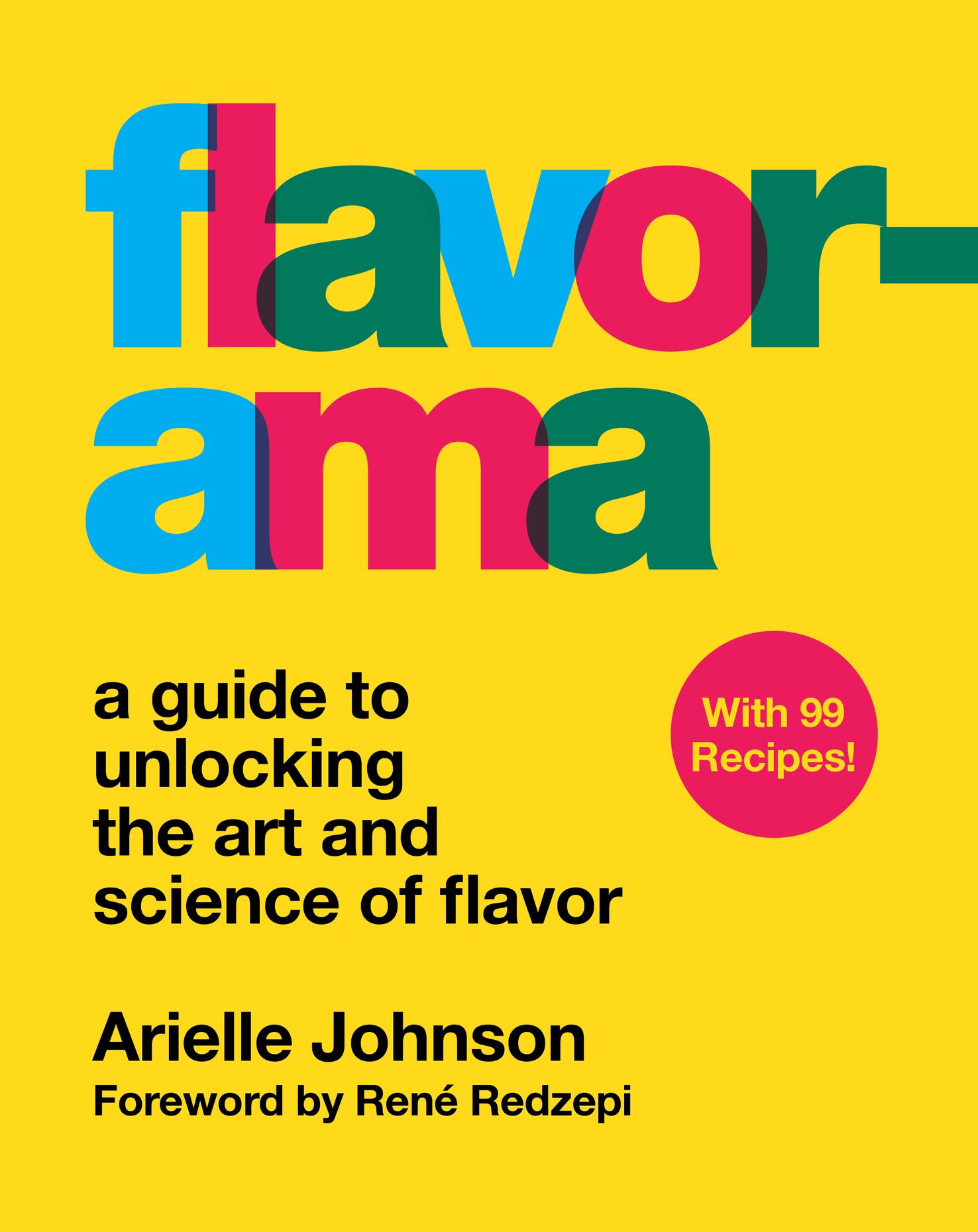
All Of It with Alison Stewart
Better Cooking Through Science
00:24:58
A new book explores the science of food, and explains how concepts from chemistry, biology and psychology can help bring more flavor and flexibility into the kitchen.
Loading summary
Transcript83 lines
- [00:00]
Wix Advertiser
Say what you want about AI, but it's here and it's helping businesses get more done in a day. Wix's website builder is infused with AI so you can stay ahead. Create a beautiful, functional website just by describing your idea. Track how your site appears in AI search results, create custom images on demand, or launch an entire campaign in a matter of minutes. WIX gives you AI wherever you need it. Try it out for yourself@wix.com.
- [00:30]
Bix Soleil Advertiser
Surprise Beach Day no excuses.
- [00:33]
Arielle Johnson
I'm in.
- [00:34]
Bix Soleil Advertiser
Gimme Five with Bix Soleil Glide Razor, you'll have hydrated, smooth skin that's ready to go on the fly. No shave cream needed. You can prep, shave and hydrate all in one step thanks to moisture bars that hydrate your skin during and after shaving. 5 flexible blades hug your skin for a close shave. Glide into smooth. It's your time to shine with bixsolate. Buy now at Amazon and Walmart. Ready? Your skin looks amazing. So smooth and beach ready.
- [00:58]
Arielle Johnson
Let's go.
- [01:00]
Caller Stephanie
Hey Fidelity, what's it cost to invest.
- [01:02]
Arielle Johnson
With the Fidelity app?
- [01:04]
Wix Advertiser
Start with as little as $1 with no account fees or trade commissions on U.S. stocks and ETFs.
- [01:11]
Arielle Johnson
Hmm. That's music to my ears.
- [01:14]
Wix Advertiser
I can only talk.
- [01:17]
Fidelity Disclaimer
Investing involves risk, including risk of loss. Zero Account fees apply to retail brokerage accounts only. Sell order assessment fee not included. A limited number of ETFs are subject to a transaction based service fee of $100. See full list of Fidelity.com commissions Fidelity Brokerage Services, LLC member NYSE S.
- [01:31]
Kushan Avadar
I'.
- [01:31]
McDonald's Advertiser
MA put you on, nephew.
- [01:32]
Arielle Johnson
All right, unc. Welcome to McDonald's. Can I take your order, miss?
- [01:35]
McDonald's Advertiser
I've been hitting up McDonald's for years. Now it's back. We need snack wraps. What's a snack wrap? It's the return of something great. Snack Wrap is back.
- [01:50]
Arielle Johnson
Listener Supported WNYC Studios.
- [02:03]
Kushan Avadar
This is all of it. I'm Kusha Navadar in for Alison Stewart. Happy PI day everyone. March 14th 314 nerds know and nerds of a certain age might also remember the Magic School Bus episode where the class accidentally gets baked into a pie and learns a little something about chemistry in the kitchen. Along the way, just to make your.
- [02:23]
Arielle Johnson
Day complete, you might get baked into a pie on a magic school.
- [02:27]
Kushan Avadar
But unlike Ms. Frizzle's class, we don't need a magic bus to learn how science can make our cooking better. Because we've got Arielle Johnson, who literally has a PhD in flavor. Flavor science, to be precise. She has a new book out that aims to deepen our understanding of the natural processes that comprise flavor, from the biological makeup of the ingredients to the chemical processes we use in the kitchen, to the science of the brain, where taste and smell molecules are neurologically encoded into our experience of flavor. That's cool. The book is called flavorama, A Guide to Unlocking the Art and Science of Flavor. It is available now wherever you get your books. Ariel, thanks for joining us today.
- [03:11]
Arielle Johnson
Thanks so much for having me on.
- [03:12]
Kushan Avadar
Absolutely. And listeners, we want to have you as part of the conversation, too. We can take your kitchen science questions. Maybe there's a technique you want to perfect with the help of science, or maybe you want to understand why certain combos of flavors do what they do. Call or text us. Here's the number. 212-433-9692. That's 212-433-WNYC. Or if you have any other questions for flavor scientist Arielle Johnson, whose new book is called flavorama, A Guide to Unlocking the Art and Science of flavor, hit us up. 212-433-9692. Okay, Ariel, you're a flavor scientist. It's a pretty unique job title. How'd you wind up on that path?
- [03:55]
Arielle Johnson
Well, so the short version, always very interested in both food and science, eventually figured out was a lot of science behind not only industrial food, but also cuisine and gastronomy. And you could use chemistry to learn a lot about those things. So ended up going to UC Davis in Davis, California in the wine department, specializing in flavor chemistry. So doing a lot of chemistry, sensory analysis, modeling of things. And since then, I do a lot of work with restaurants on research and development and experimentation. So making a lot of flavors with fermentation and other stuff. And at this point, there's so many bits of science that I work on that I just say flavor scientist.
- [04:40]
Kushan Avadar
Do you remember the first food in your life where you thought that flavor will stick with me forever? Wow. I want to learn more about that flavor.
- [04:49]
Arielle Johnson
It was definitely the smell of coffee, specifically, specifically coffee beans. When I was about three years old, I would start taking the coffee beans out of the shopping bag on the way home from the grocery store and like smelling it really deeply. I was disappointed that brewed coffee didn't taste exactly like that smell, but it definitely piqued my interest in coffee, which I still am interested in.
- [05:14]
Kushan Avadar
And now you have written a book and there are recipes in the book. It looks and feels like a cookbook, but it's not really a cookbook. How do you advise people to use.
- [05:24]
Arielle Johnson
This book, I would say it can be used as a cookbook. It can be used as a reference book if you're interested in understanding sort of the generals of how flavor works and knowing about the science of flavor can apply to cooking at all. Just flip through it, and there's a lot of sort of shorter pieces of information that'll like, hook you in even if you're not a cook. If you are a cook, I would recommend thinking about flavors, tastes, smells that you like. And there's a whole section that's almost a field guide to all of those flavors. So that's a good place to start to understand, like, what is sourness? What is an acid? Where can I find sourness?
- [06:05]
Kushan Avadar
Well, you know, it's funny because those questions kind of lie at the very science of how taste and flavor works. So help us understand the sense of taste and the sense of smell. How do they combine together to create our sense of flavor?
- [06:20]
Arielle Johnson
So when we say flavor is taste and smell, usually to the, you know, if you're taking a bite of an apple, what you feel as flavor feels like it's just taste. Smell is actually a very big part of that. And that's not actually sniffing the apple before you bite it, although that is, you know, a little bit. You can actually smell food in your mouth as you're chewing it. We call that retronasal olfaction. And it is responsible for pretty much everything about flavor beyond sweet, sour, salty, bitter, and umami. So fruitiness, roastiness, floral flavors, that all comes from smell. So taste comes from taste buds on your tongue. That gets routed into the brain. Smell gets routed a slightly different route into the brain. And eventually they come together in the orbitofrontal cortex, where we can recognize them not just as tastes, tastes and smells, but as, like, unified flavors and then come up with descriptions and names for them.
- [07:18]
Kushan Avadar
You mentioned that they get routed differently. Is there a special reason behind that, why that routing is different?
- [07:25]
Arielle Johnson
It's just a. It's a physical question, actually. Most of our senses pass through the brain stem and through sort of like the quote unquote, lower parts of the brain before they get to emotions and thoughts. Smell is actually sensed directly with brain cells. That one side is anchored in your brain, one side passes into your nasal cavity, your nose, the inside. And that, rather than going through the brainstem, goes right into the emotional centers of our limbic system, especially our amygdala. So you know the Proustian story of dipping a madeleine in tea?
- [08:00]
Kushan Avadar
You stole my next question. It's okay. It's okay.
- [08:04]
Arielle Johnson
It's. Yeah, it is biologically and neurologically true and valid. That is exactly what happens. In fact, you'll often have emotional connection or, like, a memory of a flavor before you can even recognize what it is.
- [08:17]
Kushan Avadar
We were literally gonna bring up Proust, and then he beat us to it. So, you know, prescient.
- [08:21]
Arielle Johnson
Sorry about that.
- [08:21]
Kushan Avadar
Senses are all tingling. Your spidey sense is on. We have Stephanie in Greenpoint with a question. Hi, Stephanie. Welcome to the show.
- [08:30]
Caller Stephanie
Hi. Hi. I like to make fermented loaf without using much wheat. And I would like to know, for one thing, why things get tangy when you culture them? And also what does it really do to the grains or to the chickpea flour or barley or whatever when you ferment it? And then any other thoughts about fermented foods and how your body senses them would be interesting.
- [09:08]
Kushan Avadar
Thank you, Stephanie.
- [09:09]
Arielle Johnson
Great. Well, so when we're talking about culturing, for example, making sourdough or even yogurt or sauerkraut, we're talking about food that becomes sour. And the way that it gets sour is through the fermentation action of lactic acid bacteria. So these are bacteria that also live in our skin and all over different surfaces that will eat small amounts of sugars in whatever you're fermenting them in and convert that into lactic acid, which is both deliciously tangy and conveniently is fairly toxic to mold and spoilage organisms. So we get this double bonus of delicious sourness as well as improved food safety.
- [09:54]
Kushan Avadar
If you're just joining us, this is all of it. We are talking to Arielle Johnson, a food scientist and co founder of noma's Fermentation Lab. Just put out a new book, a Guide to Unlocking the Art and Science of Flavor. We have a text that I'd love to read. Any unexpected food combinations or tastes that pair well scientifically but most people don't think of. And what about their chemistry makes them work? Great text. Thank you for it.
- [10:22]
Arielle Johnson
Yeah. I would say the number one weird flavor pairing that makes chemical and scientific sense is salt on grapefruit or more generally, salty and bitter together. Generally, if your coffee is too bitter, you might add more sugar to it or try to dilute it to kind of COVID up the taste. You wouldn't necessarily think to add salt, except salt will actually interfere with the bitter receptor on the surface of the tongue and make it less effective at sensing bitterness and sort the kind of effect of this. If you put salt on a piece of bitter Grapefruit. The grapefruit will actually taste sweeter in addition to being saltier.
- [11:01]
Kushan Avadar
So we're talking about taste buds as well right now. There's a common misconception about how taste buds are laid out on our tongues. So where did this wrong belief come from that there is a sweet zone and a salty zone and a bitter zone on everyone's tongue? And what's the reality?
- [11:15]
Arielle Johnson
So, yeah, there's this common the common graphic shows sort of areas of the tongue like a map that I believe was published. I know it was a textbook. I think it may have been a nursing textbook. Just as an explanation of these are tastes, these are where they're on the tongue. And I think the kind of, you know, attractiveness of that very graphic image with colors and zones made it catch on. And so now there's this belief that, you know, we only have sour taste buds on one part of our tongue. We actually have all kinds of taste buds all over our tongue. They're basically just mixed together to, you know, best sense as much as possible.
- [11:50]
Kushan Avadar
And sprinkled throughout the book, you have these little micro experiments that serve more to demonstrate a concept than to provide a complete recipe. We are going to get to that right after a short break. So stick around. We are talking to Arielle Johnson, the food scientist and co founder of noma's Fermentation Lab, and listeners, we can take your science questions. So if you have a technique that you want to help perfect with the help of science, or maybe you want to understand why does peanut butter and jelly go together so well? Well, we've got the person here to help you. Call or text us. 212-433-9692. That's 212-433-WNYC. Or if you have any other questions for flavor scientist Arielle Johnson, whose new book is called flavorama A Guide to Unlocking the Art and Science of Flavor, give us a call. 212-433-9692. We'll be right back. This is all of it on wnyc. I'm Kushan Avadar in Alison Stewart. We are talking to Arielle Johnson, a food scientist and co founder of noma's Fermentation Lab. Her book A Guide to Unlocking the Art and Science of Flavor helps you understand not just what you taste, but why it tastes and smells the way that it does. Listeners, we're taking your science questions about the kitchen. If there's a technique you want to perfect with the help of science, maybe you want to understand why certain Combos of flavors do what they do. Give us a call, 212-433-9692. You can also text us 212-433-WNYC. And before the break, we were talking about these micro experiments that you were sprinkling throughout the book to help provide a demonstration of these different concepts that you want to lay out. Why do you think it's important that people go out of their way to not only understand by reading but also by experimenting and actually experiencing?
- [13:42]
Arielle Johnson
Well, I mean, flavor is a very embodied experience. So it's, you know, one thing to read about it, but to actually use this stuff, which is quite useful in the kitchen, in your cooking, you won't really be able to tell until you actually taste it and put it in your mouth. So, you know, I didn't want to give a book with a lot of conceptual information and nowhere to apply it.
- [14:05]
Kushan Avadar
So let's get into some of these experiments. You break down the book around five laws of flavor, and for each of them you've picked out a. Try this experiment. The one of them is flavor is taste and smell, which we talked about earlier. What's the experiment behind that one?
- [14:25]
Arielle Johnson
The simplest one would be if you're adding lemon juice to a sauce or to a dish, don't add it until the very end. In culinary school, chefs teach this, and the reason that the instructors often give is that, oh, it will reduce the sourness and make it taste flat. It doesn't actually reduce the sourness at all. If you heat lemon juice, it boils away. It's lemony aromas. So with just the taste of lemon and very little of the smell, it doesn't come together fully on your brain, and your brain reads it as less sour and less fresh.
- [14:58]
Kushan Avadar
Interesting.
- [14:59]
Arielle Johnson
Add lemon juice at the end.
- [15:00]
Kushan Avadar
Well, let's bring it back to the listeners. We've got Sarah from Queens. Hi, Sarah. Welcome to the show.
- [15:07]
Caller Sarah
Hi. Thank you. I love the show and I'm wishing Allison a speedy recovery. I have a question for the food scientist, and it's about Buddha's hand Citron. I recently smelled it for the first time and I was absolutely enchanted by the smell. And I learned that there's no fruit in it. You can't eat it. You can only taste it. So I was wondering if she could explain the smell and explain why you can't eat it if it smells so good.
- [15:30]
Kushan Avadar
Sarah, thank you so much for that and for the well wishes. Yeah, go ahead, Ariel.
- [15:33]
Arielle Johnson
Yeah, so a Buddha's hand is a citrus. It's a Very unusual looking citrus. Instead of segments on the inside, it has sort of finger shaped things so it looks sort of like a lemon crossed with a squid. So, you know, as, as a citrus fruit in the citrus family, same sort of family as lemons and such. It has a citrusy aroma, which is a basic way of saying it. But Buddha's hand has particularly like floral, fresh lemongrass qualities. So it's sort of like an extra citrus, citrus, lemon kind of smell. The reason why it's not easy to eat a Buddha's hand is if you were to cut open an orange, you could peel out the orange segments and eat those and they would be, you know, sour and sweet and tasty. A Buddha's hand has almost no flesh and almost all pith and pith. If you have ever accidentally eaten citrus skin is quite bitter. There's molecules called limonids in there. And unless you are candying it or adding a lot of sugar, it best used just as a aromatic seasoning rather than a hand fruit.
- [16:41]
Kushan Avadar
That's the pith. Let's go to Mark in Tom's River. Hi, Mark, welcome to the show. Hi, how are you? Good. Mark, what's your question? Yeah, I wanted to ask what exactly is it about Buffalo sauce that how it gets its name and why does it taste so good on chicken? Mark, thanks so much. All right, so Buffalo sauce, what's in it? Why does it taste so good with chicken?
- [17:07]
Arielle Johnson
Buffalo sauce does not contain Buffalo. It is in fact from Buffalo. Buffalo, New York. And it is a pretty simple sauce of mostly hot sauce and butter sort of bathe chicken wings in. What makes it so good? It's a combination of spicy and sour as well as some pungency. So vinegar is a sour ingredient. It has acids in it, but the acetic acid that makes vinegar, vinegar is also volatile. So you smell it, you get that vinegar punch and also the, the sourness. So that plus spicy is just a very like, exciting, dynamic combination. I think one of the reasons Buffalo sauce is so good on Buffalo chicken is that, you know, the chicken is rich and has some, you know, melted gelatin from the collagen and a little bit fatty. And that sort of punchy, sour, pungent, spicy kick really balances it out and makes it like a bigger flavor than the sum of its parts.
- [18:09]
Kushan Avadar
And sometimes those flavors that we taste can change over the course of our lives. Right. So we just got a text from a listener that's asking, why do some foods like garlic, coffee, zucchini taste terrible when I'm pregnant? That comes from Abby. Thank you, Abby.
- [18:25]
Arielle Johnson
Yeah, so a lot of those foods are also foods when, when some people get Covid, they lose their sense of smell, and some of them lose it for a long time. When it does eventually come back, you get this effect where everything smells terrible. But especially foods like garlic, onions, alliums, and roasted things. I know of some, some research that has shown those are mostly compounds containing nitrogen and sulfur, which are somewhat more likely those elements to be in things that aren't so good for us. So we use our sense of smell to find delicious things, but also to avoid dangerous things. So when you're pregnant or when you've just gained your sense of smell back, your senses are much more about protection than, you know, having a great time. So if you know you have to, if your nose has to pick, like, what receptors do I regenerate first and what signals do I pay attention to? The ones that could be, you know, rotten food or over burnt food or something dangerous are much more urgent to know about than to smell a delicious cup of coffee.
- [19:38]
Kushan Avadar
You used a word, Ilium.
- [19:40]
Arielle Johnson
Oh, allium.
- [19:41]
Kushan Avadar
Allium. What is that?
- [19:42]
Arielle Johnson
That is the botanical family that garlic and onions and leeks are in.
- [19:47]
Kushan Avadar
Wonderful.
- [19:48]
Arielle Johnson
Alliums.
- [19:49]
Kushan Avadar
Alliums. I learned something new today. Well, learned many things new today. I'll come clean about that. This is all of it. I am Kushan Avadar in for Alison Stewart. We are lucky to be talking to Arielle Johnson, who is a food scientist and co founder of Nomos Fermentation Lab. As you can hear, listeners, we're taking your questions about kitchen science. If there's a combo of foods that you think is wonderful and you want to understand the science behind it, or if you have any other questions, call us, text us 212-433-9692. That's 212-433-WNYC. Ariel, you mentioned memory before and you mentioned Proust. For listeners who love French literature, you might be thinking about the French novelist Marcel, who wrote about how the crumb of Madeline cookie unlocked memories of his aunt. You had mentioned that before. This connection between what we eat and our memories feels so strong. Can you explain why that connection exists?
- [20:45]
Arielle Johnson
Yeah, that. That smell and emotions connection feels very strong because at a neurological level, it is very strong. The, the first place that we process smell signals in our brain, once they get written on a structure called the olfactory bulb, is the limbic system, the amygdala. All of them are what we use for storing emotions, emotional memories, responses to things. So before you even perceive what a Smell is, or could put a name to it. You'll already be having any sort of emotional connotations and memories of the last times that you experienced that smell bubble up to the surface.
- [21:26]
Kushan Avadar
That reminds me of one of the last laws of flavor that you have in your book, which is that it can be created and transformed. How so?
- [21:33]
Arielle Johnson
Well, so flavor. Flavor is molecules. There are molecules that make flavor. What makes a molecule have a flavor is just if it fits in a receptor that we have, either a olfactory receptor in our nose, taste receptor on our tongue. A lot of molecules are just way too big to do that. So, you know, we can taste a glucose molecule with our sweet receptor, something like starch, which is, you know, a thousand linked glucose molecules, way too big to fit in the receptor. So we just don't. Don't perceive it as having a flavor. But if you do some chemistry, which in the case of cooking might be browning a loaf of bread in the oven, you can change molecules, you can break them down, you can make smaller pieces. So once you're cooking, doing fermentation, anything like that, you'll be taking molecules that don't have a flavor and then chemically transforming them into new molecules that do have a flavor.
- [22:28]
Kushan Avadar
Wow. And what's the experiment in the book that helps demonstrate that?
- [22:32]
Arielle Johnson
One of the simplest and I think most delicious demonstrations of this is brown butter. So brown butter just happens when you melt butter and continue heating it until the. The milk solids start toasting. That flavor creation is a process called the Maillard reaction. It's amino acids meeting with sugars and creating this whole kaleidoscope of byproducts. So when you make brown butter from butter, it's delicious, but, you know, for me, I always want more. So thinking about, like, okay, where what's the important part of brown butter? These. These proteins, these amin acids, these sugars. There's actually a lot more of them in cream than in butter, since butter is mostly fat. So if you start with heavy cream, which is what you would use if you were churning milk to make butter, and heat it down until it evaporates all the way and then continue toasting what's left, you'll make a gigantic amount of super delicious brown butter.
- [23:25]
Kushan Avadar
We've got one more caller. We've got Nancy in Manhattan. Hi, Nancy. Welcome to the show.
- [23:31]
Caller Nancy
Thanks. I have a strange question. Every time I have kabocha squash, and I feel like that's the only thing that I want to eat, and that's the only thing I want to eat for like, three or four days, and then I inevitably end up feeling terrible and stop for a while. And it has this addictive quality. When I went online, I thought, either I'm crazy. I found a number of other people that, particularly with Kabocha, have that response. I just wondered if you'd come across that. That.
- [24:01]
Kushan Avadar
Thank you, Nancy.
- [24:02]
Arielle Johnson
What do you think that is so interesting? I have not come across that in the literature, although I have read a paper about tomatoes, which eventually is connected. Both tomatoes and. And squashes are usually pretty good sources of vitamin A. There's actually like a. A breakdown product of vitamin A that gets created in these. In these plants that they're called norisoprenoids. They smell like very deliciously fruity, floral, amazing. So there's, like, some idea that we actually use those as a signal of where we might be able to find vitamin A, because compounds similar to vitamin A that aren't vitamin A break down into things that we can, like, barely smell at all. So we're, like, very sensitive to these signs of vitamins. So I might consider thinking about whether you're getting enough vitamin A in your diet that might be a. The trigger for this kind of thing.
- [24:57]
Kushan Avadar
Interesting. Vitamin A deficiency, you're saying?
- [24:59]
Arielle Johnson
Could be.
- [24:59]
Kushan Avadar
Could be. Well, Nancy, thank you so much for that call. It's PI day today. What's the art and science relationship here? What's your advice for how folks can make the most out of the relationship with food where it's an art and a science?
- [25:13]
Arielle Johnson
Well, I think a lot of people associate science from their experience in school of, like, there is a right answer, and if you are too creative with it or you don't get it right, then you're wrong, which is a way that some people use science, but it's definitely not innate to science. For me, you know, I tried to keep the laws of flavor fairly, fairly broad and then give specific examples because, like, I don't necessarily want to or, you know, want to tell someone exactly how they should do things in their kitchen. I can give them suggestions, but to me, I think it's much more rewarding and exciting and fun to let my science instincts help out my cooking instincts. So, you know, both of them are ways of looking at the same thing but giving you different kinds of insight. So in the book, there's a lot of ways, whether from my own cooking or from my time working in restaurants, that, you know, the science of flavor is very helpful and just very tasty. Straightforward, not complicated or difficult.
- [26:17]
Kushan Avadar
Well, the book is Flavorama, a Guide to Unlocking the Art and Science of Flavor. The author, Ariel Ariel Johnson is a food scientist and co founder of noma's Fermentation Lab. Ariel, thank you so much for joining us. It was such a pleasure.
- [26:29]
Arielle Johnson
This was amazing. Thank you for having me.
- [26:31]
Kushan Avadar
Absolutely. And listeners, thank you for your calls. We have something special for you to send us out. We've got they Might Be Giants singing the song Supertaster. Here it is.
- [26:53]
Wix Advertiser (repeated)
How many times have you wished you could be in two places at once? With wix, you practically can. Wix's website builder is packed with powerful AI tools to make running your business online easier. Build a full site just by talking with AI, get an AI agent to manage your sales and marketing, or work like a 10 person team, even if it's just you. So you don't need superpowers to get everything done. You just need wix. Try it out for yourself at wix. Com.
- [27:20]
McDonald's Advertiser
I'm going to put you on, nephew.
- [27:21]
Arielle Johnson
All right, unc. Welcome to McDonald's. Can I take your order, miss?
- [27:24]
McDonald's Advertiser
I've been hitting up McDonald's for years. Now it's back. We need snack wraps. What's a snack wrap? It's the return of something great. Snack wrap is back.