Loading summary
Transcript54 lines
- [00:00]
Host 1
All of it is supported by Progressive Insurance. You chose to hit play on this podcast today. Smart Choice. Make another smart choice with Auto Quote Explorer to compare rates for multiple car insurance companies all at once. Try it@progressive.com Progressive Casualty Insurance Company and affiliates not available in all states or situations. Prices vary based on how you buy.
- [00:30]
Alison Stewart
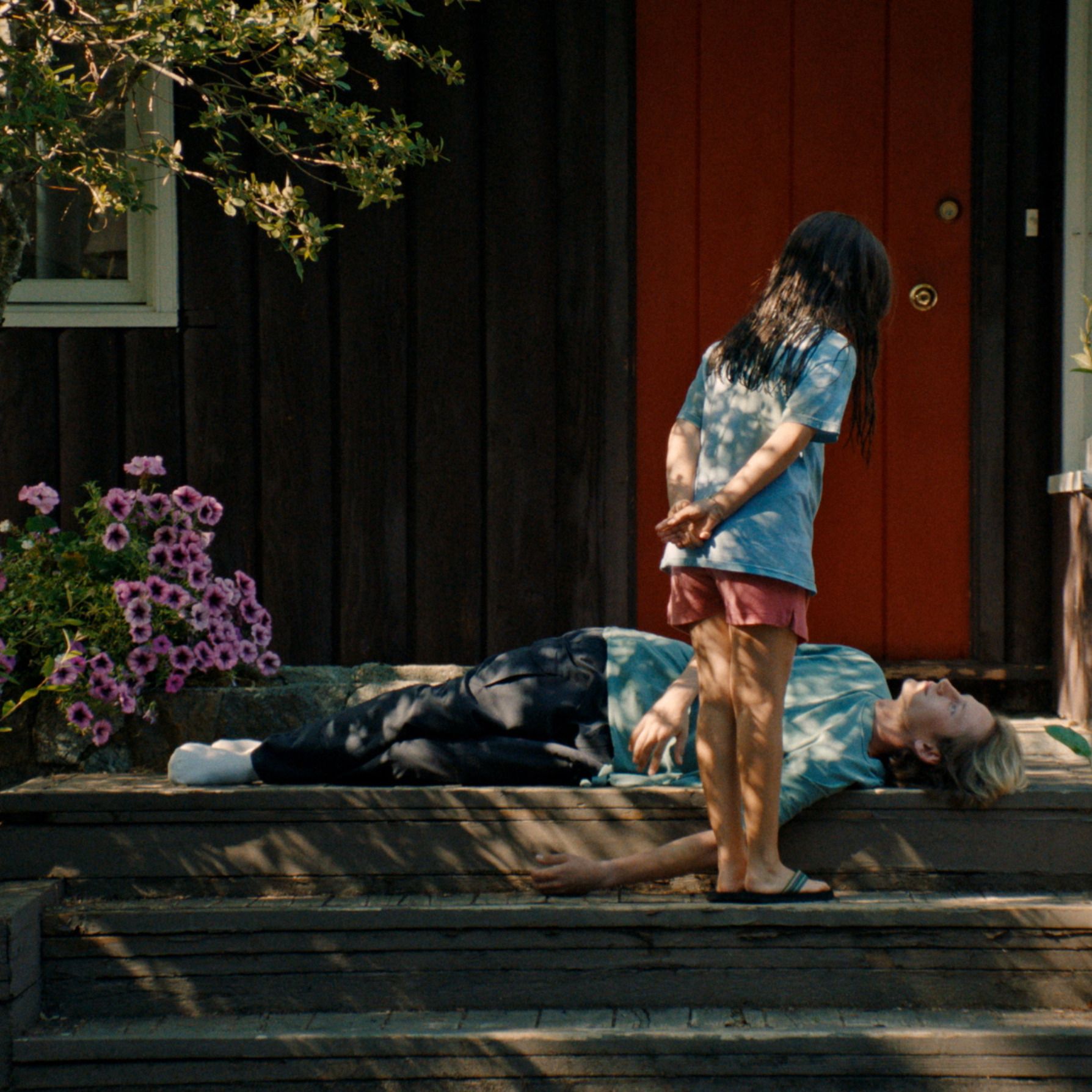
This is all of it live from the wa welcome to NYC Studios in Soho. I'm Alison Stewart. Thank you for spending part of your day with us. I'm really grateful that you are here on today's show. Spring is here. We'll be talking plants with a gardening expert who will take your calls. Harpist Ashley Jackson covers some great female musicians on her new ep. She'll be performing live with her harp in our studio and our full bio series continues on the life of Vermeer. Today we'll learn how the 17th century Dutch master worked for one patron who funded most of his work. And we'll hear about how his mother in law used her wealth to influence him and his family. That's the plan. But first let's get things started with an acclaimed new film. In the film Blue Heron, fact and fiction combine to tell the story of one family's struggle to help their son. We see that story through the eyes of Sasha, a young girl who has recently moved with her Hungarian family to Vancouver Island. Sasha just wants to fit in and make friends with the girls in the neighborhood, but she can't have her new friends over for dinner because of her older brother Jeremy's unpredictable behavior. Jeremy is the eldest half sibling. He acts out often inexplicably, sometimes violently. Sasha's parents can't figure out how to help him. Later, the film flashes forward. We see adult Sasha going through her brother's case files and making a documentary to try and understand what could have been done to help him. Blue Heron is the feature film debut from writer and director Sophie Ramvari. She's based much the film on her own experiences with her brother, which was also the subject of her short documentary film Still Processing. Reviews have called Blue Heron one of the best films of the year so far. It's playing now at the IFC center here in New York and at bam. And I'm joined now by writer and director Sophie Ramvari. Sophie, it's nice to meet you.
- [02:32]
Sophie Ramvari
Hi, it's so nice to meet you. Thank you for having me.
- [02:35]
Alison Stewart
People will probably remind themselves of your documentary still processing from 2020. When did you know you were ready to make a feature film?
- [02:45]
Sophie Ramvari
I think I had spent a long Time making short films prior to still processing. And I really wanted to wait until I had a concept that I felt, you know, necessitated the feature length because it's such a big undertaking. It's such a, you know, many, many years of your life. And so I really didn't want to jump into that until I was really sure. And so, because I had explored these themes and topics before in my shorts, I really felt like I had done a lot of prep already. And so by the time I started writing the script, I did feel confident that I was in the right headspace for it. So I did take my time.
- [03:23]
Alison Stewart
I was going to ask about the headspace. What kind of emotions came up for
- [03:26]
Host 1
you writing such a deeply personal film?
- [03:30]
Sophie Ramvari
I think, honestly, it was a really fulfilling creative process because I was able to use fiction in a way that I hadn't previously because I really was focusing on the more direct documentary style. And I was in many of my short films. And so with Blue Heron, I was able to have a creative distance that allowed me to really focus on the writing and the directing in a. In a fictional format. Even though it is an autobiographical story, it's so, as, you know, so blended because it's about memory and about the subjectivity of memory. And that really allowed me so much space to just be creative and to think of it just as a film rather than my life. And that gave me so much freedom.
- [04:13]
Host 1
What were you interested in exploring about family in this film?
- [04:19]
Sophie Ramvari
I think, for me, family, the dynamics that you. You experience, depending on, you know, what the birth order is like, who, where you sit in the family tree is. Is very interesting to me, and how your environment affects who you become. And I. I wanted to. As much as the film is about grief and about, you know, trying to understand someone who's kind of un understandable, I also wanted to try to figure out, how does someone become who they are? What are the elements of your upbringing that funnel into the person that you become? And for me, a lot of that was trying to understand my own path and my own decision to become a filmmaker. And I think the process of making this film really revealed that, as much as it maybe should have been clear to me from the start, but also thinking about the things that we inherit and the things that get passed down to us from our family and that. That's a really rich topic to me.
- [05:18]
Host 1
What made you want to become a filmmaker?
- [05:22]
Sophie Ramvari
I mean, I think now, like, after finishing this film, it became quite clear to me growing up in a family that really prioritized Art and really loved art above all else. It was something that my parents were not shy about, you know, including in our family upbringing. We watched a lot of movies. We all were playing different instruments and painting and drawing just like a very, you know, roll Tenenbaums Es. And they really, you know, they showed me a lot of films growing up as well. And the main thing was that my dad was constantly filming us and photographing us in a very artful way. And I think I grew up around a camera that made me feel like this is a way to move through the world, a way to see the world and also gave me a sense of the importance of documentation and archiving memories. And so of course when I grew up I had a big fascination with wanting to see this documentation and understand because of what had happened in my family. With, with the grief that we experienced, those memories became even more important and, and they were documentation of something that otherwise I didn't have access to.
- [06:34]
Alison Stewart
My guest is Sophie Ramvari, writer and director of the acclaimed new film Blue Heron. The film follows a young girl on Vancouver island as she struggles to understand what's going on with her troubled over older brother. The movie is based on Sophie's. It's playing now at IFC center and at bam. Casting Sasha was really important in this film. What was the process like finding the right child actor for this role?
- [07:02]
Sophie Ramvari
To be honest, there was, you know, you look at many, many submissions, many auditions, but it's really truly like when you know, you know, and I saw the audition of Elul Gavan, who is, her family is a Turkish immigrants to Canada and she just blew me away with a, just very simply, a very strong audition. She's a, she has a really solid grasp on the, on the craft of acting and it's unbelievable for an 8 year old. And she has parents who are really dedicated to supporting her in a way that I think is rare as a child. Like she, she's very self motivated and it doesn't seem at all like this idea of acting is coming from anywhere but from her own desire. And they give her a lot of space and independence, but also are very supportive and kind. And so I think it's very important when you cast a child that you also consider that you're casting their parents because they're the ones you'll be working with. And I've remained very close with their whole family. So it's, it's something that I, I'm so grateful for because they trusted me, you know, as a director with their, with their kids to like explore this very, you know, there's a lot of darkness and grief within this film and they, they, they helped her navigate that with a lot of maturity and you know, so it was really wonderful experience.
- [08:24]
Alison Stewart
How about casting Jeremy, the older brother? He has very little dialogue in the film until the end.
- [08:29]
Sophie Ramvari
Yeah, yeah, yeah. Jeremy is played by Eric Beddoes who actually also as an immigrant to Canada from Kyrgyzstan. Almost all of the actors in the film are by happenstance, all immigrants. And he was street cast. He was completely, had no, no experience in acting prior to this film and had no actually interest in acting. So he was stopped on the street by the company we were working with in Vancouver that sent me just a very short clip of him and I, I saw something in him that felt instinctually that he had a presence. And so I developed a really a rapport with him over many months. Just developing a sense of trust with him and spending time with him. And really he took a huge leap of faith because he didn't know what he was getting himself into either. And you know, he did tell me that at first he really thought this was like a student film or something. And so now, now he's getting write ups in the New York Times and he's just completely mind blown and he's winning awards and it's just, you know, he really just does have a special singular presence that I wanted to capture. But it was a huge, a huge risk for both of us and I think we're both, we're both quite happy.
- [09:52]
Alison Stewart
It's interesting watching him in the film. He's a blonde haired fellow, tall, lanky, and the rest of the family is dark. Was that purposeful?
- [10:01]
Sophie Ramvari
Yeah. So that, that is very realistically depicted in relation to my family. That that was the dynamic and eldest brother who this film is more or less based on was my half brother. And so he did have a different, you know, genetic makeup and did look quite different, strikingly so than the rest of my family. And that, so there's certain elements that I felt were important to include in the, in the family dynamic, but there's other elements that are completely fictionalized. But that element to me was there's, there's certain things in life that are just palpable metaphor is that you can't ignore. So I took those things and utilized them within the narrative of the script because it was a very, it's a very scripted film actually. You know, it has a very documentary feeling in many ways. And there are some documentary tools that I use to achieve Certain outcomes. But it is a pretty. You know, it's very intentional, the script and the way that things play out. And so Jeremy as a character is, you know, much of him is a metaphor, because that's part of what I'm exploring, is someone who is inaccessible, someone who you can't understand or has an unwillingness to be understood.
- [11:13]
Host 1
My guest is Sophie Ramvari, writer and director of the acclaimed new film Blue Heron. It's playing now at the IFC center and at Bam.
- [11:21]
Alison Stewart
Sasha's dad.
- [11:22]
Host 1
The film seems to spend his days in front of the computer taking photos and videos. You mentioned that you're a parent. Your dad took photos and videos. What is going on with her father? Over the course of this summer?
- [11:36]
Sophie Ramvari
I think I was really trying to show in both of the parents this very dedicated desire to create a safe and happy environment for their children, but also the struggle to do so given the circumstances. And so it's a fine balance, because I didn't want any one character to feel like a caricature or like, you know, a shallow representation of what those characters often are like. For the mother, it would be very easy to depict someone who's hysterical and, you know, completely emotionally dysregulated. But I wanted to show that there's a real deep love, but also deep frustration that is realistic, I think, to how parents handle situations like this. And with the dad, I wanted to show this character who was. There's a sense of detachment from him, but also the way that he shows his love is through the art that he wants the kids to engage with, through the darkroom photography and through the music that he's playing and through capturing them. So there's a way that the love is very. There's a distance between him and the children, but there's a strong, palpable sense of how he wants to care for the people around him. So I think this was an important dynamic I wanted to show is that the mother is taking the bulk of the responsibility, but then the father, of course, is working. And this is also extremely common in every family, but I think particularly in immigrant families.
- [13:08]
Alison Stewart
It's interesting because it's a quiet film, but there are moments of incredible tension in this film, especially even on the mundane acts in this film. What did you learn about how to create tension on screen?
- [13:25]
Sophie Ramvari
That's a great question. I think it's. I love that that's what comes across, because I do love mystery in film and films that take you on a journey, and you have to really lean in to understand what the film is trying to say. And so I think I really wanted people to feel like they were rooted in a very specific point of view, following this character. And part of that is a lack of access to information at the time where you might want it traditionally. So you might want to understand what's happening, but I'm not going to tell you right away. You have to stick with the. Pay attention. And part of that is the desire to show something truly from a child's point of view where you don't have access to that information and you're not given the adult perception of what's actually happening around you. And so a lot of that comes from removing access to the full knowledge. And so you hear things through a door, you see things through a window, you hear things off camera that you don't actually get to see. And so I was really trying to lean into this idea that we're with this child and she doesn't have all the information, but she knows something is wrong. And it's not until the film unfolds that we see that she didn't have all the information. And now, as an adult, as we all do, you're left to put the pieces together. So I think the tension really comes from playing with the audience's perception of what they're allowed to see and what they're not allowed to see.
- [14:50]
Alison Stewart
In the second part of the film,
- [14:51]
Host 1
we jump forward in time. We meet an adult, Sasha, who's working on a documentary about her brother.
- [14:57]
Alison Stewart
Was there ever a time that you
- [14:58]
Host 1
considered playing the role yourself?
- [15:03]
Sophie Ramvari
Very early on there was, but I realized pretty quickly in writing this script that I had already done that, really. I did that in my short films, and I got what I needed from that process as an artist and as a person. And it was very, you know, informative to the process of making this film. But I really wanted to focus on directing purely. And I think that I do love meta elements in film, and there still is a lot of that in this film. I think that had I been playing that character, it would have been. The whole emphasis would be. It would be. It would tip the scales too far into the meta space. And whereas having an actor play that role, there's a remove. There's a creative distance that actually lends itself more to the theme of the film, which is that you can't really recreate somebody. You can't really access somebody through the act of filmmaking, but you can. You can express yourself artistically, and there's still a lot of value in that. But I Think had I been in the film, that would have become the main point. And I didn't want that to be the main point. I want this to be a film that's accessible to anybody who watches it.
- [16:13]
Host 1
My guest is Sophie Ramvari, writer and director of the acclaimed new film Blue Heron. The film follows a young girl on Vancouver island as she struggles to understand what's going on with her troubled older brother. The movie is based on Sophie's own family story, and it's playing at the IFC center and at bam. So part of this film involves assembling a group of social workers who review your brother's case files. Those were real case files?
- [16:38]
Sophie Ramvari
Yes, that's correct.
- [16:42]
Host 1
Why did you want to add this sort of, this, as you called it, a tool, the documentary tool, to the feature film?
- [16:49]
Sophie Ramvari
I think for me, both documentary and fiction are just different approaches to filmmaking that get you different outcomes, and they're also different social contracts with the audience. So when you're watching a documentary, what is perceived as a documentary might give the sense to the audience that what you're watching is real. And I think when you watch a fiction film, you're under the impression that what you're watching is fiction. It's. It's creation. But I think in my eyes, both are creations that are a fiction because they're from a subjective point of view of a director. And with documentary, you know, the tools that you use to achieve a documentary are, you know, you're using real people. There's more fluidity to maybe how things are filmed, but it's still very crafted and very contrived, you know, and so I. The social workers in the film are indeed real social workers, but I got them together. They didn't know each other. We filmed it in the. The staff room of the university where I went to film school. This is not a real social services office. You know, there's all these things that go into filmmaking, documentary or fiction, that are completely, as they say, smoke and mirrors. So, you know, it's. It's about creating a perception of authenticity. And I think using those tools can oftentimes get me there in a way that I think is helpful. But I don't think of myself as a documentary filmmaker or a fiction filmmaker. I think just as a filmmaker, I just use different tools to achieve the outcome that I would like. And the reason I wanted to have real social workers was because it was important that the words that they were saying came from their own true experience. So I think I draw a line between what is True. And what is real. And so I think the film is true, but it's not real.
- [18:38]
Alison Stewart
Did the social worker say anything that helped you understand your brother better?
- [18:45]
Sophie Ramvari
I. Unfortunately, I don't think so. I. I think there's. I had already done so much research speaking with social workers and psychologists and, you know, listening to my family growing up, and my understanding is basically just that there is certain people that systems that we have in place currently are not going to be able to help and are not going to be able to support, at least not long term, because I think so many of our systems currently are about Band Aid solutions, how to fix somebody. And that's not really the assignment, you know, So I think I wanted to really point at that. And so it's more of a society, the way that society sees people, rather than an issue of social services. I think there is, of course, systemic issues and funding issues, and the government's interventions are oftentimes more damaging than good. But I don't think that I. The point is that I don't think that there is an answer to be found necessarily.
- [19:45]
Host 1
Without giving away too much of the ending, there is a scenario where the older version of Sasha interacts with the younger version of Sasha. Why did you want to combine the sort of the reality with the fantasy?
- [20:02]
Sophie Ramvari
I think it's because it's something that only film can do. You know, the way that time can bend and the way that the audience can engage with memory and these fictional spaces is something that I think only can be expressed cinematically. And that really excites me as a filmmaker. The way that time can fold and just through simply an edit, you're jumping in time. And I think that that's such an exciting thing, and that's what excited me about this film and this structure was being able to move through a person's life so fluidly across, you know, decades. And I think if I had written this as a book, it wouldn't. It wouldn't have the same effect. It wouldn't have the same experience for someone. Yeah.
- [20:41]
Host 1
What do you hope people think or talk about after seeing the film?
- [20:46]
Sophie Ramvari
I mean, I think it's. It's happening very naturally that people are having conversations about their own families, their own experiences. And I have been very moved to see how many people feel very seen by the film. And it's moving at once, but also quite heartbreaking, but also it seems to be quite communally cathartic. And I'm having such deep, incredible conversations with people about their own families and the stigma and the shame that a lot of people have felt and feeling represented by a film is kind of my goal. I felt like I wanted to make the film that made my family feel like there was less shame and stigma around what we experienced. Experienced. And I think in doing that, many, many other people have come out and said the same.
- [21:30]
Host 1
Have you been surprised by their response?
- [21:34]
Sophie Ramvari
Absolutely. Unbelievably so, yes. Yes.
- [21:38]
Host 1
What surprised you the most?
- [21:40]
Sophie Ramvari
I think it's just such a. It's such a rare thing for a film of this, of this nature, of this size. It's not a super conventional film in many ways to be received with so much openness and, and love. Honestly, I feel incredibly supported, you know, by the audiences, by everyone that's been helping me get the film out into the world by, you know, of course, Janice films. And it's just such a. It's so rare because the film is really quite a small budget film from Canada. It's a personal film. All these things usually would go against the odds of a film like this getting out into the world in the way that this film has. So it's. I'm really counting my lucky stars.
- [22:22]
Host 1
I have been speaking with Sophie Ramvari, writer and director of the acclaimed new film Blue Heron. You should go see it. It's at IFC center or at bam. Thank you for taking the time to speak with us.
- [22:34]
Sophie Ramvari
Thank you so much. This was wonderful.
- [22:39]
Liberty Mutual Spokesperson
And Doug, there's nowhere I wouldn't go to help someone customize and save on car insurance with Liberty Mutual. Even if it meets sitting front row at a comedy show.
- [22:48]
Sophie Ramvari
Hey, everyone, check out this guy and his bird. What is this, your first date?
- [22:52]
Liberty Mutual Spokesperson
Oh, no. We help people customize and save on car insurance with Liberty Mutual Together. We're married. Me to a human, him to a bird.
- [22:59]
Sophie Ramvari
Yeah, the bird looks out of your league.
- [23:00]
Liberty Mutual Spokesperson
Anyways, get a quote@libertymutual.com or with your local agent.
- [23:03]
Host 1
Liberty. Liberty.
- [23:05]
Sophie Ramvari
Liberty.
- [23:05]
Host 1
Liberty.
- [23:07]
Liberty Mutual Spokesperson
Now is the time to shop for upgrades that transform your yard during spring Backyard Days at the Home Depot. Turn an empty corner into a hangout with the Hampton Bay Brook Mill four piece patio set. Then brighten your garden with lilacs or begonias and help them thrive with vigoro potting soil. It's the finishing touches that really bring your space together with low prices. Guaranteed shop Spring backyard days for seven days at the Home Depot now through May 6th. Exclusions applies to homedevot.com pricematch for details.