Loading summary
Transcript64 lines
- [00:00]
Sponsor/Announcer
WNYC Studios is supported by Wise Wise the smart way to manage the currencies you need around the world. With a Wise account, you can send, spend, and receive in up to 40 currencies with only a few simple taps. Be smart, Get Wise. Download the Wise app today. Terms and conditions apply. WNYC Studios is supported by Odoo. When you buy business software from lots of vendors, the costs add up and it gets complicated and confusing. Odoo solves this. It's a single company that sells a suite of enterprise apps that handles everything from accounting to inventory to sales. Odoo is all connected on a single platform in a simple and affordable way. You can save money without missing out on the features you need. Check out Odoo at o d o o.com that's o d o o.com.
- [00:57]
Alison Stewart
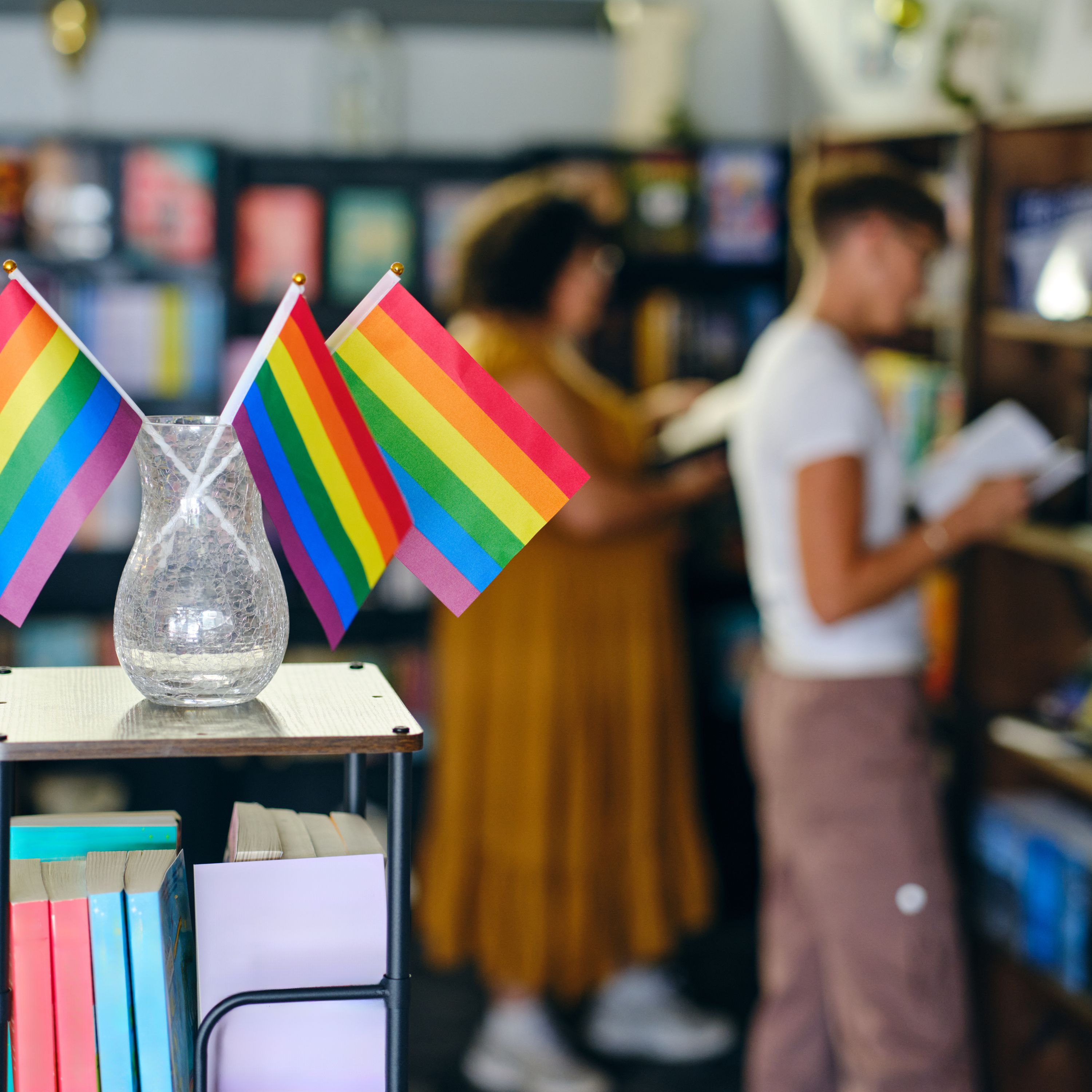
This is all of on wnyc. I'm Alison Stewart. Today marks the first day of Pride Month, a time to celebrate LGBTQ communities, culture and history. Books have long played a crucial role in passing down stories that were often left out of mainstream accounts, documenting movements for equality and helping new generations of readers excavate a legacy of resistance. And at a time when debates over LGBTQ rights and representation and access to books continues across this country, many readers are looking to history to better understand the present. To help us explore some essential reads for Pride Month, I'm joined by author and bookseller Jules Wernersbach. Jules is the co founder and owner of Hive Mind Books in Bushwick and the new general manager of the Bureau of General Services Queer Division inside the LGBT center on 13th Street. Jules also recently published their debut novel, Work to Do, which is set during a single week at a grocery co op focusing on unization efforts amidst a hurricane. Wow, that's a lot. Hey Jules.
- [02:01]
Jules Wernsbach
Hi Allison. Thanks so much for having me, listeners.
- [02:04]
Alison Stewart
We want to hear from you too. What books have shaped Your understanding of LGBTQ history, rights, or culture? Is there a title that changed your perspective? 2124-3396-9221-2433 wnyc or do you have a favorite LGBTQ author whose work you think everybody should read? Give us a call at 212-433-96-9221. WNYC so I wrote you a note.
- [02:31]
Jules Wernsbach
I told you what we were gonna
- [02:32]
Alison Stewart
do on all of it and you wrote me right back. It was great. And you came up with this great list for us. What was your criteria? What did you use as guidance?
- [02:42]
Jules Wernsbach
So I will say that this When I first started to make this list, you know, I just did a brain dump. And it was 30 books long before I even started to dig a little deeper. And so I was like, okay, I did, I was like, well, what are my constraints here? And so I looked for a good mix of books that first of all showcase all of queer and trans identity. You know, queer people are not a monolith. You know, I wanted to make sure that we were representing as many, as many colors of the rainbow as we possibly could in our queer world and our queer literature. And then I looked for a mix of books that I felt were really good. Just sort of classic queer history books and then some more contemporary things, some books that have come out recently. And then I really was looking at books. You know, I'm a, I'm a big nerd, shockingly, as a bookstore owner and worker and writer. And I wanted, I love a lot of like really deep cut university press titles, but for this I wanted to really find things that were maybe gonna be easier to find in a bookstore. You could certainly find all of these at our bookstores and things that would be just a little bit more accessible in that way. So that if you were maybe taking your step, first step into learning queer history or exploring queer history, you wouldn't be immediately put off by sort of deep, you know, really deep stuff. Although these books are all very deep and good and interesting and well written.
- [03:54]
Alison Stewart
Well, let's get into it on your book. Times Square Red, Times Square Blue by Samuel Delaney. This originally came out April of 1999. Why has this book remained relevant this long?
- [04:07]
Jules Wernsbach
This book is one of my all time favorites to hand sell at the bookstore. It is, it is two separate essays. The first was written in 1996 and then the other in 1998. And it is timeless insofar as it is about cruising. It is about the Times Square theaters. So right at the turn of the millennium, so those were theaters that were showing, you know, pornographic films and, and were places for sites for cruising and for gay cruising. And it is such an incredible snapshot into that period of time in New York City, right as Times Square was being sort of disneyfied, as we'll say, I remember, and quote, unquote cleaned up. And Delaney takes you right into those theaters. You really see what's going on there. And it is, it's just an absolute classic and I think is still very much speaking to the way that queer people are and you know, CIS gay queer people and well, really all kinds of queer people are engaging with each other even today. And it is also a lesson in, like, what was that like? And how does our queer. How does our queer behavior shift? You know, Times Square has changed a lot, but it doesn't mean that people aren't still cruising in places. And you're not going to find that elsewhere. And it's just a really interesting look at how a city changes.
- [05:20]
Alison Stewart
Has the book challenged the conventional ideas about public space and who belongs in the city?
- [05:25]
Jules Wernsbach
Well, that's something he's looking at in this book. Certainly. It's, you know, there is this attempt, you know, he's looking at it as, here was an attempt to clean up Times Square and to change behavior and to change the way that people act. And it may have pushed some of that behavior out of Times Square, but it doesn't disappear. This is all still happening. And I think it is, you know, sort of evidence of maybe an attempt to clean up and control and sort of pave over what was happening there. But it doesn't erase it and it doesn't change it. We always find our way to find each other.
- [05:53]
Alison Stewart
Another book you have on your list is A Black Queer History of the United States by C. Riley Snorton and Darius Bost. Or at best,
- [06:03]
Jules Wernsbach
how does this look
- [06:04]
Alison Stewart
at black queer identity?
- [06:05]
Jules Wernsbach
So this is a book that just came out this year. Feels like long overdue. It's really brand new, or maybe last year. The years are spinning together at this point. But what this does is I think it's a really good example that showcases the intersectionality of, you know, the fight for queer liberation and for black liberation and just that, you know, that example of like, none of us is free, one of us is free until all of us are free. And this takes a storytelling and narrative perspective on that and giving you, you know, it's not necessarily just a textbook. It is looking at the stories of people like Josephine Baker, who was openly bisexual, internationally known dancer and entertainer Private William Cassette Casse Williams, who was born female but enlisted in the army as a man in the mid-1860s. And, you know, going into some of that.
- [06:54]
Alison Stewart
That really important history, what myths or omissions does this book challenge?
- [07:01]
Jules Wernsbach
Yeah, I mean, I think that the. The myth that. I think that there. That queerness is that sort of blanket term you could put on all of our history that there is, you know, again, queer people are not a monolith. And so understanding how different types of queer people have fought for rights that benefit them and then benefit the whole community, I think just, it's continued to, like, I think, get rid of that myth of like just one rainbow washed all over everything. And it's like there is actually a lot of struggle in a lot of places that, you know, it's not all the same.
- [07:33]
Alison Stewart
Let's take a couple of calls. Let's talk to Lloyd in Manhattan. Hi, Lloyd. Thank you for taking the time to call.
- [07:39]
Jules Wernsbach
All of it.
- [07:39]
Alison Stewart
You're on the air.
- [07:41]
Caller
Oh, thank you. A couple of recommendations. The Very Heart of It by Thomas Mallon. It's a memoir in the form of diary entries of his gay life in New York in the 80s and early 90s. Thomas Mallon is the excellent novelist who wrote Fellow Travelers, the novel upon which the opera and TV series are based. I just loved it. It's just such a slice of life from that era as AIDS was approaching. And also I've just finished the new novel John of John by Douglas Stewart, who won the Booker Prize for Shuggie Bain. He also wrote Young Mungo, which I loved. And this new one is kind of a departure. It takes place not in Glasgow, Scotland. It takes place in the Hebrides Islands. And it's so atmospheric and just wonderful.
- [08:57]
Alison Stewart
It is on my bedside table.
- [09:00]
Jules Wernsbach
It's on my front table at the store.
- [09:03]
Alison Stewart
Let's talk to Tracy from Staten Island. Hi, Tracy, thanks for calling, all of it. You're on the air.
- [09:08]
Jules Wernsbach
Hi. I am a straight, middle aged white lady from Staten island and my favorite book of all time ever is Less by Andrew Shawn Grier. And it won the Pulitzer Prize. So I'm not breaking any ground here, but it is the most, it is the most romantic, beautiful love story I've ever read in my life. And it's like a friend breaker. Like if you read it and don't like it, I don't like you anymore. So please read Less by Andrew Shawn Greer.
- [09:43]
Alison Stewart
Stacy, thank you so much for calling. In honor of Pride Month, we're talking about books about lgbt, LGBTQ history and rights with author and Hive Mind Books founder Jules Wernsbach, the general manager of the Bureau of General Services Queer Division inside the center on 13th Street. Listeners, we want to hear from you as well. What books have shaped Your understanding of LGBTQ history, rights or culture? Is there a til it change of perspective? Do you have a favorite LGBTQ author who you think everyone should read? Give us a call at 2124-3396-9221-2433. WNYC. We're going to get back to your list. Marcia the Joy in defiance of Marsha P. Johnson Tourmaline. We had her on the show last year.
- [10:29]
Jules Wernsbach
That's what I know. That's what I just heard. She's wonderful.
- [10:32]
Alison Stewart
How does this book reveal the person behind the icon?
- [10:36]
Jules Wernsbach
Yeah, well, I think, you know, with Marsha P. Johnson, she has become such a queer and trans icon. You know, when I'm even buying, like, you know, gift items for the store, like, she's on everything. T shirts and tote bags and mugs, and it's incredible, and it's amazing to see how much recognition there is of her now and how much celebration. But, you know, it's important that we know, you know, the story and the life behind the tote bag and the mug and the stickers. And so Tourmaline has written this really just deeply researched, you know, story of Marcia's life, her full life, and who she was. You know, she was rumored to be the first person to throw a brick at Stonewall. And, you know, it's getting even beyond those legends to really know who she was. And, you know, what I think is remarkable is I was at a. A trans teen art event. Like, it was. They did art and writing, and one of the kids was sharing how in their school, they're learning about Marsha P. Johnson right now. And the adults in the room, just, like, our jaws dropped, were like. And tears were flowing because it's so amazing that, you know, that these details are surfacing and that someone like Tourmaline, who is such a fabulous writer and thinker and activist, has written this for us so that we can know more than just the superficial level and know more than just, you know, what's on those tote bags.
- [11:54]
Alison Stewart
I remember the book being about joy as well as defiance. Why is that important?
- [12:00]
Jules Wernsbach
Because, you know, I think that as queer people, we are. We tend to. And, you know, queer and trans people, especially right now, it's, you know, we get sort of identified with our struggle and identified with the rights we don't have and, you know, how we are being oppressed in a variety of ways. And we, I think, as queer people, can also get lost in that ourselves. You know, it's really easy to wake up every day, especially now, and go, oh, man, this world really doesn't want us. And, you know, it's important for us to turn inward and turn towards each other and experience our joy and know our joy and feel that. And so we need to celebrate all of the joyfulness of a person like Marcia as well, and not just the hard stuff, because we need it to survive. We need our joy.
- [12:42]
Alison Stewart
You also have on your list the Lesbian Bar Project. The Lesbian Bar Chronicles by Rachel Karp. This looks so interesting. This is a new book?
- [12:50]
Jules Wernsbach
Yeah, brand new. It came out, I want to say, last week, week before. We just did a few events with Rachel here in town. So Rachel and her wife and best friend embarked on this, like, epic road trip to visit every lesbian queer bar in America. And they, you know, they started off thinking, okay, well, we're hearing all these stories about how lesbian bars are in danger, and, you know, we know that they struggle to stay open and how hard that is. And so they wanted to go and see on the ground what these places were like and get the stories and their histories. Nice. And they did that. And what they found along the way was that, you know, while it's always a struggle as a small business to survive, that they were finding these really thriving queer spaces and thriving queer communities where there were tons of events, there was, you know, a good clientele, there was support, and there was a lot of work that they were doing to, you know, further queer rights out of these places. And so it kind of became a narrative that sort of turned around into, oh, there's actually, like, a lot that's thriving and doing well here. So you get all of that and, like, the fun of a road trip, you know. Road trip. Yeah.
- [13:56]
Alison Stewart
You know, what parallels do you see as a small business owner between lesbian bars and queer bookstores?
- [14:03]
Jules Wernsbach
Oh, I mean, we are in very much like, the same pocket, I would say, you know, where we're trying to hold spaces for community, for connection, where we can take care of each other, support each other, keep our culture and literature alive while paying rent, while paying our staff, and certainly here in New York, paying our staff a living wage. It's. It's hard. It's a real struggle because you do want to make, you know, my impetus is always to make everything for free. But at the end of the day, you know, you have to find that line between what can we offer and what can we do that isn't profit driven, and what are the things we do to make sure that we stay alive? And how do we, you know, keep. Keep encouraging people to support us and even understanding people don't have the means to support you. How, you know, how do you make space for them as well? So it's much more than a business, you know, it really is a community space, and it's always done with so much love, you know, and so, yeah, we are in, like, a very similar void. I have to give a shout out to boyfriend co op. They are In Bushwick. They opened not too long after we did their bar and coffee shop and event space. And I. They're a workaround cooperative. They are doing the most. And I, like, feel so much kinship with everything that they're doing to, yeah, make a place for queer joy and queer thought and queer discussion and queer hangout and queer flirt and queer makeup. You know, we getting a lot of text.
- [15:22]
Alison Stewart
This says, I'm Avedin from Fairlawn. As someone who came out as trans later in life, I really appreciate the books with characters that haven't always known they were queer. One of my favorite books is Astrid Parker Doesn't Fail by Ashley Herring Blake. The main character is incredibly relatable to me as a later in life realizer. This one says.
- [15:48]
Jules Wernsbach
Who was it?
- [15:49]
Alison Stewart
Fred? He said he wanted to plug Last Exit to Brooklyn for its trans character. What else can you tell us about? What other books can our trans folks read?
- [15:59]
Jules Wernsbach
Yeah, I mean, so I will say that for this list, I really focused on nonfiction because I was like, that was one of the parameters I had to put on it. And so, I mean, there's so much wonderful fiction that's come out. I just. If I can just plug a trans novel really quickly. That just came out. All Us Saints by Katherine Packard Burke, which is looking at how we live with sort of the monstrosity that we're in right now, but in a super gripping family story. I like. You should absolutely read that book. There's so much great trans literature out right now. Plastic Prison Void just came out from Little Puss Press. Missed Connections from Tall Girls. That's a collection of poetry, which, you know, I highly recommend. Persona from Little Puss just came out. There is a lot. What about nonfiction, but nonfiction. Okay, sorry. I know you got me on the fiction train, and my brain just went and did a deep dive. I love it. On the nonfiction side, I'll point you to Transgender History by Susan Stryker, which is a classic. It just came out and it's, I want to say, third edition. Susan Stryker is an academic, a. And also just a creative nonfiction writer. Has been in trans studies for a very long time now. And transgender history is sort of the definitive look at trans history since the 19th century. And it's. It now has, like, a longer global history. They included a new, like, chronicle of the latest just anti trans backlash. But she is such an important person to read and, like, is so deep into this history. I'm actually reading her new one that's coming out in August right now called Changing Gender. And it's like looking at gender and trans issues as a language problem. It's fascinating. Anyway, I would definitely. Yeah, yeah, it's really good. It's real. I'm like, it's been my subway read, which is dangerous because I do miss stops because I'm, like, so deep into it and, like, getting into, like, like the history of, like, linguistics and, like, gender, it's fabulous. So definitely read her. And then also, Eli Ehrlich is another writer, scholar, activist who wrote a book called Before Gender, Lost Stories from trans history 1850 to 1950. And we had Eli in the store not too long ago to talk about these just uncovered stories, you know, where Susan's looking at sort of a. A wide sweep of, like, trans history. Eli's really honing in on just a few stories and looking at, you know, someone like a trans countess who instigated AN LGBTQ riot 40 years before Stonewall. You know, she's like, really getting in there. Because I think one of the things we know and we see with trans history and queer history is that there aren't always deep records, and we don't always know because if people were living one way and had transitioned out of another, they might not have written all of that down. Or, you know, they might have changed their names in places where you don't actually know that this was trans history because people have had to hide for so long. And so, so you have people like Eli Ehrlich. Amelia Posanza is another one who wrote Lesbian Love Story, a very similar. I'm, like, doing a deep dive into these characters who were found in archives and trying to flesh out their lives and trying to sort of understand who they were from the sort of tidbits that we have.
- [19:01]
Alison Stewart
This says a text we got says, shout out to the Ridgewood, Queens based zine called Dykes and Dolls.
- [19:07]
Jules Wernsbach
Yeah, Dykes and Dolls.
- [19:08]
Alison Stewart
It's an incredible free community resource. Thanks for texting that in. This says, dear Alison, back In the early 70s, two of Kate Millay's works, Sexual Politics and Flying, plus Jermaine Greer's the Female Eunuch and other writings, along with patient conversations with gay and bisexual college friends, help open my eyes to gay issues and civil rights. I'm so fortunate to have had these people and these works among many other related topics in my life. Thanks for the show. Thank you for this list. We appreciate it. My guest is Jules Wernsbach. She is an author and the Hive Mind co founder. We're talking about books you should read for for Pride Month. And you should read them any month. But we're using Pride Month as a way to get into the conversation. Let's talk about music. You have Mighty Real A History of LGBTQ Music, 1969-2000. How did musicians influence people?
- [20:00]
Jules Wernsbach
Yeah, I mean, so this book is another one that just came out. Barry Walters has been a music critic for a really long time in San Francisco, in New York. So he's really followed everything kind of as. As it's unfurled. And so he is looking in this book at the role of queer people. Not just, you know, in, like, actually making music and, like, singing and playing music, but queer people in the record industry, queer people in the entertainment industry in general. And, you know, like, we all know that, you know, like, Madonna's Vogue comes from ballroom.
- [20:29]
Sponsor/Announcer
Right?
- [20:29]
Jules Wernsbach
Like, we all know that. So Walters is looking at stories like those. He's looking at David Bowie, Grace Jones, Sylvester, of course, and the title comes from Sylvester, Velvet Underground, Prince, and. And looking at how their work was shaping music and shaping, you know, dance culture, music culture at a time when, you know, they were being profited from while their sexualities were controversial or maybe hidden and things like that. But it's a really, like, just sort of epic look at all of it. It's a big book, but don't be. Don't be scared. Don't be scared. It's a thick one, but it's good. It's like, it's really. He's been working on it forever, you know, and it's very thorough.
- [21:07]
Alison Stewart
This text says Rita Mae Brown, especially Riverview Jungle. Coming of Age as a Lesbian story. I did want to get into some personal narratives before we run out of time. We both laughed in pleasure. The Selected Diaries of Lou Sullivan. Tell us about Lou Sullivan.
- [21:22]
Jules Wernsbach
Yeah, this is one of the best selling books at Hive Mind, I have to say. So Lou Sullivan was the first publicly gay trans man to have medically transitioned. And these journals cover, you know, from age 11 until he died of age related complications at 39. And you get everything in these journals. I love it. Like, I love reading somebody's diary. I'm a nosy person. Like, I want to see it. And so you have everything from, like, Lou's young, you know, obsession with the Beatles, you know, to coming out as a trans man and then going through medical transition and being one of the first people to do that. And you see also, like, because it's, you know, it's 1961 to 1991, those are really wild years for, you know, civil rights from A lot of directions. And so you really see how things shifted and changed over the years. And to see somebody be read somebody's, you know, account of really just being an unapologetic gay trans man during a time when that is not easy is really inspiring and just really fun. Like again, I love being the voyeur.
- [22:24]
Alison Stewart
I want to get into your book
- [22:26]
Jules Wernsbach
before we run out of time.
- [22:27]
Alison Stewart
Your debut novel, Work to Do.
- [22:30]
Jules Wernsbach
Yes.
- [22:31]
Alison Stewart
Tell us a little bit about it.
- [22:32]
Jules Wernsbach
Yeah, tell us the story. Yeah. So it is set in a small independently owned grocery store in Austin, Texas, in a week leading up to the staff announcing that it's going to unionize. So it's told from the perspective of the floor, the dairy manager leading the charge, who is a non binary character who has worked in retail and service work for their entire life. And then the crotchety old lesbian owner of the store who founded it 40 years ago and doesn't think anything ever needs to change, ever, because everything she ever does is perfect. And then the manager in the middle who is trying to find common ground between the two of them while also working in retail and grocery retail, like book retail, has really small margins. It's really stressful. There are a lot of demanding customers. But what I wanted to write about was that tension of how people come together to run a small business. And there's so many different bookstores and certainly beyond that are unionizing and. And it's really important, you know, and it's such. We're having such a moment for it and it's really been surging and it's not always black and white and clean cut when you get into the details of it. So I wanted to write about the complications of that and what that can mean for all sides. It's a very queer, like messy, messy queers novel. You know, it's not giving too much away to say that like that middle manager's girlfriend is perhaps involved in not only the union, but with the union leader in a way that anybody I think who's worked in the service industry would recognize. Like what Happens Co Worker Community, Queer Community. That's what I'm writing about in that book.
- [24:04]
Alison Stewart
I'm so glad we got that in.
- [24:05]
Jules Wernsbach
Thank you.
- [24:06]
Alison Stewart
I want to list two other books that you have in your list. So many Stars. Oral History of Trans Non Binary Genderqueer and Two Spirit People of Color. And you also had was Ricky Tucker's. And the category is Inside New York's Vogue House and Ballroom Community. I wanted to get them both in because we've only Got an extra minute? I did want to ask this important question. How can books, how can they foster understanding among people?
- [24:34]
Jules Wernsbach
You know, books are so special in that way, aren't they? I mean, because it's really, you're one to one, reader to writer. With a book, you're really sort of sitting down in quiet without, you know, a lot of other messaging coming at you, which I think is we're so used to now absorbing information in a sort of chaotic experience all the time. And so with books you can really, you know, take your time with it. You know, you can absorb it at the speed that you need to. You can put a bookmark in it and maybe do some research on something if you wanted to know more. But that really special relationship between reader and writer, I think where there's a little bit intimacy and a little bit of just quiet contemplation, that's where the change happens, I think. And it's just, it's so important to keep these books on the shelves and circulating.
- [25:20]
Alison Stewart
Jules Wernsbach, thank you so much for your time. We really appreciate it and listeners, we will have transcripts of this conversation up on the website shortly. Thanks so much for joining us.
- [25:31]
Jules Wernsbach
Thank you, Alison. Kick off Memorial Day savings with up to an extra thousand dollars off select top brand appliances like Frigidaire plus get free delivery at the Home Depot. Stack your appliance lineup with a fridge with an extra large ice capacity and
- [25:46]
Caller
an oven with over 15 cooking modes. Then let the real MVP handle cleanup
- [25:51]
Jules Wernsbach
with a dishwasher's 50 minute wash. Cycle. Shop appliances at the Home Depot offer valid May 14 through June 3, US only free delivery on appliance purchases of $998 or more. C Store online for details.
- [26:02]
Alison Stewart
Need a boost?
- [26:03]
Sponsor/Announcer
Sometimes all it takes is tapping into your inner cool. Icebreaker's gum helps you unleash the confidence within. Each chew releases a rush of icy flavor powered by cooling flavor crystals, sending a wave of refreshment to reinvigorate all your senses. Icebreaker's convenient pack fits everywhere from car cup holders to backpack pockets so you can find your cool wherever you go.
- [26:24]
Jules Wernsbach
Grab Icebreaker's gum online or at a store near you.