Loading summary
Transcript45 lines
- [00:00]
Progressive Insurance Announcer
WNYC Studios is brought to you by Progressive Insurance. Insurance isn't one size fits all. That's why drivers have enjoyed Progressive's name your price Tool for years. Now. With the Name youe Price Tool, you tell them what you want to pay and they'll show you options that fit your budget. So whether you're picking out your first policy or just looking for something that works better for you and your family, they make it easy to see your options. Visit progressive.com, find a rate that works for you with the Name youe Price Tool, Progressive Casualty Insurance Company and Affiliates Price and Coverage Match limited by state law.
- [00:43]
Alison Stewart
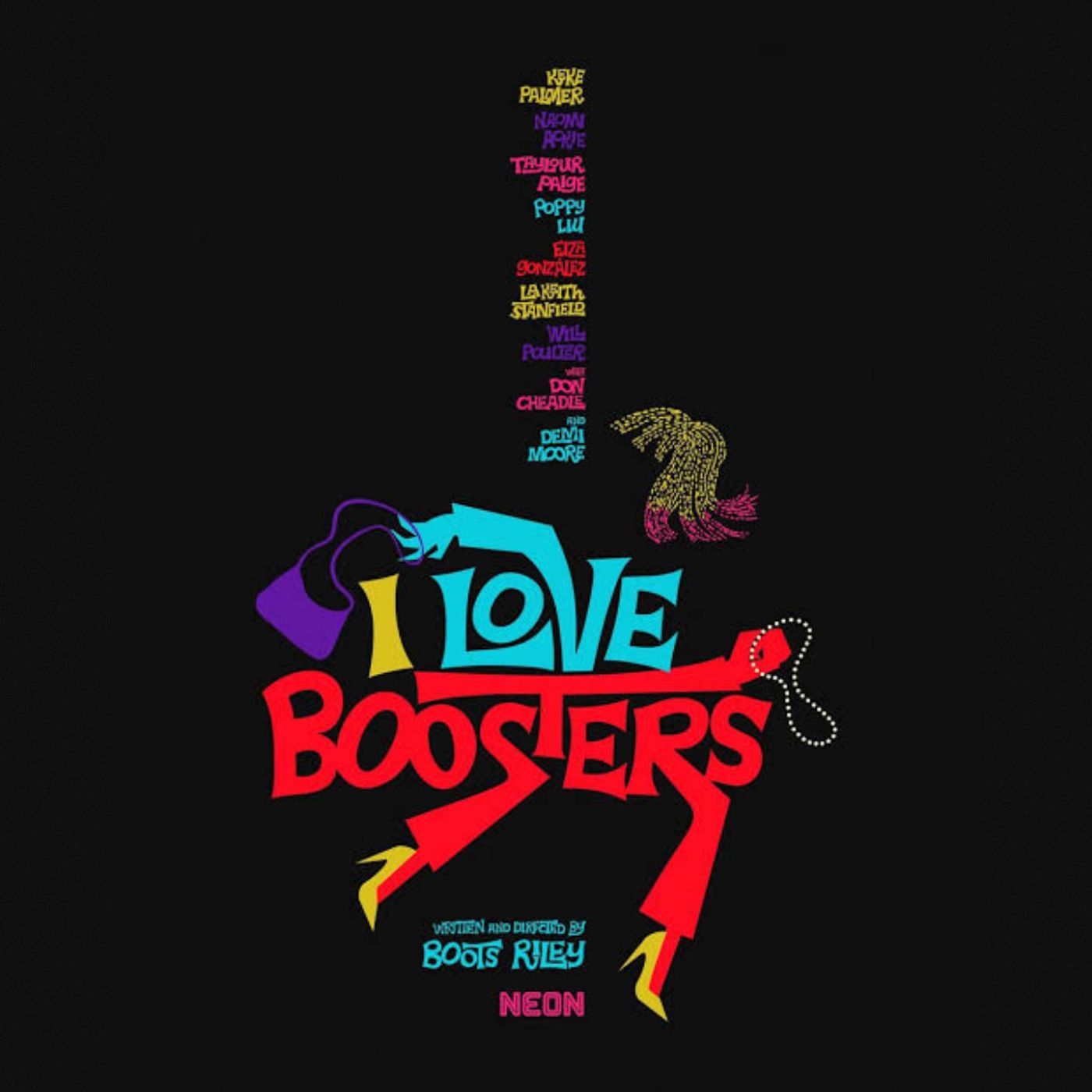
This is all of it on wnyc. I'm Alison Stewart. Let's talk movies. This hour we'll hear about the film Urchin, which stars Frank Delane and Harris Dickinson. Dickinson also wrote and directed the movie, which follows the ups and downs of a young man survival on the streets of London, from the lucky breaks to the drug relapses that keep him from breaking the cycle. We'll also talk about this year's screen adaptation of the revenge thriller play Is God Is, which follows twins seeking revenge on their violent father at the request of their dying mother. The twins are played by Kara Young and Mallory Johnson, and as they road trip, they unpack how life might have been different without the turmoil he put them through. But first, let's start with filmmaker Boots Riley. When rapper, record producer and filmmaker Boots Riley was a kid, he and his group of friends recorded a song called I Love Boosters. The lyrics went I love them boosters. They love them boosters. You should love them too. Even if they don't know you, they'll get it for you. You like a whole outfit or a shoe. A booster is a person who jacks or steals from retail stores and flips them at a dirt cheap resale price to turn a profit that is at the heart of his new film. Also titled I Love Boosters, it is set in Oakland, California and follows a trio of friends and professional shoplifters known as the Velvet Gang. They're shown as fashion forward Robin Hood types offering a service to their community. Their latest target is a fashion mogul named Christy Smith, a girl boss who personifies capitalism and exploitation as the Velvet Gang and Christie face off. The film explores themes like workers rights, plagiarism, intellectual property and what it means to be an artist. Boots Riley joined us to talk about I Love Boosters. I started by asking him why he wanted to revisit the song of the same title, which released with his hip hop group, the Coup.
- [02:59]
Boots Riley
I mean, you know, it's actually something that's in the news a lot now. The Intercept Investigative Journal did an expose that all these police unions got together in the wake of the George Floyd protests and hired publicists to seed stories in local news around the country about the supposed rise in crime and focusing on. On stuff like shoplifting, when actually it was going down. So that's maybe part of what's in the air, but really it was because I've spent, you know, I spent a long time being a broke rapper that needed to stay fly and definitely worked with a lot of boosters who provided stuff for me. But at the same time, I saw how much they were helping the community, how much even though it was illegal, it was not more immoral than the folks that they were getting it from. And so I thought that in a time when there's a lot of villainization going on, and especially this is a group of black women, that it would be good to live with them for
- [04:20]
Alison Stewart
a little bit sometimes. Critics have referred to this film as
- [04:23]
Interviewer
an anti capitalist comedy.
- [04:25]
Alison Stewart
First of all, did you sit down,
- [04:26]
Interviewer
like, think I'm gonna write an anti capitalist comedy?
- [04:29]
Boots Riley
No, I mean, I think about. Well, one. Let me be clear. I'm a communist and I believe that the people, we should have a world where the people democratically control the wealth that we create with our labor. So I believe that. So if I make some art that has to do with what I believe, it's going to be along the lines of those politics. I don't have to be like, I'm gonna try to make this. I just make art that talks about the world in the way that I see it. And I start with characters. I start with characters that we wanna be with, that we want to experience their trials and tribulations. And it expands from there. And a lot of times what I'm doing though, that I get from music is I want people to feel it. So I'm upping the ante on the contradictions. I'm heightening the contradictions to the point of absurdity in some ways. And then that ends up being funny. It ends up being. Cause comedy and tragedy both have irony in common. And that irony is very connected to contradiction. And so it's, you know, so I don't know. I don't know how to not write a comedy because life is so funny. Like, I think people have to do a lot of work to extract the comedy out of. Out of life. I've been to jail a Few times, but the longest was for three days. And people laugh in jail. Right, right. Like the. We often look at certain ideas and problems, and when we. I think when the comedy is taken out, we're taking out some actual important analysis.
- [06:24]
Interviewer
You know, the film is really colorful. It's sometimes it's really wacky in the best sense of the word. There's a lot of sight humor that's involved. But then you also talk about workers rights and stealing people's creativity. How do you think about balancing the idea of the visual stimulation that we're getting versus the deeper messages?
- [06:45]
Boots Riley
It's not a balance. It's all one thing.
- [06:47]
Interviewer
Oh, interesting.
- [06:49]
Actor (Corvette/Sade/Mariah)
So
- [06:51]
Boots Riley
the visual stimulation that we're getting, it's also, I would say also music and sound effects are part of that stimulation. And I'm trying to take people through visceral experiences that are analogous to the emotional experiences folks are going through. And like I was saying, we're juxtaposing things. We're exposing contradictions. And I want. If I have the camera pushing a character back with things whizzing by us, that's because that's part of the idea. That's where we're going together. And it leads to these other ideas. And again, like, when I'm writing it, I'm just being honest with myself about how I feel these personal things connect with these larger things. So we are, you know, we're talking about here, we're talking about the large contradiction of, you know, boosters are not outside of capitalism. They are part of the distribution system. And these things are made of not just other things. They're made of people's time. And so the idea is to, you know, one of the ideas in the movie is we see both sides of that production line and it's personal to us now that putting those together is ridiculous in and of itself. It's. The stuff is made by people that can't afford it. And the inspirations for fashion are from often from black communities and communities of color and other working class communities who inspire the fashion and can't afford it. So those contradictions are ridiculous. And when you really put it, when you put all of those things together, that comedy, that visual, that visual conflict as well, the colors, like, this is a very colorful movie, partly because I need to build a rhythm of big swaths of color that change from this to that big. I also am trying to have everything in camera so that you feel textures. There's a lot of collage in this. You know, one of my biggest cinematic influences is Parliament Funkadelic. And you know that, you know, they might have a lead guitar, electric guitar over an accordion with a gospel choir playing underneath it and someone doing spoken word. And it all fits together. And so I'm trying to visually do that same thing cinematically, not just visually, but in editing and all of that.
- [09:58]
Interviewer
I love that their lipsticks changed.
- [10:02]
Alison Stewart
Let's listen to a little bit of I Love Boosters. This is Corvette, Sade and Mariah talking
- [10:07]
Interviewer
about their plans to rob Kristi Smith's stores. Let's listen.
- [10:11]
Boots Riley
We gonna grab the videotape.
- [10:12]
Actor (Corvette/Sade/Mariah)
So right we be wearing wigs. And the camera angle ain't enough to prove work. They don't know my name is Cassandra. We use fake IDs. They don't know who we.
- [10:21]
Commercial Voiceover
None of this.
- [10:21]
Boots Riley
Even if they can't prove it, they'll still know it was us, though.
- [10:24]
Actor (Corvette/Sade/Mariah)
Let me be specific. I don't care if they know it was us. I care that Kristy Smith hates that they know it was us. With Clint place out in 40 minutes or less and be a lick picking up for us to sit back for a minute.
- [10:38]
Interviewer
I like the sound design, too.
- [10:41]
Boots Riley
That's Toon Yards that does the score.
- [10:43]
Interviewer
Oh, thank you for saying that. What did you think about the first time you saw those three actors, Kiki, Naomi, and Taylor, on screen together?
- [10:51]
Boots Riley
Well, our rehearsal was just them sitting in a room and talking. Like, we thought that we were gonna sit down and do a rehearsal. And they started talking and really vibing, and so I just sat. I was like, I'm not gonna ask them to do lines. I'm. This is the rehearsal is them getting to know each other. And, yeah, they were. It was electric. They really hit it off and became friends. And honestly, with the way that we shot this, this was a very complicated shoot. We had specific lighting requirements, things like that. Our dp, Natasha Breyer, is a genius, and she's. We had lenses invented for us by Panavision, and she had her own invention that she put in front of the lens. So to have color kind of wash and change on there. She doesn't like me to talk too much about it, but. Because she needs to get the patent. But the point is, they had a lot of time to vibe together in between stuff. So, yeah, you really feel that you are hanging with them and you want to keep hanging with them.
- [12:12]
Alison Stewart
Let's listen to a clip from I Love Boosters. Corvette sees Christy on the news answering a question about what she thinks of the Velvet Gang.
- [12:21]
Commercial Voiceover
Oh, Christy. Christy, what are your thoughts on the
- [12:23]
Boots Riley
Velvet Gang, Christie Smith knows we exist. Low class urban bitches. With all due respect to urban bitches.
- [12:40]
Actor (Corvette/Sade/Mariah)
Did she just call us urban bitches so early 2000s?
- [12:45]
Interviewer
Why did you have Christy call them urban bitches?
- [12:49]
Boots Riley
Just Cause that was like the code, like that word that used to be used, like when people didn't want to say black and you knew they were talking about black people and they said urban. So I just gave her that.
- [13:08]
Interviewer
Demi Moore has been in this business for years. What was something interesting that she brought to the character?
- [13:16]
Boots Riley
Oh, man. You know, she would say, well, I have a friend that's a fashion designer. And they do this. You know, she had all this experience of that, right? And you know, and she also. One of her notes was really good. That actually caused me to put something in a couple things in there that caused laughs. Cause the character was a child prodigy who was an MIT genius who started doing fashion. I won't get into the whole thing, but started doing fashion at a young age. And so she was like, well, if she's a genius, I need more things that just tell us she's a genius. So I was like. So I looked up a lot of antiquated insults, you know, and coming from. So, you know, and they end up. They end up. So there's like, she calls them mumble crust whores, and she calls them fustillarian. And these are words like mumble crest is something that a, you know, someone from an aristocrat might call. Might try to insult someone for having. For starving, even though they're the ones that are causing them to starve. Or fustelarian, meaning you have to fight for your life. Right? But so if after this movie you hear people using the words mumble crust or fustelarian, I need a footnote credit on that.
- [14:56]
Alison Stewart
You're both the writer and director of this film. When does the screenwriter role end for
- [15:03]
Interviewer
you and when does the director begin? Or is it the same?
- [15:06]
Boots Riley
They both are the same thing. When I'm writing the script, I need people to see the movie while they're. While they're reading it. And because I also. I'm usually giving it to people that either I need to get in, be in the movie, or fund the movie. So I want the. And also, I never know whether it's gonna get made. So I want that script to be a document that Maybe people read 20 years later and be like, this was. This would have been an amazing movie. So I'm describing. Describing production design, I'm describing the way camera Moves, things like that, obviously they change later. But then when we're on the set, I'm often. I can be honest. Cause it's my writing. I can be like, that's bad writing. Let's not do that. Let's do this other thing. And it's all happening at the same time.
- [16:01]
Interviewer
We got a text here that says sorry to Bother your was one of the best movies ever from one of our listeners texted in. So that's for you.
- [16:08]
Boots Riley
Yeah, thank you.
- [16:09]
Interviewer
What did you learn from Sorry to Bother your that you were able to. To use on this?
- [16:14]
Boots Riley
Okay, well, on Sorry to bother you, for instance, we have this part where the papers are flying behind lakeith Stanfield's character Cassius, and he's feel. He feels defeated and he sits back in his chair, the papers fly. That took us like 20 to 30 minutes to get those papers flying. And everybody was like, this is an indie film. We had a budget of less than $4 million. They're like, why are we spending a huge part of the day trying to do this? And I pushed for it and we got it. But once we started getting it, I was like. I felt bad, like we wasted so much time. So I was like, I gotta make this be worthwhile. So I thought about what the next scene was and we added a transition in there. I had lakeith turn to the side and say, you're gonna stuff all that in your mouth and it transition to the next scene. And it worked so well that when I was writing this, I was like, oh, I'm doing that to the thousandth time. And so we have a lot of transitions built into the. Into the scenes that we filmed with where the camera leads you to something or the characters lead you to this next thing. And you know, it's a thing that I'm very proud of in the movie
- [17:36]
Alison Stewart
that was Boots Riley talking about his film. I love boosters. Streaming now on Apple TV.
- [17:42]
Dr. Horton Announcer
Now is your time to get into a new Dr. Horton home by taking advantage of its national red tag sales event going on right now through Sunday, August 2nd. Stop by any of its participating communities and find select red tag homes at incredible pricing. So whether you're buying your first home or looking for an upgrade, you don't want to miss the red tag sales event going on right now. Discover the Dr. Horton Difference at Dr. Horton.com Dr. Horton, America's builder and equal housing opportunity builder, blowing ad budget on
- [18:13]
Commercial Voiceover
metrics that look great till the CFO sees them. That's bullspend. And marketers are calling it out in Dashboard Confessions.
- [18:22]
Boots Riley
I remember telling my boss, it'll be good for the brand when leads were slow. Yeah, it wasn't.
- [18:29]
Commercial Voiceover
Cut the bull. Spend LinkedIn lets you target by company, job title and More. Advertise on LinkedIn. Spend $250 on your first campaign and get a $250 credit. Go to LinkedIn.com campaign terms and conditions apply.