← All Of It with Alison Stewart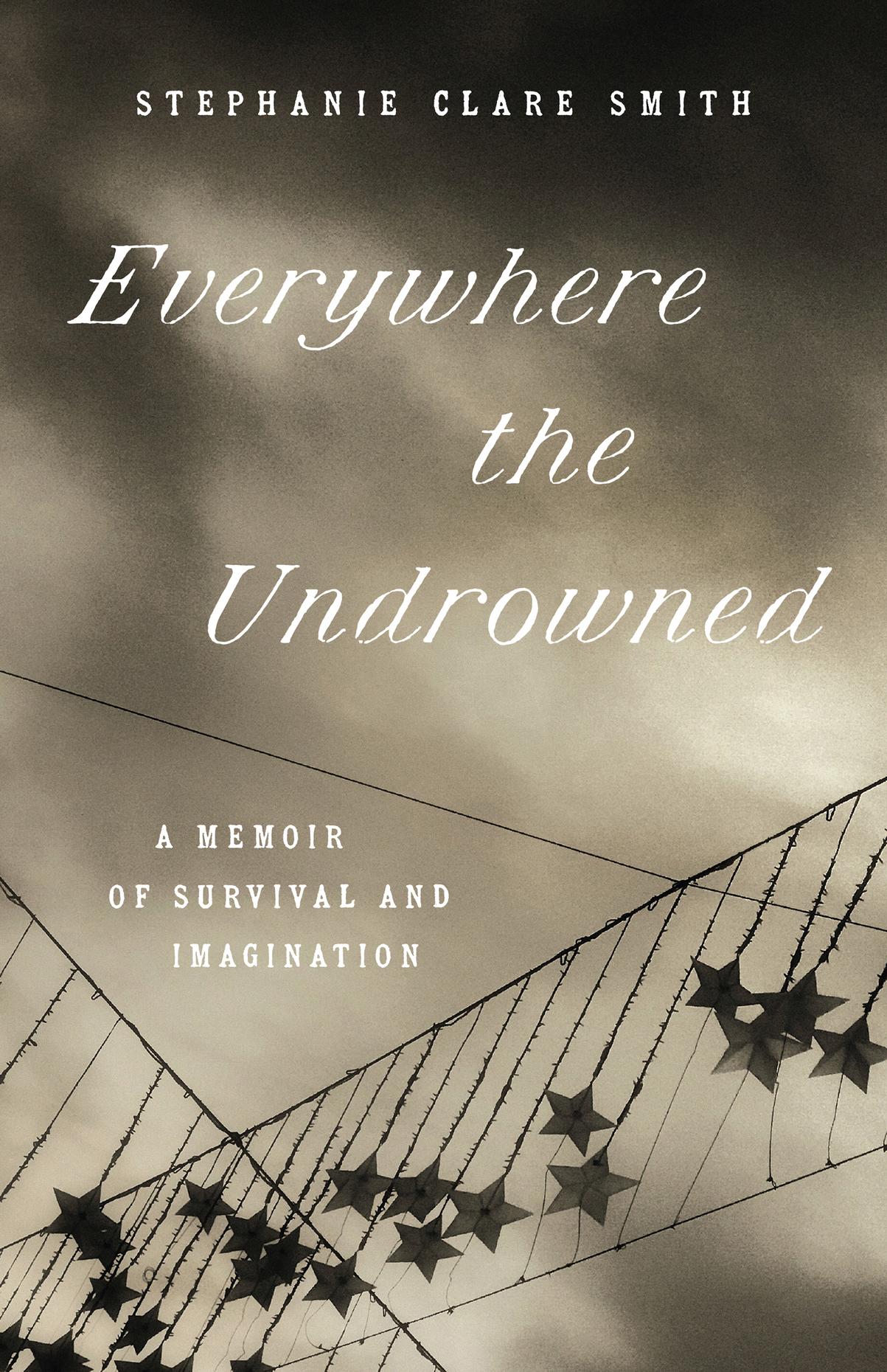
All Of It with Alison Stewart
Caring for the Mother Who Abandoned Her (Mental Health Mondays)
00:13:02
Caring for the Mother Who Abandoned Her (Mental Health Mondays)
Loading summary
Transcript30 lines
- [00:04]
Stephanie Claire Smith
Listener support, WNYC Studios.
- [00:18]
Matt Katz
This is all of it from wnyc. I'm Matt Katz filling in for Alison Stewart. We continue our ongoing series Mental Health Mondays with a new memoir about survival and trauma. Listeners, we want to let you know that this segment may deal with sexual assault. If at any time you feel you need support, please call the National Sexual Assault Hotline. That number is 1-800-656-4673. In the summer of 1973, 14 year old Stephanie Claire Smith found herself home alone in New Orleans after her mother abandoned her to go on a road trip out west. And in her mother's absence, Stephanie missed her mother deeply and felt a sense of responsibility to take care of things until she returned. She went to her summer school algebra class, but she also wandered around the city alone, formed an intimate relationship with a streetcar operator, a man twice her age, and found herself at the mercy of a man with a knife who forced himself onto her in the back of his truck. Decades later, in her 40s and 50s, poet and social worker Stephanie found herself grappling with these difficult memories after she became became the primary caretaker for her mother, who was diagnosed with dementia. Her memoir now is titled Everywhere the A Memoir of Survival and Imagination and is on shelves today and author Stephanie Claire Smith joins us to discuss. Stephanie, welcome to all of it.
- [01:50]
Stephanie Claire Smith
Thank you. It's a pleasure to be here.
- [01:52]
Matt Katz
In in this memoir, you said your mother was a freelance modern dancer hired by the city to teach dance in public schools. Tell us about her. What kind of person was she and how would you describe her outlook on life as a kid? How did you see her as a parent?
- [02:10]
Stephanie Claire Smith
Oh, those are different questions. The way I saw her was the way I needed to see her, which was flawless and fantastic and everyone wanted to be around her, kind of like a Judy Garland character. She was appealing to everyone. She was very liberal thinking and, and just a free spirit. I also think as an adult, looking back, you know, she had no intention of being a single parent during the 60s and 70s. So it was tough. And her priority was really to find love again. And that drove a lot of her.
- [02:51]
Matt Katz
Decisions, I think, and that drove monumental decision. I mean, when tell me about what your mother said to you before she left you home alone in the summer of 73.
- [03:05]
Stephanie Claire Smith
Yeah. So I asked her not to go. And I recount this in the book, how she just put a good face on it, like, oh, you'll be fine, you know, you won't even want me to come back. And so I felt silly asking her to stay. You know, I. People ask me later, like, didn't you think it was unusual? Didn't you think this or that? No, I felt like I was getting skipped ahead a few grades and I needed to really live up to this test that I was being too clingy and needy.
- [03:34]
Matt Katz
Had she ever left you home alone before for any period of time?
- [03:39]
Stephanie Claire Smith
Yeah, so this wasn't the first time. I already had developed a lot of muscles and taking care of myself, she would, she wouldn't leave me alone that long, but she certainly was out a lot late and would often times forget to pick me up places. Yeah, that happened quite a bit. So there were many cases before that where she would forget or she would figure I'd find some way to get home. Yeah.
- [04:07]
Matt Katz
And your, your father, other extended family? Was there anybody else you were able to rely on in such circumstances?
- [04:16]
Stephanie Claire Smith
No. And that's why I needed my mother to be as perfect as I could create. So my father left when I was five and he lived in a different state. I saw him about once a year and there were not any family members for long in New Orleans. Her other family members moved or she wasn't connected to them anymore. She had a slew of friends herself who I adored, but they weren't necessarily close to us. And I. It never crossed my mind to like turn to them. I didn't really even know how to reach them during that summer. So I totally blamed myself for a long time and didn't see the connection to her being gone to. As to what happened to me and.
- [04:58]
Matt Katz
Later, years later, and when you're starting to make that connection and see the. The significance of this summer, is that how you came about to try to put this pen to paper and write a memoir about the experience?
- [05:12]
Stephanie Claire Smith
Exactly. I really couldn't afford to do that until after she died. So again, my mother had many winning qualities. Imagine, you know, a Judy Garland type person. There's all this wonderful quality qualities to her. So I could only really focus on those. And like many children who grow up in homes where parents are less than attentive, neglectful, you, you're just so used to dedicating your life to them, taking care of them, that they need to be protected in so many ways. It doesn't occur to you that they should be protecting you. It just doesn't cross your mind. So I heard interview with Sinead Okonor who talked about that, who talked about if her mother, who horribly abused her, that if her mother was back al she would want to take care of her mother. Again, that's where we're getting our sense of love is from the love that we're giving. So it was after she died that I could slowly start to put the pieces together and see that, you know, her neglect actually was the engine that pulled all of this forward.
- [06:13]
Matt Katz
Wow. You're a poet. And the memoir, it feels poetic in many, just in the way it's structured in the writing. What felt right about telling the story in the way you did using. Using prose, but. But bringing your. Your poetry background into it.
- [06:35]
Stephanie Claire Smith
Yeah. So, you know, I didn't really set out to write this. I was in recovery after my mother died. I got back into writing because I had to put all that to the side and was writing poems and I was doing all this inner work on this trauma and this childhood I had, and I was in therapy. That was the real artwork. The poetry was the offsh work that I was doing. So I was writing all these poems. And then I came across Maggie Nelson's book Bluettes, which is written in these really tight little paragraphs. Yeah, it's poetic, but it's not necessarily a poem. And as I would fall asleep at night, my poems that I was working on kind of spread out into these paragraphs. They had more to say. So I would get up and I'd write a page and go back to sleep, and this would happen, you know, for several nights. And so I eventually got to 13 pages and showed it to a poet friend who said, well, I don't know what it is, but keep going. So I did. And I just kept that form because I liked it. And I also had the attention for it. It was something about it created attention to keep it really tight. And that's the way I tell stories, very succinctly. And so then after I had about 50 pages, I showed it to a fellow writer who encouraged me to really write some more now about the present and about caregiving. And so I tell you about. In about nine months, I was done. I wrote like in this white heat. Wow. As I was processing everything, the hard part was, you know, getting an agent, finding a publisher. Sure.
- [08:03]
Matt Katz
Right. Well, did you have to do any research or investigation into your own. It's your own life in order to make sure you were having the right context for things a little bit.
- [08:15]
Stephanie Claire Smith
I mean, trauma kind of sears things into your memory. So I didn't have to do a lot in that area, but certain dates, and if I was remembering certain dates correctly, certain letters that I had, things like that.
- [08:32]
Matt Katz
Yes, you write about this summer of 1973, and you write about this awful encounter with a. With a man who forced himself on you in the back of a truck. Why did you feel it was important to share this? And what could. There must have been no resources for somebody in your situation at that time. You must have felt like there was nowhere to go.
- [09:02]
Stephanie Claire Smith
Yeah, there was nowhere to go. This was way before rape crisis centers, that they may have started somewhere, but they weren't in New Orleans.
- [09:08]
Matt Katz
Yeah.
- [09:09]
Stephanie Claire Smith
And it wasn't even in our lexicon, you know, that just wasn't a thing. So, yeah, I didn't feel like there were many places to go in the places I go I went to, you know, were horrible for me. So I just learned not to talk about it anymore and. And run away from it, basically. So I'm always upset when I hear people say, oh, someone's stuck in the past. You know, in my thinking, it's the past that stuck in the past. And I was a perfect example of somebody who moved away from my past as quickly and as far as I could and never looked back. That's not really moving on. That's abandoning my past. And now it's twitching in the background somewhere, still affecting me. I mean, the. Is all around us. So instead, it's more like we need to find a way to bring our past into the present so that we can have a conversation with it, so that we can take care of it and be compassionate towards it. That took a lifetime. That took a lifetime. I was much more interested in ignoring it because anytime I did try to talk about it, people didn't understand or it was met most people. I mean, some people understood, but not very many. Not. And I never shared all the details because, again, I didn't want to out my mother. Yeah. So writing this story has been very hard in that regard because it's been. It's outed my mother. But in terms of why did I write about that? Because it was the most horrible and traumatic event of my life. And when I hear other women who are abducted, because abduction has its own version of hell, and I would hear other women talk about their experiences, and it really changed my life to hear what they were thinking of those. That first hour of their abduction. Very similar to the first hour for me. So if my story could also do something like that for someone else, then we're less alone.
- [10:58]
Matt Katz
I wonder if you also brought your past into your. Your present through your. Through your work. I mean, those experiences clearly, like, must have led you in some way to your career as A social worker and a mediator, right?
- [11:12]
Stephanie Claire Smith
Yeah, absolutely. I think unconsciously, you know, I was trying to work through my past by helping other people. And also I'd already grown up in a house where my needs weren't ever in the mix. So I'd already learned to swallow all that. And that's kind of what you have to do as a mediator, is mediate other people's concerns. Your concerns are not, you know, obviously going to be part of the mix. So I, I, my personality was already primed for that role. And then the work that I do with at risk families, ye. It was, I think, an unconscious way for me to try to work on some of that.
- [11:47]
Matt Katz
And, and your, your career has taken you from, you were in New York City for quite some time and then you ended up in, in Raleigh, North Carolina. Is that right?
- [11:57]
Stephanie Claire Smith
That's right, yeah.
- [11:58]
Matt Katz
Tell me, tell me where you, yeah, tell, tell me about your life now and, and, and why you ended up down there.
- [12:05]
Stephanie Claire Smith
Well, New York is just a little too fast for me. I grew up in New Orleans and so I think the first year in New York I could never even sit down on the train. I couldn't even get into a train. So it was hard. So yeah, as soon as I could, I, I wanted to come back where it was a little warmer and a little slower and a job came up in Raleigh and I took it. I mean, New Orleans is a hard place to live and even harder now. So I didn't. And it was really hard to get a job in New Orleans at the time. So I just ended up here. I could ended up anywhere. I just didn't want to be around any more snow.
- [12:43]
Matt Katz
Yeah, that's a very fair answer. We are going to leave it here, but congratulations on the memoir. It's a remarkable work. Everywhere the Undround A Memoir of Survival and Imaginations. Excuse me. Everywhere the Undrowned A Memoir of Survival and Imagination is in stores now. I've been speaking with author Stephanie Claire Smith. Thank you so much for joining us, Stephanie.
- [13:09]
Stephanie Claire Smith
Thank you. I appreciate it.
- [13:11]
Capella University Announcer
At Capella University, we believe accessible education can make a difference in people's lives. That's why we offer scholarship opportunities to all eligible students. Whether you're considering a bachelor's, master's or doctoral degree, our teams will walk you through the process and help you get the savings you are eligible for. Furthering your education is an investment in yourself. Entonces que estas de lo cacres con Capella University. Learn more at capella. Edu nyc. Now delivers the most up to date local news from WNYC and Gothamist every morning, midday and evening with three updates a day. Listeners get breaking news, top headlines and in depth coverage from across New York City by sponsoring programming like NYC Now. You'll reach our community of dedicated listeners with premium messaging and an uncluttered audio experience. Visit sponsorship wnyc. Org to get in touch and find out more.