← All Of It with Alison Stewart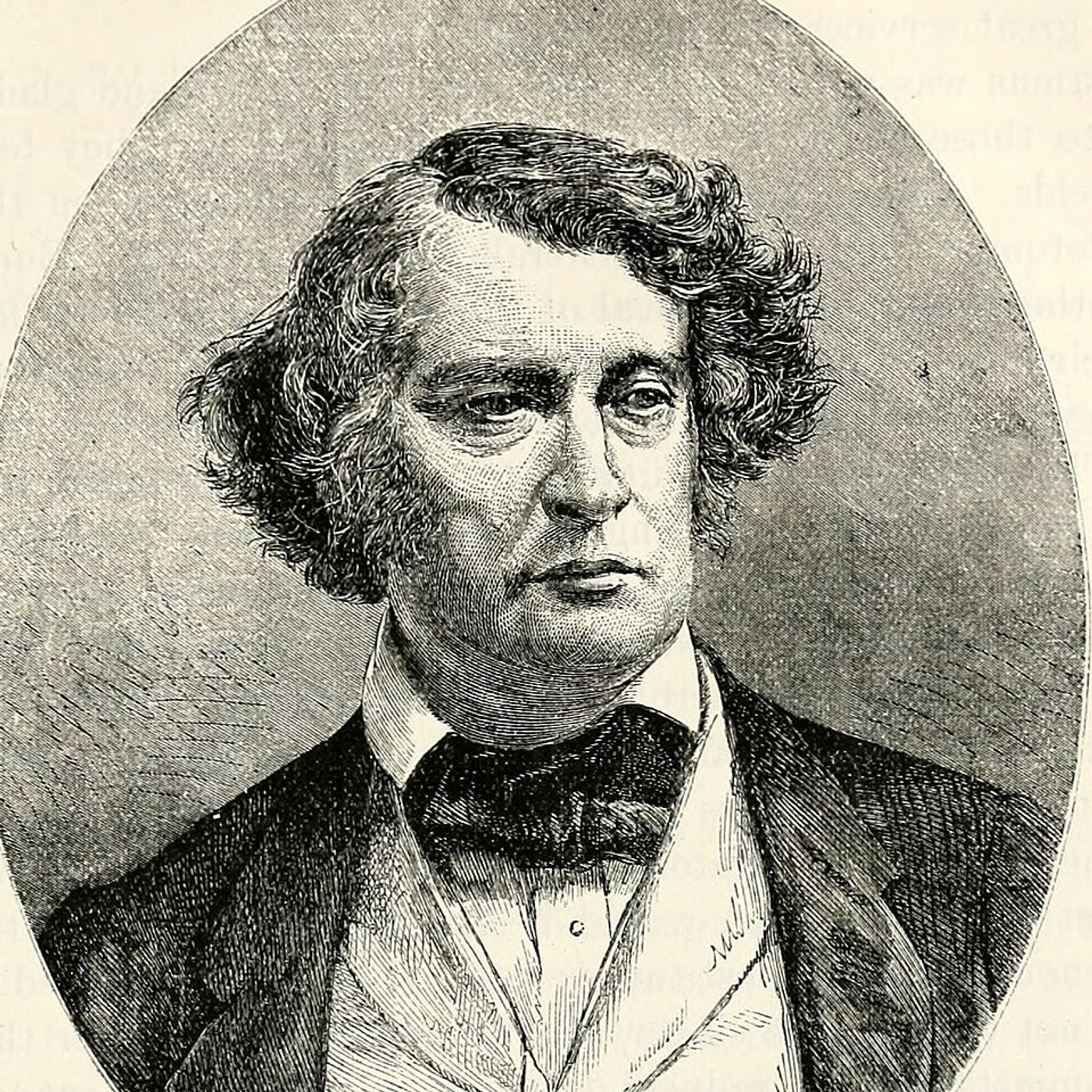
Loading summary
Transcript320 lines
- [00:00]
Progressive Insurance Announcer
WNYC Studios is brought to you by Progressive Insurance. Here's a helpful fact you might not know yet. Drivers who switch and save with Progressive save over $900 on average. Pop over to progressive.com, answer some questions and you'll get a quick quote with discounts that are easy to come by. In fact, 99% of their auto customers earn at least one discount. Visit progressive.com and see if you can enjoy a little cash back. Progressive Casualty Insurance Company and affiliates national average 12 month savings of $946 by new customers surveyed who saved with progress between June 2024 and May 2025. Potential savings will vary.
- [00:44]
Alison Stewart
This is all of it on wnyc. I'm Alison Stewart Today is History Friday, where every week this summer we revisit our full bio series to learn more about important figures in American history. Today we're going to focus on Massachusetts Senator and abolitionist Charles Sumner. Charles Sumner was the grandson of a revolutionary fighter, the first librarian of Harvard Law School, and was at President Lincoln's bedside when he died. He was a brilliant legal mind. Sumner argued that the Constitution is not mean, stingy or pettifogging, but open handed, liberal and just, including always in favor of freedom. He used his position to help Americans see that slavery was wrong and would destroy the country and it almost destroyed him. Sumner, of course, was nearly beaten to death on the Senate floor for his anti slavery views. Last year we focused on Charles Sumner as part of our full bio series where we spend a few days with the author of a deeply researched biography. To get a fuller understanding of the subject, I sat down with Zakir Tammies, author of the book Charles Sumner, Conscience of a Nation. The book uses 600 of Sumner's personal and professional letters, 400 contemporaneous news articles, and the works of the men who influenced him growing up. It's now out in paperback. We begin with Sumner's family tree, which dates back to the American Revolution.
- [02:21]
Interviewer/Host
I think before talking about Charles Sumner, it's important to understand his ancestry, which dates back to the Revolutionary War. His paternal grandfather was named Job Sumner. What role did Job play in the American Revolution?
- [02:37]
Zakir Tammies
Job Sumner was the child of farmers in rural Massachusetts. He descended from one of the first generations of Americans to come to this soil in the 1600s and he decided
- [02:52]
to go to Harvard University
- [02:56]
in his mid teens and right after he gets there, ironically, the American Revolution begins in the farming town that he had left and next thing you know colonists are fighting British redcoats at Lexington and Concord. Job Sumner was itching to get involved in the fight. But the fight came to him when revolutionaries arrived at Harvard University's campus and demanded to take over the college campus, to set up a military encampment in Cambridge in order to try to take Boston, which was in British possession at that moment. Harvard asked the student body to leave campus and to continue their studies in the countryside. But Job Sumner said no. Instead, he stayed at Harvard and joined the Revolution. And within just a few years, this farming boy rises the ranks of the revolutionary Army. And by 1783 he is a leading major who helps to supervise the evacuation of the British from New York City, escorts George Washington into the city to liberate New York and becomes one of the leading revolutionaries.
- [04:29]
Interviewer/Host
It's really interesting because one of our listeners, we had a segment on Franz's Tavern and that he was there, Job was there to help George Washington celebrate the end of the war. But I'm curious, what did he do with himself after the war?
- [04:48]
Zakir Tammies
That's right.
- [04:49]
Job Sumner was there with Washington, Fraunce's Tavern when Washington is kissing goodbye to the officers. And then Job Sumner afterwards gets an appointment to be a commissioner in Georgia. And here is what is really striking. Job Sumner, this revolutionary who fought for freedom, goes to Georgia, hobnobs with southern planters and becomes a slaveholder. And unbeknownst to Washington, or probably to anyone in the Revolutionary army, Job Sumner had a son, which was Charles Sumner's father, Charles Pinckney Sumner. Job Sumner impregnated a farm girl in Massachusetts around the same time of the Battle of Lexington and Concord. He did not marry this woman. And so he has this bastard son in rural Massachusetts who is literally toiling to survive, who is herding cows late at night, who doesn't have much of an education at first, while Job Sumner is enjoying a prestigious life as a Southern planter.
- [06:00]
Interviewer/Host
All right. Charles Pinckney Sumner marries a woman named Relief Jacobs. I love that name. And the subject of your bio. Charles Sumner is born. He's a twin of Matilda. He's the eldest of, I believe, eight children. What kind of child was Charles Sumner?
- [06:20]
Zakir Tammies
Charles Sumner was a fascinating kid.
- [06:23]
He is very scrawny. He looked sickly. He didn't engage or enjoy physical activity. He didn't go swimming with his siblings. He was not interested in dance class
- [06:41]
and he just loved to learn.
- [06:44]
So while he's young, he decided that he wanted to learn Latin and he wanted to go to the Boston Latin School.
- [06:54]
Now, the Sumner's didn't have much money
- [06:57]
and Charles Sumner decides to borrow Money from an older classmate to give him a Latin textbook.
- [07:05]
And he comes down the stairs one day, confronts his father while his dad is shaving and starts to speak in Latin. And he's like 9 years old at this moment. And that was his way of persuading
- [07:18]
his parents to give him an opportunity to take the entrance exam to the Boston Latin School. He's accepted, and next thing you know,
- [07:27]
this scrawny kid is starting to learn the classics, something that he would enjoy for the rest of his life.
- [07:33]
Interviewer/Host
He grew up in a neighborhood where black Bostonians lived, sort of the black Beacon Hill area. Tell us a little bit about the
- [07:41]
people that live there and how do you think that shaped Sumner's feelings about race early on?
- [07:50]
Zakir Tammies
So Sumner grows up in a contradiction.
- [07:54]
On the one hand, he's a third generation Harvard educated man, or he grows up and becomes a Harvard educated man. On the other hand, he is living in this ethnic enclave of Boston that has a large free black community because his family did not have any money to live anywhere else. And that experience gave him a deep sense of empathy and sympathy for his black neighbors. Black Boston at this time is a small community of extremely persecuted and marginalized people. But there are also a number of artists, of writers, musicians. Free black Boston, around a thousand people, was in many ways the cultural capital of black America in the early 1800s. Only a few blocks from Charles Sumner's home was the African Meeting House, one of the first black churches in the country, still standing today. There was also a black Masonic lodge, the first of its kind. There was the African Mutual Aid Society, an organization of free blacks that would try to give money to protect their own community. Sumner saw black schoolchildren going to the Smith School, one of the earliest black schools in the country. And there were writers in the community like David Walker, a famous black abolitionist, who wrote a tract that called out white Americans for their hypocrisy in celebrating the Revolution and the Declaration of Independence, but not granting that freedom and equality to their black neighbors.
- [09:41]
Interviewer/Host
What was Charles Sumner's experience while at Harvard and Harvard Law School?
- [09:50]
Zakir Tammies
When Sumner gets to Harvard, he is so excited. And then he discovers how difficult, tedious
- [10:00]
the curriculum was at the time. He complained about the food, he complained about his peers. Most of all, he complained about his teachers who just wanted him to memorize, memorize and memorize. That changes when he finally gets to Harvard Law School. Now, this quote unquote law school barely existed at the time.
- [10:27]
It was really just a small group
- [10:29]
of students and one teacher named Joseph Story. Joseph Story was a titan of American law. He was a justice on the US Supreme Court. He was in many ways a lieutenant to Chief Justice John Marshall. And Story pretty much founds the school, and Sumner is one of his first students. Story comes up with a new curriculum for teaching law. He decides to have his students read before class, and then in class, he would call on them to explain the reading.
- [11:09]
For anyone who has been to law
- [11:10]
school, you know what it is? It's called the cold call.
- [11:15]
Story had invented it, and Sumner is one of the first students to ever
- [11:20]
be cold called in history.
- [11:23]
And he was good at it. Story very quickly realizes that Sumner is
- [11:28]
a kind of prodigy.
- [11:30]
He starts to invite Sumner to his home, where Sumner would just riddle Story with questions about this topic and that topic. Story asked Sumner to be his research
- [11:42]
assistant and to find cases for him to edit some of his treatises.
- [11:47]
Story's son William would go on to
- [11:50]
say that his father treated Sumner like
- [11:53]
a son, which I'm sure made for an interesting dynamic because Story had a son. But Story's son William goes on to become an artist.
- [12:02]
Interviewer/Host
Yeah.
- [12:02]
Zakir Tammies
Sumner becomes the lawyer and the jurist
- [12:05]
that Story wanted for his own child.
- [12:08]
Interviewer/Host
Well, Story believed in equity jurisprudence. First of all, please explain what that means and how did that impact Sumner's opinion of the Constitution, because this becomes very, very important, as we will discuss later.
- [12:27]
Zakir Tammies
Historically, in English common law, courts were
- [12:31]
only able to grant remedies in the
- [12:34]
form of monetary compensation.
- [12:39]
That changed sometime in, I want to say, the 15, 1600s, when the English kings invented a new system of courts called the courts of equity.
- [12:53]
Equity courts were able to do all
- [12:55]
kinds of fashionable remedies.
- [12:58]
They could issue injunctions which would order a party to do something.
- [13:04]
So your compensation as an injured party might not be money, but it might be an order from a court.
- [13:12]
Equity jurisprudence is really important to Sumner's
- [13:16]
early training in the law because Story was a proponent of equity.
- [13:22]
And the logic of equity is that sometimes a court needs to be creative
- [13:29]
about how to right a wrong, that
- [13:32]
courts need to come up with new
- [13:34]
ideas and new strategies to address the violation of rights,
- [13:42]
even if there is
- [13:43]
no remedy on the books or there's no monetary remedy in law.
- [13:50]
So Story trains Sumner to have a deep respect for equity jurisprudence, which is
- [13:56]
something that Sumner takes with him for the rest of his life in trying to think creatively about how law can right wrongs, even when historically there was no right to the wrong.
- [14:09]
Interviewer/Host
It's interesting.
- [14:09]
Initially, though, he didn't do well. As an attorney, you write in the book Sumner's legal career would fail to take off and achieve the high expectations everybody placed on him. First of all, what were the expectations of him, of Sumner?
- [14:27]
Zakir Tammies
When Sumner graduates from law school, he
- [14:30]
first becomes the librarian for Harvard Law
- [14:33]
School, the first librarian ever of the
- [14:36]
school who actually published his first catalog. Then he practices law briefly, but he tells his mentors that he wants to go to Europe. And his mentors are very nervous about this. One mentor, Josiah Quincy, the president of
- [14:54]
Harvard, says, you will go and get a cane and a mustache and an
- [14:58]
additional stock of vanity.
- [15:03]
Another mentor, Simon Greenleaf, writes to him and says to see through all the
- [15:08]
Jacobinism, radicalism and atheism of modern Europe and all the other isms, and come back to be the good conservative that God made you.
- [15:22]
So there is enormous pressure from his
- [15:24]
mentors for him to be a conservative lawyer, for him to be an attorney representing the Boston merchant class rather than getting involved in any kind of human rights activism, and to please these mentors who trained him, who taught him, who took care of him.
- [15:51]
He does exactly what they tell him to do.
- [15:55]
After returning from Europe, he becomes a corporate lawyer in Boston. He represents Boston merchants, but he is not enjoying this at all.
- [16:06]
While he does well at first, his client lists quickly dwindles down, probably because
- [16:13]
they recognize he had no enthusiasm for his practice. And next thing you know, he is
- [16:19]
barely practicing law, even though he is one of the most educated lawyers in the continent. He had a nickname, the Briefless Barrister, because he was so smart and so talented, but had no cases. And very quickly his legal career flounders.
- [16:41]
Alison Stewart
You're listening to my full bio conversation with Zakir Tammies, author of Charles Sumner, Conscience of a Nation. Next we'll learn about what led to that infamous caning on the Senate floor. This is all of it. This is all of it on wnyc. I'm Alison Stewart. For this History Friday, let's continue my full bio conversation about Charles Sumner with Zakir Tamise all author of the book Charles Sumner, Conscience of a nation. In 1845, before he became a senator, Charles Sumner was a young respected Boston lawyer. And he gave a fiery speech at a fourth of July celebration. It was called the True Grandeur of Nations. It was an anti war speech against the annexation of Texas from Mexico. Sumner called the annexation a ruse to add more slave states. The speech was a beacon of things to come. When Sumner became a senator, he gave what became his most famous abolitionist speech, the crime against Kansas. In May of 1856, he was leading a Republican party that was against Kansas being admitted as a slave state. The speech so infuriated a pro slavery South Carolina congressman that he nearly beat Sumner to death on the Senate floor. It's the most well known story about Sumner, but our guest has a few details that have often been left out of its retelling. Let's learn more now. Here's my conversation with Zakir Tammies, author of Charles Sumner, Conscience of a Nation.
- [18:28]
Interviewer/Host
I'm going to take you to the 4th of July, 1845. This perhaps shows us Sumner's fire, but also his naivete.
- [18:37]
Alison Stewart
On the 4th of July, gave a
- [18:39]
Interviewer/Host
speech that left the audience in shock in Boston because he spoke about how awful it would be to enter a war with Mexico. What was his argument?
- [18:54]
Zakir Tammies
Let me paint a picture. At this time, Boston organized an annual military parade on July 4th, and they recognized one young orator who seemed to be having a promising career. So, for example, John Quincy Adams and Horace Mann and other famous individuals had an opportunity in their youth to speak at this military parade. In 1845, it was Charles Sumner's turn and this was considered a low risk pick.
- [19:31]
He is a Harvard educated corporate lawyer in Boston. Yet unbeknownst probably to the organizers, Charles
- [19:41]
Sumner was going through a transformation at the time.
- [19:45]
He was just mortified by the prospect
- [19:48]
of America going to war with Mexico. At this time, slaveholders were desperate to spread slavery into the West. Of course, most of the American west belonged to Mexico at that time. And so there's a push for the President to invade Mexico. And Sumner decides that he cannot stay silent, that he has to use his platform to denounce this war.
- [20:15]
Now, all that's well and good, but
- [20:17]
Sumner had no sense of moderation.
- [20:20]
If he was going to condemn this war, he was going to go all out. So he asked rhetorically at the beginning of his speech, who is the God of war? And he responds, it is not the Christian God of Abraham, it is Mars, man slaying blood, polluting pagan Mars. Then he goes on and he argues that in this age of Christian light,
- [20:45]
there can be no war that is not dishonorable.
- [20:49]
He denounces West Point Academy as a
- [20:53]
place of idleness and vice.
- [20:55]
He denounces the American Navy as a
- [20:59]
useless and expensive toy.
- [21:02]
He mocks the military officers who are sitting in the crowd, such that one officer tried to get up and tell
- [21:09]
his peers that they should just walk out.
- [21:13]
So this was the amazing scene. He articulated this extreme pacifist ideal and in the wake of the speech, he
- [21:25]
is losing his own social reputation. In Boston. The Mayor of Boston, Samuel Elliott, says
- [21:32]
the young man has cut his own throat.
- [21:36]
Interviewer/Host
Why did Charles Sumner want to become a senator?
- [21:43]
Zakir Tammies
Well, he loses this case,
- [21:47]
and I think that drove him to do even
- [21:50]
more, because even as he lost, the Massachusetts Supreme Court did rule that everyone
- [21:58]
should be equal before the law.
- [21:59]
And then it just said that separate
- [22:01]
schools can be equal.
- [22:03]
So there was an amazing success in
- [22:04]
the dicta of the court establishing this principle of equality before the law. Come 1850, the situation in America becomes extremely dire for black Americans.
- [22:18]
Congress passed the Fugitive Slave Act. This act is so outrageous that Charles Sumner calls it the quote, most cruel, unchristian, devilish law.
- [22:33]
The act essentially authorized bounty hunters to kidnap black Americans in the north, take them to a magistrate. The magistrate would get paid $5 for letting that person go free and $10 for sending that person into slavery. Black identity is essentially criminalized in the North.
- [22:58]
And Sumner sees what is happening in
- [23:01]
his own community of his black neighbors
- [23:05]
who are now fleeing in the hundreds to Canada because they are afraid of
- [23:10]
being abducted and sent or returned to slavery.
- [23:16]
And Sumner decides that he cannot stay silent. He joins forces with a number of
- [23:21]
other white and black lawyers, including Robert Morris and some activists, to create something they called the Vigilance Committee, which was
- [23:31]
essentially a group of vigilantes who are
- [23:34]
protecting fugitives from being re abducted and sent into slavery. Sumner does this for several years. And while he's doing so, he is also getting involved in politics. He runs for Congress unsuccessfully. He joins a new political party called
- [23:52]
the Free Soilers, which stood for the
- [23:55]
non expansion of slavery into the West.
- [23:58]
And he is now furious, most of
- [24:01]
all at Daniel Webster, the famous Senator
- [24:06]
of Massachusetts, this incredible orator, this man
- [24:11]
who championed the idea of an indestructible American union.
- [24:16]
He is furious with Webster, one of his childhood heroes, because Webster signed on
- [24:21]
to the Fugitive Slave Act.
- [24:24]
Webster had calculated that he needed to appease the south if he ever wanted
- [24:29]
to be president of the U.S. webster was planning to run for President very soon. And Sumner basically says that Webster had made a deal with the devil. And now Sumner wants a new person,
- [24:42]
an antislavery person, to take that seat
- [24:46]
when Webster becomes Secretary of the Senate, leaving that seat open and vulnerable.
- [24:51]
Interviewer/Host
Charles Sumner was known for giving elaborate speeches. You know, in some ways he thought it was cordial, but in retrospect, was he wrong?
- [25:03]
Zakir Tammies
So Sumner didn't have any sense of moderation. One of his friends said that Sumner uses words as boys do stones to
- [25:15]
break windows and knock down flower pots.
- [25:19]
He was extremely vituperative in his speech. Another friend said that if Sumner attacks you, he attacks you in broad daylight. He did not scheme behind the scenes. He did not know how to be
- [25:33]
two faced, to be nice to you in front of you and then to
- [25:37]
scheme behind you, which was a good
- [25:40]
quality in some respects.
- [25:43]
But in other respects it meant that if he disagreed with you politically, he would just eat, chew you up on the Senate floor. And he would do so with really extreme, but also clever language. So, for example, he. I mean, there's so many. But he would bring all these classical
- [26:10]
allusions into his speech.
- [26:13]
He once said that we have the whole arsenal of God, including scorn, mockery, denunciation, disgust. And to him, he said, the whole
- [26:22]
arsenal of God is ours and I will not renounce one of the weapons. Not one.
- [26:27]
Interviewer/Host
I'm ready to talk about the caning incident. Are you ready to talk about the caning incident?
- [26:31]
Zakir Tammies
Let's do it.
- [26:33]
Interviewer/Host
May 22, 1856. Abolitionist Massachusetts Senator Charles Sumner. He was nearly beaten to death on the Senate floor by pro slavery South Carolina Representative Preston Brooks for criticizing his equally pro slavery cousin, South Carolina Senator Andrew Butler. I tried to squish that into one sentence. When you think about this incident, which most of us learned about in school, what is a piece of information about the Canning incident that you think has been overlooked?
- [27:09]
Zakir Tammies
We lose the context of why Sumner delivered this speech. By 1856, more than 4 million people are in chains in the South. That's one quarter of the Southern population.
- [27:27]
Slaveholders are terrified of domestic rebellion, and
- [27:30]
for that reason, they are doing everything to spread slavery into the west and to suppress abolitionist speech. Southern states are monitoring the mail for
- [27:42]
abolitionist newspapers and letters.
- [27:45]
You could get sentenced to prison, even the death penalty for helping an enslaved person escape. There was no freedom under slavery, not
- [27:56]
even for white people.
- [27:58]
All this came to fore in Kansas, which is going to have a vote
- [28:02]
on whether to become a slave state
- [28:05]
or a free state. And pro slavery politicians are desperate to
- [28:11]
make sure that Kansas becomes a slave state.
- [28:16]
So desperate that Sumner's colleague, David Rice Acheson, a senator from Missouri, the former President pro Tempore of the Senate, goes back to his home state, organizes a gang of more than 1,000 men, storms into Kansas, takes over polling locations at gunpoint and stuffs the ballots. So Sumner is in Washington seeing one of his former colleagues organize a treasonous insurrection with violence. And what is more shocking is that many of Sumner's colleagues were too afraid to speak out against this tremendous threat to American democracy because they lived in Washington. D.C. where if you were antislavery, you could get death threats, you could get harassed and accosted on the streets. And Sumner decides that, you know what, he has to speak out anyway. And he is going to do so in the most extreme way possible, because
- [29:22]
that's the only way Sumner ever did anything.
- [29:26]
Interviewer/Host
What is something about the caning incident that people give too much credit to? They pay a little too much attention to this particular part of the story.
- [29:36]
Zakir Tammies
Yeah. So Sumner gives a speech and he condemns Senator Acheson for being a Roman traitor who should be hung for treason. He condemns President Pierce as a Roman dictator. He condemns Stephen Douglas as Lucifer incarnate. And then he targets Senator Andrew Butler of South Carolina. He condemns Butler as an apologist for slavery. And he says that Butler has a harlot, a mistress, slavery. What he's doing is he is highlighting that Butler was an enslaver who had
- [30:12]
more than 70 slaves.
- [30:14]
And through this research, I was able
- [30:16]
to find that one of Butler's former
- [30:18]
slaves actually recalled Butler having a, quote, unquote, mistress and having two children by
- [30:25]
her, probably a woman that he had raped.
- [30:29]
Which is something that no previous biography
- [30:32]
of Charles Sumner has ever mentioned. No account of the Caning ever acknowledges that Butler probably was indeed a rapist.
- [30:40]
So Sumner gives all this, and Preston Brooks, Butler's nephew, a Congressman, decides to, quote, unquote, avenge his uncle's honor. And the Caning story is often framed as a question of Southern honor, that Brooks is standing up for his family's dignity. What is missed is that Brooks is
- [31:02]
also trying to silence an anti slavery voice in Washington.
- [31:08]
Brooks comes from a place where you could be sentenced to death for helping an enslaved person escape, where you could
- [31:17]
go to jail for speaking against slavery,
- [31:20]
even as a white person. Brooks is raised as a slaveholder. He is taught from a young age to resort to violence, even torture, to get their way. He knew how to flog someone, he knew how to whip someone.
- [31:35]
That's what he did on his own plantation.
- [31:37]
And so he decides, by attacking Sumner, to give Sumner the same treatment that he would give on the daily to his own slaves. It is to degrade Sumner and to equate him with a slave. Essentially, according to one Southern newspaper, forgive the language, Sumner represented the sentiments of a Negro and Brooks decided that for that reason, Sumner needed to be attacked. So was there some Southern honor going on? Yes. But another huge part of the story is that this is Brooks, a slaveholder, attempting to assert dominance over anyone who spoke against his right to be A slaveholder,
- [32:22]
Interviewer/Host
Charles Sumner. It took a very long time for him to recover. In your research, did you discover, did he have a traumatic brain injury?
- [32:34]
Zakir Tammies
It takes him years to recover. He definitely had a severe concussion. He struggled to read or write for months. He even struggled to walk and had trouble with his balance. All indications of a severe concussion. He probably had some neuralgic pains, occipital neuralgia or something like that, because of just the sheer physical wounds that he
- [32:59]
had experienced, both on his back, his shoulders and his head didn't give him necessarily nerve damage, but pinched the nerves and aggravated them.
- [33:06]
He also had ptsd. When he came back to the Senate two years later feeling good, feeling like he's ready to resume his duties. He gets a throbbing headache as soon as he enters the Senate chamber and he comes home and just cries and cries and cries. He tried for a few weeks to go back, but every time he went there, he would get this headache and
- [33:29]
then come back crying.
- [33:31]
It was only in 1860, when there is a new Senate chamber, the modern one is constructed, that Sumner is able to resume his duties, probably because he
- [33:40]
was in a new room that did
- [33:42]
not trigger the traumatic memory of what had happened to him years before.
- [33:47]
Alison Stewart
You're listening to my full bio conversation with Zakir Tammies, author of Charles Conscience of a Nation. After the break, we'll hear about Charles Sumner's personal life and his friendship with Lincoln. Not the president, but Mary Todd Lincoln. This is all of. This is all of it on wnyc. I'm Alison Stewart. This hour, we're listening to my full bio conversation with Zakir Tamise, author of the book Charles Sumner, Conscience of a Nation. You know Sumner as the fiery speaker who championed abolitionism, but less is known about his private life. In his book, Zakir Tammies makes the case that Sumner was a gay man who, quote, didn't understand his sexuality. We'll get into it now for the final part of my full bio conversation with Zakir Tammies.
- [34:54]
Interviewer/Host
Early in the book, you write about Sumner's sexuality. You write, the evidence suggests that Sumner was probably gay insofar as modern terms means much when applied retroactively to the past. From the day Howe was married, friends were alarmed by the scale of Sumner's heartbreak. They tried to find a wife who could heal his wounds. In the wake of Howe's departure,
- [35:24]
Alison Stewart
would
- [35:25]
Interviewer/Host
you please explain the relationship between Sumner and Howe?
- [35:34]
Zakir Tammies
In the 1830s, there is a riot in Boston and Charles Sumner decides to step into the crowd, be a hero and put down the riot. He's not athletic, but he is 6 foot 4, and he thinks foolishly, that
- [35:50]
he can put this riot down.
- [35:52]
He fails spectacularly. He's thrown to the ground and there
- [35:55]
are people throwing rocks at him. And then an older, strapping young man
- [36:01]
literally comes into the crowd, pulls Sumner
- [36:03]
out and saves possibly his life. That is Samuel Gridley Howe.
- [36:09]
Samuel Howe is a doctor by training
- [36:12]
who had previously gone to Europe and served in the Greek and Polish revolutions against the Ottoman Empire.
- [36:18]
He's a dashing man.
- [36:19]
He's a horseback rider, and he later becomes a social reformer. He founds the Perkins School of the Blind, which is still one of the leading institutions in the country for the service of blind people.
- [36:30]
Howe and Sumner become very, very close very quickly. They used to go on horseback rides
- [36:36]
into the countryside and then come back, go to a pub, order strawberries and cream, and then go retire at Howe's home and talk all night long, often about their loneliness and shared experience of bachelorhood.
- [36:51]
Ultimately, Samuel Howe gets married. And when Howe gets married, Sumner is heartbroken. According to the records, he climbed into
- [37:01]
his bed in his mother's home and supposedly he did not get out for a month. Meanwhile, how feels tremendously guilty.
- [37:10]
He says that he felt like he
- [37:12]
went to heaven with his wife and left his best friend outside. He spends most of his honeymoon writing letters to Sumner instead of spending time with his new wife. His new wife is so jealous that
- [37:25]
she says Sumner ought to have been
- [37:27]
a woman and you to have married him.
- [37:32]
His wife is Julia Ward Howe, the
- [37:35]
author of the Battle Hymn of the Republic. She wrote a number of books and poems, and she wrote a manuscript that was only discovered in 1970 and published in 2004 called the Hermaphrodite, where she analyzes her husband's sexuality by exploring him as an intersex man who goes back and forth between male and female partners.
- [37:57]
What that suggests is that Howe may
- [37:59]
have been bisexual and Sumner may have been gay.
- [38:03]
Now, there's a caveat to all this, which is that the term homosexuality was
- [38:08]
not introduced into the English language until the 1870s, so the concept of homosexuality
- [38:14]
did not exist at this time as such. And yet Sumner did have this deep love for Howe, whatever that may have
- [38:22]
meant to them, whatever that may have looked.
- [38:25]
When Sumner is elected to the US Senate, Howe burns many of their letters
- [38:29]
and will continue to burn letters for the rest of their life. He said he burned the letters out of fear they would one day be seen by unfriendly eyes.
- [38:38]
What was in those letters?
- [38:40]
Was it evidence of Sumner's Sexuality? Or was it bad political opinions that
- [38:47]
Howe didn't want the world to see? We will never know. But I suggest that looking at this
- [38:53]
relationship, what we can deduce is that Sumner and Howe really did love each other, whatever that may have meant.
- [39:03]
Interviewer/Host
Let's talk about Sumner and Lincoln. What did Sumner think of Lincoln? And vice versa.
- [39:11]
Zakir Tammies
So when Lincoln comes to Washington, he and Sumner have a meeting, and the first thing they discover is that both of them are 6 foot 4. And I don't think Lincoln or Sumner would see someone the same height as him. And Lincoln says, we should match backs
- [39:30]
and see who is taller.
- [39:33]
Sumner had no sense of humor, and he was mortified by this. This is in 1861. The country is on the verge of a civil war. South Carolina and other states have already seceded. Sumner's meeting Lincoln for the first time, the man who is supposed to lead the Union in this great question of
- [39:51]
the future of America.
- [39:53]
And Sumner is horrified that Lincoln is just making jokes. And so he responds to Lincoln and says, Mr. President, this is not a time for us to match backs. We need to present a united front. So then Sumner leaves. Lincoln finds this whole thing hilarious, and he tells another man, I didn't have many bishops down where I live, but
- [40:16]
Sumner reminds me of a bishop.
- [40:19]
I call one of my chapters Lincoln's Bishop, because that's the role Sumner played in Lincoln's life. He would continually and repeatedly insist to
- [40:28]
Lincoln the necessity of emancipating Southern slaves.
- [40:32]
He called on Lincoln to see the greater moral dimension to the war and to see God's role in the war, to recognize that this was a war
- [40:42]
not only to bring the Union back
- [40:44]
together, but to guarantee freedom for everyone. And Lincoln does not agree at first.
- [40:50]
Progressive Insurance Announcer
He.
- [40:51]
Zakir Tammies
But what is striking is that from the first day on the day of the Battle of Fort Sumter, Sumner goes
- [40:58]
to Lincoln and tells him that now
- [41:00]
he can use his wartime powers to emancipate Southern slaves. Lincoln disagrees, but they argue about it
- [41:06]
until midnight, which is a suggestion that
- [41:11]
Lincoln took Sumner very seriously. And for the next few years, they would argue and argue and argue and argue. But Sumner never stopped going to Lincoln, and Lincoln never stopped hearing him out. And that leads to the Emancipation Proclamation, which Sumner helped to write. And after Lincoln issues it, he gifts
- [41:31]
the pen that he used to write the proclamation to Sumner.
- [41:36]
Interviewer/Host
You also note that Sumner had a strong relationship with Mary Todd Lincoln. Many people thought her to be a problem. What did she see in Sumner and what did Sumner see in her?
- [41:51]
Zakir Tammies
They were both in Many ways social outcasts in Washington D.C. they were at the highest echelons of power. Sumner as a prominent US Senator, Chair
- [42:00]
of Foreign Relations Committee, Mary Lincoln as First lady.
- [42:04]
And yet they were not welcome at
- [42:06]
many parties in Washington D.C. they were considered weird and outcast. So Sumner and Mary Lincoln become very close very quickly.
- [42:16]
He would often take Mary Lincoln to
- [42:18]
the opera, into the theater.
- [42:22]
He was Mary Lincoln's go to date
- [42:24]
whenever her husband, President of the United States, didn't have time.
- [42:28]
And Sumner helps to inspire a transformation in Mary Lincoln, who had grown up
- [42:33]
in Kentucky in a slave holding family,
- [42:35]
who had several brothers who fought for
- [42:37]
the Confederacy, and Mary Lincoln, who honestly didn't think much of the slavery question
- [42:43]
prior to the war, to more or
- [42:45]
less become an abolitionist.
- [42:47]
Mary Lincoln once bragged that Sumner says that he wishes my husband was as
- [42:53]
good an abolitionist as me.
- [42:56]
And they were very close for many years and long after Lincoln dies.
- [43:01]
Mary Lincoln is poor and broken. She is struggling to get by and she is asking Congress for a pension.
- [43:10]
And it was Sumner who pushed and pushed to secure that pension for Mary
- [43:15]
Lincoln and is ultimately successful. And Mary Lincoln would always say that Sumner was her closest friend in Washington
- [43:24]
Interviewer/Host
toward the end of his life. Sumner's life. You note that people were worried that he was sick, possibly losing his mind. He was lonely at this point. Was he?
- [43:42]
Zakir Tammies
Yes and no.
- [43:45]
He was lonely in the sense that
- [43:47]
very few of his white colleagues would
- [43:50]
spend any time with him. He was no longer being invited to parties in Washington D.C. he loses his chairmanship of the Senate Foreign Relations Committee, gets stripped of all of his committee appointments and basically becomes a pariah in Washington, the Senate.
- [44:05]
And on top of all this, he is now separated from his wife.
- [44:10]
He has no family left, more or less. His mother had died. He lives in Washington D.C. he doesn't even have a residence in his home base in Boston. When he returned to black Boston for
- [44:23]
an election, he, he actually said that he wasn't sure where he was going to vote or if he could vote because he no longer had a residency
- [44:30]
in Massachusetts, even though he's a US
- [44:32]
Senator, and yet at the same time
- [44:36]
that he's very lonely from white America.
- [44:39]
He's not from black America. There's a number of black friends that he has who are taking care of him. His neighbor was James Wormley, the operator of a famous Wormley Hotel, the largest
- [44:52]
black owned hotel in the country. And Wormley would visit him almost on the daily.
- [44:58]
Had a pair of keys into Sumner's home.
- [45:01]
Then there's George Downing.
- [45:02]
Then there's John Mercer Langston.
- [45:04]
There's another man named Joshua Smith, that these are all black friends of his,
- [45:08]
Frederick Douglass, even, who had spent time with him, who had almost tried to take care of his health and who
- [45:14]
became, in many ways, his family.
- [45:16]
Which is really striking to think that you've got black leaders in Washington, D.C.
- [45:20]
also a few black politicians in Washington by this time, and also black students
- [45:24]
at Howard University, who are all comfortable
- [45:27]
guests at Sumner's home and who would actually take care of him when he was sick. And they became his family.
- [45:34]
Interviewer/Host
He died on March 11, 1874. 40,000 people paid their respects to him at the State House.
- [45:43]
Alison Stewart
First of all, what happened to his civil rights bill?
- [45:46]
Zakir Tammies
When Sumner is dying, he's high on morphine. He just had a heart attack, and
- [45:54]
a crowd of people comes to visit him.
- [45:56]
The speaker of the House is there. Many Senators are there, Many Congressmen are there.
- [46:02]
Frederick Douglass is there, all in his home as he lay dying.
- [46:07]
And Sumner kept trying to get up. They thought he was delusional and tried
- [46:11]
to hold him down.
- [46:12]
Then he says to his secretary, take care of my bill.
- [46:16]
My bill.
- [46:17]
His secretary responds and says, don't worry, I'll take care of your household bills. You won't die in debt. And then Sumner gets angry and he kind of. He gets alert all of a sudden, and he says, no, you don't understand me. My civil rights bill. Take care of my civil rights bill. And then they realized that Sumner was trying to get up because he was trying to go to the Senate, as he's high on morphine, as he's dying from a heart attack, to keep pushing for the civil rights bill. In fact, just a few days earlier, he had told George Downing that, prostrate as I am, if I could crawl to the Senate and pass the civil
- [46:56]
rights bill, I'd be content to die.
- [46:59]
He dies without passing this bill, of course.
- [47:03]
But people are so moved by this moment.
- [47:06]
The speaker of the House, many other
- [47:08]
members of Congress are crying in Sumner's
- [47:12]
library right after he dies. The paper is published. Sumner's final words. Take care of the civil rights bill. Don't let the Civil Rights bill fail. Frederick Douglass helps to lead a campaign
- [47:24]
in Washington, D.C. to pass the bill in Sumner's honor. The Senate does pass the bill three
- [47:30]
months later, but the House does not until the following year, whittling it down
- [47:35]
to the extreme, making it basically unenforceable.
- [47:40]
The bill gets passed.
- [47:41]
Grant signs it into law.
- [47:44]
Grant does not enforce the civil rights bill for racial integration. Eight Years later, the Supreme Court overturns
- [47:51]
the bill in the civil rights cases of 1883, and the bill becomes a dead letter. But what is amazing is that if you Fast forward to 1964, when Congress
- [48:04]
passes the Civil Rights act, the first
- [48:07]
two provisions are almost verbatim what Charles Sumner had written nearly 100 years earlier.
- [48:16]
Interviewer/Host
If you go into a black neighborhood, you'll find a Thaddeus Stevens school, and you'll find Charles Sumner schools. How would you like people to remember him?
- [48:27]
Zakir Tammies
I think we need to do a lot more to remember Sumner as one of America's Founding Fathers.
- [48:35]
Let me explain why.
- [48:38]
Sumner is one of the architects of the 13th Amendment, the 14th Amendment, and
- [48:43]
the 15th Amendment to the US Constitution.
- [48:46]
He's one of the leading constitutional lawyers of this century. Harriet Beecher Stowe, author of Uncle Tom's
- [48:54]
Cabin, she said that Sumner was the great defender of the Constitution.
- [49:00]
Black lawyers for generations considered Sumner to be their hero and to be their ideal legal statesman. In 1950, when the NAACP is filing the brief in Brown vs Board of Education, 1954.
- [49:17]
Sorry.
- [49:18]
Thurgood Marshall says that Sumner was the founder of the equal protection clause to the U.S. constitution. And he says that the Declaration of Independence established the principle that all men are equal. But it was none other than Charles Sumner who concretized that principle into American law. So generations of black lawyers and thinkers have regarded Sumner as one of America's founding Fathers, in effect a second founder
- [49:48]
coming from that second generation of founders during the 1860s with the reconstruction Amendments.
- [49:55]
And I think that is something we all ought to remember today. And we need to put Charles Sumner into the center of America's constitutional story.
- [50:05]
Alison Stewart
That was my history Friday full bio conversation with Zakir Tammies, author of the book Charles Sumner, Conscience of a Nation. The book is out now in paperback. And that is all of it for today. All of it is produced by Kate Hines, Jordan Loff, Simon Close, Zach Goderer Cohen, El Malik Anderson, Luke Green and Sasha Lindon Cohen. Our interns this summer are Emma Lee and Joey Jerva. Megan Ryan is the head of Live Radio. Our engineers are Juliana Fonda, Jason Isaac and Amber Bruce. I'm Alison Stewart. I appreciate you listening. I appreciate you have a great weekend and I'll meet you back here on
- [50:45]
Amica Insurance Announcer
Monday at Amica Insurance. We know it's not just what's inside your home that matters. It's who you share it with. That's why we work even harder to protect it. Visit amica.com and get a quote today.